Twitter Sentiment Analysis That Actually Works (2026 Guide)

Last Updated on August 13, 2026
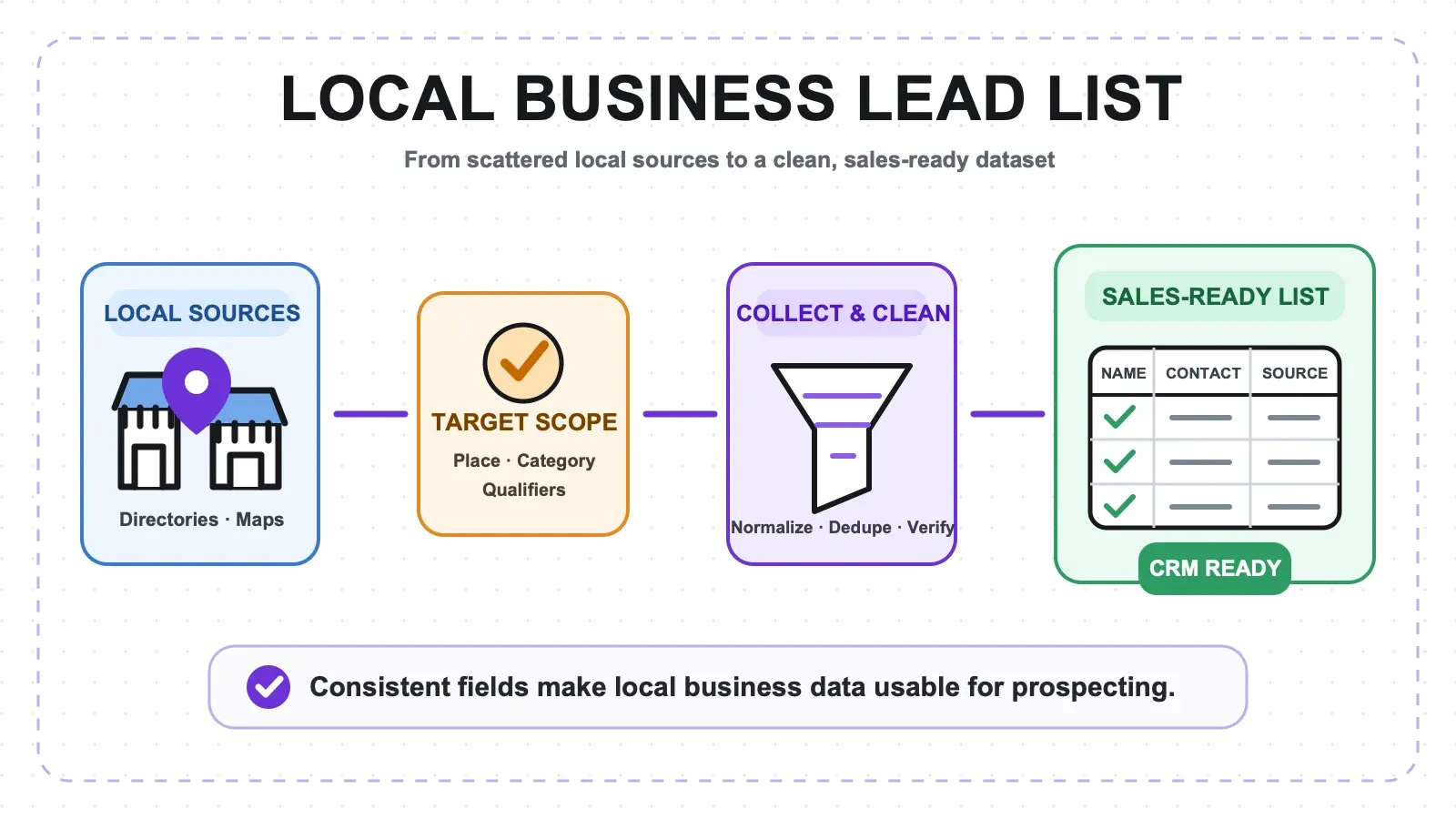
Hand-drawn workflow from collecting social posts through cleaning, sentiment scoring, human review, and business action.
AI Summary
A practical 2026 workflow for turning X posts into trustworthy sentiment insights. It explains current data-access options, text cleaning for mentions, links, hashtags, emoji, and negation, plus when to use VADER, TextBlob, or transformer models. Readers also learn how to evaluate errors, visualize results, connect findings to business decisions, and run a no-code workflow with Thunderbit.

Open a spreadsheet with 300 raw posts and the problem becomes obvious fast: copy, paste, read, squint, guess, repeat—and you still may not know whether people loved or hated the launch you are tracking.

That failure mode is why sentiment analysis exists. But here's the problem: most tutorials on this topic are stuck in 2022. They assume free API access that no longer exists, recommend models that choke on sarcasm and emoji, and skip the preprocessing steps that actually determine whether your results mean anything. I've spent a lot of time in the SaaS and automation world (including building Thunderbit), and I've watched the sentiment analysis landscape shift dramatically. The honest, updated path covers both Python and no-code workflows, with data collection methods and models that reflect reality in 2026.

What Is Twitter Sentiment Analysis?

Twitter sentiment analysis is the process of automatically classifying posts on X as positive, negative, or neutral based on their text, emojis, and context. Think of it as teaching a machine to read a tweet and answer: "Is this person happy, unhappy, or somewhere in between?"

Sentiment analysis is different from general social listening, though. Social listening is about tracking what people are talking about—topics, trends, volume. Sentiment analysis is the scoring and classification layer on top of that: it tells you how people feel about what they're saying. The concept has roots in computational linguistics and opinion mining research going back decades, but it's become a mainstream business tool only in the last several years.

There are a few common classification levels:

  • Binary: Positive or negative (simplest, but loses nuance)
  • Ternary: Positive, neutral, or negative (the most common default)
  • Fine-grained: Very positive → very negative (useful for research and detailed brand tracking)

And there are related but distinct tasks—like emotion detection (angry, sad, joyful), stance detection (for or against a proposition), aspect-level sentiment (how someone feels about price vs. quality), and sarcasm/irony detection. The TweetEval benchmark treats these as separate tasks, and for good reason: a single sentiment score can't answer every business question. If you're tracking a product launch, you probably want aspect-level sentiment ("love the camera, hate the battery"). If you're monitoring a crisis, you want emotion and volume, not just polarity.

Why Twitter Sentiment Analysis Matters for Your Business

X is built around real-time conversation, so reactions to launches, live events, and breaking news can accumulate quickly. For businesses, that speed is the point. Sentiment analysis turns a firehose of unstructured text into structured data that a team can review and act on.

The most common use cases break down like this:

Use CaseTeamBusiness Outcome
Brand reputation monitoringPR, MarketingCatch negative spikes before they go viral
Product launch feedbackProduct, MarketingIdentify what's working and what's not, in real time
Competitive benchmarkingStrategy, MarketingCompare brand perception vs. competitors over equal windows
Crisis detectionPR, OpsTrigger human review when negative volume spikes
Campaign performanceMarketingMeasure sentiment shift by creative, channel, or time
Market/stock sentimentFinance, ResearchTrack public mood around earnings, events, or policy
Political and policy researchResearch, GovernmentGauge public opinion on issues at scale

To make this concrete: X's 2026 Super Bowl recap reported 16 million Posts from 4 million authors, 5 billion impressions, and 605 million video views around a single event—with half the conversation happening in real time. That's the kind of scale where manual reading is impossible and automated sentiment scoring becomes essential.

And it's not just about volume. X's own BrandRanx methodology combines volume, engagement, and sentiment—reinforcing that sentiment is most powerful when paired with other signals, not used in isolation.

The bottom line: if your team makes decisions based on public perception—product, brand, campaign, or crisis—sentiment analysis on X data is one of the fastest feedback loops available.

The 2026 X API Reality: How to Actually Get Tweet Data

This is where most tutorials fall apart. If you've ever followed a Tweepy-based guide, pasted in your code, and hit a paywall or a cryptic error, you're not alone. The old Free / Basic / Pro subscription tiers are gone. X's API is now pay-per-usage with prepaid credits, per-endpoint costs, and real-time usage tracking.

An honest comparison of every current data collection method:

MethodCost (2026)VolumeSkill LevelNotes
X API v2 (pay-per-use)$0.005/Post readUp to 2M Post reads/month (self-serve)Intermediate (Python)Official, reproducible, compliant
Full-Archive Search$0.005 per returned Post; $0.010 per full-archive count requestBack to March 2006Intermediate–AdvancedAvailable to pay-per-use and Enterprise
Filtered StreamPost reads billed on deliveryReal-time, continuousIntermediate–AdvancedBest for live collection
Pre-built datasets (Kaggle, Sentiment140)$0Static, historical onlyBeginnerGreat for learning, not for live analysis
snscrape, Twint, Twikit, etc.$0Unreliable / frequently brokenAdvancedsnscrape hasn't worked for X search since 2023; Twint is archived; Twikit uses unofficial methods
Your own X archive$0Your posts onlyBeginnerUseful for personal analysis

A few things to know:

  • The old Free/Basic/Pro tiers are gone. Don't follow any tutorial that references them as current.
  • snscrape is dead for X. Its maintainer confirmed in 2024 that Twitter search scraping no longer works. Twint is archived. Twikit uses unofficial scraping and cookies—activity does not equal permission.
  • X's terms prohibit browser scraping without prior written consent. That means Selenium, Playwright, and browser extensions are not compliant workarounds for API access on X.

X API v2: What You Actually Get

A standard Post read costs $0.005 per returned Post. User reads cost $0.010 each. So 10,000 unique Post reads run about $50 before other resource costs. The self-serve cap is 2 million Post reads per month. Rates can change—always check the Developer Console.

For sentiment work, you'll want more than just id and text. A useful minimum schema includes created_at, lang, author_id, conversation_id, referenced_tweets, entities, context_annotations, and public_metrics. Save the raw response and an immutable record of your query, endpoint, UTC window, and pagination tokens. Without those, your corpus is not reproducible.

One more wrinkle: X's May 4, 2026 search-index migration changed the observed corpus. Keyword REST search no longer returns reposts, while Filtered Stream is unchanged. If you're comparing results from before and after that date, you may be counting different populations.

Pre-Built Datasets: Good for Learning, Not for Live Analysis

Sentiment140 (1.6 million tweets, distant-supervised labels) and various Kaggle datasets are free and great for education and benchmarking. But Sentiment140 was collected in 2009. TweetEval's sentiment subset uses SemEval data from 2013–2016. They can't prove your model works on 2026 language, slang, or events.

A Note on Thunderbit and X Data

I want to be upfront here, since we built Thunderbit: Thunderbit is an AI web scraping and automation tool that works on many compatible websites. But X's current terms prohibit browser scraping without consent. So I'm not going to position Thunderbit as a way around X API costs or access controls—that would be misleading. For X data, use the official API, an authorized provider, or your own account archive. Where Thunderbit does fit into a sentiment workflow is downstream: structuring, labeling, and exporting data you've already collected through a permitted route. More on that later.

Choosing the Right Sentiment Model: VADER vs. TextBlob vs. RoBERTa

Decision guide comparing VADER, TextBlob, and RoBERTa for social media sentiment analysis

The model you pick matters more than most tutorials let on. And the biggest gap in competing guides is that almost none of them cover transformer-based models fine-tuned on tweets—which is where some of the strongest practical baselines now live.

A head-to-head comparison follows. I'm deliberately not putting universal F1 numbers in this table, because scores differ by dataset, split, label definition, time period, and metric. Instead, I'll describe relative performance and point you to the benchmarks where you can verify.

Model / LibraryApproachHandles Sarcasm?Handles Slang/Emoji?Relative Tweet AccuracySetup Complexity
VADER (NLTK)Rule-based lexiconWeakSome emoji supportLowestVery low
TextBlobPattern-basedWeakNoLowerVery low
Naive Bayes / Logistic Regression (TF-IDF)Classic MLNoNoModerateMedium
CardiffNLP RoBERTaTransformer (fine-tuned on tweets)Better (not perfect)YesHighest among theseMedium (HuggingFace pipeline)

VADER: Quick and Simple, But Limited

VADER is a rule-based lexicon approach built for social text. It's fast, interpretable, needs no training data, and handles some emoji and emoticons. It accounts for negation, degree modifiers, punctuation, and capitalization. For a quick-and-dirty baseline or when compute and transparency matter, VADER is useful. Where it falls short: sarcasm, slang, context-dependent meaning, and anything that requires understanding beyond individual words. Its default compound-score thresholds (≥0.05 = positive, ≤-0.05 = negative) are defaults, not universal business thresholds—tune them on your own validation set.

TextBlob: Even Simpler, Even More Limited

TextBlob is a tiny educational baseline. Its default PatternAnalyzer is not trained on tweet-style text. It's useful for a first-ever NLP experiment, but not for production tweet analysis.

Classic ML: Naive Bayes, Logistic Regression, SVM

A word-and-character TF-IDF pipeline with logistic regression or LinearSVC remains a valuable supervised baseline. It's cheap, interpretable, and often exposes whether a transformer adds enough value to justify its complexity. The key rule: fit your vectorizer only after the train/validation split to avoid vocabulary and IDF leakage.

These models outperform rule-based approaches on large labeled datasets, but they still miss context, sarcasm, and slang.

CardiffNLP RoBERTa: The 2026 Standard for Tweet Sentiment

cardiffnlp/twitter-roberta-base-sentiment-latest is a maintained, tweet-oriented three-class model and a sensible strong baseline for 2026. It was pretrained on a large corpus of tweets and fine-tuned for sentiment, so it handles emoji, slang, and informal language far better than rule-based or classic ML approaches.

Here's a minimal HuggingFace code snippet to run it:

from transformers import pipeline

classifier = pipeline(
    "text-classification",
    model="cardiffnlp/twitter-roberta-base-sentiment-latest",
    top_k=None,
)
scores = classifier("@user Love waiting three hours for support 😒 http")
print(scores)

Some caveats:

  • The output is a model score, not a calibrated business probability. Calibrate or add an abstention threshold on a current labeled sample.
  • Contextual models usually outperform rule systems on many tweet tasks, but sarcasm, mixed targets, missing thread context, dialect, and coded language remain structural error sources. Don't promise that any model "understands sarcasm"—it's more accurate to say it handles it better, not perfectly.
  • Alternatives include BERTweet, TimeLMs, and multilingual Twitter-XLM-R models, depending on language and task.

So, can Twitter sentiment analysis actually be accurate? Yes—when the model, preprocessing, label definition, and evaluation sample all fit the task. A generic VADER script pasted from a 2019 tutorial is a baseline, not proof of production quality.

A Real Tweet Preprocessing Pipeline (Not Just text.lower())

Tweet preprocessing pipeline for URLs, mentions, hashtags, emoji, and negation

Feed a sentiment model raw URLs, @mentions, and HTML entities and even a decent model can return garbage. Most tutorials (including the top-ranking ones) only lowercase text before feeding it to a model. That silently sabotages accuracy—especially for classic ML, where preprocessing quality can matter as much as model choice.

What to Clean (and Why It Matters)

ElementWhat to DoWhy
URLsReplace with a placeholder like httpURLs are noise for sentiment; removing surrounding text can break context
@mentionsReplace handles with @userKeeps structure, removes author identity leakage
Emoji/emoticonsPreserve for modern tokenizers; test demojized text for sparse modelsEmoji carry strong sentiment signal—deleting them is throwing away data
HashtagsKeep the token; optionally add a segmented copy (e.g., #ClimateChangeIsReal → Climate Change Is Real)Hashtags often contain the opinion
NegationPreserve not, no, never, contractions, contrast wordsGeneric stop-word lists often remove these, flipping sentiment
Casing/punctuationPreserve for VADER and compatible modelsVADER uses capitalization and punctuation as features
RT prefixRemove RT markerIt's metadata, not sentiment
Reposts/duplicatesDetect exact and near duplicates before splittingDuplicates across train and test cause leakage

Before and After: What Preprocessing Actually Does to a Tweet

Here's a concrete example:

StageText
Raw tweetRT @BrandX: Wow, #CustomerServiceFail 😡😡 https://t.co/abc123 I've been waiting 3 hrs ngl this is awful
After URL removalRT @BrandX: Wow, #CustomerServiceFail 😡😡 http I've been waiting 3 hrs ngl this is awful
After mention normalizationRT @user: Wow, #CustomerServiceFail 😡😡 http I've been waiting 3 hrs ngl this is awful
After RT removal@user: Wow, #CustomerServiceFail 😡😡 http I've been waiting 3 hrs ngl this is awful
After hashtag segmentation@user: Wow, #CustomerServiceFail Customer Service Fail 😡😡 http I've been waiting 3 hrs ngl this is awful
After emoji-to-text (for sparse models)@user: Wow, #CustomerServiceFail Customer Service Fail angry_face angry_face http I've been waiting 3 hrs ngl this is awful
Final (for CardiffNLP RoBERTa)@user Wow, #CustomerServiceFail Customer Service Fail 😡😡 http I've been waiting 3 hrs ngl this is awful

Notice that for a transformer like CardiffNLP RoBERTa, you preserve emoji, punctuation, and casing—the model was trained on text that looks like this. For a TF-IDF model, you might demojize, lowercase, and lemmatize.

Copy-Paste Python Preprocessing Code

A clean, modular function for transformer-compatible preprocessing:

import html
import re
import unicodedata

URL_RE = re.compile(r"https?://\S+|www\.\S+", re.I)
MENTION_RE = re.compile(r"(?<!\w)@[A-Za-z0-9_]+")

def normalize_social_text(text: str) -> str:
    """Normalize a tweet for transformer-based sentiment models."""
    text = html.unescape(text)
    text = unicodedata.normalize("NFC", text)
    text = URL_RE.sub("http", text)
    text = MENTION_RE.sub("@user", text)
    text = re.sub(r"\bRT\b", "", text)
    return " ".join(text.split())

For classic ML pipelines, you'd extend this with lowercasing, emoji-to-text conversion (using the emoji or demoji library), hashtag segmentation (using wordninja or ekphrasis), slang normalization, stopword removal, and lemmatization (via spaCy or NLTK). The key principle: match your preprocessing to your model. BERTweet, for example, uses its own documented normalization convention—don't force every model through one pipeline.

Step-by-Step: Twitter Sentiment Analysis with Python

This is the complete workflow, tying together everything above. You can follow this from start to finish.

Before you start:

  • Difficulty: Intermediate (some Python familiarity assumed)
  • Time Required: ~30–60 minutes for the full pipeline; ~10 minutes for the quick transformer path
  • What You'll Need: Python 3.8+, a free Google Colab or local environment, pandas, transformers, scikit-learn, matplotlib, seaborn, and optionally wordcloud

Step 1: Collect Your Tweet Data

I'll use the Sentiment140 dataset for this tutorial (free, 1.6 million tweets, available on Kaggle). It's great for learning and benchmarking, even though it's historical.

If you want live data, use the X API v2 pay-per-use tier. A standard Post read costs $0.005. For 10,000 Posts, that's about $50.

Load the dataset:

import pandas as pd

columns = ["target", "id", "date", "flag", "user", "text"]
df = pd.read_csv(
    "training.1600000.processed.noemoticon.csv",
    encoding="latin-1",
    names=columns,
)
#Labels: Sentiment140 uses 0 = negative, 4 = positive
df["label"] = df["target"].map({0: "negative", 4: "positive"})
print(df[["text", "label"]].head())

You should see a DataFrame with raw tweet text and a label column.

Step 2: Clean and Preprocess Your Tweets

Apply the preprocessing function from the earlier section:

df["clean_text"] = df["text"].apply(normalize_social_text)
print(df[["text", "clean_text"]].head())

Check a few rows to confirm URLs are replaced, mentions are normalized, and RT prefixes are removed.

Step 3: Pick Your Model and Classify Sentiment

Path A: Classic ML with TF-IDF + Logistic Regression

This is the "understand the fundamentals" path. Split your data, fit the vectorizer on the training set only, and train a logistic regression classifier:

from sklearn.model_selection import train_test_split
from sklearn.feature_extraction.text import TfidfVectorizer
from sklearn.linear_model import LogisticRegression
from sklearn.metrics import classification_report

X_train, X_test, y_train, y_test = train_test_split(
    df["clean_text"], df["label"], test_size=0.2, random_state=42
)
vectorizer = TfidfVectorizer(max_features=50000, ngram_range=(1, 2))
X_train_tfidf = vectorizer.fit_transform(X_train)
X_test_tfidf = vectorizer.transform(X_test)

clf = LogisticRegression(max_iter=1000)
clf.fit(X_train_tfidf, y_train)
y_pred = clf.predict(X_test_tfidf)
print(classification_report(y_test, y_pred))

You should see a classification report with precision, recall, and F1 for each class. On Sentiment140, logistic regression with TF-IDF typically performs respectably—but remember, this dataset is from 2009 and uses distant supervision (emoticons as labels), so don't treat these numbers as your production benchmark.

Path B: CardiffNLP RoBERTa via HuggingFace

For the best accuracy on tweet text, use the pretrained transformer:

from transformers import pipeline

classifier = pipeline(
    "text-classification",
    model="cardiffnlp/twitter-roberta-base-sentiment-latest",
    top_k=None,
)

sample_tweets = [
    "@user Love waiting three hours for support 😒 http",
    "@user This new update is absolutely fantastic, best one yet!",
    "@user The event was okay, nothing special.",
]
for tweet in sample_tweets:
    result = classifier(tweet)
    print(f"Tweet: {tweet}\nScores: {result}\n")

You'll see a list of label scores (negative, neutral, positive) for each tweet. The sarcastic tweet ("Love waiting three hours...") should score higher on negative than a rule-based model would predict—though no model is perfect here.

Step 4: Evaluate Your Results

Now generate a confusion matrix heatmap for the classic ML path:

import matplotlib.pyplot as plt
import seaborn as sns
from sklearn.metrics import confusion_matrix

cm = confusion_matrix(y_test, y_pred, labels=["negative", "positive"])
sns.heatmap(cm, annot=True, fmt="d", xticklabels=["negative", "positive"],
            yticklabels=["negative", "positive"], cmap="Blues")
plt.xlabel("Predicted")
plt.ylabel("Actual")
plt.title("Confusion Matrix: Logistic Regression on Sentiment140")
plt.show()

With the transformer path, label a small current sample by hand (50–100 tweets), run the model, and compare. Report macro F1, per-class precision and recall, and the confusion matrix. If you're doing this for a real project, also check calibration and set an abstention threshold for ambiguous cases.

Step 5: Test on Edge Cases

Try a few tweets that test sarcasm, emoji, and slang:

edge_cases = [
    "Oh great, another update that breaks everything 🙄",
    "ngl this product slaps 🔥🔥🔥",
    "The camera is amazing but the battery life is trash",
    "Just got my order. It's... fine. I guess.",
]
for tweet in edge_cases:
    clean = normalize_social_text(tweet)
    result = classifier(clean)
    print(f"Tweet: {tweet}\nScores: {result}\n")

Look at where the model gets it right and where it struggles. Mixed-target tweets ("camera is amazing but battery is trash") are a known challenge—aspect-level sentiment is a separate task.

Twitter Sentiment Analysis Without Writing Code

Not everyone wants to write Python, and that's fine. If you're a marketer, brand manager, or operations lead who needs sentiment insights without touching code, here's your path.

One honest caveat: no-code tools trade customization for speed. They're ideal for quick brand monitoring, not for research-grade analysis or custom model training.

No-Code Options at a Glance

ToolBest ForSentiment Built-In?Price Range
AWS ComprehendEnterprise-scale text analysisYesPay-per-use
Brandwatch / SprinklrFull social listening suiteYesEnterprise pricing
Google Sheets + NLP add-onsQuick lightweight analysisVia add-onFree–low
Thunderbit + spreadsheetStructure and label data from compatible pagesAI Field Prompt for exploratory labelsFree tier available

No-Code Workflow: Collect Data, Classify in a Spreadsheet

A practical workflow for someone who has tweet data (collected via the official X API, an authorized provider, or their own archive):

  1. Export your tweet data to a spreadsheet. If you used the X API, export the JSON to CSV or use a tool like Thunderbit to structure and export data from compatible pages where you have permission to automate.
  2. Open in Google Sheets. Paste or import your tweet text into a column.
  3. Apply a sentiment classifier. Use a Google Sheets NLP add-on (check the add-on marketplace for current options) or a service like AWS Comprehend. Some add-ons let you classify sentiment directly in a cell formula.
  4. Review and visualize. Use Google Sheets' built-in charting to create a sentiment distribution bar chart or a sentiment-over-time line chart.

Thunderbit's AI Field Prompt can also add a prompt-based sentiment label during extraction on compatible pages—useful for exploratory monitoring. But for audited or high-stakes decisions, validate a sample and use a documented model.

When to Use No-Code vs. Python

ScenarioRecommended Path
Quick brand check, small volumeNo-code (spreadsheet + add-on)
Team dashboard, weekly reportingNo-code or low-code
Large-scale analysis, custom modelsPython
Academic research, reproducibilityPython
Real-time monitoring at scalePython + API + scheduled pipeline

Visualizing Your Twitter Sentiment Results

Evaluation loop connecting sentiment metrics, error review, and business decisions

Most tutorials stop at a classification report. But if you want to communicate findings to a team or make a decision, you need visuals.

Sentiment Distribution Bar Chart

The most basic but universally useful output:

import matplotlib.pyplot as plt
import seaborn as sns

sentiment_counts = df["label"].value_counts()
sns.barplot(x=sentiment_counts.index, y=sentiment_counts.values, palette="coolwarm")
plt.xlabel("Sentiment")
plt.ylabel("Tweet Count")
plt.title("Sentiment Distribution")
plt.show()

Word Cloud by Sentiment Class

Separate word clouds for positive and negative tweets reveal what people are actually saying:

from wordcloud import WordCloud

for sentiment in ["positive", "negative"]:
    text = " ".join(df[df["label"] == sentiment]["clean_text"])
    wc = WordCloud(width=800, height=400, background_color="white").generate(text)
    plt.figure(figsize=(10, 5))
    plt.imshow(wc, interpolation="bilinear")
    plt.axis("off")
    plt.title(f"Word Cloud: {sentiment.capitalize()} Tweets")
    plt.show()

Sentiment Over Time: The Chart No One Else Shows You

This is the visualization that turns raw data into a story. If you have timestamps, you can track how sentiment shifts during an event, launch, or crisis:

df["date"] = pd.to_datetime(df["date"])
df["day"] = df["date"].dt.date
sentiment_map = {"positive": 1, "neutral": 0, "negative": -1}
df["score"] = df["label"].map(sentiment_map)
daily = df.groupby("day")["score"].mean()

plt.figure(figsize=(12, 5))
daily.plot()
plt.xlabel("Date")
plt.ylabel("Average Sentiment Score")
plt.title("Sentiment Over Time")
plt.axhline(0, color="gray", linestyle="--")
plt.show()

A sudden dip on launch day? That's your signal to dig into the negative tweets and find out what went wrong.

Confusion Matrix Heatmap

Already shown in the evaluation step above. The key: look at where your model confuses positive for negative (or vice versa). Those are the tweets worth reading manually.

For Non-Coders: Charting in Google Sheets or Notion

If you've exported your sentiment-labeled data to a spreadsheet, you can chart sentiment distribution and trends directly in Google Sheets, Notion, or any BI tool. No Python required.

Common Pitfalls in Twitter Sentiment Analysis (and How to Dodge Them)

Across real-world sentiment workflows, the same mistakes keep showing up.

Sarcasm and Irony

The biggest accuracy killer. "Love waiting three hours for support 😒" looks positive to a rule-based model. Transformer models do better, but sarcasm remains structurally difficult—especially when the post alone lacks context (the thread, the author's history, the event). For high-stakes use cases, combine model output with human spot-checks.

Emoji and Slang Blind Spots

If your preprocessing strips emojis instead of converting them to text (for sparse models) or preserving them (for transformers), you're throwing away some of the strongest sentiment signals in the data. Same for slang—"ngl this slaps" is positive, but a model trained on formal English won't know that.

Outdated API Tutorials and Broken Scrapers

If a tutorial uses Tweepy with API v1.1, it's outdated. If it recommends snscrape, that hasn't worked for X search since 2023. Always check the date and API version of any tutorial you follow.

Overfitting to a Single Dataset

Sentiment140 is great for training, but it's from 2009. A 2024 EMNLP audit of 20 social-media datasets found that removing duplicates reduced F1 in 14 of 19 tested datasets and changed model rankings in 17 of 19. Use time-based, event-disjoint, and preferably author-disjoint splits. Test your model on recent tweets to see if it generalizes.

Treating Sentiment Scores as Ground Truth

A model score is not a calibrated probability. Don't trigger automated responses or public-facing decisions based solely on a sentiment label. Always require human review for decisions affecting individuals or crisis responses.

Privacy, Platform Policy, and Responsible Use

This section isn't optional.

X's Developer Policy emphasizes privacy, user control, content deletion, and restrictions on off-X matching. Practical rules:

  • Collect only necessary fields.
  • Aggregate results rather than publishing raw handles.
  • Keep Post IDs and retrieval timestamps for compliance.
  • Remove or update stored content after deletion, protection changes, or qualifying requests.
  • Do not infer sensitive traits about individuals.
  • Do not join sentiment scores to CRM identities without a permitted basis and consent.
  • Do not train or fine-tune a foundation model on X Content where prohibited by restricted-use rules.
  • Document sample size, query terms, time window, language filters, and exclusions.
  • Never automate a public response solely from a sentiment score.

Sentiment analysis is a powerful tool, but it comes with real responsibilities. Treat it accordingly.

Conclusion and Key Takeaways

Twitter sentiment analysis works in 2026—but only if you update your approach to match the current reality. The old recipe (free API, lowercase-only preprocessing, VADER or Naive Bayes, no evaluation) is broken. What actually works:

  1. Get your data through a permitted route. Use the X API v2 (pay-per-use), an authorized provider, or a transparent dataset. Don't rely on broken scrapers or browser workarounds.
  2. Preprocess for your model, not just for show. Preserve emoji, negation, and casing for transformers. Normalize URLs and mentions. Match your pipeline to your model's training data.
  3. Compare a cheap baseline with a tweet-specific transformer. TF-IDF + logistic regression is still a great sanity check. CardiffNLP RoBERTa is the current strong default for tweet sentiment.
  4. Evaluate honestly. Report macro F1, per-class metrics, and a confusion matrix. Use a current, hand-labeled sample. Set an abstention threshold for ambiguous cases.
  5. Visualize for decisions, not just for decoration. Sentiment-over-time charts and word clouds tell a story that a classification report can't.
  6. Keep humans in the loop. No model is perfect at sarcasm, mixed targets, or context-dependent meaning. For high-stakes use cases, combine model output with human review.

If you're just getting started, grab a free dataset, open Google Colab, and run the HuggingFace pipeline. You'll have working sentiment scores in under ten minutes. If you want to collect and structure web data without code for other parts of your workflow, Thunderbit can help on compatible pages where you have permission to automate.

And if you're building this for a portfolio or a job interview: adding a transformer comparison, a real preprocessing pipeline, and a sentiment-over-time chart will instantly set your project apart from the bootcamp default.

Learn More

FAQs

Is Twitter sentiment analysis accurate?

It depends on the model and how you evaluate. Rule-based tools like VADER perform at the low end on tweet data. Transformer models like CardiffNLP RoBERTa perform significantly better—but exact scores vary by dataset, split, label definition, and metric. Preprocessing quality also matters. Always evaluate on a current, hand-labeled sample rather than trusting a single benchmark number.

Can I do Twitter sentiment analysis for free?

Yes. Use a free dataset (Sentiment140 on Kaggle), a free Python environment (Google Colab), and a pretrained HuggingFace model. For live data, the X API charges $0.005 per Post read, so small-scale collection is affordable. Thunderbit offers a free tier for structuring data on compatible pages.

What is the best Python library for Twitter sentiment analysis?

For quick prototyping: VADER via NLTK. For best accuracy on tweets: the HuggingFace transformers library with CardiffNLP's RoBERTa model. For classic ML baselines: scikit-learn with TF-IDF. The right choice depends on your volume, accuracy needs, and compute budget.

How do I handle sarcasm in Twitter sentiment analysis?

Transformer models handle sarcasm better than rule-based or classic ML models because they process context, not just individual words. But no model is perfect at sarcasm—research shows that even human annotators disagree on sarcastic intent. For critical use cases, combine model output with human review and consider using sarcasm-specific datasets for evaluation.

Can I analyze Twitter sentiment without coding?

Yes. Collect your data through a permitted route (X API, authorized provider, or your own archive), export to Google Sheets, and apply a no-code sentiment classifier via a Sheets NLP add-on or a service like AWS Comprehend. Thunderbit can also add prompt-based sentiment labels during data structuring on compatible pages. For more on no-code data workflows, check out our guide to AI tools for Google Sheets.

Shuai Guan
Shuai Guan
CEO at Thunderbit | AI Data Automation Expert Shuai Guan is the CEO of Thunderbit and a University of Michigan Engineering alumnus. Drawing on nearly a decade of experience in tech and SaaS architecture, he specializes in turning complex AI models into practical, no-code data extraction tools. On this blog, he shares unfiltered, battle-tested insights on web scraping and automation strategies to help you build smarter, data-driven workflows.When he's not optimizing data workflows, he applies the same eye for detail to his passion for photography.
Topics
Twitter sentiment analysisX APISocial media analytics
Table of Contents
Thunderbit · AI web data agent

Extract data from any page in 1 click

Trusted by 250,000+ users
free plan available
From webpage to spreadsheet
Describe what you need — Thunderbit's AI Agent scrapes it and exports to Excel, Google Sheets, Airtable, or Notion. Free to start.
Chrome Store Rating
PRODUCT HUNT#1 Product of the Week