Cold Email Subject Lines That Work: Formulas + 2026 Data

Last Updated on April 28, 2026

The average B2B professional now receives . Cold email reply rates? They hover between and , depending on who you ask. Your subject line is the only thing standing between your carefully crafted message and the trash folder.

But here's what years of building outbound tools at have taught me: most "cold email subject line" articles give you a list to copy-paste, and that's it. No formulas, no deliverability advice, no honest reckoning with which sacred-cow lines are actually dead. This article is different.

I'm going to walk you through 20 cold email subject lines that work in 2026, the reusable formulas behind them, a deliverability gut-check you should run before you write a single word, and an honest verdict on the lines everyone argues about on Reddit. Plus, I'll show you how AI and smart data collection can make all of this scalable — even if you're a team of one.

Before You Write a Single Cold Email Subject Line: The Deliverability Reality Check

I've seen too many sales teams obsess over word choice while their emails quietly land in spam. shows global inbox placement at just 83.5% — meaning roughly one in six emails never reaches the inbox. Microsoft-hosted mailboxes are even tougher, averaging only 75.6% inbox placement.

The blunt truth: the best cold email subject line in the world is worthless if your email lands in Spam or Promotions. So before you touch your subject lines, run through this pre-flight checklist.

The Deliverability Pre-Flight Checklist

CheckWhat to VerifyWhy It Matters
Authenticated sending domainSPF, DKIM, and DMARC configuredGoogle, Yahoo, and Microsoft all require authentication as a baseline trust signal
Warmed-up sending addressRamp volume gradually on new domainsSudden spikes look abusive to mailbox providers
Clean contact listRemove bounces, invalid addresses, stale contactsPoor list quality tanks reputation fast
Complaint rate disciplineKeep spam complaints below 0.1% (never exceed 0.3%)Google and Yahoo enforce explicit thresholds
Reply-enabled mailboxSend from a real, monitored addressReplies are a positive reputation signal
No deceptive content cuesNo fake Re: or Fwd:, no misleading display namesBoth technical filters and human trust are at stake

Spam-Trigger Words to Purge from Your Cold Email Subject Lines

These words and patterns raise red flags with :

Spam TriggerExampleWhy It's Risky
"Free""Free demo inside"Classic spam signal
"Act now" / "Urgent""Act now before it's too late"Artificial urgency
"Limited time""Limited time offer"Promotional language
ALL CAPS"OPEN THIS NOW"Shouting = spam
Excessive punctuation"Ready???" or "Don't miss out!!!"Pattern matched by filters
"Guaranteed""Guaranteed results"Over-promising
Fake "RE:" or "FWD:""RE: Our conversation" (when there was none)Deceptive — increasingly caught by filters and damages trust
"Click here""Click here for your gift"Phishing-adjacent language

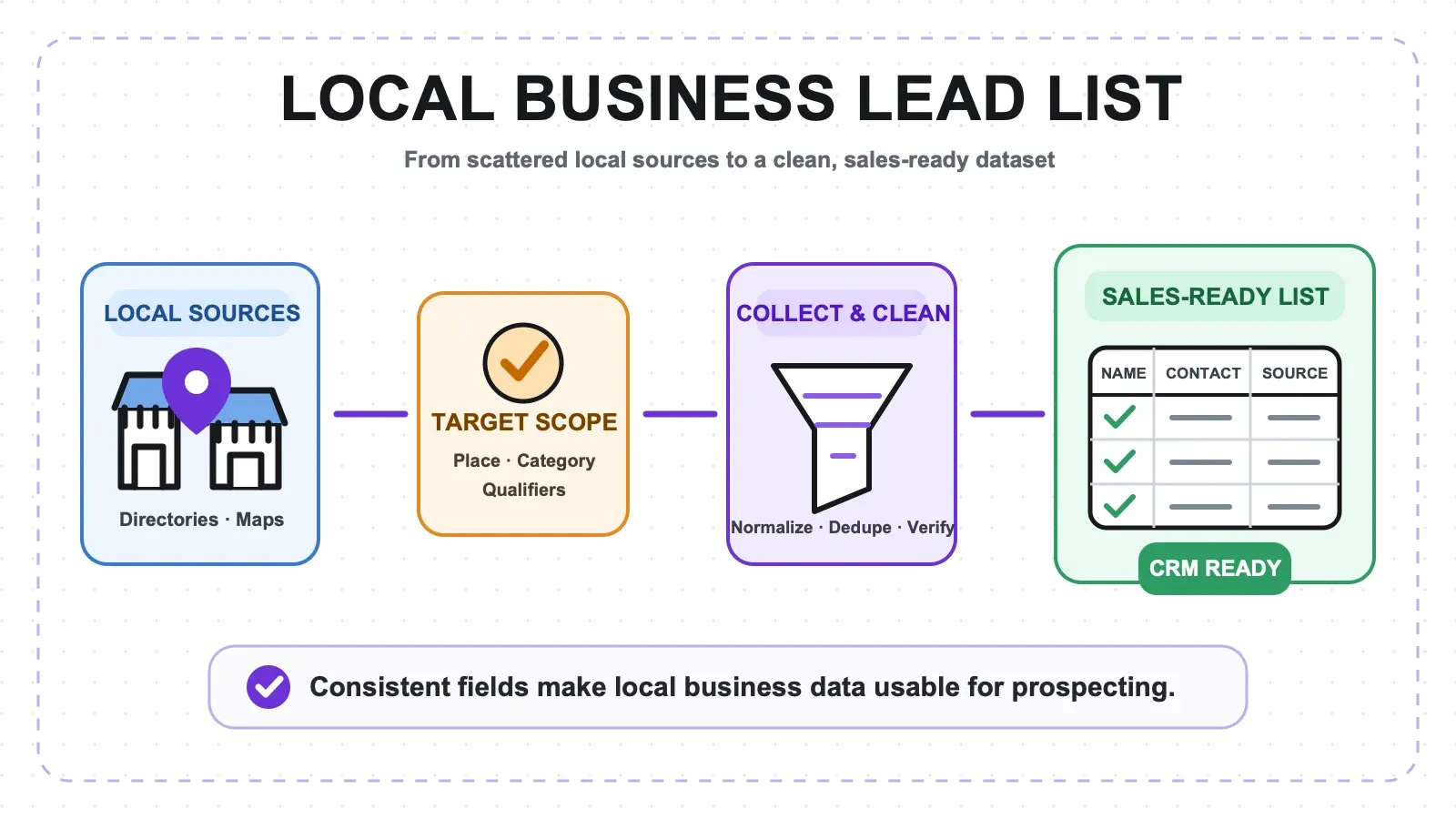
And here's the part most articles skip: building a clean, targeted prospect list is step zero of deliverability. Sending to verified, relevant contacts keeps bounce rates low and sender reputation intact. That's one reason we built — so teams can build verified lead lists from company websites and directories rather than buying low-quality lists that tank sender reputation. If you want to dig deeper into list building, check out our .

What Makes a Cold Email Subject Line Work in 2026

After spending way too many hours combing through benchmarks and A/B test results, the data points to a few clear patterns for cold email subject lines that perform:

  • Keep it short. of 5.5 million emails found 2–4 word subject lines averaged a 46% open rate, compared with 35% for 9-word lines. recommends front-loading the key idea in the first 30–40 characters, since of consumers check email most often on mobile.
  • Personalize beyond first name. found personalized subject lines averaged 46% opens vs. 35% without. But "Hi {first_name}" alone is table stakes — the real lift comes from company, role, and situational relevance.
  • Questions outperform hype. Question-based subject lines create an open loop in the reader's mind. They invite engagement, not defensiveness.
  • Skip fake urgency. found urgency words like "now" and "ASAP" pushed open rates below 36%. explicitly warns against "Urgent," "Limited time," and "Act now!!!" in cold outreach.
  • Casual beats polished. The subject lines that keep winning read like an internal note or a real question — not a marketing campaign.

A caveat worth flagging: open-rate tracking is imperfect. Both and warn that privacy tools (like Apple Mail Privacy Protection) and automated scanning distort open-rate data. Use open rates as directional signals, but trust reply rate as the deeper success metric.

Quick-Reference Checklist: Before You Hit Send

  • Is the subject line under 8 words, ideally 2–4?
  • Does the key idea appear in the first 30–40 characters?
  • Is there a specific, relevant hook (not generic flattery)?
  • Is it free of spam-trigger words and excessive punctuation?
  • Would you open this if it landed in your own inbox?

The "Sacred Cows" of Cold Email Subject Lines — An Honest Verdict

Every sales community has its favorite subject lines. But some of the most-recommended lines are either overused, deceptive, or context-dependent. I've seen heated Reddit threads about "Quick question" alone. So here's my honest, data-informed verdict on the lines everyone argues about.

Subject LineStill Works in 2026?Why / Why NotBetter Alternative
"Quick question"⚠️ DependsHunter's tester reports 28.7% open rate and 2.5% reply rate. Reddit users call it "an instant delete." Works only if the body contains a real, specific question."Question about [specific topic]"
Fake "RE:" / "FWD:"❌ AvoidDeceptive; damages trust; increasingly caught by filters.Lead with honest curiosity instead
"Checking in"❌ WeakZero value signal; easy to ignore."[First Name], any thoughts on [specific topic]?"
"[First name]" (name only)✅ Can workSalesloft data suggests one-word subjects can get high reply rates — but only if the body delivers.Keep if body is genuinely strong
Urgency lines ("Last chance…")⚠️ RiskyBelkins data: urgency words hurt cold email open rates. Fine for warm leads.Replace with relevance + specificity
Emoji subject lines⚠️ Industry-dependentAcceptable in ecommerce/DTC, risky in enterprise B2B.Test with A/B; default to no emoji for B2B

The pattern is clear: specificity and honesty beat cleverness and tricks.

If a subject line could fit 500 people at once, it's probably not going to stand out for any of them.

Four Levels of Personalization for Cold Email Subject Lines

"Hi [First Name]" is not personalization. It's a mail merge token. Here's a framework I use to think about personalization depth — and how it maps to open-rate impact.

LevelWhat You PersonalizeExample Subject LineEffortOpen-Rate Lift
L1 — NameFirst name"Alex, quick question"LowBaseline (+10–20%)
L2 — Company + RoleCompany name, job title"Scaling ops at Acme? An idea for you"Medium+20–35%
L3 — Trigger EventRecent funding, hiring, product launch"Congrats on Series B — thought about [challenge]?"High+35–50%
L4 — Pain-Point SpecificSpecific challenge based on research"Saw Acme is expanding to EU — here's how others handled compliance"Very High+50%+

These lift estimates are directional, based on patterns from , , and . The takeaway is simple: the deeper you go, the better the results — but the harder it is to scale.

For L3 and L4 personalization, you need prospect data you can't get from a CRM alone. That's where comes in. Our AI web scraping can extract trigger events (recent hires, product launches, funding news) and company-specific details from websites, directories, and press pages — then or your CRM to fuel personalized outreach. This turns L4 personalization from "nice in theory" to actually doable for a team of one. (More on this workflow below.)

Five Reusable Cold Email Subject Line Formulas

Most articles give you a list. I want to give you the formulas behind the list — so you can generate unlimited variations, not just copy-paste the same 20 lines everyone else is using.

FormulaStructureExampleBest Used When
Trigger + ValueRecent event + reason to care"Saw your Series B — idea for outbound"There is a real, timely trigger
Question + Pain PointQuestion + known challenge"Still tracking pipeline manually?"The role has a clear pain point
Mutual ConnectionName + reason for intro"Sarah suggested I reach out"There is a real shared contact
Stat + Curiosity GapSurprising number + topic"3 leads I found for Acme"You have credible proof or data
Disarmingly DirectHonest, low-pressure statement"Not sure this is relevant"The audience is skeptical of templated outreach

I'll reference these formulas as we walk through each of the 20 subject lines below. Think of them as the DNA behind every good cold email subject line.

Personalization-Driven Cold Email Subject Lines

These subject lines lead with something specific to the recipient — their name, company, a trigger event, or a mutual connection. They require the most research but consistently deliver the highest open and reply rates.

Formula card: [Personalization Token] + [Relevance Hook]

1. "[First Name], quick thought on [Company]'s [challenge]"

Example: "Sarah, quick thought on Acme's hiring push"

Why it works: Combines name personalization with a company-specific challenge. Keeps length under 7 words. Signals relevance without clickbait.

When to use it: First-touch cold outreach to a known decision-maker.

Spam risk: Low

Scalability: Medium — requires knowing a specific challenge per prospect.

2. "Noticed [trigger event] at [Company]"

Example: "Noticed the Series B at Acme"

Why it works: References a real, timely event — signals you did homework, not mass blasting. Short and curiosity-provoking. and both highlight trigger-event lines as top performers.

When to use it: Outreach within 1–2 weeks of a public trigger event (funding, product launch, executive hire).

Spam risk: Low

Scalability: Medium-High with the right tools — Thunderbit can to identify trigger events in bulk.

3. "[Mutual connection] suggested I reach out"

Example: "Jamie Chen suggested I reach out"

Why it works: Leverages social proof and implied trust. Recipients are far more likely to open an email that references someone they know. and both flag this as a high-performer.

When to use it: Referral-based outreach, warm introductions, networking follow-ups.

Spam risk: Low (as long as the connection is genuine — fake social proof is worse than none).

Scalability: Low — each email requires a real mutual connection.

4. "[First Name], loved your take on [topic]"

Example: "Marcus, loved your take on AI in supply chain"

Why it works: Opens with a genuine compliment tied to something specific the recipient said or published. Flattery that feels earned, not generic.

When to use it: Outreach after consuming a prospect's LinkedIn post, podcast appearance, conference talk, or article.

Spam risk: Low

Scalability: Medium — requires reviewing prospect's recent content.

Question-Based Cold Email Subject Lines

Questions create an open loop in the reader's mind. They invite engagement rather than a pitch. Data from and shows question-based subject lines can outperform statements in cold outreach.

Formula card: [Open Question] + [Specificity Signal]

5. "What's your current approach to [pain point]?"

Example: "What's your current approach to lead qualification?"

Why it works: Positions sender as a curious peer, not a salesperson. The specificity of the pain point signals relevance. Invites the recipient to reflect on their own process.

When to use it: Discovery-phase outreach when you want to start a conversation, not push a demo.

Spam risk: Low

Scalability: High — pain point can be templated per ICP segment.

6. "Is [challenge] still a priority this quarter?"

Example: "Is reducing churn still a priority this quarter?"

Why it works: Time-bound framing ("this quarter") adds urgency without sounding pushy. Implies you understand their strategic priorities.

When to use it: Re-engagement or second-touch outreach; also effective for prospects who went dark.

Spam risk: Low

Scalability: High — easy to customize per vertical.

7. "Curious — how are you handling [industry trend]?"

Example: "Curious — how are you handling AI compliance in fintech?"

Why it works: The word "curious" lowers defenses; positions the sender as genuinely interested. Industry-specific trend makes it feel relevant and timely.

When to use it: Thought-leadership-style outreach; works especially well for consultants and agencies.

Spam risk: Low

Scalability: Medium — requires knowing the trending topic per industry.

Value and Result-Driven Cold Email Subject Lines

These subject lines lead with a tangible outcome, metric, or case study reference. They answer the reader's implicit question: "Why should I care?" notes that subject lines with numbers and specific metrics consistently outperform vague claims.

Formula card: [Social Proof / Metric] + [Relevance Check]

8. "[X% result] for [similar company] — relevant?"

Example: "43% faster pipeline for Freshworks — relevant?"

Why it works: Leads with a specific, credible number. The "relevant?" tag invites a low-commitment reply. The similar company creates peer-comparison curiosity.

When to use it: Outreach to prospects in the same industry or company size as an existing customer.

Spam risk: Low-Medium (avoid exaggerated claims; keep percentages believable).

Scalability: High — swap company name per segment.

9. "How [peer company] solved [specific problem]"

Example: "How Drift solved outbound reply rates"

Why it works: Social proof through a recognizable peer company. "How they solved" implies a story the recipient will want to learn.

When to use it: When you have a strong case study from a company the prospect would recognize or admire.

Spam risk: Low

Scalability: Medium — requires matching case studies to prospect segments.

10. "Idea to cut [pain point] by [specific metric]"

Example: "Idea to cut manual data entry by 6 hours/week"

Why it works: "Idea" is low-stakes and non-threatening. The specific metric makes the benefit concrete and believable rather than vague. (And yes, I'm a little biased on this one — is something we think about a lot at Thunderbit.)

When to use it: Outreach where you can quantify the value proposition clearly.

Spam risk: Low

Scalability: High — metric can be templated per persona.

Curiosity and Casual Tone Cold Email Subject Lines

These subject lines deliberately lower the stakes. They feel like a note from a colleague, not a sales pitch. The casual tone cuts through the formality that prospects associate with spam.

Formula card: [Trigger Event] + [Value Prop] or [Lowered Stakes Opener]

11. "Thought about this after [specific trigger]"

Example: "Thought about this after your LinkedIn post on hiring"

Why it works: Feels personal and spontaneous — like you genuinely thought of them. The specific trigger proves it's not a mass blast.

When to use it: Warm-ish outreach after observing a prospect's activity (social post, event attendance, content publication).

Spam risk: Low

Scalability: Medium — requires a specific trigger per prospect.

12. "An idea about [specific goal]"

Example: "An idea about scaling your SDR team"

Why it works: Short, intriguing, non-threatening. "An idea" implies you have something concrete to share, not a generic pitch.

When to use it: First-touch outreach when you genuinely have a specific suggestion.

Spam risk: Low

Scalability: High — goal can be templated per ICP.

13. "This might be off-base, but…"

Example: "This might be off-base, but…" (body references their expansion to APAC)

Why it works: Self-deprecating honesty disarms the reader. The ellipsis creates a cliffhanger. It gives the recipient permission to say no, which paradoxically increases replies.

When to use it: When reaching out to a prospect with uncertain fit, or when you want to stand out in a highly competitive inbox.

Spam risk: Low

Scalability: Medium — works better when body is personalized.

Follow-Up Sequence Cold Email Subject Lines

Most deals happen after the follow-up, not the first touch. Yet most salespeople give up after one email. confirms that follow-up emails can significantly lift overall reply rates — but only if the subject line re-engages rather than annoys.

Formula card: [Callback Reference] + [Low-Pressure Question]

14. "Following up: [specific topic from email 1]"

Example: "Following up: the data enrichment idea"

Why it works: References the specific topic from your first email, which jogs the recipient's memory and shows this isn't a generic follow-up. The colon format is clear and scannable.

When to use it: 3–5 days after first email with no reply.

Spam risk: Low

Scalability: High — topic can be auto-populated from your sequence.

15. "Did my last note land at a bad time?"

Example: "Did my last note land at a bad time, Alex?"

Why it works: Acknowledges the recipient is busy without guilt-tripping. Offers an easy out ("yes, bad timing") which paradoxically encourages a reply. Casual, human tone.

When to use it: Second or third follow-up when you suspect timing, not disinterest, is the issue.

Spam risk: Low

Scalability: Very High — no customization needed.

16. "Still thinking about [pain point]?"

Example: "Still thinking about lead response time?"

Why it works: Re-anchors the conversation around the prospect's pain, not your product. Implies continuity — you're genuinely interested in helping them solve this.

When to use it: Later-stage follow-up (email 3 or 4); also works for re-engaging prospects who went cold months ago.

Spam risk: Low

Scalability: High — pain point can be templated per persona.

Meeting Request Cold Email Subject Lines

These subject lines are for when you're ready to move the conversation from inbox to calendar. They work best later in a sequence or when a prospect has shown some signal of interest.

Formula card: [Time Commitment] + [Specific Value]

17. "15 mins on [specific value] — worth it?"

Example: "15 mins on cutting CRM data entry — worth it?"

Why it works: States exactly how much time you're asking for (low commitment), ties it to a specific benefit, and the "worth it?" tag gives the recipient a decision framework rather than an obligation.

When to use it: Mid-to-late sequence when you've established some context; also effective as a standalone when targeting high-fit prospects.

Spam risk: Low

Scalability: High — value prop can be swapped per segment.

18. "Quick call re [topic] — [day] or [day]?"

Example: "Quick call re outbound strategy — Tuesday or Thursday?"

Why it works: The either/or close (Tuesday or Thursday) is a classic sales technique that reduces decision fatigue. Specific topic reinforces relevance.

When to use it: When a prospect has shown engagement (opened previous emails, visited your site, replied positively).

Spam risk: Low

Scalability: High — dates and topic easily customized.

Contrarian and Honest Cold Email Subject Lines

These subject lines break the pattern by leading with transparency. In an inbox full of pitches, honesty stands out. They work especially well for skeptical or senior-level prospects who are tired of sales tactics.

Formula card: [Disarming Honesty] + [Specific Curiosity]

19. "Not a pitch — genuine question about [topic]"

Example: "Not a pitch — genuine question about your hiring process"

Why it works: The explicit "not a pitch" disclaimer creates cognitive disruption — it's unexpected. The key is that the email body must actually deliver a genuine question, not a pitch disguised as one.

When to use it: Outreach to senior executives, C-suite, or prospects in industries with high cold-email fatigue (SaaS, marketing, recruiting).

Spam risk: Low

Scalability: Medium — requires a genuine, specific question per prospect or segment.

20. "Honest question about [Company]'s [area]"

Example: "Honest question about Acme's onboarding flow"

Why it works: "Honest" is a power word that implies the sender has nothing to hide. Company + specific area proves research was done. Targets a specific aspect of their business rather than a generic pitch.

When to use it: When you've identified a genuine gap or opportunity in the prospect's business that you can address.

Spam risk: Low

Scalability: Medium — requires per-company research on the specific area.

All 20 Cold Email Subject Lines Compared at a Glance

Use this comparison table to match the right subject line to your situation:

#Subject Line TemplateCategoryPersonalization EffortOpen-Rate PotentialSpam RiskBest Use CaseScalability
1"[First Name], quick thought on [Company]'s [challenge]"PersonalizationMediumHighLowCold outreachMedium
2"Noticed [trigger event] at [Company]"PersonalizationMedium-HighHighLowCold outreachMedium-High
3"[Mutual connection] suggested I reach out"PersonalizationLowVery HighLowReferralLow
4"[First Name], loved your take on [topic]"PersonalizationMediumHighLowCold outreachMedium
5"What's your current approach to [pain point]?"QuestionLow-MediumHighLowCold outreachHigh
6"Is [challenge] still a priority this quarter?"QuestionLow-MediumHighLowFollow-up / Re-engagementHigh
7"Curious — how are you handling [industry trend]?"QuestionMediumHighLowCold outreachMedium
8"[X% result] for [similar company] — relevant?"Value/ResultLow-MediumHighLow-MediumCold outreachHigh
9"How [peer company] solved [specific problem]"Value/ResultMediumHighLowCold outreachMedium
10"Idea to cut [pain point] by [specific metric]"Value/ResultLowHighLowCold outreachHigh
11"Thought about this after [specific trigger]"Curiosity/CasualMediumHighLowWarm-ish outreachMedium
12"An idea about [specific goal]"Curiosity/CasualLowMedium-HighLowCold outreachHigh
13"This might be off-base, but…"Curiosity/CasualMediumMedium-HighLowCold outreachMedium
14"Following up: [specific topic from email 1]"Follow-UpLowMediumLowFollow-upHigh
15"Did my last note land at a bad time?"Follow-UpLowMediumLowFollow-upVery High
16"Still thinking about [pain point]?"Follow-UpLowMedium-HighLowFollow-up / Re-engagementHigh
17"15 mins on [specific value] — worth it?"Meeting RequestLowMedium-HighLowMeeting requestHigh
18"Quick call re [topic] — [day] or [day]?"Meeting RequestLowMediumLowMeeting requestHigh
19"Not a pitch — genuine question about [topic]"Contrarian/HonestMediumHighLowCold outreach (senior)Medium
20"Honest question about [Company]'s [area]"Contrarian/HonestMediumHighLowCold outreachMedium

A few patterns jump out.

Question-based and follow-up lines are the most scalable — they require the least per-prospect research. Trigger-event and pain-point-specific lines have the highest open-rate potential but demand the most research (or the right data tools). And every line on this list has low spam risk, because none rely on hype, urgency, or deceptive formatting.

Using AI to Generate and Test Cold Email Subject Lines at Scale

This is the section most competing articles still skip entirely. In 2026, you don't have to hand-craft every subject line from scratch. AI can accelerate the process — if you feed it the right formula and the right prospect context.

The practical workflow I recommend:

Step 1: Data Gathering

You need prospect info and trigger events: company names, roles, recent news, pain points. This is where fits naturally. Our AI web scraper can extract company details, recent news, and contact information from websites, directories, and press pages — then or your CRM. The "AI Suggest Fields" feature reads the page and suggests the right output structure, which parallels how you'd want to set up variables for subject-line generation.

For more on building prospect lists, see our and .

Step 2: Prompt Engineering

Three ready-to-use AI prompts for generating cold email subject line variations:

Prompt 1 — Formula-Driven:

"Generate 10 cold email subject lines for a VP of Sales at a mid-market SaaS company that recently closed a Series B. Tone: casual. Max 6 words. Use only the Trigger + Value formula. Return a table with columns: subject_line, why_it_works."

Prompt 2 — Multi-Formula:

"Write 12 subject lines for RevOps leaders at ecommerce companies using these formulas only: Question + Pain Point, Stat + Curiosity Gap, and Disarmingly Direct. Keep each under 50 characters. Avoid spam words like free, urgent, guaranteed."

Prompt 3 — A/B Variant:

"Create a subject-line A/B test. Control subject: 'Quick thought on Acme's pipeline.' Change only one variable in the treatment: personalization, tone, length, or trigger reference. Return: hypothesis, control, treatment, what changed, expected risk, primary metric."

Step 3: A/B Testing at Scale

A/B testing subject lines sounds simple, but most teams either skip it or do it wrong. A few ground rules for running a useful test:

  • Minimum sample: at least 100 leads total or 50 per variation as a directional starting point. For higher confidence, aim for 100–200 per variant.
  • One variable at a time. Change only the subject line; keep the body, sender, and send time identical.
  • Wait 5–7 days after the last send before drawing conclusions.
  • Measure open rate directionally, but trust reply rate as the real signal.
  • Iterate: Keep winners, retire losers, and refresh by persona or offer as your context changes.

Platforms like , (which supports up to 26 variants per step), and all support A/B or A/Z testing natively.

Step 4: Feedback Loop

Use open-rate and reply-rate data to refine your AI prompts over time. If "Question + Pain Point" consistently outperforms "Stat + Curiosity Gap" for your audience, tell the AI to weight that formula more heavily. This creates a compounding improvement cycle.

The End-to-End Workflow

StepWhat HappensTools InvolvedOutput
Prospect researchIdentify target companies and rolesSales research, directories, company sitesRaw target list
Data enrichmentCollect company, role, context, contact detailsThunderbitStructured prospect sheet
Variant generationTurn formulas + data into multiple subject linesAI model (ChatGPT, Claude, etc.)Subject-line set by segment
Split testingAssign variants to segmentslemlist, Instantly, Smartlead, etc.Open/reply comparisons
Review and iterationKeep winners, retire losers, refreshCRM / outreach platform + sheetCompounding improvement loop

How to Build a Clean Prospect List for Better Cold Email Subject Line Results

I keep coming back to this because it's the most underrated lever in cold email. Even the cleverest subject line fails if you're sending to the wrong people, or to addresses that bounce.

Thunderbit helps with this step in a few ways:

  • AI web scraping to extract verified emails, phone numbers, company info, and trigger events from websites, directories, and public databases.
  • to enrich records with additional context (e.g., visiting each company's about page to identify recent news).
  • Direct export to , , or a CRM — no manual copy-paste required.
  • AI Suggest Fields to automatically identify the right data columns based on the page you're scraping.

Contrast this with buying third-party lists: purchased lists typically have higher bounce rates, lower relevance, and greater spam risk. confirms that poor list quality is one of the top drivers of deliverability problems. If you want to explore more tools for building lists, check out our roundup of .

Key Takeaways: Picking the Right Cold Email Subject Line for Every Scenario

If you take away nothing else from this article:

  • Deliverability comes first. No subject line overcomes a spam folder. Authenticate your domain, warm up your sender, and keep your list clean.
  • Personalization beyond first name drives the biggest open-rate lifts. Company, role, trigger events, and pain points matter more than \{first_name\}.
  • Formulas — not just templates — let you generate unlimited variations. Learn the five formulas, and you'll never run out of subject lines.
  • Question-based and honest subject lines outperform hype and urgency in cold outreach. Skip the tricks; lead with relevance.
  • A/B testing is essential, and AI makes it practical at scale. Generate variants, test them, and iterate.
  • A clean, relevant prospect list is the foundation everything sits on. Invest in list quality before list size.

My recommendation: start with the personalization level that matches your resources, pick 3–4 subject lines from this list to A/B test this week, and invest in list quality before list size. If you want to see what modern prospect data collection looks like, — you might be surprised how much time it saves.

Happy emailing — and may your reply rates always beat the average.

FAQs

How long should a cold email subject line be?

Aim for 2–4 words or roughly 30–40 characters. of 5.5 million emails found 2–4 word subject lines averaged a 46% open rate. Front-load the key idea so it's visible even on mobile, where of people check email most often.

Do cold email subject lines with emojis work?

It depends on your audience. Emojis are generally acceptable in ecommerce or DTC outreach, but risky in enterprise B2B. If you're unsure, default to no emoji and test with a small A/B segment first. The data is mixed enough that there's no universal answer.

What cold email subject lines trigger spam filters?

Common triggers include words like "free," "act now," "urgent," "guaranteed," and "limited time." ALL CAPS, excessive punctuation (e.g., "!!!"), and deceptive formatting like fake "RE:" or "FWD:" also raise red flags. and both publish updated lists of words and patterns to avoid.

How many follow-up emails should I send?

Data from and sales community benchmarks suggest that 2–3 follow-ups significantly increase reply rates, with diminishing returns after 4–5 total touches. The key is to add value or a new angle with each follow-up — not just "bumping this to the top of your inbox."

Can AI write cold email subject lines for me?

Yes — and increasingly well, if you give it the right inputs. Feed an AI model your target persona, a specific formula (like Trigger + Value or Question + Pain Point), and real prospect data (company, role, recent events). Then A/B test the output. The best workflow combines AI generation with for data gathering and platforms like or for split testing. Always review AI-generated lines for tone and accuracy before sending.

Try Thunderbit for Smarter Cold Email Prospecting

Learn More

Shuai Guan
Shuai Guan
CEO at Thunderbit | AI Data Automation Expert Shuai Guan is the CEO of Thunderbit and a University of Michigan Engineering alumnus. Drawing on nearly a decade of experience in tech and SaaS architecture, he specializes in turning complex AI models into practical, no-code data extraction tools. On this blog, he shares unfiltered, battle-tested insights on web scraping and automation strategies to help you build smarter, data-driven workflows.When he's not optimizing data workflows, he applies the same eye for detail to his passion for photography.

Try Thunderbit

Scrape leads & other data in just 2-clicks. Powered by AI.

Get Thunderbit It's free
Extract Data using AI
Easily transfer data to Google Sheets, Airtable, or Notion
PRODUCT HUNT#1 Product of the Week