MX Record Lookup

By
Check a domain's mail exchange records to verify email routing, priorities, and DNS setup for faster troubleshooting.
Chrome Store Rating
PRODUCT HUNT#1 Product of the Week
Accenture logoCriteo logoGrammarly logoVerisk logoklook logoPuma logoRingCentral logoAccenture logoCriteo logoGrammarly logoVerisk logoklook logoPuma logoRingCentral logoAccenture logoCriteo logoGrammarly logoVerisk logoklook logoPuma logoRingCentral logoAccenture logoCriteo logoGrammarly logoVerisk logoklook logoPuma logoRingCentral logoAccenture logoCriteo logoGrammarly logoVerisk logoklook logoPuma logoRingCentral logoAccenture logoCriteo logoGrammarly logoVerisk logoklook logoPuma logoRingCentral logo
Check Email Routing with ThunderbitUse Thunderbit to scrape and extract structured data from websites, PDFs, docs, and images with a simple Chrome extension. Save time with fast automation and export results to Sheets, Airtable, or Notion.
chrome-web-store
Install fromChrome Web Store

Check Email Routing with Thunderbit

Need to collect data from websites, subpages, PDFs, docs, or images. Thunderbit can scrape and structure the information for you, then summarize, categorize, or format fields as needed. You can export the results to Google Sheets, Airtable, or Notion, making it easy to turn web data into organized workflows for sales, operations, and research.

How to Look Up MX Records Using Thunderbit

step_01.png
STEP 1Download and InstallDownload and install the Thunderbit Chrome Extension from the Thunderbit Chrome Extension Download Page. Once installed, log in or create a free account to get started.
step_02.png
STEP 2Open ExtensionGo to the website or workspace where you want to check a domain's MX records. Open the Thunderbit Chrome Extension, then select the MX Record Lookup tool. In the Enter a Domain tab, type a valid domain such as example.com into the domain field.
step03.png
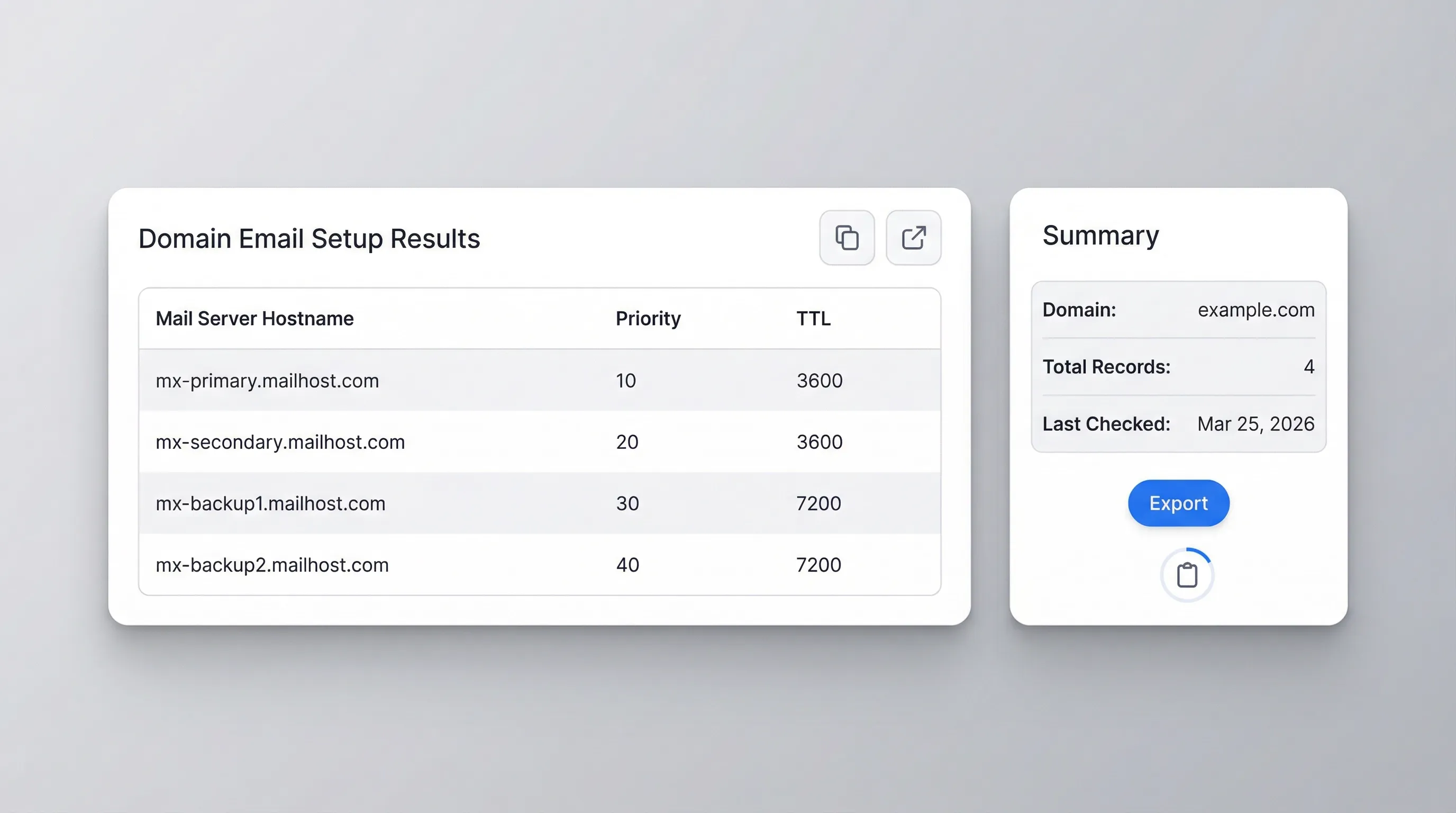
STEP 3Click the Lookup MX Records ButtonClick the Lookup MX Records button. Thunderbit will query DNS servers and return a table with Mail Server Hostname, Priority, and TTL values for the domain. Review the results, then copy or export them to your preferred workflow for email configuration checks or troubleshooting.

Learn how to look up MX records for any domain

Look Up Mail Server Records
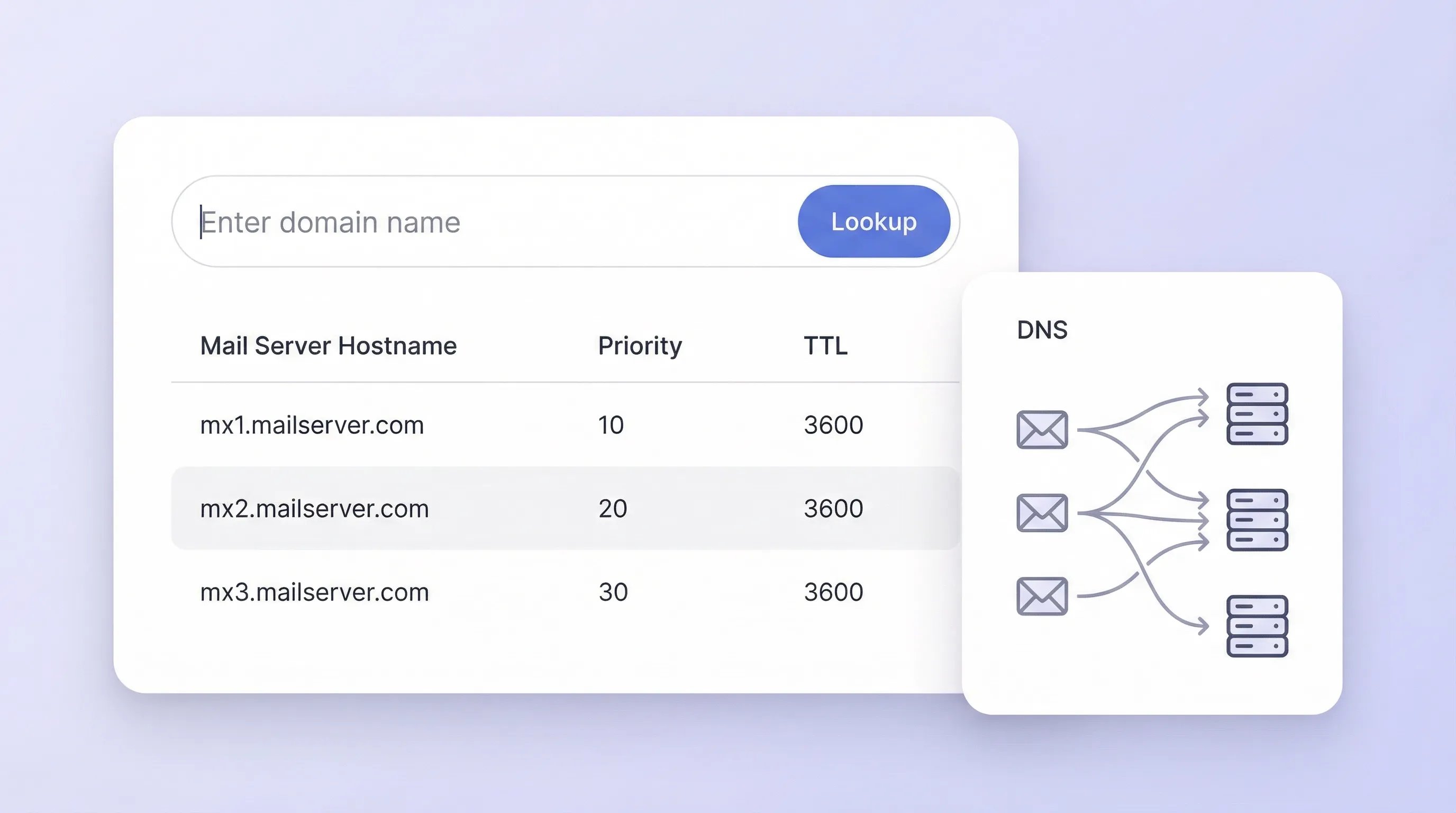
The MX Record Lookup tool checks a domain's DNS settings and returns the mail servers responsible for handling email delivery. It shows each server's hostname, priority, and optional TTL value, helping you verify whether a domain is set up correctly for email. This is useful for IT teams, email admins, and support staff who need a quick way to inspect mail routing.
Get Started Free

Check Email Configuration

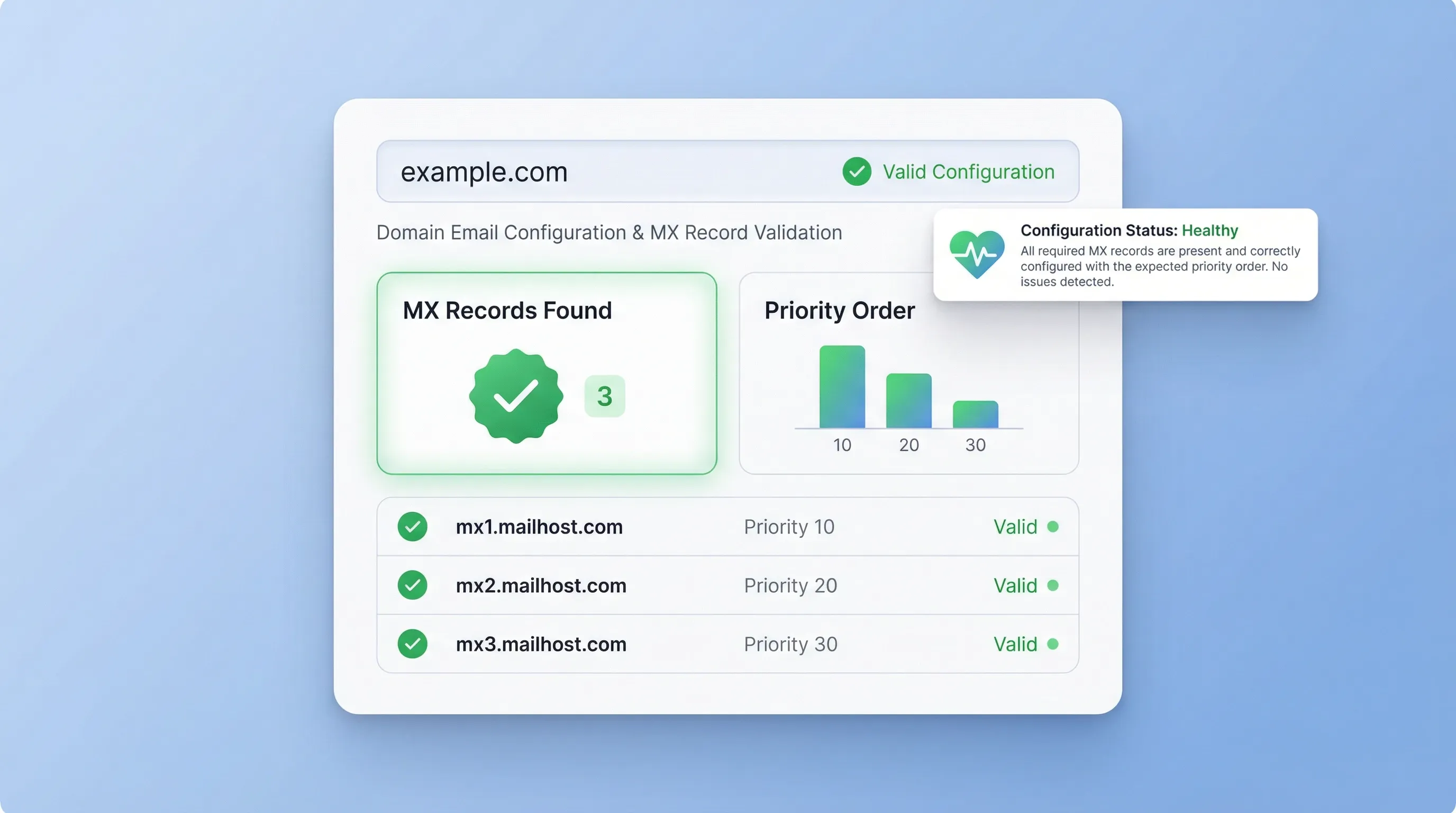
Use this tool to confirm whether a domain has valid MX records before sending mail or troubleshooting delivery problems. By seeing which servers are configured and how they are prioritized, you can spot misconfigurations, missing records, or unexpected routing. It saves time compared with manual DNS checks and helps reduce email issues caused by incorrect domain setup.
Get Started Free

Review Domain Email Setup

Once the lookup is complete, the results are shown in a table with Mail Server Hostname, Priority, and TTL. This makes it easy to compare records, copy the details into reports, or share them with teammates. The structured output helps you document domain email settings and keep troubleshooting notes organized for future reference.
Get Started Free

Support Troubleshooting Workflows

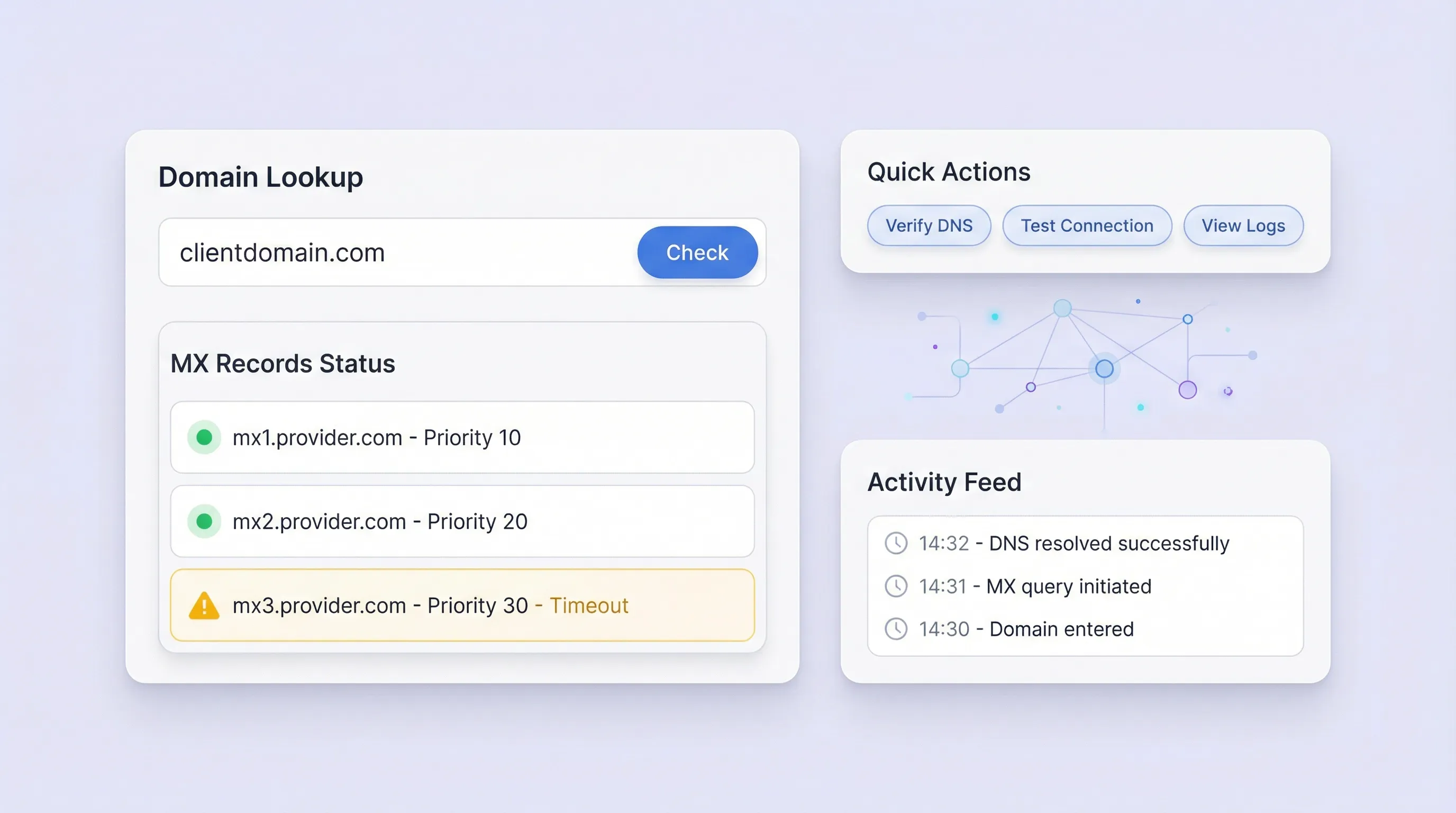
MX lookups are especially useful for support, infrastructure, and operations teams handling email delivery problems, domain onboarding, or DNS verification. Instead of checking records one by one in a DNS console, you can enter a domain and review the mail routing details in one place. That makes it easier to validate configurations and resolve email-related issues faster.
Get Started Free

What users say about Thunderbit

Taryn W.Growth Strategist@Thunderbit changed how I run competitor research. I click 'AI Suggest Fields,' and it builds a clean table across paginated results—no coding, no CSS. Huge time-saver when analyzing product data from long-tail marketplaces.
Miles T.Sales Development ConsultantI use Thunderbit to grab emails and phone numbers from directories. It extracts clean contact info in one click, and exporting to Sheets or Notion takes seconds. No extra setup, no coding—just usable data ready to work with.
Rhea C.E-commerce AnalystThunderbit helps me monitor SKU data across multiple pages. I scrape the listings, then use Subpage Scraping to pull full product specs, pricing, reviews, and stock. The AI organizes everything into columns I define.
Cassian B.Real Estate AdvisorThunderbit's Scheduled Scraper makes real estate tracking easier. I describe the interval in plain English, and it automatically pulls updated listings, prices, and links without touching the setup again. Simple and very practical.
Dorian B.Content & SEO SpecialistI use Thunderbit's Field AI Prompts to clean and tag scraped blog content. It extracts titles, authors, and even suggests categories. Works great across dynamic sites and subpages—perfect for building structured SEO datasets.
Lina K.Marketplace Operations LeadWe track SKUs from niche stores using Thunderbit. Cloud Scraping handles 50 pages at a time, and for login-required sites, we switch to browser mode. It’s fast, flexible, and doesn’t need ongoing maintenance or manual edits.
Jorge F.Inbound Sales ManagerThunderbit’s AI Autofill is a lifesaver. After scraping contact info, I use it to fill lead forms directly in my browser. I just select the tab, and it fills everything using the scraped row. No manual input needed.
Alina D.Freelance ResearcherI rely on Thunderbit for extracting data from PDFs, image-based sites, and infinite scroll pages. It handles messy formats with AI and delivers ready-to-export tables I can send to Google Sheets or Airtable in seconds.
Taryn W.Growth Strategist@Thunderbit changed how I run competitor research. I click 'AI Suggest Fields,' and it builds a clean table across paginated results—no coding, no CSS. Huge time-saver when analyzing product data from long-tail marketplaces.
Miles T.Sales Development ConsultantI use Thunderbit to grab emails and phone numbers from directories. It extracts clean contact info in one click, and exporting to Sheets or Notion takes seconds. No extra setup, no coding—just usable data ready to work with.
Rhea C.E-commerce AnalystThunderbit helps me monitor SKU data across multiple pages. I scrape the listings, then use Subpage Scraping to pull full product specs, pricing, reviews, and stock. The AI organizes everything into columns I define.
Cassian B.Real Estate AdvisorThunderbit's Scheduled Scraper makes real estate tracking easier. I describe the interval in plain English, and it automatically pulls updated listings, prices, and links without touching the setup again. Simple and very practical.
Dorian B.Content & SEO SpecialistI use Thunderbit's Field AI Prompts to clean and tag scraped blog content. It extracts titles, authors, and even suggests categories. Works great across dynamic sites and subpages—perfect for building structured SEO datasets.
Lina K.Marketplace Operations LeadWe track SKUs from niche stores using Thunderbit. Cloud Scraping handles 50 pages at a time, and for login-required sites, we switch to browser mode. It’s fast, flexible, and doesn’t need ongoing maintenance or manual edits.
Jorge F.Inbound Sales ManagerThunderbit’s AI Autofill is a lifesaver. After scraping contact info, I use it to fill lead forms directly in my browser. I just select the tab, and it fills everything using the scraped row. No manual input needed.
Alina D.Freelance ResearcherI rely on Thunderbit for extracting data from PDFs, image-based sites, and infinite scroll pages. It handles messy formats with AI and delivers ready-to-export tables I can send to Google Sheets or Airtable in seconds.

Frequently Asked Questions

Extract Data using AI
Easily transfer data to Google Sheets, Airtable, or Notion
Chrome Store Rating
PRODUCT HUNT#1 Product of the Week