कामकाज की दुनिया पहले कभी इतनी जुड़ी हुई—और इतनी जटिल—नहीं थी। जैसे-जैसे हम 2026 की ओर बढ़ रहे हैं, collaboration tools हर टीम की डिजिटल रीढ़ बन गए हैं, चाहे वह तेज़ी से बढ़ता स्टार्टअप हो या बड़ा वैश्विक एंटरप्राइज़। मैंने इस स्पेस को साधारण chat apps से लेकर ऐसे उन्नत, AI-संचालित platforms तक बदलते देखा है, जो teamwork को सिर्फ संभव ही नहीं, बल्कि हर time zone और work model में और ज़्यादा productive बनाने का वादा करते हैं। और सच कहें तो: जब 93% enterprises किसी न किसी unified communications और collaboration software का इस्तेमाल कर रहे हैं, तो अगर आपकी टीम अब भी email threads और sticky notes पर टिकी है, तो मानो आप कबूतरों से संदेश भेज रहे हों।
लेकिन असली बात यह है: इन tools के पीछे का data खुद tools जितना ही अहम है। चाहे आप sales leader हों, ops manager हों, या वह व्यक्ति हों जिसे सब लोग तब ढूँढ़ते हैं जब “Zoom काम नहीं कर रहा,” collaboration tools statistics और usage data को समझना smarter decisions, खुश टीमों, और crowded market में असली बढ़त की कुंजी है। तो चलिए उन numbers, trends, और insights में उतरते हैं जो team communication के भविष्य को आकार दे रहे हैं—और देखते हैं कि Thunderbit (मेरी team का AI web scraper) कैसे businesses को unstructured feedback को actionable strategy में बदलने में मदद कर रहा है।
AI Web Scraping के लिए Thunderbit आज़माएँ
एक नज़र में Top Collaboration Tools Statistics
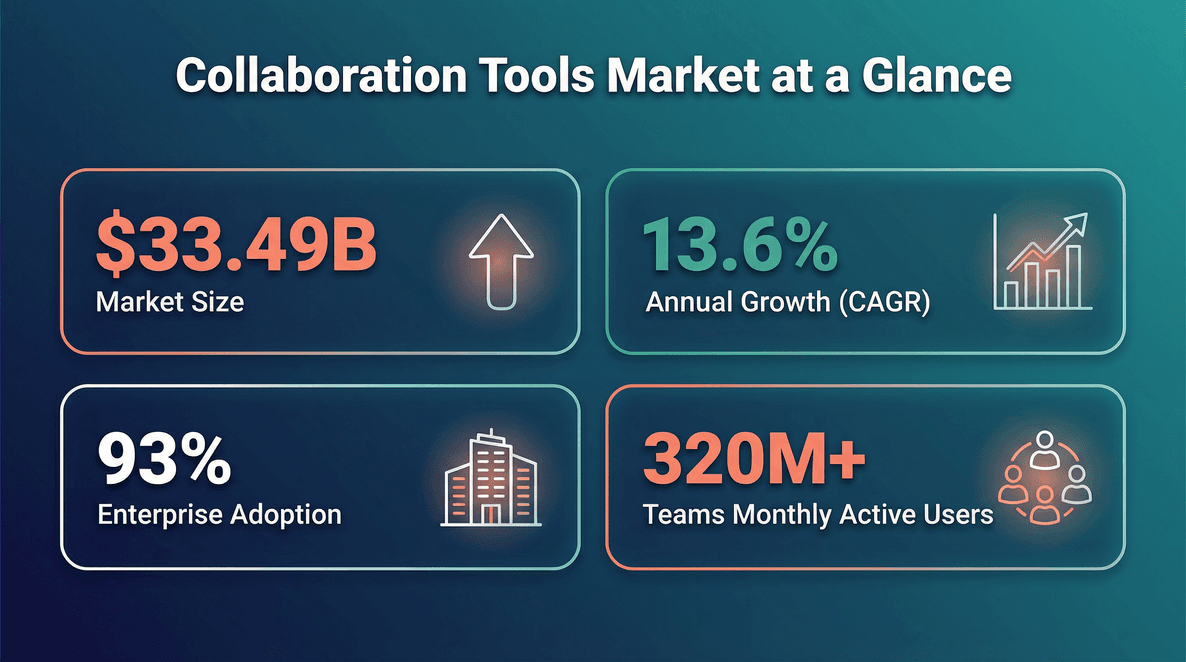
शुरुआत करते हैं सबसे अहम आँकड़ों से। 2026 के लिए आपको जो सबसे ज़रूरी collaboration tools statistics और usage data जानना चाहिए, वे यहाँ हैं:
| विषय | आँकड़ा | स्रोत |
|---|---|---|
| 2026 Market Size | $33.49B team collaboration software market (2026) | GII Research |
| 2026 Growth Rate | 13.6% CAGR (2025→2026) | GII Research |
| Enterprise Adoption | 93% of enterprises use UC & collaboration apps | IDC |
| Videoconferencing Adoption | 90% of enterprises use videoconferencing systems | IDC |
| Platform Scale | 320M+ monthly active users on Microsoft Teams | Microsoft |
| Tech Gap | 75% of employees say remote-work tools need improvement | Zoom |
| Investment Pressure | 72% say org needs new tools/tech for remote work | Zoom |
| After-Hours Collaboration | Chats outside 9-to-5 up 15% YoY; avg 58 messages/user before/after hours | Microsoft |
| Late Meetings | Meetings after 8 p.m. up 16% YoY | Microsoft |
| Cross–Time-Zone Work | 30% of meetings span multiple time zones (up 8 pts since 2021) | Microsoft |
| Peer Reviews’ Role | 31% of buyers say public review sites are most consulted info source | G2 |
| Trust Breakdown | 9% cite “vendor websites are unreliable” as biggest purchase obstacle | G2 |
ये आँकड़े सिर्फ trivia नहीं हैं—ये इस बात की pulse हैं कि टीमें कैसे काम कर रही हैं, क्या काम कर रहा है (और क्या नहीं), और अगला बड़ा मौका कहाँ छिपा है।
Collaboration Tools Market Trends: 2026 में Growth को क्या चला रहा है
अब stats के पीछे छिपे trends पर नज़र डालते हैं। collaboration software market तेज़ी से बढ़ रहा है, और 2026 में यह $33.49 billion तक पहुँच रहा है, वह भी 13.6% annual growth rate पर। लेकिन इस उछाल की वजह क्या है?
पहला कारण है stack consolidation और AI augmentation। आधे से ज़्यादा organizations (51%) कहते हैं कि वे जितने collaboration और communications providers इस्तेमाल करते हैं, उन्हें कम करना “extremely important” है (IDC). टीमें अब कम, लेकिन ज़्यादा ताकतवर tools चाहती हैं जो chat, meetings, file sharing, और project management को एक ही जगह जोड़ दें।
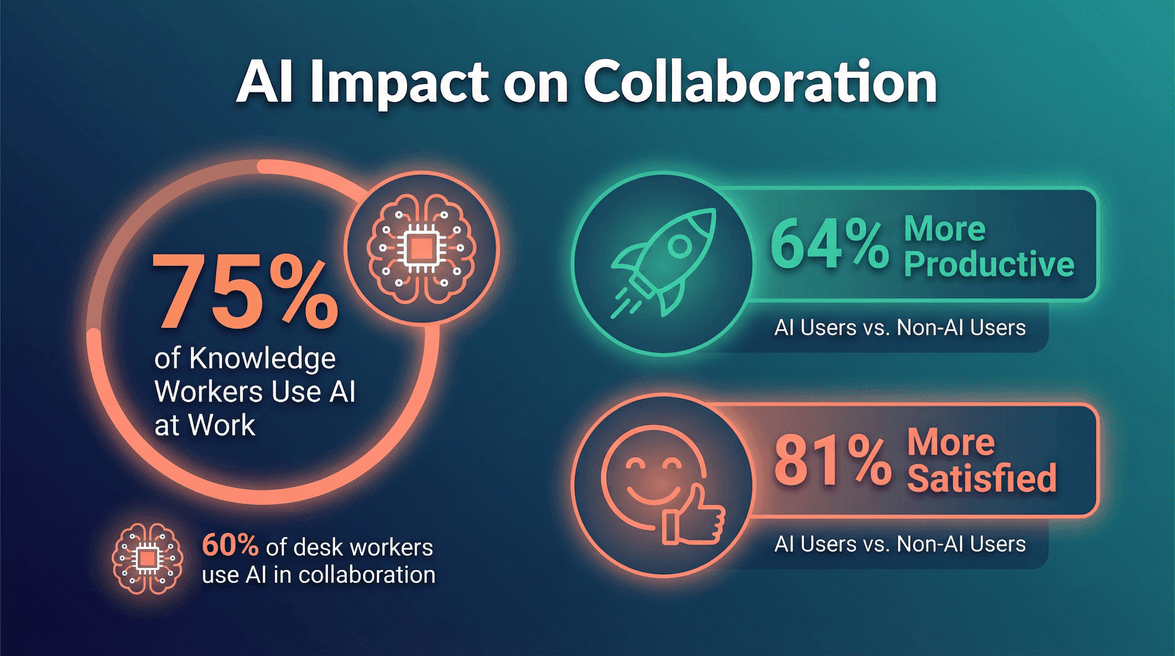
दूसरा, AI हर जगह है। automated meeting summaries से लेकर real-time translation तक, AI-powered features की मांग तेज़ी से बढ़ रही है। Microsoft के Work Trend Index के अनुसार 75% knowledge workers काम के दौरान AI का उपयोग करते हैं, और 78% अपने खुद के AI tools (BYOAI) लाते हैं। यानी “shadow AI” काफी फैल चुका है—productivity के लिए बढ़िया, लेकिन IT governance के लिए चुनौती।
तीसरा, platform ecosystem विस्फोटक रूप से बढ़ रहा है। Microsoft Teams में अब 2,000 से ज़्यादा apps हैं, और Adobe, Atlassian, तथा Workday के collaborative apps में से हर एक के Teams के भीतर एक million से ज़्यादा monthly active users हैं। मतलब साफ़ है: buyers को सिर्फ एक और chat app नहीं, बल्कि “hub + extensions” चाहिए।
और आखिर में, user feedback roadmap को shape कर रहा है। 31% buyers public review sites को अपनी सबसे भरोसेमंद information source मानते हैं (2021 के 13% से ऊपर), इसलिए vendors असली दुनिया की problems—reliability, integrations, notification overload, और admin headaches—को ठीक करने की दौड़ में हैं।
Team Communication Tools Data: 2026 में यह पहले से भी ज़्यादा क्यों महत्वपूर्ण है
तो 2026 में team communication tools data इतना अहम क्यों है? क्योंकि काम करने का तरीका—और यह मापने का तरीका कि क्या काम कर रहा है—मूल रूप से बदल चुका है।
उदाहरण के लिए sales teams को लें। यह जान लेना काफी नहीं है कि आपके reps “Slack इस्तेमाल कर रहे हैं।” असली सवाल है कैसे इस्तेमाल कर रहे हैं: क्या वे deals पर real time में सहयोग कर रहे हैं? क्या वे CRM और document tools के साथ integrations का फायदा उठा रहे हैं? क्या वे notifications में डूब रहे हैं, या सच में ज़्यादा deals बंद कर रहे हैं?
यहीं data काम आता है। social platforms, internal chat logs, या public reviews से user behavior data निकालकर टीमें workflow design से लेकर tool configuration तक सब कुछ optimize कर सकती हैं। Thunderbit में मैंने teams को हमारे AI Web Scraper का इस्तेमाल करते देखा है, जिससे वे G2, Trustpilot, या Reddit से हज़ारों user comments खींचकर यह समझते हैं कि कौन-सी features satisfaction बढ़ाती हैं और कौन-सी frustration। यह 24/7 चलने वाले focus group जैसा है—बस donuts की ज़रूरत नहीं।
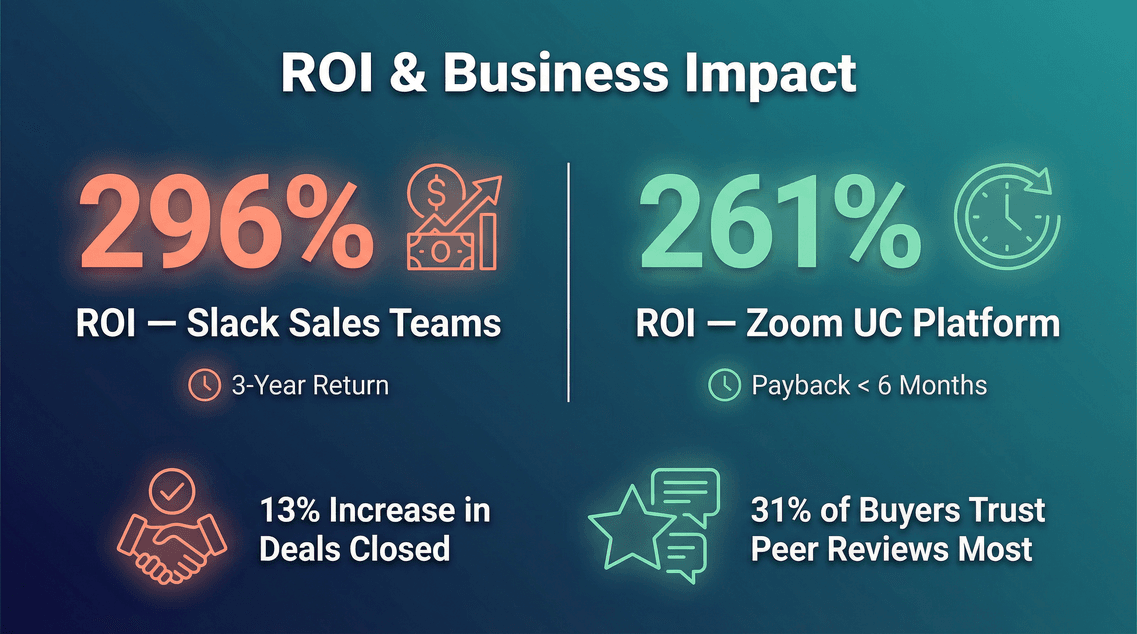
और इसका असर real है। Slack TEI study के अनुसार, integrated collaboration tools इस्तेमाल करने वाली sales teams ने तीन वर्षों में 296% ROI देखा, और deals बंद होने में 13% की बढ़ोतरी हुई। यह कोई nice-to-have नहीं—यह competitive advantage है।
Hybrid और Remote Work Trends: Collaboration Software क्यों ज़रूरी है
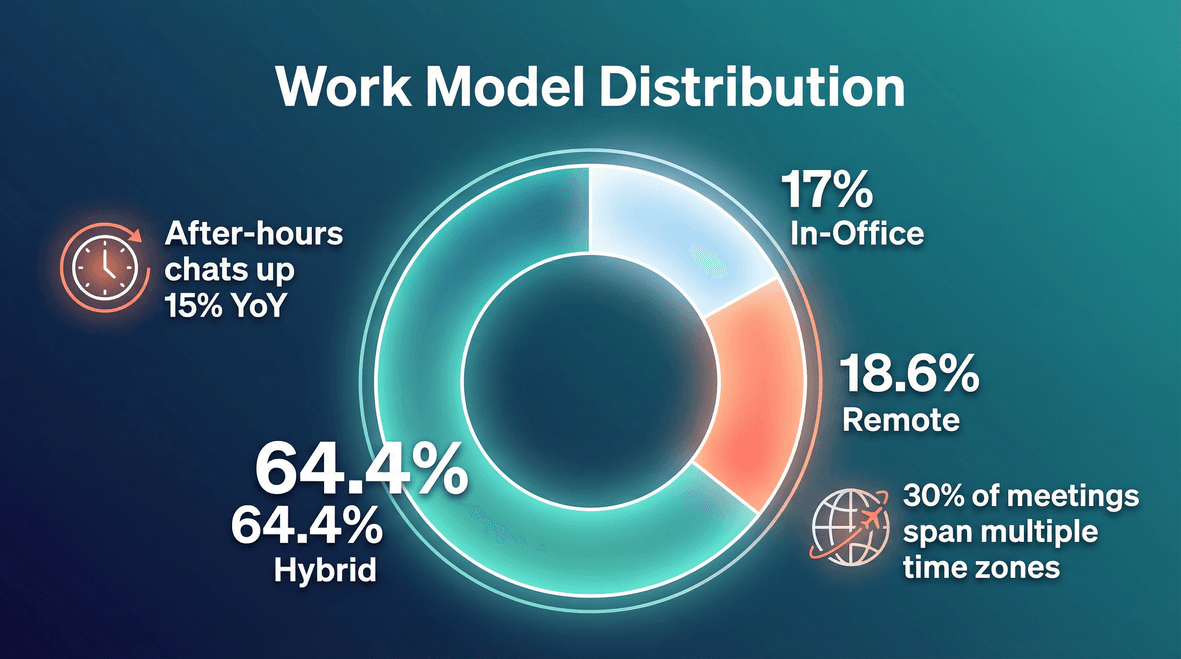
distributed और hybrid work के बढ़ने ने collaboration software को helpful से essential बना दिया है। 2026 में, 64.4% organizations hybrid हैं, 17% पूरी तरह office-based हैं, और 18.6% पूरी तरह remote हैं (Zoom). और हमारे tools को भी उसी रफ्तार से evolve होना पड़ता है।
Hybrid और remote teams हर चीज़ के लिए collaboration tools पर निर्भर हैं: meetings, project management, document sharing, यहाँ तक कि casual पानी-कूलर वाली बातचीत के लिए भी। लेकिन चुनौतियाँ भी असली हैं—after-hours chats साल-दर-साल 15% बढ़े हैं, और 30% meetings अब multiple time zones में फैली होती हैं (Microsoft). इसका मतलब है कि async messaging, automated summaries, और timezone-aware scheduling जैसे features अब सिर्फ अच्छा लगने वाले नहीं, बल्कि ज़रूरी हैं।
Review data को collaboration insights में बदलें Get Started Free
यहीं Thunderbit काम आता है। G2 और Trustpilot जैसे platforms से review data को scrape और analyze करके टीमें देख सकती हैं कि कौन-से tools distributed teams के लिए सच में काम करते हैं। उदाहरण के लिए, आपको APAC regions के users meeting times को लेकर शिकायत करते मिल सकते हैं, जबकि North American users integration gaps पर ज़्यादा ध्यान देते हैं। Thunderbit के साथ आप इस unstructured feedback को actionable insights में बदल सकते हैं—ताकि आप सही tool चुनें, उसे अपनी team के लिए configure करें, और vendor negotiations तक को बेहतर बना सकें।
Unstructured Feedback और Reviews: Collaboration Data को Insights में बदलना
अब बात करते हैं unstructured data की—collaboration tool feedback की जंगली दुनिया। user reviews, forum posts, और social media threads में insights भरी होती हैं, लेकिन इन्हें manually समझना लगभग नामुमकिन है।
इसीलिए मैं Thunderbit में जो बना रहे हैं, उसके बारे में इतना उत्साहित हूँ। हमारा AI Web Scraper G2, Trustpilot, या niche SaaS forums जैसी sites से हज़ारों reviews निकाल, संरचित कर, और analyze कर सकता है। आप reviewer role, company size, use case, pros/cons, और AI feature mentions जैसे fields निकाल सकते हैं।
मुझे एक छोटा workflow बहुत पसंद है:
- अपनी shortlist की tools के लिए reviews scrape करें (जैसे Slack, Teams, Zoom, Notion)।
- Fields को normalize करें: हर review को top pros, cons, और “deal-breaker” phrases के लिए tag करें।
- थीम के आधार पर complaint frequency chart करें (जैसे notification overload, admin pain, integration gaps)।
- role (IT admin बनाम end user) या company size के अनुसार sentiment segment करें।
- trends पकड़ें: क्या AI features satisfaction बढ़ा रही हैं? क्या कुछ pain points सिर्फ remote teams में दिखते हैं?
यह सिर्फ academic exercise नहीं है—31% buyers अब vendor websites से ज़्यादा peer reviews पर भरोसा करते हैं. अगर आप इस data को mine नहीं कर रहे, तो आप बातचीत से बाहर रह जा रहे हैं।
Collaboration Tools Strategy: Data का इस्तेमाल करके Product और Market Decisions बनाना
आगे देखते हुए, collaboration software market के असली विजेता वे होंगे जो data को strategy में बदलेंगे। usage data और user feedback का विश्लेषण करके कंपनियाँ market gaps पहचान सकती हैं, product improvements के मौके ढूँढ़ सकती हैं, और अपना go-to-market playbook भी बना सकती हैं।
उदाहरण के लिए, अगर आपको लगातार यह शिकायत मिले कि आपकी tool category में “search/knowledge retrieval” कमजोर है, तो यह roadmap opportunity है। अगर AI-powered meeting summaries को सबसे बड़ी strength बताया जा रहा है, तो उस feature पर और ज़ोर दीजिए। और अगर competitors खराब integrations की वजह से आलोचना झेल रहे हैं, तो आपके लिए चमकने का मौका है।
Thunderbit इस तरह की competitive intelligence को सिर्फ possible ही नहीं, बल्कि practical बनाता है। Sales और ops teams review data को scrape, categorize, और visualize कर सकती हैं—noise को signal में, और signal को action में बदलते हुए।
Collaboration Software Usage Data: Adoption, Frequency, और Preferences
तो टीमें वास्तव में इन tools का इस्तेमाल कितनी बार करती हैं? और कौन-से features सबसे ज़्यादा मायने रखते हैं?
- Daily/Weekly Usage: Microsoft Teams के 320 million से ज़्यादा monthly active users हैं, और Slack’s Workforce Index दिखाता है कि अब 60% desk workers अपनी collaboration workflows में AI का उपयोग करते हैं।
- Feature Preferences: 2026 में सबसे ज़्यादा माँगे जाने वाले features कौन-से हैं? AI-powered meeting recaps, real-time translation, CRM/project tools के साथ deep integrations, और मजबूत mobile experiences (IDC).
- Usage by Industry/Region: Tech और professional services adoption में आगे हैं, लेकिन regulated industries (finance, healthcare) भी तेज़ी से बढ़ रही हैं—हालाँकि वहाँ compliance और governance की ज़रूरतें ज़्यादा सख्त होती हैं। APAC teams async features और translation को प्राथमिकता देती हैं, जबकि North America integrations और workflow automation पर ज़्यादा ध्यान देती है (Capterra).
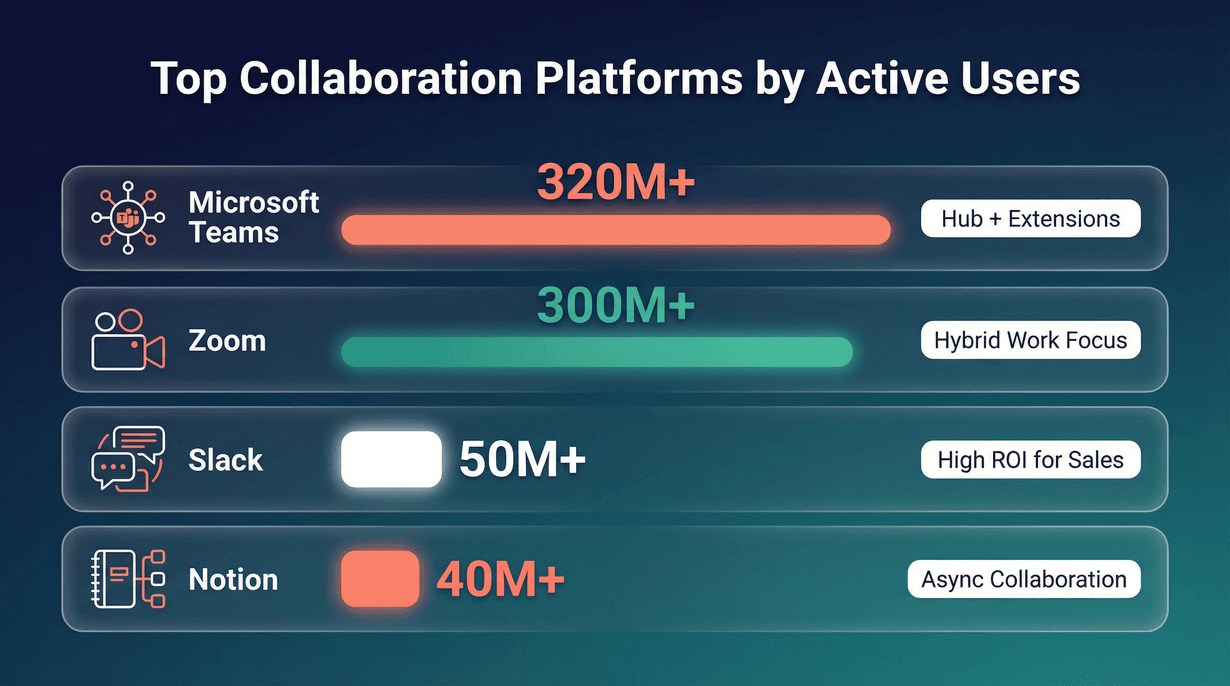
संदर्भ के लिए यहाँ एक quick table है:
| Tool | Daily Active Users | Most Popular Features | Notable Trends |
|---|---|---|---|
| Microsoft Teams | 320M+ | Chat, meetings, file sharing, AI recaps | Hub + extensions model, rapid AI adoption |
| Slack | 50M+ | Messaging, integrations, workflow builder | High ROI for sales/service teams, AI agents |
| Zoom | 300M+ | Video, webinars, phone, whiteboard | Hybrid work focus, AI-powered meeting tools |
| Notion | 40M+ | Docs, wikis, project mgmt, AI | Knowledge management, async collaboration |
Team Communication Tools Data: Productivity और Engagement पर असर
अब असली सवाल पर आते हैं: क्या ये tools वाकई फर्क डालते हैं?
- ROI: sales teams के लिए Slack ने तीन वर्षों में 296% ROI दिया, और Zoom के unified communications platform ने 261% ROI दिखाया, जिसकी payback अवधि छह महीने से भी कम रही।
- Productivity Gains: Zoom users ने प्रति employee प्रति सप्ताह 52 मिनट तक अतिरिक्त productivity की रिपोर्ट की, और Slack sales teams ने 13% अधिक deals बंद कीं।
- Engagement: collaboration tools में daily AI users, non-AI users की तुलना में 64% अधिक productive और 81% अधिक satisfied हैं।
संदेश साफ़ है: सही tools, सही तरीके से इस्तेमाल किए जाएँ, तो वे असली business outcomes देते हैं।
Work Model के अनुसार Collaboration Tools Data: Remote, Hybrid, और In-Office
काम करने का model बहुत मायने रखता है। collaboration software usage data का breakdown कुछ इस तरह है:
- Hybrid Teams: 64.4% organizations hybrid हैं, और कर्मचारी अपना लगभग 46% सप्ताह office में बिताते हैं (Gallup). इन teams को ऐसे tools चाहिए जो synchronous और asynchronous दोनों कामों का support करें, device switching आसान बनाएं, और mobile/web पर एक जैसा अनुभव दें।
- Remote Teams: async messaging, timezone fairness, और AI-powered summaries को प्राथमिकता देती हैं। खास तौर पर APAC teams meeting time की चुनौतियों का ज़िक्र करती हैं और post-meeting recaps पर बहुत निर्भर रहती हैं (Capterra).
- In-Office Teams: फिर भी collaboration tools का इस्तेमाल करती हैं, लेकिन अक्सर meeting room hardware, whiteboarding, और on-prem systems के साथ integrations पर ध्यान देती हैं।
चाहे model कोई भी हो, trend साफ़ है: productivity और engagement के लिए collaboration tools अब बुनियादी ज़रूरत बन चुके हैं।
Collaboration Tools Statistics में Regional और Industry Differences
Collaboration tools हर जगह एक जैसे काम नहीं करते। डेटा में अंतर कुछ यूँ दिखता है:
- Region: North America platform adoption और integration depth में आगे है। APAC translation, async features, और timezone fairness को प्राथमिकता देता है। EMEA में अक्सर data privacy और compliance की ज़्यादा सख्त ज़रूरतें होती हैं (Capterra).
- Industry: Tech, professional services, और education शुरुआती adopters हैं। Finance और healthcare भी आगे बढ़ रहे हैं, लेकिन security और governance पर खास ध्यान दे रहे हैं। Manufacturing और logistics teams frontline coordination और incident response के लिए collaboration tools का तेज़ी से उपयोग कर रही हैं।
इन बारीकियों को समझना buyers और vendors दोनों के लिए अहम है।
Key Takeaways: 2026 के Collaboration Tools Data का आपकी टीम के लिए क्या मतलब है
आइए सबसे actionable insights के साथ समापन करें:
- Adoption लगभग सर्वव्यापी है: 93% enterprises collaboration tools का उपयोग करती हैं, और usage intensity लगातार बढ़ रही है।
- AI नया normal है: अगर आपके tool में AI-powered features नहीं हैं, तो आप पीछे रह गए हैं।
- Peer feedback मायने रखता है: 31% buyers review sites पर सबसे ज़्यादा भरोसा करते हैं—स्मार्ट निर्णयों के लिए इस data को scrape और analyze करें।
- Hybrid यहीं रहने वाला है: अपने workflows और tool stack को केवल “remote” या “in-office” के लिए नहीं, बल्कि flexibility के लिए डिज़ाइन करें।
- Thunderbit मदद कर सकता है: Thunderbit का उपयोग करके unstructured feedback को extract, structure, और analyze करें—और reviews को असली competitive advantage में बदलें।
Collaboration Tools Statistics & Usage Data के बारे में FAQs
1. 2026 में collaboration tools market कितना बड़ा होगा?
Global team collaboration software market के 2026 में $33.49 billion तक पहुँचने का अनुमान है, और यह 13.6% CAGR से बढ़ रहा है।
2. Businesses द्वारा collaboration tools का adoption कितना व्यापक है?
93% enterprises unified communications और collaboration apps का उपयोग करती हैं, और 90% videoconferencing systems इस्तेमाल करती हैं।
3. Collaboration tools productivity और ROI पर क्या असर डालते हैं?
Studies में 261% से 296% तक ROI तीन वर्षों में देखा गया है, साथ ही productivity, deal velocity, और employee satisfaction में उल्लेखनीय बढ़ोतरी हुई है।
4. 2026 में reviews से मिलने वाला unstructured feedback इतना महत्वपूर्ण क्यों है?
31% buyers अब सबसे पहले public review sites देखते हैं, इसलिए peer feedback tool selection, configuration, और competitive intelligence का एक अहम स्रोत बन गया है।
5. Thunderbit collaboration tools data को समझने में teams की कैसे मदद करता है?
Thunderbit teams को review sites, forums, और social media से unstructured data scrape और analyze करने की सुविधा देता है—जिससे raw feedback structured insights में बदल जाता है और decision ज्यादा smart बनते हैं।
आगे पढ़ें और Resources
- Thunderbit Official Website
- Thunderbit Chrome Extension Download Page
- Thunderbit Blog
- IDC MarketScape: Worldwide Unified Communications and Collaboration Platforms 2024
- G2 2024 Buyer Behavior Report
- Microsoft Teams FY24 Q1 Earnings
- Zoom Hybrid Work Trends
- Capterra Global Team Collaboration Survey
- Slack TEI Study for Sales Teams
- Zoom Total Economic Impact Report
- Salesforce Slack Workforce Index
- Gartner Multimodal Enterprise Apps Forecast
अगर आप collaboration tools data को अपनी टीम की अगली बड़ी बढ़त में बदलने के लिए तैयार हैं, तो Thunderbit आज़माइए—और 2026 में teamwork को सिर्फ व्यस्त नहीं, बल्कि ज़्यादा स्मार्ट बनाइए।
Collaboration Tools Data का विश्लेषण करने के लिए Thunderbit आज़माएँ Get Started Free