
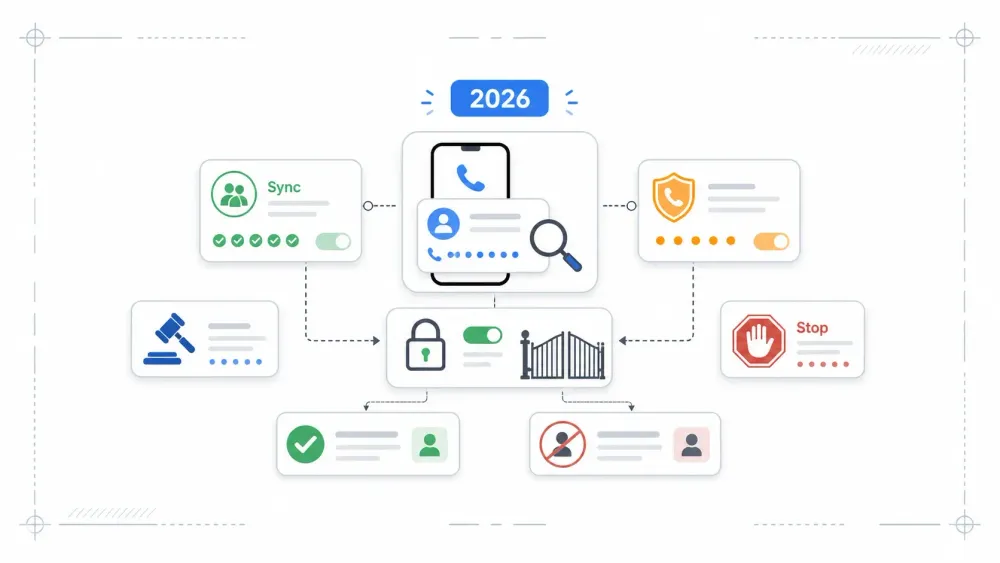
If you landed here, you probably tried what every other guide on Google told you to do — pasted a phone number into Facebook's search bar, opened Instagram and waited for a magical lookup, fired up Truecaller and hoped for a full social profile — and none of it worked. You're not doing anything wrong. The methods most articles still recommend stopped working between 2019 and 2026. The articles just didn't update.
At Thunderbit, my team spends a lot of time looking at how web data extraction, AI workflows, and browser automation actually behave against real platforms. That makes me less patient than most people with "type the number in the search bar" advice that hasn't been true in five years.
This page is my attempt to write the honest 2026 version: what each platform actually allows today, with the official source, how to think about why you're searching before you pick a tool, and the obsolete tricks I think you should stop trying.
The Quick Answer
If you only have 60 seconds:
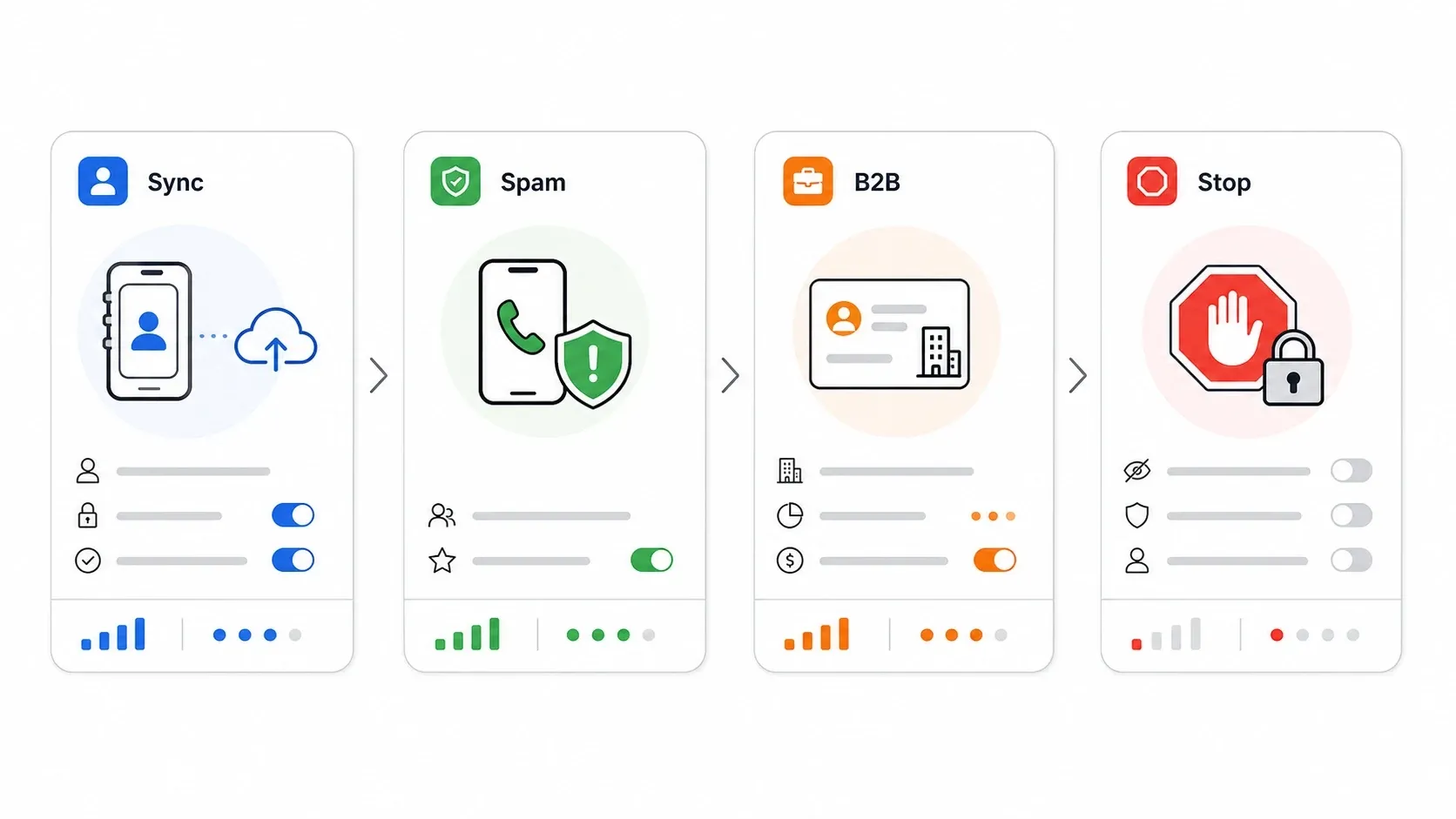
- Searching for an old friend? Save the number into your phone's contacts, then use the platform-native contact-sync or friend-discovery flow on one or two relevant apps. This is the only "free + native" method that still works in 2026, and even then only if the target hasn't opted out of discoverability.
- Vetting a marketplace counterparty or unknown caller? Use a carrier-side spam database (Truecaller, Hiya, your carrier's app), not a social-account finder.
- Doing B2B prospect enrichment? SignalHire, RocketReach, or Apollo are the only mainstream category designed for this, but use them only for purposes their terms and privacy law allow. Do not use reverse-lookup output for hiring, tenant screening, credit, or insurance decisions.
- Investigating fraud or doing journalism? Use a counsel-approved public-source workflow, licensed sources where appropriate, manual verification, and a documented legal basis. AI can help organize lawfully collected material; it should not identify, enrich, profile, or track a private person for you.
- Trying to identify someone who is avoiding discovery? Stop. In many jurisdictions this crosses from "research" into territory covered by anti-stalking, harassment, and data-protection law. No tool will reliably surface a person who has tightened their privacy settings, and attempting to route around those settings is the wrong legal posture.
The rest of this article is the long version of why — and what changed.
The 2020 Playbook Is Dead. Here's What Actually Works in 2026.
The "find someone by phone number" genre on Google is stuck in 2019. Half the listicles still tell you to paste a number into Facebook's search bar. That stopped working in September 2019, when Facebook patched the contact-importer enumeration after the abuse came to light. The patch wasn't optional — it's what Meta later cited when the Irish Data Protection Commission fined them €265 million in November 2022 specifically because the old Facebook Search, Messenger Contact Importer, and Instagram Contact Importer had enabled phone-number-to-profile lookups at scale.
In other words: the trick everyone is still teaching you is the exact trick that triggered the biggest privacy fine of the decade. It's not coming back.
Across the major platforms — Instagram, Facebook, X, TikTok, Snapchat, WhatsApp, Telegram, Signal, LINE, Viber, Discord, LinkedIn — there is no longer a single "type a phone number, get a profile" search box that works unless the target's privacy settings allow discovery. Some platforms removed the feature outright. Some left a setting on, but made discovery narrower and less visible. Some require contact sync, mutual context, or both. The net effect is the same: the era of phone-as-public-ID is over.
The rest of this article is the practical map of what survived, and what to use instead.
2019 → 2026: How Phone-Based Discovery Got Hard
You can read the whole shift as a seven-year arc:
- September 2019 — Facebook patches the contact-importer enumeration vulnerability after researchers and journalists show it can be used to map phone numbers to profiles at scale. Meta's own explainer of the timeline is here.
- April 2021 — A 533-million-record Facebook dataset (including phone numbers, names, locations, and account IDs) resurfaces on a hacking forum. Meta says it came from scraping before the September 2019 contact-importer changes.
- November 2022 — The Irish Data Protection Commission issues a €265 million fine against Meta under GDPR Articles 25(1) and 25(2), naming the three contact-importer features by name. This is the watershed moment for the whole industry: once phone-number enumeration became a nine-figure regulatory problem, platforms had little reason to loosen discovery again.
- October 2023 — California signs the Delete Act (SB 362), creating a one-stop deletion mechanism for data brokers including the reverse-phone-lookup category.
- January & April 2024 — The FTC issues its order against X-Mode / Outlogic, banning the sale of sensitive location data. This chills the wider data-broker market that powers many reverse-lookup services.
- February 2025 — EU AI Act Article 5 prohibition on untargeted scraping of facial images for facial-recognition databases enters into force, making consumer-grade facial-recognition database workflows legally toxic in Europe.
- June 2026 (scheduled) — WhatsApp's business-messaging ecosystem starts preparing for usernames and business-scoped user IDs, another signal that messaging identity is moving away from raw phone numbers.
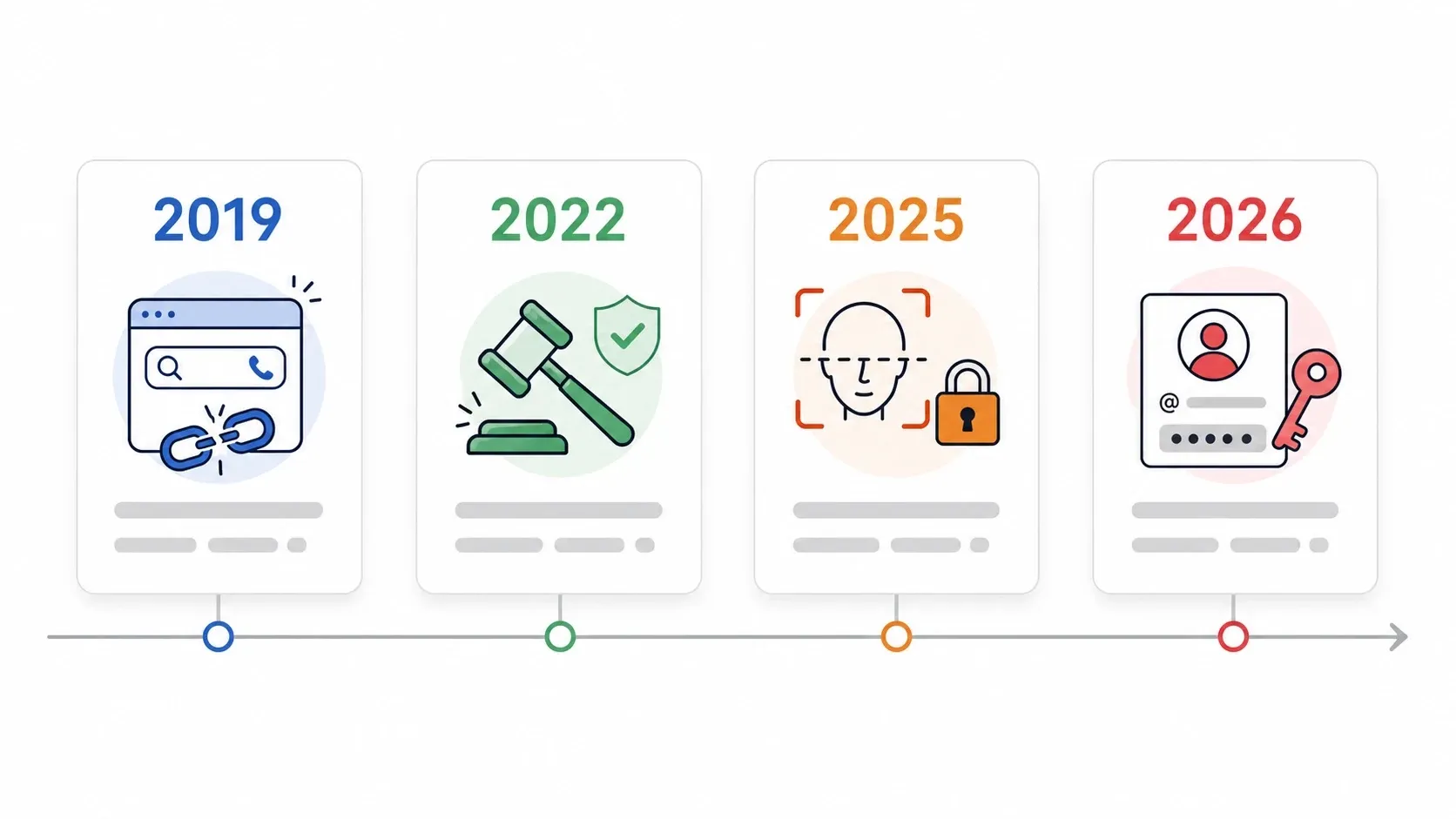
If you put those dates on a wall, the trend is obvious. Every event is a tightening, never a loosening. There's no realistic timeline where "type the phone number in the search bar" comes back.
First: Decide Why You're Searching
The single biggest reason people get frustrated with this whole topic is that they're trying to do five different jobs with the same tool. The job determines the legal frame, the tool category, and the realistic success rate. Be honest about which one is yours.
- (1) Verifying a caller / running a spam check. Use a carrier-side or community spam database. You don't actually need to "find the social profile" — you need to know whether to pick up.
- (2) Reconnecting with someone you actually know. Contact sync on 1–2 platforms is the only native method left, and it works only if the other person has phone discoverability enabled. Reality: this is far less reliable than it was in 2020.
- (3) B2B sales or recruiting outreach. Reverse-contact enrichment tools (SignalHire, Apollo, RocketReach) exist for this category. They all carry FCRA disclaimers — read them — and you cannot use reverse-lookup output for hiring, tenant screening, credit, insurance, or other eligibility decisions under 15 U.S.C. § 1681.
- (4) Journalism, fraud investigation, or other public-interest research. Use a documented, counsel-approved workflow. AI can help organize already-lawful source material, but the identification call belongs to a human working inside a legitimate mandate.
- (5) Vetting a marketplace counterparty. Reverse-lookup aggregator plus a cross-check of the name on the marketplace itself. Low risk if you're confirming a transaction, high risk if you're trying to dox.
Two things you should not be doing, regardless of motive: stalking an ex or unwanted contact (illegal under most US state anti-stalking statutes, e.g., California Penal Code § 646.9), and harassment outreach to a number you obtained without consent. No tool I describe below is a defense if this is what you're up to.
Try This First: The Native Contact-Sync Path
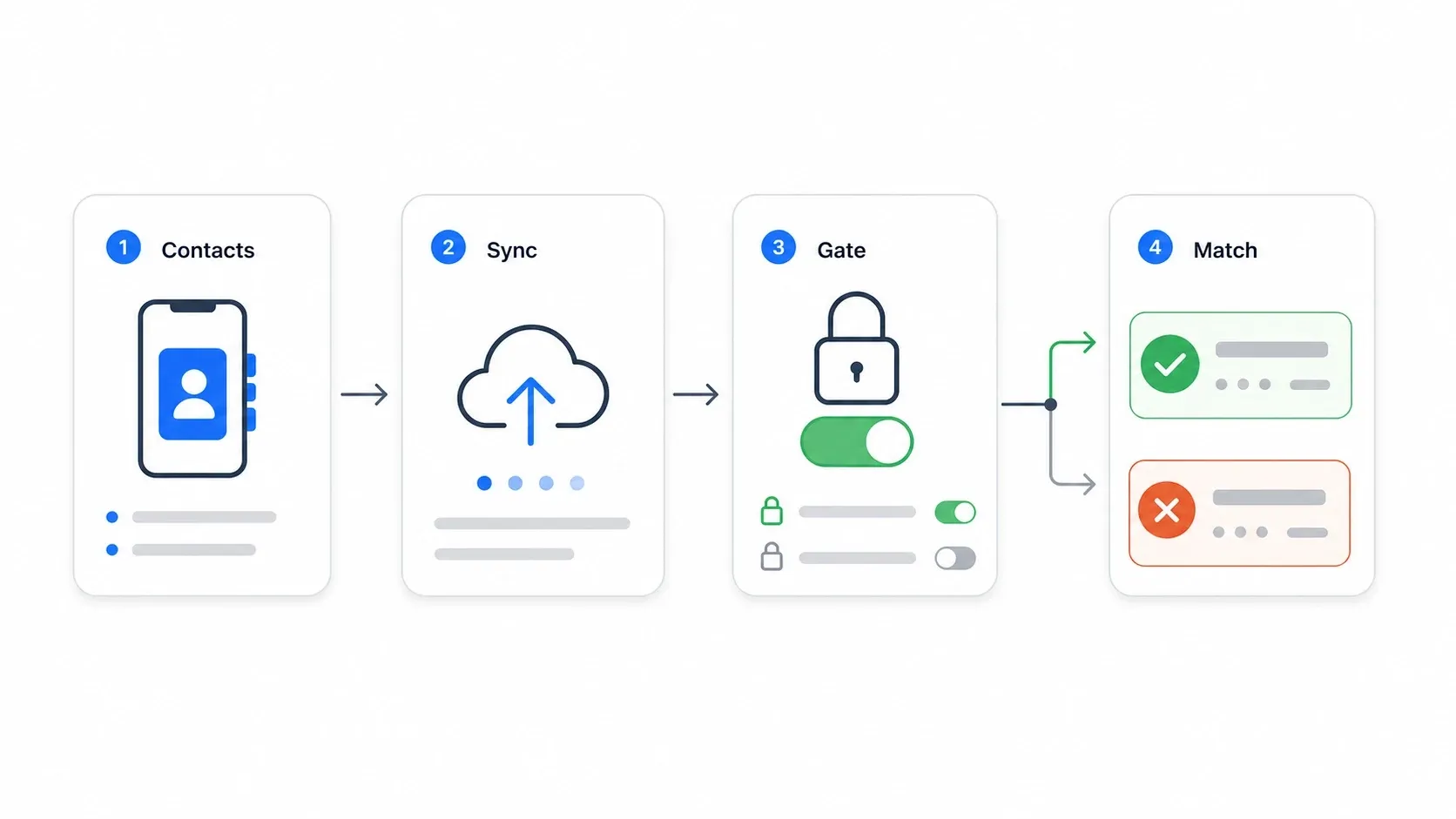
If your goal is reconnecting with someone you already know, this is the cleanest workflow I would try before paying for any reverse-lookup database. It is not magic; it is a permissioned match.
- Save the number as a single contact on your phone.
- Pick one or two platforms where the relationship actually makes sense. For an old classmate, Instagram or TikTok may be reasonable. For a professional contact, LinkedIn is more sensible.
- Use the platform's native contact-sync or friend-discovery flow.
- Treat a match as a lead, not proof. Names, profile photos, and recycled phone numbers can mislead.
- Turn off contact sync and delete uploaded contacts when the platform gives you that control.
The practical version: Instagram, TikTok, Snapchat, and X depend on contact sync plus the target's discoverability settings. Signal may require the person's exact username if they have tightened phone-number discovery. Discord's friend discovery only works when both sides allow the contact-based flow. LINE and Viber remain more contact-list-centered, but they still depend on app settings, region/version rules, and the other person's account choices. If nothing matches after one or two relevant apps, the most likely answer is that the account is not discoverable by phone.
Platform-by-Platform: What Each One Actually Allows in 2026
Here's the long version. Every claim below has an official source link; nothing here is from a third-party SEO blog or "news roundup."
Facebook (Meta)
The "Who can look you up using the phone number you provided?" setting still exists, with options for Everyone / Friends of Friends / Friends. What's different is that the upload-side enumeration that made bulk lookups possible got patched in September 2019, and the privacy posture around phone discovery is much tighter than old listicles assume. Meta's own writeup of the fix is here.
If the target left "Everyone" on, a friend logged into Facebook can still find them by pasting the full number into the search bar. Many users have not left that setting open, which is why the old one-step trick fails so often.
Instagram has no "search by phone" UI. The only path is contact sync: connect your phone book to your account from inside the Accounts Center, and Instagram tries to match people you already have in your contacts to existing Instagram accounts. From their own docs: "When your contact list is connected, it's periodically synced and securely stored on Instagram's servers." You can disconnect and delete previously uploaded contacts at any time.
Practical reality: this works for accounts where the owner has linked a phone number to their account and hasn't opted out of being discoverable. Both conditions need to hold.
X (Twitter)
X has a discoverability settings page controlling whether your phone number is matchable. There's no public phone-search box; the only path is to upload your contacts and let X try to match them. The practical bar is high: a match depends on the target having phone discoverability enabled and on you using the contact-upload flow. X's own help doc also states that "Your email address and phone number are not publicly displayed on X, even if you have enabled the setting that lets others find you by your email address or phone number."
TikTok
TikTok's Find Friends from contacts feature still works. The bar is high: the target must have a phone number on their account and not have disabled "Suggest your account to others" and the searcher must have contact sync enabled and the number in their contacts. All three conditions need to hold.
WhatsApp is the most interesting case. In October 2024, Meta announced Identity Proof Linked Storage (IPLS) and started letting users save and manage contacts inside the app rather than going through the phone's address book. The cleaner public signal in 2026 is on the business-messaging side: providers are preparing for a username and business-scoped user ID rollout, where a raw phone number may no longer be present in every webhook payload.
The "open wa.me/{phone-number}" trick still works in the narrow sense that you can attempt to start a chat with a number, and you may see the profile photo and name if the target has them set to "Everyone" in WhatsApp privacy settings. I would not build a durable lookup strategy around it. WhatsApp is still phone-number-centered today for many users, but the product direction is less phone-number exposure, not more.
Telegram
Telegram has a "Who can find me by my number?" privacy setting with three options: Everybody / My Contacts / Nobody. The default is "My Contacts." The FAQ at telegram.org/faq covers the controls.
Signal
Signal now has explicit phone-number privacy and username controls. The important setting is "Who can find me by my number." If someone sets that to "Nobody," Signal says people will need the person's exact unique username to start a connection. Signal still uses phone numbers for registration, but it is no longer safe to assume a phone number will be a discoverable Signal identity.
LINE
LINE still supports phone-number-based friend adding in some cases, but it is bounded by settings and regional/version limits. LINE's Help Center says the other person needs to turn on "Allow others to add me" for phone-number search to work, and it separately notes that phone-number search is restricted for many accounts outside Hong Kong, Japan, Korea, Taiwan, and Thailand. If phone search fails, LINE itself points users toward QR codes, links, LINE ID, or group-member introductions instead.
Viber
Viber remains more phone-contact-centered than many social platforms. Its official sync, add, and share contacts guide says Viber syncs against your phone contact list when the app has permission. That makes it useful for confirming whether a number already saved in your address book is on Viber, but it still should not be treated as a public people-search engine.
LinkedIn doesn't expose phone-to-profile search. Phone numbers only appear in the Contact Info section if the owner filled it in voluntarily, and even then only visible to direct connections. The overview of how LinkedIn handles imported contacts is here. If you upload a contacts CSV containing a phone number, the number may surface someone in People You May Know — but it won't expose a profile to your search directly.
Snapchat
Snap rolled out significant teen-safety changes in 2023 requiring multiple mutual friends before a 13–17-year-old appears in Search or Quick Add. The "Quick Add" surface itself was renamed to "Find Friends" in 2024 with expanded in-app warnings. The contact-sync mechanism still exists for adult-to-adult discovery, but the friction is much higher than it was three years ago.
Discord
Discord's Find Your Friends feature is contact discovery, not public phone search. Discord says the feature periodically syncs phone numbers from your phone to its servers, hashes them, and compares hashed data only when both users have enabled discovery. The practical consequence is simple: if either side has not opted into the flow, a phone number will not reveal a Discord account.
Google Account
Google treats your phone number as a recovery signal, not a discovery signal. The number is used to alert you about suspicious sign-ins and to power recovery contacts, not to expose your Google account to people searching for it.
If you forget the email address attached to a phone number, you can use the Google account recovery flow at accounts.google.com/signin/usernamerecovery — but this is intended for your own number, and it returns masked information designed to confirm identity rather than enable lookup.
The Contact-Sync Trick: The One Native Method That Still Works
I want to be specific about contact sync because it's the only native social method that survived the 2019–2025 contraction, and it's worth understanding the trade-off.
The mechanic is similar on Instagram, TikTok, Snapchat, X, Discord, LINE, Viber, and (in a different form) WhatsApp. You save the target's phone number into your phone's address book. You then open the platform and turn on contact sync or friend discovery. The platform processes your address book — sometimes by uploading it, sometimes by hashing it first — matches the numbers against existing accounts, and surfaces accounts only where the owner and platform rules allow discovery.
The trade-off is real: in exchange for finding one account, you've uploaded your entire phone book to a platform operator that will store it and use it to power "People You May Know"-style suggestions for others. From Instagram's own docs, again: "When your contact list is connected, it's periodically synced and securely stored on Instagram's servers." You can disconnect later, but the data has already been processed.
Why this works less often than competitor articles claim: privacy regulation, abuse history, and platform-level safety changes have pushed contact discovery into a narrower lane. The population of accounts discoverable via contact sync is a fraction of what older articles imply.
Third-Party Reverse-Lookup Tools: What's Still Legal, What Changed
This is the category where the regulatory environment has shifted hardest, and where the gap between "what the tool's homepage promises" and "what you can actually do with the output" is widest.
I would separate the market into categories before naming tools. A caller-ID app, a people-search broker, and a B2B enrichment database are not interchangeable just because all three accept a phone number.
- Caller ID / spam reputation: Truecaller, Hiya, and carrier apps are best for unknown caller checks. They may show caller labels, spam scores, and community reports, but they are not social-account finders.
- Consumer people-search brokers: Spokeo, BeenVerified, and Whitepages are closer to public-record-style lookup tools. Treat their output as a lead to verify, not proof.
- B2B contact enrichment: Apollo, RocketReach, and SignalHire are built for business prospecting and company research, but their terms, consent requirements, FCRA limits, and outreach-law constraints matter.
- Platform-native contact sync: Instagram, TikTok, Snapchat, X, Discord, LINE, Signal, and Viber can surface accounts only when the relevant settings allow it. The privacy trade-off is that you may be syncing your address book.
- Public-source research workflow: Official directories, registries, websites, and marketplaces can support journalism, fraud checks, or market research when there is a lawful purpose and human verification.
Every consumer-facing reverse-lookup site — Spokeo, BeenVerified, Whitepages, Truecaller's premium tier — carries an FCRA disclaimer. The disclaimer isn't decorative: under 15 U.S.C. § 1681 you cannot use this data for hiring, tenant screening, credit, or insurance decisions. The FTC's case against Spokeo (which ended in an $800,000 settlement) established that even Spokeo gets treated as a Consumer Reporting Agency when it markets to recruiters.
Two regulatory shifts that matter in 2026:
- The California Delete Act (SB 362) creates a single-portal mechanism for California residents to request deletion from registered data brokers. The portal is still in build-out, but it changes the long-term math on these databases by making broker opt-outs easier to exercise at scale.
- The FTC's final order against X-Mode / Outlogic in April 2024 bans the sale of sensitive location data outright. This doesn't directly kill the reverse-phone-lookup category, but it signals that the FTC is willing to act, and it has chilled the broader data-broker ecosystem that powers many of these tools.
For broader context on why data-broker transparency has been a recurring FTC concern, this PBS NewsHour interview with then-FTC chair Edith Ramirez is still a useful backgrounder. The legal sources remain the FTC and statutory links above.
PBS NewsHour: FTC urges more online privacy protection from data brokers
Honest disclaimer most people don't want to hear: data provenance in commercial reverse-lookup databases is often opaque. Some records may be licensed, some may be compiled from public records, and some may trace back to old scraped or leaked datasets, including the Facebook contact-importer scrape that resurfaced in 2021. If a product cannot tell you where a match came from, treat the match as a lead to verify, not a confirmed identity.
AI-Assisted Public-Source Research: The Boundary
I'll be honest about where AI tools fit, because pretending otherwise is exactly the kind of thing I'm trying to push back on with this article.
The useful work in 2026 is no longer "what's in a phone-keyed database." The databases got narrower; the leaked stuff got staler; the regulators got louder. What changed in the other direction is AI's ability to structure public information quickly: business directories, public marketplace listings, company websites, official registries, complaint pages, help-center records, and other web pages that used to require a lot of manual copying.
That can be useful in legitimate research workflows, but it needs a hard boundary:
- You can use automation to collect and structure public pages when you have a lawful purpose.
- You can use an LLM to summarize already-lawful source material, extract entities, deduplicate records, or prepare a review checklist.
- You should not use an LLM or scraper to identify, enrich, profile, or track a private person from a phone number, face image, or scattered public traces.
- You should not treat model-generated identity candidates as findings. If the workflow involves a person, a human with a legitimate mandate has to verify every claim against source material and legal constraints.
That is also where Thunderbit fits. Thunderbit can help teams turn public web pages into structured data for compliant research workflows — for example, market monitoring, public directory QA, spam-pattern research, or marketplace analysis. I would not position it as a "find a private person's accounts from a phone number" tool. That is the wrong product promise and the wrong legal posture.
The boundary is getting sharper. EU AI Act Article 5 prohibits untargeted scraping of facial images for facial-recognition databases; under Article 113, the prohibited-practices chapter has applied since February 2, 2025. That does not make every image search identical, but it does make consumer facial-recognition database workflows legally toxic in the EU. Major model providers also draw a hard line around private-person identification. Models may help summarize material you already lawfully collected with consent or another valid basis. They should not be used to identify, enrich, profile, or track a private individual from a phone number, face image, or scattered public traces.
The Legal Floor: What You Cannot Do, Even When It's Technically Possible
"I found it on Google" is not a legal defense. The floor depends on who you are and where you operate.
United States (federal): The FCRA (15 U.S.C. § 1681) restricts consumer-report-style use of reverse-lookup output. The FTC enforces against unfair and deceptive practices in the data-broker market — the X-Mode order is the recent benchmark. Many states have anti-stalking and cyber-harassment statutes; California's Penal Code § 646.9 is the model statute.
EU / UK: Phone numbers are personal data under GDPR. Processing requires a lawful basis under Article 6; for any commercial use you'll typically rely on legitimate interest (Article 6(1)(f)), which requires a balancing test against the data subject's rights. The EDPB's Guidelines 1/2024 walk through how that test is supposed to go. The data subject also has a right to erasure that you have to be able to honor.
California specifically: Phone numbers are "personal information" under CCPA / CPRA. The Delete Act (SB 362) creates the framework for a one-stop deletion mechanism.
Robocall and SMS: STIR/SHAKEN caller-ID authentication is now mandatory for US carriers (FCC overview here). Cold-SMS outreach to a number you obtained without prior consent runs into TCPA exposure — the penalties are per-message and they add up fast.
This is not legal advice; it is the operating floor I would use before choosing any lookup workflow. The short version: if you can't articulate why you're allowed to do what you're about to do, you probably shouldn't do it. After the 2022 Meta DPC decision and the FTC's data-broker actions, "we just looked it up" is no longer a serious compliance posture.
Decision Framework: Which Path for Which Goal
A quick mapping. Use this before you start, not after.
- Spam call check: Carrier app + Truecaller community. Realistic success rate: high. Legal risk: low. Cost: free.
- Find an old friend: Native contact sync on 1-2 platforms. Realistic success rate: low-medium and settings-dependent. Legal risk: low-medium because of address-book upload. Cost: free.
- B2B prospect enrichment: SignalHire / Apollo / RocketReach, within their terms and FCRA limits. Realistic success rate: medium-high. Legal risk: medium. Cost: paid subscription.
- Journalism or fraud investigation: Counsel-approved workflow + licensed sources + manual verification. Realistic success rate: case-dependent. Legal risk: medium-high and jurisdiction-dependent. Cost: varies.
- Marketplace counterparty vetting: Reverse-lookup aggregator + platform cross-check. Realistic success rate: medium. Legal risk: low in a transactional context. Cost: paid one-off or subscription.
- Identify someone avoiding discovery: None of the above. Realistic success rate: near zero. Legal risk: high. Cost: n/a.
Obsolete Advice Still Ranking on Google in 2026 — And Why It's Wrong
I'd rather spend the section budget here than in another retelling of "5 methods." Here's the SERP-still-recommended advice I think you should actively stop trying.
- "Type the phone number into Facebook's search bar." Impossible since the September 2019 contact-importer patch. Meta's own writeup of the fix.
- "Use Truecaller to find someone's full social profile." Truecaller surfaces caller-ID display name and spam-label community votes. It is not a social-account aggregator, and treating it as one will mislead you.
- "Reverse-image-search the WhatsApp profile photo to identify a stranger." This was always thin. As of February 2025, EU AI Act Article 5 makes tools built on untargeted scraped facial-image databases legally toxic in the EU, which has chilled the consumer-grade facial-recognition shortcuts that used to make this trick easy.
- "Sync contacts on X (Twitter) to find any profile." Still works only for accounts that left phone discoverability enabled. That makes it a settings-dependent subset, not a universal lookup method.
- "People-search sites like Spokeo give you a confirmed account match." The FCRA disclaimer on every people-search site explicitly says you cannot use the output to make a decision about a person. The platform itself disclaims this use.
If a guide tells you to do any of the above without flagging the limitation, it was written before 2023 and never refreshed.
The 60-Second Checklist Before You Click "Search"
Before you start, run through these five questions. They take a minute and they save you from the avoidable mistakes.
- Have I documented a legitimate purpose? If you can't write it in one sentence, stop.
- Am I in a jurisdiction with extra rules? California (CCPA + Delete Act), EU/UK (GDPR), and some US states have specific obligations.
- Am I using the platform-native method (contact sync) first? It's free, it's transparent about the trade-off, and it's the path the platforms actually intend.
- If I'm using a third-party tool, did I read the FCRA disclaimer? It restricts what you can do with the output, not just whether you can see it.
- Will I store the data? Do I have a deletion policy? GDPR's right to erasure isn't optional, and CCPA users can demand deletion.
If you can't answer all five comfortably, your search isn't ready yet.
You Might Also Be Interested
Can I find someone's Facebook account by their phone number in 2026? Only if they've left the "Who can look you up by phone number?" setting on Everyone, and even then the old bulk-enumeration path is gone. Many users are not discoverable this way anymore. Pasting a number into the Facebook search bar without that condition will not return a profile.
Does Instagram let you search by phone number? There is no phone-search UI on Instagram. The only path is contact sync, which requires the target to have a phone number linked to their account and discoverability enabled. Instagram's own docs cover the mechanic.
Can you find someone on Snapchat by phone number? Adult-to-adult discovery via contact sync still works. Discovery for 13–17-year-olds was tightened in 2023 to require multiple mutual friends. Quick Add was renamed to Find Friends in 2024 with expanded warnings.
How do I find an X (Twitter) account by phone? Only via contact upload, only if the target has phone discoverability enabled. There is no public phone-number search box.
Can I find a Signal account by phone number? Sometimes, but only if the person allows discovery by phone number. Signal's phone-number privacy settings let users require an exact username instead, so a failed phone lookup may simply mean the person chose not to be findable that way.
Can I find a Discord account by phone number? Only through Discord's Find Your Friends flow, and only when both sides have enabled the relevant contact-discovery settings. Discord does not expose a public phone-number search.
Can LINE or Viber find someone by phone number? LINE can, but only when the other person's account and region/version settings allow phone-number search. Viber is contact-list-based: if the number is in your phone contacts and Viber has permission, it may show whether that contact is on Viber.
Is it legal to reverse-lookup a phone number in the US? The lookup itself is generally legal; what you do with the result is governed by the FCRA and other privacy laws. You cannot use the result for hiring, tenant screening, credit, or insurance decisions under 15 U.S.C. § 1681. California residents are also getting a centralized deletion path as SB 362 comes online.
Is it legal in the EU or UK? You need a lawful basis under GDPR Article 6. For most commercial cases that means legitimate interest, which requires a balancing test against the data subject's rights (EDPB Guidelines 1/2024 walks through it). You must also support the right to erasure.
Will WhatsApp usernames make phone lookup obsolete? Not overnight. WhatsApp is still phone-number-centered for many users. But the direction is clear: the business-messaging ecosystem is preparing for usernames and business-scoped user IDs, and other messengers have offered username-based discovery for years. Over time, messaging identity is likely to depend less on raw phone numbers.
How do I remove my own number from people-search sites? California residents: use the SB 362 one-stop deletion portal as it comes online. Everyone else: each broker has an opt-out form, usually buried; expect to spend a couple of hours filing requests one site at a time. Services like DeleteMe automate this for a yearly fee.
Can ChatGPT or Claude find a phone number's owner? No, and they shouldn't. Major model providers draw a hard line around identifying or profiling private people. The models can help summarize material you already lawfully collected with consent or another valid basis, but they should not act as a lookup engine for a phone number's owner.
What's the difference between contact sync and reverse lookup? Contact sync is a platform-native, opt-in match: you upload your address book, the platform matches against accounts that have opted into discoverability. Reverse lookup is a third-party database query against scraped or licensed records, and it carries FCRA constraints on how you can use the output.
Why don't these tactics work as well as they used to? Three reasons: (1) platforms patched the enumeration vulnerabilities and tightened discovery settings after the 2022 Meta fine; (2) GDPR / CCPA / Delete Act raised the regulatory floor on data brokers; (3) identity itself is slowly moving away from phone number toward usernames, scoped IDs, and tighter contact-discovery settings.
How We Have Written the Blog
For this article I committed to two rules:
- Every claim about a platform's policy or a regulator's action links to the official source (platform help center, platform engineering blog, regulator press release, statute text). No second-hand SEO blogs, no media transcriptions, no "according to a report."
- The Reality Matrix in the platform-by-platform section will be built from a first-party experiment planned for June 2026. My team and I will test 10 phone numbers across USA / GBR / IND / AUS / CAN against the discovery methods documented above, under controlled conditions (consenting volunteers, IRB-lite consent form citing GDPR Article 6(1)(a) as lawful basis, no enumeration scraping, no third-party data purchases). The experiment will repeat quarterly; this article will be updated each quarter with the new results.
Until that experiment is complete, this article does not claim measured success rates. When a future version says "in 2026, this works X% of the time," it will be backed by that experiment. When the experiment hasn't tested something, I'll say so.
Sources
Platforms
- Facebook — Control who can look you up · Scraping by the numbers (2021 explainer) · Facts on news reports about Facebook data (2021)
- Instagram — Syncing contacts · Find people you know · Disconnect contacts syncing
- X (Twitter) — Discoverability settings · Upload contacts
- TikTok — Finding friends from contacts · Suggested accounts
- WhatsApp — In-app contact management announcement (Oct 2024) · IPLS engineering writeup
- Telegram — FAQ (phone-number privacy controls)
- Signal — Phone Number Privacy and Usernames · Deeper dive
- LINE — I can't add friends · Preventing others from adding you as a friend
- Viber — Sync, add, and share contacts
- LinkedIn — Contact lists overview · Contact info section
- Snapchat — 2023 safeguards · Quick Add → Find Friends rename · Teen safeguards (Parents page)
- Discord — Find Your Friends FAQ
- Google — Recovery options · Recovery contacts
Provider implementation notes
- Twilio — WhatsApp usernames / BSUID changelog
Video background
- PBS NewsHour — FTC urges more online privacy protection from data brokers
Regulators / law
- Irish Data Protection Commission — €265M decision on Meta (Nov 2022)
- GDPR — Article 6 · EDPB Guidelines 1/2024 on Article 6(1)(f)
- EU AI Act — Article 5 (prohibited practices) · Article 113 (application timeline)
- FTC — X-Mode / Outlogic final order (Apr 2024) · Spokeo case page · FCRA business guidance
- FCC — STIR/SHAKEN call authentication
- California — Delete Act / SB 362 · CCPA hub · Penal Code § 646.9 (stalking)
- US Federal — 15 U.S.C. § 1681 (FCRA)
AI provider policies
- OpenAI — Usage Policies
- Anthropic — Using agents according to our Usage Policy




