
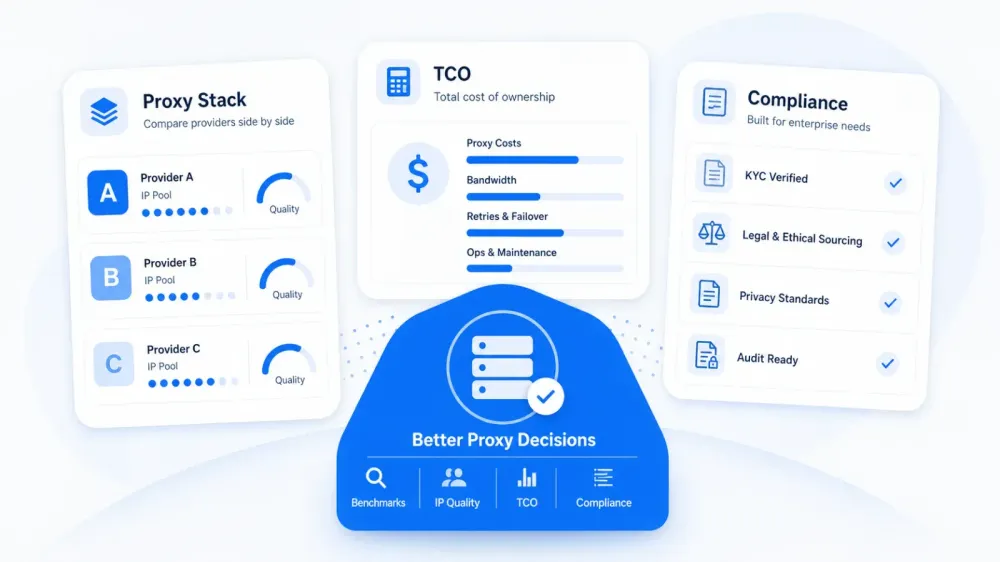
Enterprise teams spend tens of thousands of dollars per month on proxy infrastructure — and most buying guides show a teaser $/GB rate that has almost nothing to do with the actual bill. I've watched procurement teams at large organizations try to compare proxy vendors using landing-page prices, only to discover that minimum commitments, overage charges, and support-tier upsells blow up their budgets.
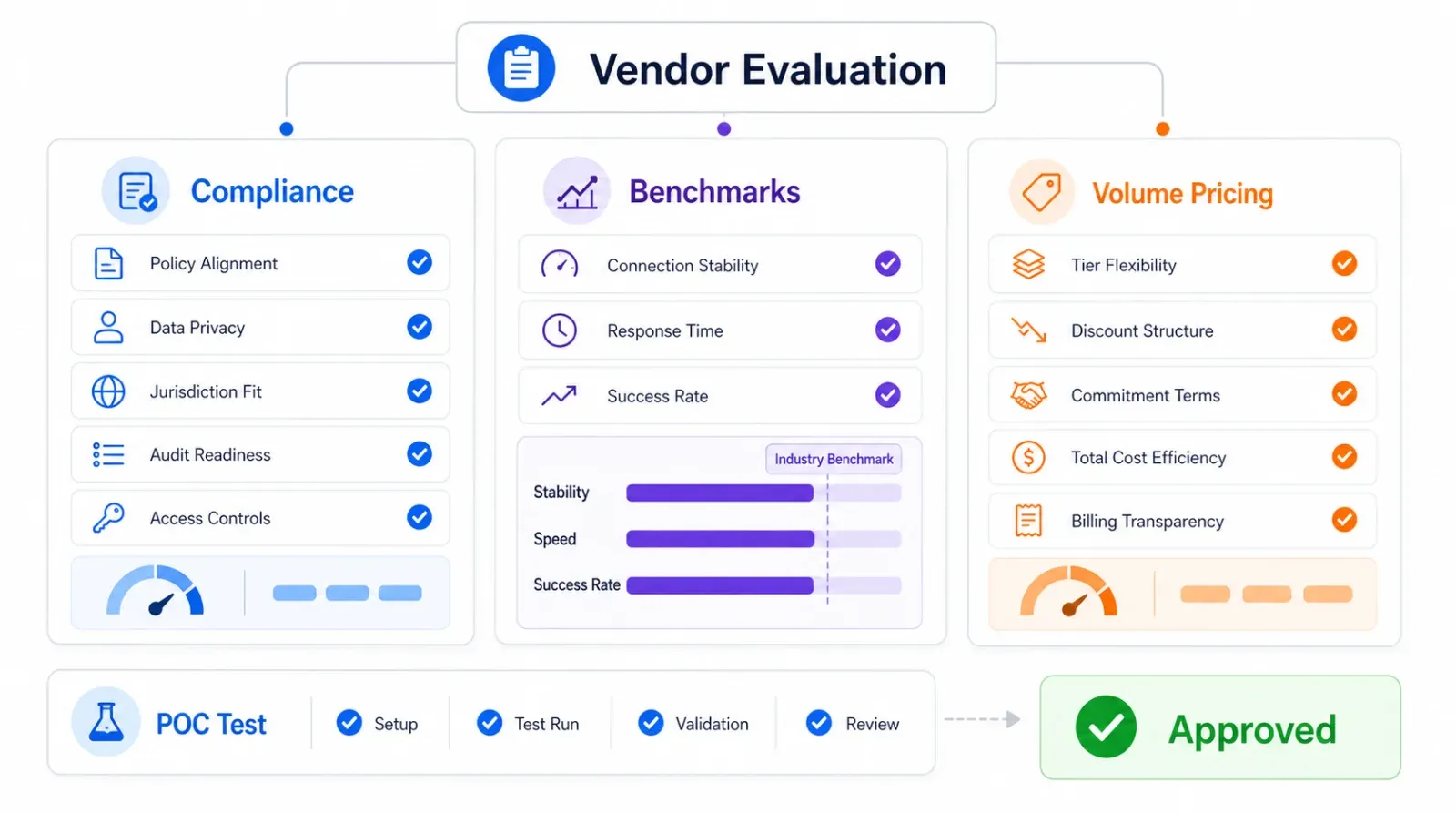
This guide covers 9 enterprise proxy services with real pricing at scale, a TCO calculator at 100GB, 500GB, and 1TB/month, a compliance certification matrix, and independent performance benchmarks — the kind of data procurement teams actually need to sign off on a vendor.
It also asks a question most proxy comparison articles skip entirely: do you even need a standalone proxy, or would an AI scraping API that handles proxy infrastructure internally get you to structured data faster and cheaper? (Spoiler: for a lot of teams, the answer is the latter.)
Why Enterprise Teams Invest in Proxy Services
An enterprise proxy service is a network of IP addresses that routes web requests through different locations and identities. The goal: your business operations — scraping, monitoring, verification, brand protection — don't get blocked, throttled, or served fake data.
The top enterprise use cases driving proxy spend in 2026 include: Large-scale web scraping and data collection — market research, lead generation, pricing intelligence Ad verification — confirming ads appear correctly in target geographies Competitive price monitoring — tracking competitor pricing across regions and platforms Brand protection — detecting counterfeit listings, unauthorized resellers, or trademark abuse Geo-restricted content access — testing localized content, SEO rankings, and app behavior across markets SEO monitoring — tracking SERP positions from different locations without triggering bot detection Consumer-grade proxies and VPNs don't cut it here. Enterprise operations demand SLA-backed uptime, compliance certifications that satisfy legal and procurement, dedicated account management, high concurrency, and the ability to scale from 100GB to multiple terabytes per month without renegotiating a contract every quarter.
How We Evaluated the Best Enterprise Proxy Services
The evaluation criteria below are weighted by what enterprise procurement and operations teams actually prioritize — not feature counts or marketing superlatives.
| Criterion | Weight | Why It Matters |
|---|---|---|
| Uptime SLA & Success Rate | ⭐⭐⭐⭐⭐ | Enterprise ops can't tolerate downtime; SLA-backed guarantees are procurement table stakes |
| Compliance & Certifications (SOC 2, ISO 27001, GDPR) | ⭐⭐⭐⭐⭐ | Legal/procurement teams require auditable compliance before signing |
| Proxy Network Size & Geographic Coverage | ⭐⭐⭐⭐ | Determines if the service can reach target markets and avoid geo-blocks |
| Proxy Types (Residential, Datacenter, ISP, Mobile) | ⭐⭐⭐⭐ | Different use cases need different proxy types |
| Enterprise Volume Pricing (TCO at 100GB–1TB/mo) | ⭐⭐⭐⭐ | Budget holders need total cost projections, not teaser rates |
| Concurrency & Scalability | ⭐⭐⭐ | Burst capacity matters for large-scale campaigns and peak loads |
| API Quality & Integration Options | ⭐⭐⭐ | Technical teams need clean docs, SDKs, and stack compatibility |
| Customer Support & Dedicated Account Management | ⭐⭐⭐ | Enterprise accounts expect dedicated CSMs, not ticket queues |
| Free Trial / POC Options | ⭐⭐ | Enables technical validation before procurement commitment |
These weights reflect what matters most in real vendor evaluations. A proxy with the cheapest $/GB is worthless if it can't pass a compliance review or if its success rate drops to 70% on the targets that actually matter.
Do You Actually Need a Proxy? A Decision Framework for Scraping Teams
Before committing budget to a proxy contract, answer three questions. This is the section no competitor article includes, and it could save a team six figures a year.
Question 1: What's your primary use case?
If the answer is web scraping or structured data extraction — and that's the case for a huge share of enterprise proxy buyers — an AI scraping API that handles anti-bot, JS rendering, CAPTCHAs, and IP rotation internally can replace a standalone proxy + custom scraper stack entirely. For ad verification, brand protection, multi-account testing, or other workflows requiring raw IP control, a dedicated proxy network is the right category.
Question 2: Do you need raw IP access or structured data output?
A proxy is middleware. Teams still need to build a scraper, a parser, retry logic, and a scheduler on top. If structured data (JSON, CSV, Markdown) is the end goal, an API that returns schema-matched output skips the proxy management layer. That's a meaningful difference in engineering cost and maintenance burden.
Question 3: What's your compliance bar?
Some industries require data residency, specific certifications, or auditable sourcing policies. Map each provider's certs against internal requirements before shortlisting.
| Primary Goal | Recommended Approach | Example Providers |
|---|---|---|
| Structured web data extraction | AI Scraping API (proxy built-in) | Thunderbit API, Zyte API |
| Ad verification / geo-testing | Direct proxy rotation | Bright Data, Oxylabs |
| Brand protection / social monitoring | Residential proxy rotation | SOAX, Decodo, Bright Data |
| Raw IP access for custom tooling | Standalone proxy network | Oxylabs, Bright Data, Rayobyte |
| Budget-first high-volume scraping | Low-cost proxy + scraper | IPRoyal, Webshare + Scrapy |
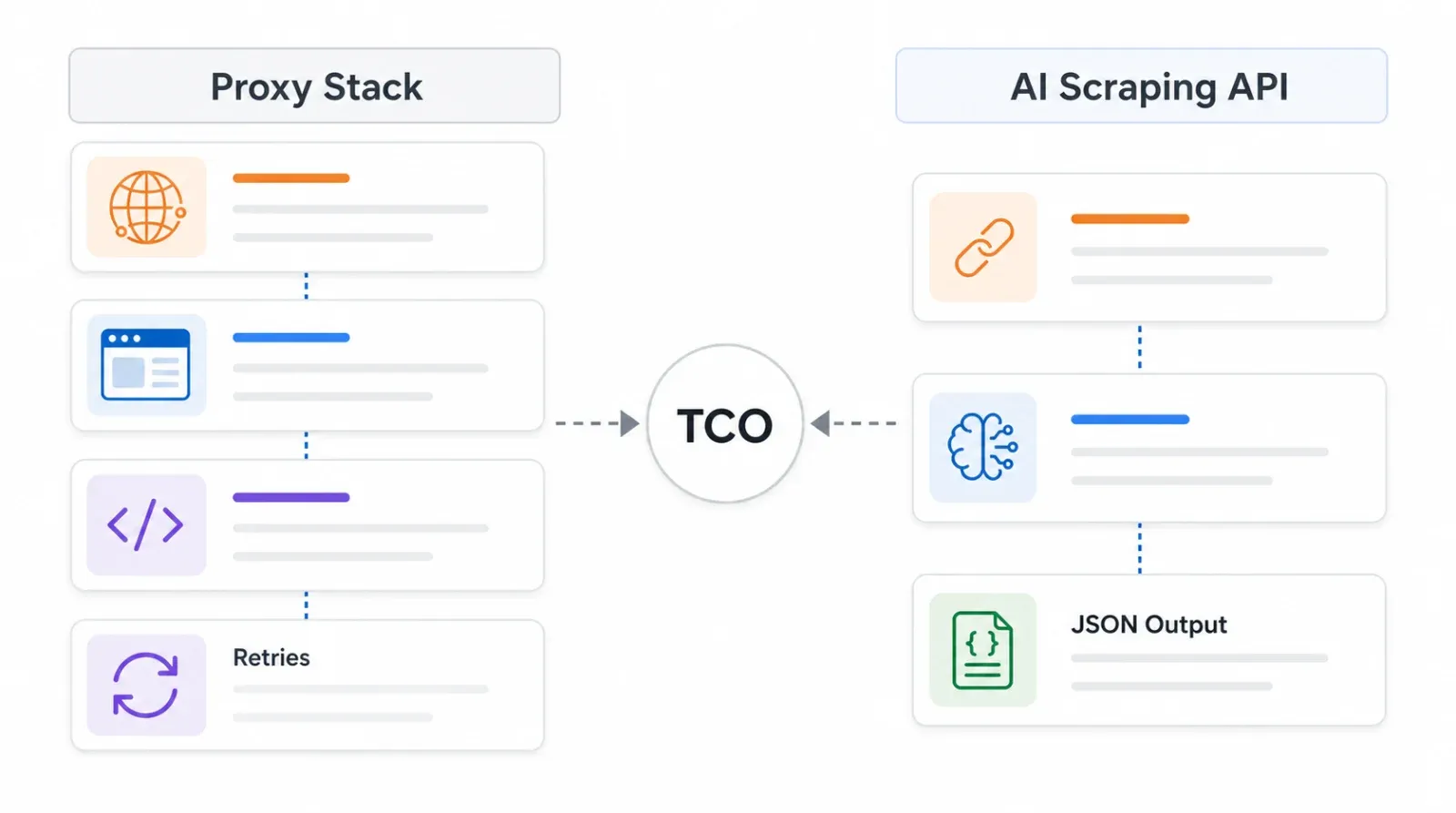
If the answer to Question 1 is "web scraping" and Question 2 is "structured data," the Thunderbit section below is worth reading carefully before signing a proxy contract.
1. Thunderbit: AI Scraping API That Replaces Your Proxy Stack
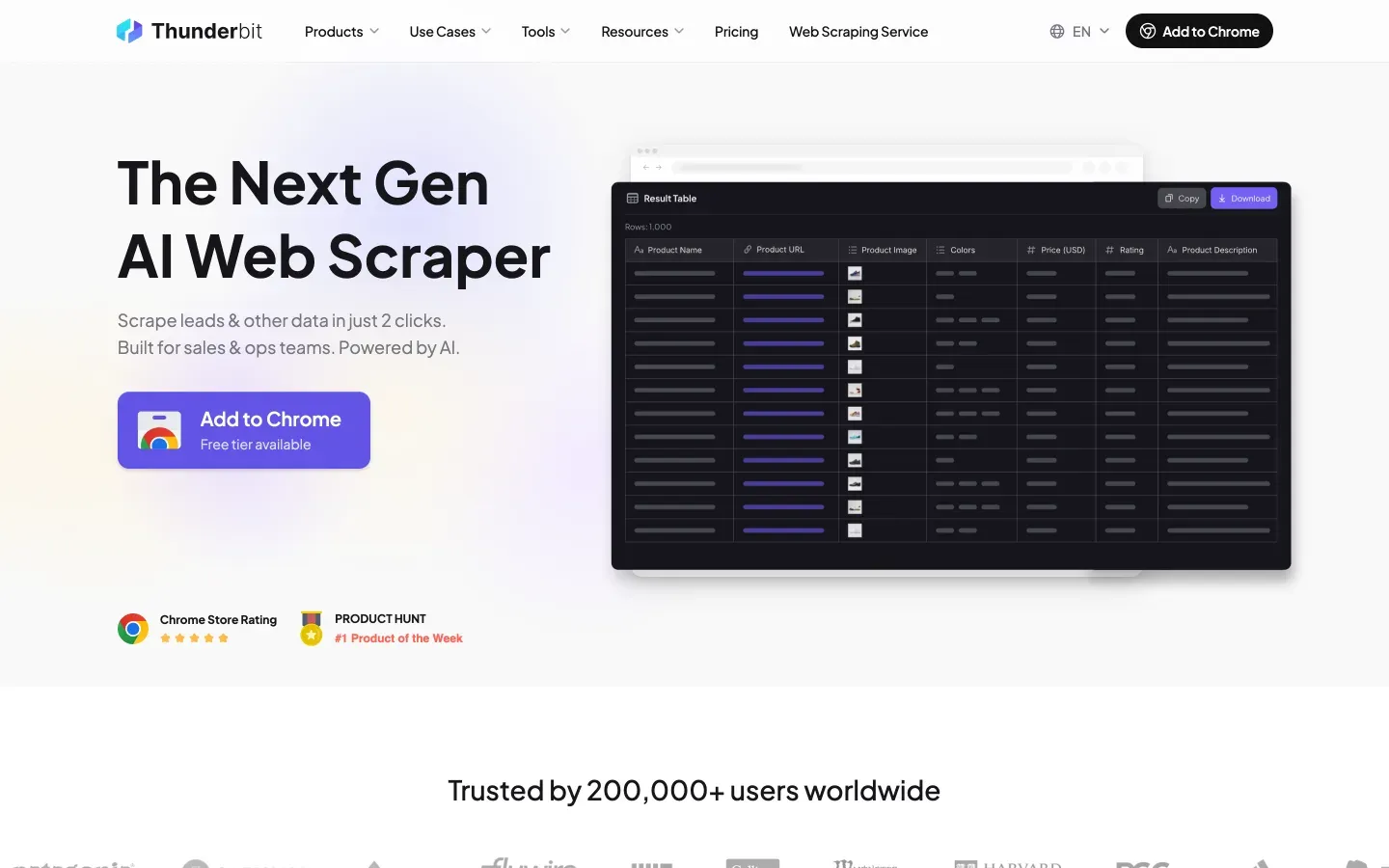 Thunderbit is the outlier on this list. It is not a proxy network you plug into your scraper. It's a managed AI scraping layer for teams that would rather get clean Markdown, structured JSON, or spreadsheet-ready output than operate proxies, headless browsers, parsers, and retries themselves.
Full disclosure: I work on the Thunderbit team. I'll be straightforward about what it does well and where it's not the right fit.
How It Works
Thunderbit abstracts away proxy infrastructure, browser rendering, anti-bot handling, and data extraction into a single managed layer. The three main interfaces: Open API: POST /distill converts any web page to clean Markdown (1 credit/request). POST /extract returns structured JSON via JSON Schema (20 credits/request). Both handle JS rendering with configurable renderMode options. Batch endpoints support bulk jobs.
MCP Server: For AI agents and coding assistants (Claude, Cursor) — thunderbit_extract and thunderbit_distill tools let agents scrape mid-task without leaving their environment. If you're building RAG pipelines or AI training data workflows, this is the integration point.
CLI: npx @thunderbit/thunderbit-cli batch extract for terminal, scripts, CI, and cron-based production pipelines. No browser needed.
The Chrome Extension serves as the no-code interface — 2-click scraping with AI Suggest Fields, cloud scraping (50 pages concurrently), subpage scraping, scheduled scraping, and direct export to Excel, Google Sheets, Airtable, or Notion.
Pricing
Credit-based, not bandwidth-based. Distill costs 1 credit/request; Extract costs 20 credits/request. Free tier available, with full pricing details here (including a managed scraping option — quote-based, NDA available). The practical upshot: teams whose primary proxy use case is data extraction can directly compare credit costs vs. proxy bandwidth + engineering costs to find the cheaper path.
Key Specs
Proxy Types: N/A (proxy infrastructure abstracted internally) Output: Structured JSON, Markdown, CSV Cloud Scraping: US, EU, Asia; handles anti-bot and CAPTCHAs Concurrency: Free 2, Pro 10, Enterprise 50 Free Trial: Yes (free tier + free trial)
Best For
Teams whose primary proxy use case is data extraction — not raw IP access. Also strong for RAG ingestion, AI training data pipelines, and no-code operations teams. Not the right fit if you need direct proxy endpoint access, custom IP rotation policies, or raw residential/mobile/datacenter IP control.
For more on how AI scraping works under the hood, see our guide on AI web scraping.
2. Bright Data: Largest IP Pool with Full Enterprise SLA
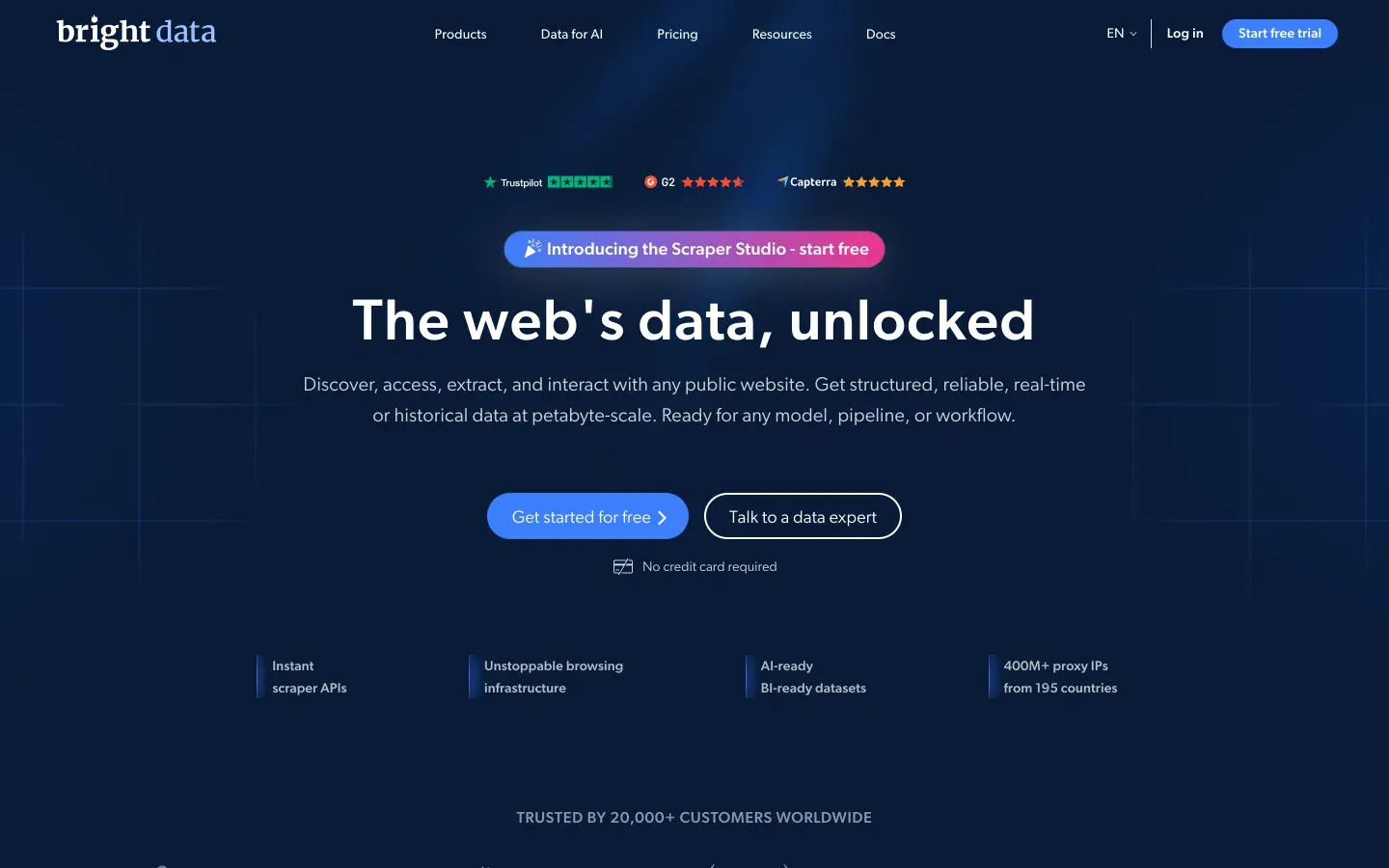 Bright Data has operated since 2014 and runs the largest proxy network in the category: 400M+ residential IPs across 195 countries. If you need the widest IP diversity and the strongest compliance posture, this is the benchmark.
Proxy types: Residential, datacenter, ISP, mobile, rotating, SOCKS5.
Enterprise features: Custom premium SLAs (99.95% success rate guarantee), unlimited concurrency, dedicated Slack-based support, sub-user management, geo-targeting down to ZIP/ASN level. Additional products include Web Unlocker, Browser API, Scraper APIs, SERP API, an MCP server, and downloadable datasets.
Compliance: SOC 2, SOC 3, ISO 27001, CSA STAR Level 1, GDPR, CCPA, strict KYC, and the Bright Initiative for ethical IP sourcing. This is the strongest compliance story in the category.
Pricing: Bright Data's residential pricing page currently lists residential proxy pricing from $5.88/GB, with custom enterprise plans available. Datacenter proxies and ISP proxies are priced separately. Fair warning: pricing can be complex because proxies, unlockers, browser APIs, SERP APIs, datasets, and managed acquisition are separate line items.
Best for: Fortune 500 companies, large-scale data collection operations, and regulated industries that need the broadest network, compliance review, and a full data collection product suite.
3. Oxylabs: Best for Large-Scale Enterprise Operations
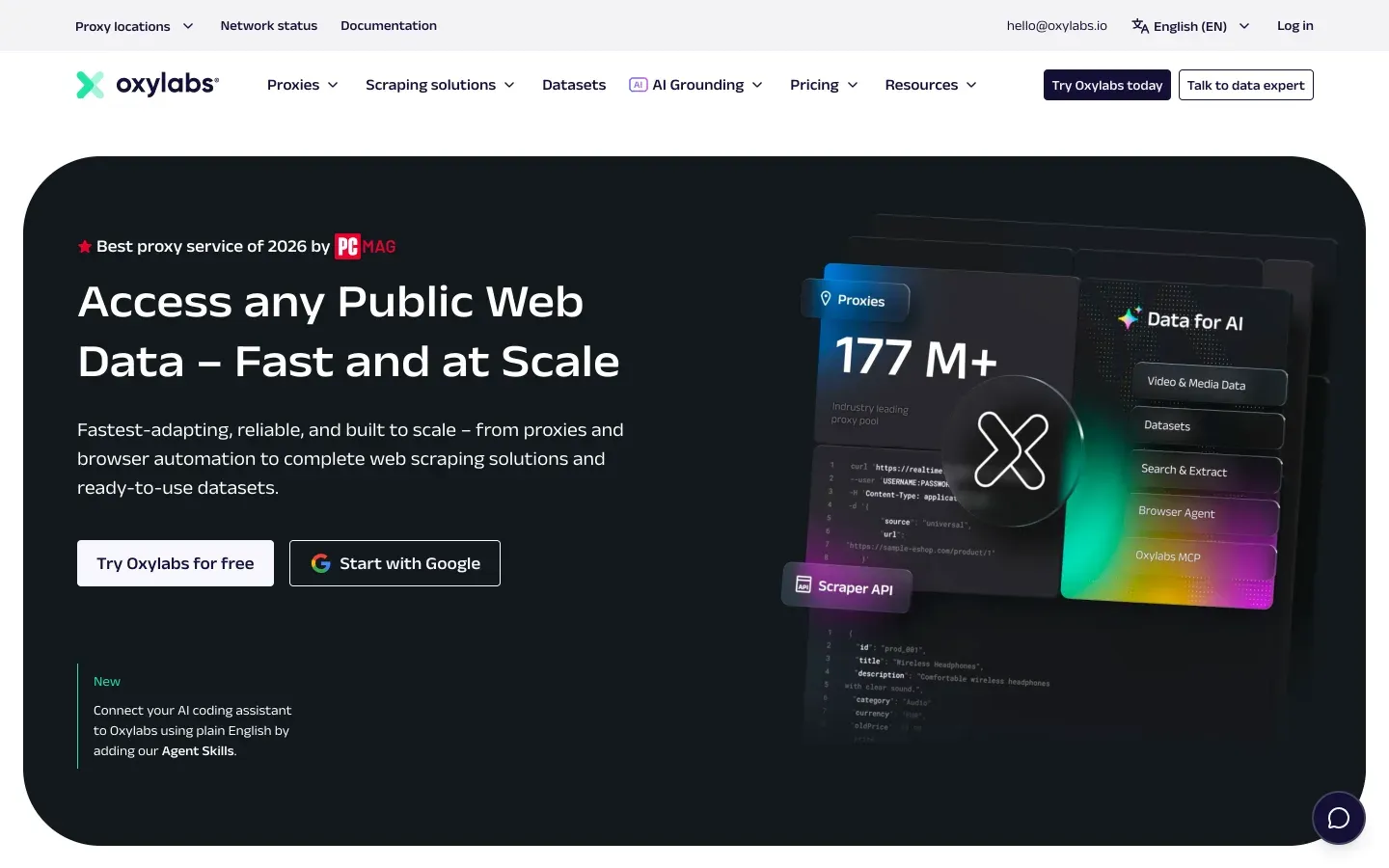 Oxylabs runs 175M+ residential IPs in 195 countries and 10,400+ cities. Independent reviewers consistently rate it top-tier, and the developer focus is evident in its API and integration options.
Proxy types: Residential, datacenter, ISP, mobile. City/ASN/ZIP-level targeting. HTTP(S), HTTP3, SOCKS5 support.
Enterprise features: Unlimited concurrent sessions, an average 99.95% success rate (vendor-claimed), dedicated account management, Chrome extension, and integration with web scraping and market analysis tools. Free trial: 3 days individual, 7 days enterprise.
Pricing: 5GB at $6/GB, 20GB at $5/GB, 125GB at $4/GB, 1TB at $2.50/GB. Volume pricing is clear and published, which is refreshing for this category.
Watch-out: Oxylabs restricts certain targets on its residential network — banking, government, streaming, ticketing, mailing, and some Google domains. Validate target acceptability before committing.
Best for: Enterprise scraping and intelligence teams that want a large proxy platform with strong support, clear volume pricing, and integrated web unblocker/scraping products.
4. Decodo (Formerly Smartproxy): Best for Mid-Market Teams
 Decodo (formerly Smartproxy) offers 115M+ IPs across 195+ countries. The balance of enterprise capability and accessibility is the draw here — clean UI, fast onboarding, approachable pricing.
Proxy types: Residential, mobile, datacenter, static residential. Country/continent/state/city/ZIP targeting.
Enterprise features: Unlimited concurrent sessions, dedicated account managers, 24/7 live chat, scraping tools and CAPTCHA bypass included. 3-day free trial on all proxy types, 14-day money-back guarantee.
Pricing: Residential starts at $3/GB. Published tiers: 3GB at $3.75/GB, 10GB at $3.50/GB, 25GB at $3.25/GB, 50GB at $3.00/GB. Custom enterprise plans available.
Compliance: EWDCI certified, Technology Errors & Omissions insurance. For enterprise buyers, verify current SOC 2 and ISO status directly with Decodo.
Best for: Small to mid-market businesses needing under 100GB/month, teams new to proxies, and operations teams wanting an easy onboarding experience without sacrificing IP quality.
5. SOAX: Best for Ethical IP Sourcing and High-Volume Pricing
 SOAX advertises 155M+ IPs across 195+ locations, with an emphasis on ethically sourced residential and mobile proxies.
Proxy types: Residential, mobile, ISP (US only), datacenter.
Enterprise features: City/ISP-level targeting, flexible session management, API access, dashboard with real-time analytics. The standout is pricing: SOAX rebuilt its plans in 2025 into subscription tiers with bundled credits — Builder starts at $200/month, scaling to Team ($500), Scale ($1,500), Enterprise ($3,000+VAT) — with per-GB rates as low as $0.35/GB. Among the lowest in the category.
Free plan: Available (Sandbox, pay-per-GB, no bundled credits).
Best for: High-volume teams that care about bandwidth economics and ethical sourcing. Social media monitoring and brand protection use cases fit well here.
Watch-out: Very low enterprise $/GB should be validated against commitment size, target types, support depth, and success rate benchmarks before signing.
6. IPRoyal: Best Budget Option with Non-Expiring Traffic
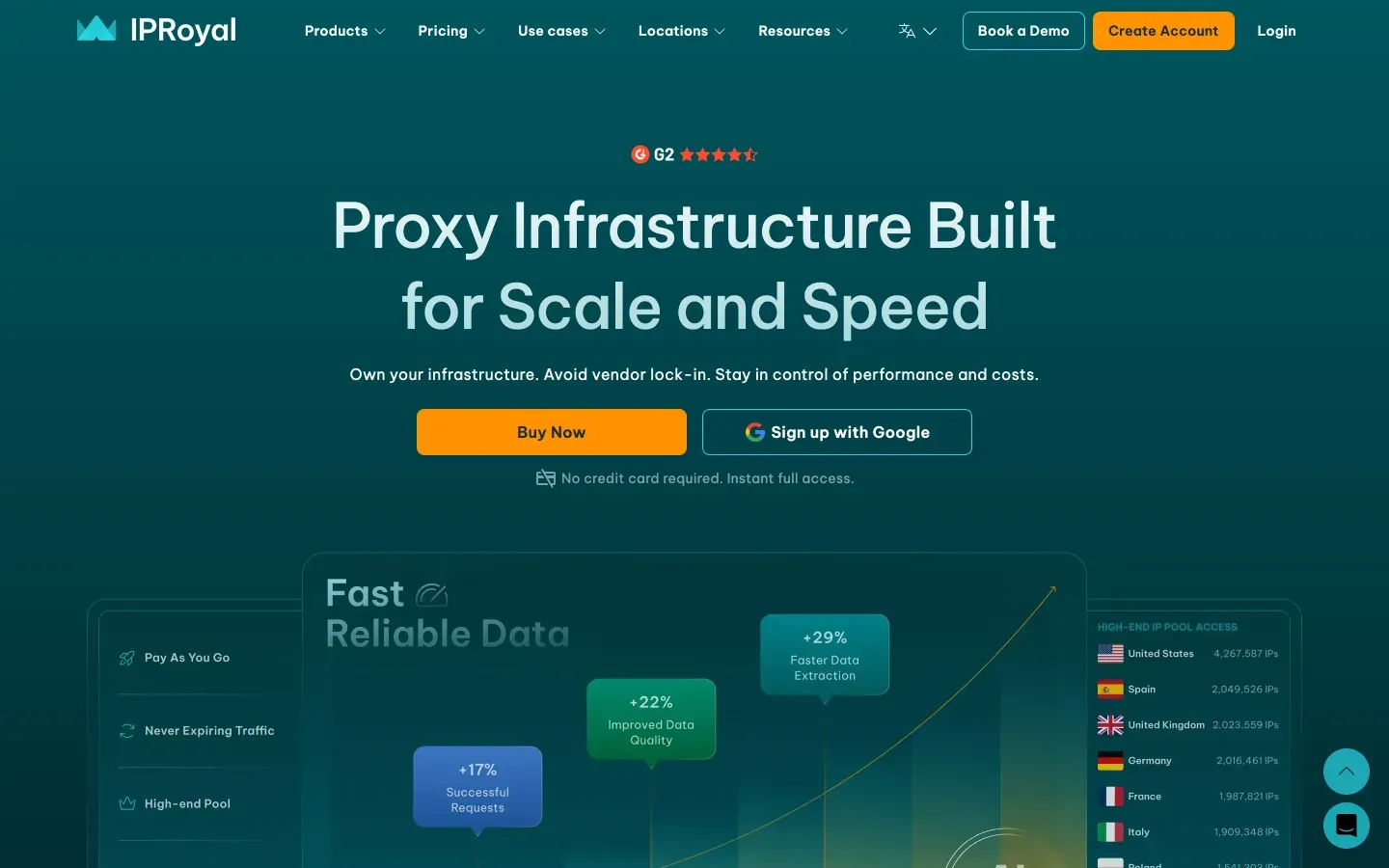 IPRoyal has a smaller pool — 64M+ IPs across 195+ countries — but the differentiator is that purchased bandwidth never expires. For teams with variable or seasonal usage patterns, that matters.
Proxy types: Residential, mobile, datacenter, ISP.
Pricing: 1GB at $7/GB, 10GB at $5.25/GB, 50GB at $4.90/GB, with bulk discounts as low as $1.75/GB. Contact sales for enterprise-scale proxies.
Limitations: No custom SLA, no dedicated support team — support is live chat and email only. Smaller IP pool means less diversity for high-rotation use cases.
Best for: Budget-conscious enterprise teams, bursty or seasonal workloads, and datacenter proxy use cases where cost is the top priority.
7. Webshare: Cheapest for High-Volume Datacenter Use
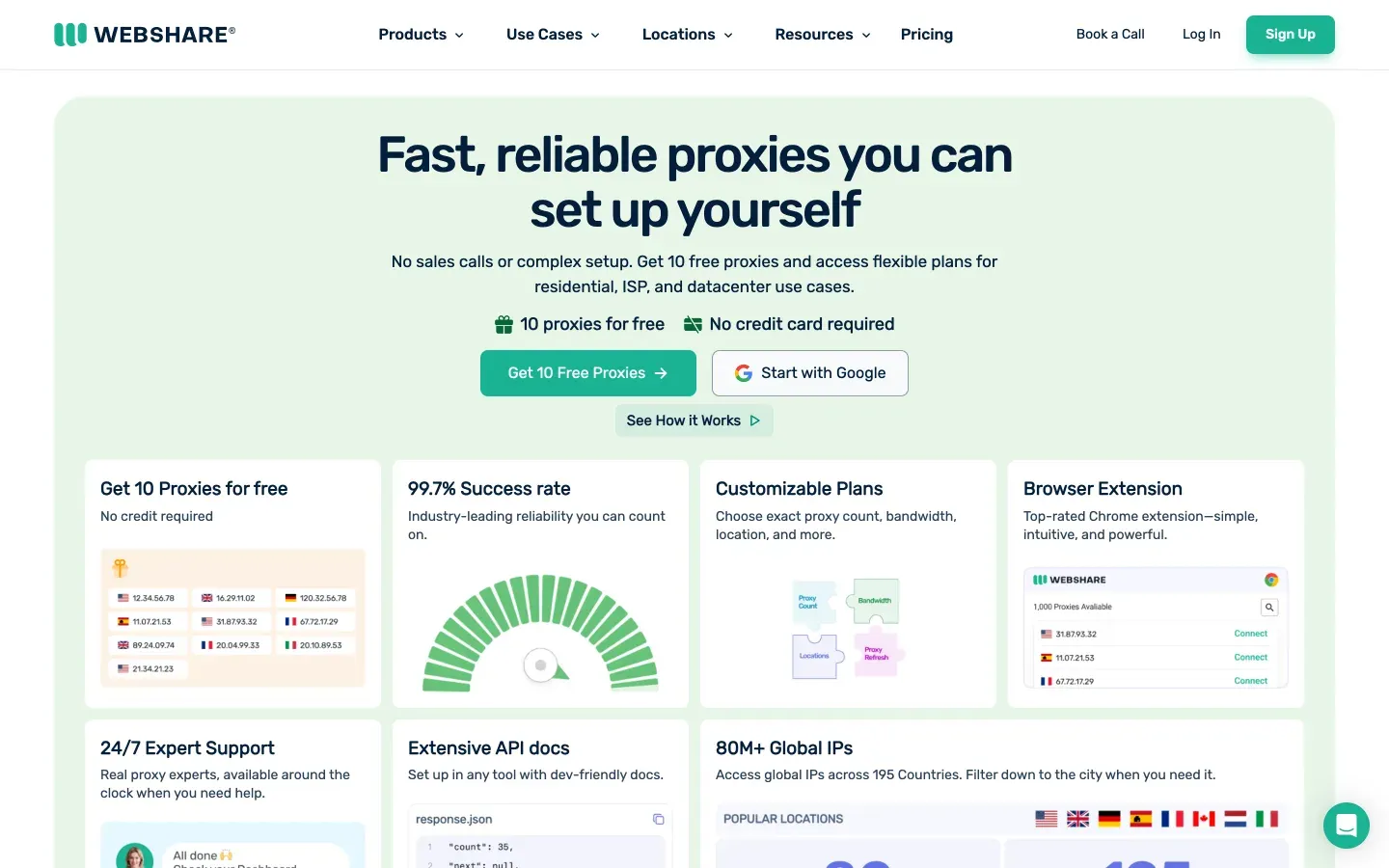 Webshare offers 80M+ residential IPs — known for rock-bottom pricing, especially on datacenter proxies.
Proxy types: Residential, datacenter (no mobile proxies).
Pricing: Rotating residential from $2.4/GB, static residential from $0.23/IP, datacenter proxy servers from $0.018/IP. 30% discount for annual payments. 10 free datacenter IPs on signup.
Limitations: No HTTPS/SOCKS5 with UDP, slower response times on popular targets, no mobile proxies. Lower IP quality means higher detection risk on well-protected sites.
Best for: High-volume datacenter proxy needs where cost is the top priority, and teams comfortable with higher detection rates in exchange for savings.
8. Zyte: Best for Integrated Scraping Infrastructure
 Zyte (formerly Scrapinghub) combines proxy services via Smart Proxy Manager with a full scraping platform including Scrapy Cloud and an automatic extraction API. For teams that want proxy + scraper from one vendor, this is the option to evaluate.
Proxy types: Rotating proxies via Smart Proxy Manager (primarily residential and datacenter).
Enterprise features: Automatic ban management, automatic retries, headless browser rendering, deep Scrapy framework integration, API-based extraction.
Pricing: Typically per-request or per-successful-crawl rather than pure bandwidth-based. Contact Zyte for current enterprise pricing. Zyte is less transparent about raw IP pool numbers than competitors.
Best for: Developer teams already using Scrapy, teams wanting a unified proxy + scraper platform, and large-scale crawling operations.
9. Rayobyte: Best for Dedicated Datacenter IPs
Rayobyte (formerly Blazing SEO) focuses on datacenter proxies with dedicated (non-shared) IP options. IP consistency matters for tasks like account management and SEO monitoring, and that's where Rayobyte aims.
Proxy types: Datacenter (dedicated and semi-dedicated), residential, ISP, mobile.
Pricing: Transparent and published. Rotating residential: $3.50/GB at 1–49GB, down to $0.50/GB at 5TB+. Rotating datacenter: $0.25/GB at 151–350GB, $0.23/GB at 351–1000GB. Static ISP: $5/IP starter, $4.80/IP personal, $4.60/IP corporate. Custom pricing for 1TB+.
Best for: Teams needing dedicated (non-rotating) datacenter IPs, SEO monitoring, and account management tasks where IP consistency matters.
Best Enterprise Proxy Services at a Glance: Master Comparison Table
| Provider | Proxy Types | IP Pool Size | Countries | Uptime SLA | Residential Entry Price ($/GB) | Compliance Certs | Free Trial | Concurrency | Dedicated Support |
|---|---|---|---|---|---|---|---|---|---|
| Thunderbit | N/A (abstracted) | N/A | US, EU, Asia (cloud) | N/A | Credit-based (~$0.05–$1/page) | Verify current | Yes (free tier) | Up to 50 | Yes (Enterprise) |
| Bright Data | Res, DC, ISP, Mobile | 400M+ | 195 | 99.95% success SLA | $5.88+ (listed) | SOC 2, ISO 27001, GDPR, CCPA | Yes | Unlimited | Yes |
| Oxylabs | Res, DC, ISP, Mobile | 175M+ | 195 | 99.95% (claimed) | $2.50 (1TB tier) | Verify current | 3–7 days | Unlimited | Yes |
| Decodo | Res, Mobile, DC, Static | 115M+ | 195+ | 99.99% (claimed) | $3.00 (50GB tier) | EWDCI | 3-day | Unlimited | Yes |
| SOAX | Res, Mobile, ISP, DC | 155M+ | 195+ | Verify | Verify (plan + tier based) | Verify | No (free plan only) | Verify | Verify |
| IPRoyal | Res, Mobile, DC, ISP | 64M+ | 195+ | 99.9% (claimed, no SLA) | $1.75 (bulk) | Verify | Yes (companies) | Unlimited | No (chat/email) |
| Webshare | Res, DC | 80M+ | Varies | 99.97% (claimed) | $2.40 | Verify | 10 free DC IPs | Varies | No |
| Zyte | Res, DC (via SPM) | Not disclosed | Global | Verify | Per-request | Verify | Verify | Varies | Yes |
| Rayobyte | DC, Res, ISP, Mobile | Verify | Varies | Verify | $3.50 (1–49GB) | Verify | Verify | Varies | US-based |
"Verify" means the provider does not publicly disclose this data or it requires sales contact to confirm. Always validate directly before procurement.
NetNut was previously included here. Its domains were seized by the FBI in July 2026 and the service is no longer available.
Enterprise TCO Calculator: What You Actually Pay at 100GB, 500GB, and 1TB per Month
Listed $/GB teaser rates don't tell the full story. Total cost of ownership includes volume discounts, overage charges, minimum commitments, and whether dedicated account management is bundled or upsold.
Below is a modeled TCO table using published pricing tiers as of August 2026. Where custom/enterprise pricing is required, it's noted. All figures are estimated annual costs for residential proxy bandwidth unless otherwise specified.
| Provider | 100 GB/mo Est. Annual | 500 GB/mo Est. Annual | 1 TB/mo Est. Annual | Pricing Model | Min. Commitment |
|---|---|---|---|---|---|
| Thunderbit | Compare credit costs per page | Compare credit costs per page | Compare credit costs per page | Credit-based (per request) | None (free tier available) |
| Bright Data | ~$7,056 ($5.88/GB listed) | Custom (volume discount) | Custom | Bandwidth ($/GB) + product add-ons | Varies by plan |
| Oxylabs | ~$4,800 ($4/GB at 125GB tier) | ~$15,000 ($2.50/GB at 1TB tier) | ~$30,000 ($2.50/GB) | Bandwidth ($/GB) | Verify |
| Decodo | ~$3,600 ($3/GB at 50GB tier) | Custom | Custom | Bandwidth ($/GB) | None (PAYG available) |
| SOAX | Custom (plan + credits) | Custom (plan + credits) | Custom (plan + credits) | Subscription + credits + tiered $/GB | From $200/mo (Builder) |
| IPRoyal | ~$5,880 ($4.90/GB at 50GB) | Custom (bulk to $1.75/GB) | Custom | Bandwidth ($/GB), non-expiring | None |
| Webshare | ~$2,880 ($2.40/GB) | Custom | Custom | Bandwidth ($/GB) | None |
| Zyte | Per-request/per-crawl | Per-request/per-crawl | Per-request/per-crawl | Per-request | Verify |
| Rayobyte | Verify | Verify | Verify | Bandwidth ($/GB) | Verify |
Hidden costs to watch for: Scraper engineering: If you're buying a proxy, you still need to build, maintain, and monitor your scraper. That's developer time, infrastructure cost, and ongoing maintenance.
Retry and CAPTCHA costs: Failed requests still consume bandwidth on most providers. Anti-bot handling may require additional products (e.g., Bright Data's Web Unlocker is a separate line item).
Support tier upsells: Some providers bundle dedicated account management only at higher tiers.
Minimum contract terms: Some providers require 3–12 month commitments. Others may require annual contracts for volume discounts.
Thunderbit TCO comparison: For teams whose primary use case is data extraction, compare the credit cost per page extracted (Distill at 1 credit, Extract at 20 credits) against the total cost of proxy bandwidth + scraper engineering + retry logic + CAPTCHA handling. In many cases, the managed API path is cheaper and dramatically simpler.
Real Performance Benchmarks: What Vendors Don't Put on Their Landing Pages
Vendor-claimed success rates are marketing metrics. Truly independent, apples-to-apples benchmarks across all providers are rare — which is itself a useful data point. The table below aggregates what's available from third-party sources like Proxyway's annual reviews, CNET testing, and developer community reports.
| Provider | Avg. Response Time (Residential) | Success Rate (Residential) | Uptime (Reported) | Data Source |
|---|---|---|---|---|
| Bright Data | ~1.5–3s (varies by target) | 99.95% (SLA-backed) | 99.9%+ | Vendor SLA + Proxyway |
| Oxylabs | ~1.5–3s | 99.95% (vendor-claimed) | 99.9%+ | Vendor + Proxyway |
| Decodo | ~2–4s | ~99.86% (vendor-claimed) | 99.99% (claimed) | Vendor |
| SOAX | ⚠️ Limited independent data | ⚠️ Limited independent data | ⚠️ | Vendor only |
| IPRoyal | ⚠️ Limited independent data | ⚠️ | 99.9% (claimed, no SLA) | Vendor only |
| Webshare | Slower on popular targets | ⚠️ | 99.97% (claimed) | Vendor + community reports |
| Zyte | Varies (managed retries) | Varies by target | ⚠️ | Vendor |
| Rayobyte | ⚠️ Limited independent data | ⚠️ | ⚠️ | Vendor only |
How to read this table: ⚠️ means no independently verified data was found for that metric. Vendor claims are included where available but flagged clearly. If a provider's performance data is mostly self-reported, treat it with appropriate skepticism.
Thunderbit's relevant metric: Since Thunderbit abstracts away proxy infrastructure, the meaningful benchmark is end-to-end extraction success rate and latency per page — not raw proxy response time. That's a different metric, but it's the one that actually matters if your goal is structured data output rather than raw HTTP access.
The takeaway: Bright Data and Oxylabs have the most independently verified performance data. For other providers, request a POC and run benchmarks on actual target sites before committing.
Compliance and Certification Matrix: The Table Your Procurement Team Needs
No competitor article compares compliance certifications side-by-side. Procurement teams can't approve vendors without this data, so this section exists.
| Provider | SOC 2 Type II | ISO 27001 | GDPR | CCPA | Ethical IP Sourcing | KYC Screening | Data Residency Options |
|---|---|---|---|---|---|---|---|
| Bright Data | ✅ | ✅ | ✅ | ✅ | ✅ (Bright Initiative) | ✅ | US, EU (verify APAC) |
| Oxylabs | ⚠️ Verify | ⚠️ Verify | ✅ | ⚠️ Verify | ✅ (stated) | ✅ | Verify |
| Decodo | ❌ Not found | ❌ Not found | ✅ | ⚠️ Verify | ⚠️ (EWDCI) | ⚠️ | Verify |
| SOAX | ⚠️ Verify | ⚠️ Verify | ⚠️ Verify | ⚠️ Verify | ✅ (stated) | ⚠️ | Verify |
| IPRoyal | ❌ Not found | ❌ Not found | ⚠️ Verify | ⚠️ Verify | ⚠️ | ⚠️ | Verify |
| Webshare | ❌ Not found | ❌ Not found | ⚠️ Verify | ⚠️ Verify | ✅ (stated) | ⚠️ | Verify |
| Zyte | ⚠️ Verify | ⚠️ Verify | ✅ | ⚠️ Verify | ⚠️ | ⚠️ | Verify |
| Rayobyte | ❌ Not found | ❌ Not found | ⚠️ Verify | ⚠️ Verify | ⚠️ | ⚠️ | Verify |
How to read this table: ✅ = publicly documented and verifiable. ⚠️ = mentioned by the provider but not independently verified or self-reported. ❌ = no public evidence found.
Bright Data is the clear leader on compliance documentation. If SOC 2 Type II and ISO 27001 are hard requirements, the field narrows significantly. For other providers, request certification documentation directly during the RFP process.
Note: Thunderbit is not a proxy service, so its compliance posture relates to its own API and data handling — not proxy-specific certifications. Check Thunderbit's current trust and security documentation on its website.
How Enterprise Proxy Services Fit Into Modern Data Stacks
Where proxies sit in the workflow matters more than picking the "best" provider in a vacuum. Three integration patterns dominate enterprise environments. Pattern 1: Proxy + Custom Scraper The traditional approach. Configure a proxy provider (Bright Data, Oxylabs, Decodo, etc.) as the upstream proxy for Scrapy, Puppeteer, or Playwright scripts.
Auth methods: User:pass or IP whitelist, depending on the provider.
Rotation: Most providers offer automatic rotation via their gateway endpoint. Session management (sticky vs. rotating) is configured per-request.
Gotchas: The team is still responsible for parsing, anti-bot handling (or buying the provider's unlocker product separately), retry logic, scheduling, and monitoring. Non-trivial engineering burden.
Pros: Full control over every request. Cons: High maintenance, and the proxy is only one piece of the puzzle.
Pattern 2: Proxy + No-Code Scraping Tool Tools like Thunderbit's Chrome extension can leverage browser-level proxies for sites requiring login, or bypass proxy needs entirely via cloud scraping (50 pages concurrently with built-in anti-bot handling). This pattern is common for operations teams running ad-hoc data collection without developer support.
For more on no-code approaches, see our guide on web scraping without coding.
Pattern 3: AI Scraping API as Proxy Replacement For teams building AI/ML data pipelines, RAG systems, or automated data entry workflows, Thunderbit's Open API (POST /distill for LLM-ready Markdown, POST /extract for structured JSON) and MCP server (thunderbit_extract tool) handle IP rotation, JS rendering, and CAPTCHAs internally. The CLI (npx @thunderbit/thunderbit-cli batch extract) enables cron-based production pipelines. This eliminates the proxy layer entirely for data extraction use cases.
| Use Case | Integration Pattern | Recommended Providers |
|---|---|---|
| Large-scale web scraping (structured data) | AI Scraping API (proxy built-in) | Thunderbit API, Zyte API |
| Ad verification / geo-testing | Direct proxy rotation | Bright Data, Oxylabs |
| Price monitoring (e-commerce) | Proxy + scraper OR scheduled API | IPRoyal + Scrapy, or Thunderbit Scheduled Scraper |
| AI training data / RAG ingestion | API → Markdown pipeline | Thunderbit Distill API, MCP server |
| Brand protection / social monitoring | Residential proxy rotation | SOAX, Decodo, Bright Data |
For a deeper look at how AI scraping APIs compare to traditional scraper + proxy stacks, check out our best AI web scrapers roundup.
Which Enterprise Proxy Service Is Right for You?
A quick decision map, based on the research and evaluation criteria above: Largest IP pool and strongest compliance posture → Bright Data Best for large-scale enterprise operations with clear volume pricing → Oxylabs Mid-market teams wanting ease of use and fast onboarding → Decodo Ethical sourcing priority and aggressive volume pricing → SOAX Budget-first with non-expiring traffic → IPRoyal Cheapest high-volume datacenter proxies → Webshare Integrated scraping platform for Scrapy teams → Zyte Dedicated datacenter IPs for IP-consistent tasks → Rayobyte Skip the proxy entirely and get structured data directly → Thunderbit API/MCP/CLI If the end goal is structured data extraction, compare Thunderbit's credit costs against the full proxy + scraper TCO before committing to a proxy contract. Many teams discover the managed API path costs less and ships weeks faster.
Explore Thunderbit's YouTube channel, or start with the free tier to benchmark against an existing stack.
Try Thunderbit AI Web Scraper for Free Get Started Free
FAQs
What is an enterprise proxy service?
An enterprise proxy service is a managed network of IP addresses — residential, datacenter, ISP, or mobile — that routes your web requests through different locations and identities. It's designed for business-scale operations like web scraping, ad verification, brand protection, and competitive monitoring, with SLA-backed uptime, compliance certifications, dedicated support, and the ability to handle high concurrency and volume.
How much do enterprise proxy services cost?
Costs vary widely by proxy type, volume, and provider. Residential proxies typically range from about $1.75/GB (bulk IPRoyal) to $5.88+/GB on listed premium plans, with enterprise custom pricing often falling between $0.35/GB (SOAX, Enterprise plan) and several dollars per GB depending on commitment. Datacenter proxies are significantly cheaper — as low as $0.018/IP (Webshare). Raw $/GB doesn't capture the full cost — scraper engineering, retry logic, CAPTCHA handling, support tiers, and minimum commitments all contribute to real TCO.
What's the difference between residential, datacenter, ISP, and mobile proxies?
Residential proxies use IPs assigned to real home internet connections — hardest to detect, best for sites with aggressive anti-bot. Datacenter proxies use IPs from data centers — fastest and cheapest, but easier to detect. ISP proxies (also called static residential) combine datacenter speed with residential-level trust — good for long-duration sessions. Mobile proxies use IPs from mobile carriers — useful for mobile-specific targets and the hardest to block, but typically the most expensive.
Do I need a proxy service for web scraping?
Not necessarily. If your goal is structured data output (JSON, CSV, Markdown), an AI scraping API like Thunderbit handles IP rotation, anti-bot, JS rendering, and CAPTCHAs internally — so the proxy layer may be unnecessary. Standalone proxies still make sense for use cases requiring raw IP control, like ad verification, brand protection, or multi-account testing.
What compliance certifications should I look for in an enterprise proxy provider?
At minimum, look for SOC 2 Type II (audited security controls), ISO 27001 (information security management), GDPR compliance (if processing EU data), and CCPA compliance (for California data). Also evaluate the provider's ethical IP sourcing policy (opt-in consent for residential IPs) and KYC/anti-fraud screening. Bright Data currently has the most comprehensive public compliance documentation in the category.
Can I try enterprise proxy services before committing?
Most providers offer some form of trial or POC. Bright Data, Oxylabs, and Decodo offer multi-day free trials. IPRoyal offers trials for companies. Webshare provides 10 free datacenter IPs. SOAX offers a free Sandbox plan (pay-per-GB, no bundled credits). Rayobyte — verify current trial options directly. Thunderbit offers a free tier with no commitment required, so you can benchmark extraction performance against your proxy stack before making a decision. Learn More




