
अगर आप अभी "zillow scraper github" खोजेंगे, तो आपको 409 repositories मिलेंगे। सुनने में यह काफ़ी अच्छा लगता है — जब तक आप यह न देख लें कि उनमें से 264 एक साल से भी ज़्यादा समय से अपडेट नहीं हुए हैं।
मैंने इन repos का काफ़ी समय तक audit किया है, उन्हें live Zillow pages पर test किया है, और GitHub issues तथा Reddit threads पढ़े हैं जहाँ developers इस बार क्या टूट गया, इस पर भड़ास निकालते हैं। पैटर्न साफ़ है: कोई repo पहली बार चलने पर stars बटोर लेता है, फिर जब Zillow अपना DOM बदलता है, anti-bot stack कड़ा करता है, या किसी internal API endpoint को बंद करता है, तो वह चुपचाप मर जाता है। Reddit पर एक निराश developer ने इसे बहुत सही कहा: “scraping projects need to be on constant maintenance due to changes on the page or api.” यह लेख वही audit है जिसकी मुझे अपनी पहली Zillow scraper repo clone करने से पहले ज़रूरत थी — एक ईमानदार, अपडेटेड नज़र कि 2026 में वास्तव में क्या चलता है, क्या टूटता है और क्यों, और कब GitHub rabbit hole में पड़े बिना सीधे Thunderbit जैसा tool इस्तेमाल करना ज़्यादा समझदारी है।
Zillow Scraper GitHub Project क्या है (और किसे इसकी ज़रूरत होती है)?
“Zillow scraper” कोई भी script या tool है जो Zillow की website से property listing data अपने-आप collect करता है — जैसे price, address, beds, baths, square footage, Zestimate, listing status, days on market, और कभी-कभी price history या tax records जैसी detail-page data भी। लोग GitHub इसलिए खोजते हैं क्योंकि वे कुछ free, open-source और customizable चाहते हैं। repo fork करो, fields tweak करो, output को अपनी pipeline में डाल दो। सिद्धांत में यह दोनों दुनिया का सबसे अच्छा मेल है।
इसके उपयोगकर्ता काफ़ी अलग-अलग होते हैं:
- Real estate investors जो zip codes के across deals track करते हैं — उन्हें opportunities filter करने के लिए price drops, Zestimate gaps, और days-on-market data चाहिए
- Agents जो prospecting lists बनाते हैं — उन्हें listing URLs, agent contact info, और listing status changes चाहिए
- Market researchers और analysts जो structured comps निकालते हैं — address, price per square foot, sold-vs-list price, inventory counts
- Ops teams जो अलग-अलग markets में नियमित अंतराल पर pricing या inventory monitor करते हैं
सामान यही है कि सबको structured, repeatable data चाहिए — एक बार का copy-paste काम नहीं। इसी वजह से scraping आकर्षक लगता है। और यही वजह है कि जब कोई repo काम करना बंद कर देता है, maintenance का बोझ इतना दर्दनाक हो जाता है।
2026 Zillow Scraper GitHub Repo Audit: वास्तव में क्या अभी भी चलता है
मैंने GitHub पर सबसे ज़्यादा stars और forks वाले Zillow scraper repos खोजे, last commit dates देखीं, open issues पढ़े, और live Zillow pages पर उन्हें test किया। तरीका सीधा है: अगर कोई repo अप्रैल 2026 तक Zillow search results या detail pages से सही listing data वापस ला सकता है, तो उसे “working” माना गया। अगर वह चलता है लेकिन अधूरा data देता है या कुछ pages के बाद block हो जाता है, तो वह “partially working” है। अगर वह सीधे fail हो जाता है या maintainer कहता है कि वह dead है, तो वह “broken” है।
कड़वी सच्चाई: जिन repos ने 12–18 महीने पहले promising दिखाया था, उनमें से ज़्यादातर अब चुपचाप टूट चुके हैं।
Curated Comparison Table: Top Zillow Scraper GitHub Repos
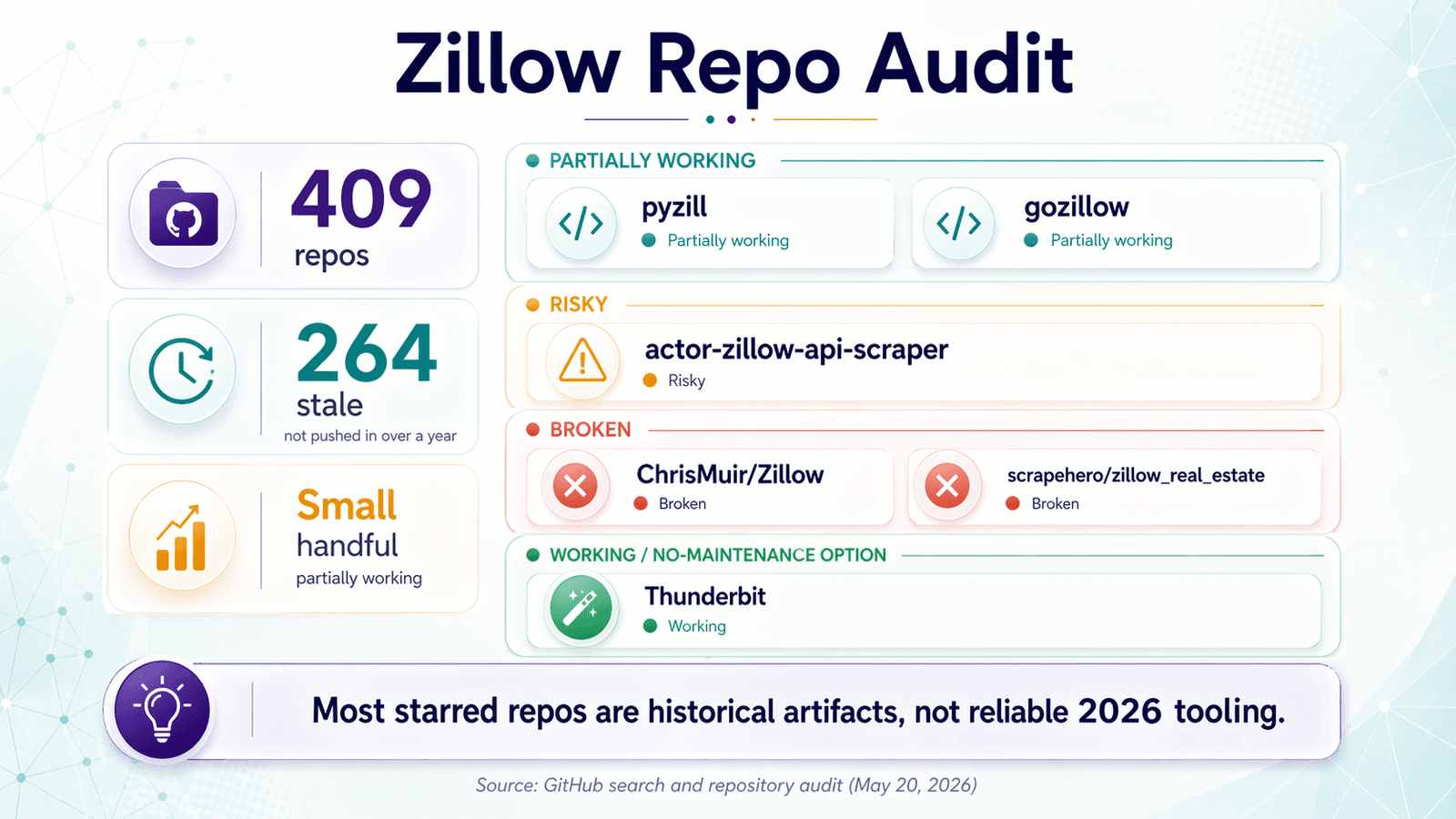
| Repo | Language | Stars | Last Push | Approach | 2026 Status | Key Limitation |
|---|---|---|---|---|---|---|
| johnbalvin/pyzill | Python | 96 | 2025-08-28 | Zillow search/detail extraction + proxy support | आंशिक रूप से काम कर रहा है | README में लिखा है “Use rotating residential proxies.” Issues में Cloudflare blocks, proxyrack के जरिए 403s, proxies के साथ भी CAPTCHA शामिल हैं। |
| johnbalvin/gozillow | Go | 10 | 2025-02-23 | Property URL/ID और search methods के लिए Go library | आंशिक रूप से काम कर रहा है | वही maintainer जिसने pyzill बनाया, लेकिन adoption कम है और issue surface पतली है। भरोसा कम है। |
| cermak-petr/actor-zillow-api-scraper | JavaScript | 59 | 2022-05-04 | Internal Zillow API recursion का उपयोग करने वाला hosted actor | आंशिक रूप से काम कर रहा है (जोखिम भरा) | चालाक design — result limits से बचने के लिए map bounds को recursively split करता है। लेकिन GitHub repo 2022 से push नहीं हुआ। एक issue title: “is this still working?” |
| ChrisMuir/Zillow | Python | 170 | 2019-06-09 | Selenium | टूट चुका है | README साफ़ कहता है: “As of 2019, this code no longer works for most users.” Zillow webdrivers detect करता है, और अंतहीन CAPTCHAs दिखाता है। |
| scrapehero/zillow_real_estate | Python | 152 | 2018-02-26 | requests + lxml | टूट चुका है | Issues में “returns empty dataset,” “No output in .csv file,” और “Is this repo still updated?” जैसे problems शामिल हैं। |
| faithfulalabi/Zillow_Scraper | Python/notebook | 30 | 2021-07-02 | Hardcoded Selenium | टूट चुका है | Educational project जो Arlington, TX rentals के लिए hardcoded है। यह general-purpose scraper नहीं है। |
| eswan18/zillow_scraper | Python | 10 | 2021-04-10 | Scraper + processing pipeline | टूट चुका है | Repo archived है। |
| Thunderbit | No-code (Chrome extension) | N/A | लगातार अपडेट होता रहता है | AI page structure पढ़ता है + pre-built Zillow template | काम कर रहा है | Maintain करने के लिए GitHub repo नहीं है। Zillow का layout बदलने पर AI अपने-आप adapt हो जाता है। Free tier उपलब्ध है। |
पैटर्न साफ़ है: GitHub ecosystem में अभी भी कुछ जीवित code है, लेकिन दिखने वाले ज़्यादातर repos tutorials, historical artifacts, या proxy-dependent workflow के पतले wrappers हैं।
“Working”, “Broken” और “Partially Working” का मतलब क्या है
मैं इन labels में सावधानी बरतना चाहता हूँ क्योंकि ये star counts से कहीं ज़्यादा मायने रखते हैं:
- Working: testing date तक Zillow search pages और/या detail pages से सही listing data सफलतापूर्वक लौटाता है, और maintainer ने project को dead नहीं बताया
- Partially working: चलता है लेकिन अधूरा data देता है, कुछ pages के बाद block हो जाता है, या केवल कुछ page types पर काम करता है — आम तौर पर proxy infrastructure और ongoing tuning की ज़रूरत होती है
- Broken: data वापस नहीं देता, errors फेंकता है, या maintainer/community ने इसे स्पष्ट रूप से non-functional बताया है
170 stars वाला और “broken” status वाला repo, 10 stars वाले ऐसे repo से भी खराब है जो सच में data लौटाता है। Popularity historical context है, quality signal नहीं।
Zillow Scraper GitHub Projects क्यों टूटते हैं (5 आम failure modes)
Zillow scrapers क्यों टूटते हैं, यह समझने से आप किसी भी repo README से ज़्यादा समय बचा सकते हैं। अगर आप क्यों टूटते हैं, यह समझ लें, तो या तो आप ज़्यादा resilient scraper बना सकते हैं, या फिर तय कर सकते हैं कि maintenance tax काबिल-ए-बर्दाश्त नहीं है।
1. DOM Restructuring (Zillow का React Frontend)
Zillow का frontend React पर बना है और अक्सर बदलता रहता है। Class names, component structure, और data attributes बिना warning के बदल जाते हैं। आज जो scraper div.list-card-price को target करता है, हो सकता है कल उस class name का नामो-निशान न रहे। जैसा कि एक Stack Overflow answer बताता है, Zillow पर “the class names vary from page to page”।
नतीजा: आपका script चलता है, empty fields लौटाता है, और आपको तब तक पता नहीं चलता जब तक आप एक हफ़्ते से खाली data collect नहीं कर रहे होते।
2. Internal API और GraphQL Endpoint Changes
ज़्यादा smart repos HTML को पूरी तरह bypass करके Zillow के internal GraphQL या REST APIs पर hit करते हैं। उदाहरण के लिए, actor-zillow-api-scraper repo सीधे Zillow के internal API का उपयोग करता है और result limits से बचने के लिए map bounds को recursively split करता है। यह clever design है — लेकिन Zillow समय-समय पर इन endpoints को restructure करता रहता है। जब ऐसा होता है, आपका scraper 404s या खाली JSON लौटाता है, बिना किसी error message के।
यह टूटने का एक अधिक सूक्ष्म रूप है। Code ठीक है। Target हिल गया।
3. Anti-Bot और CAPTCHA Escalation
Zillow ने bot detection लगातार कड़ा किया है। अप्रैल 2026 में मेरी अपनी testing में, requests.get() से zillow.com और zillow.com/homes/Chicago,-IL_rb/ दोनों पर plain requests ने CloudFront से 403 responses लौटाए — Chrome-like user-agent और Accept-Language header के साथ भी। Community reports भी यही कहते हैं: एक user ने बताया कि उसका reverse-engineered API flow लगभग 100 requests के बाद 403 देने लगा।
जो scrapers low volume पर ठीक चलते हैं, वे scale करने पर अचानक fail हो सकते हैं। जब आप 3 zip codes में 200 listings track कर रहे हों, तो यह बहुत बुरा surprise होता है।
4. Premium Data के आसपास Login Walls
कुछ data points — जैसे Zestimate details, tax records, और कुछ price history — authentication के पीछे बंद होते हैं। Open-source scrapers आम तौर पर login flows को handle नहीं करते, इसलिए ये fields खाली लौटती हैं। अगर आपका use case price history या tax assessed values पर निर्भर है, तो आप जल्दी इस दीवार से टकराएँगे।
5. Dependency Rot और Unmaintained Repos
scrapehero repo के issues में No module named 'unicodecsv' जैसी install problems हैं। eswan18 repo में manual driver और GIS dependency की परेशानियाँ दर्ज हैं। Python libraries के updates compatibility तोड़ देते हैं। 6+ महीनों से अपडेट न हुए repos अक्सर Zillow के anti-bot stack तक पहुँचने से पहले ही fresh install पर fail हो जाते हैं।
2026 में Zillow Anti-Bot Defenses: आप वास्तव में किससे लड़ रहे हैं
“बस proxies इस्तेमाल करो और headers rotate करो” 2022 में ठीक सलाह थी। 2026 में नहीं।
सिर्फ IP Blocking नहीं: TLS Fingerprinting और JS Challenges भी
Zillow सिर्फ IPs block नहीं करता। Community reports बताते हैं कि Zillow Cloudflare के पीछे है और fingerprinting तथा bot detection का इस्तेमाल करता है, जो simple rate limiting से आगे जाता है। TLS fingerprinting non-browser clients को उनकी “digital handshake” से पहचानता है — यानी वे encryption कैसे negotiate करते हैं। Fresh proxy होने पर भी, अगर आपके scraper का TLS signature असली Chrome browser से मेल नहीं खाता, तो उसे flag किया जा सकता है।
JavaScript challenges एक और परत जोड़ते हैं। Headless browsers जो JS पूरी तरह execute नहीं करते या automation markers दिखाते हैं (जैसे navigator.webdriver = true), पकड़े जा सकते हैं।
Search Pages बनाम Property Detail Pages: अलग-अलग सुरक्षा स्तर
Zillow के सारे pages एक जैसे protected नहीं होते। Apify real-estate schema साफ़ तौर पर एक “Fast Mode” को अलग करता है जो detail pages छोड़ देता है, और एक धीमे “Full Mode” को जो richer data शामिल करता है। Thunderbit का Zillow guide भी शुरुआती listings scrape को “Scrape Subpages” से अलग करके detail-page enrichment बताता है।
व्यावहारिक takeaway: आपका scraper search results पर ठीक चल सकता है, लेकिन individual property pages पर fail हो सकता है, जहाँ Zillow ज़्यादा कठोर protection लगाता है क्योंकि data ज़्यादा valuable है और ज़्यादा बार scrape किया जाता है।
HTTP-Only Crowd: कुछ डेवलपर Browser Automation से क्यों बचते हैं
डेवलपर्स का एक बड़ा समूह साफ़ तौर पर HTTP-only approach चाहता है — Selenium नहीं, Playwright नहीं, Puppeteer नहीं। कारण व्यावहारिक हैं: browser automation धीमा है, resource-heavy है, और scale पर deploy करना कठिन है।
ईमानदार आकलन: 2026 में Zillow जैसे target के खिलाफ pure HTTP approaches, advanced header और fingerprint management के बिना, दिन-ब-दिन कठिन होती जा रही है। Community evidence यह दिखाती है कि Zillow जैसे targets के लिए browser rendering exception नहीं, standard बन रही है।
Zillow के लिए Concrete Anti-Block Best Practices
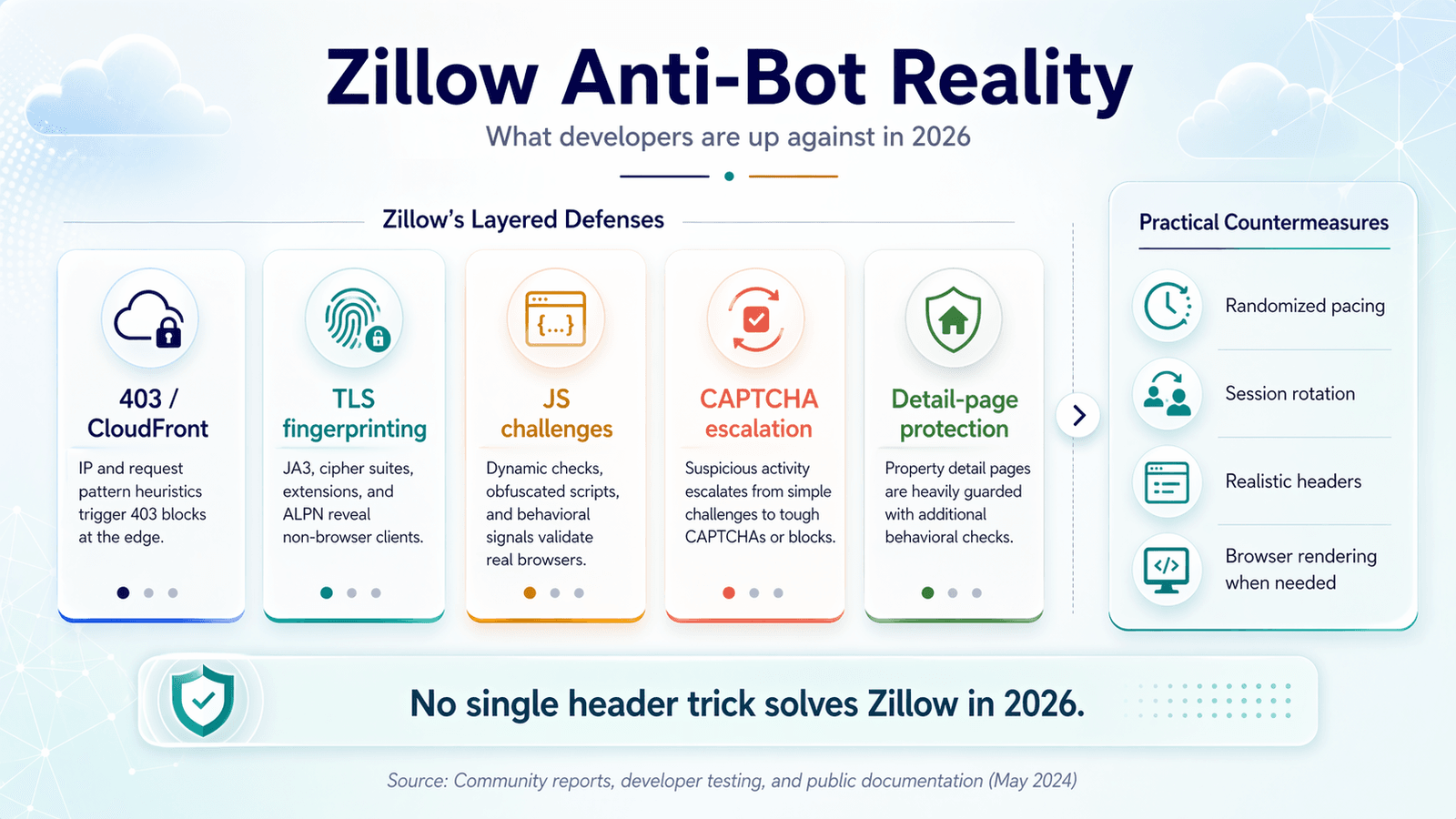
अगर आप DIY रास्ता चुन रहे हैं, तो ये चीज़ें सच में मदद करती हैं (और ये नहीं):
- Randomized request pacing जो human browsing जैसा लगे — fixed delays नहीं, बल्कि session-like behavior के साथ variable intervals
- Realistic header configurations जिनमें
Accept-Language,Sec-CH-UAfamily headers, और proper referer chains हों — लेकिन साफ़ कहें: realistic headers ज़रूरी हैं, पर्याप्त नहीं - Session rotation — एक ही proxy/cookie combination को सैकड़ों requests के लिए reuse न करें
- कब browser rendering पर जाना है, यह पहचानें — अगर आपका HTTP-only approach 50 requests के बाद 403 दे रहा है, तो आप हारती हुई लड़ाई लड़ रहे हैं
किसी भी ऐसे लेख पर भरोसा न करें जो यह संकेत दे कि एक जादुई header block 2026 में Zillow की समस्या हल कर देगा।
Thunderbit की cloud scraping यह सब अपने-आप संभालती है — US/EU/Asia में rotating infrastructure, rendering और anti-bot management के साथ — ताकि users proxy-configuration के rabbit hole में जाएँ ही नहीं। असली बात यह है कि operational burden कहाँ रखा जाए।
AI के साथ Zillow Scraping आज़माएँ
अपने Zillow Scraper GitHub Setup को भविष्य के लिए तैयार रखने के Best Practices
जो पाठक GitHub/DIY रास्ता चुनते हैं, उनके लिए ये practices उन scrapers को अलग करती हैं जो महीनों चलते हैं, उनसे जो कुछ ही दिनों में टूट जाते हैं।
Selectors को कमज़ोर Class Names से अलग रखें
अगर कोई repo Zillow के auto-generated CSS class names पर निर्भर है, तो इसे red flag मानें। ये names बार-बार बदलते हैं — कभी-कभी हर हफ़्ते। इसके बजाय:
- Elements को
aria-label,data-*attributes, या पास के heading text से target करें - जहाँ संभव हो, text-content-based selectors का इस्तेमाल करें
- जब Zillow page source में structured data देता हो, तो HTML parsing की जगह JSON-first extraction को प्राथमिकता दें
Automated Health Checks जोड़ें
Zillow scraping को एक बार चलने वाले script की तरह नहीं, production monitoring की तरह treat करें। Cron job या GitHub Action सेट करें जो:
- हर दिन आपके scraper को एक known listing पर चलाए
- Output schema validate करे (क्या सभी expected fields मौजूद हैं और खाली नहीं हैं?)
- Output malformed या empty होने पर alert trigger करे
इससे टूट-फूट हफ़्तों की बजाय 24 घंटों के भीतर पकड़ में आती है।
Dependency Versions Pin करें और Virtual Environments इस्तेमाल करें
अपने Python (या Node) dependencies को हमेशा specific versions पर pin करें। Virtual environments या Docker containers इस्तेमाल करें। हमारी audit में पुराने repos दिखाते हैं कि install rot कितनी तेज़ी से फैलती है — broken dependencies अक्सर पहली चीज़ होती हैं जो फेल होती हैं, इससे पहले कि Zillow का anti-bot stack सामने आए।
Scrape Volume को संयमित रखें
वह ~100-request threshold universal नहीं है, लेकिन यह एक भरोसेमंद reminder है कि volume scraper के व्यवहार को बदल देता है, जो testing में ठीक लग रहा था। अपने requests को sessions में फैलाएँ। Randomized delays इस्तेमाल करें। एक ही run में 10,000 listings scrape करने की कोशिश न करें।
कब DIY मेहनत के लायक नहीं रहता
अगर आप data analyze करने से ज़्यादा समय अपने scraper को maintain करने में लगा रहे हैं, तो economics उलट चुकी है। यह failure नहीं — managed solution पर विचार करने का संकेत है।
Zillow Scraper GitHub (DIY) बनाम No-Code Tools: एक ईमानदार decision matrix
“zillow scraper github” के लिए audience साफ़ तौर पर दो हिस्सों में बँटती है: वे developer जो code ownership चाहते हैं, और real estate professionals जो बस spreadsheet में data चाहते हैं। दोनों valid हैं। असली tradeoffs कुछ यूँ सामने आते हैं।
Side-by-Side Comparison Table
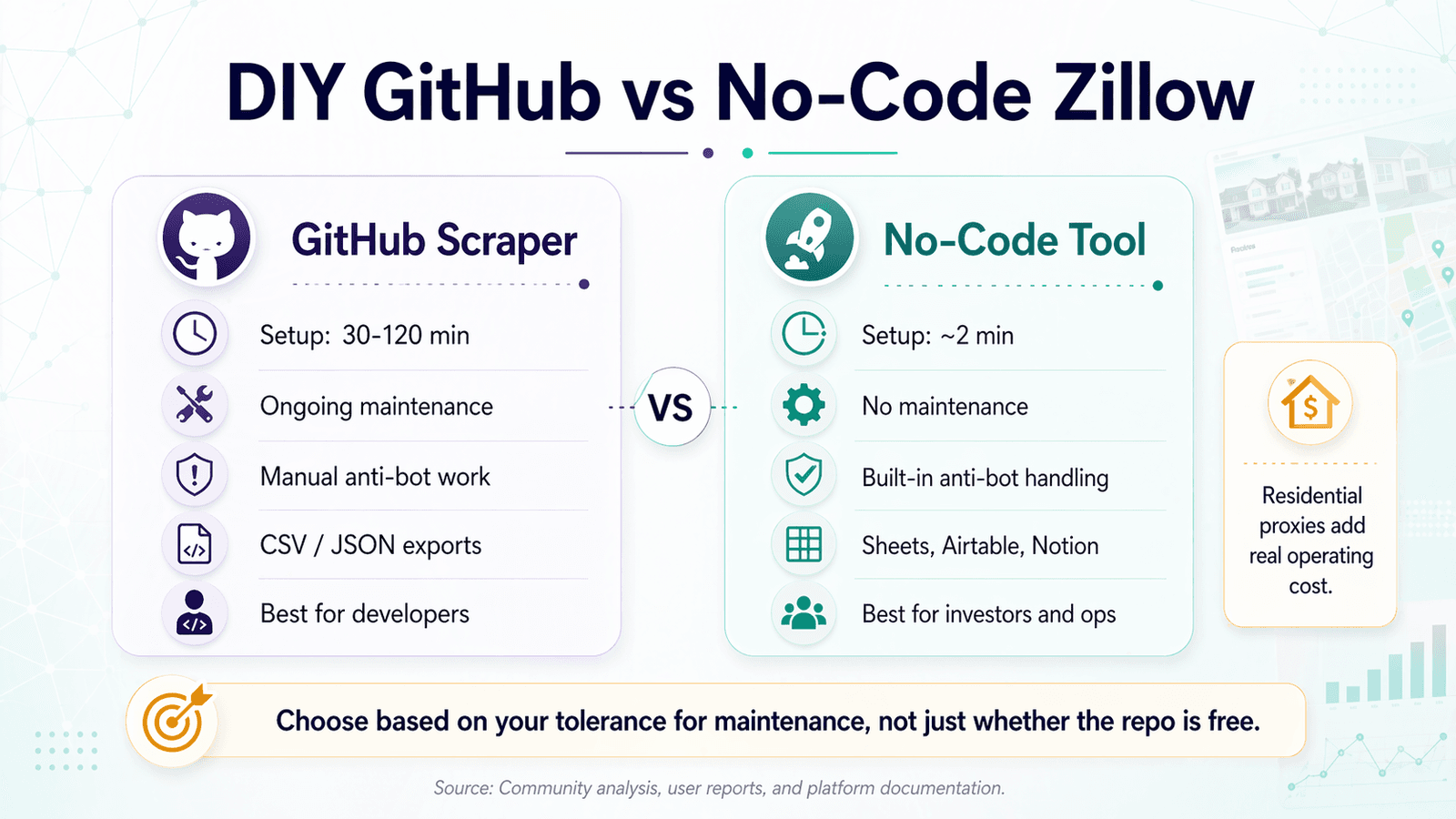
| Criteria | GitHub Scraper (Python) | No-Code Tool (e.g., Thunderbit) |
|---|---|---|
| Setup time | 30–120 min (env, deps, proxies) | ~2 min (extension install, scrape पर क्लिक) |
| Maintenance | लगातार — Zillow बदलते ही टूट सकता है | नहीं — AI page layout के अनुसार अपने-आप adapt हो जाता है |
| Anti-bot handling | Manual (proxies, headers, delays) | Built-in (cloud scraping, rotating infra) |
| Data fields | Custom — जो आप code करें | AI-suggested या template-based |
| Export options | Code के ज़रिए CSV/JSON | Excel, Google Sheets, Airtable, Notion — free |
| Cost | Free (code) + proxy costs ($3.50–$8/GB for residential) | Free tier उपलब्ध; उससे आगे credit-based |
| Customization ceiling | Unlimited (code आपका है) | High (field AI prompts, subpage scraping) लेकिन सीमित |
Proxy Cost की हकीकत
“Free repo” वाली दलील proxy costs जोड़ते ही कम असरदार हो जाती है। Residential proxies की current public pricing:
| Provider | Pricing (as of April 2026) |
|---|---|
| Webshare | 1 GB के लिए $3.50/GB, बड़े bundles पर कम |
| Decodo | ~ $3.50/GB pay-as-you-go |
| Bright Data | सामान्यतः $8/GB, मौजूदा promo के साथ $4/GB |
| Oxylabs | $8/GB से शुरू |
Repo मुफ़्त हो सकता है, लेकिन proxy-backed Zillow workflow आम तौर पर मुफ़्त नहीं होता।
कब GitHub Repo चुनें
- आपको code लिखना और maintain करना पसंद है
- आपको बहुत specific customization चाहिए (custom data transformations, proprietary pipeline integration)
- आपके पास breakage handle करने का समय और technical skill है
- आप proxy infrastructure manage करने को तैयार हैं
कब Thunderbit चुनें
- आपको आज ही reliable data चाहिए, बिना setup या maintenance के
- आप real estate agent, investor, या ops team member हैं — developer नहीं
- आप export code लिखे बिना सीधे Google Sheets, Airtable, या Notion में export करना चाहते हैं
- आप अतिरिक्त configuration के बिना subpage scraping (listing को detail-page data से enrich करना) चाहते हैं
- आप scheduled scraping को आसान भाषा में समझाया हुआ चाहते हैं
Zillow Scraping के लिए Thunderbit इंस्टॉल करें
चरण-दर-चरण: Thunderbit से Zillow कैसे scrape करें (GitHub की ज़रूरत नहीं)
No-code रास्ता GitHub setup process से बिल्कुल अलग दिखता है।
Step 1: Thunderbit Chrome Extension इंस्टॉल करें
Chrome Web Store पर जाएँ, Thunderbit इंस्टॉल करें, और sign up करें। Free tier उपलब्ध है।
Step 2: Zillow पर जाएँ और Thunderbit खोलें
किसी भी Zillow search results page पर जाएँ — मान लीजिए किसी खास zip code में homes for sale। अपने browser toolbar में Thunderbit extension icon पर क्लिक करें।
Step 3: Zillow Instant Scraper Template का उपयोग करें (या AI से fields सुझवाएँ)
Thunderbit में एक pre-built Zillow template है — कोई configuration नहीं, बस एक क्लिक। यह template standard fields को कवर करता है: Address, Price, Beds, Baths, Square Feet, Agent Name, Agent Phone, और Listing URL।
वैकल्पिक रूप से, “AI Suggest Fields” पर क्लिक करें और AI page पढ़कर columns सुझाएगा। मेरे अनुभव में यह आमतौर पर 20+ fields पहचान लेता है, जिनमें Zestimate भी शामिल है।
Step 4: Scrape पर क्लिक करें और results देखें
“Scrape” पर क्लिक करें। Thunderbit pagination, anti-bot, और data structuring अपने-आप संभाल लेता है। आपको results की structured table मिलती है — न 403 errors, न खाली fields, न proxy configuration।
Step 5: Subpage Data से enrich करें (वैकल्पिक)
“Scrape Subpages” पर क्लिक करें, ताकि Thunderbit हर listing के detail page पर जाए और अतिरिक्त fields निकाले: price history, tax records, lot size, school ratings। GitHub setup में यह अपना selector logic और anti-bot handling वाला एक जटिल दूसरा scraping pass होता। यहाँ यह एक क्लिक का काम है।
Step 6: अपना data मुफ्त में export करें
Excel, Google Sheets, Airtable, या Notion में export करें — सब मुफ़्त। चाहें तो CSV या JSON के रूप में download करें। कोई export code लिखने की ज़रूरत नहीं।
यह GitHub user journey से काफ़ी अलग है, जो आम तौर पर environment setup से शुरू होती है और 403s की troubleshooting पर खत्म।
CSV से Insight तक: Zillow Data के साथ असल में क्या करें
ज़्यादातर guides “यह रहा आपका CSV” पर खत्म हो जाते हैं। यह ऐसा है जैसे किसी को fishing rod देकर यह बताए बिना चले जाना कि मछली पकाने के बाद क्या करना है।
Scraping पहला कदम है। बाकी यहाँ है।
Step 1: Scrape — Listing Data इकट्ठा करें
Search results से core fields: price, beds, baths, sqft, address, Zestimate, listing status, days on market, listing URL.
Step 2: Enrich — Subpage Scraping से Detail-Page Data निकालें
Property detail pages से अतिरिक्त fields: price history, tax records, lot size, HOA fees, school ratings, agent contact details. Thunderbit की subpage scraping यह एक क्लिक में कर देती है। GitHub setup में आपको अपने selectors और anti-bot logic के साथ एक अलग scraping pass बनाना पड़ेगा।
Step 3: Export — अपने पसंदीदा platform पर भेजें
- Google Sheets तेज़ analysis और sharing के लिए
- Airtable mini-CRM या deal tracker के लिए
- Notion team dashboard के लिए
- CSV/JSON custom pipelines के लिए
Step 4: Monitor — Recurring Scrapes Schedule करें
यही वह pain point है जिसे कई forum threads अभी भी unresolved बताते हैं। आपको सिर्फ़ आज का data नहीं चाहिए — आपको price drops, status changes (active → pending → sold), और नई listings जैसे ही वे आएँ, पकड़नी हैं।
Thunderbit का scheduled scraper आपको plain language में intervals बताने देता है (जैसे, “हर मंगलवार और शुक्रवार सुबह 8 बजे”)। GitHub setup के लिए आपको cron job बनाना, authentication persistence handle करना, और failure recovery खुद manage करना होगा।
Step 5: Act — Deals filter करें और outreach workflows को feed करें
यहीं data decision बनता है:
- Investors के लिए: 30 दिनों में >5% price drops, days-on-market >90, price below Zestimate filter करें
- Agents के लिए: buyer criteria से match करने वाली नई listings, expired/withdrawn listings को prospecting के लिए flag करें
- Researchers के लिए: price per sqft trends, sold-vs-list price ratios, inventory velocity निकालें
Real-World Example: 3 Zip Codes में 200 Listings track करने वाला Investor
यहाँ data fields हर use case के लिए कैसे map होते हैं:
| Data Field | Investing | Agent Leads | Market Research |
|---|---|---|---|
| Price | ✅ Core | ✅ | ✅ |
| Zestimate | ✅ Core (gap analysis) | ✅ | |
| Price history | ✅ Core (trend detection) | ✅ | |
| Days on market | ✅ Core (motivation signal) | ✅ | ✅ |
| Tax assessed value | ✅ (valuation cross-check) | ✅ | |
| Listing status | ✅ | ✅ Core | ✅ |
| List date | ✅ | ✅ | |
| Agent name/phone | ✅ Core | ||
| Price per sqft | ✅ | ✅ Core | |
| Sold price vs. list price | ✅ Core |
Investor हर हफ़्ते तीन zip codes में scrape set up करता है, Google Sheets में export करता है, और price drops तथा DOM outliers के लिए conditional formatting लगाता है। Agent Airtable में export करके prospecting pipeline बनाता है। Researcher trend analysis के लिए spreadsheet में डालता है। एक ही scraping step, तीन अलग workflows।
Zillow Scraping के लिए Legal और Ethical Considerations
संक्षेप में, लेकिन ज़रूरी।
Zillow’s Terms of Use स्पष्ट रूप से automated queries, including screen scraping, crawlers, spiders, और CAPTCHA जैसी precautions को bypass करना, प्रतिबंधित करता है। Zillow की robots.txt /api/, /homes/, और query-state URLs सहित व्यापक paths को disallow करती है।
साथ ही, US web-scraping law को “all scraping is illegal” कहकर नहीं समेटा जा सकता। hiQ v. LinkedIn cases की श्रृंखला CFAA के तहत public-data scraping के लिए महत्वपूर्ण है। Haynes Boone की एक ताज़ा अप्रैल 2026 summary बताती है कि Ninth Circuit ने फिर LinkedIn की public member profiles scraping रोकने की कोशिश खारिज कर दी। लेकिन इससे अलग contract, privacy, या anti-circumvention arguments मिट नहीं जाते, और Zillow की ToS भी अप्रासंगिक नहीं हो जाती।
इसका निचोड़:
- Public-page scraping के पास कई साइट owners की तुलना में मज़बूत CFAA arguments हो सकते हैं
- Zillow फिर भी contractually इसे मना करता है
- Technical barriers bypass करने से कानूनी जोखिम बढ़ता है
- अगर आपका commercial या high-volume use case है, तो legal advice लें
- कानूनी स्थिति चाहे जैसी हो, responsibly scrape करें: rate limits का सम्मान करें, servers पर बोझ न डालें, personal data का spam के लिए उपयोग न करें
अपने Zillow Workflow के लिए सही Tool चुनना
2026 में Zillow scraper GitHub landscape दिखने से कहीं पतली है। ज़्यादातर visible repos stale, brittle, या broken हैं। कुछ नए repos — खासकर pyzill — अभी भी काम करते हैं, लेकिन केवल ongoing proxy और anti-bot maintenance के साथ।
असल चुनाव open source बनाम closed source नहीं है। यह control बनाम operational burden है।
- अगर आप full control चाहते हैं और scrapers maintain करना पसंद करते हैं, तो GitHub repos शक्तिशाली हैं — लेकिन proxy management, selector updates, और health monitoring के लिए समय बजट करें।
- अगर आपको zero upkeep के साथ आज reliable data चाहिए, तो Thunderbit का Zillow template आपको कुछ ही मिनटों में search से spreadsheet तक पहुँचा देता है। इसका AI हर बार page structure fresh पढ़ता है, इसलिए यह hardcoded selectors पर निर्भर नहीं रहता जो टूट जाएँ।
दोनों रास्ते वैध हैं।
सबसे खराब outcome यह है कि आप GitHub scraper setup करने में घंटों लगा दें, और बाद में पता चले कि वह पिछले महीने टूट चुका था और किसी ने README अपडेट नहीं किया।
अगर आप no-code रास्ता काम करते देखना चाहते हैं, तो Thunderbit का free tier आज़माएँ — लगभग 2 clicks में Zillow listings scrape करें और उसे उसी platform में export करें जिसका आपकी टीम पहले से उपयोग करती है। पहले process देखना चाहते हैं? Thunderbit YouTube channel पर walkthroughs हैं।
Zillow Scraping के लिए Thunderbit आज़माएँ Get Started Free
FAQs
क्या 2026 में GitHub पर कोई working Zillow scraper है?
कुछ repos आंशिक रूप से काम कर रहे हैं — सबसे खास johnbalvin/pyzill, जो अभी भी data लौटाता है लेकिन उसे rotating residential proxies और ongoing tuning की ज़रूरत होती है। ज़्यादातर starred repos (जिनमें 170 stars वाला ChrisMuir/Zillow और 152 stars वाला scrapehero/zillow_real_estate शामिल हैं) Zillow के anti-bot changes और DOM updates की वजह से टूट चुके हैं। वर्तमान status के लिए ऊपर दी गई audit table देखें।
क्या Zillow GitHub scrapers को detect और block कर सकता है?
हाँ। Zillow IP blocking, TLS fingerprinting, JavaScript challenges, CAPTCHAs, और rate limiting का उपयोग करता है। Testing में, Chrome-like headers के साथ plain HTTP requests ने भी CloudFront से 403 लौटाया। Proper anti-detection measures — residential proxies, realistic headers, browser rendering — के बिना GitHub scrapers जल्दी block हो जाते हैं, अक्सर 100 requests के भीतर।
Zillow से कौन सा data scrape किया जा सकता है?
सामान्य fields में price, address, beds, baths, square feet, Zestimate, listing status, days on market, listing URL, और agent contact details शामिल हैं। Detail-page scraping से price history, tax records, lot size, HOA fees, और school ratings भी मिल सकते हैं। Exact fields आपके scraper की क्षमता और इस बात पर निर्भर करते हैं कि आप search results देख रहे हैं या individual property pages।
क्या Zillow scraping legal है?
यह nuance वाला सवाल है। Publicly available data scraping के पक्ष में hiQ v. LinkedIn cases के बाद कानूनी आधार बेहतर है, लेकिन Zillow की Terms of Use automated access को साफ़ तौर पर प्रतिबंधित करती हैं। Technical barriers (CAPTCHAs, rate limits) bypass करने से अतिरिक्त कानूनी जोखिम जुड़ता है। Personal research के लिए जोखिम आम तौर पर कम है। Commercial या high-volume use cases के लिए legal counsel लें। हर हाल में responsibly scrape करें।
Thunderbit बिना टूटे Zillow कैसे scrape करता है?
Thunderbit हर run में page structure को fresh पढ़ने के लिए AI का उपयोग करता है — यह hardcoded CSS selectors या XPaths पर निर्भर नहीं रहता, जो Zillow का frontend बदलते ही टूट जाते हैं। इसके पास one-click extraction के लिए pre-built Zillow instant scraper template भी है। Cloud scraping rotating infrastructure के साथ anti-bot को अपने-आप संभालती है, इसलिए users को proxies configure करने या browser rendering खुद manage करने की ज़रूरत नहीं होती। जब Zillow layout बदलता है, AI adapt हो जाता है — repo update की ज़रूरत नहीं पड़ती।
और जानें




