
Private label market share in the U.S. hit roughly 21% in 2024—up from about 18–19% just five years earlier. That's not a blip. It's a structural shift in how Americans buy everything from vitamins to trash bags.
And yet, most "private label product ideas" articles respond to this momentum by listing 15–25 categories, giving each a paragraph of cheerful generalities, and leaving you to figure out which ones are actually worth your money. I've read dozens of them. They're fine for inspiration, terrible for decisions.
So this post takes a different approach: six categories I'd actually put capital behind in 2026, scored on the same criteria—margins, MOQ, competition, repeat purchases, regulatory load, and (this is the one nobody else talks about) 2026 tariff exposure. I'll also walk through how to validate any idea before you spend a dollar, what realistic budgets look like, and the honest patterns that separate private label winners from expensive lessons.
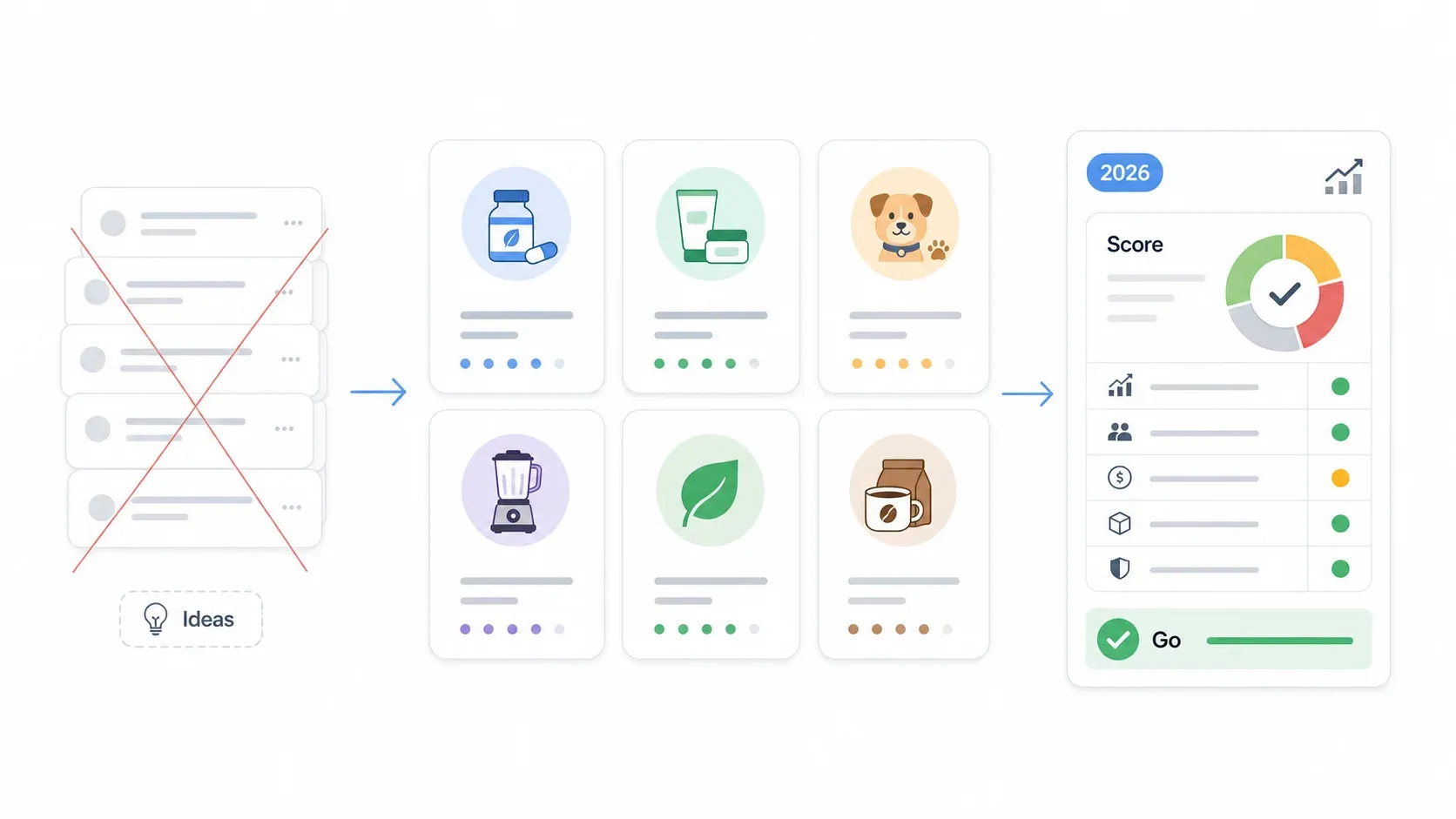
What Are Private Label Products (and Why They're Booming in 2026)
Private label products are goods manufactured by a third party and sold under your own brand name. You don't run the factory—you design the product spec, branding, and packaging, then a contract manufacturer produces it for you.
One distinction worth nailing down early: private label is not the same as white label. Private label means custom specs, your formulation or design, and typically exclusivity with that manufacturer for your SKU. White label is a generic product that multiple brands can slap their logo on. The difference matters because in 2026, the opportunity isn't in relabeling the same thing everyone else sells. It's in making something slightly (or significantly) better.
Why now? A few reasons converge. First, consumer trust in store brands and indie brands keeps climbing—Kirkland Signature, Amazon Basics, Trader Joe's private labels, and Target's Good & Gather have trained shoppers to expect quality from non-legacy brands. Second, DTC channels (Shopify, TikTok Shop, subscription tools) are mature enough that you don't have to bet everything on Amazon. Third, AI-powered research tools—including what we've built at Thunderbit—now let you validate demand, scrape competitor data, and mine reviews in hours instead of weeks. The cost of making informed decisions has dropped dramatically, even as the cost of winning on Amazon has risen.
U.S. private label retail sales reached approximately $271 billion in 2024, with Circana reporting CPG private label at roughly $330 billion depending on measurement scope. Both figures are record highs. The momentum heading into 2026 is supported by high household penetration, continued retailer investment in own-brand programs, and a consumer base that's learned to evaluate products on merit rather than brand legacy alone.
How I Picked These 6 Private Label Product Ideas (The Scoring Criteria)
Here's the framework behind every pick in this article. Each category was evaluated on six dimensions—because a 70% margin means nothing if you can't afford the MOQ, and a low-competition niche is worthless if the product gets stuck in customs.
| Criteria | Why It Matters |
|---|---|
| Average Margin Range | Determines profitability after COGS, FBA, PPC, returns, and tariffs |
| Typical MOQ | Impacts how much capital you need before selling a single unit |
| Amazon Competition Level | Affects PPC costs and how hard it is to rank organically |
| Repeat Purchase Potential | Drives lifetime value and sustainable revenue without constant new customer acquisition |
| Regulatory Complexity | FDA/EU compliance for supplements, cosmetics, food—skip this and you risk listing suppression or worse |
| Shipping & Storage Ease | Lightweight/small = lower FBA fees and freight costs; bulky = margin compression |
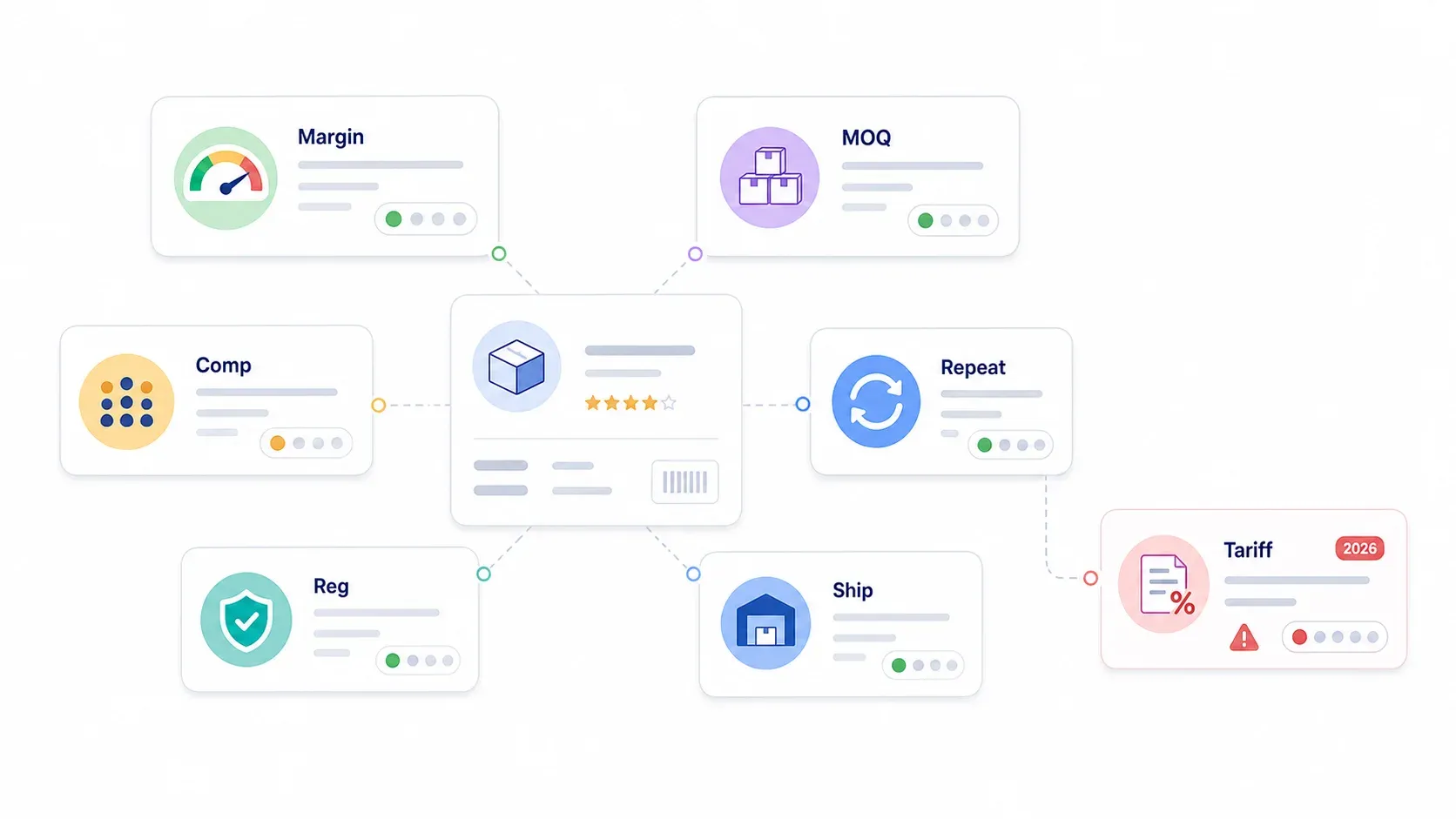
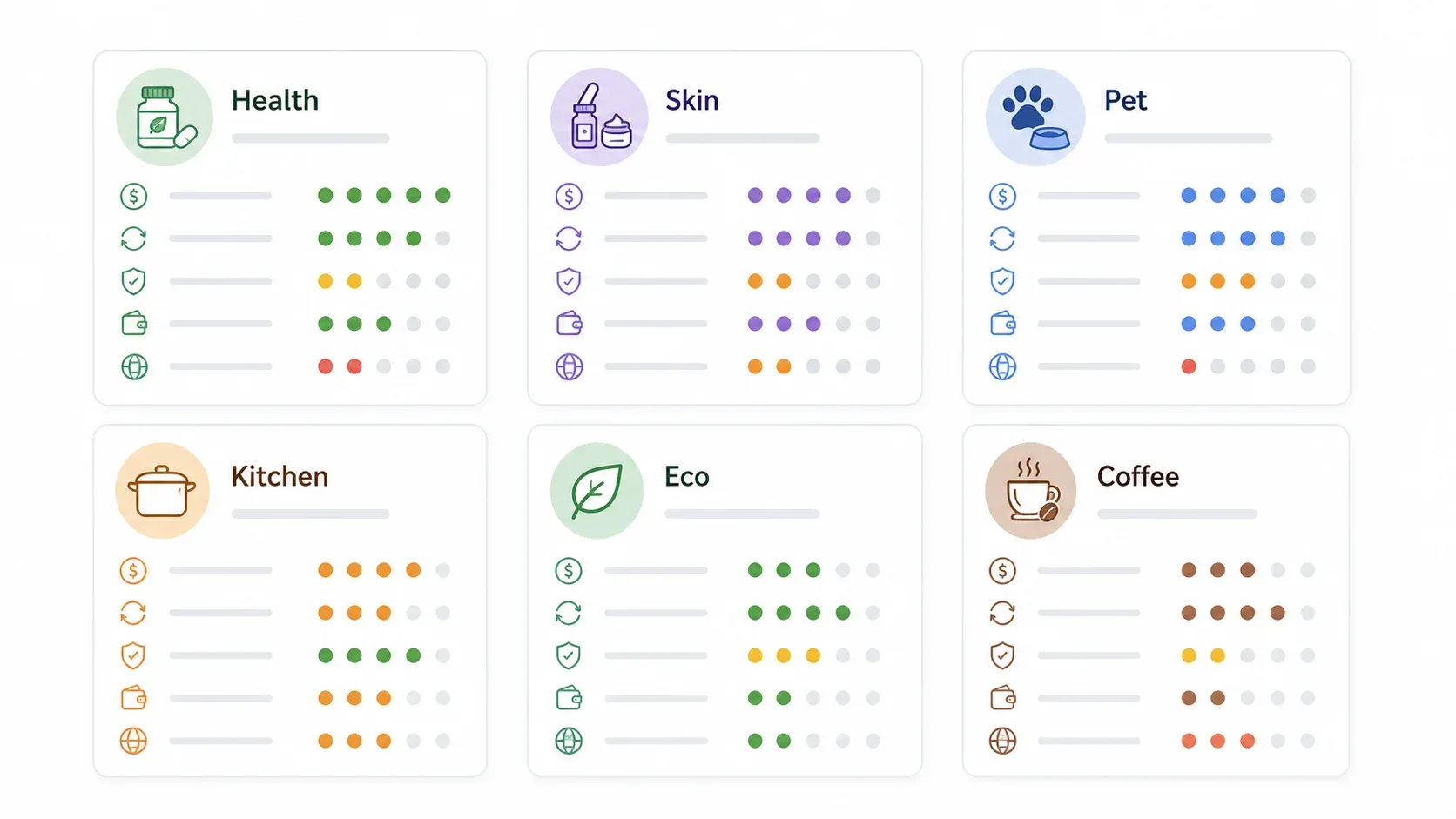
Most competing "private label product ideas" articles don't give you a structured way to compare trade-offs across categories. You're left scrolling paragraphs, mentally weighing one vague description against another. The scorecard below is designed to let you narrow from six to two or three options based on your actual budget, risk tolerance, and comfort with regulation.
The Side-by-Side Scorecard: All 6 Private Label Product Ideas at a Glance
| Category | Margin Range | Typical MOQ | Competition | Repeat Purchase | Regulatory Load | Startup Cost | 2026 Tariff Exposure |
|---|---|---|---|---|---|---|---|
| Health Supplements | 60–80% | 500–1,000 units | High | ★★★★★ | High (FDA/cGMP) | $3K–$10K | Low (if U.S.-made) |
| Skincare & Personal Care | 60–75% | 200–500 units | High | ★★★★ | Medium (FDA cosmetics/MoCRA) | $2K–$8K | Medium (if China-sourced) |
| Pet Products | 40–60% | 300–1,000 units | Medium | ★★★★ (consumables), ★★ (accessories) | Low–Medium | $1.5K–$5K | Medium |
| Kitchen Gadgets | 35–55% | 500–2,000 units | Medium-High | ★★ | Low–Medium | $2K–$7K | High |
| Eco-Friendly Products | 45–65% | 500–1,500 units | Low-Medium | ★★★★ (consumables) | Low–Medium | $2K–$5K | Medium (lower via India/domestic) |
| Coffee & Beverages | 50–70% | 200–500 lbs | Medium | ★★★★★ | Medium (FDA food) | $2K–$6K | Low (Latin America sourcing) |
How to read this: If you're bootstrapping with under $3K, look at eco-friendly consumables, simple pet accessories, or a small coffee test. If you want maximum repeat purchases and can handle compliance, supplements and coffee are your best bets. If you're a brand builder who wants customer loyalty, skincare. If you're a content creator with TikTok chops, kitchen gadgets—but model your tariffs first.
1. Health Supplements & Vitamins: High Margins, High Repeat Purchases
Supplements make accountants smile. Gross margins of 60–80% are realistic for capsules, gummies, and powders. The product is small and light (FBA loves that). And the repeat purchase rate is the highest on this list—people don't take probiotics once and call it a day.
The Council for Responsible Nutrition reports that roughly 74–80% of U.S. adults use dietary supplements. The market is large, mature, and still growing, especially around targeted benefits: gut health, sleep, women's wellness, healthy aging, and performance recovery.
But there's a catch (there's always a catch).
Competition on Amazon for generic supplements is brutal. "Multivitamin" and "vitamin D" are not where you win. The opportunity is in specificity: benefit + audience + format. "Magnesium glycinate gummies for women 40+" is more defensible than "magnesium supplement." "Sugar-free melatonin-free sleep gummies with L-theanine" is more interesting than "sleep aid."
Best Sub-Niches for Private Label Supplements in 2026
- Gut health probiotics — still growing, especially when positioned for a specific audience (women's digestive health, post-antibiotic recovery, travel digestion)
- Sleep support gummies — gummy format reduces friction, but differentiate: melatonin-free, magnesium glycinate, or ashwagandha blends
- Adaptogens and stress support — trend-aligned, but claims must be conservative
- Collagen peptides — mature but viable in specific formats: marine collagen, beauty-from-within bundles, or unflavored coffee-friendly versions
Lower-competition angles come from combining ingredient + audience + form factor, not from the ingredient alone.
What to Watch Out For: Regulatory and Compliance Basics
Dietary supplements are regulated by the FDA under DSHEA. Manufacturers must follow current Good Manufacturing Practice (cGMP) regulations under 21 CFR Part 111. Labels need Supplement Facts panels, proper ingredient lists, and structure/function claim disclaimers. Disease claims ("treats anxiety," "cures insomnia") are off-limits unless you want a very unpleasant letter from the FDA.
Budget $500–$1,000 for compliance review on your first supplement. That's cheap compared to the cost of a suppressed listing, recalled inventory, or regulatory action.
Sellers on r/FulfillmentByAmazon consistently report the same pattern: winners avoid generic multivitamins, invest in branding and subscriptions, and use review analysis to find complaints like "capsules too large," "taste too sweet," or "powder clumps." Failures come from copying a top listing, underestimating PPC, or making claims that trigger suppression.
2. Skincare & Personal Care Products: Brand-Friendly with Strong Loyalty
If you want customers who actually come back and buy again without a coupon code, skincare is your category. Gross margins of 60–75% are achievable, MOQs can start as low as 200–500 units through contract labs, and once a customer finds a moisturizer or serum that works for them, they tend to stick around.
The "clean beauty" and ingredient-transparency movement continues to favor indie private label brands. Consumers are reading ingredient lists, comparing actives, and choosing based on formulation logic rather than legacy brand names.
That's your opening.
Trending Skincare Sub-Niches for 2026
- Barrier-repair creams — ceramides, panthenol, and microbiome-friendly formulas are resonating with consumers who understand skin barrier health
- Peptide serums — competitive as a broad term, but specific positioning (age group, texture, skin concern) creates room
- Scalp care — consumers are treating scalp as skin, opening space for exfoliating serums, scalp moisturizers, and hair-density-adjacent products (without risky medical claims)
- Fragrance-free/sensitive skin lines — underserved on Amazon relative to demand
Amazon room for new entrants is better in specific concern + ingredient + format niches than broad terms like "vitamin C serum," where top listings often have thousands of reviews.
Building a Skincare Brand That Sticks
Successful indie skincare brands win through packaging clarity, ingredient transparency, and one memorable hero product. Think The Ordinary's approach: clear ingredient logic, affordable pricing, and education-first marketing. The lesson for private label: you don't need 20 SKUs. You need one product that solves a real problem and looks trustworthy in a search thumbnail.
Skincare is regulated under FDA cosmetics rules, and the Modernization of Cosmetics Regulation Act (MoCRA) expanded requirements around facility registration, product listing, and safety substantiation. A moisturizer can claim "hydrates dry skin." It should not claim to "treat eczema" unless it meets drug requirements.
One note: SPF-infused daily moisturizers have strong demand, but SPF makes a product an OTC drug in the U.S., which significantly increases regulatory complexity. First-time sellers may want to start with non-SPF products unless they're working with an experienced lab.
3. Pet Products & Accessories: A Loyal (and Growing) Customer Base
Americans spent roughly $152 billion on their pets in 2024, and that number keeps climbing. Pet owners don't stop buying food, treats, and grooming supplies when the economy wobbles. That resilience makes pet products a reliable private label category.
Margins are usually lower than supplements or skincare—40–60% gross for accessories—but regulatory complexity is also lower, making this a friendlier entry point for first-time sellers. The key distinction: consumables (waste bags, wipes, treats, dental chews) have strong repeat purchase potential, while one-time accessories (bowls, beds, toys) need to be supplemented with a broader catalog or paired with consumables.
Top Pet Product Sub-Niches with Room to Grow
- Biodegradable or compostable waste bags — combines pet demand with sustainability positioning (but claims need certification)
- Interactive puzzle toys — solve boredom and enrichment, though designs are easy to copy
- Pet grooming tools — differentiate through ergonomic improvements, material quality, or content-driven marketing
- Pet wellness consumables — calming chews, joint support, dental care; higher margins but more compliance work
For Amazon competition, the best opportunity is not "dog bowl" broadly. Look for sub-niches where several top listings on page one have fewer than 500 reviews, and prices still support a 30%+ net margin after FBA and PPC.
Sourcing Tips for Pet Products
Common sourcing regions: China for plastic/silicone/metal accessories, Vietnam for textiles, India for cotton/jute/natural fiber products, and domestic suppliers for premium or food-contact items. Quality considerations include chew safety, choking hazards, non-toxic dyes, stainless steel grade, and BPA-free plastics. For toys or chew products, insist on safety testing.
Forum pattern I keep seeing: sellers fail when they launch a commodity pet accessory with no design improvement and rely on PPC. Sellers succeed when they improve a visible complaint—bowls that slide, beds that flatten, bags that tear, brushes that hurt skin.
4. Kitchen Gadgets & Home Organization: Viral Potential, Lower Repeat Purchases
Kitchen gadgets live and die by social media. A well-designed vegetable chopper, space-saving organizer, or silicone cooking tool can go viral overnight. The category has broad appeal and lots of impulse buys. Margins around 35–55% gross are plausible.
The trade-off is real, though.
People buy one avocado slicer, not ten. Repeat purchase potential is the lowest on this list, which means you either need a wider catalog, bundling strategy, or a plan to pair gadgets with consumable products.
How to Stand Out in a Crowded Kitchen Gadgets Market
Kitchen products need to win the search thumbnail. That means solving one specific pain point, bundling complementary items, improving dimensions for small kitchens, or investing in lifestyle photography that shows scale and use. Recent viral examples include countertop ice makers, fridge organizers, glass rinser attachments, and under-sink organizers—all of which demonstrate that content drives sales in this category.
The problem: once something goes viral, copycats appear within weeks. Your differentiation window is short unless you have design patents or a brand moat.
Margin Watch: Why Kitchen Gadgets Are Most Tariff-Exposed
Most kitchen gadgets are sourced from China and may fall under HTS categories affected by Section 301 tariffs. Silicone tools, plastic organizers, stainless utensils, and small appliances can each land in different HTS codes—sellers must classify at the SKU level, not the category level.
If China-only sourcing turns a 35% net margin into 20% after duties, the product isn't robust enough for 2026. Alternative sourcing from India, Mexico, or domestic manufacturers can protect margins, but quality and lead times need validation.
5. Eco-Friendly Everyday Products: Low Competition, Values-Driven Buyers
Here's the category most sellers overlook. Margins of 45–65%, low-to-medium Amazon competition, and a growing base of consumers who will pay a premium for products that align with their values.
The best eco-friendly private label products are not decorative "green" items. They're everyday replacements with repeat usage: compostable trash bags, bamboo toothbrush heads, laundry detergent sheets, reusable food wraps, refillable cleaning tablets, and wool dryer balls.
Why Eco-Friendly Is a Smart 2026 Play
Consumer surveys from McKinsey, NIQ, and PwC consistently show that many consumers prefer sustainable products and some will pay more—but actual purchase depends on price, trust, and convenience. The most useful framing: eco-friendly supports premium pricing when the product also performs as well as the conventional alternative.
Amazon's Climate Pledge Friendly badge is a useful trust cue. It doesn't guarantee sales, but it can improve click confidence when shoppers compare similar products. Products with eligible sustainability certifications (FSC, BPI, OEKO-TEX) qualify.
Sourcing Eco-Friendly Products Responsibly
The risk here is greenwashing. Claims like "compostable," "biodegradable," or "plastic-free" must be backed by certifications or clear substantiation. BPI certification is the standard for compostable products in North America. FSC certification covers responsibly sourced paper, wood, and bamboo. OEKO-TEX covers textile safety.
Alternative sourcing reduces tariff exposure: India for natural fibers and some compostable goods, domestic or Mexico for paper/cleaning products, Vietnam for textiles. The key is verifying claims before building packaging around them.
6. Coffee & Specialty Beverages: The Ultimate Repeat-Purchase Private Label Product
If I could only launch one product, it would be coffee. The math is hard to argue with: 50–70% gross margins, the highest repeat purchase rate on this list, relatively low MOQs through contract roasters (often 200–500 lbs), and the best tariff profile of all six categories.
The National Coffee Association continues to report coffee as one of America's most consumed beverages, with sustained interest in specialty, single-origin, cold brew, and functional formats. The subscription model is a natural fit—coffee is one of the best private label categories for building a DTC subscription business alongside Amazon.
Trending Beverage Sub-Niches for 2026
- Single-origin specialty coffee — competitive but brandable when tied to origin story, roast profile, and ethical sourcing
- Functional mushroom coffee and adaptogen blends — still strong, but taste and texture must be excellent (consumers won't sacrifice flavor for function)
- Cold brew concentrates — fit convenience demand but increase packaging and shelf-stability complexity
- Matcha and specialty tea blends — lower coffee-crowding and strong subscription potential
- Protein coffee and wellness mixes — can work if the product actually tastes good
Why Coffee Has the Best Tariff Profile of All 6 Categories
Green coffee is commonly sourced from Latin America, Africa, and parts of Asia. U.S. coffee imports from many origins carry low or zero ordinary duty, and coffee is not a China-sourcing-dependent category. That means coffee sellers are largely insulated from the Section 301 tariff shocks that hit kitchen gadgets and many pet/kitchen accessories.
FDA food labeling rules apply to coffee and beverages—identity, net quantity, nutrition facts, ingredient list, allergen disclosures, and truthful claims. Co-packers and contract roasters typically support compliance, but brand owners remain responsible for accurate labeling.
How to Validate Any Private Label Product Idea Before Spending a Dollar
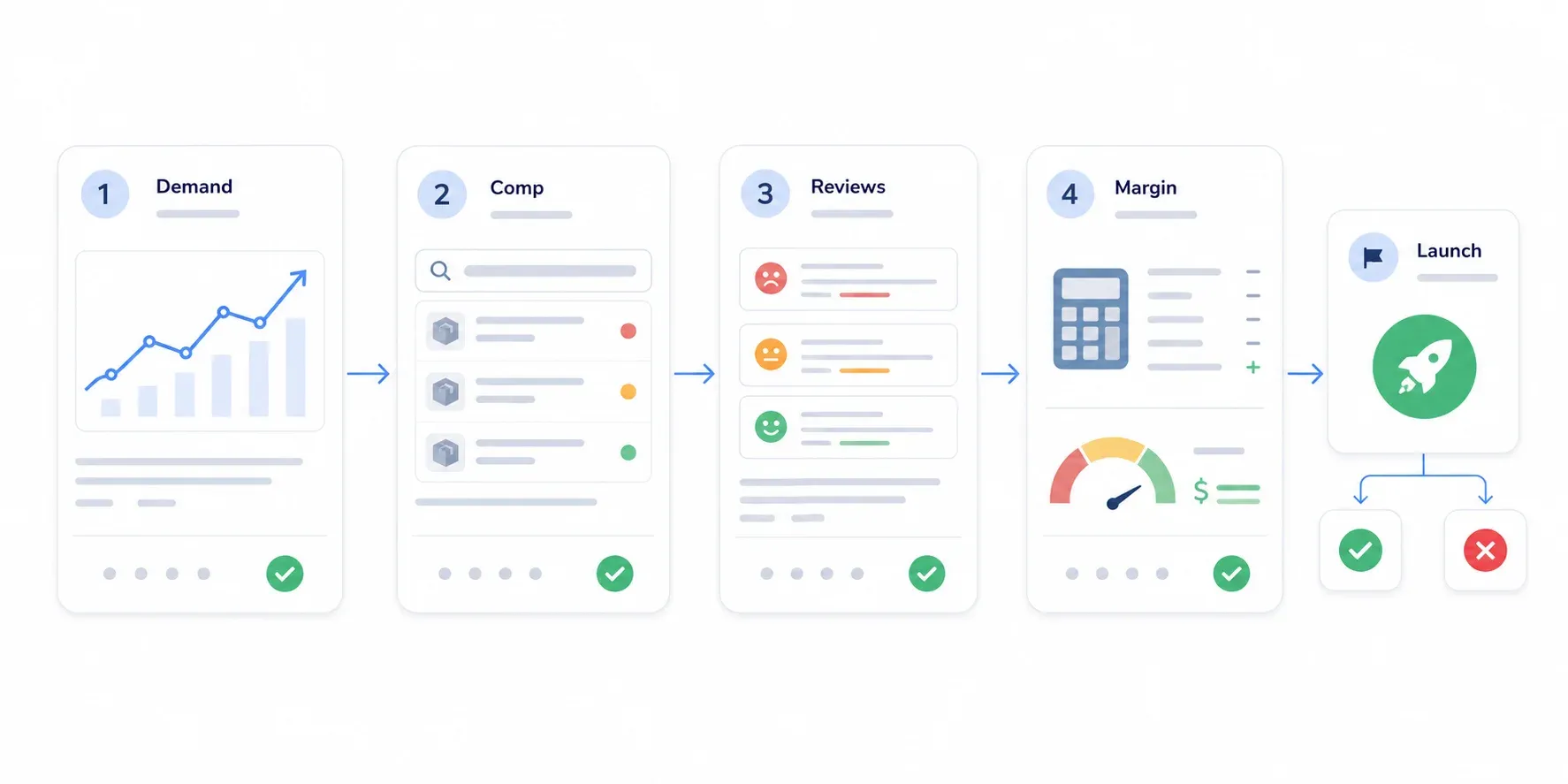
The question that dominates every Amazon seller forum thread about private label: "How do I know if this idea will actually sell?"
Here's a four-step workflow that costs you time, not money.
Step 1: Check Demand with Google Trends
Open Google Trends, set geography to United States, and compare 3–5 keyword variants for your target sub-niche. Use the five-year view first to see the big picture, then switch to 12 months to catch recent acceleration or decline.
For example, compare "mushroom coffee," "cold brew concentrate," "probiotic gummies," "barrier repair cream," and "compostable trash bags." You're looking for stable or rising interest—not a spike that already peaked.
Step 2: Scan the Competition with Thunderbit
Most sellers waste hours clicking through Amazon listings and manually copying data into spreadsheets. Instead, use Thunderbit's AI web scraper on Amazon search result pages to extract structured fields: product title, price, rating, review count, seller/brand, coupon text, and product URL. Thunderbit's AI Suggest Fields auto-detects the relevant columns from the page, and you can export directly to Google Sheets or Excel.
Scan Amazon Competition with AI
Scrape the first 3 pages of Amazon results for your target keyword. Then filter for products with review counts under 500, prices that support your margin model, and listings with visible weaknesses—poor images, unclear bundles, or generic positioning. If every listing on page one has 5,000+ reviews and aggressive PPC, that sub-niche is probably not where you want to start.
Step 3: Mine Competitor Reviews for Product Gaps
Private label differentiation lives in the reviews. Use Thunderbit's subpage scraping to visit each competitor listing and extract review text, star ratings, and common complaint language. You can check out how to scrape Amazon products and reviews for a walkthrough.
Look for repeated complaints: "cap leaks," "tastes chalky," "smells too strong," "bag tears easily," "brush handle breaks," "not dishwasher safe," "too small for large dogs," "packaging arrived damaged." Each complaint is a product spec improvement waiting to happen. That's your differentiation—not a new logo on the same product.
Step 4: Run the Margin Math
Use this formula:
Landed unit cost = factory unit cost + packaging + freight + duties/tariffs + inspection
Net margin = selling price – Amazon referral fee – FBA fee – landed cost – returns allowance – PPC cost per unit
The Amazon FBA Revenue Calculator is the official tool for modeling fulfillment and referral fees. Alibaba supplier quotes are starting points—always request samples, DDP quotes, carton specs, and lead times.
Rule of thumb: if the product can't show 30%+ net margin after COGS, FBA, freight, tariffs, and PPC in a conservative model, skip it or change the positioning, bundle, supplier, or channel.
Realistic Startup Budgets: From $500 Bootstrap to $10K+ Scale
Budget anxiety dominates private label forums because sellers hear two conflicting stories: "I started with $500" and "you need $10K minimum."
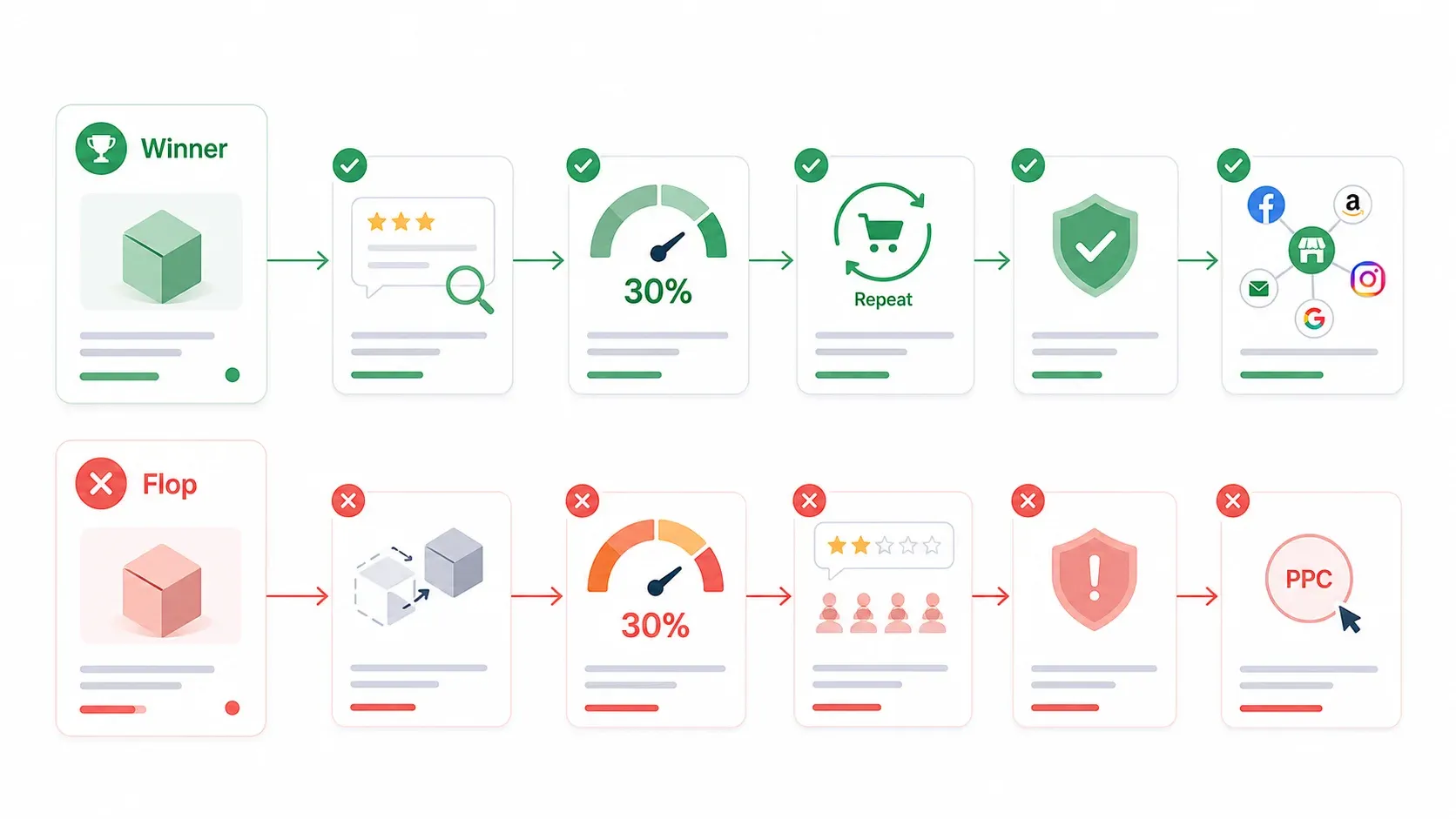
Both can be true. Here's a framework that applies across all six categories.
| Tier | Budget | What It Covers | Best For |
|---|---|---|---|
| Bootstrap | $500–$2K | Small MOQ, basic labels, organic launch, DIY photos | Testing a concept with minimal risk |
| Moderate | $2K–$10K | Custom packaging, 3+ supplier samples, pro photos, initial PPC, compliance review | Serious first product launch |
| Scale | $10K–$15K+ | Larger MOQ for unit cost savings, professional branding, multi-channel launch, aggressive PPC | Experienced sellers expanding catalog |
Bootstrap Tier: $500–$2K
- Product samples: $50–$300
- Basic packaging/labeling: $100–$300
- First small inventory order: $300–$1,000
- DIY or lightweight photography: $50–$200
This is realistic for eco-friendly consumables, simple pet accessories, or a tiny coffee test run. You won't have custom packaging or PPC budget, so organic launch tactics (social media, email, community marketing) are essential.
Moderate Tier: $2K–$10K
- Supplier samples from 3+ manufacturers: $150–$600
- First inventory order: $1,000–$5,000
- Custom packaging and design: $300–$1,500
- Professional photography: $300–$1,500
- Compliance/testing review: $300–$1,500
- Initial PPC budget: $500–$2,000
This is the sweet spot for a serious first launch in skincare, coffee, pet products, or eco-friendly goods. You have enough capital to test properly, get decent packaging, and run initial ads.
Scale Tier: $10K–$15K+
- Inventory at higher MOQ: $5,000–$10,000+
- Professional branding and graphic design: $1,500–$5,000+
- Testing and compliance: $1,000–$3,000+
- Photography, video, and content: $1,000–$4,000+
- PPC and influencer launch: $2,000–$5,000+
This tier is for experienced sellers expanding their catalog, launching supplements (where compliance costs are higher), or going multi-channel with Amazon + DTC simultaneously.
Average Amazon Ads CPC varies widely—from under $1 in lower-competition niches to $3–$5+ in competitive supplements and beauty keywords. Treat category CPC benchmarks as directional and validate with Amazon Ads keyword data before launch.
The 2026 Tariff Reality: How New Duties Reshape Which Private Label Product Ideas Win
Most "private label product ideas" articles skip tariffs entirely. That omission can cost you thousands.
In 2025, U.S. policy changes around China Section 301 tariffs and de minimis treatment made low-value China/Hong Kong shipments more costly and operationally complex. The White House and CBP announced changes restricting de minimis treatment for certain China-origin imports. These shifts directly impact private label margins for anyone sourcing from China.
| Category | Primary Source | 2026 Tariff Exposure | Alternative Source | Net Margin Impact |
|---|---|---|---|---|
| Supplements | USA domestic | Low ✅ | n/a | Minimal |
| Skincare | South Korea / China | Medium ⚠️ | South Korea, EU, USA | –3% to –8% if China-sourced |
| Pet Products | China / Vietnam | Medium ⚠️ | Vietnam, India | –5% to –12% if China-only |
| Kitchen Gadgets | China | High ⚠️ | India, Mexico | –8% to –15% |
| Eco-Friendly | China / India | Medium ⚠️ | India, domestic | –3% to –10% |
| Coffee | Latin America | Low ✅ | Brazil, Colombia, Ethiopia | Minimal |
Important: Tariff rates are HTS-code-specific. The same "kitchen gadget" could be plastic, silicone, stainless steel, or electric—each falling under a different code with different duty rates. Sellers should verify HTS classification with a customs broker before placing a large order.
Practical recommendations:
- Quote DDP (Delivered Duty Paid) and FOB separately so you see all-in costs
- Avoid China-only supply chains for tariff-sensitive SKUs
- Use Vietnam, India, Mexico, or domestic alternatives where quality is comparable
- Build a tariff sensitivity tab into your margin model—if a 10% duty swing kills your margin, the product isn't robust
What Separates a Private Label Best-Seller from a Flop
Not every private label launch succeeds. Experienced sellers on Amazon forums and r/FulfillmentByAmazon consistently report that only a minority of product attempts become meaningful winners. One seller put it bluntly: "10% will be best sellers… 10–20% will be total flops." Your first launch should be treated as a controlled learning investment, not a retirement plan.
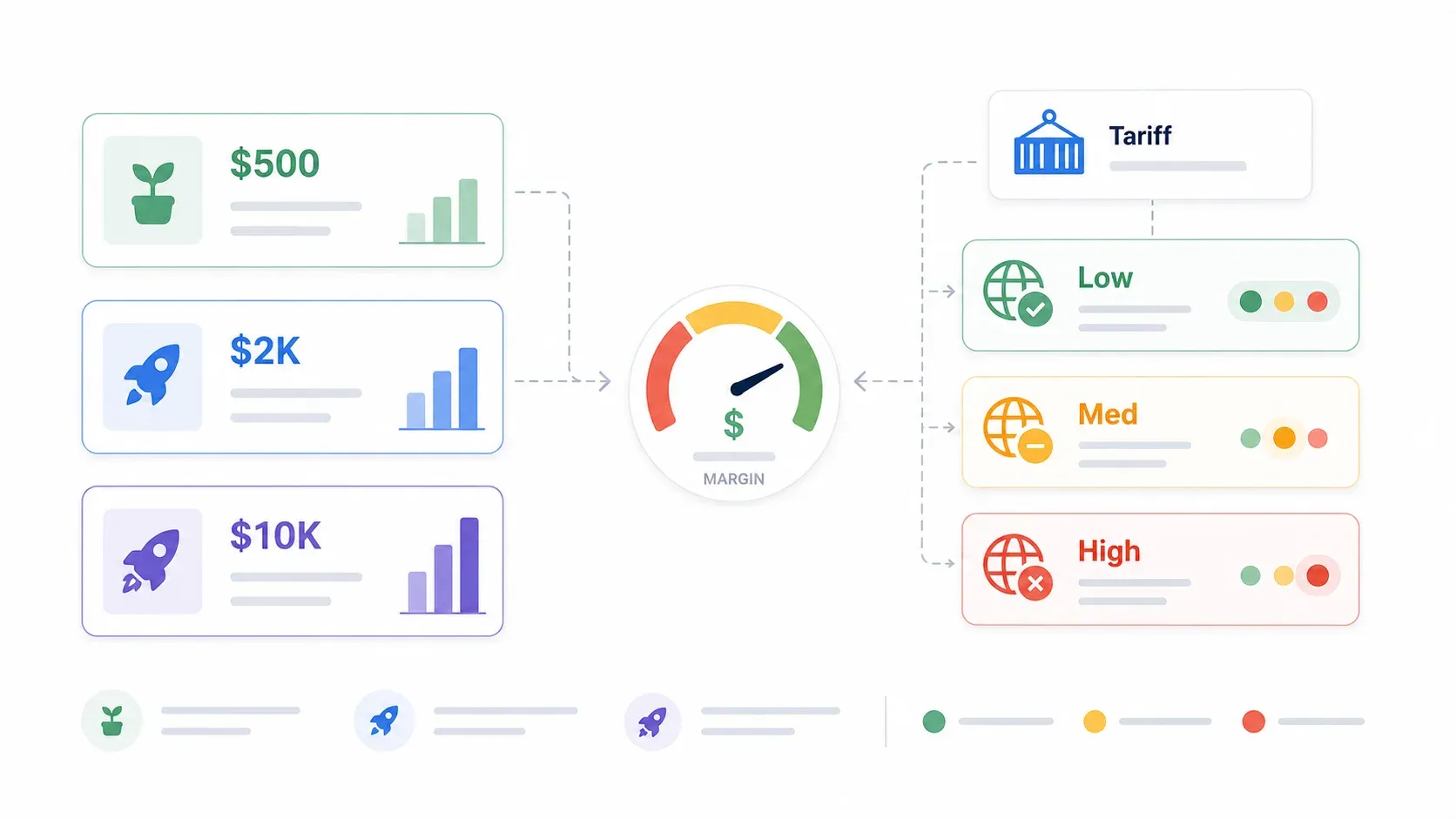
Here's the pattern I see over and over:
| Signal | ✅ Winner Pattern | ❌ Flop Pattern |
|---|---|---|
| Competition check | Found sub-niche where several top listings have <500 reviews | Entered category where top 10 all have 5,000+ reviews |
| Differentiation | Solved a specific customer complaint mined from reviews | Copied exact product with new logo |
| Margin after all costs | 30%+ net after PPC, FBA, COGS, tariffs | Sub-15% net margin before PPC even starts |
| Repeat purchase | Product naturally reorders (supplements, coffee, skincare, pet consumables) | One-time purchase item in commodity market |
| Regulation | Understood compliance requirements upfront | Hit FDA/labeling issues after first batch |
| Channel strategy | Amazon demand + DTC/email/social retention | PPC-only launch with no brand angle |
Common Patterns Behind Successful Launches
- Differentiated packaging that wins the search thumbnail (this alone can double click-through rates)
- One specific improvement mined from competitor reviews—not 10 improvements, just the one that matters most
- Targeted an underserved sub-niche rather than competing head-on with the category leader
- Built subscription or repeat-purchase mechanics from day one (especially for supplements, coffee, skincare)
- Quality-controlled before mass production—samples, samples, samples
The Most Common Reasons Private Label Products Fail
- Entering an oversaturated sub-niche without any differentiation
- Skipping sample testing and receiving a poor first batch
- Relying solely on PPC with no organic channel, brand story, or review strategy
- Underestimating regulatory or compliance requirements (especially for supplements and skincare)
- Not modeling tariffs into the margin math until the first shipment arrives with unexpected duties
Which Private Label Product Idea Is Right for You?
Quick decision guide:
- First-time seller with a small budget → eco-friendly consumables or pet accessories. Lower regulatory burden, manageable MOQ, room to learn.
- Looking for maximum repeat purchases and LTV → supplements or coffee. Higher compliance work, but the subscription economics are unmatched.
- Brand-building focus with strong customer loyalty → skincare. Invest in formulation, packaging, and education-first content.
- Social media savvy with design skills → kitchen gadgets. Viral upside is real, but model your tariffs and plan for copycats.
- Values-driven brand builder on a moderate budget → eco-friendly products. Lower competition, premium pricing potential, and growing demand.
- DTC/subscription-minded seller → coffee. Low tariff exposure, natural reorder cycle, and the best category for building off-Amazon revenue.
Whichever category catches your eye, validate before you spend. Use the scorecard to narrow your options, run the Google Trends demand check, scrape Amazon competition with Thunderbit, mine reviews for product gaps, and run the margin math with tariffs included. The sellers who do this work upfront are the ones who end up with best-sellers instead of expensive storage fees.
If you want to see how the validation workflow looks in practice—scraping Amazon listings, extracting review data, exporting to Google Sheets—you can try Thunderbit's Chrome extension for free. It's what our team built specifically for this kind of research, and it turns hours of manual data collection into a few clicks.
The first product is tuition. The second one is where it gets interesting.
Scrape product data with AI Get Started Free
Try Thunderbit for Product Research
FAQs
What is the most profitable private label product category?
Health supplements and coffee tend to offer the strongest combination of high gross margins (60–80% for supplements, 50–70% for coffee) and repeat purchase potential. Skincare is close behind for brand loyalty. "Most profitable" ultimately depends on your budget, regulatory comfort, PPC costs, and whether you're optimizing for margin per unit or lifetime customer value.
How much money do I need to start a private label business?
You can test a concept for $500–$2K with a simple product, basic packaging, and organic launch. A serious first launch typically requires $2K–$10K for custom packaging, professional photography, compliance review, and initial PPC. Experienced sellers expanding their catalog often invest $10K–$15K+ for larger MOQs, professional branding, and multi-channel launch.
How do I find a reliable private label manufacturer?
Start with Alibaba for overseas suppliers and Thomasnet for U.S.-based manufacturers. Trade shows (Canton Fair, Natural Products Expo, PLMA) are valuable for relationship-based sourcing. Always order samples from at least 3 suppliers before committing. Verify certifications (cGMP for supplements, FDA registration for food, safety testing for pet products), ask for references, and consider third-party inspection for larger overseas orders.
Is private labeling still worth it in 2026?
Yes—private label market share continues to grow, and consumer trust in non-legacy brands is at an all-time high. But it's not a "copy and paste" business anymore. Success in 2026 requires validated demand, genuine product differentiation (often from mining competitor reviews), tariff-aware sourcing, and a margin model that accounts for PPC, FBA fees, and duties. The sellers who treat it as a data-driven process win; the ones who guess, usually don't.
How do I validate a private label product idea before investing?
Follow a four-step workflow: (1) Check demand with Google Trends—compare 3–5 keyword variants over five years. (2) Scan Amazon competition with Thunderbit—scrape the first 3 pages of search results and filter for review counts, prices, and listing weaknesses. (3) Mine competitor reviews using Thunderbit's subpage scraping to find repeated complaints that become your product improvement specs. (4) Run the margin math—landed cost plus Amazon fees plus PPC versus competitor selling prices, targeting 30%+ net margin.
Try AI Web Scraper for Product Research Get Started Free
Learn More