
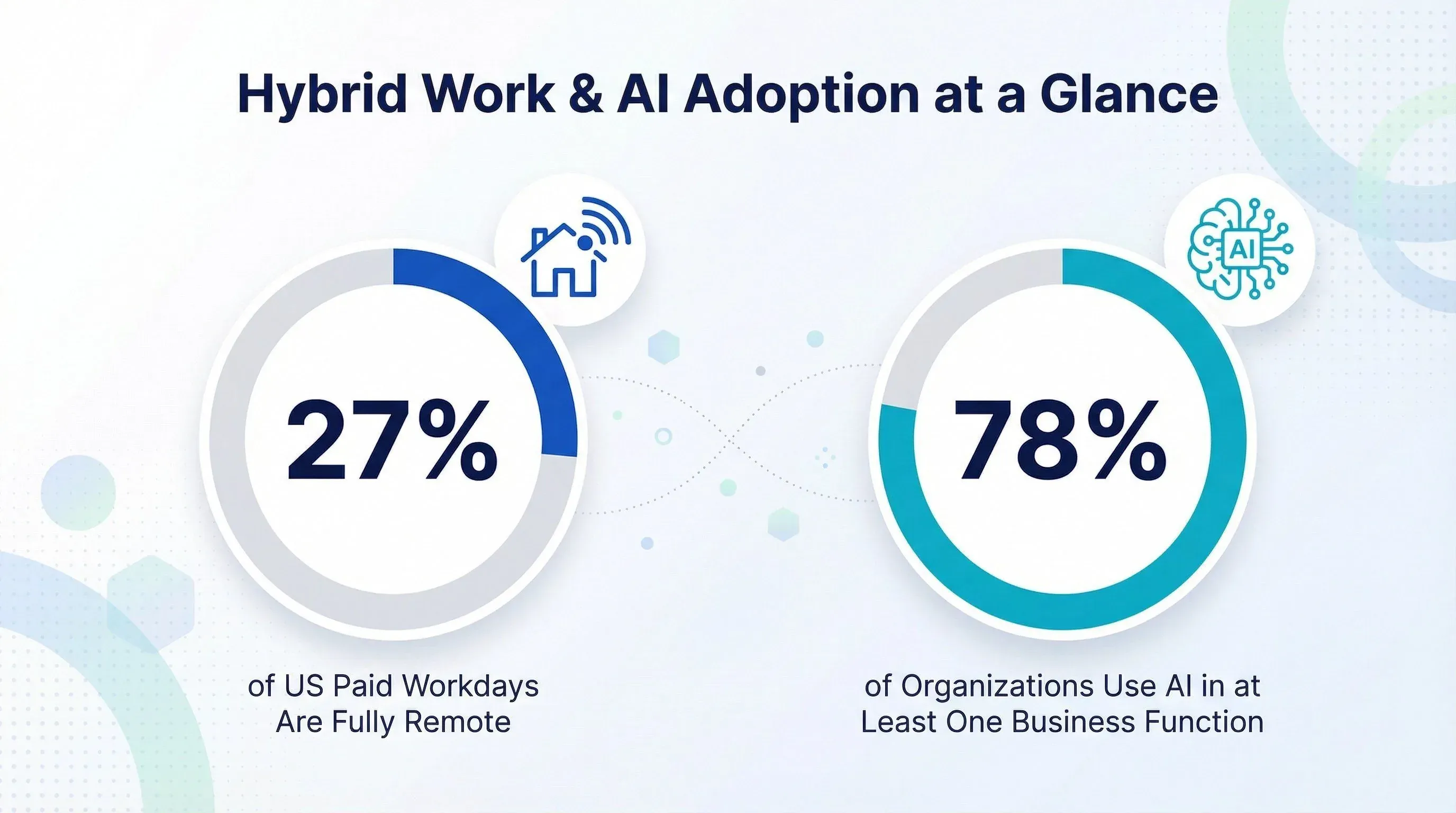
Hybrid work isn’t just a passing trend—it’s the new backbone of how modern teams operate. As I look at the landscape in 2026, it’s clear that hybrid work models and automation have become inseparable partners, driving a fundamental shift in how businesses think about productivity, efficiency, and employee satisfaction. The numbers tell a compelling story: 27% of paid workdays in the US are now fully remote, and globally, hybrid work has stabilized at about 1.23 days per week working from home for college-educated, full-time workers.
But here’s where it gets really interesting: as hybrid work cements itself as the norm, automation tools are exploding in adoption and impact. In fact, 78% of organizations now use AI in at least one business function, and the productivity gains are measurable—think 26 minutes saved per employee per day just from smarter workflow automation. As someone who’s spent years building automation tools at Thunderbit, I can tell you: the data revolution in hybrid work is just getting started.
Let’s dig into the latest hybrid workforce productivity data, automation trends, and what it all means for your business in 2026.
Try Thunderbit for AI web scraping Get Started Free
Hybrid Work Automation Statistics: 2026 at a Glance
If you’re looking for the headline numbers that define hybrid work automation and productivity in 2026, here’s your cheat sheet:
- 27% of paid workdays in the US are fully remote(Dec 2025)
- 66%of US firms offer some location flexibility; 71% of Fortune 100 companies remain flexible
- 78% of organizations globally use AI in at least one business function;
- 71% use generative AI regularly
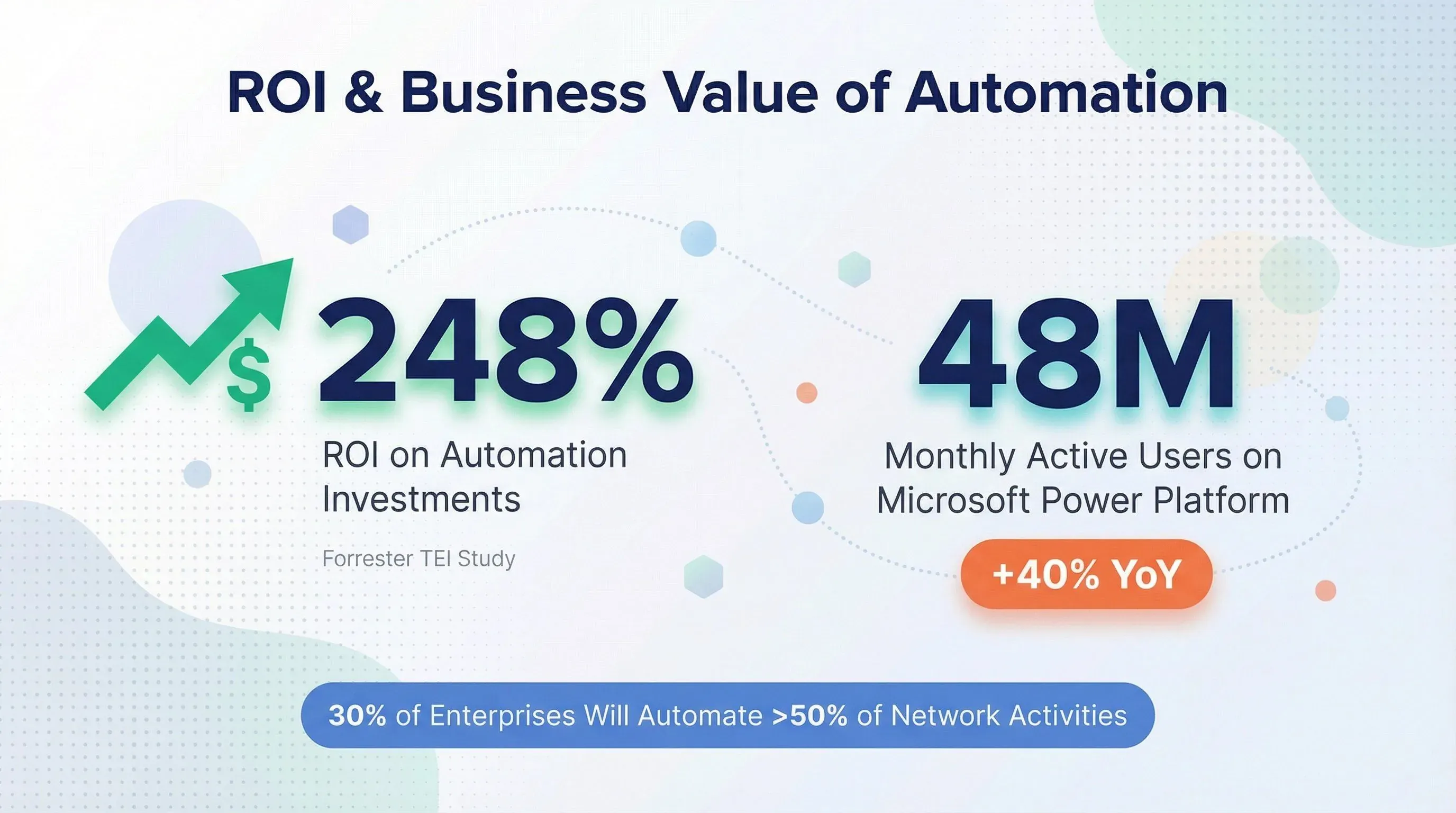
- 56 million monthly active users on Microsoft Power Platform, up 27% YoY
Replace the "Data Revolution" bullet (currently reads "Microsoft's Power Platform hit 48 million monthly active users, growing 40% year-over-year. That's a tidal wave of business users automating approvals, reporting, and data movement."):
- Low-Code and Workflow Automation: Microsoft's Power Platform now reports 56 million monthly active users, up 27% year-over-year. That's a steady expansion of business users automating approvals, reporting, and data movement — not the explosive 40% growth of a year earlier, but still material.
- 26 minutes saved per dayon average by users of AI automation tools (UK government trial)
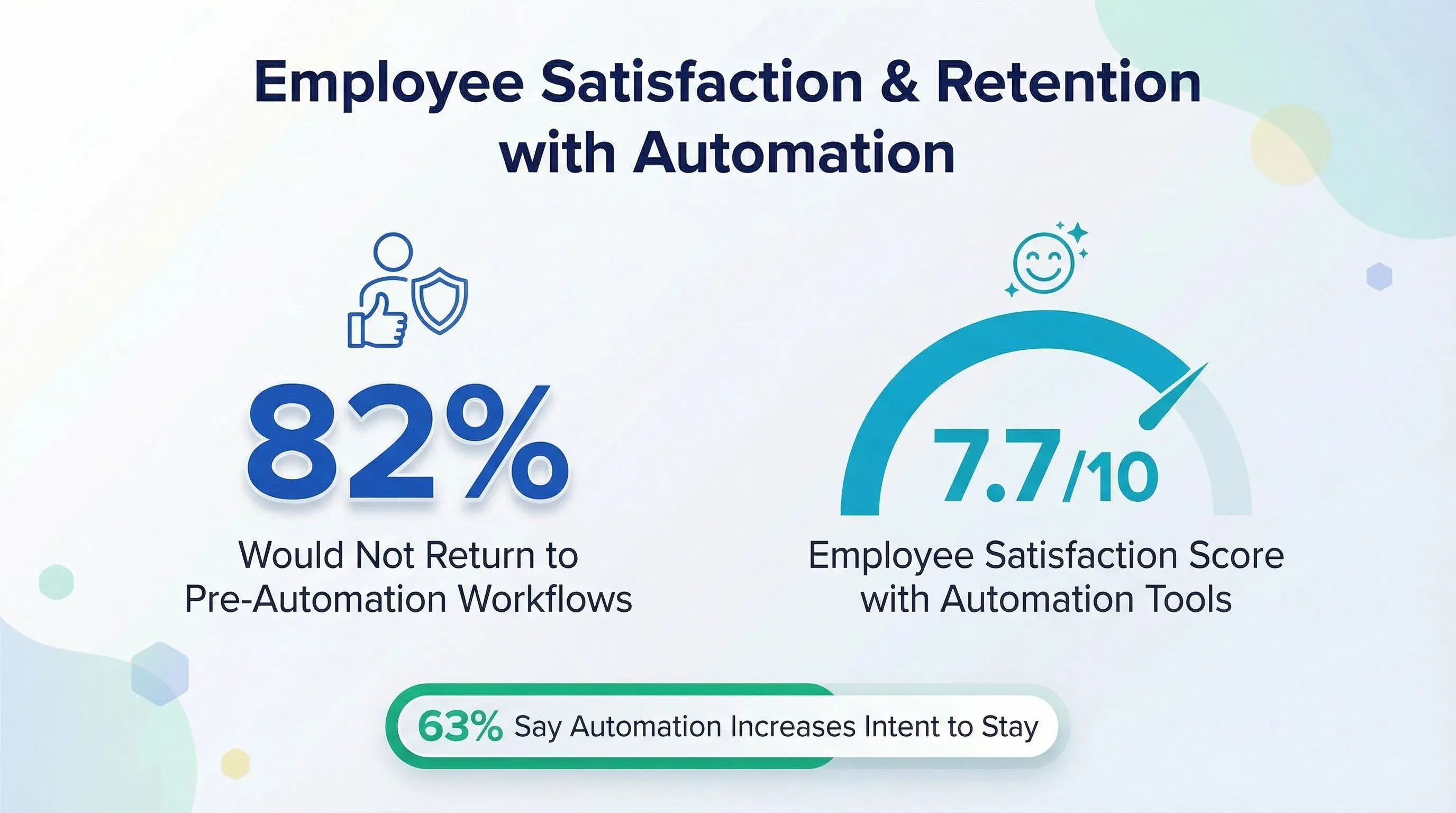
- 82% of users would not want to return to pre-automation workflows
- 60% (coordination, meetings, duplicative tasks) of knowledge worker time is spent on “work about work” -ROI of 248% for automation investments (Forrester TEI study)
- Employee satisfaction scores rise to 7.7/10 with automation tools; 63% say automation increases intent to stay
- Office utilization rebounds to 53% globally (up from 38% in 2024)
These numbers aren’t just impressive—they’re reshaping how leaders think about productivity, employee experience, and the future of work.
The Data Revolution: Automation Trends in Hybrid Workplaces
The hybrid work era has unleashed a wave of automation unlike anything I’ve seen before. Why? Because hybrid models introduce more complexity—more handoffs, more asynchronous collaboration, more fragmented systems. The solution? Automate the repetitive, manual, and coordination-heavy parts of work.
Let’s break down the trends:
- AI and Automation Adoption: 78% of organizations now use AI in at least one business function, up from 55% just a year ago. Regular use of generative AI is at 71%.
- Low-Code and Workflow Automation: Microsoft’s Power Platform hit 48 million monthly active users, growing 40% year-over-year. That’s a tidal wave of business users automating approvals, reporting, and data movement.
- Hyperautomation: Gartner projects that by 2026, 30% of enterprises will automate more than half of their network activities, up from under 10% in 2023.
The impact? Less manual intervention, faster workflows, and a measurable reduction in “work about work.” In my own experience, the teams that embrace automation aren’t just more efficient—they’re more agile and resilient, able to pivot quickly when business needs change.
How Automation Reshapes Hybrid Workflows: Key Data Insights
So what does this look like on the ground? Here’s where the data gets personal.
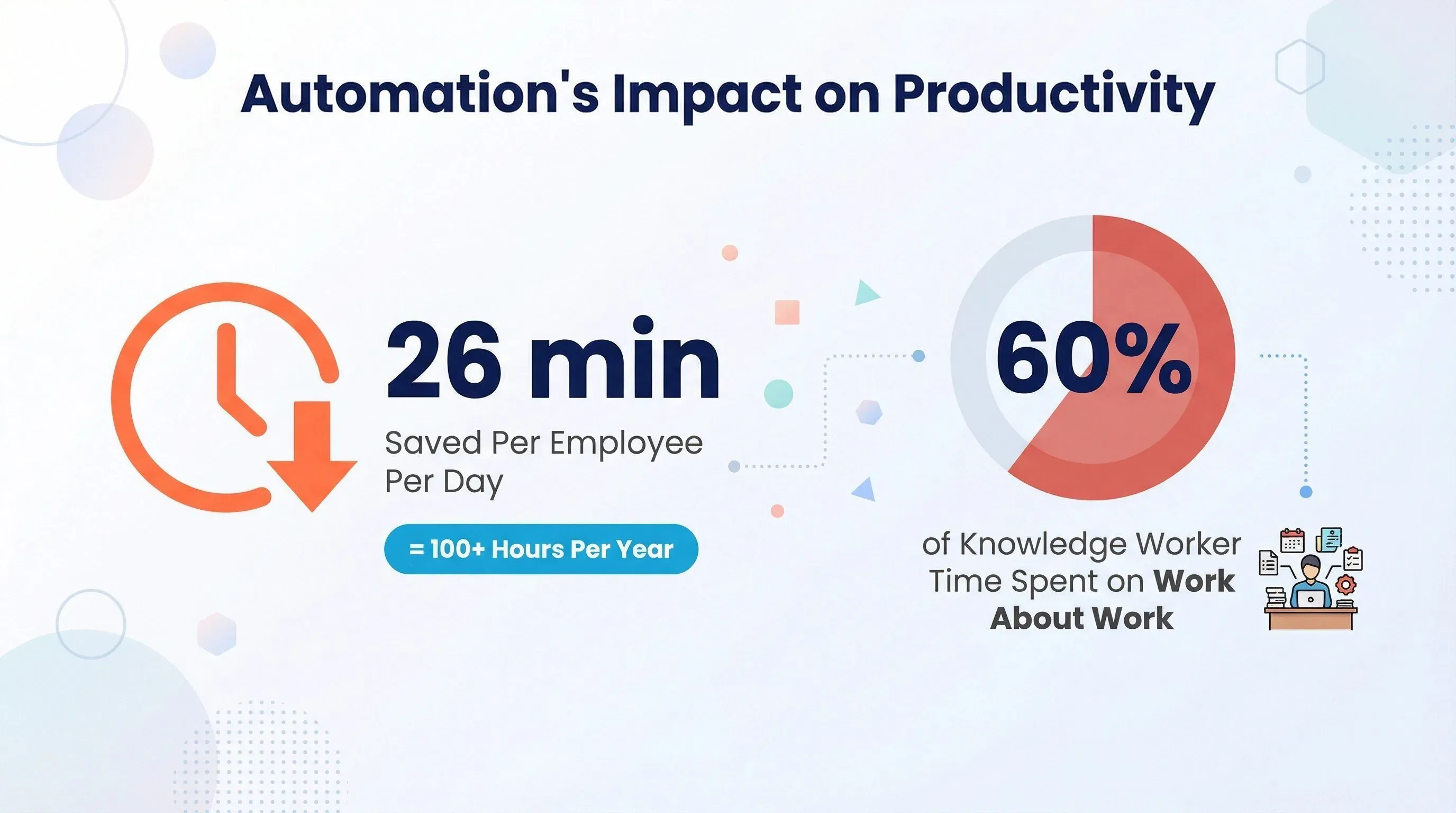
- Time Savings: In a cross-government experiment, users of AI automation tools saved an average of 26 minutes per day. That’s over 100 hours per year, per employee, reclaimed from repetitive tasks.
- Coordination Tax Reduction: 60% of knowledge worker time is spent on coordination—meetings, status updates, duplicative work. Automation tools slash this overhead by auto-generating reports, assigning tasks, and surfacing the right information at the right time.
- Error Reduction: Automated workflows reduce rework rates and “version mismatch” incidents, especially in distributed teams where manual handoffs are error-prone.
- Quality and Speed: In the Department for Work and Pensions trial, 73% reported better quality outputs and 65% felt more fulfilled at work.
I’ve seen this firsthand at Thunderbit—when you automate the grunt work, your team has more time for strategic, creative, and high-impact projects.
Thunderbit’s Role in Hybrid Office Automation: Measurable Impact
Thunderbit for hybrid office automation Get Started Free
Let’s talk about where Thunderbit fits into this picture. As an AI-powered web scraper and automation agent, Thunderbit is built for the hybrid era. Our users—sales, operations, marketing, and real estate teams—are using Thunderbit to automate the collection, structuring, and analysis of web data that used to require hours of manual effort.
Here’s how Thunderbit drives measurable impact:
- Web Data Automation: Thunderbit extracts structured data from web pages, PDFs, and images without templates or code — you describe the fields you want in natural language, and the AI fills in the table.
- Subpage and Pagination Scraping: Our AI can visit each subpage (think product details, contact info, or reviews) and enrich your dataset automatically.
- Real-Time Decision Support: By automating data collection, teams can make faster, data-driven decisions—whether it’s updating a sales lead list, monitoring competitor pricing, or tracking market trends.
- Workflow Acceleration: Thunderbit users consistently report saving hours per week on manual data entry and research. That’s time they can spend on higher-value work.
And yes, you can try Thunderbit for free and see the difference for yourself.
Key Hybrid Workforce Productivity Data Points for 2026
Let’s get specific about the metrics that matter for hybrid teams:
| Metric | 2026 Benchmark | Automation Impact |
|---|---|---|
| Employee Engagement | 7.7/10 satisfaction (with automation tools) (gov.uk) | +15–20% increase in engagement scores |
| Task Completion Rate | Up to 30% faster in automated workflows (tei.forrester.com) | Fewer bottlenecks, less rework |
| Remote Communication Efficiency | 70%+ report less time searching for info (gov.uk) | Fewer status meetings, faster handoffs |
| Time Spent on “Work About Work” | 60% of time pre-automation (asana.com) | Down by 20–30% with automation |
| Error/Rework Rate | 10–20% reduction in automated environments (gov.uk) | More consistent outputs |
| Talent Retention | Quit rates down by one-third in hybrid/automated teams (pubmed.ncbi.nlm.nih.gov) | Higher intent to stay, lower burnout |
These aren’t just numbers—they’re the foundation for smarter business strategy in a hybrid world.
Automation’s Effect on Employee Satisfaction: What the Data Shows
One of the most exciting shifts I’ve seen is how automation is transforming employee experience:
- Less Repetition, More Creativity: With automation handling the repetitive stuff, employees spend more time on creative and strategic work. In the UK government trial, 82% of users didn’t want to return to pre-automation workflows.
- Higher Fulfillment: 65% of employees felt more fulfilled at work after adopting automation tools.
- Talent Retention: Hybrid and automated teams see quit rates drop by about one-third, with no negative impact on performance (pubmed.ncbi.nlm.nih.gov).
- Innovation Boost: Freed from manual drudgery, teams are more likely to innovate and experiment—something I see every day with Thunderbit users who suddenly have time to explore new markets or launch new campaigns.
The bottom line: automation doesn’t just make teams faster—it makes them happier and more resilient.
Regional and Industry Variations in Hybrid Work Automation
Not all hybrid workforces are created equal. The data shows big differences by region and industry:
- Regional Gaps: English-speaking countries average 1.5–1.9 WFH days/week, while East Asian countries are often below 1 day/week. Europe and Latin America cluster around 1 day/week.
- Industry Differences: Tech and professional services lead in automation adoption, while finance and manufacturing are catching up. SMBs (under 500 employees) are more likely to be fully flexible and early adopters of lightweight automation (flexindex.com).
- Cultural and Policy Factors: In the Middle East, 87% of workers view return-to-office policies positively, compared to 64% in Europe. Compliance with hybrid policies also varies—Europe (85%), North America (78%), US (74%).
What does this mean? Best practices don’t always transfer one-to-one. The right automation strategy depends on your region, industry, and company culture.
Overcoming Challenges: Data-Driven Solutions for Hybrid Work Automation
Of course, it’s not all smooth sailing. The top challenges in automating hybrid workplaces include:
- Skills Gaps: Fewer than 20% of organizations have mastered measurement of hyperautomation initiatives.
- Security Concerns: Sensitive data and complex workflows can limit automation benefits (gov.uk).
- Integration Issues: 55% of respondents cite data quality and lack of expertise as the biggest hurdles to successful AI/analytics rollouts (cbre.com).
How are leading companies overcoming these obstacles?
- Investing in Training: Upskilling employees to use automation tools effectively.
- Choosing User-Friendly Platforms: Tools like Thunderbit lower the barrier to entry with natural language prompts and no-code interfaces.
- Focusing on Measurable Outcomes: Tracking time saved, error reduction, and employee satisfaction to prove ROI.
- Prioritizing Security and Governance: Building in controls and audits from the start.
The most successful teams treat automation as a journey, not a one-time project—constantly iterating and learning as they go.
Key Takeaways: What the 2026 Data Means for Your Hybrid Workforce
Let’s wrap up with the big lessons from the 2026 data revolution:
- Hybrid work is here to stay: With 27% of workdays remote and flexibility the norm, productivity measurement must adapt.
- Automation is the new productivity engine: 78% of organizations use AI, and users are saving 26 minutes per day on average.
- Employee experience is a competitive edge: Automation boosts satisfaction, fulfillment, and retention—making hybrid work more attractive and sustainable.
- Data-driven strategy wins: The best teams measure what matters—operational throughput, coordination efficiency, quality, and employee experience.
- Thunderbit and similar tools make automation accessible: No-code, AI-powered platforms are democratizing automation for every team, not just IT.
If you’re not already leveraging automation in your hybrid workflows, now’s the time to start. And if you want to see what’s possible, Thunderbit’s free trial is a great place to begin.
FAQs on Hybrid Work Automation and Productivity Data
1. What is the current adoption rate of hybrid work and automation in 2026?
27% of paid workdays in the US are fully remote, and 78% of organizations globally use AI in at least one business function.
2. How much time can automation save in a hybrid workplace?
On average, 26 minutes per employee per day are saved through automation, translating to over 100 hours per year.
3. What are the most significant productivity gains from automation?
Key improvements include faster task completion, reduced coordination overhead, fewer errors, and higher employee engagement and satisfaction.
4. How does Thunderbit support hybrid work automation?
Thunderbit automates web data extraction and analysis, enabling real-time decision-making and reducing manual data entry for sales, operations, and other teams.
5. Are there regional or industry differences in automation adoption?
Yes—English-speaking countries and tech sectors lead in adoption, while East Asia and some traditional industries lag behind. SMBs are often more flexible and quicker to adopt lightweight automation.
Further Reading & Resources
- Global WFH 2025: Survey Results
- Flex Index: Hybrid Work Policy Stats
- CBRE 2026 Global Workplace and Occupancy Insights
- McKinsey: The State of AI 2025
- GOV.UK: Microsoft 365 Copilot Experiment Findings
- Asana: Why Work About Work Is Bad
- Forrester TEI: Power Automate Study
- Thunderbit Official Website
- Thunderbit Chrome Extension Download Page
- Thunderbit Blog
If you’re hungry for more stats, strategies, and stories from the front lines of hybrid work automation, check out the Thunderbit Blog for deep dives and practical guides. Here’s to a more productive, automated, and human-centric hybrid workplace in 2026 and beyond.
Try AI Web Scraper Get Started Free




