

Föreställ dig det här: det är en måndagmorgon 2026 och du smuttar på kaffet medan du scrollar runt på Amazon efter allt från matvaror till prylar – kanske till och med ett par nya strumpor som du inte visste att du behövde. Du är inte ensam. Varje given minut byter över en miljon dollar ägare på Amazons plattformar, och någonstans levererar just nu en Prime-bil ett paket till din grannes veranda (eller kanske till din egen, igen).
Amazon är inte längre bara en nätbutik – det är ett globalt ekosystem, en teknikjätte och, ärligt talat, lite av en vana. Oavsett om du är företagsledare, marknadsförare, säljare eller bara en nyfiken konsument kan de senaste Amazon-statistiken – från Prime-medlemskap till försäljning, intäkter och mycket mer – hjälpa dig att fatta smartare beslut 2026. Låt oss därför dyka ner i siffrorna som formar framtiden för handel, teknik och, ja, hur vi alla köper strumpor.
Resultattavla för räkenskapsåret 2025 (rapporterat 2026-02-05): Amazon nådde 716,9 miljarder dollar i nettoförsäljning (+12 % jämfört med föregående år), 80 miljarder dollar i rörelseresultat (+17 %) och 77,7 miljarder dollar i nettoresultat (+31 %). AWS växte till 128,7 miljarder dollar med en utgående årstakt nära 142 miljarder dollar. Källa: Amazons pressmeddelande för Q4/helåret 2025.
Amazon i siffror: viktig Amazon-statistik för 2026
Innan vi går ner på detaljnivå kommer här en översiktlig ögonblicksbild av Amazons storlek 2026. Dessa toppsiffror sätter ramen för allt som följer:
| Nyckeltal | Siffra för räkenskapsåret 2025 | Källa |
|---|---|---|
| Total nettoförsäljning (2025) | 716,9 miljarder dollar (+12 % mot föregående år) | Amazon IR (Q4/helåret 2025) |
| Nettoförsäljning Q4 2025 | 213,4 miljarder dollar (+14 %) | Amazon IR |
| AWS-intäkter (2025) | 128,7 miljarder dollar (+20 %); ca 142 miljarder i årstakt vid utgången av Q4 | Amazon IR |
| Annonstjänster (2025) | 68+ miljarder dollar (enbart Q4: 21,3 miljarder, +23 %) | Marketing Dive |
| Prenumerationstjänster (2025) | 49,6 miljarder dollar (+12 %) | Amazon IR |
| Segmentet Nordamerika (2025) | 426,3 miljarder dollar (+10 %) | Amazon IR |
| Segmentet Internationellt (2025) | 161,9 miljarder dollar (+13 %) | Amazon IR |
| Rörelseresultat (2025) | 80,0 miljarder dollar (+17 %) | Amazon IR |
| Nettoresultat (2025) | 77,7 miljarder dollar (+31 %); utspädd vinst per aktie 7,17 dollar | Amazon IR |
| Amazon Prime-medlemmar (Q1 2026) | ca 201 miljoner i USA (CIRP-uppskattning); 220+ miljoner betalande medlemmar globalt (Amazon har inte redovisat siffran sedan "200+ miljoner" 2021) | CIRP / Yaguara |
| Investeringsplan 2026 | ca 200 miljarder dollar, till största delen AWS och AI-infrastruktur | Variety |
Siffrorna är nästan svåra att ta in. Amazons räckvidd är så enorm att bolaget inte bara är en återförsäljare – det är en naturkraft inom global handel och teknik.
Amazons försäljningsstatistik: hur stor är Amazons säljmotor?
Låt oss gå rakt in i hjärtat av Amazons verksamhet: försäljningen. Om du någonsin undrat hur mycket varor Amazon egentligen flyttar är svaret … väldigt mycket. Och lite till.
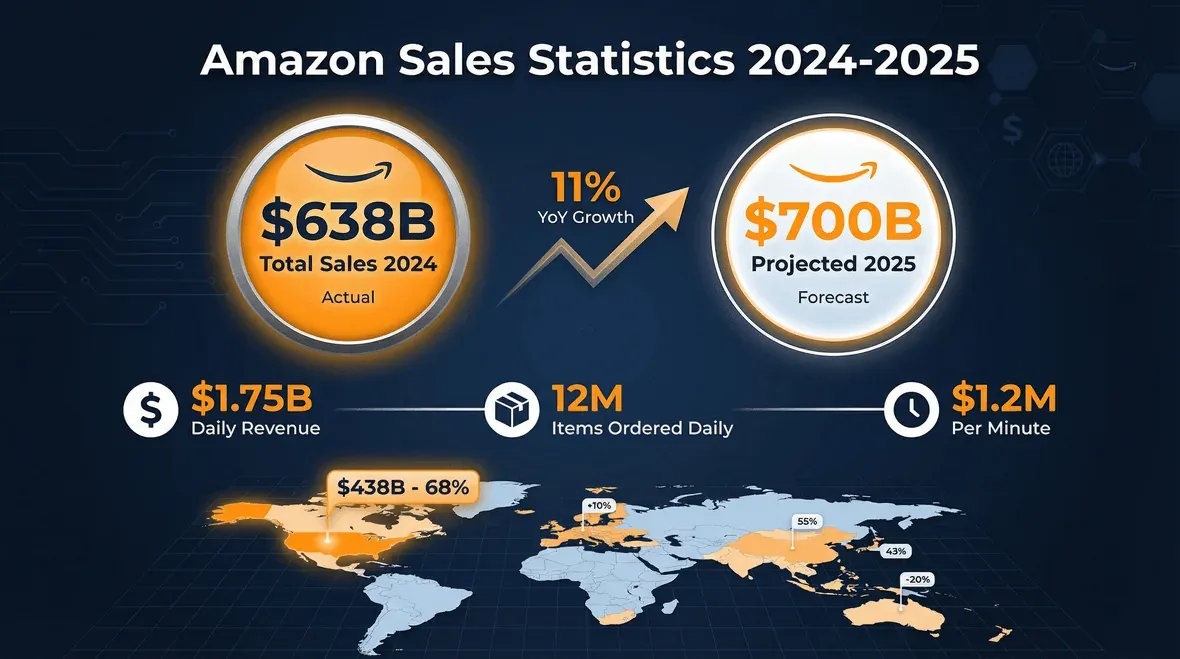
- Total nettoförsäljning (2025): 716,9 miljarder dollar, upp 12 % mot föregående år – utgångsläget för 2024 var 638 miljarder.
- Enbart Q4 2025: 213,4 miljarder dollar, upp 14 %.
- Daglig omsättning (snitt 2025): ca 1,96 miljarder dollar per dag.
- Omsättning per minut (snitt 2025): ca 1,36 miljoner dollar.
- Nettoresultat (2025): 77,7 miljarder dollar, upp 31 % – rörelsemarginalen ökade med cirka 40 punkter till 11,2 %.
Amazons globala försäljning fördelad
Amazons försäljning är global, men USA är fortfarande motorn:
- Segmentet Nordamerika (2025): 426,3 miljarder dollar, upp 10 % (59 % av totalen).
- Segmentet Internationellt (2025): 161,9 miljarder dollar, upp 13 % (23 % av totalen) – snabbare tillväxt än Nordamerika.
- Amazon levererar till över 130 länder och driver marknadsplatser i över 20 länder (Capital One Shopping).
De största produktkategorierna på Amazon
Vad köper folk?
- Elektronik och teknik: Alltid i topp (Amify).
- Hem och kök: Kraftig tillväxt när fler investerar i sina bostäder.
- Hälsa och skönhet: 32 % av kunderna köpte hälso- och skönhetsprodukter.
- Kläder och mode: 34 % av kunderna köpte kläder.
- Livsmedel: Över 150 miljoner kunder köpte mat på Amazon förra året.
Viktig trend: 48 % av amerikanska konsumenter anger fri frakt som ett av de främsta skälen att välja Amazon, och 44 % säger att det är den bekvämaste shoppingsajten.
Amazon Prime-statistik: medlemskap, engagemang och värde
Amazon Prime är limmet som håller ihop hela Amazon-universumet. Det handlar inte längre bara om fri frakt – det handlar om media, matvaror och massor av förmåner.
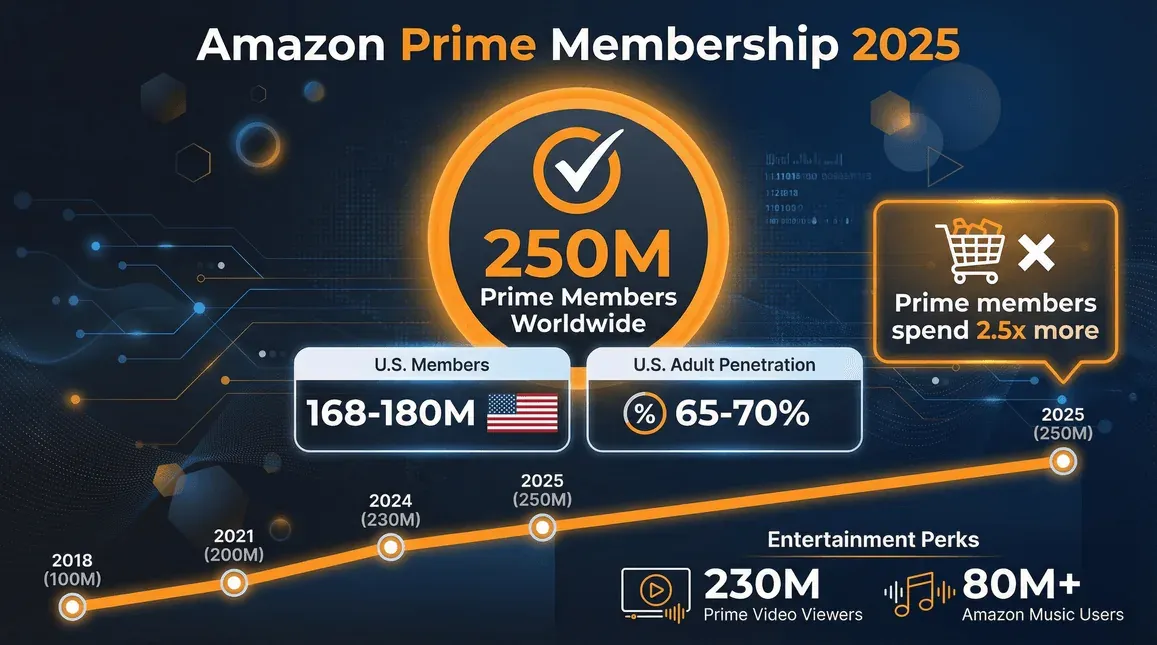
- Totalt antal Prime-medlemmar (2025): ca 250 miljoner världen över.
- Prime-medlemmar i USA: 168–180 miljoner.
- Primes penetration i USA: 65–70 % av alla vuxna amerikaner.
- Prime-medlemmarnas konsumtion: Prime-medlemmar spenderar 2,5 gånger mer än kunder utan Prime.
Tillväxten av Prime-prenumeranter
Primes tillväxt har varit närmast raketdriven:
- 2018: ca 100 miljoner medlemmar.
- 2021: över 200 miljoner medlemmar.
- 2024: ca 230 miljoner medlemmar.
- 2025: ca 250 miljoner enligt prognos.
Primes tillväxt i USA planar ut, men de internationella marknaderna tar över stafettpinnen.
Prime Video, Music och andra förmåner
- Prime Video: 230 miljoner tittare globalt; låg 2024 jämsides med Netflix i andel av den amerikanska streamingmarknaden.
- Innehållsbudget för Prime Video (2024): 19,6 miljarder dollar.
- Amazon Music: över 80 miljoner användare världen över.
- Prime Reading och Kindle: 13 miljoner titlar i Kindle Store.
Prime handlar om mer än frakt – det är en livsstilsprenumeration.
Amazons intäktsstatistik: var kommer pengarna ifrån?
Amazons intäktsströmmar är lika breda som produktkatalogen. Så här ser fördelningen ut:
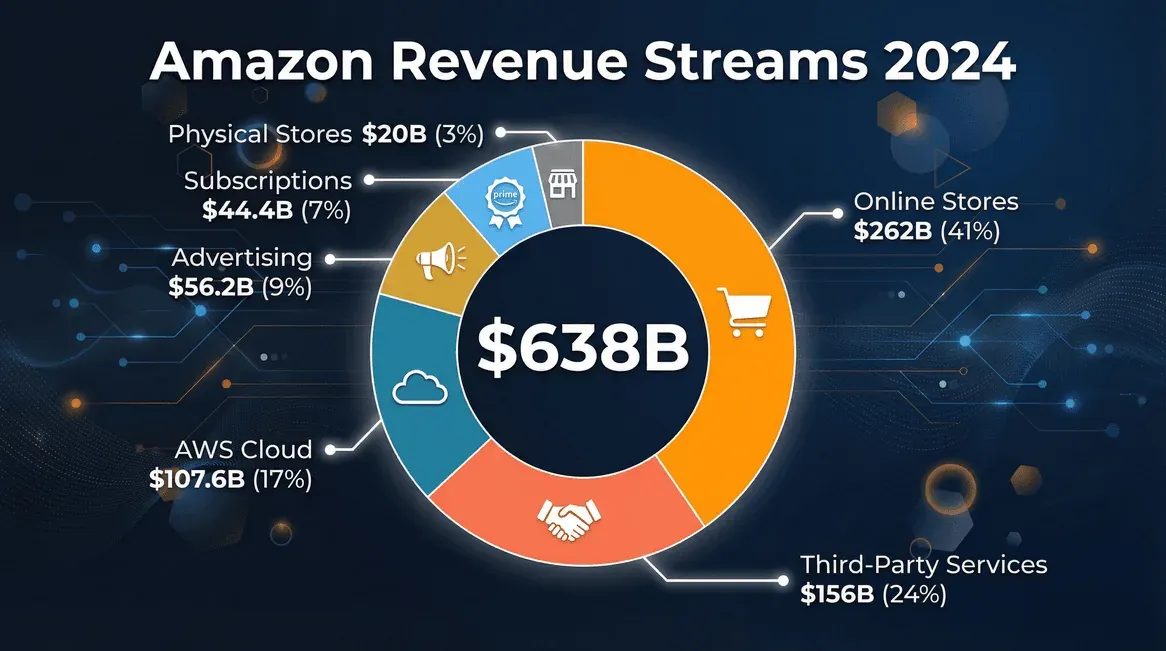
| Intäktsström | Intäkt 2025 | Förändring | Källa |
|---|---|---|---|
| AWS (moln) | 128,7 mdr USD | +20 % | Amazon IR |
| Annonstjänster | 68+ mdr USD | +22 % | Marketing Dive |
| Prenumerationstjänster | 49,6 mdr USD | +12 % | Amazon IR |
| Segmentet Nordamerika | 426,3 mdr USD | +10 % | Amazon IR |
| Segmentet Internationellt | 161,9 mdr USD | +13 % | Amazon IR |
| Total nettoförsäljning | 716,9 mdr USD | +12 % | Amazon IR |
Intäkterna från Amazon Web Services (AWS)
- AWS-intäkter (2025): 128,7 miljarder dollar, upp 20 % mot föregående år.
- AWS i Q4 2025: 35,6 miljarder dollar, upp 24 % – tillväxten accelererade sent på året tack vare AI-arbetslaster.
- Årstakt vid utgången av Q4 2025: ca 142 miljarder dollar.
- AWS orderstock vid årsskiftet 2025: 244 miljarder dollar (+40 %), vilket speglar fleråriga AI- och molnåtaganden.
- AWS andel av Amazons intäkter (rullande tolv månader): 18,0 %; AWS står fortfarande för merparten av Amazons samlade rörelseresultat.
- Investeringar 2026: Amazon har guidat mot cirka 200 miljarder dollar i investeringar under 2026, till största delen för AWS och AI-infrastruktur (Variety).
AWS är motorn som gör att Amazon kan ta stora risker på andra håll.
Amazons annonsintäkter
- Annonstjänster (2025): över 68 miljarder dollar, drivet av annonser i Prime Video, sponsrade produkter och DSP-expansion.
- Annonstjänster i Q4 2025: 21,3 miljarder dollar, upp 23 % (Amazon IR) – det starkaste kvartalet någonsin.
- Tillväxtdrivare: Amazon lade till cirka 12 miljarder dollar i ökade annonsintäkter från sin full funnel-strategi under 2025 – Prime Videos annonsnivå är nu den enskilt största bidragsgivaren till den ökningen.
Amazon-annonsering är numera ett måste för varumärken – pay to play är den nya normen.
Statistik om Amazons marknadsplats och säljare
Amazons marknadsplats är ett eget universum som driver miljontals företag.
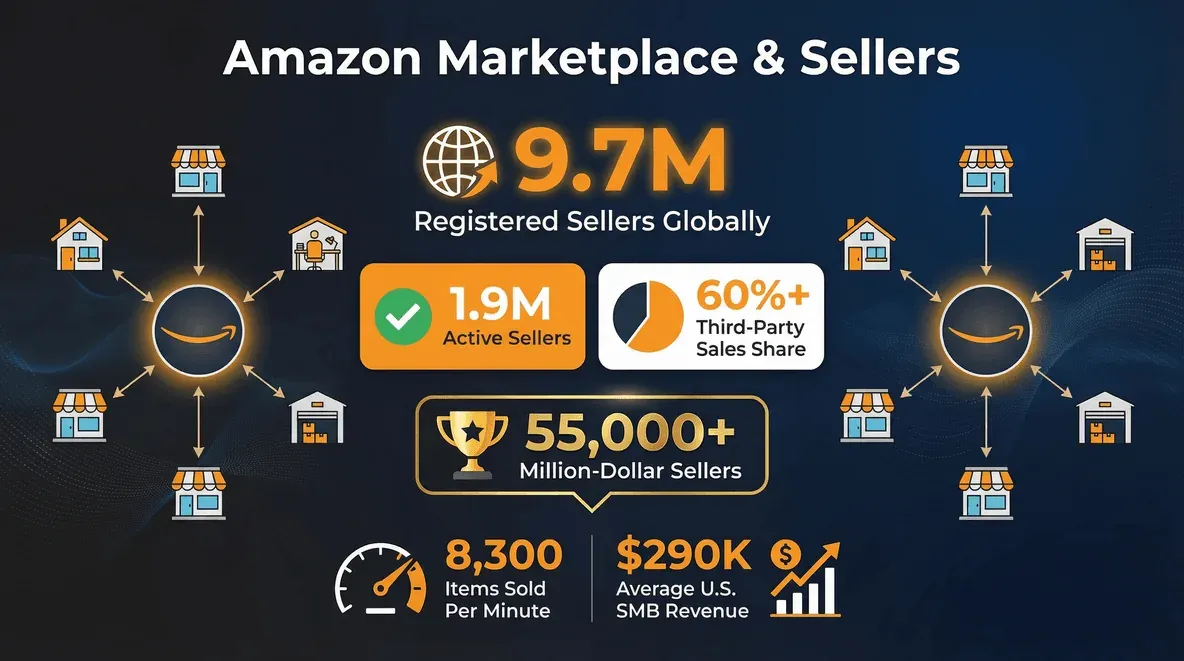
- Registrerade säljare: 9,7 miljoner globalt.
- Aktiva säljare: 1,9 miljoner.
- Säljare baserade i USA: 1,1 miljoner.
- Andel av försäljningen från tredjepartssäljare: Över 60 %.
- Genomsnittlig omsättning för amerikanska småföretagssäljare: 290 000 dollar per år.
- Säljare med över 1 miljon dollar i försäljning (2024): över 55 000.
De oberoende säljarnas betydelse
- Produkter sålda av amerikanska småföretag (2024): 4,3 miljarder.
- Antal sålda varor per minut från amerikanska säljare: 8 300.
- Småföretag som exporterar via Amazon: Över 1 miljard dollar i varor exporteras årligen.
Amazons marknadsplats är platsen där små företag kan bli globala varumärken – om de lyckas sticka ut i mängden.
Statistik om Prime Day och säsongsförsäljning
Prime Day är inte bara en rea – det är ett detaljhandelsfenomen.
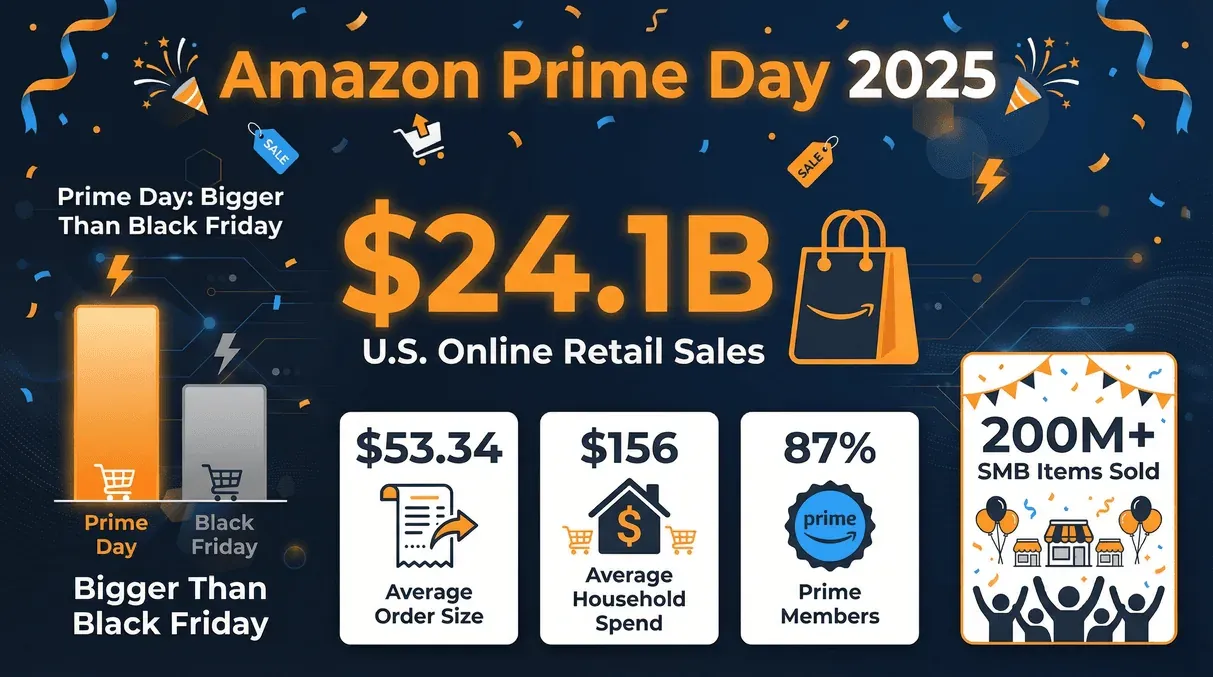
- Prime Day 2025: Den största någonsin, utökad till fyra dagar.
- Amerikansk e-handelsförsäljning under Prime Day (2025): 24,1 miljarder dollar under Prime Day-veckan.
- Genomsnittligt ordervärde: 53,34 dollar.
- Genomsnittlig konsumtion per hushåll: 156 dollar.
- Andel Prime Day-kunder som är Prime-medlemmar: 87 %.
- Varor sålda av småföretag under Prime Day (2024): över 200 miljoner.
Prime Day slår numera regelbundet både Black Friday och Cyber Monday på Amazons egen plattform.
Statistik om Amazons kunder och trafik
Amazons räckvidd är, ärligt talat, vansinnig.
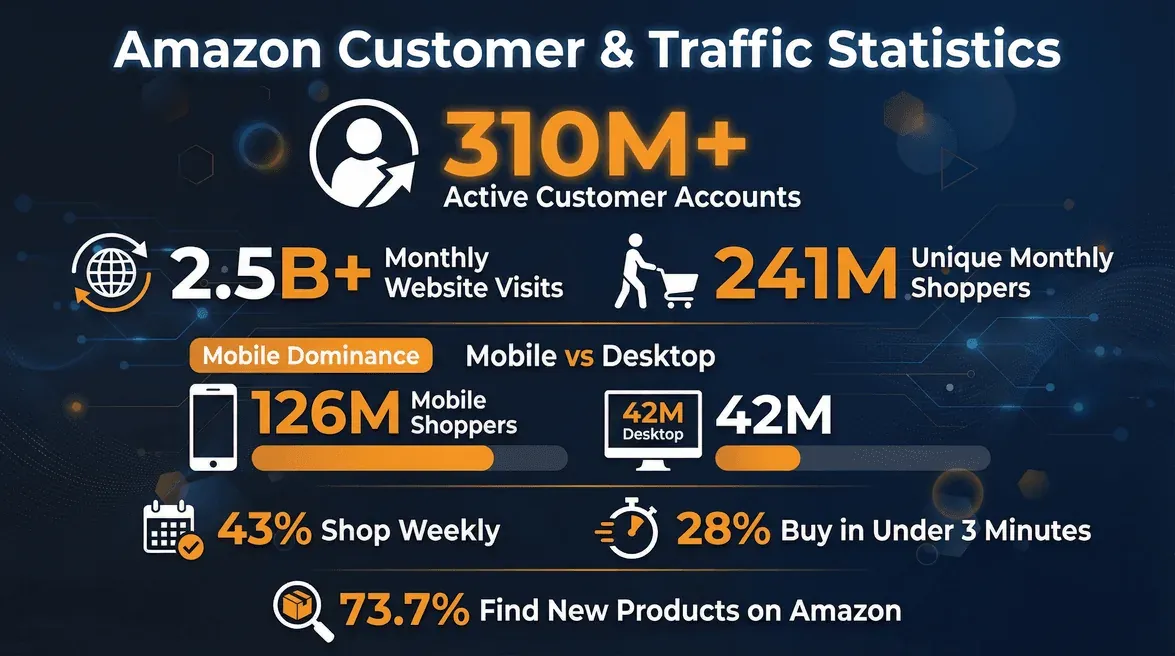
- Aktiva kundkonton: över 310 miljoner.
- Besök på webbplatsen per månad: över 2,5 miljarder.
- Unika kunder per månad: 241 miljoner.
- Mobil kontra dator: 126 miljoner handlar via mobilen mot 42 miljoner via datorn i USA.
- Köpfrekvens: 43 % av amerikanerna handlar varje vecka.
- Tid som läggs på shopping: 28 % av kunderna lägger tre minuter eller mindre.
Amazon är en daglig samhällsfunktion för miljontals människor – ibland känns det som att tjänsten bara är ett tryck bort (för det är den).
Amazons varumärkesvärde och marknadsposition
Amazon är inte bara stort – det är ett av världens mest värdefulla varumärken.
- Varumärkesvärde (Kantar BrandZ 2025, globalt): 866 miljarder dollar, fjärde plats globalt (efter Apple, Google och Microsoft).
- Varumärkesvärde (Kantar BrandZ 2025, enbart detaljhandel): 315,5 miljarder dollar, världens mest värdefulla detaljhandelsvarumärke.
- Börsvärde (2025): 1,7–1,8 biljoner dollar.
- Andel av den amerikanska e-handeln: ca 40 %.
- Andel av molnmarknaden: ca 30 %.
- Placeringar hos Fortune/Forbes: Topp fem globalt sett till omsättning, vinst och tillgångar (Business of Apps).
Amazon är i dag lika mycket ett teknikbolag som en återförsäljare.
Amazons fysiska närvaro: butiker, enheter och mer
Amazon är inte bara digitalt – det finns i ditt kvarter och i ditt vardagsrum.
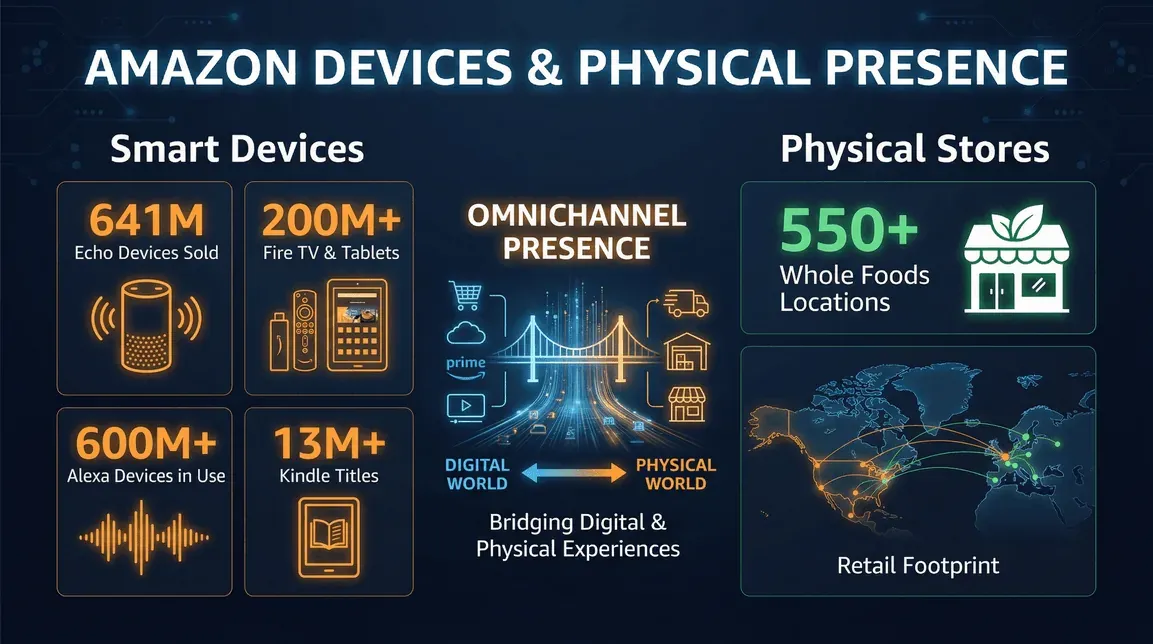
- Whole Foods-butiker: över 550 platser.
- Amazon Fresh- och Go-butiker: Över 20 Fresh, dussintals Go (men många stängs till förmån för Whole Foods) (Reuters).
- Sålda Amazon Echo-enheter: 641 miljoner enheter sedan 2014.
- Alexa-enheter i bruk: över 600 miljoner.
- Sålda Fire TV och surfplattor: över 200 miljoner.
- Titlar i Kindle Store: över 13 miljoner.
Amazons enheter finns överallt – ibland undrar jag om min brödrost snart börjar rekommendera böcker åt mig.
Statistik om Amazons hållbarhet och samhällspåverkan
Amazons storlek gör att bolagets hållbarhetsarbete spelar stor roll.
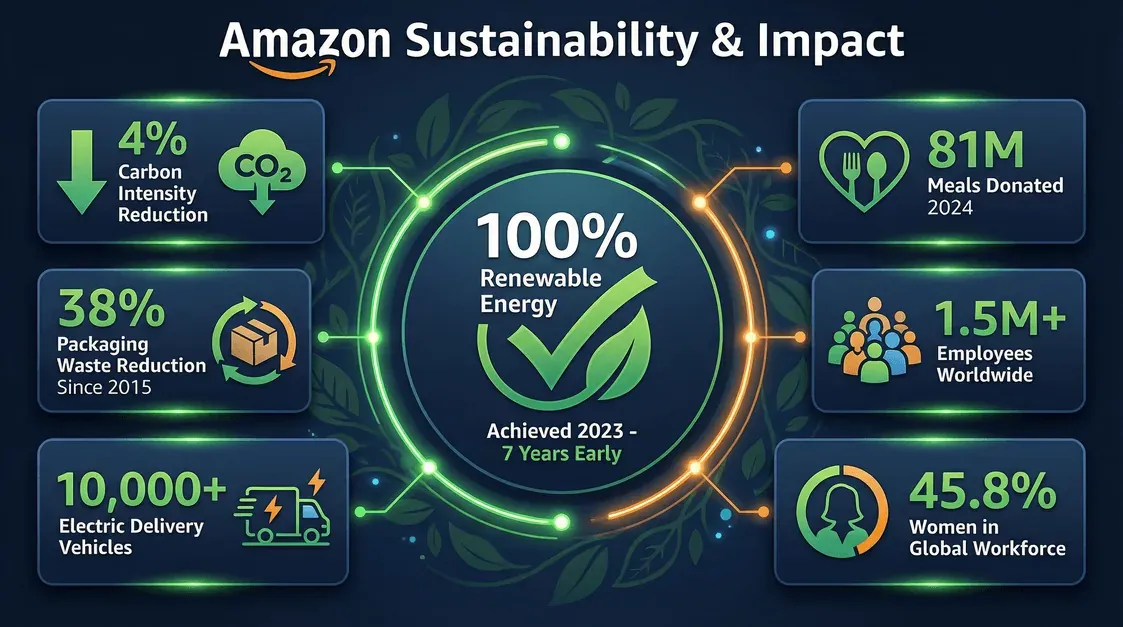
- 100 % förnybar energi: Uppnått 2023, sju år före tidplan.
- Koldioxidutsläpp: 4 % minskad koldioxidintensitet under 2024.
- Elektriska leveransfordon: över 10 000 utplacerade i Indien.
- Minskat förpackningsavfall: 38 % mindre per försändelse sedan 2015.
- Matdonationer: 81 miljoner måltider donerade under 2024.
- Mångfald: 45,8 % kvinnor i den globala arbetsstyrkan.
Amazons miljöavtryck är enormt, men det är även potentialen för positiv påverkan.
Amazons globala expansion: internationell försäljning och räckvidd
Amazon är inte bara en amerikansk historia – det är en global.
- Internationell försäljning (2024): 142,9 miljarder dollar.
- Marknadsplatser per land: över 20 länder.
- Användare i Indien: över 100 miljoner registrerade.
- Intäkter i Europa (2024): ca 100 miljarder dollar (Storbritannien, Tyskland, Frankrike, Italien, Spanien, Nederländerna, Sverige och Polen tillsammans).
- Global leverans: över 130 länder.
Amazon expanderar fortfarande, särskilt på tillväxtmarknader.
Statistik om Amazons anställda och arbetsplats
Med över 1,5 miljoner anställda är Amazon en arbetsgivarkoloss.
- Totalt antal anställda (2023): 1 525 000.
- Lager kontra kontor: Majoriteten arbetar inom logistik och drift; cirka 300 000 inom kontor och teknik.
- Mångfald (USA): 36 % vita, 26 % svarta, 22 % latinamerikaner, 13 % asiater.
- Genomsnittslön inom driften: 19 dollar i timmen.
- Anställda aktieägare: 10,6 miljarder utestående aktier.
Amazons arbetsstyrka är lika mångfaldig som produktkatalogen – och minst lika upptagen.
Shoppingtrender på Amazon: insikter om konsumentbeteende
Hur handlar folk på Amazon 2026? Snabbt, mobilt och ofta.
- Mobil shopping: Över 60 % av köpen sker via mobilen.
- Snabba köp: 28 % av kunderna handlar på under tre minuter.
- Prime-medlemmarnas engagemang: 75 % av de amerikanska Amazon-kunderna är Prime-medlemmar.
- Produktupptäckt: 73,7 % av kunderna hittar nya produkter på Amazon.
- Rösthandel: 5 % av Amazons kunder har använt Alexa för att göra ett köp.
- Matvarukunder: över 150 miljoner köpte livsmedel på Amazon förra året.
Amazon har satt tempot för bekvämlighet och snabbhet inom näthandeln.
Amazon-statistik: snabbfakta och överraskande siffror
Här kommer en snabb rond med hisnande siffror:
- 1,2 miljoner dollar spenderas varje minut på Amazon (Capital One Shopping).
- Över 600 miljoner produkter till försäljning (Capital One Shopping).
- 8 300 varor säljs per minut av amerikanska säljare (Capital One Shopping).
- Över 9 miljarder varor levererade till Prime-medlemmar under 2024 (Capital One Shopping).
- Alexa finns i över 600 miljoner enheter världen över (Capital One Shopping).
- 88,5 miljarder dollar lades på teknik och FoU under 2024 (Capital One Shopping).
- Över 400 miljoner kvadratfot lageryta (Roobykon).
- Över 520 000 robotar i lagren (Roobykon).
- Prime Day slår Black Friday och Cyber Monday på Amazons egen plattform (eDesk).
Om du någon gång känner dig oproduktiv, tänk på det här: någonstans flyttar just nu en Amazon-robot en hylla klockan tre på natten.
Så skrapar du Amazon-produkter och recensioner med AI 2025 Get Started Free
Vad säger då all denna Amazon-statistik, Prime-statistik och försäljningsstatistik egentligen om 2026?
- Amazons skala saknar motstycke. Med intäkter som närmar sig 700 miljarder dollar, en kundbas större än de flesta länders befolkning och ett logistiknät som levererar miljarder varor i rasande fart sätter Amazon standarden för vad som är möjligt inom handel och teknik.
- Diversifieringen är Amazons superkraft. Oavsett om det gäller AWS, annonsering eller marknadsplatsen innebär Amazons många motorer att bolaget är motståndskraftigt och alltid växer någonstans – även när ett område bromsar in.
- Prime är det ultimata lojalitetsprogrammet. Med 250 miljoner medlemmar och förmåner som hela tiden utökas är Prime vallgraven som konkurrenterna kämpar för att ta sig över.
- Konsumenternas förväntningar har förändrats. Snabba leveranser, mobilt först och produktupptäckt på Amazon är den nya normen. Är du ett företag måste du möta kunderna där de är – och det är i allt högre grad på Amazon.
- Den globala tillväxten fortsätter. Amazons internationella expansion innebär nya möjligheter (och ny konkurrens) på marknader världen över.
- Möjligheterna är många – för den som kan konkurrera. Med miljontals säljare är det svårt att sticka ut, men belöningen är verklig: över 55 000 säljare omsätter mer än 1 miljon dollar per år.
- Innovation och hållbarhet står i centrum. Från Alexa till elektriska skåpbilar och 100 % förnybar energi formar Amazon framtiden för både tekniken och miljön.
Skrapa Amazon-data med Thunderbit AI Web Scraper Get Started Free
Som någon som ägnat flera år åt SaaS och automatisering fascineras jag alltid av hur Amazons siffror speglar inte bara affärstrender, utan förändringar i hur vi alla lever, arbetar och handlar. Oavsett om du är en säljare på jakt efter ditt stora genombrott, en marknadsförare som planerar nästa kampanj eller bara en datanörd (ingen dömer – jag är precis likadan) är den här statistiken din vägkarta till Amazons värld 2026.
Vill du gräva djupare i data, automatisering och e-handel? Läs fler insikter på Thunderbits blogg eller se hur AI kan hjälpa dig att automatisera din egen Amazon-research med Thunderbits AI Web Scraper-tillägg för Chrome. Om Amazon lär oss något är det nämligen att skala – och tempo – spelar roll.
Testa Thunderbit AI Web Scraper för Amazon-data
Testa Thunderbit AI Web Scraper för Amazon Get Started Free




