
Wyobraź sobie tę scenę: przewijasz swój feed na LinkedInie i masz wrażenie, że co drugi post to ktoś ogłaszający nowy startup AI, rundę finansowania na 100 milionów dolarów albo produkt, który „zmieni świat". To nie złudzenie — 2026 to rok, w którym startupy zajmujące się sztuczną inteligencją zamieniły się ze strumyka w prawdziwą falę. Ale przy takiej ilości szumu i nagłówków, jak odróżnić sygnał od hałasu? Niezależnie od tego, czy jesteś założycielem, inwestorem, czy po prostu chcesz utrzymać firmę o krok przed rynkiem, zrozumienie prawdziwych liczb stojących za boomem AI decyduje o tym, czy popłyniesz na tej fali, czy zmiecie cię z powierzchni.
Ostatni rok spędziłem w samym środku ekosystemu AI — budując, badając i (owszem) od czasu do czasu przewijając w nieskończoność newsy o finansowaniu. Statystyki, którymi zaraz się podzielę, nie są tylko efektowne; to niezbędne punkty odniesienia dla każdego, kto chce się odnaleźć w tej gorączce złota. Przyjrzyjmy się więc najważniejszym statystykom dotyczącym AI i startupów AI w 2026 roku i sprawdźmy, co naprawdę oznaczają dla przyszłości technologii, biznesu i, cóż, nas wszystkich.
Boom startupów AI: najważniejsze statystyki 2026 roku
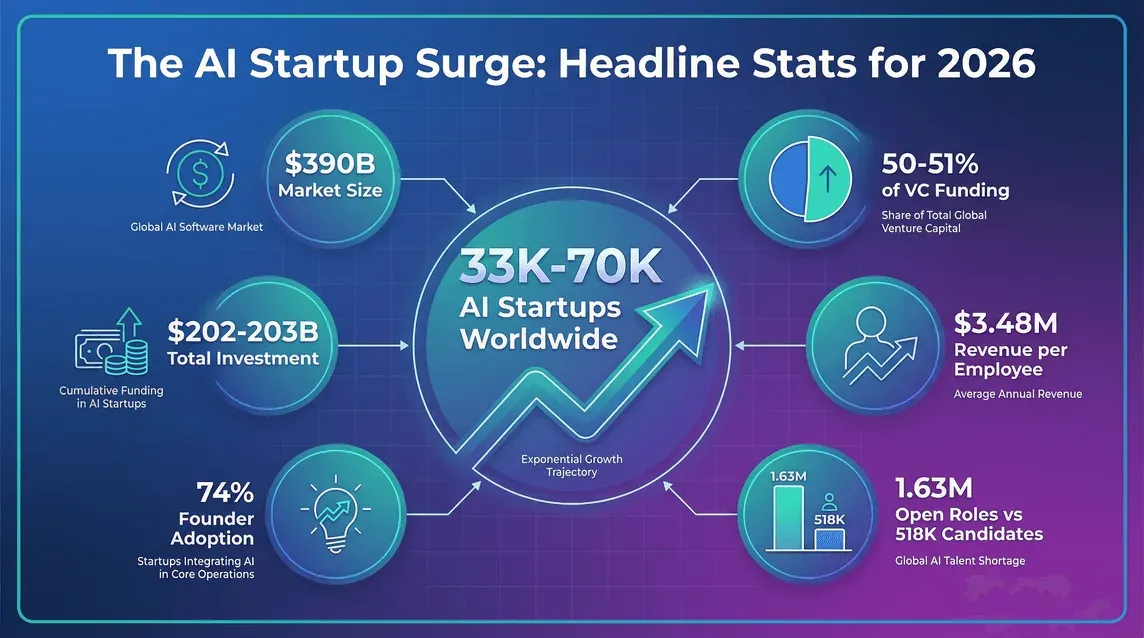
Zacznijmy od liczb, przez które opadają szczęki w salach zarządów i na kanałach Slacka na całym świecie. Oto kluczowe statystyki dotyczące AI i startupów AI, które trzeba znać w 2026 roku:
| Statystyka | Wartość / trend w 2026 roku |
|---|---|
| Liczba startupów AI na świecie | ok. 33 000 do ok. 70 000 |
| Wielkość globalnego rynku AI (2025) | ok. 390 mld USD, prognozowany CAGR 36% do 1,8 bln USD w 2030 roku |
| Globalne finansowanie VC dla AI (tylko I kw. 2026) | 242 mld USD — 80% globalnego VC, na kursie, który zdeklasuje 2025 rok |
| Udział startupów AI w globalnym finansowaniu VC (cały 2025 rok) | 50–51% (wzrost z 34% w 2024 roku) |
| Łączne inwestycje VC w startupy AI (cały 2025 rok) | ok. 202–203 mld USD |
| Średni przychód na pracownika w czołowych startupach AI | 3,48 mln USD (5–6× więcej niż w czołowych firmach SaaS) |
| Wykorzystanie AI w nowych startupach technologicznych | ok. 74% założycieli wdraża AI |
| Batch YC Winter 2026 — udział startupów AI / infrastruktury agentowej | ok. 60% to AI ogółem, ok. 41,5% buduje infrastrukturę dla agentów |
| Luka kadrowa w AI | 1,63 mln otwartych stanowisk w AI wobec ok. 518 000 wykwalifikowanych kandydatów |
Jeśli nie jesteś choć trochę zszokowany, sprawdź puls.
Globalny krajobraz startupów AI: wzrost, finansowanie i udział w rynku
Czym jest data scraping i jak go stosować w 2025 roku Get Started Free
Krajobraz startupów AI w 2026 roku jest, szczerze mówiąc, szalony. W zależności od tego, kogo zapytasz, na świecie działa albo ok. 33 000, albo ok. 70 000 startupów skupionych na AI. To nie jest tylko mnóstwo pitch decków — to fundamentalna zmiana w tym, jak buduje się dziś nowe firmy.
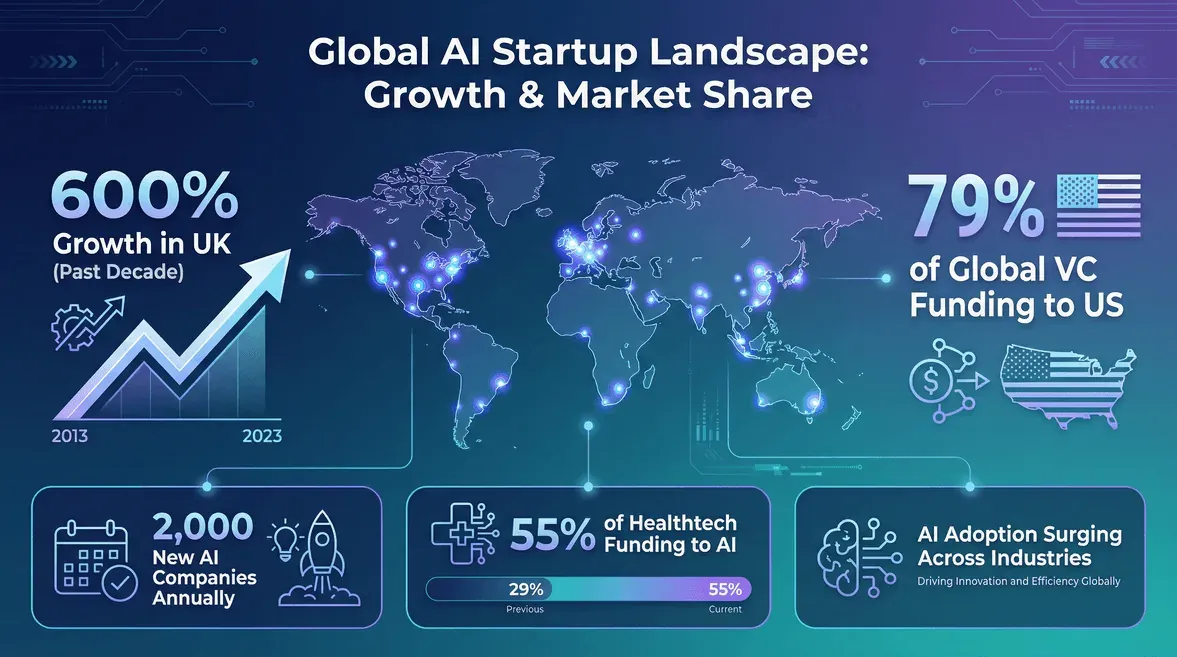
- Tempo wzrostu: w samej Wielkiej Brytanii liczba firm AI wzrosła o 600% w ciągu ostatniej dekady, a co roku powstaje tam około 2000 nowych firm AI.
- Regionalne centra: dominują Stany Zjednoczone — do amerykańskich startupów płynie ok. 79% globalnego finansowania VC w AI.
- Podział na branże: AI pożera świat, ale niektóre sektory dostają więcej uwagi niż inne. Na przykład ok. 55% finansowania w healthtechu trafia dziś do startupów AI (wzrost z 29% w 2022 roku).
- AI-native, AI-first i AI-enabled: jaka jest różnica? Startupy AI-native są zbudowane wokół AI od pierwszego dnia (pomyśl o laboratoriach modeli fundamentalnych czy firmach tworzących agentowe AI). AI-first oznacza, że AI jest głównym produktem lub wyróżnikiem. Startupy AI-enabled wykorzystują AI do ulepszania istniejących produktów lub procesów. W 2026 roku granice się zacierają, ale trend jest jasny: jeśli nie używasz AI, prawdopodobnie nie dostaniesz finansowania.
Wniosek: AI nie jest już funkcją — jest fundamentem.
Dokąd płyną pieniądze: finansowanie startupów AI i trendy inwestycyjne
Aktualizacja za I kw. 2026 — obraz znów się zmienił. Dane Crunchbase opublikowane w kwietniu 2026 roku pokazują, że inwestorzy ulokowali 300 mld USD w około 6000 transakcji na świecie w samym I kw. 2026 — to największy kwartał w historii. Startupy AI wchłonęły 242 mld USD z tej kwoty, czyli około 80% całego globalnego finansowania VC, wobec 55% w I kw. 2025. Cztery czołowe laboratoria — OpenAI (122 mld USD), Anthropic (30 mld USD), xAI (20 mld USD) i Waymo (16 mld USD) — zebrały łącznie 188 mld USD, czyli 65% wszystkich globalnych inwestycji venture w tym kwartale. Innymi słowy: jeden kwartał 2026 roku jest na kursie, by niemal dorównać całemu finansowaniu AI z 2025 roku.
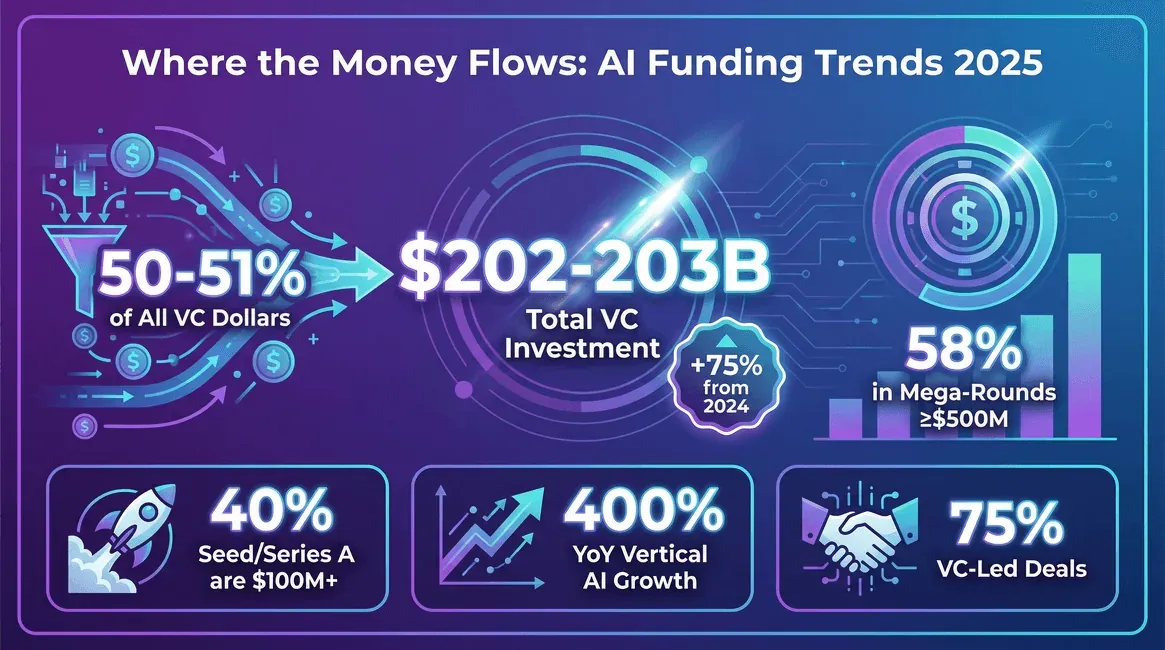
Porozmawiajmy o pieniądzach, bo — bądźmy szczerzy — to one utrzymują światła zapalone (a GPU w ruchu).
- Łączne inwestycje VC w startupy AI (2025): ok. 202–203 mld USD, o 75% więcej niż 114 mld USD w 2024 roku.
- Udział w globalnym finansowaniu VC: 50–51% wszystkich dolarów VC trafia dziś do startupów AI.
- Megarundy: 58% finansowania startupów AI w 2025 roku trafiło do rund o wartości co najmniej 500 mln USD. Samo 40 mld USD zainwestowane przez SoftBank w OpenAI wystarczy, by każdemu założycielowi zakręciła się łza w oku.
- Przesunięcie we wczesnych fazach: ok. 40% finansowania w rundach seed i Series A trafia w 2026 roku do rund powyżej 100 mln USD, w większości do firm AI.
- Wyceny: OpenAI zamknęło megarundę na 122 mld USD w lutym i marcu 2026 roku, a szeroko cytowane wyceny post-money sięgały okolic 850 mld USD, z perspektywą możliwego debiutu giełdowego w IV kw. 2026. Anthropic wycenił swoją rundę Series G przy wycenie post-money 380 mld USD na początku 2026 roku, a doniesienia z rynku wtórnego i kolejnych rund w ciągu roku wskazywały jeszcze wyżej. Mediana wycen startupów AI w późnych fazach wciąż znacznie przewyższa tradycyjne wskaźniki dla oprogramowania — ale wraz z tą wysokością pojawia się coraz ostrzejsze pytanie, które z tych mnożników rzeczywiście przetrwają następny cykl finansowania.
Sektory na fali:
- Generatywna AI wciąż jest gwiazdą wieczoru, ale „wertykalna AI" (rozwiązania branżowe) nabiera rozpędu. Według Bessemera firmy tworzące wertykalną AI opartą na LLM rosną średnio o ok. 400% rok do roku, przy marży brutto na poziomie ok. 65%.
Przepływ transakcji: choć giganci technologiczni i fundusze private equity wypisują duże czeki, fundusze VC wciąż prowadzą 75% transakcji, często w syndykatach. Średnia wielkość transakcji rośnie, a czasy inwestowania seed metodą „strzelaj i módl się" odchodzą w przeszłość — chyba że budujesz agenta AI.
Wyniki startupów AI: produktywność, rentowność i struktura zespołu
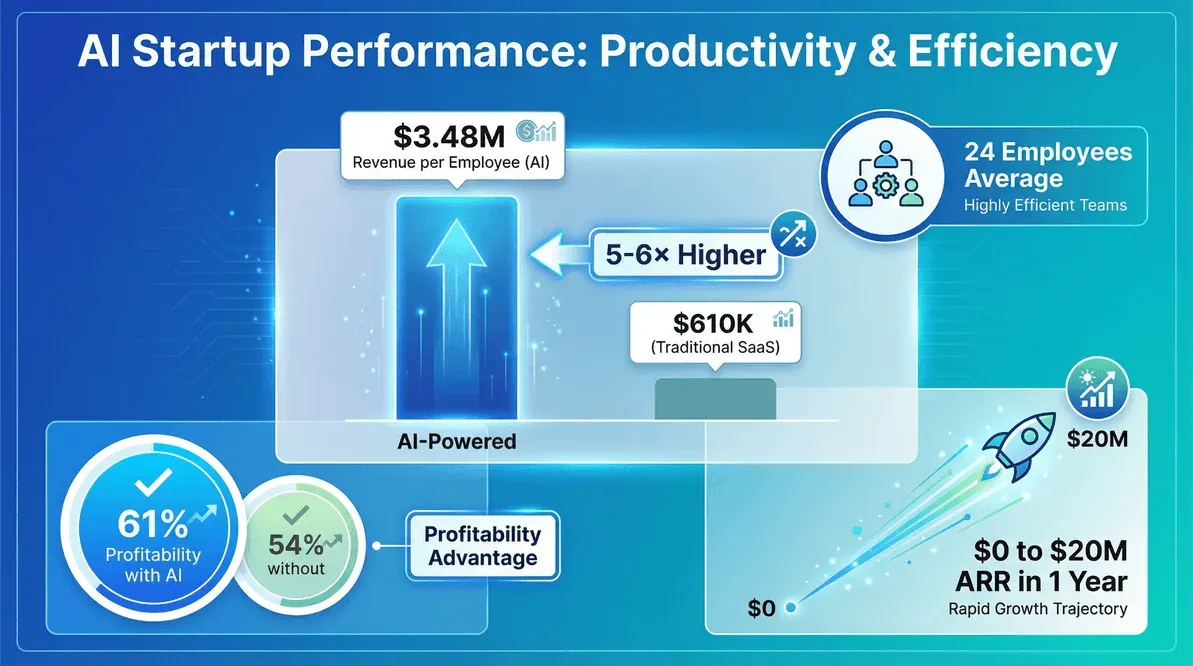
I tu robi się naprawdę ciekawie. Startupy AI nie tylko zbierają więcej pieniędzy — robią też więcej mniejszym nakładem.
- Przychód na pracownika: czołowe startupy AI osiągają średnio 3,48 mln USD na pracownika — to 5–6 razy więcej niż w czołowych firmach SaaS (które oscylują wokół 610 tys. USD).
- Wielkość zespołu: 10 największych startupów AI zatrudnia średnio zaledwie ok. 24 osoby. Porównaj to z setkami czy tysiącami pracowników w tradycyjnych firmach technologicznych.
- Rentowność: 61% firm SaaS korzystających z narzędzi AI osiąga próg rentowności lub lepszy wynik, wobec 54% tych, które z AI nie korzystają.
- Czas wejścia na rynek: niektóre startupy GenAI przechodzą od 0 do 20 mln USD ARR w rok, skupiając się na jednym konkretnym problemie (MIT/Fortune).
Co za tym stoi? Szczupłe, interdyscyplinarne zespoły napędzane automatyzacją opartą na AI — kodowanie, analizy, tworzenie treści, cokolwiek chcesz. Nie chodzi tylko o mądrzejszą pracę; chodzi o pracę w mniejszym składzie i szybsze skalowanie.
Wdrażanie AI w startupach: zastosowania i trendy
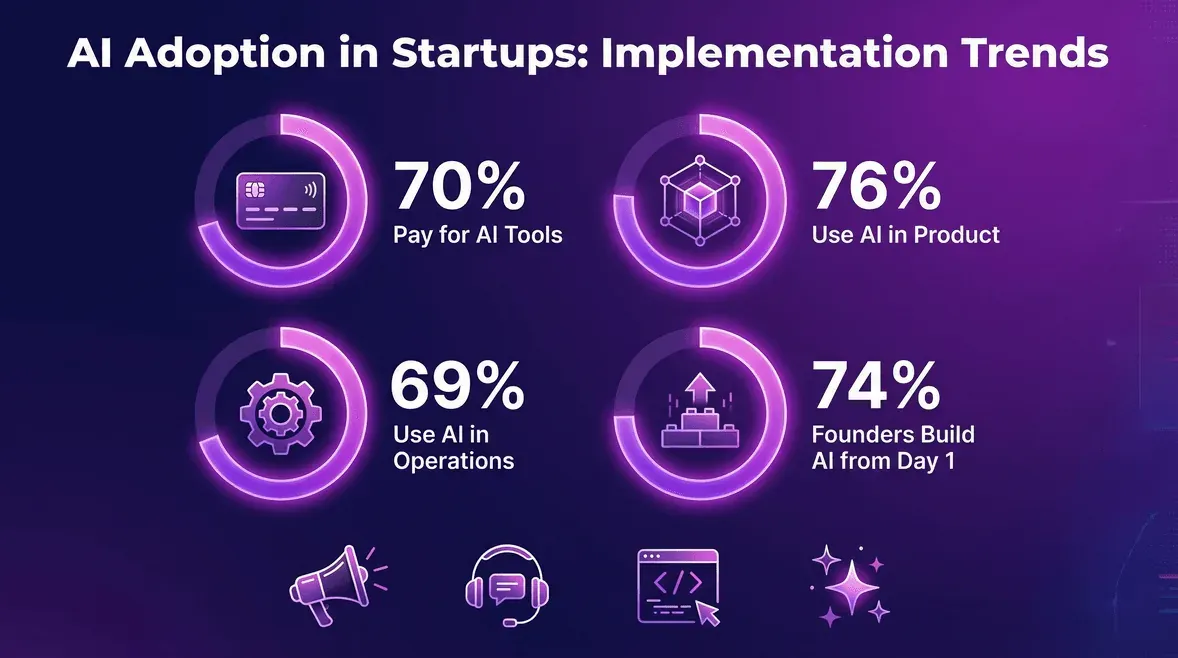
Dla startupów AI nie jest już modnym hasłem — to nowa norma.
- Poziom adopcji: ok. 70% startupów płaci już za przynajmniej jedno narzędzie AI. Wśród firm SaaS 76% wykorzystuje AI w swoim produkcie, a 69% w codziennych operacjach.
- Sposób myślenia założycieli: ok. 74% nowych założycieli wbudowuje AI w model biznesowy od pierwszego dnia.
Najczęstsze zastosowania:
- Automatyzacja marketingu i sprzedaży: generowanie tekstów, kampanie e-mailowe, treści do social mediów i testy A/B.
- Obsługa klienta: chatboty i wirtualni asystenci automatyzujący wsparcie.
- Rozwój produktu: kodowanie wspierane przez AI, czyszczenie danych, analityka i business intelligence.
- Funkcje niszowe: wbudowywanie AI bezpośrednio w produkt (inteligentne podpowiedzi, analityka predykcyjna czy nawet generowanie obrazów).
Wskazówka: najskuteczniejsze startupy skupiają się na 2–3 kluczowych zastosowaniach AI, które realnie robią różnicę, zamiast rozpraszać się na kilkanaście funkcji „miło by było mieć" (HubSpot).
Rozkwit agentowej AI i systemów autonomicznych w startupach
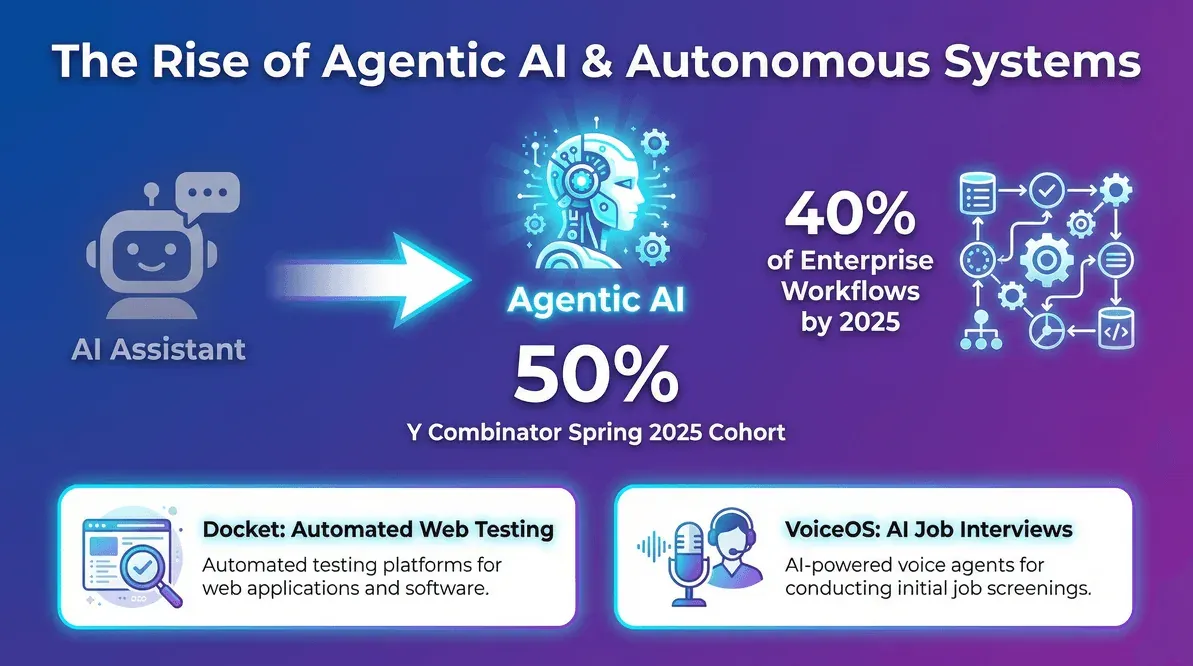
Pamiętasz czasy, gdy „asystent AI" oznaczał chatbota, który ledwo radził sobie z umówieniem spotkania? W 2026 roku najgorętszym trendem jest agentowa AI — systemy, które potrafią faktycznie wykonać zadanie za ciebie, a nie tylko je zasugerować.
- Adopcja agentowej AI: kohorta YC z wiosny 2025 roku była pierwszą, w której niemal połowa (46%) firm skupiała się na agentach. Batch Winter 2026 poszedł jeszcze dalej — około 60% firm koncentruje się na AI, a mniej więcej 41,5% buduje konkretnie infrastrukturę dla agentów. Kierunek jest jednoznaczny: agenci przeszli z roli „motywu przewodniego kohorty" do „domyślnego punktu wyjścia".
- Prognoza branżowa: Gartner przewiduje, że do 2025 roku ok. 40% procesów w przedsiębiorstwach będzie zawierać komponenty agentowe.
Przykłady:
- Docket: agent AI, który pisze i uruchamia testy webowe.
- VoiceOS: system AI automatycznie przeprowadzający rozmowy rekrutacyjne.
Ta zmiana jest realna: przechodzimy od AI jako narzędzia zwiększającego produktywność do AI jako autonomicznego „współzałożyciela". (Wciąż czekam, aż moja AI przyniesie mi kawę, ale na razie zadowolę się automatycznym testowaniem stron).
Wyzwania startupów AI: ROI, integracja i talenty
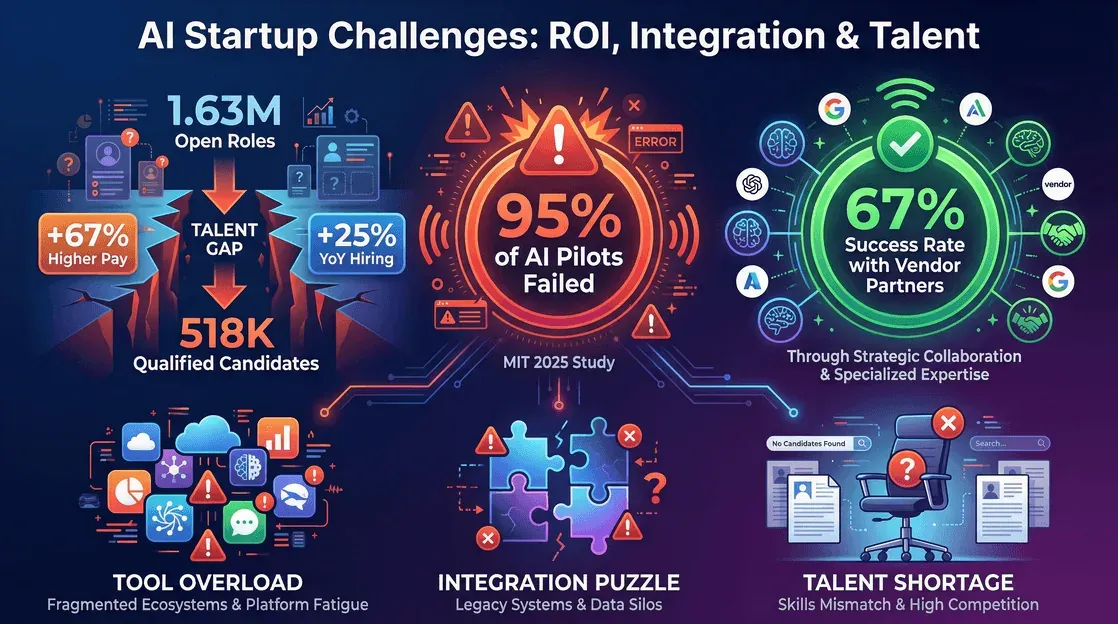
Nie wszystko jednak jest usłane różami i klastrami GPU. Startupy AI mierzą się z realnymi wyzwaniami — a niektóre z nich potrafią podciąć nogi nawet najlepszym zespołom.
- Problemy ze zwrotem z inwestycji: badanie MIT z 2025 roku wykazało, że 95% korporacyjnych pilotaży AI utknęło lub nie przyniosło mierzalnych korzyści. Boli.
- Bóle integracyjne: wiele startupów cierpi na „zmęczenie narzędziami AI" — za dużo narzędzi, za mało strategii. Najskuteczniejsze zespoły wybierają kilka najlepiej dopasowanych narzędzi i integrują je głęboko, zamiast gonić za każdą nową błyskotką.
- Niedobór talentów: na świecie jest ok. 1,63 mln otwartych stanowisk w AI, ale tylko ok. 518 000 wykwalifikowanych kandydatów. Role związane z AI są opłacane ok. 67% lepiej niż typowe stanowiska programistyczne, a rekrutacja inżynierów AI wzrosła o ok. 25% rok do roku.
Dobre praktyki:
- Waliduj swoje zastosowania AI i integruj je głęboko z procesami pracy.
- Korzystaj ze sprawdzonych platform AI i współpracuj z dostawcami (co daje ok. 67% skuteczności), zamiast budować wszystko własnymi siłami.
- Podejdź kreatywnie do rekrutacji: zespoły zdalne, outsourcing i szkolenie obiecujących programistów.
Trendy w startupach AI, które warto obserwować: full-stack AI, wertykalizacja i narzędzia no-code
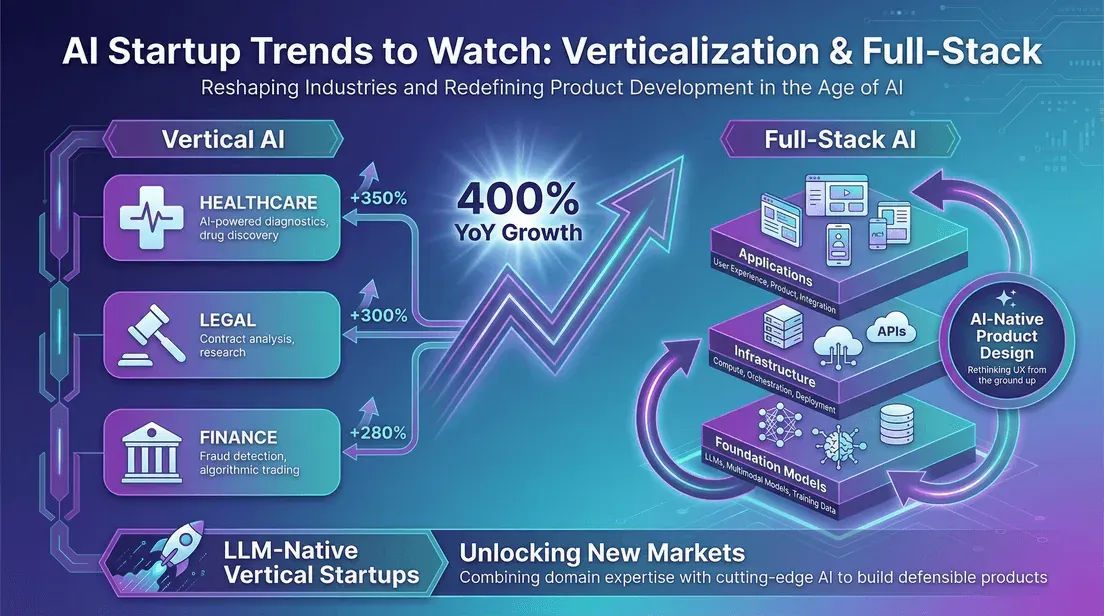
Jeśli chcesz wiedzieć, dokąd zmierza gra, miej oko na te trendy:
- Wertykalna (branżowa) AI: według Bessemera startupy wertykalne oparte natywnie na LLM (prawo, ochrona zdrowia, finanse itd.) skalują się w tempie ok. 400% rok do roku, otwierając rynki, których tradycyjny SaaS nigdy nie tknął.
- Startupy full-stack AI: coraz więcej firm „przejmuje cały stos" — od modeli po aplikacje końcowe — zwłaszcza w branżach regulowanych.
- Projektowanie produktów natywnych dla AI: AI nie jest już doklejanym dodatkiem; jest wpisana w rdzeń nowych produktów.
- Narzędzia AI no-code i low-code: 84% liderów technologicznych twierdzi, że AI nie zastąpi narzędzi low-code i no-code, ale 76% uważa, że je wzmocni. Spodziewaj się fali kreatorów AI typu „przeciągnij i upuść" oraz platform pozwalających osobom nietechnicznym budować procesy oparte na AI.
Jako ktoś, kto spędził sporo czasu na tym, żeby narzędzia AI były użyteczne dla osób nieprogramujących (pozdrowienia dla Thunderbit), mogę powiedzieć jedno: popyt na prostą i mocną AI będzie już tylko rósł.
Wypróbuj Thunderbit AI Web Scraper
Przyszłość startupów AI: regulacje, korekta rynkowa i zrównoważony wzrost
Najlepsze narzędzia i programy do web scrapingu w 2025 roku Get Started Free
Impreza wokół AI jeszcze się nie skończyła, ale ochrona (regulatorzy i realia rynkowe) zaczyna sprawdzać dowody.
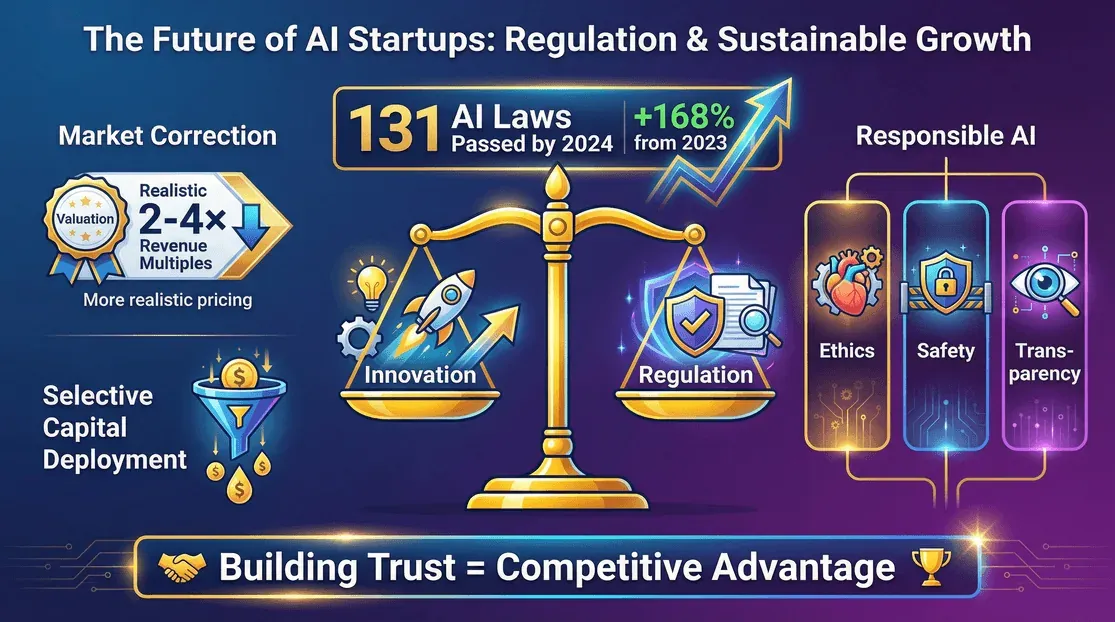
- Regulacje: w Stanach Zjednoczonych do 2024 roku uchwalono 131 ustaw dotyczących AI (wobec 49 w 2023 roku). Unijny AI Act ma wymusić surowsze wymogi zgodności. Startupy muszą projektować z myślą o prywatności, przejrzystości i bezpieczeństwie od pierwszego dnia.
- Korekta rynkowa: po latach zasady „najpierw buduj, pytania potem" punkt ciężkości przesuwa się w stronę selektywnego lokowania kapitału i wyraźnego ROI. Spodziewaj się bardziej realistycznych wycen (mnożniki rzędu 2–4× przychodu, jak w biotechu) i premii za zrównoważony wzrost.
- Odpowiedzialna AI: etyka, bezpieczeństwo i ograniczanie uprzedzeń nie są już miłym dodatkiem — stają się przewagą konkurencyjną, która buduje zaufanie użytkowników i inwestorów.
Zwycięzcami w 2026 roku i później będą te startupy, które połączą odważne innowacje z dyscypliną operacyjną i zgodnością z przepisami.
Najważniejsze wnioski: co statystyki startupów AI z 2026 roku oznaczają dla założycieli i inwestorów
Podsumujmy. Oto, co wszystkie te statystyki dotyczące AI i startupów AI oznaczają dla każdego, kto w 2026 roku buduje sztuczną inteligencję lub w nią inwestuje:
- Porównuj się bezlitośnie: zestawiaj swoje finansowanie, przychód na pracownika i poziom adopcji z najlepszymi w klasie. Jeśli twój startup AI nie jest szczupły i wydajny, zostawiasz na stole pieniądze (i udział w rynku).
- Skup swoją AI: najskuteczniejsze startupy wybierają 2–3 zastosowania AI o dużym wpływie i realizują je konsekwentnie. Nie daj się rozpraszać błyskotkom.
- Licz się z koncentracją kapitału: największe rundy trafiają do największych zakładów. Jeśli nie budujesz czegoś fundamentalnego ani wertykalnego, rozważ partnerstwa strategiczne lub konsolidację.
- Zarządzaj niedoborem talentów: bądź kreatywny w rekrutacji, szkoleniach i partnerstwach. Specjaliści od AI są drodzy i rzadcy — planuj z wyprzedzeniem.
- Korzystaj ze sprawdzonych narzędzi: współpracuj z uznanymi dostawcami i platformami AI (takimi jak Thunderbit), żeby uniknąć „zmęczenia narzędziami" i zmaksymalizować ROI.
- Wykorzystuj nowe trendy: wertykalna AI, rozwiązania full-stack i narzędzia no-code kształtują kolejną falę. Jeśli nie budujesz pod te trendy, być może budujesz pod wczoraj.
- Zachowaj zgodność i skupienie na użytkowniku: buduj zaufanie przez przejrzystość, etykę i mierzalne efekty. Regulacje nadchodzą — wyprzedź je.
Dla założycieli, menedżerów i inwestorów te statystyki AI to nie ciekawostki — to mapa drogowa przetrwania i rozwoju na najbardziej konkurencyjnym i najszybciej zmieniającym się rynku technologicznym, jaki widzieliśmy.
Jeśli chcesz zgłębić temat AI, automatyzacji i tego, jak faktycznie wykorzystać te statystyki w praktyce, zajrzyj na Blog Thunderbit. A jeśli szukasz najprostszego sposobu na automatyzację własnych procesów pracy z danymi, wypróbuj nasze rozszerzenie Thunderbit do Chrome. (No dobrze, musiałem wcisnąć chociaż jedną autopromocję).
Za budowanie mądrzejszych, szczuplejszych i bardziej znaczących startupów AI w 2026 roku — i za to, żeby nie dać się zastąpić własnej agentowej AI… przynajmniej nie w tym roku.
Pobierz rozszerzenie Thunderbit do Chrome za darmo
Dalsza lektura i źródła:
- Statystyki AI, które powinien znać każdy startup (HubSpot)
- Ile jest firm AI? (Exploding Topics)
- Statystyki AI 2024–2025: trendy globalne (Founders Forum)
- 6 wykresów pokazujących najważniejsze trendy finansowania AI w 2025 roku (Crunchbase)
- Startupy AI wyprzedzają tradycyjne oprogramowanie w jednym kluczowym wskaźniku (Web Strategist)
- Wdrażanie AI w prywatnych firmach SaaS (SaaS Capital)
- Jak startupy wykorzystują AI do wzrostu (Kruze Consulting)
- Część I: przyszłość AI jest wertykalna (Bessemer Venture Partners)
- AI Index 2025: stan AI w 10 wykresach (Stanford HAI)
Chcesz więcej praktycznych wniosków? Subskrybuj Blog Thunderbit, żeby być na bieżąco z AI, automatyzacją i budowaniem startupów nowej generacji.
Wypróbuj Thunderbit AI Web Scraper za darmo Get Started Free




