
Picture this: You’re scrolling through your phone, dodging ads like you’re in a game of Frogger, when suddenly a friend pings you: “You have to try this new app—it’s a total lifesaver.” Next thing you know, you’re downloading it, no questions asked. That’s the power of referral marketing in 2026—where trust, not just targeting, is the real currency.
And marketers are catching on fast. Global referral marketing spend is projected to surge by , and for good reason: referrals are delivering conversion rates and ROI that traditional channels can only dream about. In a world where data-driven decisions rule and ad fatigue is real, referral marketing isn’t just a trend—it’s the channel every marketer needs to watch (and work) in 2026.
The Referral Marketing Statistics Marketers Are Talking About in 2026
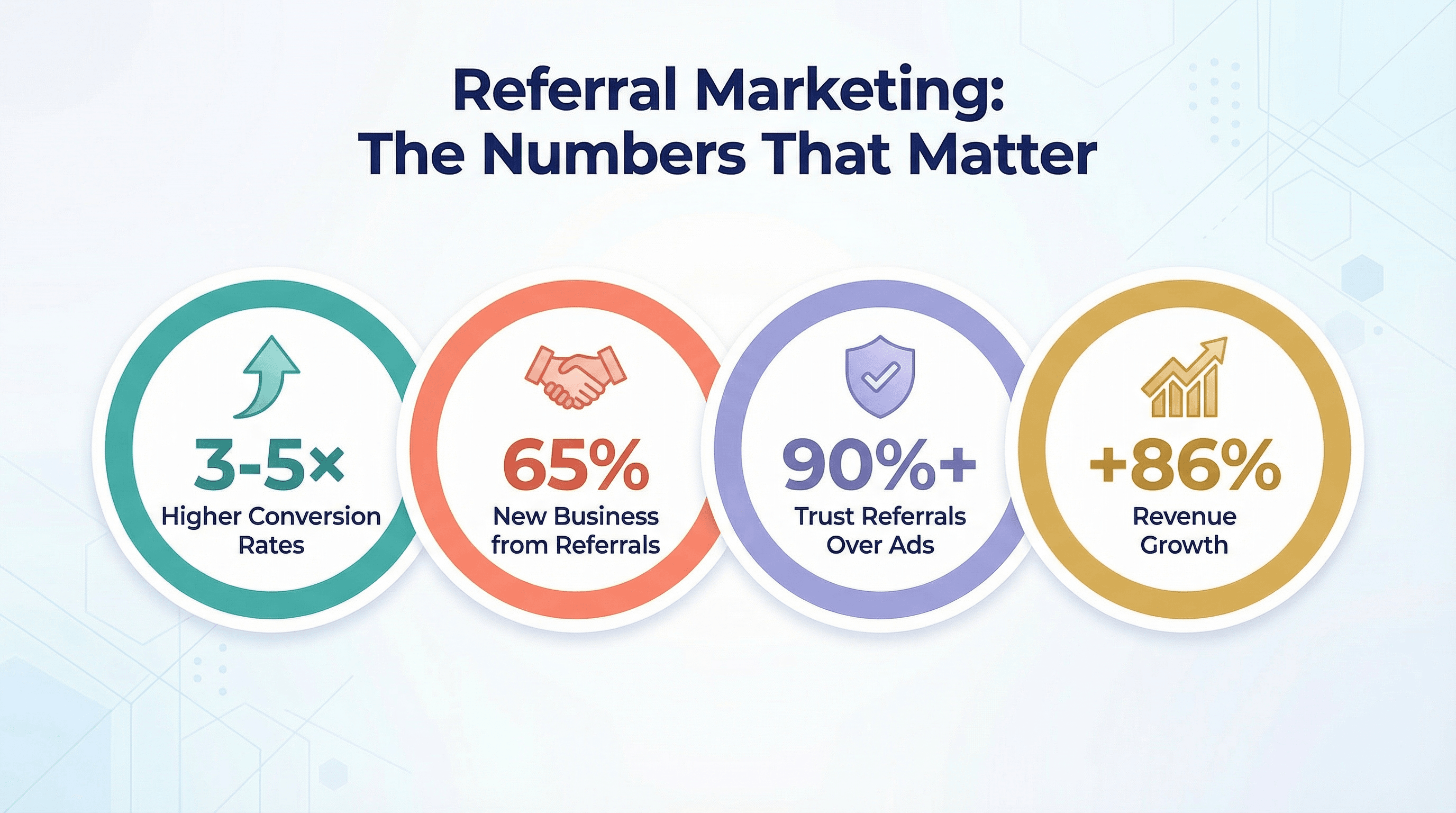 Let’s cut to the chase. Here are the headline stats everyone’s buzzing about this year:
- 3–5× higher conversion rates: Referral marketing delivers conversion rates than other marketing channels.
- 65% of new business comes from referrals: is generated through referrals and recommendations.
- Word-of-mouth drives 20–50% of decisions: of all purchasing decisions are influenced by word-of-mouth.
- Over 90% trust referrals: More than trust recommendations from friends and family above any form of advertising.
- +86% revenue growth with referrals: Companies that invest in referral campaigns see an compared to the previous year.
- 84% of B2B buying starts with a referral: begin their purchase process with a referral.
- 71% influenced by social referrals: are more easily influenced by social media referrals.
These numbers aren’t just impressive—they’re a wake-up call. If you’re not leveraging referral marketing, you’re leaving serious growth on the table.
Why Referral Marketing Outperforms Traditional Channels
Let’s be honest: traditional marketing is starting to feel a bit like shouting into the void. Rising ad costs, banner blindness, and a general sense of “meh” from consumers mean it’s harder than ever to break through. Referral marketing, on the other hand, is like having your best customers do the selling for you—no bullhorn required.
Lower Acquisition Costs, Higher Loyalty
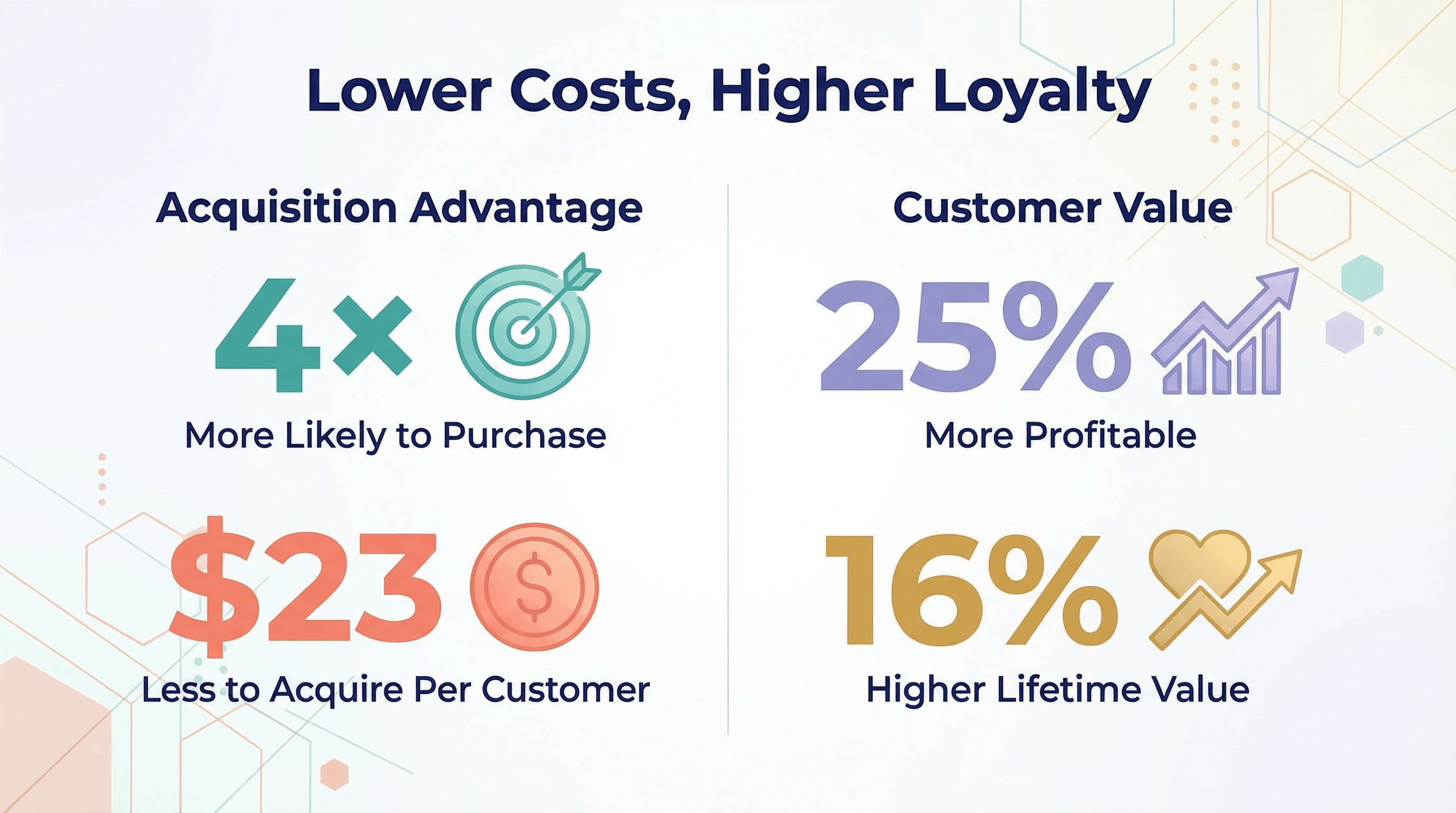
- Referral leads are 4× more likely to purchase than leads from other channels ().
- Companies with referral programs see a (CAC).
- A referred customer costs than a non-referred customer.
But it’s not just about getting customers in the door. Referred customers are:
- 25% more profitable and 18% more loyal ().
- Sporting a 16% higher lifetime value on average.
ROI That’ll Make Your CFO Smile
- Referral programs deliver a than paid digital campaigns.
- For large enterprises, the overall ROI from referral initiatives can be the investment.
That’s not just a good deal—it’s the kind of math that makes marketers want to do a happy dance.
Conversion Rates: Referral Marketing’s Secret Weapon
If you’re a numbers person (and let’s be real, in 2026, who isn’t?), conversion rates are where referral marketing really flexes.
- Referral campaigns achieve than other channels.
- In B2B, referred leads convert at an 11% average rate, beating every other channel ().
Why? Because referrals come pre-loaded with trust. It’s like skipping the awkward first date and jumping straight to “meet the parents.” The result: higher profit margins, longer customer relationships, and a lot less wasted effort.
Trust and Influence: The Psychology Behind Referral Marketing
Here’s the thing: people trust people, not ads. (Sorry, ad creatives.) In fact:
- trust recommendations from people they know more than any form of advertising.
- Only 36% trust online video ads, and a measly 2% say a traditional ad is very important in their purchase decision ().
That’s a trust gap you could drive a truck through. Or, you know, a referral program.
Word-of-Mouth Referrals: The Original Social Proof
Long before “influencer” was a job title, word-of-mouth was king—and it still is:
- are influenced by word-of-mouth.
- Word-of-mouth is in generating sales.
- Nearly 23% of people talk about their favorite products with friends or family every day.
But beware the flip side: 21% of brands say they’ve lost customer trust due to negative word-of-mouth. Happy customers are your best marketers—unhappy ones, well, they’re your best warning system.
Referral Marketing in B2B: Stats Every Marketer Should Know
 If you think referrals are just for B2C, think again. In the world of business buying, referrals are pure gold:
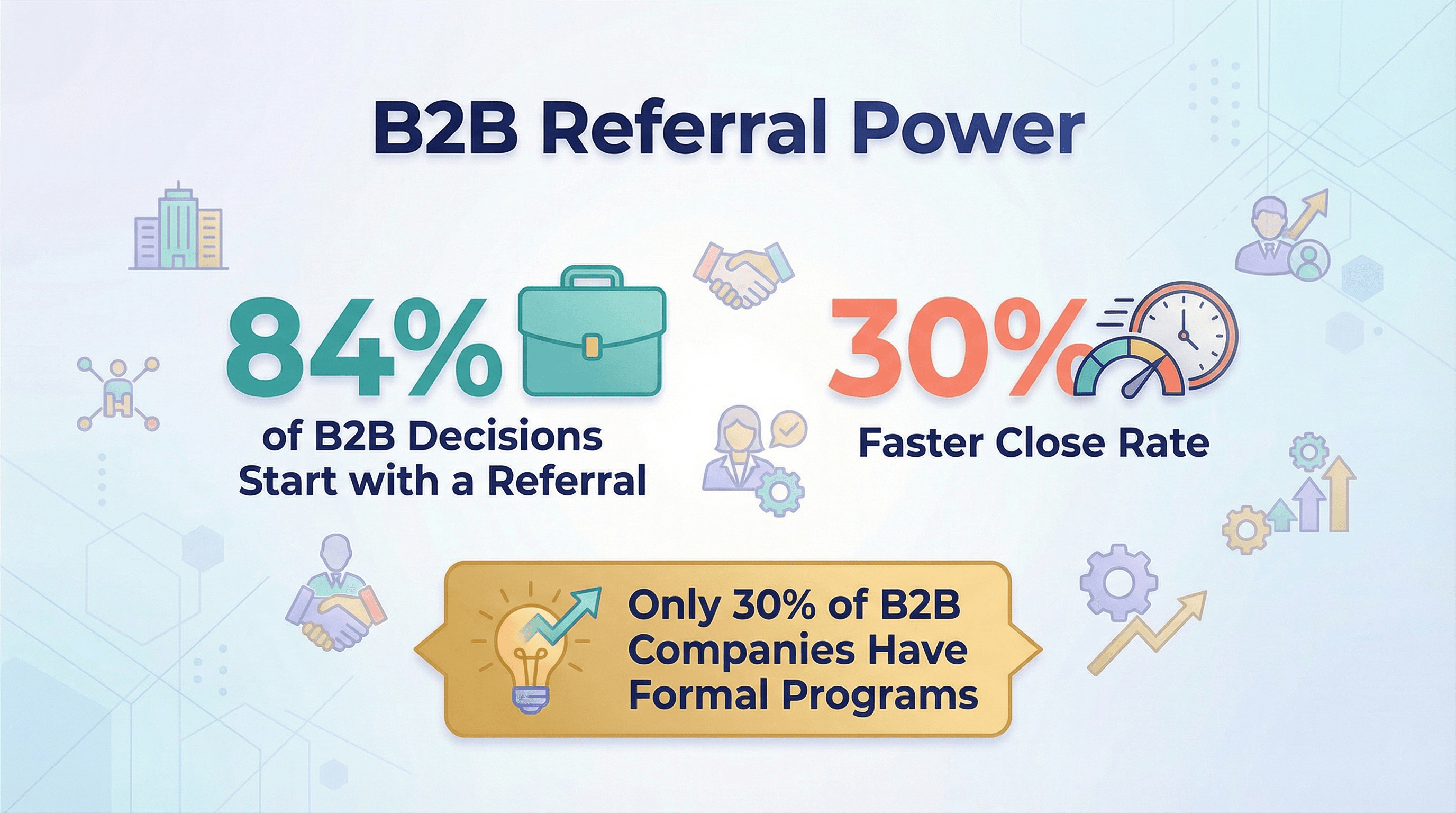
- start their buying process with a referral.
- Over 90% of B2B buying decisions are influenced by word-of-mouth or referrals.
- 78% of B2B marketers say referral programs generate high-quality leads, and 82% of B2B sales leaders say referrals yield their best new leads.
And here’s the kicker: referred B2B leads close about 30% faster than others (), and 86% of B2B companies with formal referral programs grew their revenue over the past two years.
B2B Referral Programs: Growth and Effectiveness
Despite all this, only about 30% of B2B companies have a formal referral program. That means a whopping 70% are leaving money on the table. For those who do run programs:
- 65% say referrals are “very important” to sales success.
- B2B firms with referral programs are 3× more likely to hit their revenue goals.
If you’re in B2B and not running a referral program, it’s like showing up to a potluck empty-handed.
The Social Media Effect: Referral Marketing in the Digital Age
 Social media has turned referrals into a high-speed, global phenomenon. One post, one story, one viral video—and suddenly your brand is everywhere.
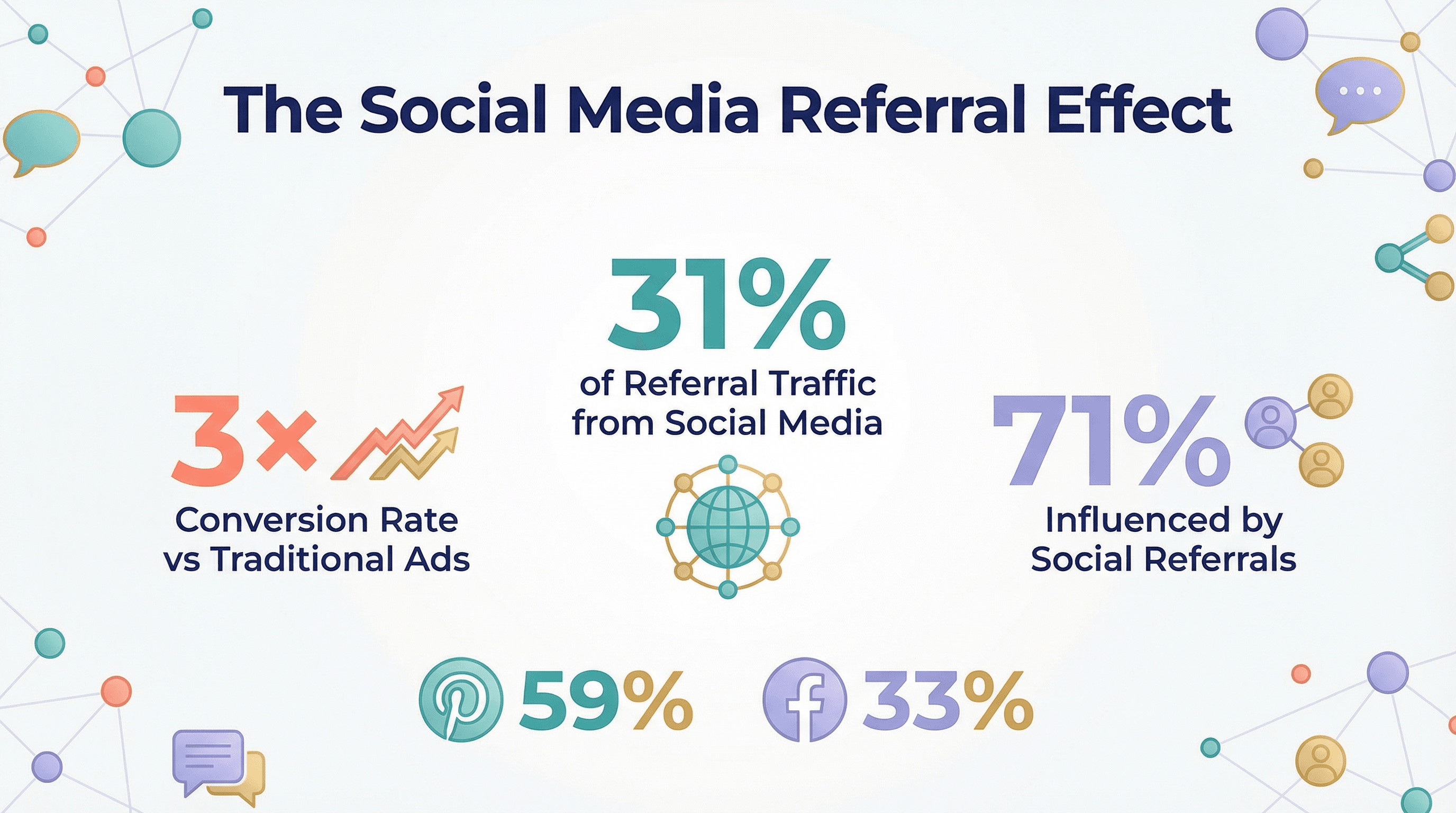
- Social media now accounts for about for new business.
- Social media referrals convert at .
- are more likely to buy if they see friends or family refer or discuss a product on social.
And if you build a brand community? 73.6% of consumers purchase more frequently when they’re part of a brand’s community, and some companies trace back to community influence.
Platform-Specific Referral Insights
- Pinterest: have purchased an item after seeing it on Pinterest.
- Facebook: have bought something after seeing it on a friend’s wall or feed. 53% are more likely to buy if they can message a company on Facebook.
- Instagram/TikTok: These platforms are driving “referral at scale” through influencer content and user-generated videos. (Ever heard “TikTok made me buy it”?)
- Email/Messaging Apps: In some industries, originate from messaging apps or email.
The lesson? Make it easy for your fans to share—wherever they are.
Incentives and Rewards: What Really Motivates Referrals?
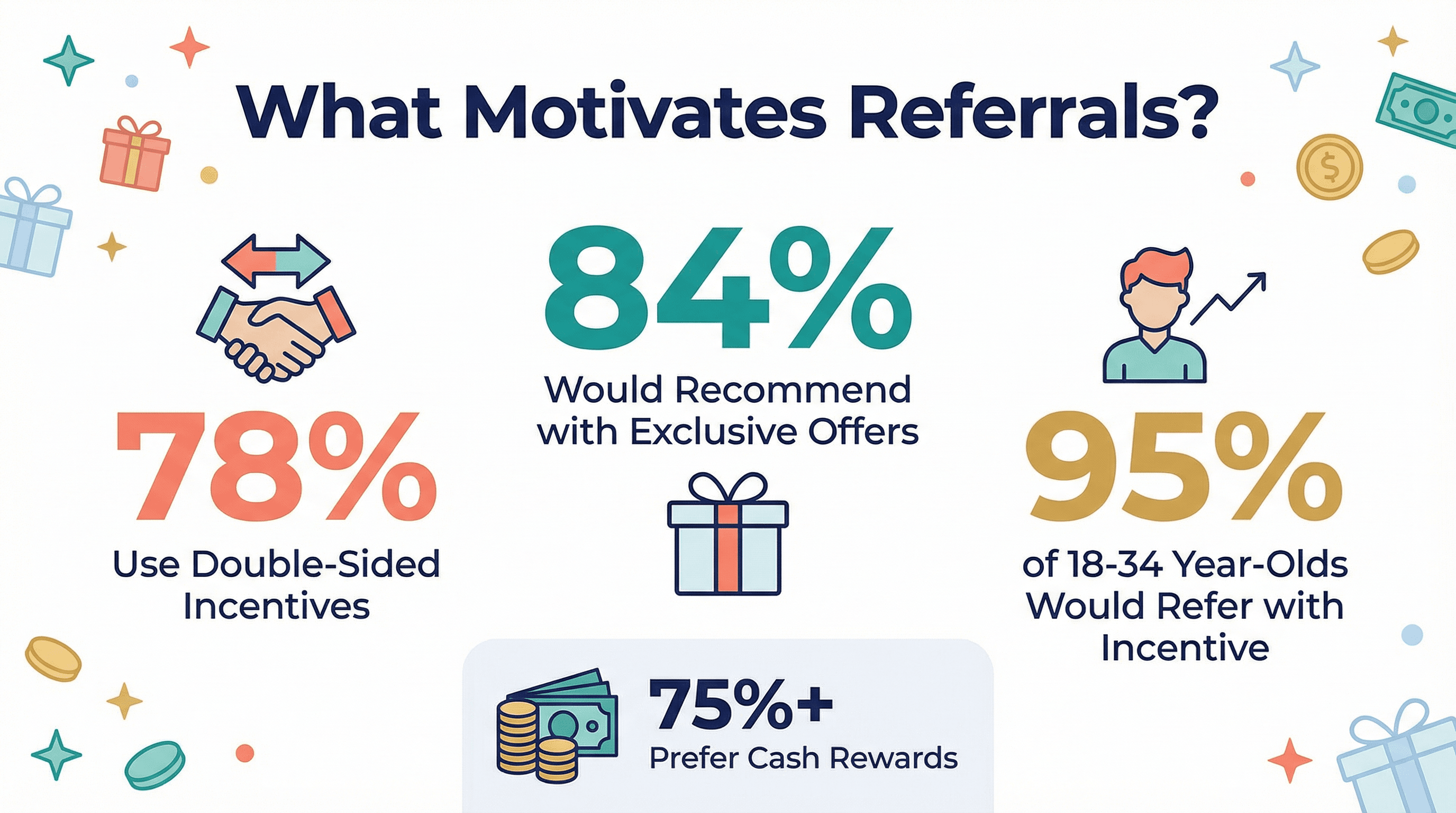 Let’s face it: everyone loves a little something extra. Incentives can turbocharge your referral program, but you don’t have to break the bank.
- 84% of Americans say an exclusive offer would make them more likely to recommend a brand ().
- 91% would share a “great deal” or exclusive offer with friends and family.
- 75%+ prefer cash or cash-equivalent rewards.
- Double-sided incentives (rewarding both the referrer and the referred) are used by .
And here’s a fun one: 95% of 18–34 year-olds say they’d be more willing to refer if offered an incentive. For them, referral codes are practically a social currency.
Employee Referral Statistics: The Overlooked Channel
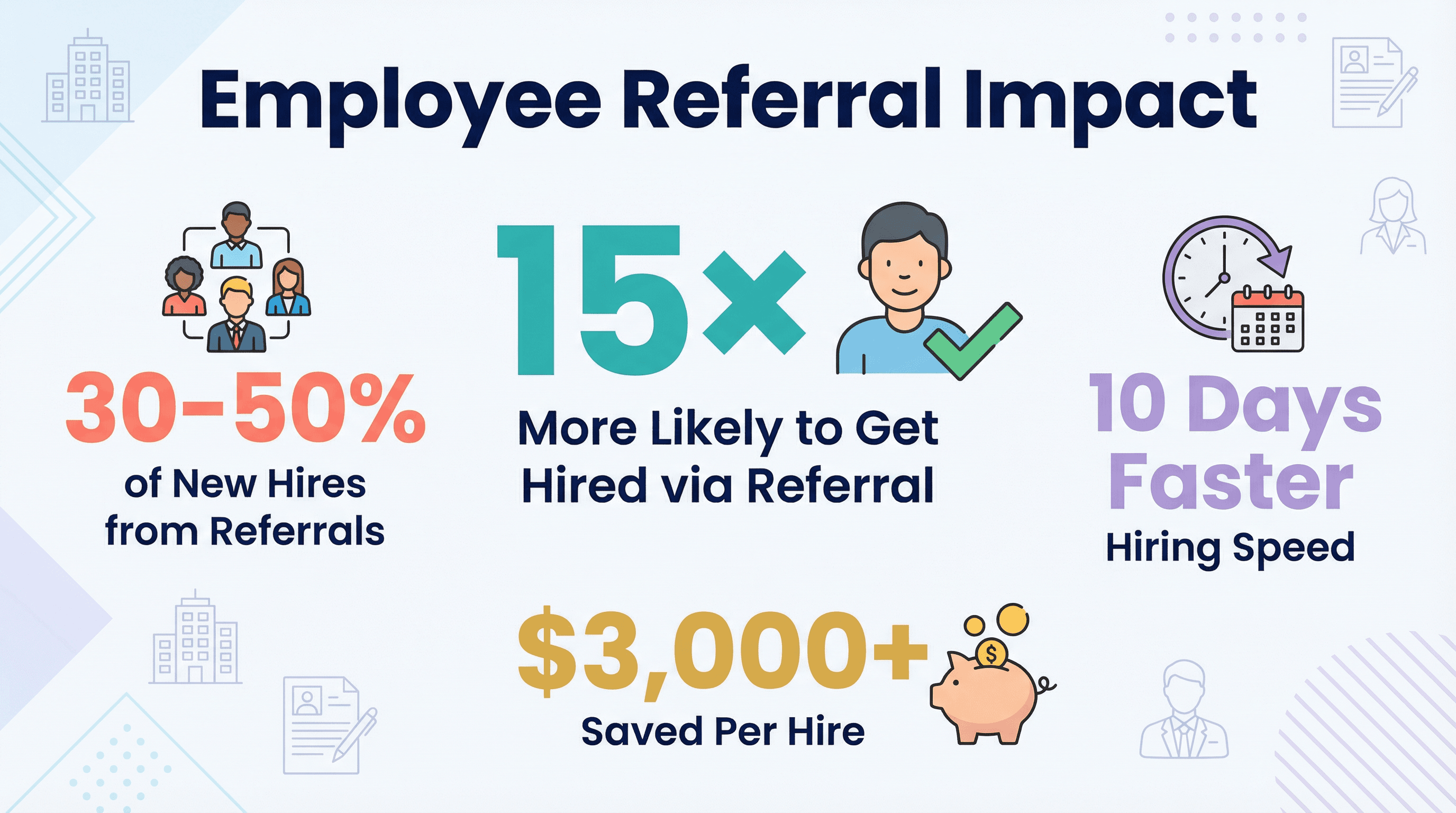 Referral marketing isn’t just about customers—your own team can be a referral powerhouse, especially when it comes to hiring.
- 84% of companies run formal employee referral programs.
- Employee referrals account for 30% to 50% of all new hires.
- Although only 7% of candidates come in via referral, they make up almost 40% of hires.
- A referred applicant is 15× more likely to land the job than one from a job board.
- Referral hires are made 10 days faster and save companies over $3,000 per hire.
- Referred employees generate about 25% more profit for their companies.
So, if you’re looking to grow your team (and who isn’t?), don’t overlook the talent network sitting right inside your own office.
Generational Trends in Referral Marketing
Do Gen Z and Millennials really refer more than Boomers? The answer: sort of, but everyone’s in on the action.
- 88% of Millennials trust recommendations from friends and family ().
- 83% of Gen Z trust referrals and word-of-mouth as much as any other info source.
- Gen X and Boomers? Still strong, with 80–83% trust levels.
- 95% of 18–34 year-olds would share a product if given an incentive.
- 28% of Millennials won’t try a product unless it’s been recommended by someone they know.
Even Gen Alpha (the kids!) are getting in on the act—81% influence their parents’ purchasing decisions.
Bottom line: every generation trusts and uses referrals. The difference is how and where they share—so meet them where they are, whether that’s Instagram, WhatsApp, or the local book club.
The Bottom Line: Referral Marketing ROI and Revenue Impact
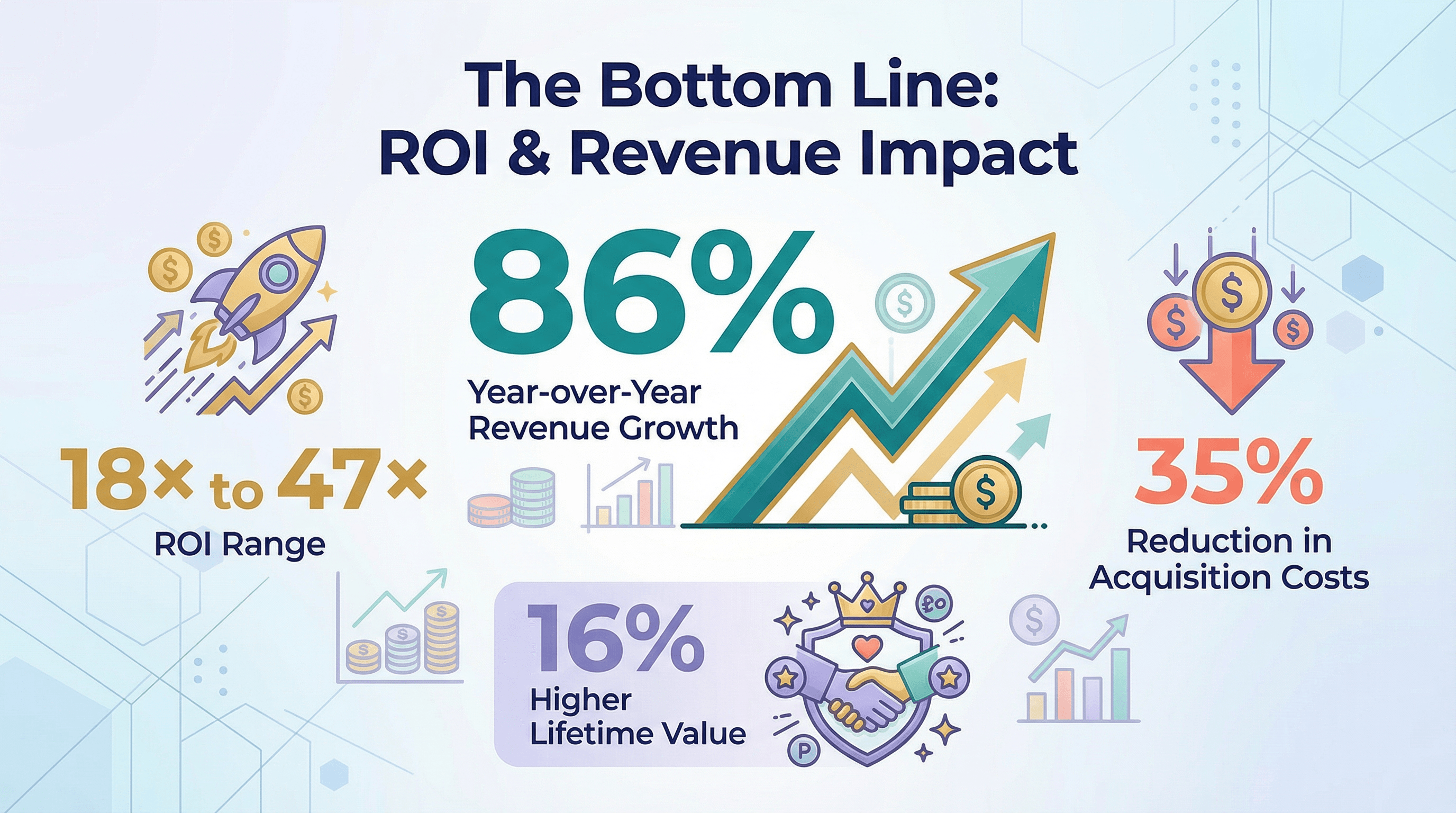 Let’s bring it home with the numbers that matter most: revenue and ROI.
- Companies running referral campaigns see an .
- Some businesses attribute to referrals.
- Referral program ROI ranges from .
- Referred customers have a 16% higher lifetime value and are 25% more profitable.
- Companies with referral programs see a .
In other words: referral marketing doesn’t just work—it compounds. Every happy customer is a potential growth engine, and every referral is a shortcut to trust, loyalty, and profit.
Key Takeaways for Marketers: What the Referral Marketing Statistics Mean for 2026
- Referral marketing delivers superior ROI and growth: Conversion rates are 3–5× higher than other channels, and ROI can hit double or triple digits.
- Trust is everything: Consumers trust peer referrals far more than ads. Build campaigns that leverage this trust—think testimonials, reviews, and referral programs.
- Outperform traditional channels: Lower acquisition costs, higher lifetime value, and better retention mean referral marketing should be a core part of your mix.
- Implement and optimize referral programs: Especially in B2B, where only 30% have formal programs—huge opportunity for growth.
- Leverage incentives wisely: Even small rewards work. Double-sided incentives (for both referrer and referee) drive the most participation.
- Tap into social media and communities: Make sharing easy and meet customers where they hang out—Facebook, Instagram, TikTok, Pinterest, and brand communities.
- Don’t forget internal referrals: Employee referral programs are a proven way to get better hires faster and cheaper.
- Tailor by generation: Millennials and Gen Z love digital sharing and incentives; Boomers and Gen X trust referrals too, but may prefer more personal channels.
Referral marketing isn’t just a tactic—it’s a strategy for sustainable, scalable growth in 2026 and beyond.
References
| Source | Link |
|---|---|
| DemandSage (2025): Latest Referral Marketing Statistics 2026 (Trends & Facts) | Read |
| Talkable (2025): 50 Important Referral Marketing Stats You Need To Know in 2025 | Read |
| Impact.com (2025): Top Referral Marketing Statistics for 2025 [+ Actionable Insights] | Read |
| ReferralRock (2024): 61 B2B Referral Statistics You Need To Know [2025] | Read |
| Friendbuy (2023): 54+ Referral Marketing Statistics That Every Business Should Know | Read |
| Nielsen (2021): Global Trust in Advertising Report (cited via DemandSage/Talkable) | Read |
| Harvard Business Review (2011): “Referral Programs and Customer Value” (cited via DemandSage/Talkable) | Read |
| McKinsey & Company: Word-of-mouth research | Read |
| Gartner (2025): Marketing and Consumer Trends Forecast (cited via Talkable) | Read |
| Influitive/Forrester (2022): B2B referral benchmark report (cited via ReferralRock) | Read |
Want more data-driven marketing insights? Check out the for the latest trends, tools, and strategies. And if you’re looking to automate your own referral or lead generation workflows, give a look—we’re all about making your growth stack smarter, faster, and a whole lot easier to manage.