
Picture this: You’re sipping your morning coffee, scrolling through the news, and you see two headlines back-to-back. The first warns, “AI to Displace Millions of Jobs by 2030!” The second, just below, beams, “AI Will Create Even More Jobs Than It Destroys!” If you’re anything like me, you’re left wondering—so which is it? Are we heading for a robot apocalypse, or is this the dawn of a golden age for workers who can ride the AI wave?
The truth, as usual, is more nuanced—and way more interesting. As someone who’s spent years building automation and AI tools (and now leading , where we help teams automate the boring stuff so they can focus on what matters), I’ve seen firsthand how AI is both a disruptor and a creator. In 2026, understanding the real story behind AI job statistics isn’t just for data nerds or policy wonks—it’s essential for business leaders, job seekers, and anyone who wants to thrive in a world where AI is rewriting the rules of work. So, let’s dive into the numbers, the trends, and the human stories behind the stats.
AI Job Statistics 2026: The Numbers Everyone’s Talking About
Let’s kick things off with the headline stats—the ones you’ll see quoted in boardrooms, newsrooms, and probably at your next family dinner when someone brings up “the robots.” Here’s the state of AI jobs in 2026, by the numbers:
Each of these numbers tells a story. Let’s unpack what’s really happening behind the stats.
The Big Picture: How AI is Transforming the Job Market
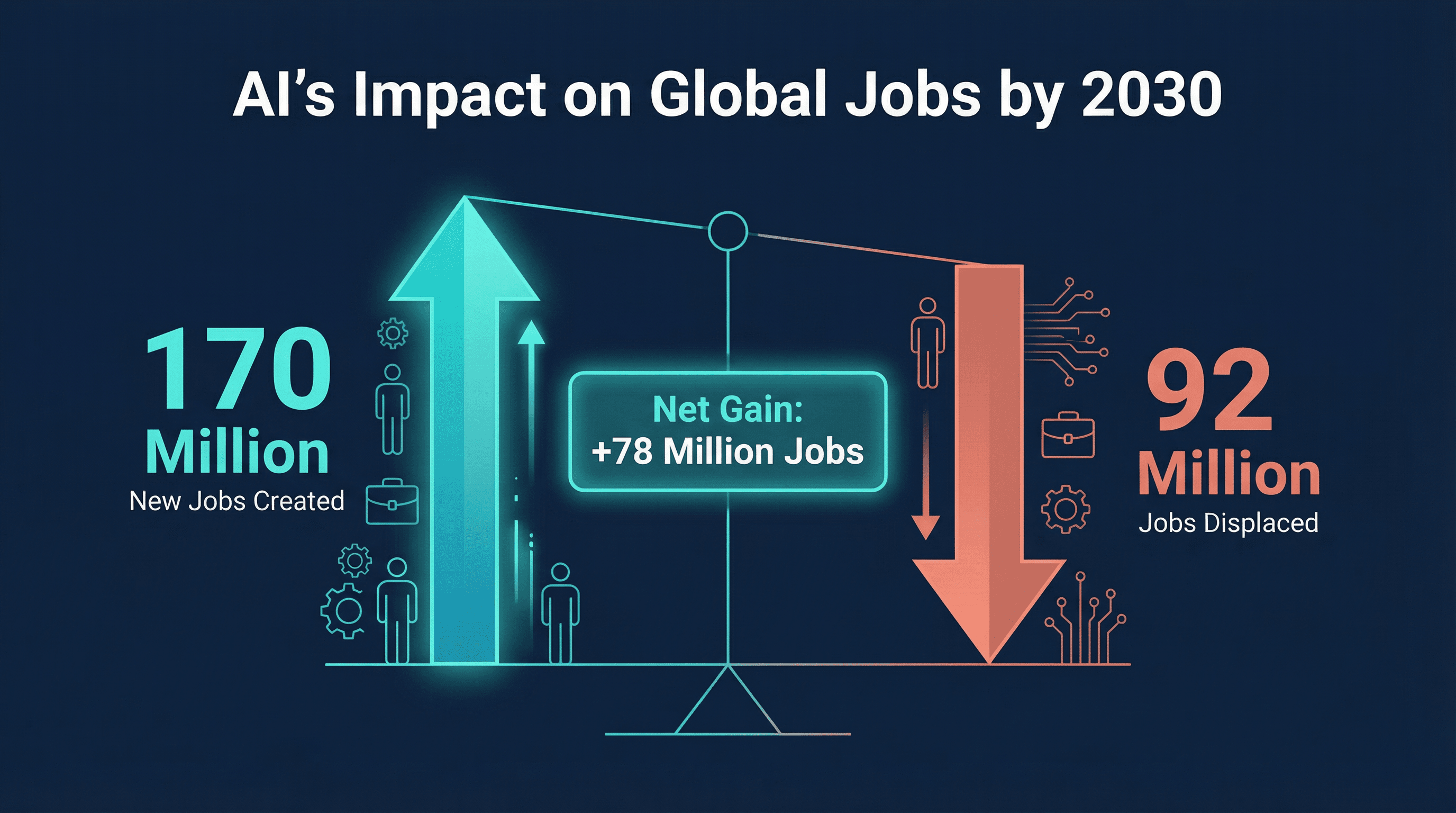
AI’s impact on jobs is a classic “good news, bad news” scenario. On one hand, we’re seeing significant job displacement—especially in roles that involve repetitive tasks. On the other, AI is a powerful job creator, spawning new industries and roles that didn’t exist a decade ago.
AI Job Losses vs. AI Job Creation
Let’s break down the numbers:
- Jobs Lost: The , with . Some estimates go as high as if AI is fully adopted.
- Jobs Gained: On the flip side, , and .
- Net Impact: In the short term, we might see a small net negative (a contraction of about 14 million jobs by 2027), but by 2030, the forecast is for net growth—if we can keep up with the pace of change.
The real story? AI is neither a job-destroying villain nor a job-creating superhero. It’s a catalyst for transformation, and the outcome depends on how quickly businesses, workers, and policymakers adapt.
Who’s Most at Risk? AI Job Exposure by Industry and Role
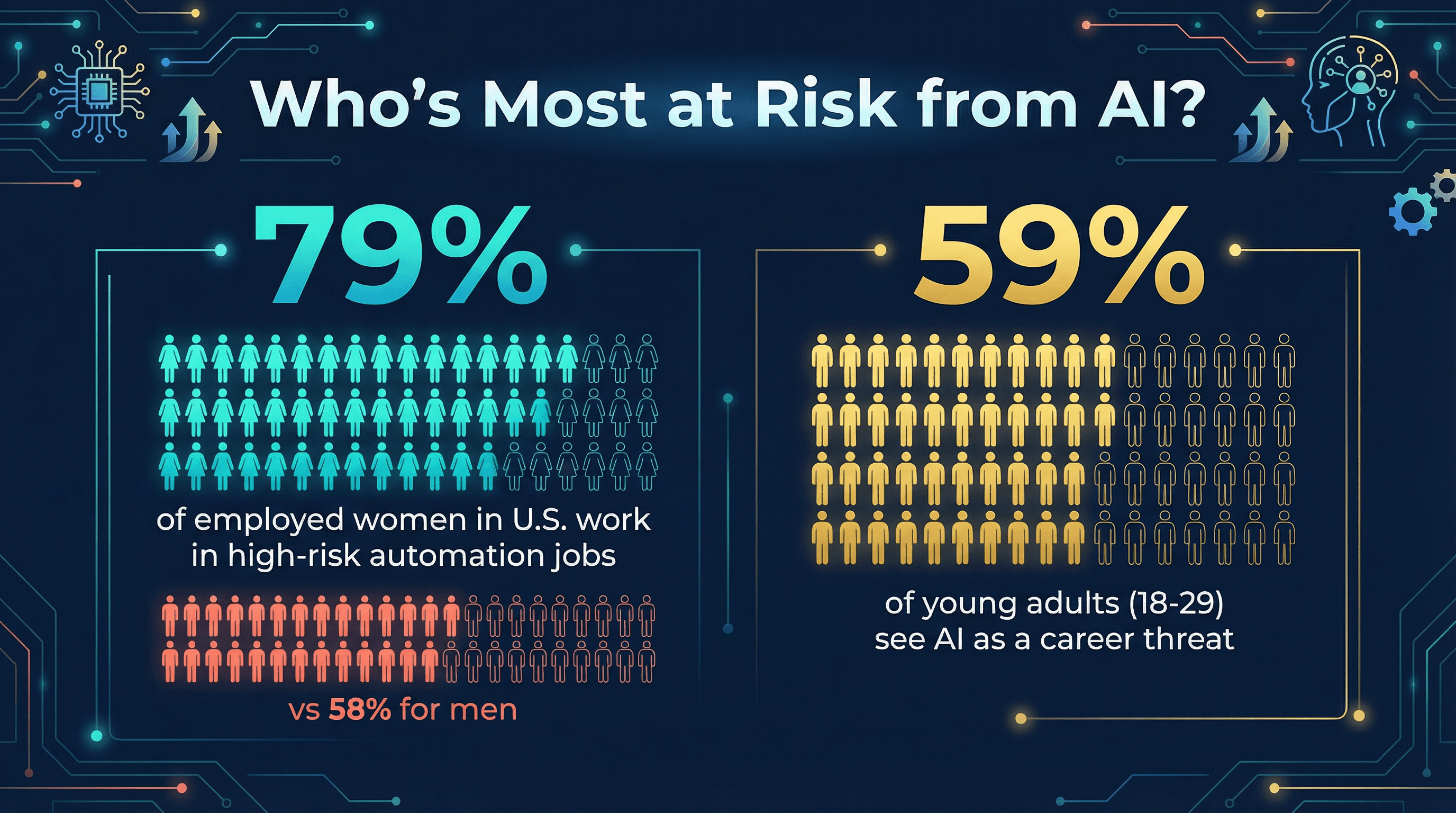 Not all jobs are created equal in the eyes of AI. Here’s where the risk—and opportunity—lies:
- Clerical & Administrative: . Think data entry, payroll, and basic bookkeeping.
- Manufacturing & Warehousing: . Robotics and AI vision systems are accelerating this trend.
- Customer Service & Telemarketing: AI chatbots and voice assistants are .
- Transportation & Logistics: Self-driving tech is coming for long-haul trucking and delivery jobs, though the timeline is still unfolding.
- Basic Accounting: AI can now reconcile accounts and process invoices, putting entry-level finance roles at risk.
- Media & Journalism: Automated news-writing and translation tools are changing the landscape for writers and translators.
But “at risk” doesn’t always mean “gone.” Many roles will be redefined, not eliminated. For example, a customer service rep might handle only complex issues, while AI takes care of the FAQs.
The Human Side: Demographics and AI Job Impact
Who feels the impact most?
- Young Workers: . Entry-level jobs are often the first to be automated.
- Mid-Career & Middle-Skill Workers: Routine white-collar jobs are increasingly exposed. The “middle class squeeze” is real.
- Lower-Income & Less-Educated Workers: .
- Women: , compared to 58% of men.
- Ethnicity & Geography: Job impacts can vary by region and demographic, often reflecting broader inequalities.
Bottom line: AI could widen existing gaps if we’re not careful. Targeted support and upskilling are essential.
AI Job Growth: Where the Opportunities Are
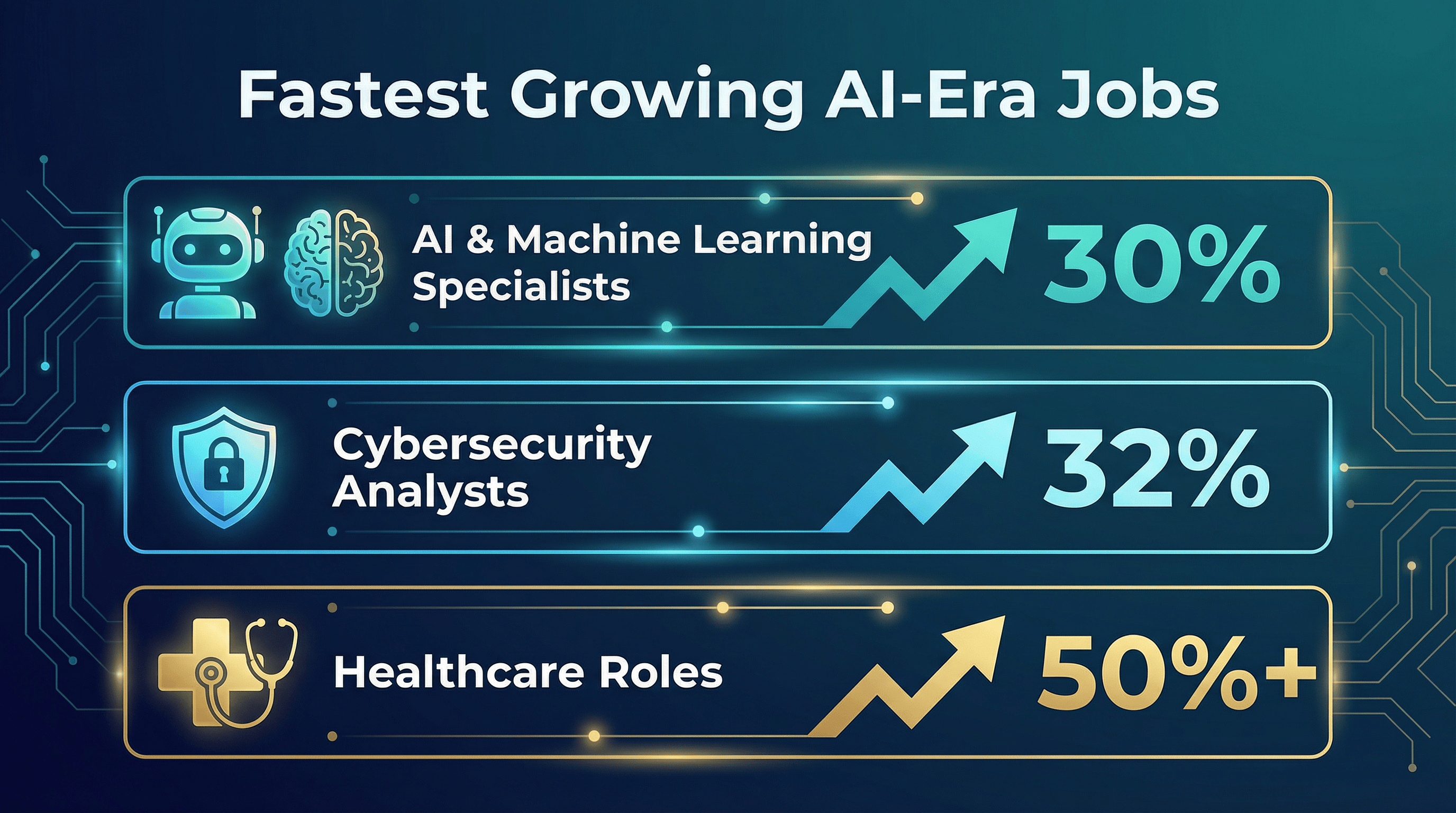 Now for the good news: AI is also a job-creation engine, especially if you know where to look.
- Tech & AI Development: , with a projected 30% increase by 2027.
- Data Roles: .
- AI Application (Non-Technical): Roles like are booming.
- Cybersecurity: .
- Healthcare & Education: AI is augmenting—not replacing—roles in healthcare and teaching. For example, .
- Green Economy: Jobs like are on the rise.
- Creative Industries: AI is a tool, not a replacement, for creative professionals. New hybrid roles are emerging, like AI Art Designer.
And don’t forget the “resilient” jobs: skilled trades, personal care, and service roles that require a human touch are still in demand.
AI Skills in Demand: What Employers Want
So, what skills will get you hired in the AI era?
- Machine Learning & Data Science: Programming (Python, R), machine learning, data analysis, and big data tools are golden tickets.
- Software Development & IT: Cloud computing, APIs, DevOps, and cybersecurity are hot.
- Analytical & Creative Thinking: , followed closely by creativity.
- Resilience & Adaptability: The ability to learn and pivot is essential.
- Communication & Collaboration: As AI takes on routine tasks, human interaction and teamwork become even more valuable.
- Lifelong Learning: .
The winners in the AI job market will be those who blend technical skills with uniquely human strengths.
AI Job Statistics by Region: Global Trends and Local Realities
AI’s impact isn’t uniform—it varies dramatically by region:
- North America: . The U.S. leads in both AI job creation and displacement.
- Europe: High adoption, strong worker protections, and a focus on ethical AI. .
- Asia-Pacific: China is the automation powerhouse, with . India is focusing on becoming an AI talent hub.
- Latin America & Africa: Slower adoption means less immediate displacement, but also slower job creation in AI fields. .
- Middle East: High-end tech jobs are growing, but traditional roles are being automated.
Policy, public sentiment, and economic structure all play a role in shaping regional outcomes.
The Employer Perspective: How Companies Are Responding to AI Job Shifts
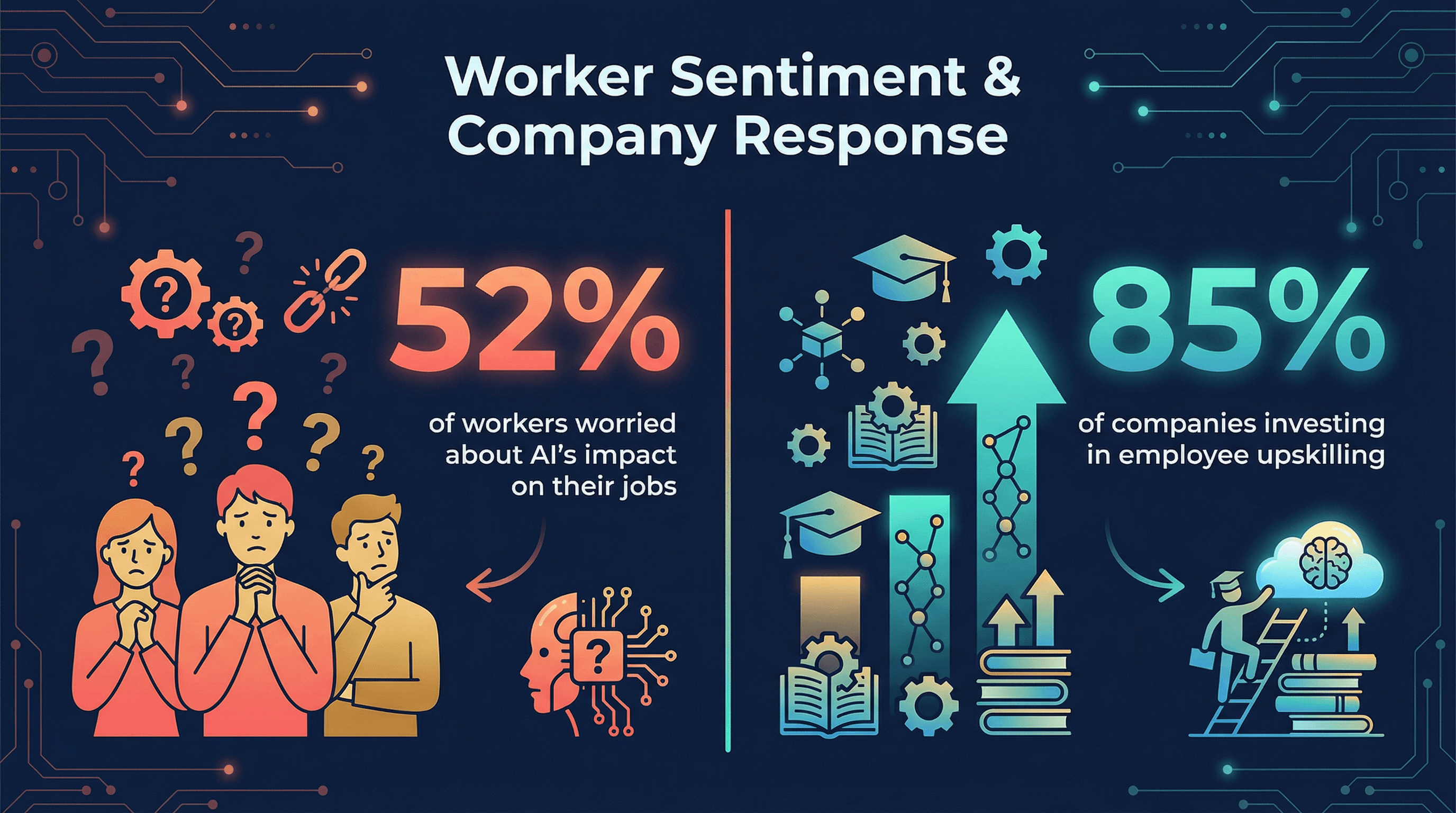 How are businesses handling the AI revolution?
- Rapid Adoption: .
- Workforce Reduction: . IBM, for example, announced a hiring freeze for roles that AI could do.
- Workforce Expansion: At the same time, .
- Upskilling & Retraining: .
- Role Redefinition: Many companies are redesigning jobs to work alongside AI, not just replacing people.
- Communication: Transparent communication and change management are key to keeping morale high.
A great example: Siemens is investing heavily in continuous training, expecting employees’ roles to shift toward programming and decision-making as routine work is automated.
Worker Sentiment: How Employees Feel About AI Jobs
Let’s be real—AI is making a lot of people nervous.
- Worry is Widespread: . Only 36% feel hopeful.
- Young Workers: , but they’re also the most likely to use AI tools at work.
- Demand for Training: .
- Distrust of Employers: Many workers are wary of AI in hiring or performance evaluation. .
- Hope & Optimism: Those who use AI tools often find them helpful, especially for eliminating repetitive tasks.
The takeaway? Workers want reassurance, support, and a clear path to new opportunities.
AI Job Training and Upskilling: Preparing for the Future
Training is the name of the game. The scale is massive:
- 59% of workers will need upskilling or reskilling by 2030 ().
- 85% of companies are investing in internal training programs ().
Examples:
- Amazon’s Upskilling 2025 program: $700 million to train 100,000 employees.
- IBM’s SkillsBuild and AI Skills Academy: free education platforms for staff and external learners.
- Governments like Singapore’s SkillsFuture: funding credits for every citizen to take tech and AI courses.
But there’s still a gap. Employers report difficulty finding skilled talent, and not all training programs are keeping up with the pace of change. The most successful efforts combine technical upskilling with soft skills and offer clear pathways to new roles.
The Future Outlook: What’s Next for AI Jobs?
So, what does the future hold? Here’s what the experts are saying:
- Continued Acceleration: By 2030, .
- Net Job Growth vs. Mass Displacement: The optimistic scenario is net job growth, with more jobs created than destroyed. The pessimistic scenario is mass displacement, especially if AI advances faster than workers can reskill.
- Changing Definition of “Job”: The gig economy could expand, and we might see more entrepreneurial small businesses powered by AI.
- Policy Responses: Universal Basic Income, reduced work weeks, and robust retraining programs are being discussed as ways to cushion the transition.
- New Sectors: Expect entirely new industries to emerge—personal AI services, space exploration, AI maintenance, and more.
- Workforce Transformation: By 2030, the skill profile of the average worker will be very different. Coding and data analysis might be as common as using Excel is today.
The key message? The outcome isn’t set in stone. It will be shaped by how businesses, workers, and policymakers respond—through training, education reform, and a focus on human-centered AI.
Key Takeaways from AI Job Statistics 2026
- AI is both a disruptor and a creator: Tens of millions of jobs will be displaced, but even more could be created if we get the transition right.
- Nearly a quarter of all jobs are changing: .
- Clerical, repetitive, and entry-level tasks are most at risk: But creative, complex, and hands-on roles are growing.
- Tech and human skills are both in demand: Analytical thinking, creativity, and adaptability are as important as coding.
- Regional differences matter: Advanced economies see faster disruption, but no region is immune.
- Employers are automating and upskilling: .
- Workers are anxious but willing to adapt: Training and clear career pathways are essential.
- The fastest-growing jobs are in tech, data, and hybrid roles: But healthcare, education, and green jobs are also expanding.
- By 2030, the workplace will be transformed, not jobless: The future depends on how we manage the transition.
Citable Charts and Data Sources: AI Job Statistics
If you’re looking to cite data or add visuals to your own presentations, here are some of the best sources:
- : Chart showing 170 million jobs created vs. 92 million lost.
- : Infographic on 23% of jobs changing.
- : Percentage of tasks that can be automated by industry.
- : IMF and Pew Research charts.
- : Pew Research Center’s 2024 survey results.
- : Comparative chart of job roles.
- : Infographic on top skills.
- : WEF and Fortune charts.
For more in-depth reading and resources, check out the , , and .
Final Thoughts
AI is here to stay, and it’s reshaping the world of work at a pace that’s both exhilarating and a little bit terrifying. But if there’s one thing I’ve learned from years in automation and AI, it’s that the winners aren’t the ones who resist change—they’re the ones who learn, adapt, and find new ways to add value. Whether you’re a business leader, a job seeker, or just someone curious about the future, staying informed and agile is your best bet.
And hey, if you’re looking to automate the boring stuff so you can focus on the creative, strategic, and human side of your work, check out —we’re building AI tools to help you do just that. (Shameless plug, but hey, it’s my blog.)
Stay curious, keep learning, and let’s build a future where AI works for all of us.
Written by Shuai Guan, Co-founder & CEO of . For more insights on AI, automation, and the future of work, check out the .