
Picture this: It’s 2026, and you’re walking into a buzzing conference center. The energy is electric—name badges flash, AI-powered apps ping with personalized networking suggestions, and the coffee line is, as always, the real center of gravity. But here’s the kicker: behind every handshake, every hybrid session, and every meticulously planned experience, there’s a mountain of data shaping how these events come to life. The event management industry isn’t just back—it’s bigger, smarter, and more strategic than ever.
How big? Try $2.33 trillion big. That’s the projected global value of the events industry this year, nearly double what it was before the world hit pause in 2020 (). Whether you’re a marketer, event planner, or business leader, understanding the latest event marketing statistics isn’t just “nice to have”—it’s your roadmap for staying ahead of the curve. So, grab your virtual (or physical) lanyard, and let’s dive into the 40 stats that are defining event marketing trends in 2026.
Quick-Glance: Top Event Marketing Statistics for 2026
For those who want the TL;DR before their next meeting, here are the headline stats you need to know:
- $2.33 trillion: Projected global events industry market size by 2026 ().
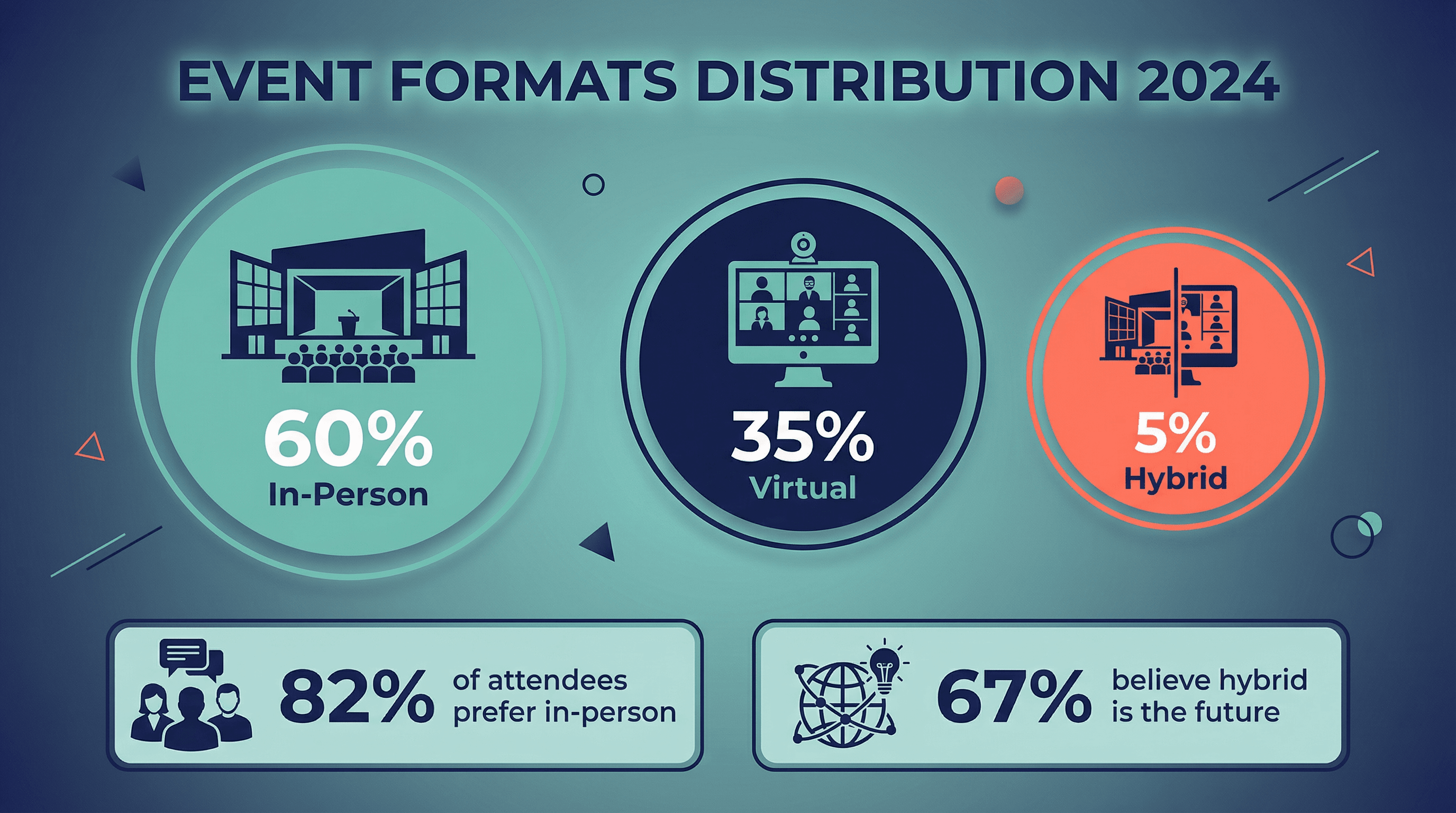
- 60% / 35% / 5%: Share of events held in-person, virtual, and hybrid, respectively, as of 2024 ().
- 82%: Attendees who prefer in-person events over virtual ().
- 59%: Event professionals who say virtual events are now a permanent fixture ().
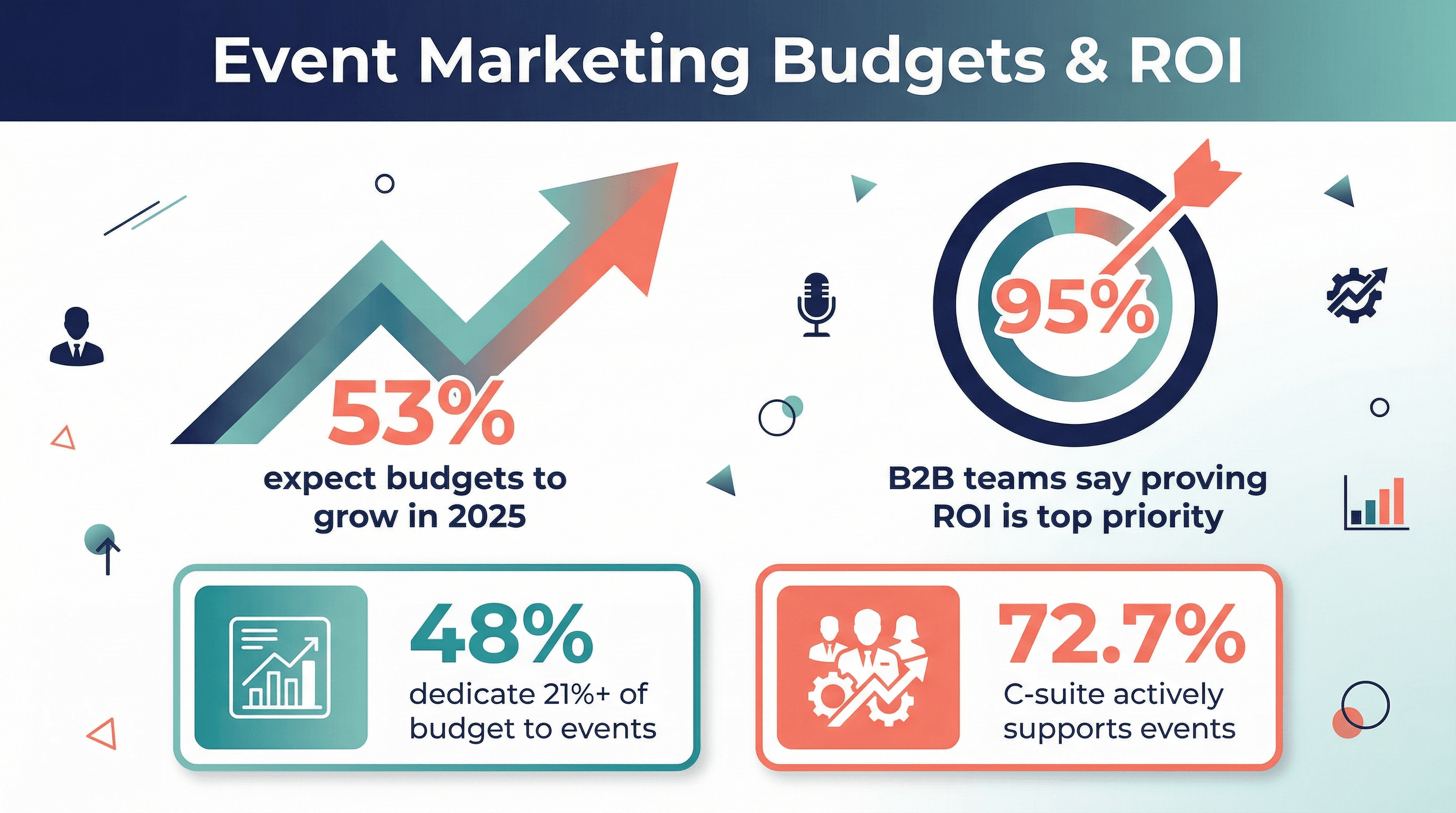
- 53%: Event organizers expecting their event budgets to increase in 2025 ().
- 95%: B2B event teams who say proving event ROI is a top priority ().
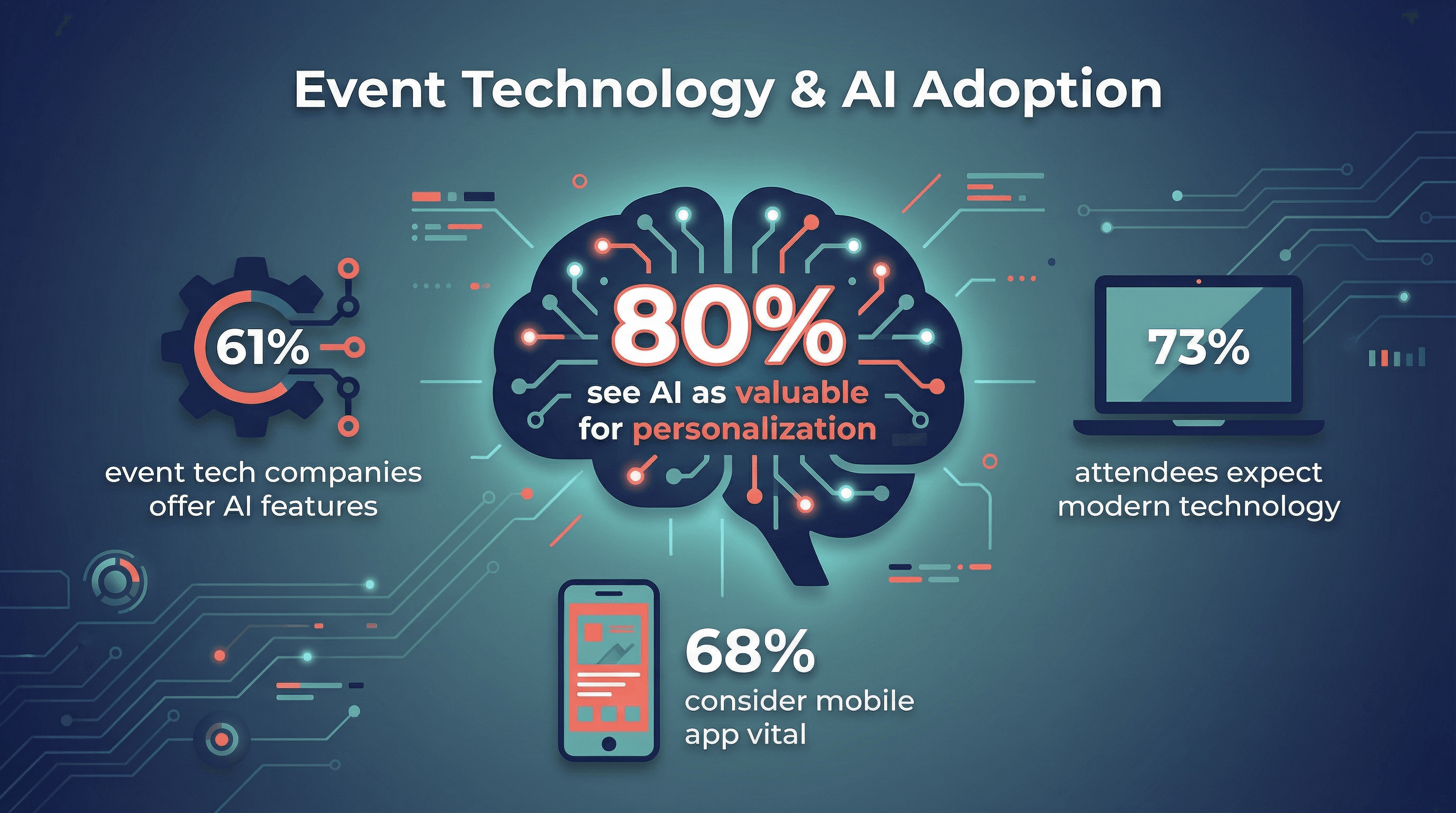
- 80%: Event teams who see AI as valuable for personalizing event experiences ().
- 64%: Attendees who cite immersive experiences as the most important element of an event ().
- 60%: Event teams who say diversity, equity & inclusion (DE&I) is top of mind ().
- 80%: Event planners whose organizations factor sustainability into event planning ().
These numbers aren’t just impressive—they’re shaping the way we plan, execute, and measure events in 2026. Now, let’s break down what’s driving these trends.
The Event Management Industry in 2026: Market Size & Growth
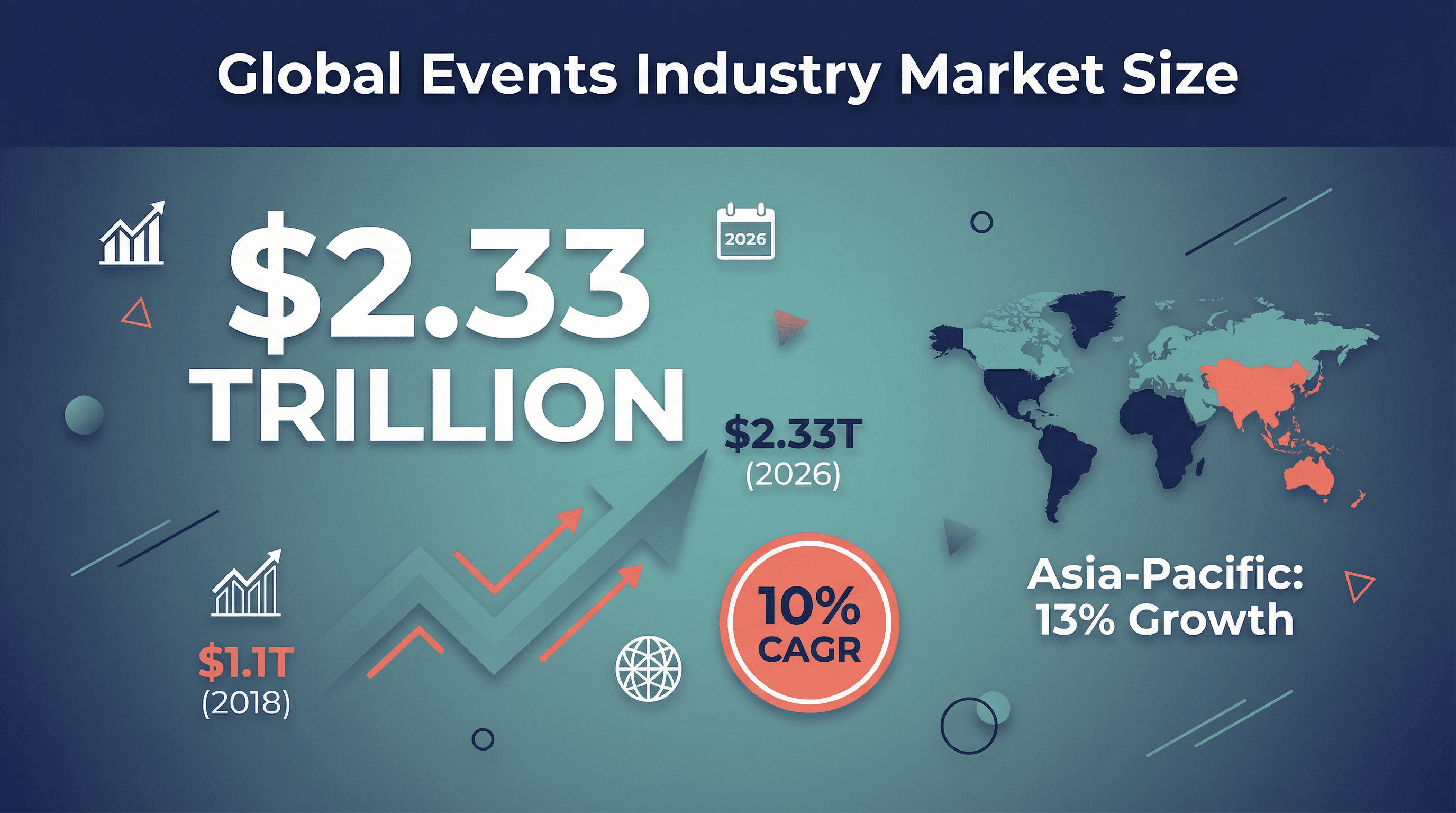 Let’s talk scale. The global event management industry is not just back from the pandemic—it’s thriving. In 2018, the industry was valued at $1.1 trillion. Fast forward to 2026, and we’re looking at a projected $2.33 trillion market (). That’s a compound annual growth rate (CAGR) of about 10%. And if you’re thinking long-term, some forecasts see the industry hitting $2.5 trillion by 2035 ().
What’s fueling this growth?
- The comeback of in-person events: After a forced hiatus, live events are back in a big way. In 2024, 60% of events were held in-person ().
- Hybrid and virtual expansion: Virtual and hybrid models have expanded total audience reach—one analysis found that audience reach jumped 134% when events shifted to virtual ().
- Increased investment: Budgets are rebounding, and companies are putting more resources into event marketing, recognizing its high ROI.
Regional trends: While North America and Europe have long been the powerhouses, Asia-Pacific is now the fastest-growing region, with an estimated 13% annual growth through 2026 (). Corporate events—think conferences, seminars, and product launches—make up about 28% of the total market ().
After losing over $30 billion in 2020 due to cancellations (), the industry’s rebound is nothing short of remarkable. For marketers and planners, this means more opportunity—but also more competition for attention.
Event Marketing Trends: In-Person, Virtual, and Hybrid Events
 The last few years have been a wild ride for event formats. We’ve gone from all-in-person, to all-virtual, to a new “blended” era where in-person, virtual, and hybrid events each have a role.
- 2024 stats: 60% in-person, 35% virtual, 5% hybrid ().
- Attendee preference: A whopping 82% of attendees prefer in-person events (), but 59% of event pros say virtual is now a permanent part of their strategy ().
In-Person Event Statistics
The comeback is real. In-person events are once again the “crown jewel” of event marketing.
- 78% of organizers say in-person events are their most impactful marketing channel ().
- 57% of organizers reported increased attendance at in-person events in the past year ().
- 81% of attendees say networking with experts is a top reason to attend ().
- 70% rate in-person events as the best source of training and professional content ().
- 80% say in-person events are the most trusted way to learn about new products ().
- Only 10% of event pros think reduced in-person attendance is a permanent problem ().
In short: in-person is back, and it’s more valued than ever.
Virtual & Hybrid Event Statistics
But don’t count out virtual and hybrid events—they’re not just a pandemic relic.
- The virtual events market was valued at $78.5 billion in 2023 and is projected to grow at 18.8% CAGR through 2030 ().
- 93% of organizers plan to continue investing in virtual events ().
- 52% of event pros say attendee engagement is the biggest challenge for virtual events ().
- Hybrid events are evolving: 63% of organizations plan to host more hybrid events for wider reach (), and 67% of organizers believe hybrid is the future ().
- Hybrid events are ~25% more profitable on average than strictly in-person events ().
Key takeaway: The best event portfolios in 2026 are omnichannel—using in-person for depth, virtual for reach, and hybrid for flexibility.
Event Marketing Budgets and ROI: Where the Money Goes
 Let’s talk dollars and sense (pun intended). After a few years of budget whiplash, things are looking up:
- 53% of organizers expect event budgets to grow in 2025 ().
- 48% of marketers dedicate at least 21% of their marketing budget to in-person events ().
- Marketing and promotion are now the top spending categories, followed by venue and catering ().
- 95% of B2B event teams say demonstrating ROI is their top priority ().
- 38.2% of organizers still find it difficult to prove ROI, but that’s down from 45.4% last year ().
- 72.7% of organizers say their C-suite actively supports in-person event strategies ().
Efficiency is the name of the game: Planners are moving meetings to secondary markets (53% considering it) to save costs (), and sponsorships are a growing revenue stream.
B2B Event Marketing: Industry-Specific Insights
B2B events are in overdrive. Here’s what’s happening on the business side:
- 79.8% of B2B organizers say in-person conferences are critical to their organization’s success ().
- 24% of organizers say “grow sales pipeline” is the #1 goal for B2B conferences ().
- 52% of B2B event teams added headcount in 2024 ().
- 66% planned to schedule more events in 2025 than the previous year ().
- 58% of marketers plan to increase small, hosted in-person events ().
Challenges? Rising costs, venue/supplier issues, and the ever-present struggle to measure ROI—especially with long B2B sales cycles.
Event Technology & Event Management Software: Adoption and Impact
 I geek out on event tech, and 2026 is a golden age for it:
- 73% of companies use 1–5 event tech solutions; another 12% use 6–10 ().
- 24% spend $10,000–$50,000/year on event tech; 21% spend $50,000–$250,000 ().
- 61% of marketers use event management software to measure event success ().
- 73% of attendees expect in-person conferences to use modern technology ().
- 68% consider a mobile event app vital ().
- 72.5% of organizers said their event platform contributed to positive outcomes ().
Integration is still a hurdle: Only about 20% of enterprises have fully integrated their event tech with their broader marketing stack ().
AI in Event Marketing: The Next Frontier
AI is the shiny new toy—and it’s actually delivering.
- 61% of event tech companies offer at least one AI-powered feature ().
- 80% of event teams say AI offers value for personalizing experiences ().
- 40% of providers use AI for matchmaking; about a third use it for content recommendations ().
- AI chatbots are on the rise, with 14.8% of event tech companies offering them ().
- McKinsey estimates generative AI could add $2.6 to $4.4 trillion in economic value annually across industries ().
What does this look like in practice? Think AI-driven networking suggestions, personalized agendas, automated content summaries, and chatbots answering attendee questions 24/7. The productivity gains are real, and the attendee experience is only getting better.
Attendee Engagement & Experience: What Matters Most
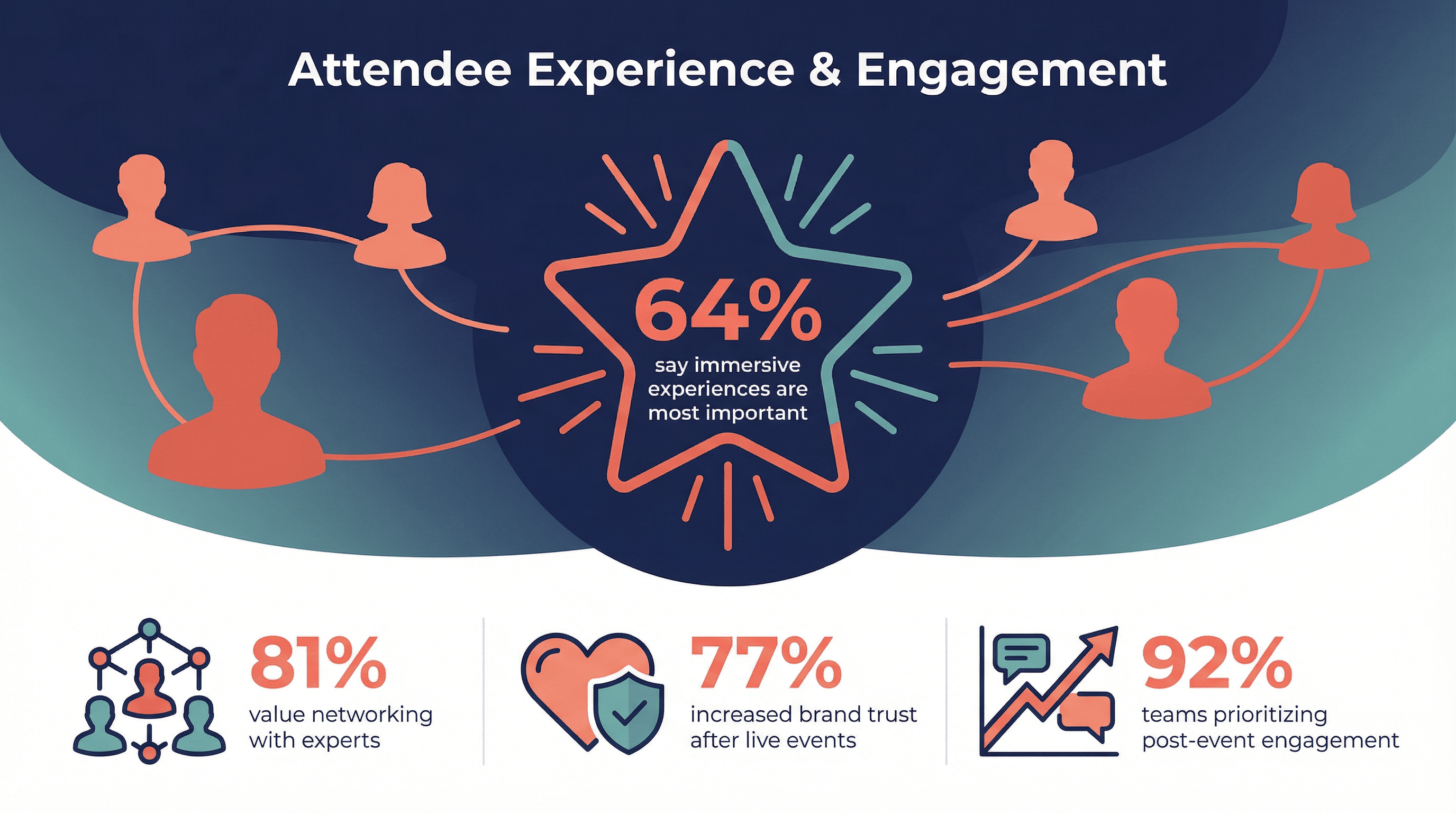 At the end of the day, it’s all about the attendee. Here’s what matters most in 2026:
- 64% of attendees say immersive experiences are the most important element ().
- 81% value networking with experts; 68% enjoy meeting new contacts ().
- 70% rate in-person events as the best source of professional content ().
- 45% say having a mobile app for Q&A and polls is vital ().
- 77% of consumers report increased trust in a brand after a live event interaction ().
- 92% of event teams are prioritizing better post-event engagement ().
Pro tip: Don’t forget the fundamentals—relevant content, easy navigation, good Wi-Fi, and a welcoming atmosphere are still crucial.
Diversity, Equity, Inclusion, and Sustainability in Event Marketing
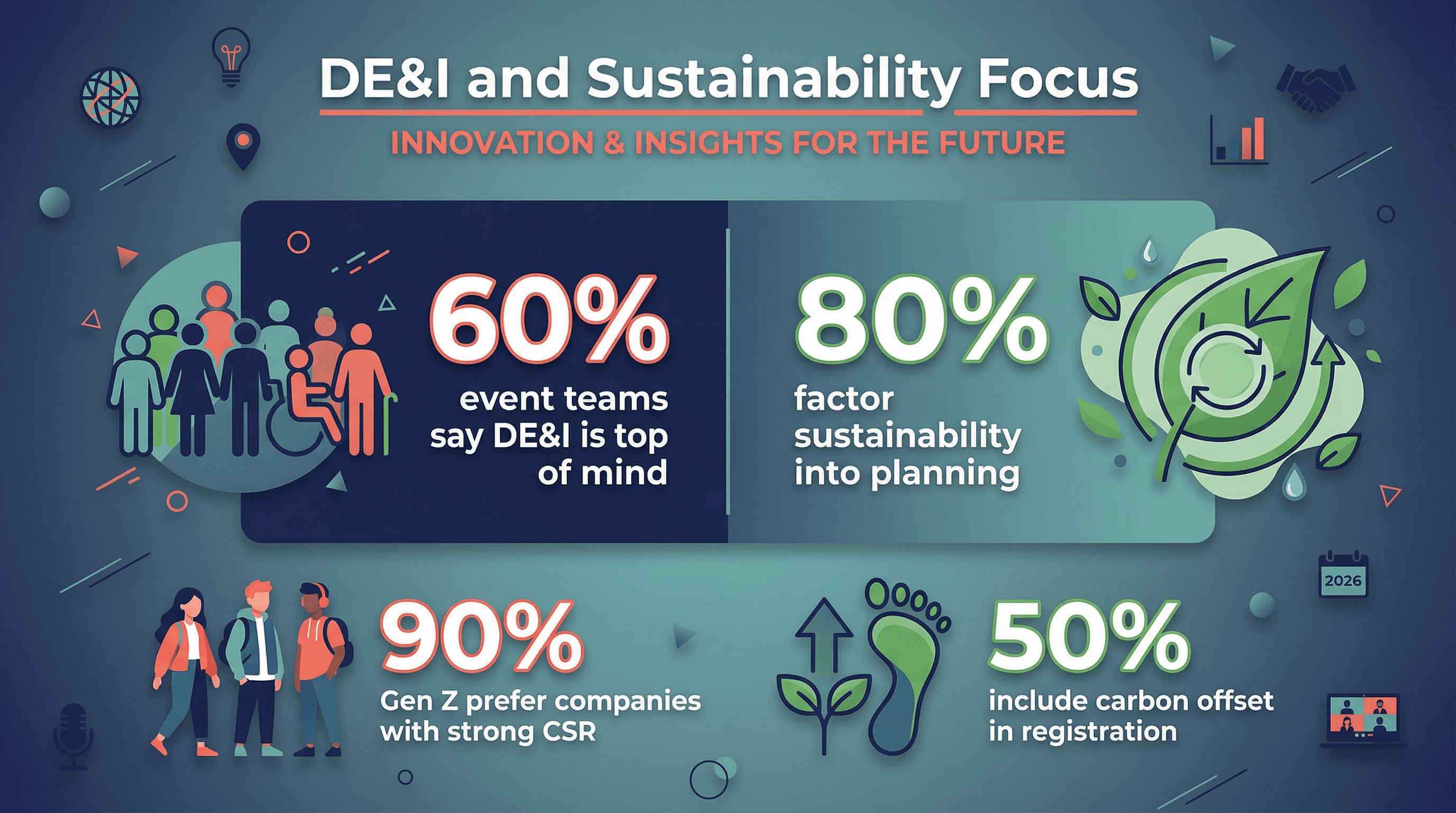 Values matter. Here’s how DE&I and sustainability are shaping events:
- 60% of event teams say DE&I is top of mind ().
- 55% are actively aiming to make events more inclusive and accessible ().
- 80% claim their organizations factor sustainability into planning ().
- 50% of event hosts now include a carbon offset option in registration ().
- 90% of Gen Z professionals prefer companies that demonstrate strong CSR at events ().
- Only 18% of attendees said sustainable practices were their top priority when deciding to attend ().
Bottom line: DE&I and sustainability are no longer optional—they’re expected, especially by younger audiences and sponsors.
Key Takeaways: What These Event Marketing Statistics Mean for 2026
So, what’s the big picture? Here’s what I’m seeing as we look at the data:
- In-person events are irreplaceable, but hybrid is here to stay. The best event strategies blend physical and digital for maximum reach and impact.
- ROI is king. With budgets on the rise, the pressure to prove value is higher than ever. Invest in measurement and analytics.
- Experience is everything. Immersive, engaging, and tech-enabled events drive attendee satisfaction and brand trust.
- Tech and AI are your friends. Use them to personalize, automate, and scale—just don’t forget the human touch.
- Values matter. DE&I and sustainability aren’t just buzzwords—they’re differentiators that can win (or lose) you attendees and sponsors.
- Community is the new currency. Events are milestones in a year-round engagement strategy, not one-off moments.
And maybe most importantly: Stay agile. The only constant in event marketing is change. Keep your ear to the ground, experiment, and be ready to pivot when the next trend (or global curveball) comes your way.
Sources & Further Reading
Want to dig deeper or cite these stats in your next pitch deck? Here are some of the most authoritative sources I used for this post:
For even more insights, check out Cvent’s 2025 Event Trends Report, EventMB (Skift Meetings), and PCMA for qualitative research and case studies.
Want more data-driven insights on automation, AI, and productivity tools? Check out the for the latest in web automation, sales tech, and digital transformation. And if you’re looking to automate your own event data workflows, you might want to give a spin. (Yes, that’s a shameless plug, but hey, we’re all about helping you work smarter.)
Here’s to your next event being your best one yet—whether it’s in a ballroom, a browser, or both.