
Yellow business directories might sound like relics from a pre-internet age, but in Germany, they’re still a big deal—and they’ve gone digital in a big way. I’ve spent a lot of time digging into how local business discovery works in Europe, and I’m always surprised by just how central Yellow Pages Germany (Gelbe Seiten) remains to the business ecosystem. Whether you’re a sales pro looking for leads, a small business owner trying to boost your visibility, or just a curious data geek like me, understanding how Yellow Pages Germany works—and how you can use modern AI tools like Thunderbit to get more out of it—can give you a real edge.
Let's dive into what makes Yellow Pages Germany unique, how it's evolved from a stack of yellow books to a digital powerhouse, and why it still matters for local businesses, lead generation, and smart marketing in 2026.
What Is Yellow Pages Germany? A Modern Business Directory
Yellow Pages Germany—known locally as Gelbe Seiten—is the country’s leading business directory, and it’s been a household name for decades. Think of it as Germany’s go-to platform for finding companies, service providers, and professionals of every stripe, from plumbers to law firms to tech startups. While it started as a thick, printed book (I can still picture those dog-eared copies in every office lobby), today it’s a robust online portal at gelbeseiten.de.
What does it do? At its core, Yellow Pages Germany connects businesses and consumers by listing company details—addresses, phone numbers, websites, business hours, and even customer reviews. It’s trusted by millions of Germans for everything from finding a local bakery to researching B2B suppliers. In fact, Gelbe Seiten has shown up repeatedly in the DISQ/ntv "Deutschlands Beste Online-Portale" awards — most recently in the 2025 Branchenverzeichnisse (business directories) category — which, fairly or not, is the closest thing Germany has to a public benchmark on directory trust.
The Evolution of Yellow Pages Germany: From Print to Digital
The story of Yellow Pages Germany is a classic tale of digital transformation. For much of the 20th century, Gelbe Seiten was a physical book—delivered to homes and businesses across the country. But as the internet took off, so did the need for faster, more searchable, and always-up-to-date business information. By the early 2000s, Gelbe Seiten began investing heavily in its online platform, and today, the digital version is the primary way most Germans access business listings. The print edition still exists in some regions, but it’s the website and mobile app that drive the majority of traffic. This shift has made business discovery more accessible, with real-time updates, richer data (like maps and reviews), and easy search by category, location, or keyword.
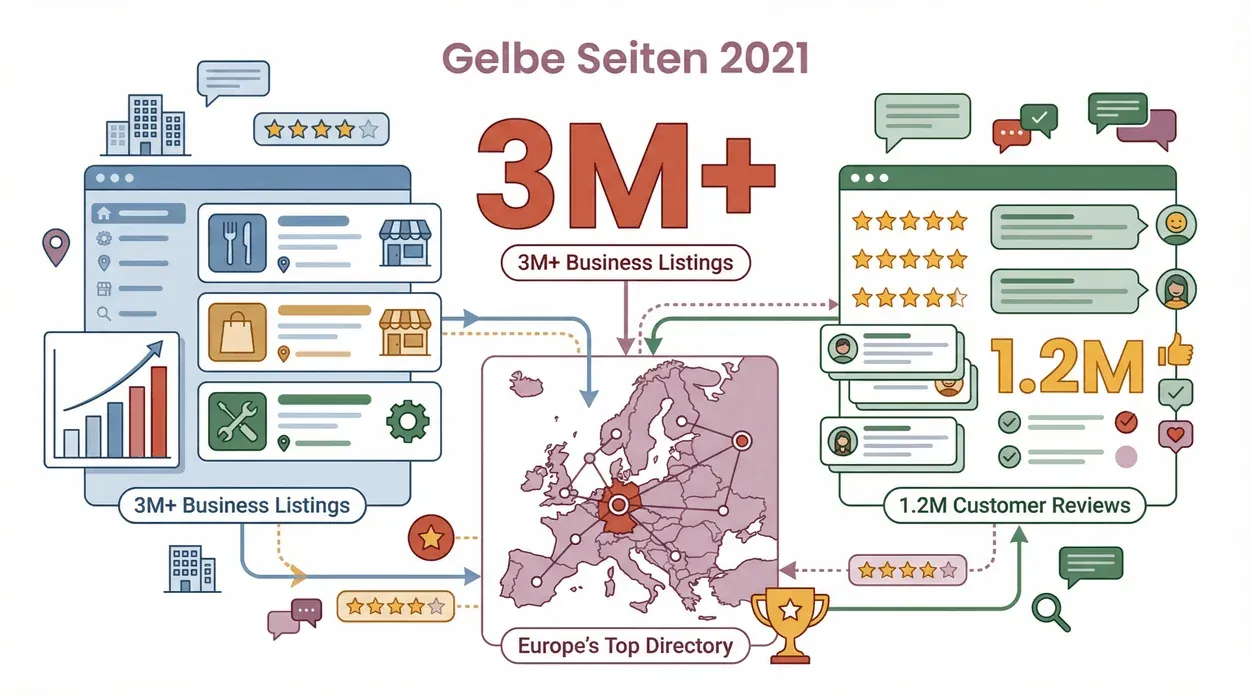
The move online hasn't just been about convenience. It's also about data freshness and reach. Per Gelbe Seiten's own newsroom, the directory carries roughly 3.7 million business entries across 4,853 industries, and the platform reports around 5.9 million monthly visits with about 61 million searches a year — figures that, even taken with the usual "publisher's own data" pinch of salt, make it one of the most comprehensive business directories in Europe.
Why Yellow Pages Germany Still Matters for Local Business
You might wonder: in the age of Google, does anyone still use business directories? In Germany, the answer is a resounding yes. European countries maintain stronger Yellow Pages traditions than many other markets, and Gelbe Seiten remains a trusted resource—especially for local services and B2B connections.
Here’s why it’s still so relevant:
- Local Focus: Yellow Pages Germany is laser-focused on local businesses, making it easier to find nearby suppliers, tradespeople, and partners.
- Structured Listings: Unlike the wild west of search engines, Gelbe Seiten offers structured, verified business profiles—so you know you’re getting accurate info.
- Trusted Brand: Decades of brand recognition mean that both consumers and businesses see Gelbe Seiten as a reliable source.
- Detailed Categories: The platform covers everything from niche B2B services to everyday consumer needs, with detailed business categories and filters.
Key Use Cases for Sales and Operations Teams
If you’re in sales or operations, Yellow Pages Germany is a goldmine for:
- Lead Generation: Build targeted lists of potential customers or partners in specific regions or industries.
- Competitor Research: See who else is operating in your space and how they present themselves.
- Market Mapping: Understand the local business landscape before launching a new service or campaign.
- Supplier Discovery: Find and vet new vendors or service providers.
I’ve seen teams in real estate, retail, and B2B services use Gelbe Seiten to quickly map out local markets and identify high-potential leads—often faster than sifting through Google results.
The Role and Limitations of Yellow Pages Germany in the Digital Age
Let’s be real: no platform is perfect. Yellow Pages Germany has some big strengths, but also a few limitations—especially when compared to search engines like Google.
Strengths:
- Structured, Verified Data: Business listings are organized and often verified, making it easier to extract clean data.
- Local Emphasis: It’s built for local discovery, which is huge for small and medium businesses.
- Privacy and Compliance: As a European platform, Gelbe Seiten is GDPR-compliant, with strong verification standards.
Limitations:
- Data Freshness: While listings are updated regularly, they may not be as real-time as Google’s crawling.
- Coverage: Some very new or very small businesses might not be listed yet.
- User Reviews: The volume and recency of reviews can lag behind platforms like Google Maps.
- Feature Set: Google offers maps, directions, instant messaging, and more—Gelbe Seiten is focused on directory info.
Comparing Yellow Pages Germany with Google and Other Platforms
Here’s a quick comparison to put things in perspective:
| Feature | Yellow Pages Germany (Gelbe Seiten) | Google Search/Maps | Other Local Directories |
|---|---|---|---|
| Data Structure | Highly structured, verified | Unstructured, scraped | Varies |
| Local Focus | Strong | Good, but global | Usually local/regional |
| Real-Time Updates | Regular, not instant | Near real-time | Varies |
| User Reviews | Present, but fewer | Extensive, frequent | Varies |
| Coverage | Most established businesses | Almost all, including new | Often limited |
| Compliance | GDPR, high standards | Varies by region | Varies |
| Advanced Features | Directory, some reviews, maps | Maps, chat, directions | Usually basic |
For many German users—especially those looking for trusted, local info—Gelbe Seiten is still the first stop. But for the freshest data or the widest coverage, Google can’t be beat.
How Businesses Can Benefit from Yellow Pages Germany
So how do you make the most of Yellow Pages Germany as a business? Here are a few strategies I’ve seen work well:
- Claim and Optimize Your Listing: Make sure your business info is accurate, complete, and up to date. Add images, business hours, and a compelling description.
- Encourage Reviews: Ask happy customers to leave reviews—it boosts your credibility.
- Monitor and Respond: Keep an eye on your listing and respond to reviews or questions.
- Use Categories Wisely: Pick the most relevant categories to improve your discoverability.
A well-optimized Gelbe Seiten profile can drive real leads—especially from customers who prefer trusted, local sources over global search engines.
Scrape Yellow Pages Germany with AI Extract business listings, contact info, and reviews from Gelbe Seiten in seconds using Thunderbit's AI-powered web scraper. Get Started Free
Now, here’s where things get really interesting. If you’re in sales, ops, or marketing, you know that finding and organizing business data can be a slog. That’s where Thunderbit comes in.
Thunderbit is an AI-powered web scraper Chrome Extension that makes it ridiculously easy to extract structured data from sites like Yellow Pages Germany. Instead of copying and pasting listings one by one, you can:
- Scrape Business Listings: Pull names, addresses, phone numbers, emails, websites, and more into a spreadsheet — usually quick on a single listing page, slower once pagination, rate limits, or Gelbe Seiten's anti-bot kick in.
- Analyze Customer Reviews: Extract and analyze review data for sentiment analysis or competitor benchmarking.
- Export Contact Lists: Build targeted outreach lists for sales or marketing campaigns.
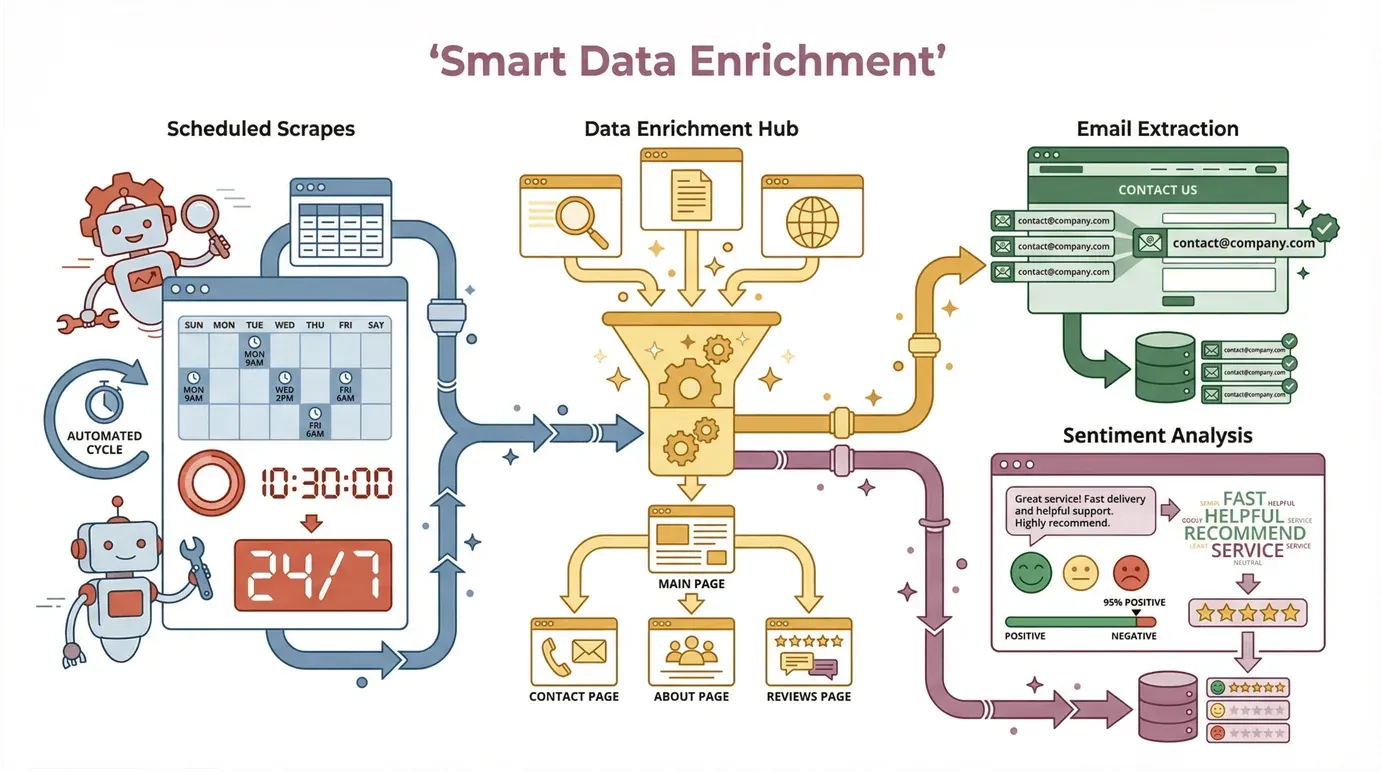
- Automate Data Updates: Schedule regular scrapes to keep your CRM or marketing database fresh.
Thunderbit’s Yellow Pages Scraper template is designed specifically for platforms like Gelbe Seiten, so you can go from “I need a list of local plumbers” to “Here’s my Excel file” in two clicks.
Try Yellow Pages Scraper Template
Practical Workflow: Exporting and Analyzing Yellow Pages Germany Data
Here’s how I’d use Thunderbit to supercharge my Yellow Pages Germany workflow:
- Open Gelbe Seiten and Search: Find the category or region you’re interested in.
- Activate Thunderbit: Click the extension and select the Yellow Pages Scraper template.
- AI Suggest Fields: Let Thunderbit’s AI scan the page and suggest the best columns to extract—like business name, address, phone, website, and reviews.
- Click Scrape: Thunderbit grabs all the data, even across multiple pages (pagination handled automatically).
- Export Data: Download as Excel, CSV, or push directly to Google Sheets, Airtable, or Notion.
- Segment and Analyze: Clean up your data, segment by region or category, and get ready for outreach or analysis.
For more details, check out Thunderbit’s step-by-step guide.
Choosing the Right Tools for Yellow Pages Germany Data Collection
If you’re serious about business data, your choice of tools matters. Here’s what I look for:
- Reliability: Does the tool handle website changes and pagination?
- Ease of Use: Can non-technical users get results fast?
- Data Accuracy: Are the fields clean and well-structured?
- Compliance: Is the tool GDPR-friendly and respectful of site terms?
Thunderbit stands out because it’s AI-driven (so it adapts to site changes), no-code (anyone can use it), and offers free data export. Plus, you can schedule scrapes and even enrich your data with subpage info—like grabbing emails from business websites or pulling review sentiment.
 Other tools exist, but many require manual setup, coding, or constant maintenance. Thunderbit’s “AI Suggest Fields” and instant templates make it a breeze for business users.
Download Thunderbit Chrome Extension
The Future: Yellow Pages Germany Meets AI and Automation
Here’s where things get exciting. The future of business directories isn’t just about listing data—it’s about making that data actionable. By combining Yellow Pages Germany with AI-powered tools like Thunderbit, you unlock a whole new world of possibilities:
- Smart Data Enrichment: Automatically add missing info (like emails or social profiles) to your leads.
- Predictive Analytics: Use AI to score leads, predict churn, or spot new market opportunities.
- CRM Integration: Push fresh, structured data directly into your sales or marketing systems.
- Automated Outreach: Trigger personalized campaigns based on directory data and customer signals.
Artificial intelligence is already revolutionizing business directories, making them smarter, faster, and more useful for everyone—from small businesses to enterprise sales teams.
Real-World Applications: AI-Enhanced Lead Generation and Marketing
Here are a few ways I’ve seen teams use AI-driven data extraction from Yellow Pages Germany:
- Targeted Marketing: Build hyper-local lists for direct mail, email, or phone campaigns.
- Personalized Outreach: Segment leads by category, location, or review sentiment for tailored messaging.
- Competitive Analysis: Track how competitors are listed, what reviews they’re getting, and how they’re positioning themselves.
- Market Expansion: Quickly map out new regions or verticals before launching new products or services.
To measure ROI, track metrics like response rates, conversion rates, and time saved on manual research. With the right setup, I’ve seen teams cut their lead research time by 70% or more.
Explore More AI Web Scraping Guides Discover more tips and strategies for web scraping, lead generation, and automation on the Thunderbit Blog. Get Started Free
Yellow Pages Germany isn’t just a relic of the past—it’s a living, evolving platform that still plays a vital role in local business discovery, lead generation, and B2B networking. By understanding its strengths (and its limits), and by pairing it with modern AI tools like Thunderbit, you can unlock powerful new ways to find, organize, and act on business data.
Whether you’re a sales rep, a marketer, or an operations lead, don’t overlook the value of Gelbe Seiten in your toolkit. And if you’re ready to take your data game to the next level, download the Thunderbit Chrome Extension and see how easy it is to turn business listings into actionable insights.
For more tips on web scraping, lead generation, and AI automation, check out the Thunderbit Blog.
FAQs
1. Is Yellow Pages Germany (Gelbe Seiten) still widely used in 2026?
Yes — and the numbers Gelbe Seiten itself publishes back this up. Their newsroom reports around 5.9 million monthly visits and roughly 61 million searches a year across channels (source). I can't independently audit those numbers, but the platform's continued award presence and active publisher network (Müller Medien, Heise Group, Schlütersche, Sutter) line up with a directory that's clearly still funded and maintained — not winding down.
2. What kind of businesses are listed on Yellow Pages Germany?
Gelbe Seiten covers a huge range of businesses—everything from small local shops and tradespeople to large corporations, B2B service providers, and professionals like doctors and lawyers. If it’s a registered business in Germany, chances are it’s listed.
3. How can I extract business contact data from Yellow Pages Germany?
You can use AI-powered tools like Thunderbit to scrape business names, addresses, phone numbers, websites, and even reviews from Gelbe Seiten. Thunderbit’s Yellow Pages Scraper template makes this process fast and easy—no coding required.
4. What are the main differences between Yellow Pages Germany and Google?
Yellow Pages Germany offers structured, verified business listings with a strong local focus and GDPR compliance. Google provides broader coverage and more real-time data, but its listings are less structured and can be harder to extract for business use. Many teams use both for different purposes.
5. Is it legal and compliant to scrape data from Yellow Pages Germany?
As long as you’re collecting publicly available data for legitimate business purposes and respecting GDPR and site terms, scraping is generally allowed. Always check the platform’s terms of service and use tools like Thunderbit that are designed with compliance in mind.
Ready to unlock the power of Yellow Pages Germany for your business? Try Thunderbit’s free Chrome Extension and start building smarter lead lists today.
Start Scraping Yellow Pages Germany with AI Get Started Free
Learn More




