
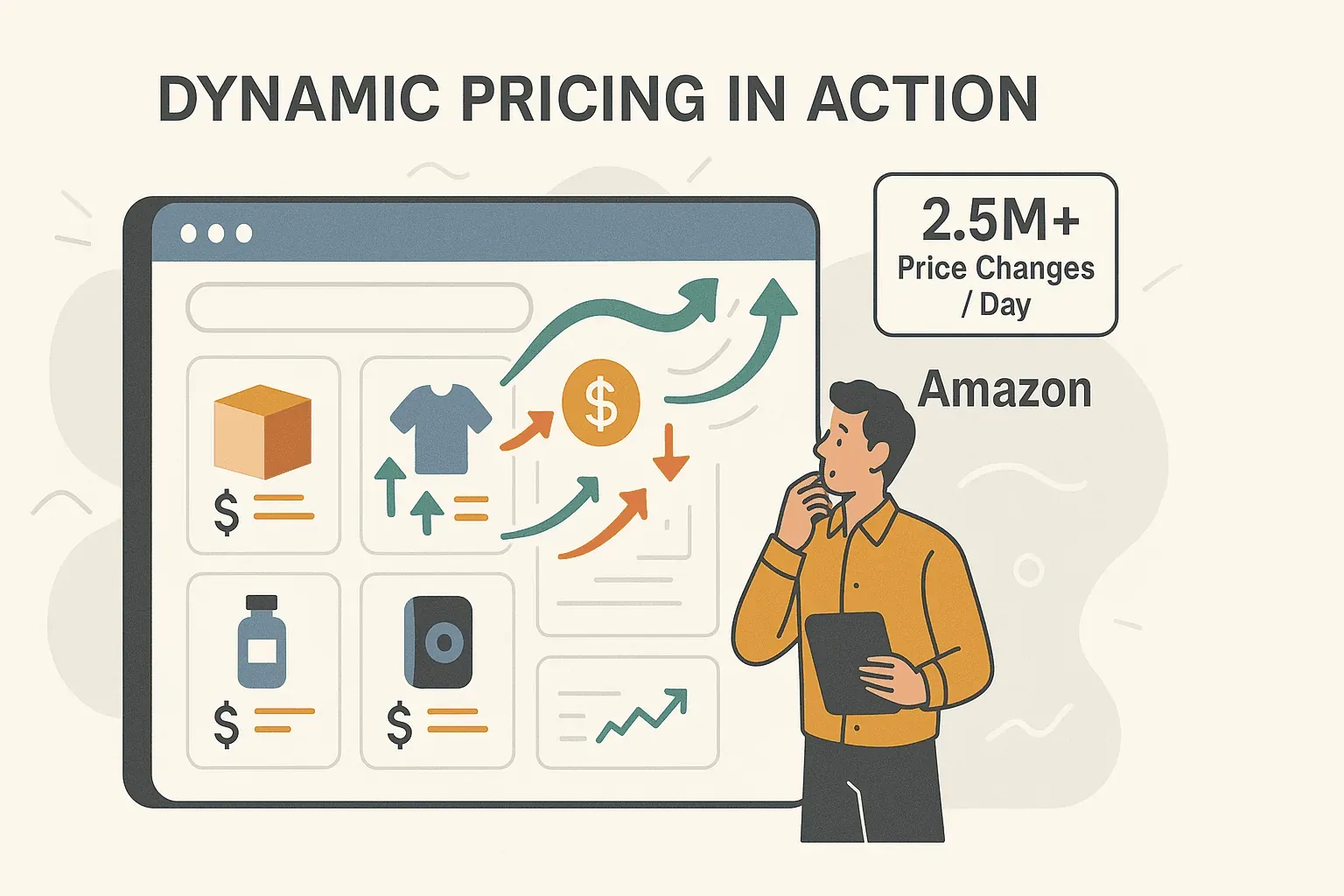
If you’ve ever tried to keep up with the wild world of online pricing, you know it’s a bit like chasing a flock of caffeinated pigeons—prices are everywhere, always moving, and if you blink, you’ll miss a deal (or worse, get undercut by a competitor). In today’s hyper-competitive ecommerce landscape, price changes happen at lightning speed. For instance, Amazon alone is rumored to adjust product prices about 2.5 million times per day. That means the price of your favorite gadget could shift before you even finish your morning coffee.
 So how do businesses keep up? Enter price scrapping (or, more commonly, price scraping)—the art and science of using automation to collect, compare, and react to price data across the web. As someone who’s spent years in SaaS and automation, I’ve seen firsthand how real-time price intelligence can be the difference between leading the pack and getting left in the digital dust. Let’s break down what price scrapping really is, why it’s become a must-have for modern teams, and how tools like Thunderbit are making it easier than ever—even if you’re not a tech wizard.
What Is Price Scrapping? A Simple Explanation
At its core, price scrapping is the automated extraction of pricing information from online stores, marketplaces, or virtually any website that displays prices. Imagine having a tireless digital assistant who visits every competitor’s site, copies down their prices, and organizes them neatly in a spreadsheet for you—except this assistant works at computer speed and never asks for a raise.
Here’s how it works in plain English:
- A software bot or “scraper” navigates to a webpage (like a product listing or search results).
- It identifies the price (and often other details like product name or SKU).
- The data is pulled into a structured format—think tables, spreadsheets, or databases.
- This process can repeat across hundreds or thousands of products and websites, all in minutes.
The key difference from manual price monitoring? Automation and scale. Instead of a human checking prices one by one (which is about as fun as watching paint dry), price scrapping lets you monitor the entire market in real time, with zero copy-paste marathons.
For a more technical crowd, most price scrapping tools use a combination of web crawling, HTML parsing, and sometimes AI to “read” the page and extract the right numbers—even if the website changes its layout or uses dynamic content.
Price Scrapping vs. Traditional Price Monitoring: What’s the Difference?
Let’s get real: before automation, price monitoring was a manual slog. Picture an analyst with a spreadsheet, checking 10 competitor sites every Monday, and updating prices by hand. By the time the report landed on the boss’s desk, the market had already moved on. It’s like bringing a notepad to a Formula 1 race.
Here’s a side-by-side comparison:
| Aspect | Manual Price Monitoring | Automated Price Scrapping |
|---|---|---|
| Speed | Slow (hours/days) | Fast (minutes/real-time) |
| Scale | Limited (few products/sites) | Massive (hundreds/thousands) |
| Accuracy | Prone to human error | High (direct from source, no typos) |
| Frequency | Periodic (weekly/monthly) | Continuous or scheduled (hourly/daily) |
| Labor | High (copy-paste, manual checks) | Low (set up once, let it run) |
| Insights | Often outdated by the time used | Always up-to-date, ready for action |
Manual tracking is reactive and error-prone. Automated price scrapping is proactive, precise, and—let’s be honest—a lot less soul-crushing for your team (visualping.io).
Key Use Cases: How Businesses Leverage Price Scrapping
Price scrapping isn’t just for the tech giants. From scrappy startups to global retailers, businesses use automated price data for a range of strategic moves. Here are some of the most common scenarios:
| Use Case | Benefit of Price Scrapping | Typical Users |
|---|---|---|
| Competitor Price Monitoring | Real-time tracking to avoid being undercut; enables rapid price adjustments | Pricing analysts, ecommerce managers |
| Dynamic Pricing & Optimization | Feeds live market data into pricing engines; maximizes revenue and margin | Pricing strategy teams, revenue managers |
| Promotions & Marketing | Detects competitor sales instantly; enables timely counter-offers or marketing campaigns | Marketing teams, sales teams |
| MAP Compliance Monitoring | Flags unauthorized low pricing by resellers; protects brand equity | Brand managers, compliance officers |
| Market Trend Analysis | Aggregates historical price data for trend spotting and forecasting | BI analysts, product managers, procurement |
| Multi-Channel Aggregation | Compares prices across platforms for holistic market view | Marketplace sellers, strategic planners |
Real-World Example
Let’s say you’re selling the latest iPhone model. You want to know how your price stacks up against Apple’s official store, Amazon, and eBay. With price scrapping, you can pull all those prices into a single table—updated every hour. If Amazon suddenly drops their price by $50, you’ll know within minutes and can decide whether to match, beat, or hold steady. That’s the kind of agility that can make or break your sales numbers (sellerise.com).
The Benefits of Automated Price Scrapping
So, why is everyone talking about price scrapping? Because the benefits are huge—and measurable.
- Speed & Real-Time Insights: Automation means you’re always the first to know when a competitor changes their price. In fast-moving markets, this can be the difference between winning and losing a sale. Companies using real-time price monitoring have seen 15–30% revenue growth and 2.3× faster market share gains.
- Accuracy: No more typos, missed updates, or “Oops, I copied the wrong row.” Automated tools pull data directly from the source, every time.
- Scalability: Whether you’re tracking 10 products or 10,000, automation scales effortlessly. Thunderbit’s cloud scraping, for example, can process 50 pages at once.
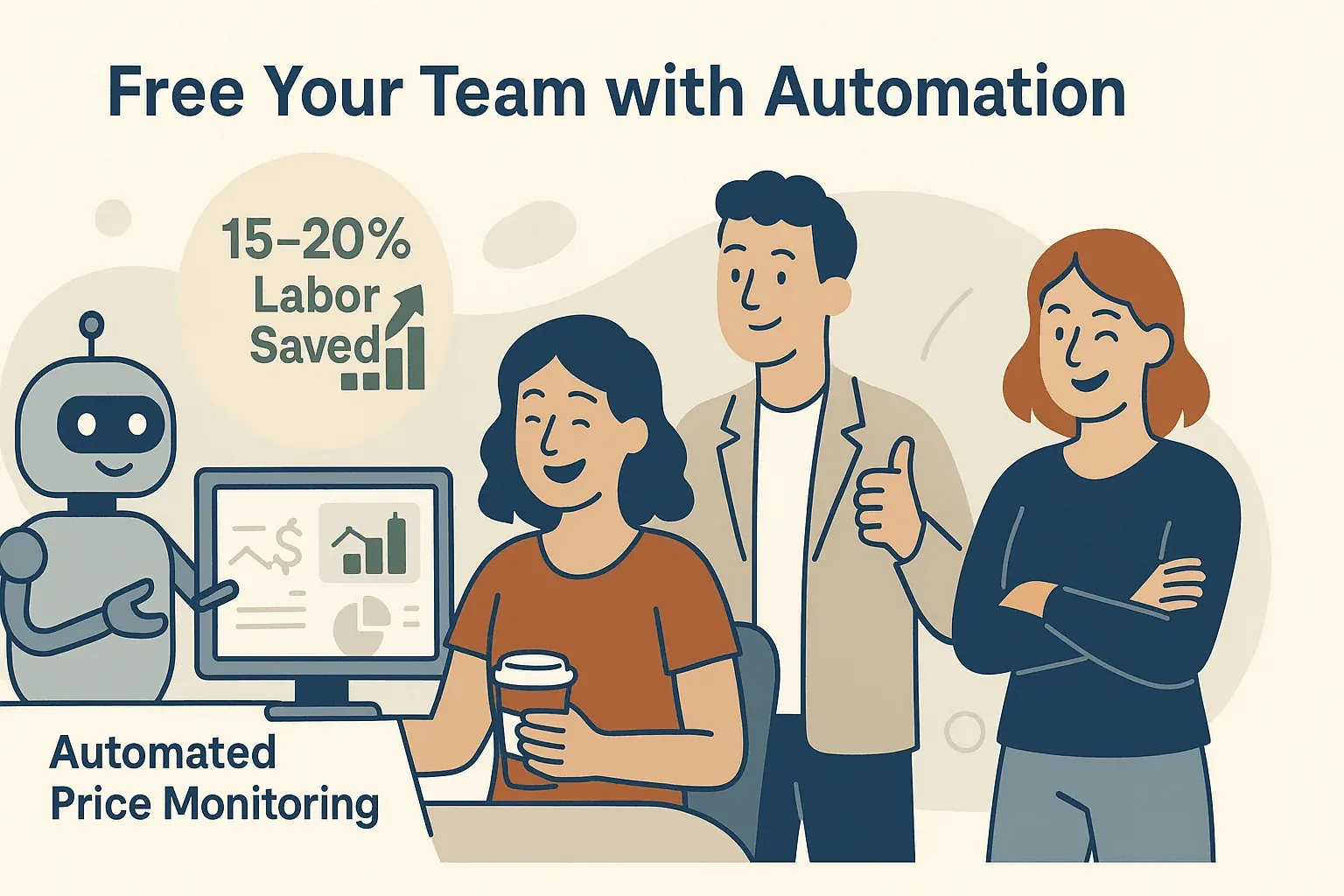
- Efficiency & Cost Savings: Free up your team from grunt work. One study found businesses using automated price monitoring saved 15–20% on pricing process labor.
- Better Decision-Making: With up-to-date data, you can make smarter pricing, inventory, and marketing decisions—no more guessing or reacting too late.
- Rapid ROI: The cost of missing just one major price move can far outweigh the investment in a good scraping tool.
How Price Scrapping Works: A Step-by-Step Overview
Let’s demystify the process. Here’s how a typical price scrapping workflow looks (and yes, Thunderbit makes it even easier):
- Select Target Sites/Products: Decide which products and competitors you want to monitor. Paste URLs or use search/category pages.
- Configure the Scraper: Define which fields to extract—usually “Product Name,” “Price,” and maybe “URL” or “Stock Status.” With Thunderbit, just click “AI Suggest Fields” and let the AI do the heavy lifting (Thunderbit Docs).
- Handle Subpages & Pagination: For sites where prices are on product detail pages, enable subpage scraping. Thunderbit can visit each subpage and merge the data back into your main table (Thunderbit Docs).
- Run the Scrape: Hit “Scrape” and let the tool gather all the data. Cloud scraping can process dozens of pages at once.
- Review Results: Check the output table for accuracy and completeness.
- Export Data: Send results directly to Excel, Google Sheets, Airtable, or Notion with one click (Thunderbit Docs).
- Schedule & Automate: Set up recurring scrapes (daily, hourly, etc.) so your data is always fresh (Thunderbit Docs).
It’s as close to “set it and forget it” as you can get in the world of data.
Scrape data from any website using AI Get Started Free
Thunderbit: AI-Powered Price Scrapping Made Easy
Here’s where I get excited—because this is exactly the kind of problem we set out to solve at Thunderbit. We built Thunderbit as an AI web scraper Chrome Extension designed for business users who want results, not headaches.
What Makes Thunderbit Different?
- AI Suggest Fields: Just click a button and Thunderbit’s AI scans the page, suggesting the best columns to extract—no coding, no manual setup (Thunderbit Blog).
- Subpage Scraping: Need prices from product detail pages? Thunderbit can visit each subpage and enrich your table automatically (Thunderbit Docs).
- Pagination Handling: Whether it’s “Next Page” buttons or infinite scroll, Thunderbit can handle it.
- Instant Templates: For popular sites like Amazon, Zillow, and Shopify, use pre-built templates for one-click scrapes—no setup required.
- Free Data Export: Export your data to Excel, Google Sheets, Airtable, or Notion—unlimited and free.
- Cloud or Browser Scraping: Choose the method that fits your needs. Cloud scraping is lightning-fast for public sites; browser mode is perfect for logged-in sessions.
- AI Data Processing: Add custom instructions to categorize, translate, or summarize data as you scrape (Thunderbit Docs).
- Affordable Pricing: Free for small jobs (6–10 pages), with paid plans starting around $15/month for 500 rows (Thunderbit Pricing).
Thunderbit is trusted by over 70,000 users worldwide, from solo entrepreneurs to global ecommerce teams.
Try Thunderbit for Price Scrapping
Thunderbit’s AI Features for Price Scrapping
- Context-Aware Extraction: Thunderbit’s AI understands the difference between “sale price,” “original price,” and “discount”—so you get the right number, every time (Thunderbit Blog).
- Multi-Language Support: Scrape sites in 34 languages—perfect for global teams (Thunderbit Blog).
- Scheduling & Automation: Describe your schedule in plain English (“every day at 9am”) and Thunderbit handles the rest (Thunderbit Blog).
- Bulk & Subpage Scraping: Scrape hundreds of products and drill down into detail pages—all in a single workflow.
Want to see Thunderbit in action? Download the Chrome Extension and try it for yourself.
Choosing the Right Price Scrapping Tool: What to Consider
Not all scrapers are created equal. Here’s what to look for when picking a tool:
| Solution Type | Ease of Use | Features & Flexibility | Pricing Model |
|---|---|---|---|
| Thunderbit (AI Web Scraper) | Very easy, no code | AI field detection, subpages, scheduling, export | Freemium, from ~$15/mo |
| Open-Source (e.g., Scrapy) | Developer required | Highly customizable, but needs coding | Free, but high setup/maintenance |
| Visual No-Code (Octoparse, ParseHub) | Easy-medium | Visual setup, cloud runs, some templates | $75–$150+/mo for heavy use |
| Dedicated SaaS (Prisync, Price2Spy) | Very easy | Analytics, dashboards, auto-matching, alerts | $99+/mo, per product/competitor |
(Thunderbit Blog: Best Price Scraping Tools)
Key criteria to consider:
- Ease of use: Can your team use it without IT support?
- Accuracy: Does it handle complex or changing websites?
- Export options: Can you get the data where you need it?
- Scalability: Will it keep up as your needs grow?
- Support: Is help available if you get stuck?
Thunderbit hits the sweet spot for most business users: powerful, affordable, and genuinely easy to use.
Best Price Scraping Tools in 2025 Get Started Free
Data Compliance and Ethics in Price Scrapping
Let’s talk about the elephant in the room: is price scrapping legal and ethical? The short answer: scraping publicly available prices is legal in most jurisdictions, but there are best practices to follow (datadome.co).
Best practices:
- Scrape only public data: Don’t try to bypass logins or scrape private info.
- Respect robots.txt and terms of service: If a site says “no scraping,” proceed with caution (and be aware of the risks).
- Don’t overload servers: Use reasonable scraping speeds and avoid peak times.
- Use data responsibly: Internal analysis is fine; don’t republish or misuse competitor data.
- Stay compliant: If you incidentally collect personal data (like names in reviews), handle it according to privacy laws.
Most companies use price scrapping for competitive intelligence and internal decision-making—not for copying or republishing data. As long as you’re respectful and ethical, the risks are low. But always check with your legal team if you’re unsure (prowebscraper.com).
Conclusion: Unlocking Competitive Advantage with Price Scrapping
In today’s fast-moving digital market, price scrapping isn’t just a nice-to-have—it’s a competitive necessity. Automated price intelligence lets you react to market changes in real time, optimize your pricing strategy, and stay one step ahead of the competition. Manual monitoring just can’t keep up.
AI-powered tools like Thunderbit have made price scrapping accessible to everyone—not just developers or data scientists. With features like AI field detection, subpage scraping, instant templates, and free data export, Thunderbit puts the power of real-time price intelligence in your hands.
If you’re still tracking prices by hand, it’s time to upgrade. Try out a modern price scrapping tool, start small, and see how much faster and smarter your pricing decisions can be. In a world where prices change by the minute and customers are more price-sensitive than ever, having the right data—at the right time—can make all the difference.
Want to learn more? Check out the Thunderbit Blog for deep dives, tutorials, and real-world use cases.
Start Price Scrapping with Thunderbit
FAQs
1. What is price scrapping, and how is it different from manual price monitoring?
Price scrapping is the automated extraction of pricing data from websites using software bots. Unlike manual monitoring, which relies on humans checking and recording prices, price scrapping operates at scale and speed, providing real-time, accurate data for analysis and decision-making.
2. What are the main benefits of automated price scrapping?
Automated price scrapping offers real-time insights, higher accuracy, scalability, and significant labor savings. It enables businesses to react quickly to market changes, optimize pricing, and improve revenue and margins.
3. Is price scrapping legal and ethical?
Scraping publicly available price data is legal in most regions, but you should always respect website terms of service, avoid overloading servers, and use the data responsibly. Avoid scraping private or protected information, and consult your legal team if in doubt.
4. How does Thunderbit make price scrapping easier for non-technical users?
Thunderbit uses AI to suggest fields, handle subpages and pagination, and export data to popular formats like Excel and Google Sheets. Its point-and-click interface means you don’t need coding skills—just describe what you want, and Thunderbit does the rest.
5. How do I get started with price scrapping?
Start by identifying key products and competitors you want to monitor. Choose an easy-to-use tool like Thunderbit, set up your first scrape, and export the data for analysis. You can begin with Thunderbit’s free tier and scale up as your needs grow.
Ready to see price scrapping in action? Download Thunderbit’s Chrome Extension and start tracking your market like a pro.
Try AI Web Scraper for Price Scrapping Get Started Free




