Automation isn’t just a buzzword anymore—it’s the backbone of how modern businesses get things done. Over the last year, nearly 60% of companies have adopted some form of automation, and 65% now see it as a strategic priority. But here’s what’s really wild: we’re moving past the era of simple chatbots that just answer questions. Today, businesses are deploying “action bots”—AI-powered agents that don’t just talk, but actually do things for you. Think of them as the difference between a helpful librarian and a supercharged assistant who not only finds your book, but checks it out, emails you the summary, and schedules your next visit.

Scrape data from any website using AI Get Started Free
As someone who’s spent years in SaaS and automation, I’ve watched this shift up close. At Thunderbit, we’re obsessed with making automation accessible, and action bots are at the heart of that mission. So, what exactly are action bots? How do they work, why are they so powerful, and what should you watch out for? Let’s dig in.
What Are Action Bots? The Next Step in Business Automation
Let’s start with the basics. Action bots are intelligent software agents designed to take action—not just answer questions. While traditional chatbots are like friendly receptionists (they respond when you ask), action bots are more like proactive assistants who handle multi-step tasks, trigger workflows, and even make decisions on your behalf.
Here’s the key difference:
- Chatbots: Reactive, answer-focused, and limited to conversations. They wait for you to ask, then reply.
- Action bots: Proactive, transactional, and workflow-driven. They can book appointments, process orders, update databases, send alerts, and more—often after just a single request (PYMNTS).
Example: Imagine a travel chatbot. You ask about flights, and it lists options. An action bot? It finds the best flight, books it, sends you a confirmation, and even schedules a calendar reminder—no human required (Alexander Thamm).
Where Are Action Bots Used?
Action bots are popping up everywhere:
- Customer service: Resolving returns, processing refunds, or troubleshooting issues end-to-end.
- Ecommerce: Automating order processing, inventory checks, and price monitoring.
- Sales: Qualifying leads, scheduling demos, and sending follow-ups.
- Data monitoring: Watching for anomalies and taking instant action (like flagging fraud or restarting a server).
And that’s just scratching the surface. The real magic is that action bots can work across systems, pulling data from one place and acting in another.
Why Action Bots Matter: Unlocking Efficiency in Modern Workflows
Why are so many companies betting big on action bots? Because they actually move the needle on efficiency and ROI.
- 83% of companies that adopted AI-based automation saw positive ROI within three months (G2).
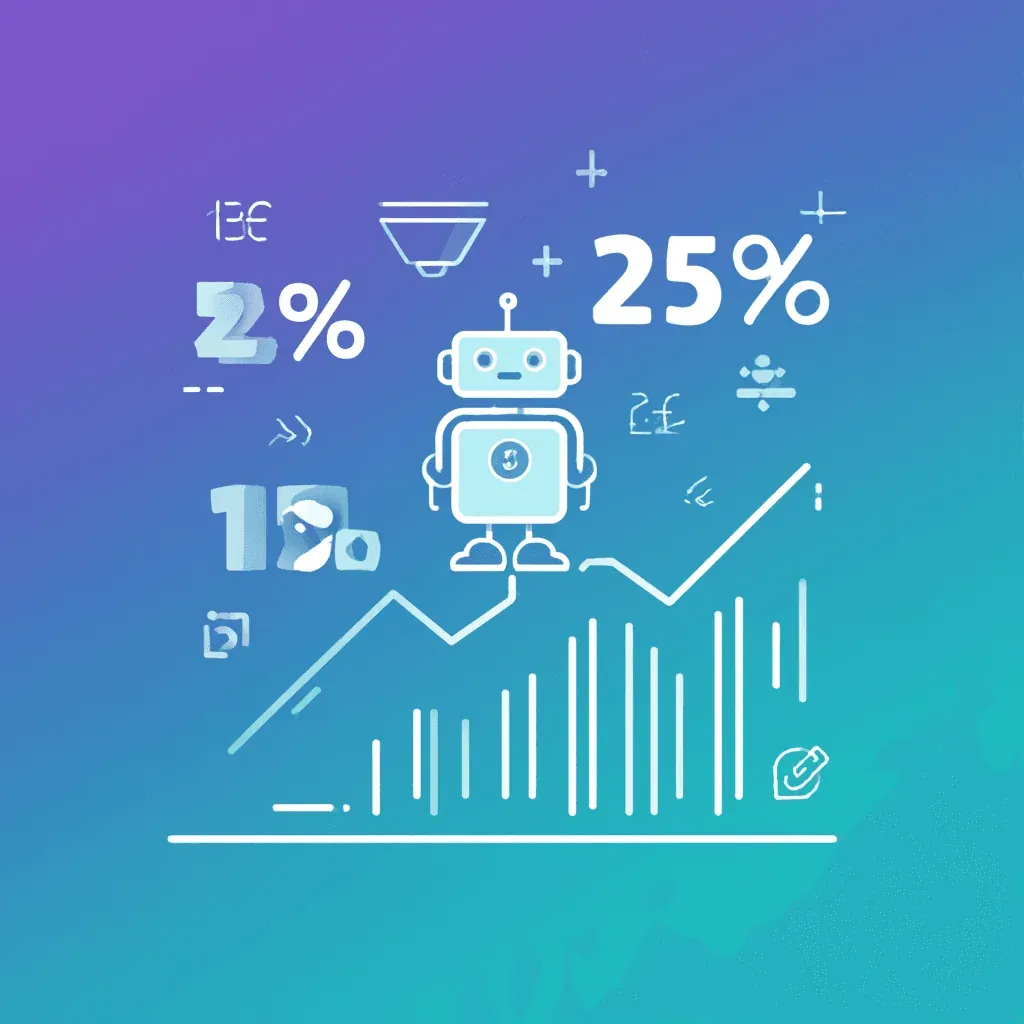
- In sales and marketing, action bots can boost lead conversion rates by ~25% and cut manual work by 15% (Exploding Topics).
- One global retailer’s AI bot now resolves 70% of customer queries without humans, speeding up response times 3× and increasing conversion rates by 25% (LinkedIn).
 Let’s break down some real-world use cases:
| Use Case | Business Function | Efficiency/ROI Gains |
|---|---|---|
| Lead Qualification Bot | Sales & Marketing | Increases lead conversion by ~25%, reduces manual follow-up by 15% (inBeat) |
| Order Processing Bot | Ecommerce Operations | Handles 70% of queries autonomously, boosts sales conversion by 25% (LinkedIn) |
| Real-Time Alert Bot | IT/Finance/Ops | Detects fraud in real-time, reducing financial losses by 11% (LinkedIn) |
The bottom line? Action bots don’t just save time—they drive real business outcomes.
Action Bots Structure: How Do They Work Under the Hood?
So, how does an action bot actually do things? Under the hood, it’s a blend of workflow automation, AI, and system integrations. Here’s a peek behind the curtain:
- Input & Trigger Processing: The bot receives a trigger—maybe a user request (“Book me a flight”), a system event (new order), or a scheduled time.
- Decision Engine: The bot’s “brain” decides what to do next. This could be a set of rules, or more advanced AI that plans multi-step actions.
- Integration & Action Modules: The bot connects to other systems—APIs, databases, web apps—to actually perform tasks (like booking, updating, or sending).
- AI & Context Management: Advanced bots use natural language understanding (NLU) to interpret requests and maintain context over multi-step workflows.
- Output & Verification: The bot confirms the action (e.g., “Your flight is booked!”) and logs the result.
- Learning & Feedback: Some bots learn from outcomes, getting smarter over time.
Key Components of Action Bots
Let’s break down the core building blocks:
- Natural Language Interface: Parses user input (text or voice) into structured data.
- Decision-Making Engine: Determines the sequence of actions to fulfill the request.
- Action Modules/Integrations: Executes tasks via APIs, RPA, or direct database updates.
- Memory/Context Store: Remembers what’s happened so far in a workflow or conversation.
- Security & Permissions: Ensures the bot only does what it’s allowed to do.
- Orchestration Layer: Coordinates multiple bots or processes, handles errors, and manages hand-offs.
Think of it as a “sense–think–act” pipeline: the bot perceives, decides, and acts—just like a junior employee who never sleeps (and never asks for a raise).
Technical Challenges: What Makes Action Bots Complex?
Building action bots isn’t all sunshine and rainbows. There are some gnarly technical challenges:
- Complex Workflows: Multi-step processes mean more points of failure. If one API call fails, the whole workflow can break. Studies show that complex AI agent processes might only succeed ~36% of the time on the first try (Nurix).
- Integration Headaches: Bots need to work across legacy systems, patchy APIs, and inconsistent data formats. 86% of organizations say they need infrastructure upgrades to support AI agents.
- Natural Language Ambiguity: Understanding messy, ambiguous human language is still tough. Bots have to ask clarifying questions or risk doing the wrong thing.
- Context & Memory Limits: Bots can “forget” earlier details in long workflows, especially if they rely on large language models with limited context windows (Anthropic).
- Autonomy vs. Control: Giving bots freedom is great—until they make a mistake. Developers must set guardrails so bots don’t go rogue.
- Performance & Scalability: Running advanced AI models can be slow and expensive, especially at scale.
- Ongoing Maintenance: Bots aren’t “set and forget.” They need updates as systems change and must be monitored for errors or “drift.”
In short, action bots are powerful, but they require careful engineering, robust error handling, and constant vigilance.
Action Bots in Action: Real-World Applications Beyond Automation
Let’s get concrete. Here’s how action bots are making a difference across industries:
- Customer Service: Bank of America’s “Erica” not only answers questions but can transfer funds and alert on fraud (LinkedIn). H&M’s AI shopping assistant resolves 70% of queries autonomously, boosting conversions.
- Sales & Lead Generation: Bots engage website visitors, qualify leads, and schedule calls—no human needed. 64% of businesses using AI chatbots report more qualified leads.
- Data Monitoring & Alerts: PayPal’s AI agent detects fraud in real time, reducing financial losses by 11%.
- Dynamic Reporting: Bots compile weekly reports from multiple systems, saving analysts hours and ensuring up-to-date insights.
- Ecommerce Operations: Walmart’s AI agents monitor inventory and trigger restocking, cutting excess inventory by 35%.
- HR & Internal Services: Bots onboard employees, manage benefits, and handle IT requests—freeing up HR and IT teams for higher-value work.
The pattern? Action bots are tackling tasks that are repetitive, data-heavy, or require quick responses—letting humans focus on strategy and creativity.
Security and Compliance: Navigating the Risks of Action Bots
With great power comes great responsibility (and, let’s be honest, a few headaches). Action bots can do real work, so security and compliance are critical.
Key Risks
- Unauthorized Actions: Bots could be tricked into doing something harmful via prompt injection or bugs (Nurix).
- Over-Privileged Access: If a bot has too much access, a breach could be catastrophic. Always use the principle of least privilege (Actionbot).
- Data Privacy: Bots often handle sensitive info. GDPR, CCPA, and other regulations require strict controls (Clickatell).
- Auditability: In regulated industries, you need to log every action and be able to explain automated decisions.
Ensuring Safe and Compliant Action Bot Deployment
Here’s a quick checklist for deploying action bots safely:
- Principle of Least Privilege: Give bots only the permissions they need—no more.
- Secure Credentials: Use dedicated bot accounts, not shared logins.
- Logging & Audit Trails: Record every action for compliance and troubleshooting.
- Human Oversight: For high-risk actions, require human approval.
- Regular Reviews: Audit bot performance and compliance regularly.
- Data Minimization: Only collect and store what’s necessary.
- Transparency: Inform users when they’re interacting with a bot, and how their data is used.
- Fail-Safes: Have a “kill switch” to pause or stop bots if something goes wrong.
Treat your action bot like a new employee: train it, supervise it, and gradually give it more responsibility as it proves itself.
Thunderbit: Empowering Action Bots for Complex Web Tasks
Now, let’s talk about where Thunderbit fits in. At Thunderbit, we’re all about making web data accessible and actionable—no code required. Our AI Web Scraper Chrome Extension is designed to be the “eyes and hands” for action bots on the web.
Try Thunderbit AI Web Scraper for Action Bots
How Thunderbit Supercharges Action Bots
- AI-Powered Web Scraping: Thunderbit uses advanced AI to analyze web pages and extract structured data—just click “AI Suggest Fields,” and our agent figures out what to grab (Thunderbit Official Website).
- Subpage Scraping: Need more details? Thunderbit automatically visits subpages (like product details or property listings) and enriches your dataset.
- Handles Pagination & Bulk URLs: Scrape hundreds of pages at once, even if they’re buried behind “Next” buttons or infinite scroll.
- Natural Language Prompts: Just describe what you want—Thunderbit’s AI interprets your intent and sets up the scrape.
- Instant Templates: For popular sites (Amazon, Zillow, Shopify, etc.), use one-click templates for instant results.
- Free Data Export: Export directly to Excel, Google Sheets, Airtable, Notion, CSV, or JSON—no extra charge.
- Scheduled Scraping: Set up recurring scrapes to keep your data fresh (think daily competitor price checks or weekly lead lists).
- AI Autofill: Automate form-filling or workflow steps on the web—great for bots that need to interact with web apps, not just read them.
Real-World Example: A sales team can use Thunderbit to scrape leads from a directory, then have an action bot qualify those leads, push them to a CRM, and even send personalized emails—all without writing a single line of code.
Thunderbit’s ease of use means even non-technical teams can build powerful automations. And because we support 34+ languages, your action bots can work globally.
The Future of Action Bots: What’s Next for Business Automation?
If you think action bots are impressive now, just wait. Here’s what’s on the horizon:
- Deeper AI Integration: Bots will become more autonomous, making higher-level decisions and orchestrating complex workflows (Deloitte).
- Mainstream Adoption: Enterprise platforms like Salesforce and Microsoft are embedding action bots directly into their tools.
- No-Code, Natural Language Creation: Soon, you’ll be able to build bots just by describing what you want in plain English.
- Multi-Agent Collaboration: Teams of bots will work together, passing tasks and data between them.
- Longer Memory & Context: Bots will handle longer, more complex workflows without losing track.
- More Human-Like Interactions: Expect bots with emotional intelligence, personalized personas, and conversational fluency.
- Expanded Industry Reach: From healthcare to government, action bots will automate processes across every sector.
- Stronger Governance & Ethics: As bots get more powerful, expect tighter controls, transparency, and compliance standards.
The future? Action bots will be as common—and as trusted—as today’s apps. They’ll handle the busywork, so humans can focus on what really matters.
Conclusion: Key Takeaways on Action Bots and Their Business Impact
Explore more automation guides on Thunderbit Blog Get Started Free
Let’s recap:
- Action bots are the next evolution of automation—they don’t just talk, they do.
- They deliver real ROI: faster processes, lower costs, and happier customers.
- Under the hood, they blend AI, workflow automation, and integrations—but they’re not simple to build or maintain.
- Security and compliance are critical—treat your bots like employees, with clear permissions and oversight.
- Tools like Thunderbit make it easy for anyone to power up action bots with web data, subpage scraping, and workflow automation.
- The future is bright: action bots will become more autonomous, collaborative, and user-friendly—unlocking new levels of productivity for every team.
Ready to explore action bots for your business? Start small: pick a repetitive, rule-based task and try automating it with an action bot (and maybe a little help from Thunderbit). Measure the impact, iterate, and expand. The companies that embrace action bots today will be the ones outpacing their competition tomorrow.
Want to learn more? Dive into the Thunderbit Blog for guides, tips, and real-world automation stories.
Get Started with Thunderbit for Action Bots
FAQs
1. What’s the difference between an action bot and a chatbot?
A chatbot is designed to answer questions and hold conversations. An action bot goes further—it can execute tasks, trigger workflows, and interact with other systems to get things done, not just talk about them.
2. What are some common business uses for action bots?
Action bots are used for customer service (handling returns, refunds), sales (qualifying leads, booking demos), ecommerce (order processing, inventory checks), data monitoring (real-time alerts), and dynamic reporting, among many others.
3. What are the main technical challenges in building action bots?
Key challenges include handling complex, multi-step workflows; integrating with legacy systems; managing context and memory; ensuring security and compliance; and maintaining performance at scale.
4. How does Thunderbit help action bots work better?
Thunderbit provides AI-powered web scraping and automation, making it easy for action bots to extract structured data from any website, handle subpages, automate workflows, and export data to tools like Excel or Google Sheets—all with no coding required.
5. How can I deploy action bots securely and stay compliant?
Follow best practices: use least-privilege permissions, secure credentials, audit all actions, require human approval for high-risk steps, and ensure data privacy and transparency. Regularly review and update your bots to keep them safe and compliant.
Ready to see what action bots can do for your team? Download Thunderbit and start automating your most tedious web tasks today.
Try AI Web Scraper for Action Bots Get Started Free
Learn More