Best Practices for Web Scraping for Lead Generation Success

Last Updated on January 12, 2026

In today’s digital-first world, the race for high-quality sales leads is more intense than ever. I’ve seen firsthand how teams that rely on manual research—copying and pasting contact info, scouring endless directories—are falling behind. The numbers don’t lie: companies that automate lead generation see an average , and nearly than those still stuck in the manual lane. As the co-founder of Thunderbit, I’m obsessed with making web scraping accessible and effective for every team—because I know from experience that the right data, at the right time, can transform your pipeline. manual-vs-automated-lead-generation.png

In this guide, I’ll break down the actionable best practices for web scraping for lead generation: from identifying the most valuable fields, to staying compliant, to automating your workflows and ensuring data quality. Whether you’re in sales, marketing, ecommerce, or real estate, you’ll find practical tips (and a few hard-won lessons) to help you scale your lead gen efforts with confidence.

Unlocking the Power of Web Scraping for Lead Generation

Let’s get down to basics: web scraping for lead generation means using software to automatically collect publicly available information from websites—think names, job titles, emails, phone numbers, company details, and more. Instead of spending hours manually hunting for prospects, web scraping acts like a digital research assistant, tirelessly gathering and organizing leads into a structured spreadsheet or database.

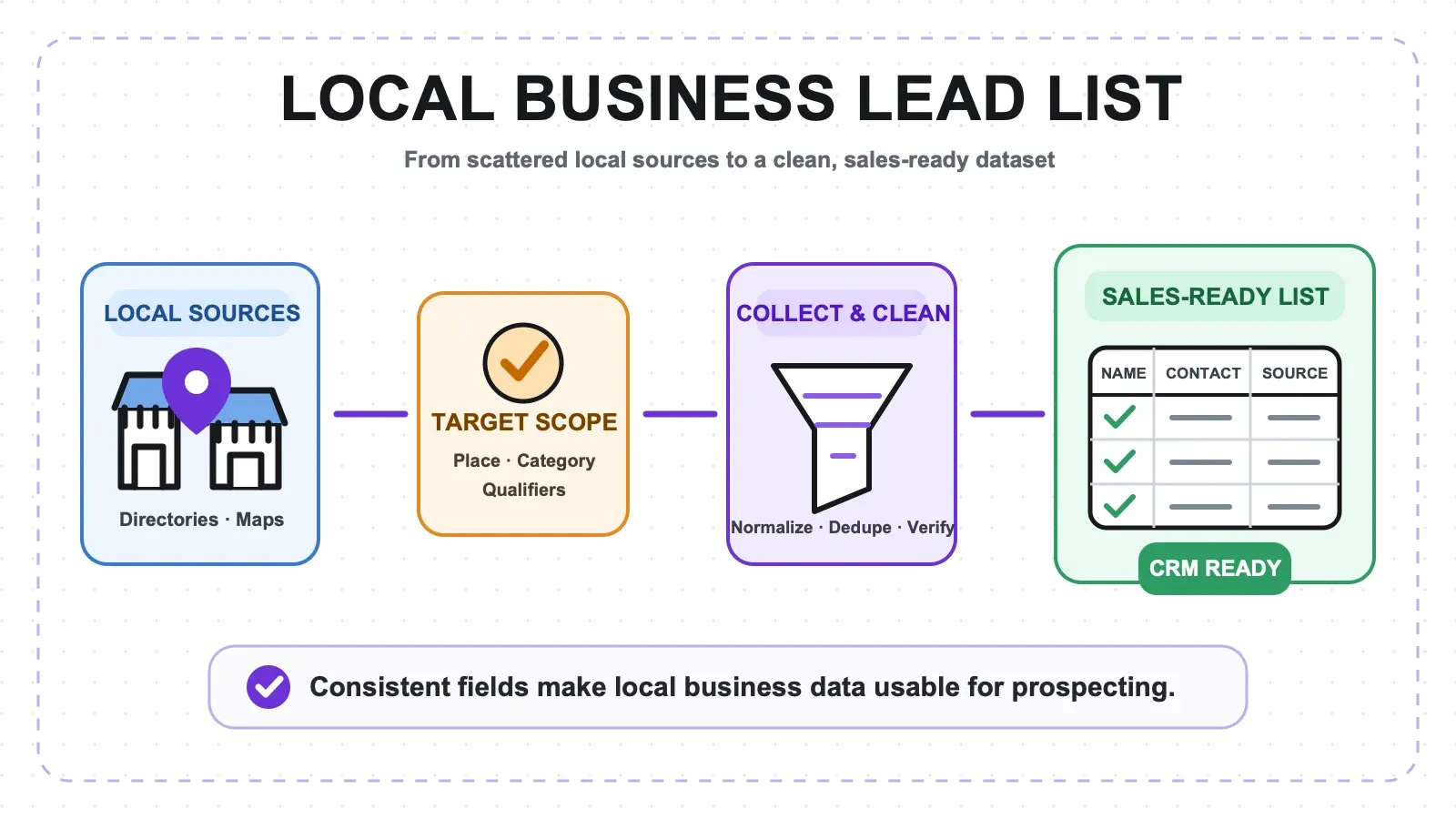
Picture this: You’re selling B2B software and need a list of retail store owners in Texas. Instead of Googling each store and copying their info one by one, a web scraper can pull hundreds of names and emails from a directory or Google Maps in minutes. Or maybe you’re a real estate agent scraping new “For Sale by Owner” listings from Zillow—again, what would take a human a day, a scraper does in seconds. web-scraping-lead-generation-process.png

The real magic? Speed, scale, and targeting. Automated scraping tools can extract lead data in minutes that might take a person hours or days. And because you can target specific sources and criteria, your lead lists are not just bigger—they’re smarter and more relevant ().

Why Web Scraping for Lead Generation Matters for Modern Teams

Manual prospecting is a productivity killer. Sales reps spend a staggering , and instead of actually selling. Web scraping flips the script, letting teams reclaim those hours and focus on what matters: building relationships and closing deals.

Here’s how different teams benefit:

Team/FunctionManual Pain PointWeb Scraping Value
SalesSlow, error-prone lead research10–100x more leads per hour; better targeting
MarketingLimited campaign reachRapidly build segmented email/social lists
Ecommerce OperationsPrice/stock monitoring is tediousAutomated SKU, price, and competitor data collection
Real EstateNew listings require constant checkingInstantly scrape FSBO/expired listings for outreach

The ROI is real: companies using AI-powered prospecting tools get to spend roughly 2X more time in active selling (), and are than those sticking to old-school methods.

Identifying Key Fields: From URLs to Contact Information

Not all data is created equal. For lead generation, you want to extract the fields that actually help you contact and qualify prospects. The essentials:

  • Name (full name)
  • Job Title/Role
  • Company/Organization Name
  • Work Email Address
  • Phone Number
  • Company Website URL
  • LinkedIn or Social Profile
  • Industry/Sector
  • Location

Here’s where shines. Our AI Suggest Fields feature scans any webpage and recommends the most relevant columns—like “Name,” “Title,” “Company,” “Email,” and more. This means you don’t have to guess or fiddle with selectors; the AI does the heavy lifting. For example, on a directory page, Thunderbit might suggest “Name, Title, Company, Email, LinkedIn URL.” On a real estate listing, it might auto-detect “Address, Price, Listing Agent, Agent Phone.”

You can always tweak these suggestions—add or remove fields, rename columns, or set custom data types. My tip: always align your field selection with your outreach goals. If you’re running a cold email campaign, make sure “Email” and “First Name” are included. If you’re qualifying by company size or industry, add those fields.

And don’t forget Thunderbit’s Field AI Prompt. This lets you add custom instructions for each field—like “extract company website domain” or “categorize job title by seniority.” It’s a powerful way to enrich your data on the fly, without extra steps.

Web scraping isn’t just about collecting contact info. Some of the best leads come from monitoring your competitors and the broader market. For example:

  • Scrape competitor review pages to find dissatisfied customers—prime targets for your outreach.
  • Monitor pricing tables and product announcements to spot when a competitor raises prices or launches a new feature (and then target affected customers).
  • Extract user feedback from forums or social media to identify pain points your product can solve.

Thunderbit’s custom Field AI Prompt makes this easy. Want to flag negative reviews? Add a prompt like “extract sentences mentioning issues or complaints.” Need to track competitor product launches? Set up a scheduled scrape of their news page, and have the AI pull out product names and release dates.

I’ve seen teams use Thunderbit to automatically generate weekly reports on competitor moves—turning market intelligence into actionable lead lists. It’s like having a market radar that never sleeps.

Let’s talk compliance—because no amount of leads is worth a lawsuit or a damaged reputation. Here are the essentials:

  • Scrape only public data. If a site requires login or is behind a paywall, review the terms of service before scraping.
  • Check robots.txt and terms of service. If a site disallows scraping, respect that—or seek explicit permission.
  • Limit to business contact info. Avoid sensitive personal data, and never scrape info about minors.
  • Comply with privacy laws. For EU data, ensure you have a lawful basis (like legitimate interest under GDPR) and be ready to delete data if requested. For California, honor CCPA opt-outs.
  • Be transparent in outreach. When contacting scraped leads, identify yourself and provide an easy opt-out.

Here’s a quick compliance checklist:

Compliance StepAction Item
Public Data OnlyConfirm data is accessible without login/payment
Review Terms of ServiceDon’t violate explicit anti-scraping clauses
Respect robots.txtAvoid scraping disallowed pages
Avoid Sensitive DataStick to business info; no health/financial data
GDPR/CCPA ComplianceDocument rationale; honor removal/opt-out requests
Use Data InternallyDon’t resell or republish scraped data
Quality & AccuracyClean and verify data before use

For more, check out and .

From Manual to Automated: Scaling Lead Generation with Web Scraping Tools

Manual lead collection is slow, tedious, and error-prone. Automation is the only way to scale. With Thunderbit, you can:

  • Schedule scraping tasks (e.g., “scrape this directory every Monday at 8am”)
  • Bulk scrape hundreds of URLs at once—just paste your list, and Thunderbit loops through them automatically
  • Choose between Cloud and Browser Mode: Cloud Mode scrapes up to 50 pages at once (great for public sites), while Browser Mode handles sites behind logins or with anti-bot measures
  • Export data instantly to Google Sheets, Airtable, Notion, Excel, CSV, or JSON—no manual copy-paste

For teams, this means you can assign scraping projects, track progress in shared sheets, and keep your lead lists continuously refreshed. I’ve seen teams replace 5 hours of weekly prospecting with a Thunderbit workflow that delivers new leads to their CRM every Monday—no more “who’s updating the spreadsheet?” drama.

Data Quality: Cleaning, Validating, and Enriching Your Scraped Leads

Scraping is just the start. Raw data can be messy—duplicates, missing fields, invalid emails. Here’s how to polish your leads:

  1. Deduplicate: Remove exact and partial duplicates (e.g., same email or name+company).
  2. Standardize formatting: Normalize phone numbers (Thunderbit outputs E.164 format), capitalize names, and fix typos.
  3. Validate emails: Use tools like NeverBounce or ZeroBounce to weed out invalid addresses.
  4. Enrich records: Append missing info (like LinkedIn URLs or company size) using enrichment APIs or additional scraping passes.
  5. Integrate with your CRM: Export clean data directly to your CRM or spreadsheet, and always tag the source for tracking.

A quick cleaning checklist:

TaskTool/Method
DeduplicationExcel/Sheets, CRM dedupe tools
Email ValidationNeverBounce, ZeroBounce, Hunter
Phone FormattingThunderbit, Excel formulas
EnrichmentThunderbit Field AI Prompt, enrichment APIs
IntegrationThunderbit export, CRM import tools

Remember: clean data = higher conversion rates and happier sales teams.

Overcoming Common Challenges in Web Scraping for Lead Generation

Web scraping isn’t always smooth sailing. Here are the most common hurdles—and how to tackle them:

  • Anti-bot measures (CAPTCHAs, IP blocks): Use Thunderbit’s Browser Mode to mimic real user behavior, or slow down your scraping speed. For heavy-duty jobs, Cloud Mode with rotating IPs helps avoid blocks ().
  • Dynamic content & pagination: Thunderbit automatically handles infinite scroll and pagination. For tricky sites, scroll manually or input paginated URLs.
  • Changing website layouts: Thunderbit’s AI adapts to layout changes. If data stops coming in, use “AI Improve Fields” to refresh your template.
  • Partial/inconsistent data: Use Field AI Prompts to extract info buried in text, or leverage subpage scraping for missing fields.
  • Choosing Cloud vs. Browser Mode: Use Cloud for speed and scale; Browser for sites needing login or with aggressive anti-bot defenses.

If you hit a wall, don’t panic—adjust your approach, try a different mode, or break the job into smaller chunks. Most obstacles have a workaround.

Measuring Success: KPIs and Continuous Improvement for Lead Generation

You can’t improve what you don’t measure. Here are the KPIs I recommend tracking:

  • Number of leads generated (by source, per week/month)
  • Lead conversion rate (leads to meetings, meetings to deals)
  • Lead response rate (outreach engagement)
  • Bounce rate/data accuracy (invalid emails, wrong numbers)
  • Cost per lead (tool cost + time vs. output)
  • Pipeline and revenue influence (deals closed from scraped leads)
  • Team productivity (leads per rep per day, hours saved)

Set up a feedback loop with your sales team: Are the leads relevant? Which sources convert best? Use this intel to refine your field selection, update scraping schedules, and double down on what works. Continuous improvement is the name of the game.

Conclusion: Key Takeaways for Web Scraping for Lead Generation Success

Web scraping has gone from a niche trick to an essential practice for modern lead generation. Here’s what I’ve learned (sometimes the hard way):

  • Automate for scale and speed: Manual prospecting can’t compete with AI-powered scraping. Use tools like Thunderbit to reclaim your team’s time and fill your pipeline faster.
  • Focus on high-value fields: Identify the data that matters—name, title, company, email, phone, LinkedIn—and use AI to extract it efficiently.
  • Leverage competitive insights: Scrape not just contacts, but also competitor reviews, pricing, and market trends to spot new opportunities.
  • Stay compliant: Respect privacy laws, site terms, and ethical boundaries. Only scrape public data, and always honor opt-outs.
  • Clean and enrich your data: Deduplicate, validate, and enrich your leads before outreach. Quality beats quantity every time.
  • Overcome challenges with the right tools: Use Cloud vs. Browser Mode strategically, and lean on AI to adapt to changing sites.
  • Measure and iterate: Track your KPIs, listen to your sales team, and refine your process for continuous improvement.

With , web scraping for lead generation is no longer just for developers—it’s for every sales, marketing, and ops team that wants to win in a data-driven world. Start small, experiment, and scale up as you see results. Your next wave of growth could be just a few clicks away.

Want to see Thunderbit in action? and try scraping your first lead list for free. For more tips and deep dives, check out the .

Try Thunderbit AI Web Scraper for Lead Generation

FAQs

1. Is web scraping for lead generation legal?
Yes, as long as you scrape only publicly available data, respect website terms of service, and comply with privacy laws like GDPR and CCPA. Always avoid scraping sensitive personal data or sites that explicitly forbid it.

2. What are the most important fields to extract for lead generation?
Focus on name, job title, company, email, phone number, company website, LinkedIn/social profile, industry, and location. These fields enable personalized outreach and qualification.

3. How does Thunderbit help non-technical users with web scraping?
Thunderbit’s AI Suggest Fields feature automatically detects the most relevant data fields on any webpage. No coding or selector setup is needed—just click, review, and scrape.

4. How do I ensure the quality of my scraped leads?
Deduplicate your data, validate emails and phone numbers, standardize formatting, and enrich records with missing info. Use tools like Thunderbit’s Field AI Prompt and third-party validation services.

5. What should I do if a website blocks my scraper or changes its layout?
Switch to Thunderbit’s Browser Mode to mimic human browsing, slow down your scraping speed, or use Cloud Mode for faster, parallel scraping. If layouts change, use “AI Improve Fields” to refresh your extraction template.

Ready to supercharge your lead generation? Give Thunderbit a spin—and may your next big deal be just a scrape away.

Learn More

Shuai Guan
Shuai Guan
Co-founder/CEO @ Thunderbit. Passionate about cross section of AI and Automation. He's a big advocate of automation and loves making it more accessible to everyone. Beyond tech, he channels his creativity through a passion for photography, capturing stories one picture at a time.
Topics
Web scrapingLead generation
Table of Contents

Try Thunderbit

Scrape leads & other data in just 2-clicks. Powered by AI.

Get Thunderbit It's free
Extract Data using AI
Easily transfer data to Google Sheets, Airtable, or Notion
Chrome Store Rating
PRODUCT HUNT#1 Product of the Week