
Picture this: it’s 2026, and you’re sipping your morning coffee while your AI-powered smart fridge reminds you that you’re out of oat milk, your smartwatch suggests a mindfulness break, and your company’s IT dashboard is pinging with real-time analytics from cloud servers halfway around the world. This isn’t a sci-fi movie—it’s the new normal, and it’s powered by a tidal wave of technology that’s transforming everything from how we work to how we wind down.
But here’s the kicker: behind every futuristic gadget, every AI-driven business process, and every “how did we ever live without this?” moment, there’s a story told in numbers. Technology statistics aren’t just trivia—they’re the pulse of our digital economy. In fact, global IT spending is set to smash records at over $6 trillion in 2026, and nearly nine in ten companies now use AI. If you’re a business leader, tech professional, or just a curious human trying to keep up, understanding these stats is your secret weapon for navigating the wild world of technology in 2026. A housekeeping note while we’re here: the headline count on this piece was overdue for an audit, so this August 2026 refresh included counting the statistics properly, re-sourcing every figure against its original report, and retitling the piece to match what’s actually in it. Gartner alone revised its data centre forecast twice this year, so a few of the numbers you may remember have moved a long way since.
Let’s dive into the most eye-opening, conversation-starting, and strategy-shaping technology statistics of 2026—and see what they really mean for all of us.
The Big Picture: Why Technology Statistics Matter in 2026
Scrape data from any website using AI Thunderbit's agentic web scraper reads any tech-industry data page itself and pulls the numbers in one click. Get Started Free
In today’s digital economy, technology isn’t just a department—it’s the engine room of growth, innovation, and even economic resilience. In some cases, nearly all recent GDP growth has come from tech investment. For example, in the U.S., a staggering 92% of GDP growth in early 2025 was driven by data center and IT spending.
Why do these numbers matter? Because they turn hype into actionable intelligence. Whether you’re deciding where to invest, how to allocate budgets, or which trends to double down on, technology statistics help you separate the signal from the noise. If 88% of enterprises report regular AI use, and cybersecurity spending is up 15% year-over-year to $213 billion, you know exactly where the world is heading—and where your business needs to be.
Global Technology Growth Statistics: The Numbers Shaping 2026
Let’s zoom out for a second. The global technology sector is expanding at a pace that would make even the most seasoned futurist do a double take.
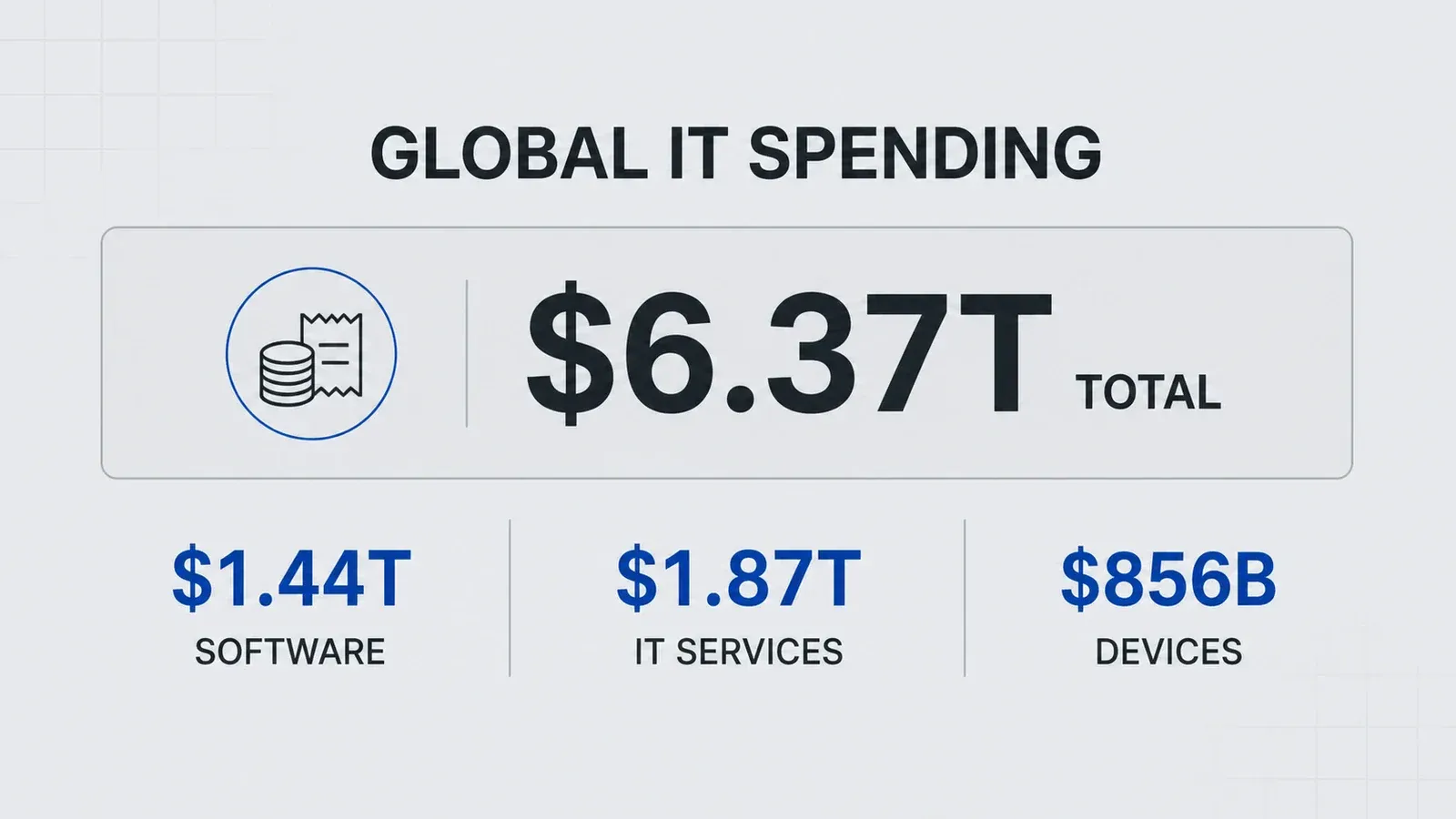
- Worldwide IT spending is projected to reach $6.37 trillion in 2026—that’s more than the GDP of Japan.
- The digital economy now accounts for about 15% of world GDP, or roughly $16 trillion, and could rise to 25% by the late 2020s.
- Tech investment is outpacing nearly every other sector, with AI-related spending growing at 47% year-over-year.
In short: if you’re not tracking these numbers, you’re flying blind in a digital storm.
Information Technology Spending: Where the Money Goes
So, where is all that $6 trillion going? Here’s a breakdown that might surprise you (and maybe make your CFO sweat):
- Software: The biggest slice of the pie. Enterprise software spending is set to reach about $1.44 trillion in 2026, up roughly 15% from the previous year (Gartner). GenAI features are now “baked in” everywhere, driving both costs and capabilities.
- IT Services: Consulting, outsourcing, and managed services are expected to reach $1.87 trillion in 2026.
- Devices: Spending on hardware (PCs, smartphones, etc.) will hit $856 billion in 2026, fueled by the rise of AI-powered devices.
- Data Center Systems: The real “wow” factor—spending is expected to jump 55.8% to more than $788 billion in 2026.
- Communications Services: Growing more modestly, but still a giant at $1.36 trillion in 2026.
The bottom line? IT budgets are swelling across the board, but especially in areas that support digital transformation—software, cloud infrastructure, and services.
Artificial Intelligence: The Fastest Growing Technology Trend
If there’s one trend that’s impossible to ignore, it’s AI. I’ve been in the automation and AI space for years, and even I’m blown away by the speed of adoption and the scale of investment.
AI Adoption and Market Size
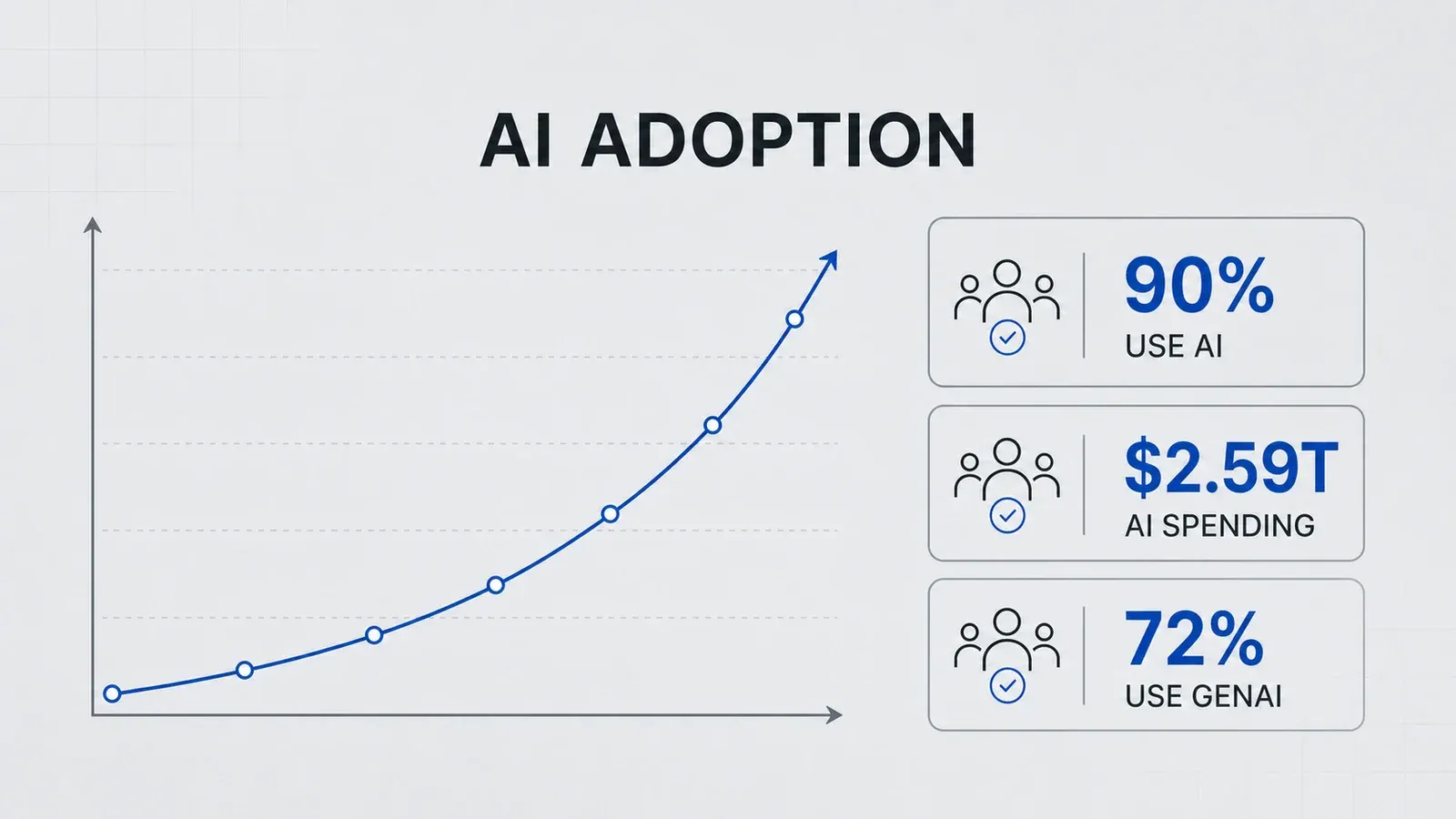
- Nearly 90% of large organizations now use AI in at least one business function.
- Global AI spending is forecast to reach $2.59 trillion in 2026.
- Generative AI adoption has exploded: 72% of organizations use GenAI tools in at least one function, up from 33% in 2023 (2024 survey base).
To put that in perspective, AI is now a “general purpose technology”—think electricity or the internet. It’s everywhere, and it’s only getting bigger.
Agentic AI and Automation
Here’s where things get really interesting. The rise of agentic AI—AI that acts autonomously, not just reactively—is changing the game for enterprise software.
- 62% of companies are experimenting with AI agents, and 23% have started scaling agentic AI in at least one business function.
- By 2028, 33% of all enterprise software will include agentic AI, up from less than 1% in 2024.
This shift means more routine (and even some complex) decisions will be made by machines, freeing up humans for higher-level work—and raising new questions about governance, trust, and skills.
Cloud Computing and Data Centers: Powering the Digital World
Cloud isn’t just a buzzword anymore—it’s the backbone of the digital world. And the numbers are, frankly, jaw-dropping.
Cloud Spending and Adoption
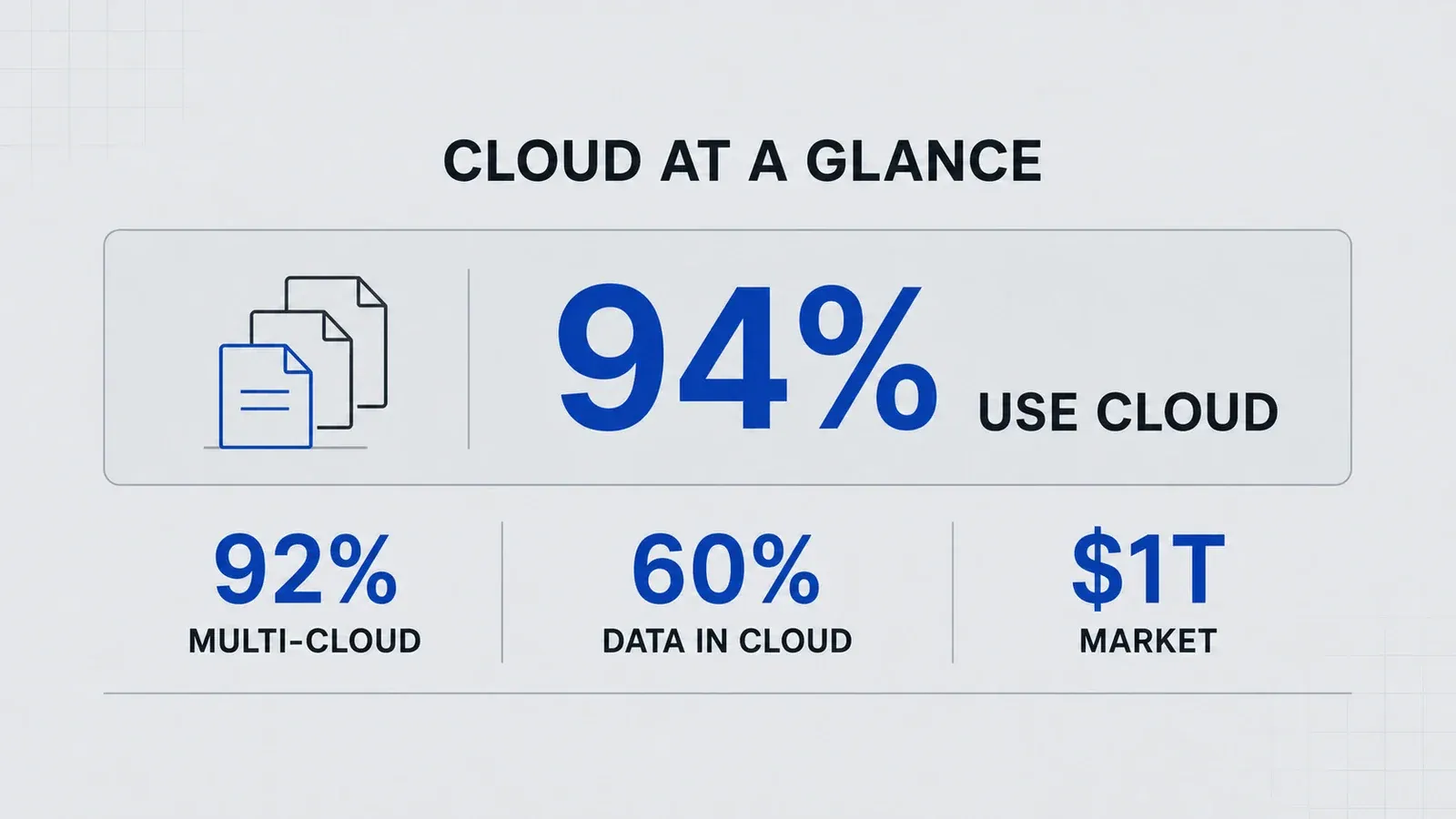
- The global cloud computing market is on track to hit $1 trillion by 2026.
- 94% of enterprises use cloud services, and 92% have a multi-cloud strategy.
- More than 60% of business data is now stored in the cloud.
Cloud is no longer a “nice-to-have”—it’s the default for new workloads, and it’s powering everything from AI to remote work.
Data Center Expansion and Energy Use
- Data center systems spending is expected to reach more than $788 billion in 2026, up 55.8% from 2025.
- Data centers consumed 415 terawatt-hours (TWh) of electricity in 2024—about 1.5% of global electricity use.
With AI and crypto driving demand, energy efficiency and sustainability are now top priorities for cloud providers.
Cybersecurity: Protecting the Digital Frontier
With great tech comes great responsibility—and, unfortunately, great risk. Cybersecurity is now a non-negotiable part of every digital strategy.
Cybersecurity Spending and Threat Landscape
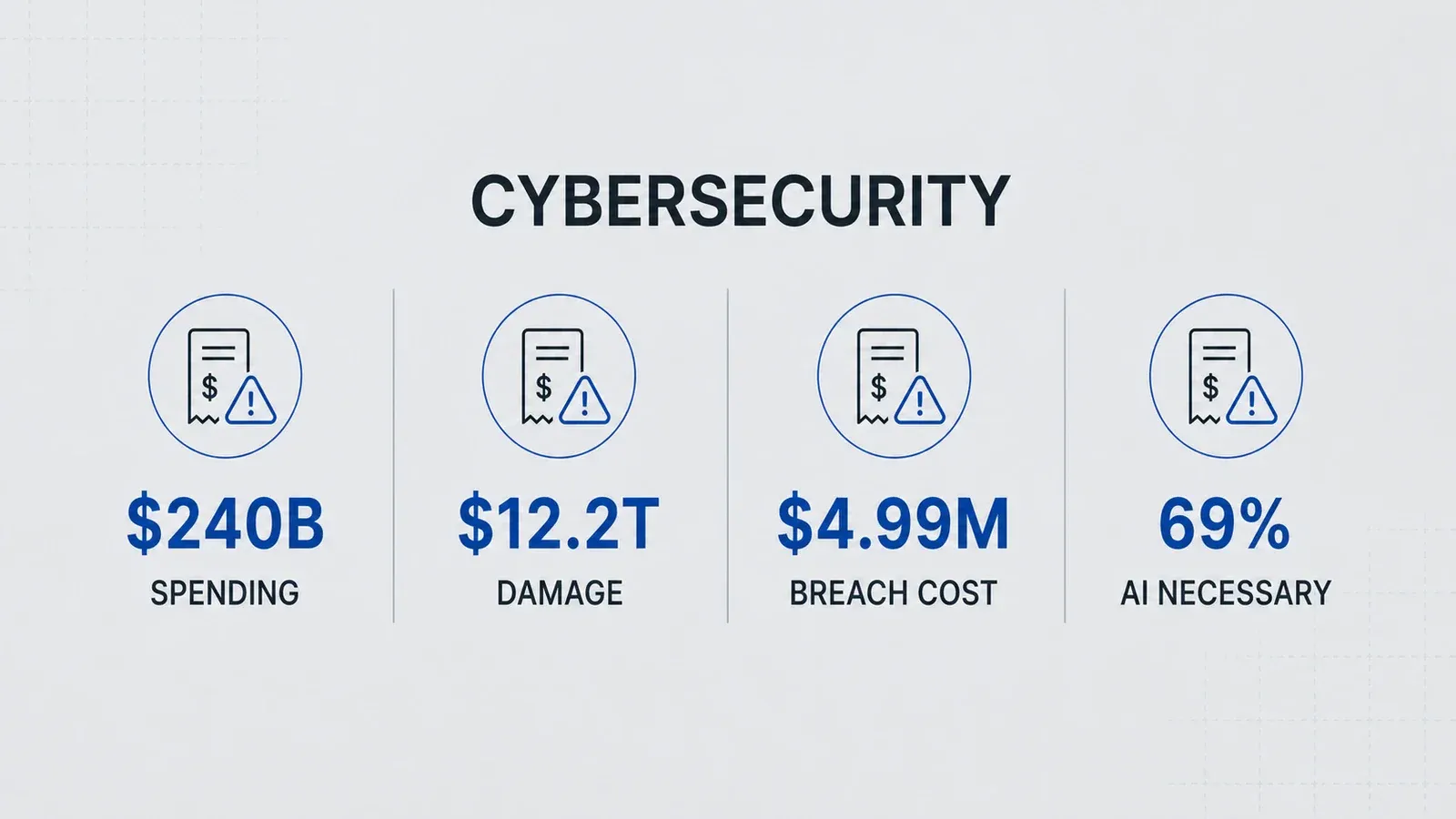
- Global cybersecurity spending is set to reach $240 billion in 2026.
- Cybercrime damages are projected to cost the world $12.2 trillion annually by 2031.
- Breaches keep getting pricier: the global average cost of a data breach reached $4.99 million globally in 2026—up 12% year over year, with the U.S. average at $11.5 million.
AI is both a sword and a shield here—69% of enterprises say AI is necessary for cybersecurity, but attackers are weaponizing AI too. It’s an arms race, and the stakes have never been higher.
Consumer Technology Statistics: Devices, Adoption, and Trends
Let’s talk about the gadgets we can’t live without. The numbers here are just as wild:
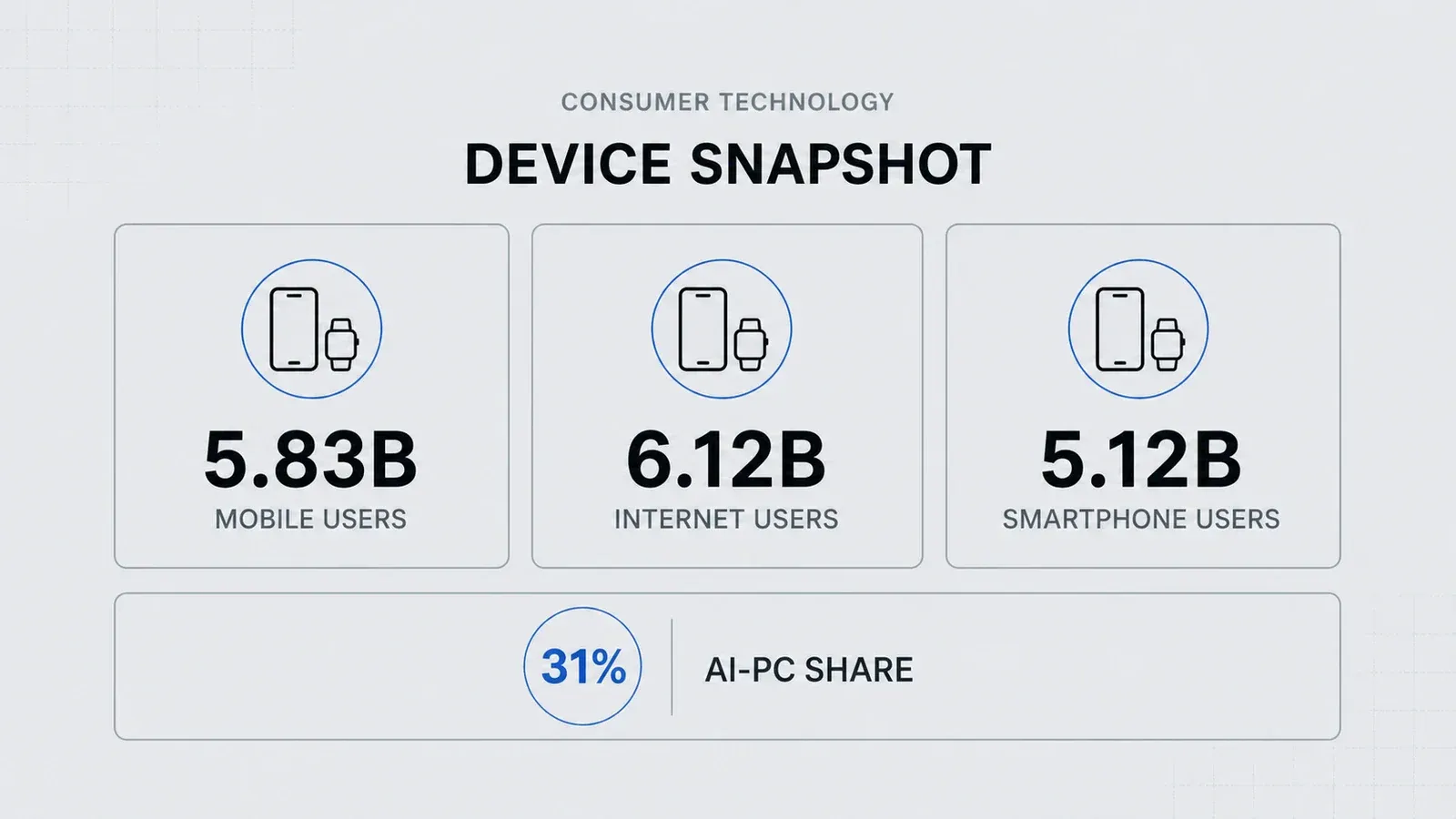
- 5.83 billion people worldwide are unique mobile users—about 71% of the planet, alongside 6.12 billion internet users (73.8% penetration).
- By 2026, forecasts suggest 5.12 billion smartphone users.
- 31% of PCs shipped in 2025 were AI-PCs, and that’s expected to be 55% in 2026.
AI is now a standard feature in consumer tech, not a luxury add-on. Your phone, your PC, your watch—they’re all getting smarter, and so are your expectations.
AI-Embedded Devices
- Spending on GenAI smartphones is projected at $393 billion in 2026.
- By the end of 2026, 40% of software vendors will prioritize AI features that run directly on PCs.
The line between “device” and “intelligent assistant” is getting blurrier by the day.
Workforce and Skills: Technology’s Impact on Jobs
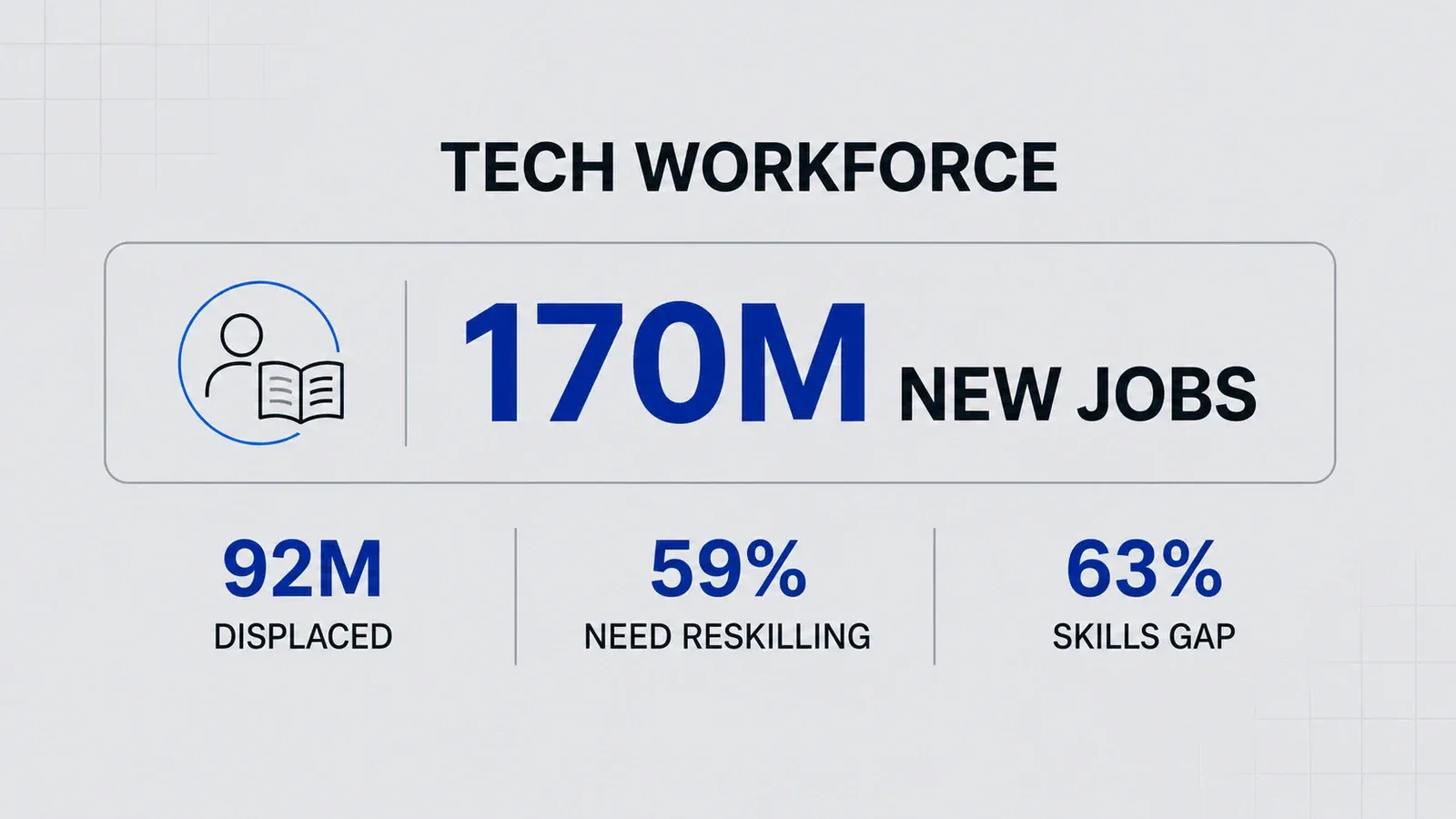
Here’s a stat that always gets people talking: the World Economic Forum projects that by 2030, as many as 170 million new jobs will be created, while 92 million will be displaced by automation.
- 59% of workers will require reskilling or upskilling by 2030.
- 63% of employers say the skills gap is a primary barrier to adopting new technologies.
The message? Lifelong learning isn’t just a buzzword—it’s a survival skill.
Emerging Technologies to Watch: Beyond the Usual Suspects
Sure, AI and cloud get all the headlines, but there’s plenty more happening under the radar:
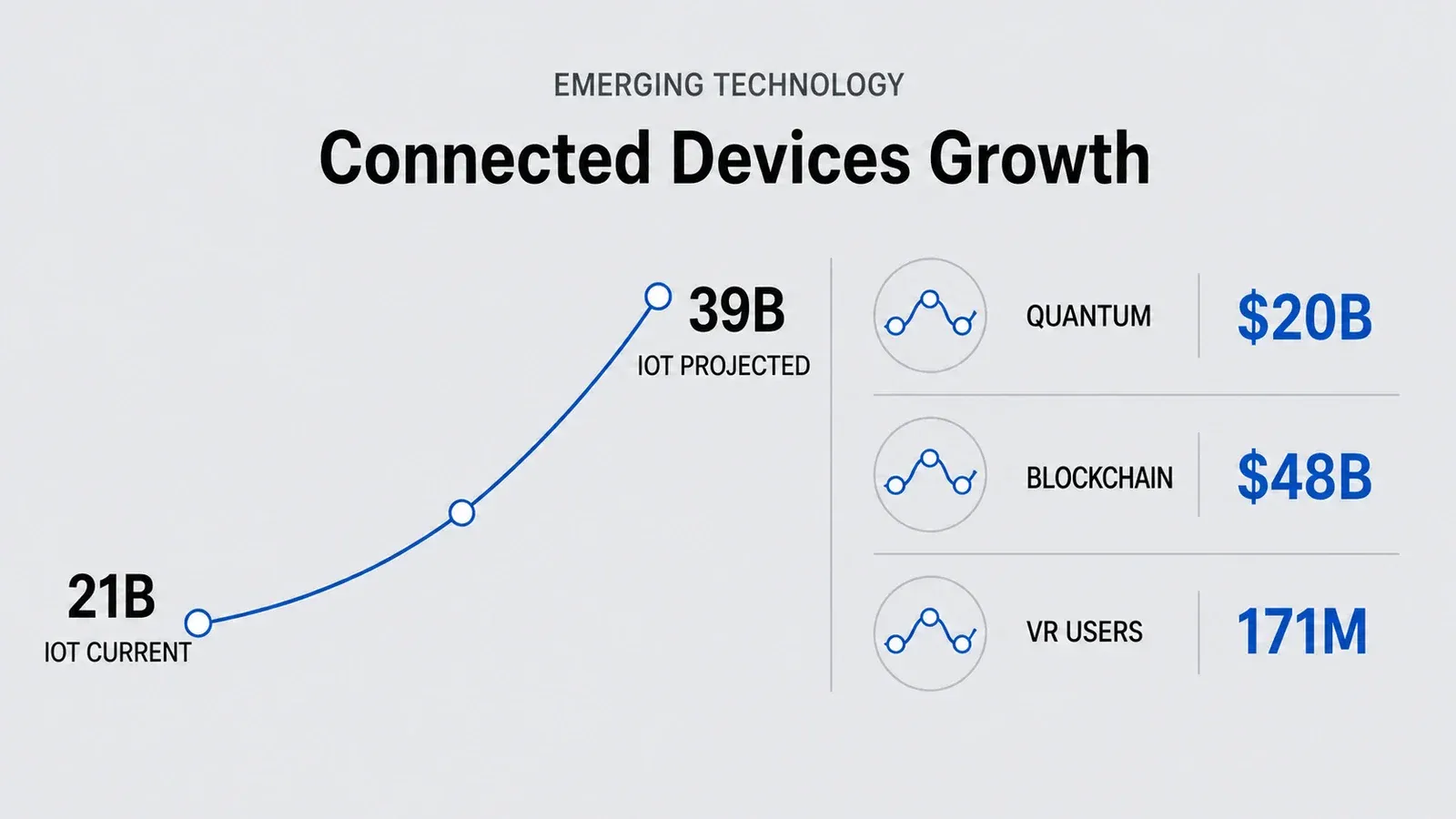
- Quantum Computing: Market valued at $2.5–3.5 billion in 2025, projected to hit $20 billion by 2030.
- IoT Devices: 21+ billion connected devices in 2025, on track for 39 billion by 2030.
- Blockchain: Market size could reach $48 billion in 2026.
- AR/VR: 171 million VR users worldwide in 2025, with the market value ramping up to $75 billion in 2025.
These aren’t just “nice to have” trends—they’re the seeds of the next wave of disruption.
Technology and the Economy: Measuring the Broader Impact
Let’s talk big picture. Technology isn’t just a sector—it’s the backbone of the global economy.
- The digital economy now makes up 15% of global GDP, and could hit 25% by the late 2020s.
- In the U.S., the internet sector contributed $4.9 trillion—about 18% of GDP, and double its 2020 contribution.
- The IMF projects that AI could raise global GDP by 0.5% annually from 2025 to 2030.
If you’re in business, government, or policy, these numbers are your north star for planning, investment, and growth.
The Top 40+ Technology Statistics for 2026: The Ultimate List
Ready for the data buffet? Here’s a curated, easy-to-read list of the most important technology statistics for 2026—organized by category for your referencing pleasure. (Don’t worry, I won’t quiz you at the end.)
IT Spending and Global Tech Growth
- Worldwide IT Spending (2026): $6.37 trillion, up 14.2% from 2025.
- Software Spending: About $1.44 trillion in 2026, remaining the largest IT spending category (Gartner).
- Data Center Hardware: more than $788 billion in 2026, up 55.8% YoY.
- Digital Economy Share: 15% of global GDP, or ~$16 trillion.
Artificial Intelligence
- Global AI Spending: $2.59 trillion in 2026, up 47% (Gartner).
- Enterprise AI Adoption: 88% of companies use AI.
- Generative AI Use: 72% of organizations use GenAI.
- Agentic AI in Enterprise: 33% of enterprise software will include agentic AI by 2028.
Cloud Computing & Data Centers
- Cloud Market Size: ~$1 trillion by 2026.
- Cloud Adoption: 94% of enterprises use cloud.
- Data Center Energy Use: 415 TWh in 2024, projected to double by 2030.
Cybersecurity
- Cybersecurity Spending: $240 billion in 2026.
- Cybercrime Damages: $12.2 trillion annually by 2031.
- AI in Cybersecurity: 69% of enterprises say AI is essential for defense.
Consumer Tech
- Smartphone Users: 4.69 billion in 2025, 5.12 billion by 2026.
- AI PCs: 31% of PCs shipped in 2025 were AI-PCs, 55% in 2026.
- Wearables: Over 1 billion devices in use globally.
Workforce & Skills
- Jobs Created by 2030: 170 million new jobs, 92 million displaced by automation.
- Skills Gap: 59% of workers need reskilling by 2030.
Emerging Tech
- Quantum Computing: $2.5–3.5 billion market in 2025, $20 billion by 2030.
- IoT Devices: 21+ billion connected devices in 2025.
- Blockchain: $48 billion market in 2026.
- AR/VR: 171 million VR users in 2025, $75 billion AR/VR market in 2025.
Key Takeaways: What These Technology Statistics Mean for Your Business
See How Agentic Web Scraping Works Thunderbit's AI reads a page like a person would and turns tech-industry statistics pages into structured data in one click. Get Started Free
So, what does all this mean for you and your organization? Here are the big trends and actionable insights I see:
- Tech investment is non-negotiable: If you’re not investing in digital, you’re falling behind. IT spending is directly linked to economic growth.
- AI is now table stakes: Nearly every company is using AI in some form. If you’re not, you’re missing out on productivity, efficiency, and competitive advantage.
- Cloud is the new normal: With most workloads and data moving to the cloud, optimizing your cloud strategy is essential.
- Cybersecurity is a must-have: The threat landscape is only getting more complex. Invest in AI-driven security, employee training, and robust incident response plans.
- Upskilling is urgent: The skills gap is real. Continuous learning and reskilling are vital for both organizations and individuals.
- Keep an eye on emerging tech: Quantum, IoT, blockchain, and AR/VR are moving from buzzwords to business drivers. Stay curious and experiment early.
And, of course, always make your decisions data-driven. That’s how you turn technology statistics into real-world results.
Sources and Methodology: Where Our Technology Statistics Come From
Compiling this mega-list wasn’t just a matter of Googling “cool tech stats.” We drew from a range of authoritative sources, including:
- Gartner (IT spending, AI, cloud, and device forecasts)
- McKinsey (State of AI survey)
- World Economic Forum (Workforce, jobs, and skills)
- IDC, Deloitte, Statista, and others (market sizing, digital economy)
- Tech industry blogs and vendor reports (for aggregated and cross-verified stats)
- Academic and government data (for economic and workforce impact)
We prioritized the most recent, credible, and globally relevant data, cross-checked figures, and included direct links so you can dig deeper.
Want More? Stay Ahead With Thunderbit
If you’re as obsessed with data as I am (and you want to turn these stats into action), check out Thunderbit—our agentic web scraper Chrome extension that makes gathering, structuring, and exporting web data as easy as clicking a button. Whether you’re in sales, e-commerce, marketing, or just want to automate your research, Thunderbit’s AI-powered features help you stay ahead of the curve.
Try Thunderbit Free – Scrape Web Data Instantly Free plan covers 6 pages a month, no credit card required — a fast way to pull data for your own reports. Get Started Free
You can even try it for free—just grab the Thunderbit Chrome Extension and start scraping the data that matters most to your business.
For more deep dives, tips, and the latest tech trends, swing by the Thunderbit Blog. I’m always updating our resources with the latest research, practical guides, and, yes, even more stats (because who doesn’t love a good chart?).
Final Thoughts
Technology in 2026 is moving at breakneck speed, but the numbers don’t lie: the future belongs to those who understand the data and act on it. So whether you’re planning your next big investment, rethinking your workforce strategy, or just trying to keep up with your AI-powered fridge, remember—statistics are your compass in the digital age.
Now, if only my coffee machine could read this blog and start brewing before my next meeting…
Want to dig even deeper?
- What Is Data Scraping and How to Do It in 2026
- How to Scrape Website Data into Excel using AI
- 6 Web Scraping Tools I Actually Use: Honest Comparison (2026)
Sources: All statistics in this article are linked directly to their original reports or studies for verification and further reading.
Try Thunderbit Agentic Web Scraper for Free Get Started Free




