
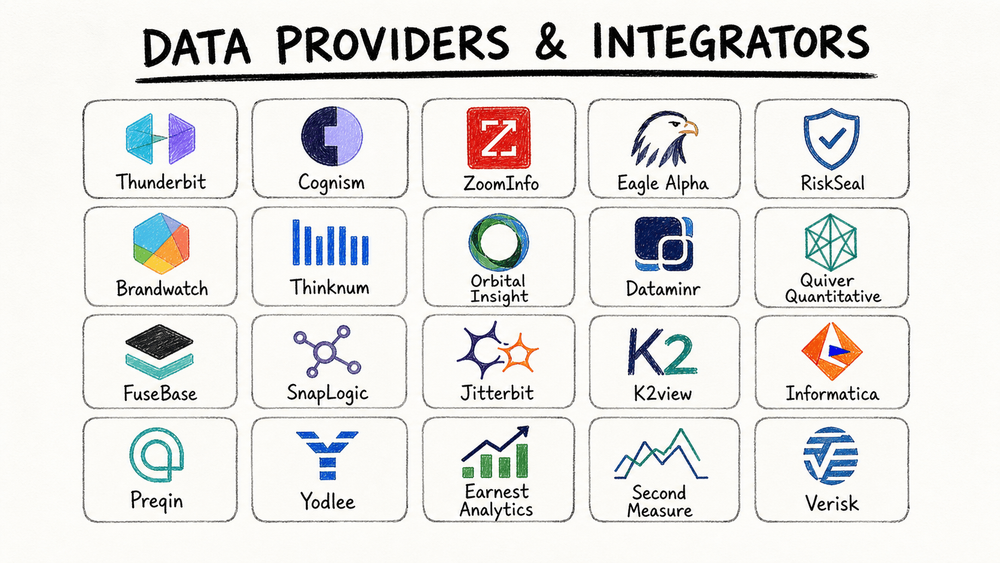
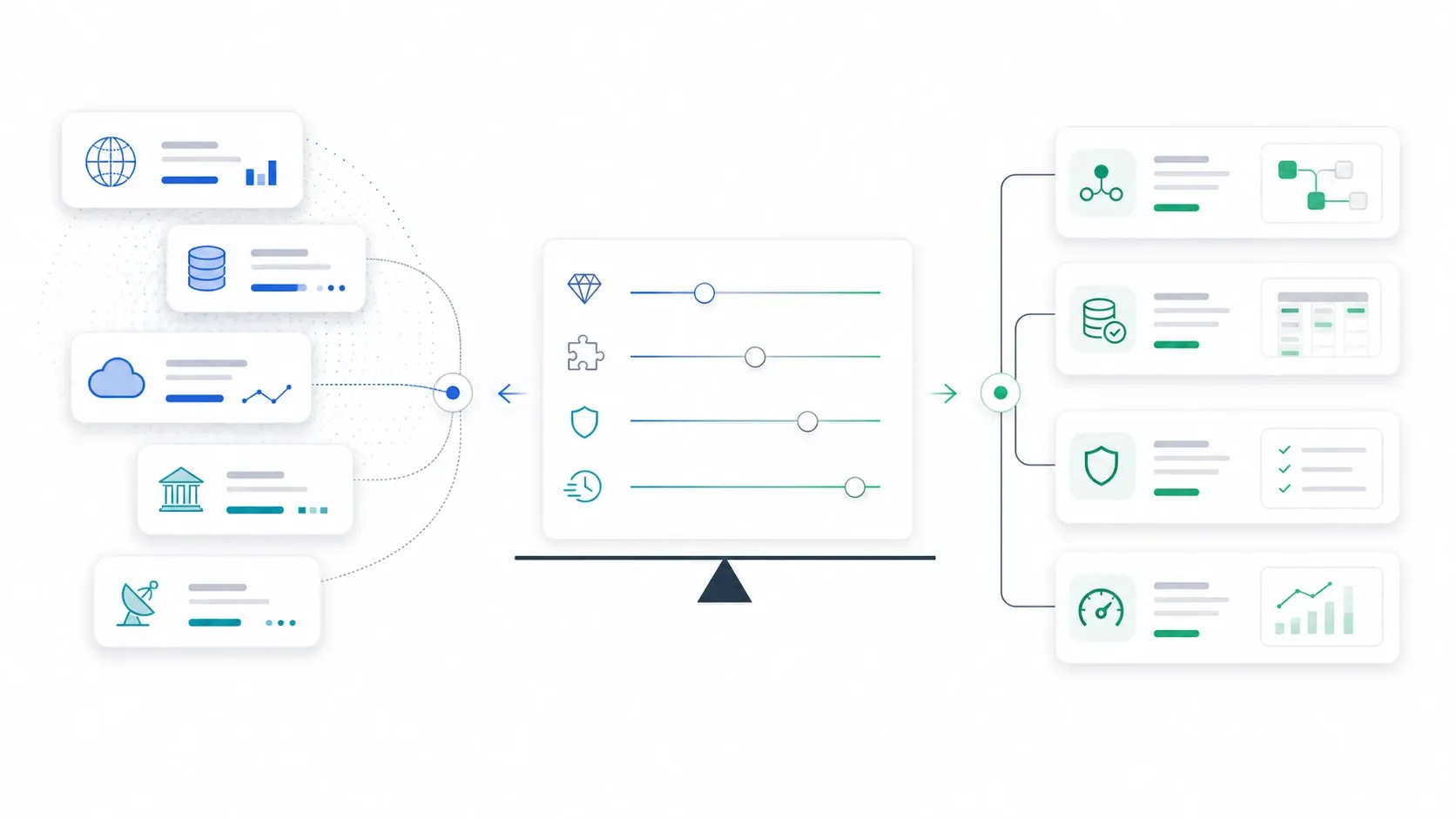
If you are building a modern data stack in 2026, you are usually solving two different problems at once. First, you need differentiated external data: contact data, transaction data, social signals, geospatial coverage, risk data, or web data that does not exist in your internal systems. Second, you need a clean way to move, govern, and operationalize that data across CRMs, warehouses, apps, APIs, and now AI agents.
That split matters more than ever. Grand View Research estimates the global alternative data market reached $11.65 billion in 2024 and projects extremely fast growth through 2030. At the same time, enterprise data teams are still under heavy cost pressure: TRG Screen says financial market-data and news spend hit $42 billion in 2023, a record year. In plain English: more data is available, more teams want an edge, and the cost of choosing the wrong provider stack is getting harder to hide.
This guide covers both halves of the decision. It includes alternative data vendors, B2B intelligence providers, transaction and risk-data specialists, and a separate group of integration platforms that matter because AI agents now need secure access to tools and workflows. I also paid special attention to which vendors publicly document Model Context Protocol (MCP) support, because that is increasingly the difference between "AI assistant" marketing and actually usable agent connectivity.
Quick Picks by Use Case
- Need the fastest way to collect structured public-web data without writing code? Start with Thunderbit.
- Need compliant B2B contact data for outbound teams? Shortlist Cognism and ZoomInfo.
- Need alternative datasets for investors or research teams? Review Eagle Alpha, Thinknum, Preqin, and Earnest Analytics.
- Need social, event, or reputation signals in real time? Look closely at Brandwatch and Dataminr.
- Need agent-ready integration with explicit MCP positioning? Start with FuseBase and SnapLogic.
- Need enterprise data integration and governance more than greenfield AI experimentation? Compare Jitterbit, K2view, and Informatica.
Check Whether AI Web Scraping Fits Your Data Stack Fill the coverage gaps your data vendor misses — scrape any public page in 1 click. Get Started Free
Why This Category Is Harder to Buy Than It Looks
Most "best data provider" roundups blur together products that solve completely different jobs. That is how teams end up overbuying an expensive enterprise stack for a lightweight sourcing problem, or trying to force a contact database to behave like an integration platform.
Here is the practical distinction:
- Alternative data providers give you differentiated external datasets: contact intelligence, card transactions, social sentiment, geospatial data, web traffic, market events, consumer spending, and other non-core internal signals.
- Integration platforms move and operationalize data across your systems: CRM, ERP, data warehouse, SaaS apps, APIs, and increasingly AI-agent workflows.
- Hybrid tools sit between the two. Thunderbit, for example, is not a classic database vendor or iPaaS platform. It is a browser-first AI workflow for collecting structured public-web data from sources that do not expose a useful API in the first place.
This matters even more now because AI-agent readiness is no longer theoretical. During this refresh, only a small subset of vendors made public MCP support a visible product message on their official pages. That does not automatically disqualify the rest, but it does tell you which platforms are already building for agent-native connectivity and which ones are still positioning primarily around APIs, connectors, and traditional automation.
If you want a fast overview of how a modern data marketplace helps teams compare external dataset vendors, this Datarade video is a useful orientation point:
How I Evaluated These Providers
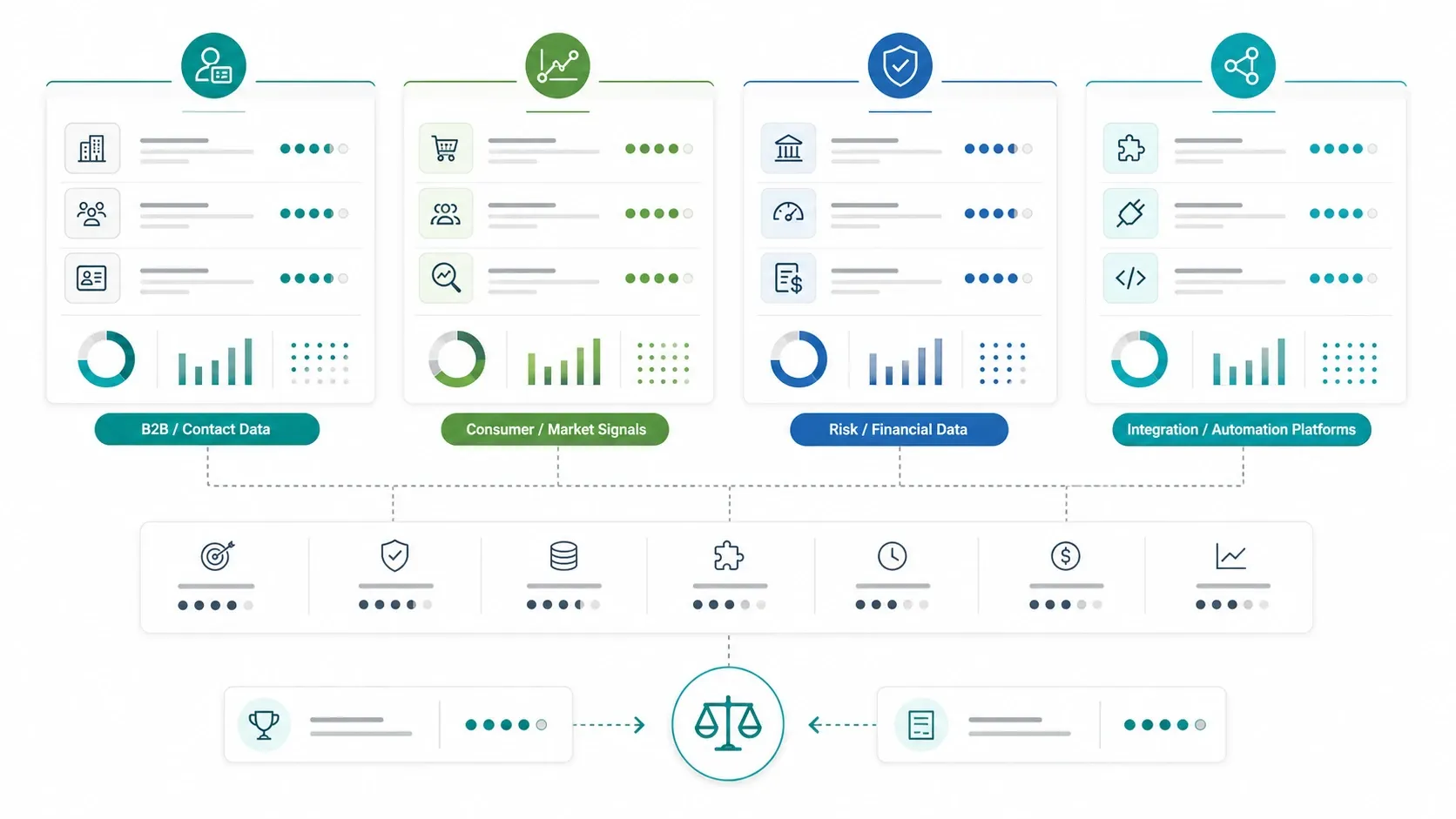
I used six filters that map to the real buying tradeoffs:
| Dimension | What I Checked |
|---|---|
| Category fit | Is it mainly a data source, an integration layer, or a hybrid workflow tool? |
| Differentiated value | Does it add data or capability you are unlikely to get from a commodity alternative? |
| AI signal | Does the vendor publicly position AI assistants, agents, copilots, or workflow automation? |
| MCP signal | Did I find clear public MCP positioning on the official product pages reviewed in August 2026? |
| Enterprise readiness | Governance, APIs, compliance posture, deployment flexibility, and operational depth |
| Pricing clarity | Public pricing, freemium entry, usage-based model, or enterprise quote only |
One note on the MCP column in the comparison table below: Public MCP docs means I found explicit official product messaging or docs during this refresh. Not publicly emphasized does not prove the vendor cannot support an agent workflow. It means public MCP positioning was not a clear part of the product story on the pages I reviewed.
Comparison Table: 20 Best Alternative Data Providers and Integration Platforms in 2026
| Provider | Primary type | AI / automation signal | MCP signal | Best for | Pricing model |
|---|---|---|---|---|---|
| Thunderbit | AI web data workflow | AI field suggestion, subpage enrichment, exports | Not publicly emphasized | Business teams collecting structured public-web data fast | Freemium plus credits |
| Cognism | B2B contact data | AI-assisted prospecting and enrichment | Not publicly emphasized | Compliance-sensitive outbound and EMEA coverage | Quote-based subscription |
| ZoomInfo | B2B intelligence | Copilot, intent, workflow automation | Not publicly emphasized | Enterprise sales and marketing intelligence | Quote-based subscription |
| Eagle Alpha | Alt-data marketplace and advisory | Research and curation more than agent tooling | Not publicly emphasized | Investors sourcing multiple alternative datasets | Subscription / enterprise |
| RiskSeal | Credit and identity risk data | Automated identity and behavioral scoring | Not publicly emphasized | Fintech risk, KYC, and credit-invisible users | Usage-based / enterprise |
| Brandwatch | Social and consumer intelligence | AI summaries, sentiment, image and trend analysis | Not publicly emphasized | Marketing, PR, and brand monitoring | Subscription |
| Thinknum | Public-web alternative data | Alerts and analyst workflows | Not publicly emphasized | Financial and strategy teams tracking company signals | Subscription |
| Privateer | Geospatial data intelligence | AI-driven geospatial analysis | Not publicly emphasized | Supply chain, public sector, and macro monitoring | Enterprise subscription |
| Dataminr | Real-time event intelligence | AI detection and live summarization | Not publicly emphasized | Security, crisis, and breaking-event monitoring | Enterprise subscription |
| Quiver Quantitative | Retail-friendly alternative data | AI scoring and ranked signal views | Not publicly emphasized | Self-directed investors and traders | Freemium / subscription |
| FuseBase | Agent-native collaboration and integration | AI agents, automation, workspace actions | Public MCP docs | Service teams and SMBs building agent workflows | Freemium / subscription |
| SnapLogic | Enterprise integration platform | AgentCreator, SnapGPT, AI-led automation | Public MCP docs | Enterprise integration and governed agent connectivity | Quote-based subscription |
| Jitterbit | Low-code iPaaS and API platform | AI assistants and low-code automation | Not publicly emphasized | Mid-market and enterprise integration teams | Quote-based subscription |
| K2view | Data fabric and operational integration | AI data fusion and entity-level access | Not publicly emphasized | Large enterprises with fragmented operational data | Enterprise license |
| Informatica | Enterprise data management and integration | CLAIRE AI, copilots, mapping automation | Not publicly emphasized | Governance-heavy enterprise data programs | Quote-based subscription |
| Preqin | Private-markets intelligence | Analytics and workflow tooling | Not publicly emphasized | PE, VC, private debt, and real-assets research | Subscription |
| Yodlee | Financial data aggregation | Automated enrichment and categorization | Not publicly emphasized | Fintech, lenders, and account-linked financial apps | Usage-based / enterprise |
| Earnest Analytics | Consumer transaction data | ML-assisted normalization and benchmarking | Not publicly emphasized | Retail, CPG, and investment research | Subscription |
| Second Measure | Consumer-spend analytics | Self-serve analytics more than agent tooling | Not publicly emphasized | Investors and strategy teams studying spend trends | Enterprise / Bloomberg access |
| Verisk | Risk, insurance, and compliance data | Analytics, fraud, and embedded decisioning | Not publicly emphasized | Insurance, banking, and regulated risk workflows | Usage-based / enterprise |
The 20 Best Alternative Data Providers and Integration Platforms in 2026
1. Thunderbit
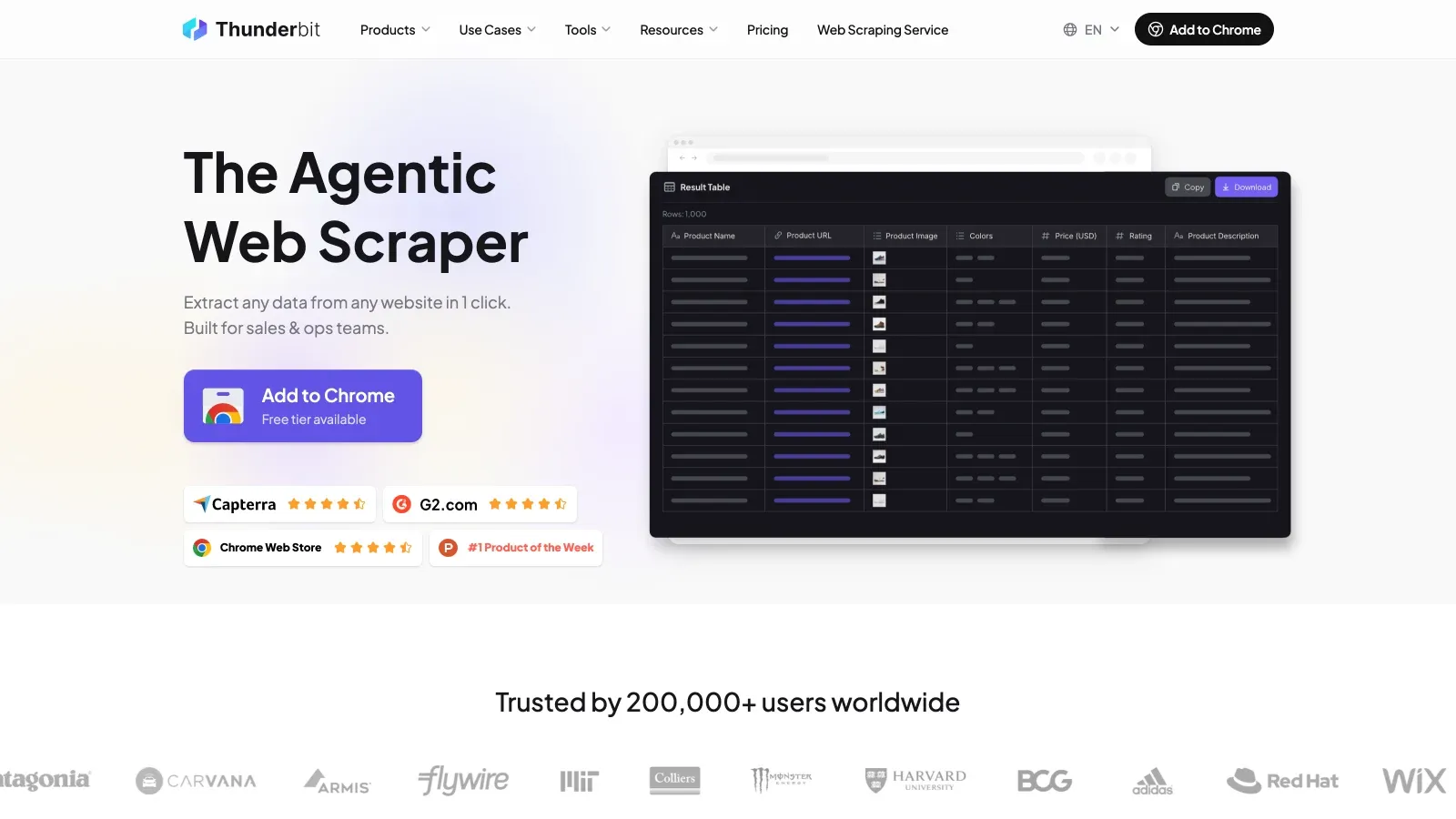
Thunderbit earns the top spot here because a surprising number of "data provider" problems are actually collection problems. Teams know the public sources they need, but those sources do not provide a usable API, clean export, or stable structure. Thunderbit solves that gap with a browser-first AI workflow that reads the page, suggests fields, handles pagination and subpages, and exports the result directly into Sheets, Excel, Airtable, Notion, CSV, or JSON.
- Best for: sales, ecommerce, marketplace research, and operations teams collecting structured public-web data
- Why it stands out: faster time-to-data than classic scraping stacks, especially for non-technical teams
- Pricing signal: freemium entry with credit-based expansion
Try Thunderbit on a Live Website No connectors to configure. The AI reads the page and returns a clean table in 1 click. Get Started Free
2. Cognism

Cognism remains one of the clearest choices when compliance, EMEA coverage, and outbound usability matter more than raw US database breadth. Its current positioning still emphasizes verified mobile data, buyer-intent signals, and GDPR-aware prospecting, which makes it a safer shortlist candidate for teams prospecting internationally.
- Best for: outbound sales and marketing teams targeting Europe or regulated markets
- Why it stands out: compliance posture and international fit
- Pricing signal: quote-based subscription
3. ZoomInfo
ZoomInfo is still the default reference point for broad B2B intelligence. The product story has continued to move beyond contact data into intent, workflow automation, and AI-assisted sales execution, which is useful for large GTM teams that want one platform to cover multiple stages of prospecting and account research.
- Best for: enterprise sales, account-based marketing, and RevOps teams
- Why it stands out: breadth, workflow depth, and real-time GTM signals
- Pricing signal: quote-based subscription
4. Eagle Alpha
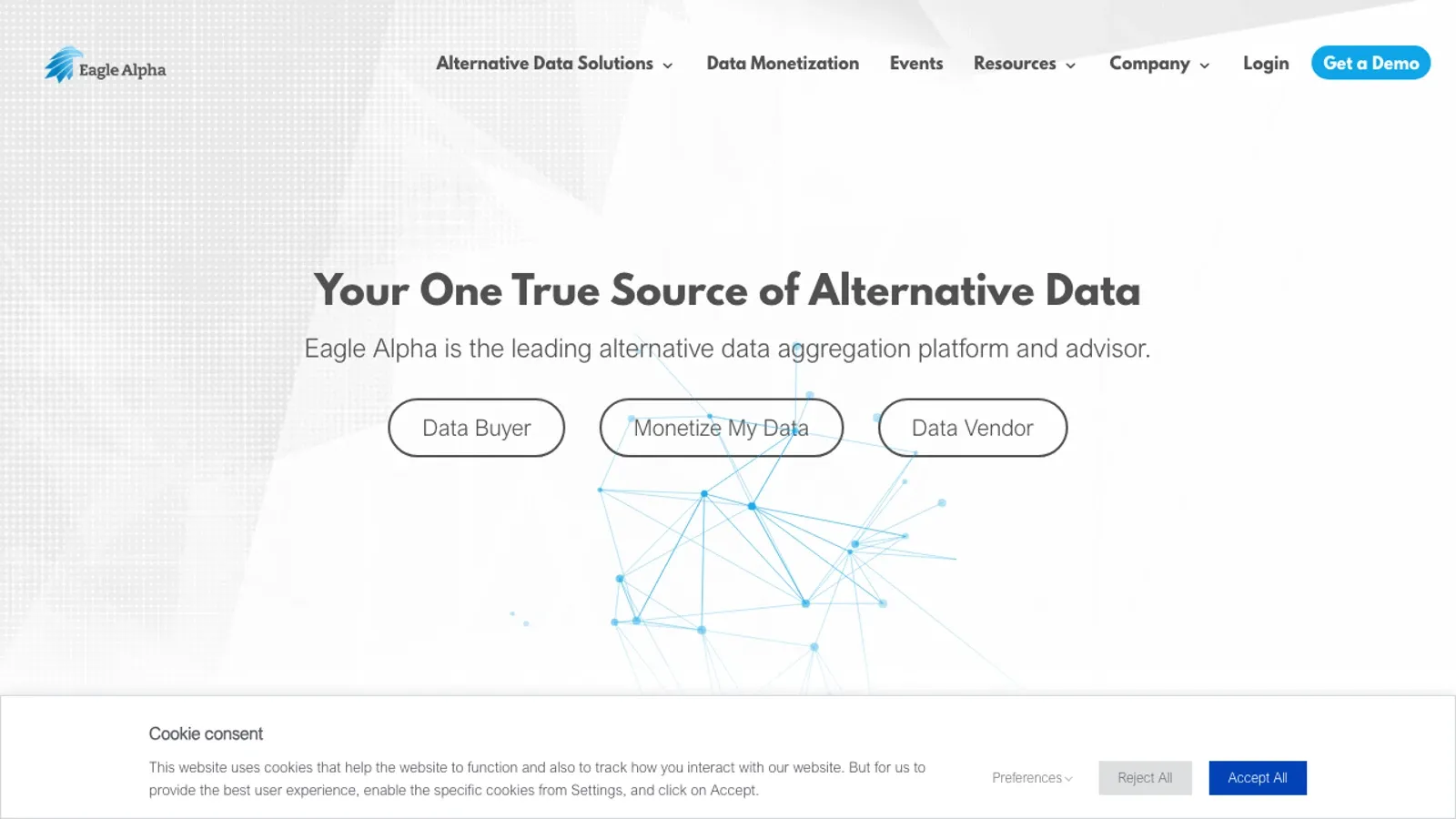
Eagle Alpha is a better fit for institutional buyers than for generalist business teams. It acts as a sourcing and validation layer for alternative datasets, combining vendor discovery, research, and compliance support so buy-side teams can compare, trial, and operationalize niche data more efficiently.
- Best for: hedge funds, asset managers, and corporate strategy teams buying alternative datasets
- Why it stands out: curation, vendor aggregation, and research support
- Pricing signal: enterprise subscription and advisory engagement
5. RiskSeal
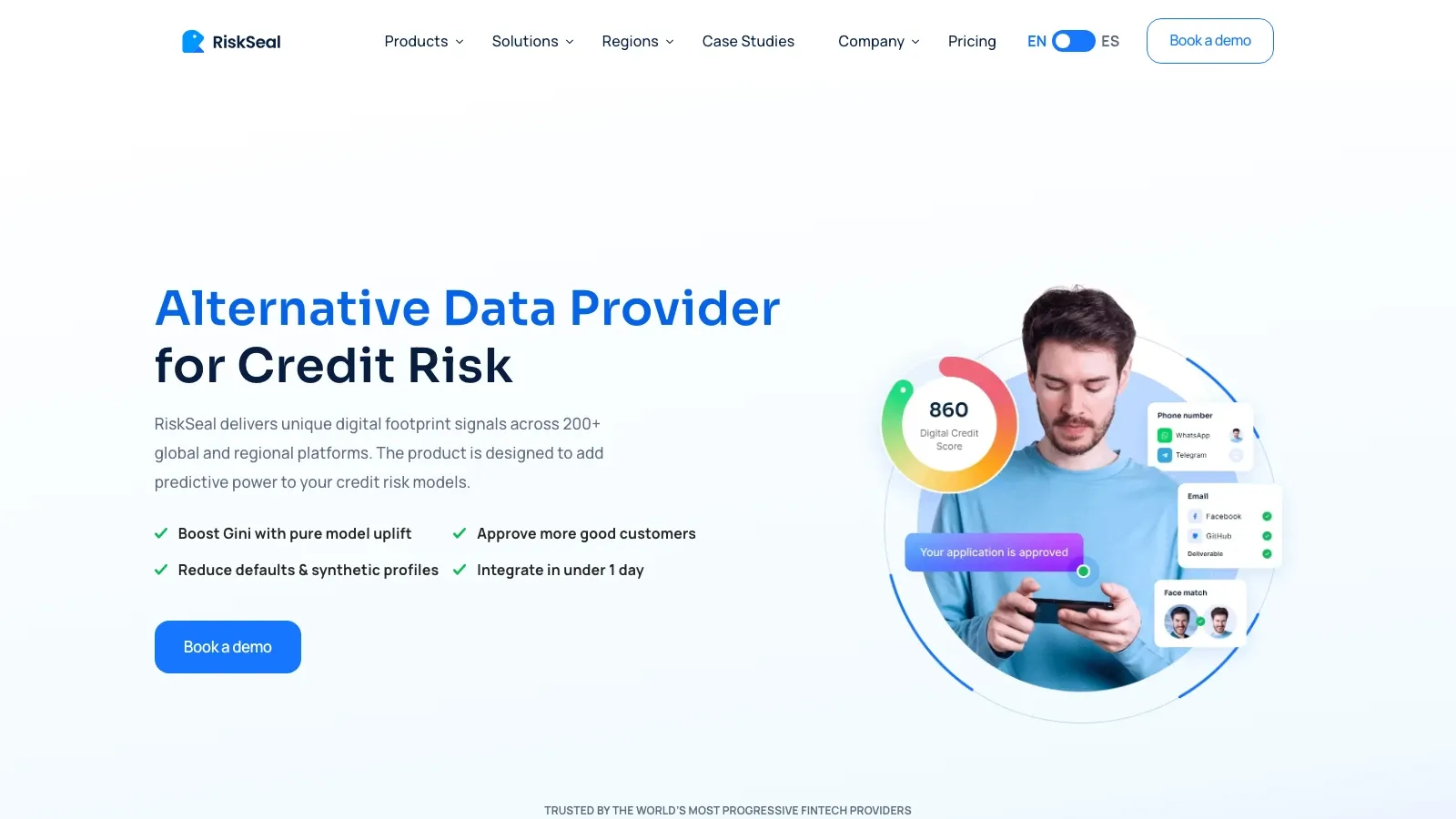
RiskSeal focuses on a very specific but important use case: using alternative digital-footprint data to improve credit and fraud decisions. That makes it relevant for lenders and fintechs serving customers who are thin-file, cross-border, or otherwise hard to underwrite using traditional bureau data alone.
- Best for: BNPL providers, fintech lenders, and digital KYC workflows
- Why it stands out: digital-risk scoring beyond standard bureau models
- Pricing signal: usage-based or enterprise sales model
6. Brandwatch
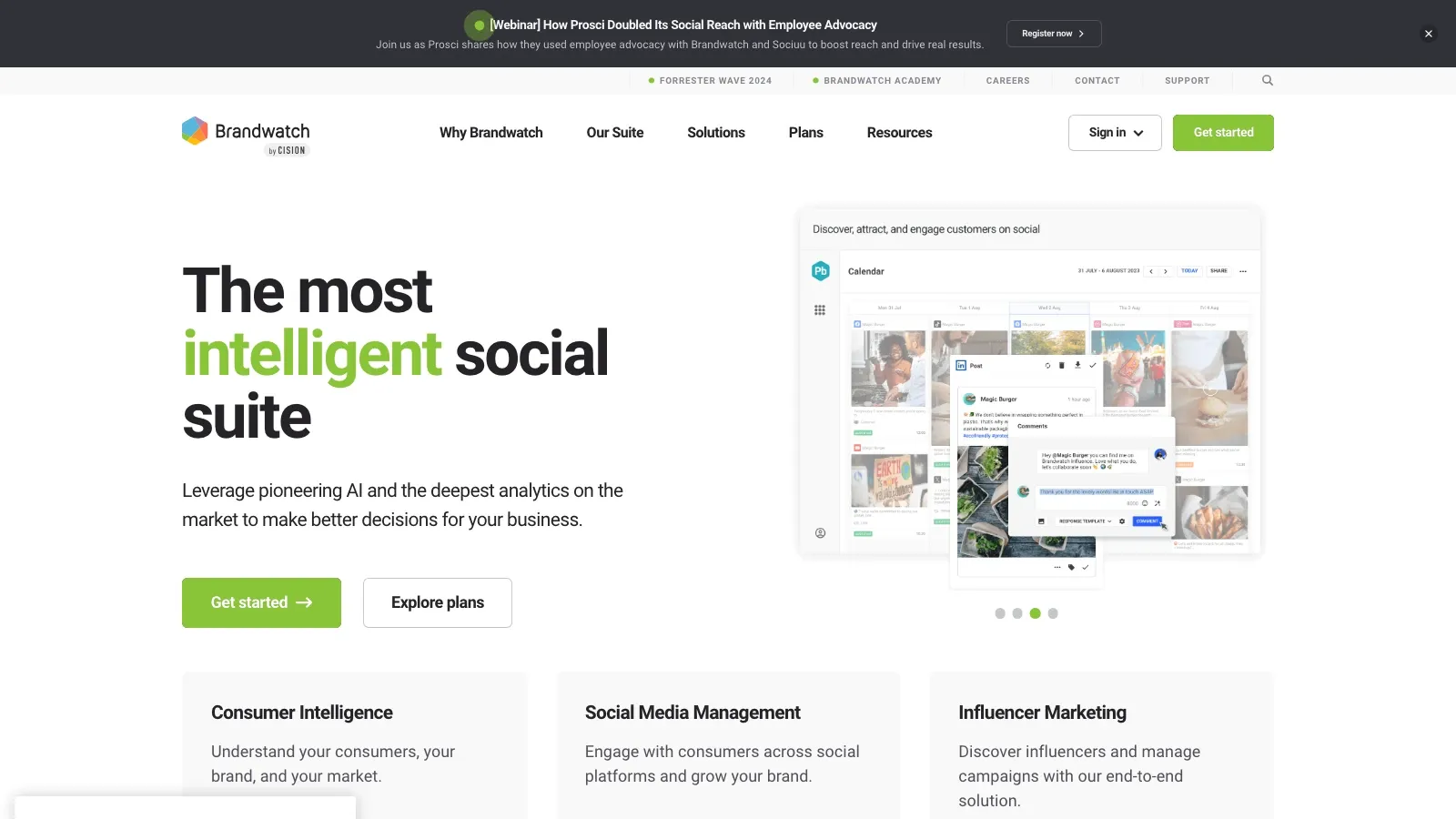
Brandwatch continues to be one of the strongest platforms for social listening, consumer intelligence, and trend detection. If your team needs to track brand sentiment, campaign response, or emerging narratives across social and online channels, Brandwatch belongs on the shortlist.
- Best for: marketing, PR, communications, and consumer-insight teams
- Why it stands out: broad social coverage plus AI-assisted analysis
- Pricing signal: subscription
7. Thinknum
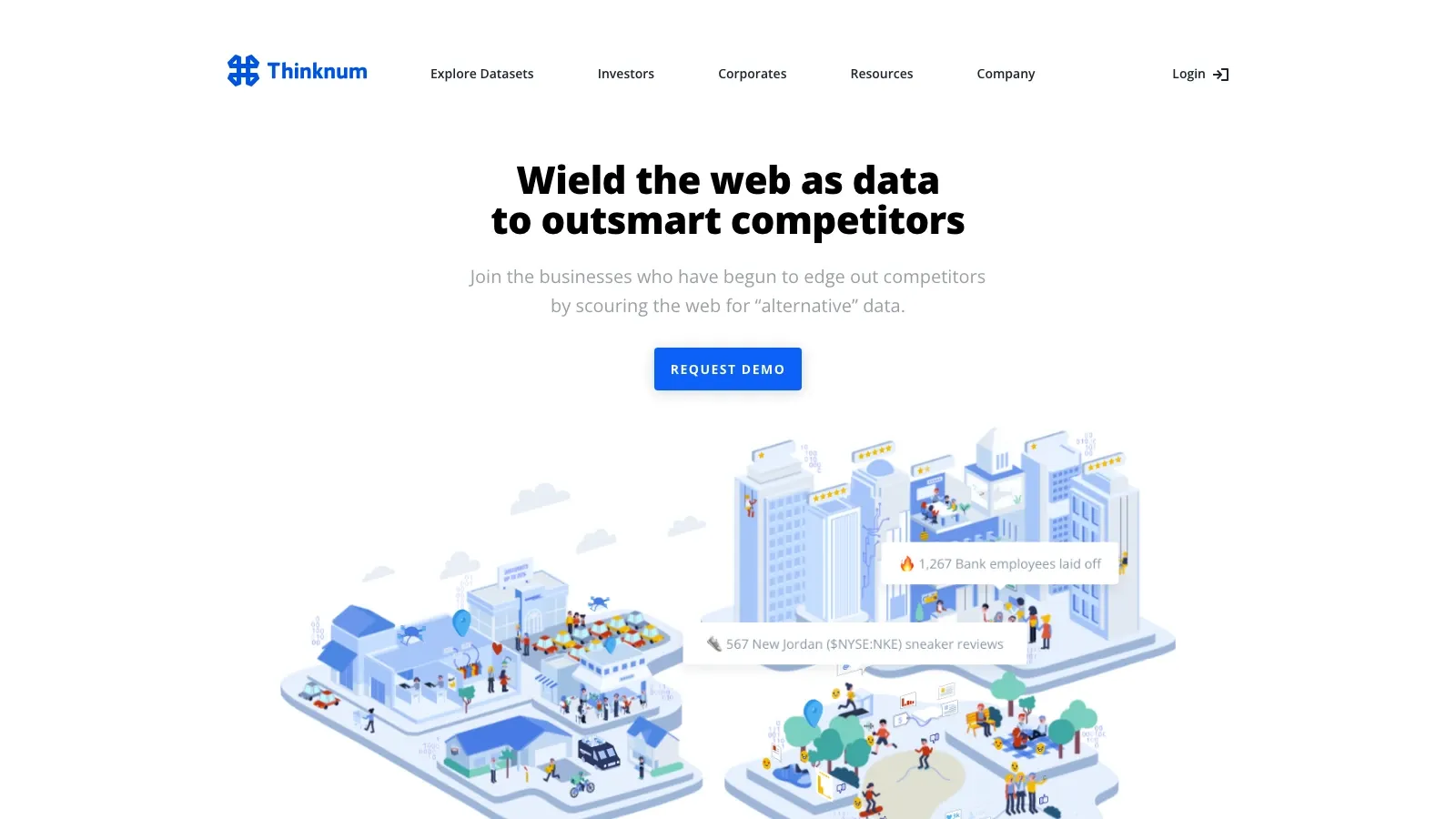
Thinknum is still one of the cleanest ways for analysts to work with structured public-web signals such as job listings, product prices, app metrics, or catalog changes. Its value is less about flashy AI positioning and more about turning web-observable company behavior into a queryable research workflow.
- Best for: equity research, competitive intelligence, and strategy teams
- Why it stands out: web-derived signal coverage with analyst-friendly access
- Pricing signal: subscription
8. Privateer (formerly Orbital Insight)

Privateer brings geospatial intelligence into operational decision-making. For teams monitoring logistics, infrastructure, agriculture, or macro activity, its satellite and location-based coverage creates a different kind of alternative-data edge than the usual contact or transaction providers.
- Best for: supply chain, commodities, infrastructure, and public-sector analysis
- Why it stands out: geospatial and satellite-derived operational insight
- Pricing signal: enterprise subscription
9. Dataminr

Dataminr remains one of the fastest event-detection platforms in the market. Its value comes from fusing public signals into early alerts for crises, disruptions, and newsworthy events, which makes it materially different from historical or benchmark-style data vendors.
- Best for: security, crisis-response, newsroom, and operational-risk teams
- Why it stands out: speed and real-time alerting from broad public-source coverage
- Pricing signal: enterprise subscription
10. Quiver Quantitative
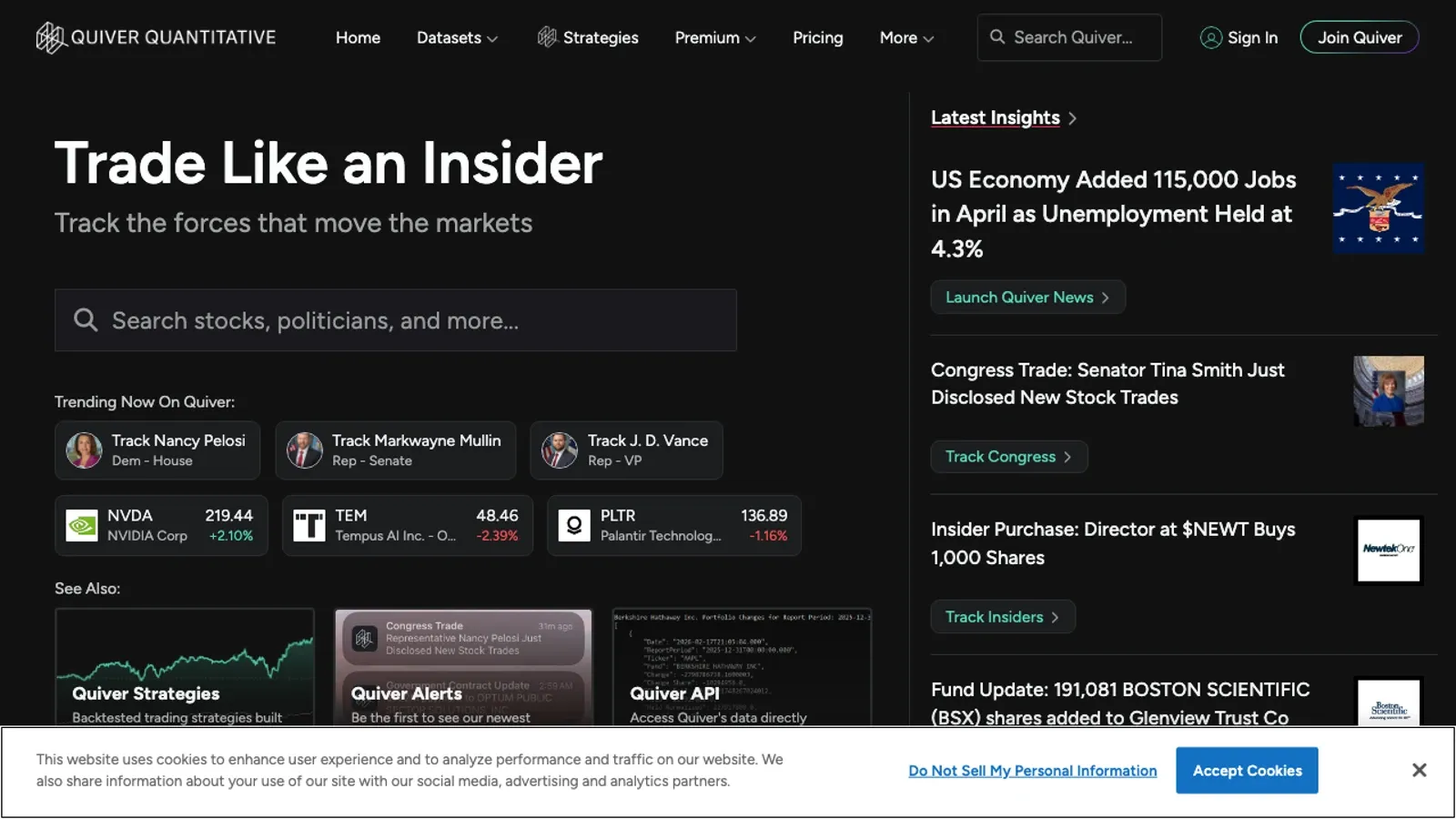
Quiver Quantitative makes unconventional datasets easier for retail and semi-professional investors to use. That matters because many alternative-data vendors are priced and packaged almost entirely for institutions, while Quiver gives smaller users a more accessible way to explore non-traditional signals.
- Best for: retail investors and smaller research teams
- Why it stands out: accessibility and unique public-interest datasets
- Pricing signal: freemium and subscription tiers
11. FuseBase
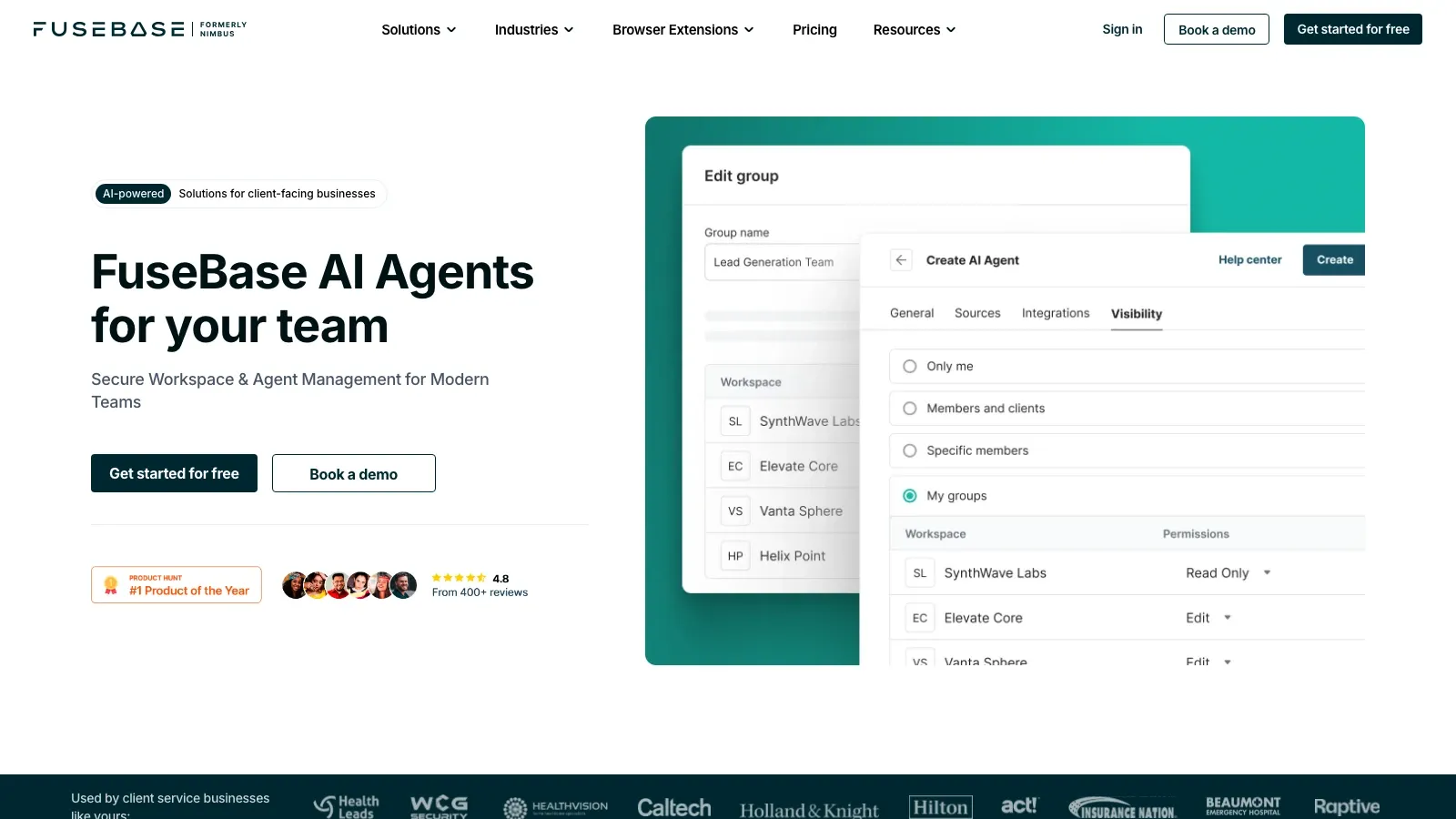
FuseBase is one of the few vendors in this roundup that made MCP a clear part of its public product story during this refresh. Its official docs say MCP lets FuseBase AI agents connect to external services, and that recommended MCP integrations already include tools like Airtable, Google Sheets, and Notion. That gives it real relevance for smaller teams that want agent workflows without assembling a full enterprise integration stack first.
- Best for: client-service teams, agencies, and SMBs building agent-driven workflows
- Why it stands out: public MCP documentation plus practical agent workflows
- Pricing signal: freemium and subscription plans
12. SnapLogic
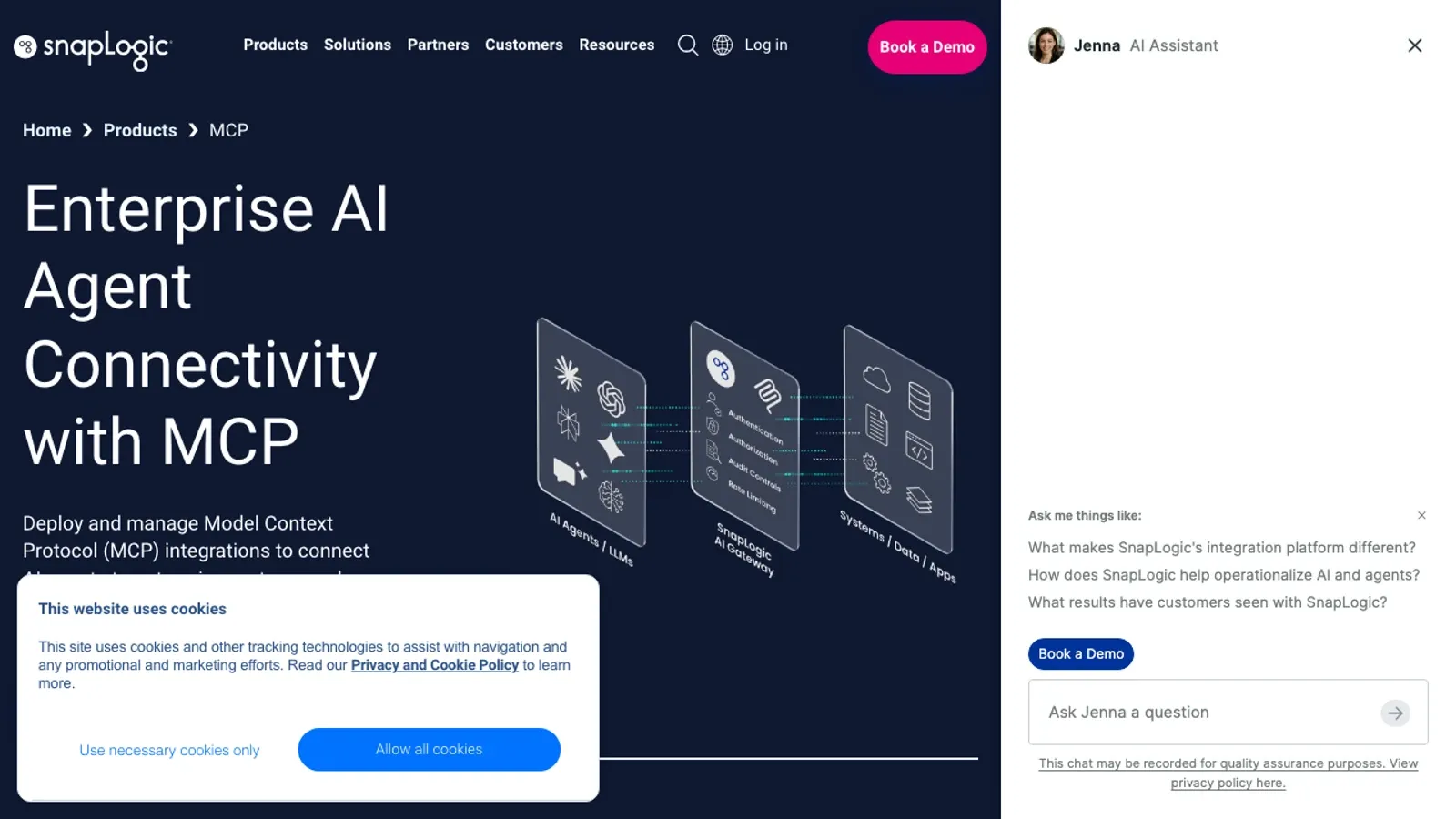
SnapLogic is the strongest large-enterprise integration pick on this list if MCP support is part of your evaluation. On its official MCP page, SnapLogic says its MCP servers can use 1000+ existing Snaps and pipelines to expose governed enterprise actions to AI agents, and it also positions an MCP Client Snap Pack for consuming external MCP servers. That is a materially stronger public agent-connectivity signal than a generic "AI assistant" label.
- Best for: enterprises that want governed AI-agent access to apps, APIs, and data workflows
- Why it stands out: explicit MCP server and client positioning
- Pricing signal: quote-based subscription
If agent-native connectivity is on your evaluation checklist, this official SnapLogic MCP demo is the most relevant mid-article walkthrough:
13. Jitterbit
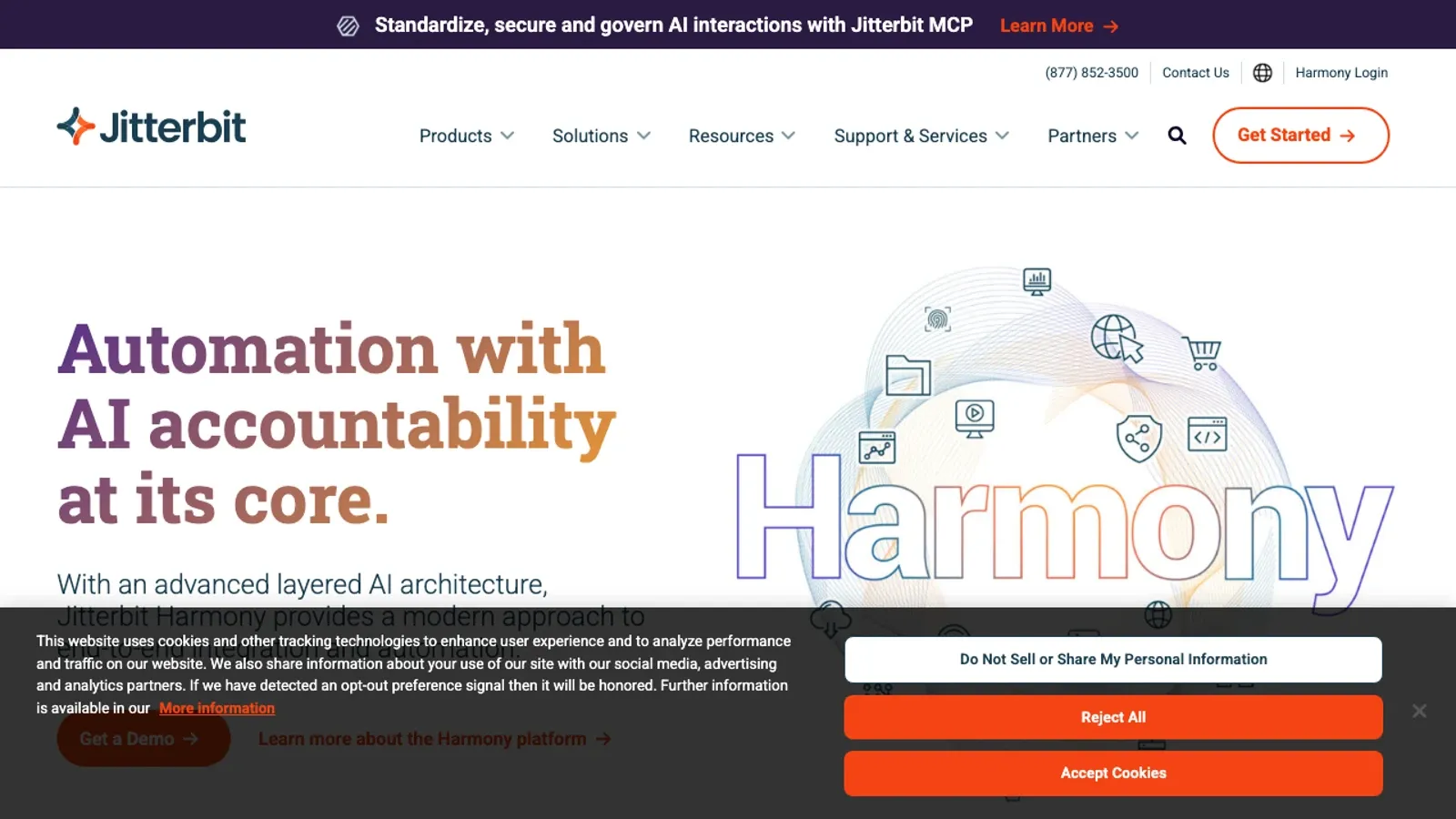
Jitterbit still makes the most sense for teams that need low-code integration, API management, and automation in one place without jumping all the way to the heaviest enterprise platforms. Its AI messaging is focused more on assistants and low-code productivity than on MCP-native agent connectivity.
- Best for: mid-market IT teams and business systems integration
- Why it stands out: low-code usability plus API management
- Pricing signal: quote-based subscription
14. K2view
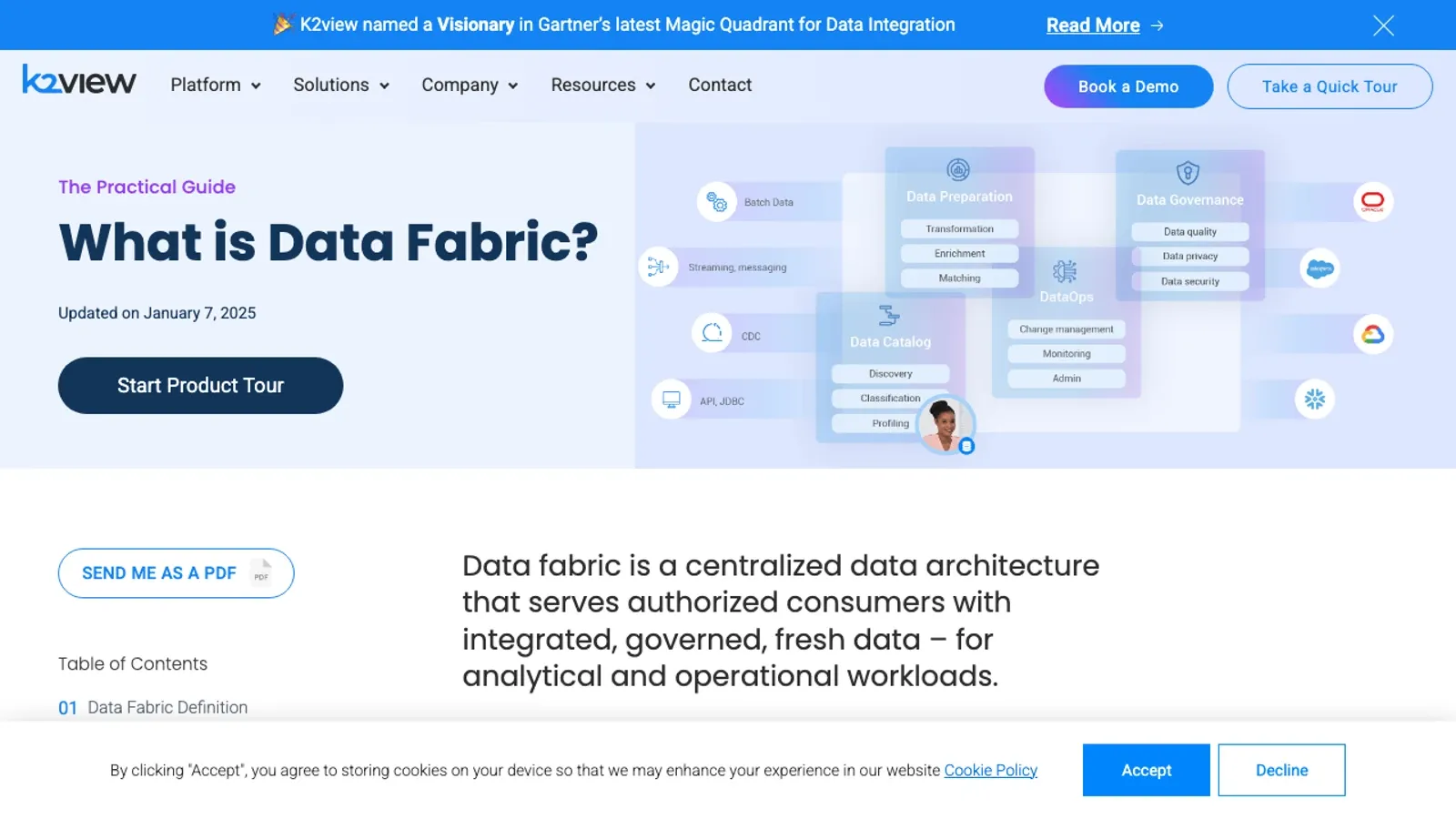
K2view is a fit for enterprises with complex operational data fragmentation. Its data-fabric approach is not lightweight, but it is differentiated for teams that need entity-level access, strong governance, and a practical way to feed downstream analytics or AI with cleaner, unified operational context.
- Best for: large enterprises with fragmented customer, product, or operational records
- Why it stands out: micro-database and data-product approach
- Pricing signal: enterprise license
15. Informatica
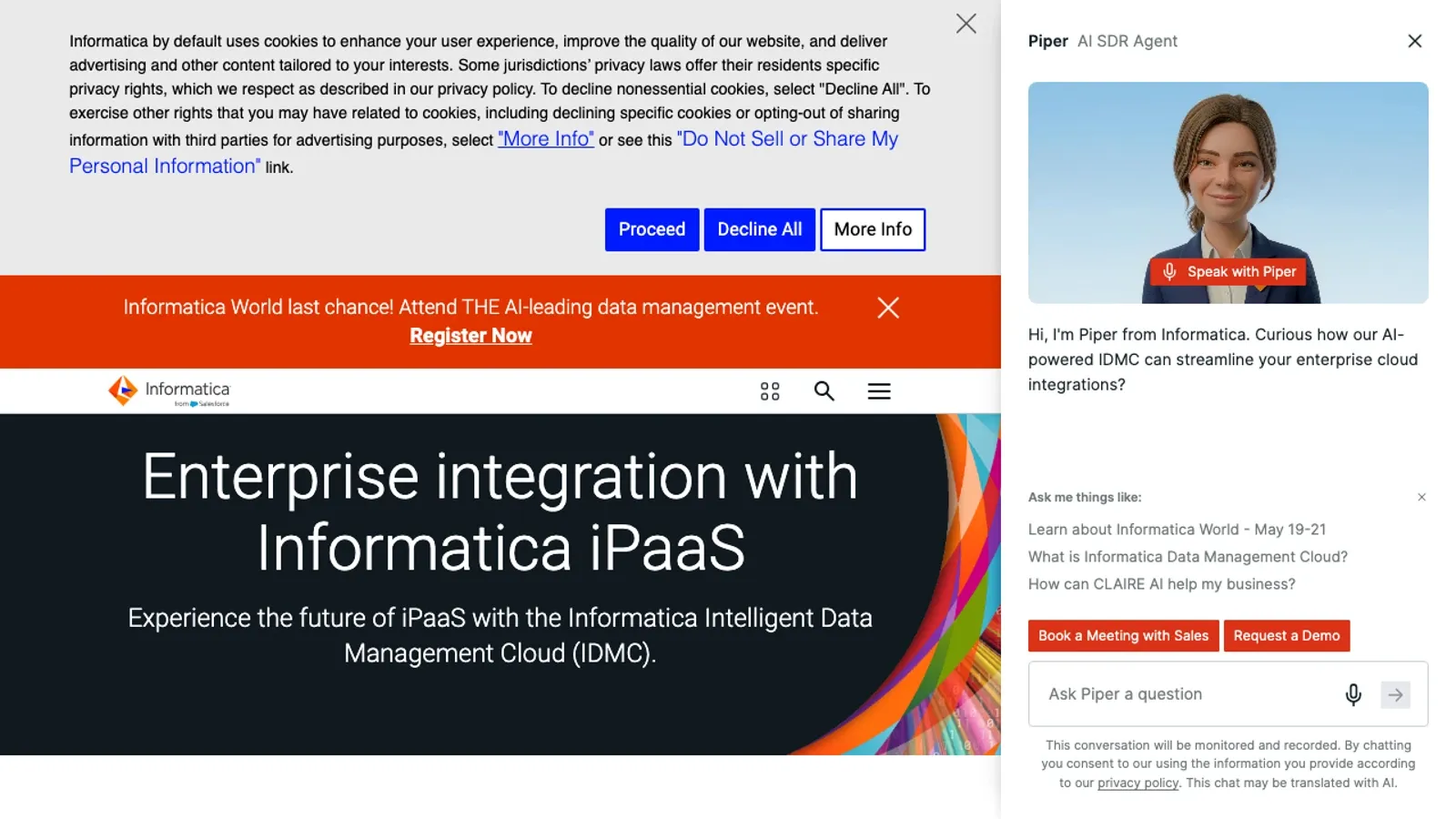
Informatica stays on the list because governance-heavy enterprises still need a real data-management backbone, not just another connector catalog. Its CLAIRE AI positioning helps with automation and mapping, but the bigger reason to buy Informatica is still integration depth, governance, cataloging, and enterprise data control.
- Best for: governance-heavy enterprise data teams
- Why it stands out: mature integration, quality, catalog, and stewardship layers
- Pricing signal: quote-based subscription
16. Preqin
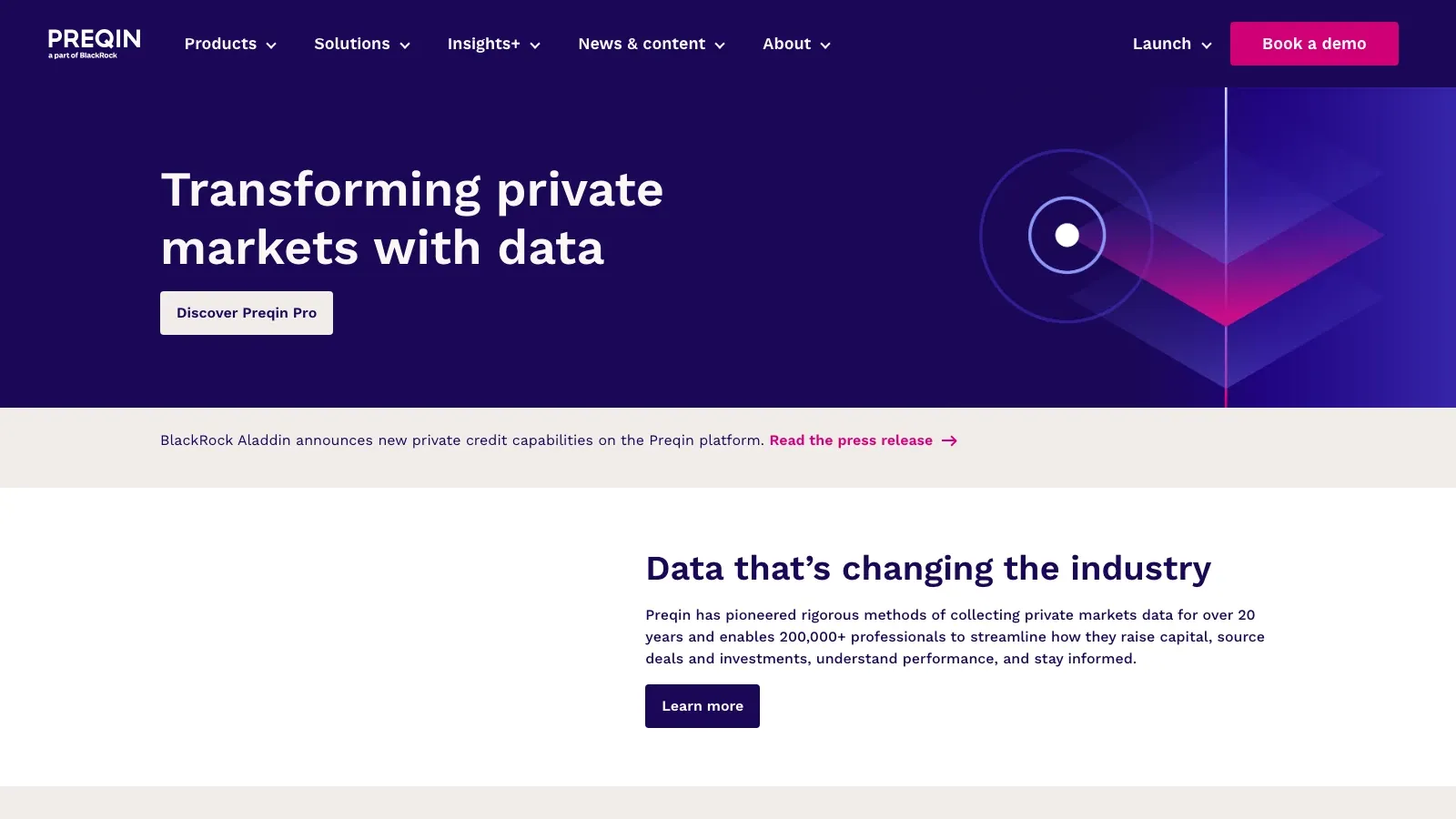
Preqin remains the benchmark data platform for private markets. If your job is private equity, venture capital, private debt, or real assets research, Preqin solves a far more specialized problem than most generic "alternative data" platforms ever will.
- Best for: private-markets investors, consultants, and fund managers
- Why it stands out: private-markets depth and workflow fit
- Pricing signal: subscription
17. Yodlee
Yodlee is still a foundational financial-data aggregation layer for fintech apps and lenders that rely on linked account data. It is not flashy, but that is almost the point: reliability, institution coverage, normalization, and compliance matter more here than trendiness.
- Best for: fintech apps, account-linking, and cash-flow-based underwriting
- Why it stands out: long-standing financial aggregation infrastructure
- Pricing signal: usage-based and enterprise deals
18. Earnest Analytics
Earnest Analytics is still one of the more recognizable names in consumer transaction data for investment and corporate benchmarking use cases. It is a better fit for teams that want interpreted or research-ready demand signals, not just raw data plumbing.
- Best for: retail, CPG, and investment research teams
- Why it stands out: consumer-spend data packaged for benchmarking decisions
- Pricing signal: subscription
19. Second Measure
Second Measure still matters because self-serve consumer-spend analytics is a very different buying motion from enterprise-scale data engineering. Teams that need fast pattern recognition and cohort exploration can get value here without building a custom transaction-data pipeline from scratch.
- Best for: strategy teams and investors watching consumer-spend shifts
- Why it stands out: visual analytics and cohort exploration
- Pricing signal: enterprise or Bloomberg-linked access
20. Verisk
Verisk closes the list because risk and compliance data is still one of the clearest commercial uses of external data. Verisk's relevance comes from deep vertical coverage, especially in insurance and regulated risk workflows, where data quality, benchmarking, and operational embedment matter more than glossy AI packaging.
- Best for: insurance, banking, and regulated risk workflows
- Why it stands out: deep sector specialization and operational embedment
- Pricing signal: usage-based or enterprise contracts
How to Choose the Right Mix for Your Team
The most common buying mistake here is choosing a single platform category before you understand the actual job to be done. In practice, most teams should buy in this order:
- Define the gap clearly. Do you need new external signal, better internal connectivity, or both?
- Choose your primary motion. Database-style prospecting, event intelligence, consumer transaction insight, public-web collection, or enterprise integration all imply different vendors.
- Treat MCP as a meaningful filter when AI execution matters. During this refresh, FuseBase and SnapLogic stood out because they publicly documented MCP workflows rather than just mentioning AI in the abstract.
- Check whether your bottleneck is actually data collection. If the data already exists publicly but is trapped in websites, portals, or messy pages, a tool like Thunderbit can be more valuable than a traditional data subscription.
- Buy governance when the risk justifies it. Enterprises with regulated, distributed, or multi-team data operations should weight governance, lineage, and auditability much more heavily than convenience.
If your team is testing whether public-web collection should sit alongside traditional subscriptions, this current Thunderbit walkthrough is the most relevant execution demo:
My Shortlist by Team Type
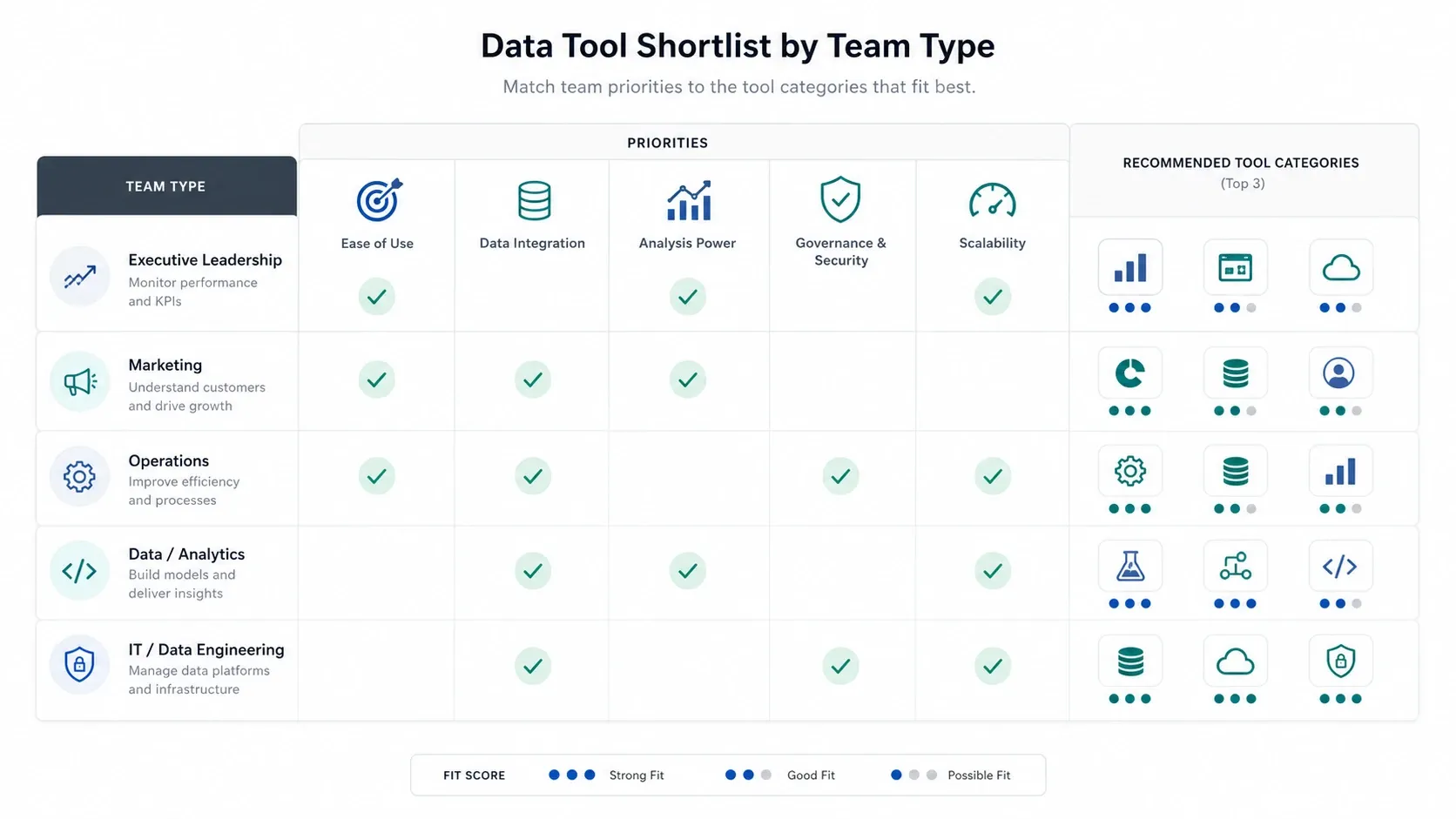
| Team type | Best first shortlist | Why |
|---|---|---|
| Lean revenue team | Thunderbit, Cognism, ZoomInfo | Fast lead and web-data coverage without building a full data stack |
| Investor or strategy team | Eagle Alpha, Thinknum, Preqin, Earnest Analytics | Better coverage of differentiated external signals |
| Brand and comms team | Brandwatch, Dataminr | Real-time social and event awareness |
| Fintech or risk team | RiskSeal, Yodlee, Verisk | Credit, identity, financial aggregation, and regulated risk signals |
| SMB services team building agents | FuseBase, Thunderbit | Practical automation plus lightweight agent workflows |
| Enterprise integration team | SnapLogic, Jitterbit, Informatica, K2view | Governance, orchestration, and broader operational depth |
Download Thunderbit Chrome Extension Free tier included. Scrape any website in 1 click and export anywhere you work. Get Started Free
Final Take
The cleanest way to read this market in 2026 is to stop pretending it is one market. It is at least three:
- differentiated external data providers
- governed integration platforms
- lightweight AI collection workflows for data that lives on the public web
That is why the best stack for most teams is not one winner. It is a combination that matches your actual bottleneck. Sales teams may pair Cognism or ZoomInfo with Thunderbit. Investors may use Preqin or Eagle Alpha alongside Thinknum or Earnest. Enterprise IT teams may standardize on SnapLogic or Informatica while business teams still rely on Thunderbit for last-mile collection from websites with no usable feed.
The important thing is to buy by workflow, not by vendor brand prestige. Teams that do that usually move faster, pay for fewer redundant tools, and avoid forcing an expensive integration platform to solve a data-sourcing problem it was never designed to solve.




