
I will never forget the first time I watched a brand issue turn into a full-blown online firestorm before lunch. One forum complaint about a product defect jumped to social, support got swamped, PR lost the timeline, and leadership suddenly cared a lot more about “monitoring” than they had the day before.
That is why this category matters more now than it did even a year ago. In 2026, brand monitoring is not a nice-to-have dashboard. It is part crisis radar, part customer-research loop, and part competitive intelligence system. According to We Are Social and Meltwater's Digital 2026 reporting, the world now generates more than 5.5 billion social identities alone, while Sprout Social's latest index work shows 93% of consumers expect brands to keep up with online culture. If your team is not listening across social, news, forums, reviews, and the wider web, you are usually finding out too late.
This annual guide is built for shortlist-making, not filler. I re-checked the official product pages, pricing signals, and workflow fit for each tool in August 2026, then narrowed the list to ten platforms that still matter for real monitoring work.
Quick Picks by Monitoring Job
- Need structured monitoring for forums, directories, review sites, and other web-first sources? Start with Thunderbit.
- Need an all-in-one social suite with publishing, engagement, analytics, and listening? Shortlist Sprout Social.
- Need fast real-time alerts and sentiment tracking for a smaller team? Start with Brand24.
- Need multilingual monitoring plus visual and audio recognition? Review Talkwalker.
- Need PR, news, and social monitoring in one enterprise stack? Compare Meltwater.
- Already run social operations in Hootsuite? Add Hootsuite Listening to your shortlist.
Why Brand Monitoring Still Matters in 2026
Brand monitoring tools matter because customer feedback rarely arrives in one clean channel anymore. Complaints show up in Reddit threads, YouTube comments, review pages, local forums, trade publications, LinkedIn posts, and screenshots shared out of context. The question is no longer whether your brand is being discussed. It is whether your team sees the signal early enough to do anything useful with it.
The practical jobs are familiar:
- Crisis detection: catch negative spikes before they become executive emergencies.
- Reputation protection: monitor brand mentions that never tag your handle directly.
- Customer insight: use sentiment, topics, and recurring complaints to inform product, support, and messaging.
- Competitive intelligence: track how competitors are being covered, reviewed, and reacted to.
- Campaign measurement: connect conversation volume and sentiment shifts back to launches, promotions, and partnerships.
If you want a fast concept reset before you compare products, this official Sprout Social explainer is still one of the better short introductions to what social listening is actually for:
What Separates a Great Brand Monitoring Tool
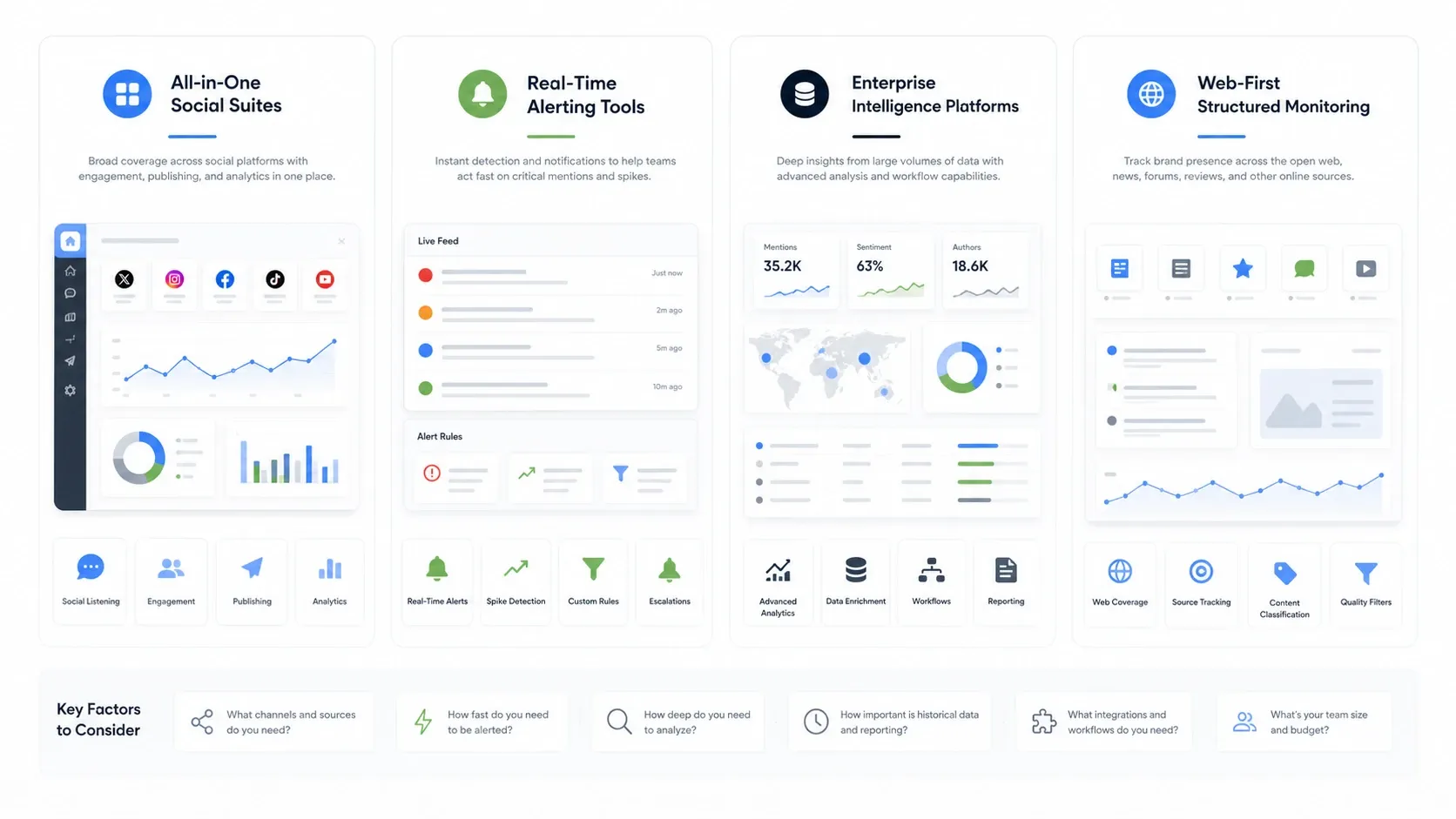
Not every tool in this category does the same job well. The strongest products usually differ along seven dimensions:
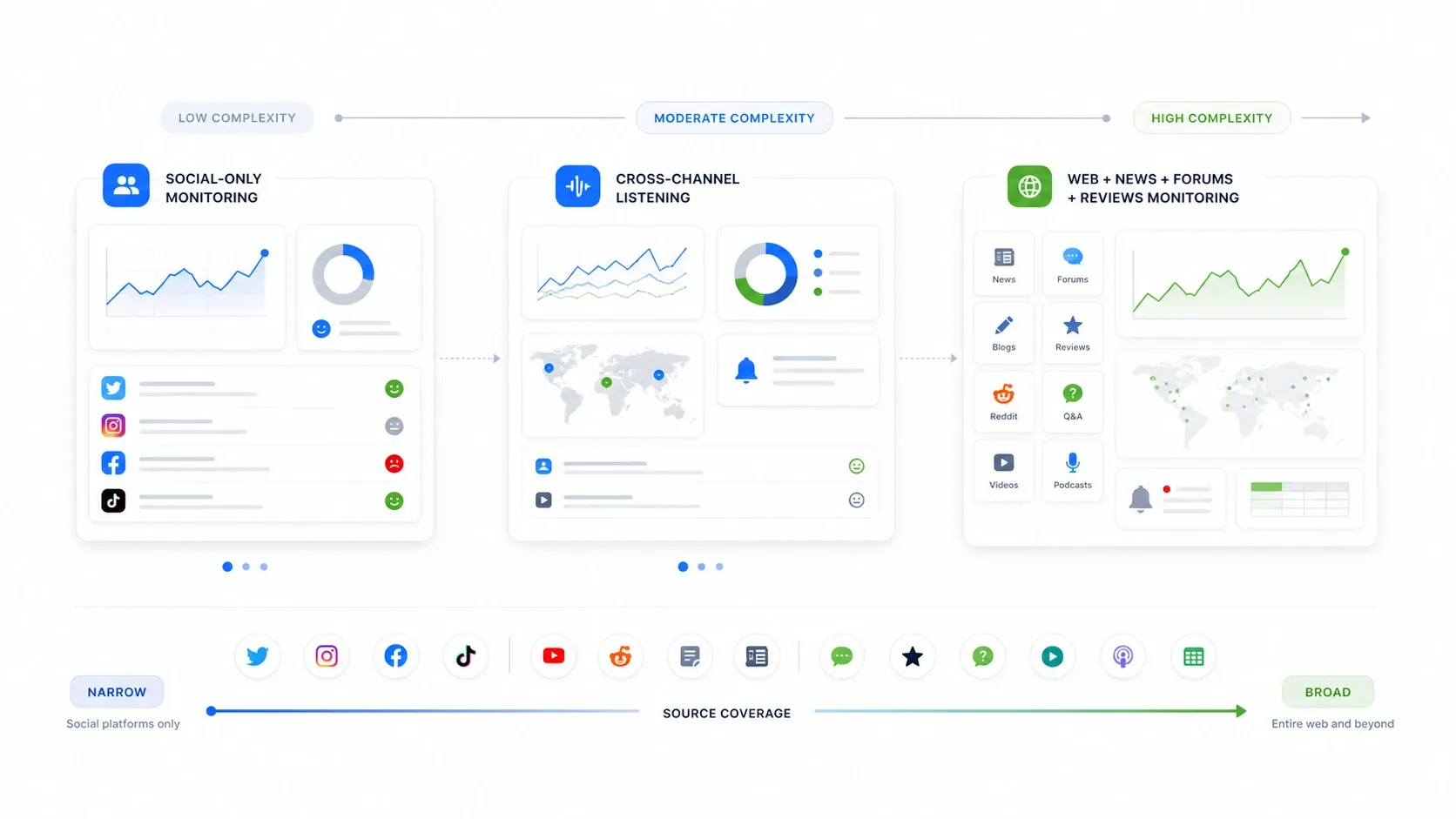
- Coverage: Does it monitor only social platforms, or also news, blogs, forums, review sites, podcasts, and the wider web?
- Alerting speed: Can it surface a sudden spike or negative mention fast enough to matter operationally?
- Sentiment quality: Is the sentiment layer useful for triage, or just decorative?
- Visual listening: Can it recognize logos, products, and image-based mentions?
- Reporting depth: Does it provide share of voice, trends, benchmarking, and export-ready dashboards?
- Workflow fit: Can the output move into Slack, CRM, Sheets, Airtable, Notion, BI, or helpdesk systems?
- Ease of use: Will a real cross-functional team use it, or will it become a specialist-only tool?
Check Whether Thunderbit Fits Your Web Monitoring Workflow Turn forums, review pages, and news mentions into a structured dataset in 1 click. Get Started Free
Quick Comparison Table: Best Brand Monitoring Tools in 2026
| Tool | Coverage | Sentiment Analysis | Visual Listening | Pricing signal | Best for |
|---|---|---|---|---|---|
| Thunderbit | Web-first: forums, news, blogs, directories, review pages | Export-first workflow | Limited | Free tier and paid plans | Structuring web mentions into usable datasets |
| Sprout Social | Major social networks plus broader listening sources | Yes | No | Core plans from $79/user/month; listening is an add-on | Teams that want one social suite |
| Brand24 | Social, news, blogs, forums, and reviews | Yes | No | Individual from $199/month billed annually | Lean teams that need fast alerts |
| Talkwalker | Social, web, news, podcasts, TV, and multilingual sources | Yes | Yes | Custom quote | Global brands and agencies |
| Meltwater | Social, news, blogs, forums, and media monitoring | Yes | Limited | Custom quote | PR-heavy and enterprise monitoring stacks |
| Mention | Social, web, and online media monitoring | Yes | No | Company plan from $599/month billed yearly | Teams that want simpler enterprise monitoring |
| Hootsuite Listening | Social listening inside the Hootsuite workflow | Yes | Yes on premium listening tiers | Hootsuite plans from $99/user/month; advanced listening depends on plan | Existing Hootsuite users |
| YouScan | Social listening with strong image-led analysis | Yes | Yes | Lite from $499/month billed annually | Consumer brands that care about visual mentions |
| Awario | Social, web, blogs, news, and forums | Yes | No | Starter from $29/month billed annually | Startups and budget-conscious teams |
| Brandwatch | Broad enterprise social and consumer intelligence coverage | Yes | Yes | Custom quote | Research-heavy enterprise teams |
The 10 Best Brand Monitoring Tools in 2026
1. Thunderbit
Thunderbit is the most useful option here when your monitoring problem starts outside traditional social listening streams. It is not trying to be a social inbox. It is better thought of as a web-first monitoring and data-structuring tool for sources that many listening platforms still treat as edge cases: niche forums, review portals, directories, product pages, local listings, and news pages that need to be turned into structured rows instead of raw mentions.
That matters because a lot of early-warning signal lives in the messy web. If your team needs to capture the mention, the source, the author, the product, the date, the complaint type, and the linked page all at once, Thunderbit is a better fit than a social-only feed.
Why it stays on the shortlist:
- AI-first extraction: define fields in plain English instead of maintaining brittle selectors.
- Strong fit for long-tail monitoring: practical for review sites, directories, niche communities, and product pages.
- Structured output: export straight to Excel, Google Sheets, Airtable, or Notion.
- Good complement to social suites: fill the web-monitoring gaps that classic listening tools often miss.
Pricing signal: Thunderbit offers a free tier plus paid Basic, Professional, and Business plans on its current pricing page.
2. Sprout Social
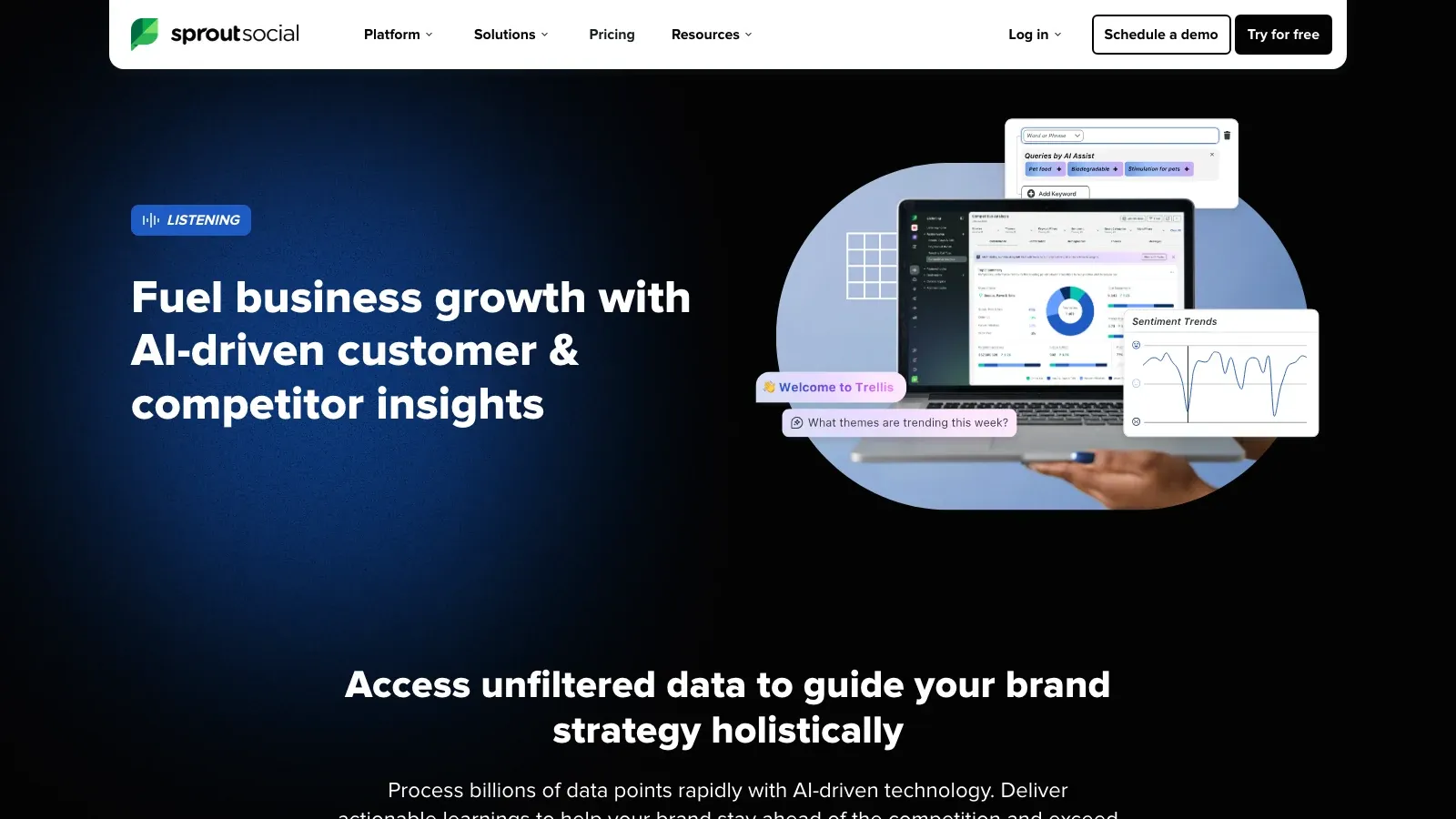
Sprout Social remains one of the best all-in-one options for teams that want publishing, engagement, analytics, and listening in one place. That is its main advantage. Instead of buying a standalone listening tool and then wiring it into a separate social management stack, Sprout lets a team handle day-to-day social work and listening from the same environment.
Its listening layer is strongest for organizations that already care about collaboration and reporting, not just mention collection. If your social team lives inside one platform all day, that matters more than having the deepest niche listening feature list.
Why teams keep choosing it:
- Unified workflow: publishing, engagement, and listening stay in one system.
- AI summaries and anomaly detection: useful for spotting unusual conversation shifts quickly.
- Strong reporting: executive-ready dashboards and share-of-voice views are easy to operationalize.
- Good fit for cross-functional social teams: especially when support and marketing both need visibility.
Pricing signal: Sprout Social's core plans currently start at $79 per user per month, with Standard at $199 per user per month billed annually. Listening is sold above the base suite.
3. Brand24
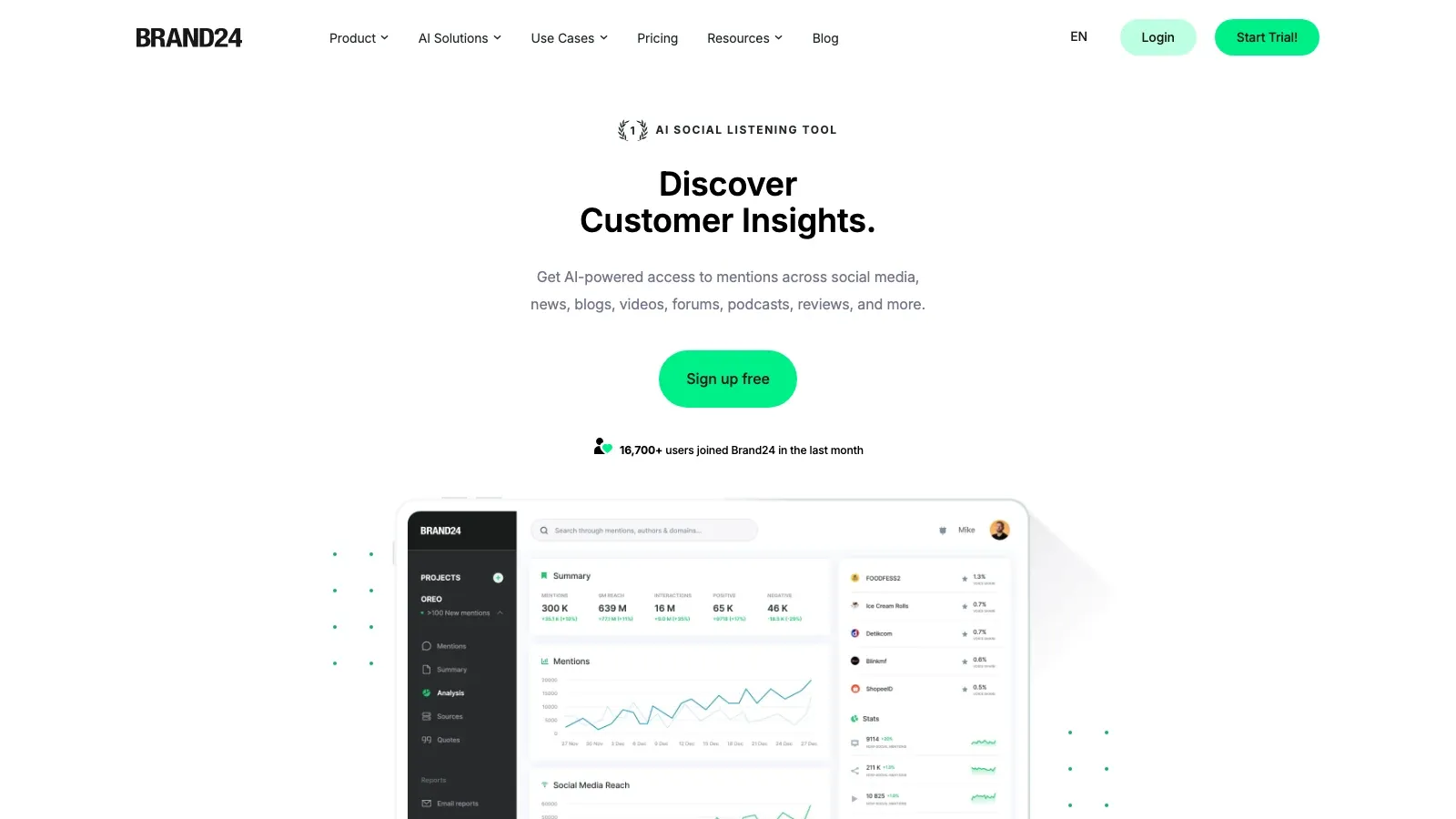
Brand24 still earns its place because it is practical. It is one of the faster tools to set up if the main job is to get real-time brand mention alerts, understand basic sentiment, and see whether the volume around a topic is moving in a worrying direction.
It does not try to be the deepest enterprise intelligence platform in this list. That is part of the appeal. For smaller teams, agencies, or operators who need something operational quickly, that lighter footprint is a feature.
Why it stands out:
- Fast alerting: strong fit for crisis detection and daily mention monitoring.
- Broad enough coverage for SMB needs: social, blogs, forums, news, and reviews.
- Useful sentiment and reach metrics: enough to prioritize what deserves a response.
- Agency-friendly: easier to roll out than heavier enterprise suites.
Pricing signal: Brand24's Individual plan is currently listed at $199 per month billed annually, with Team above it.
4. Talkwalker
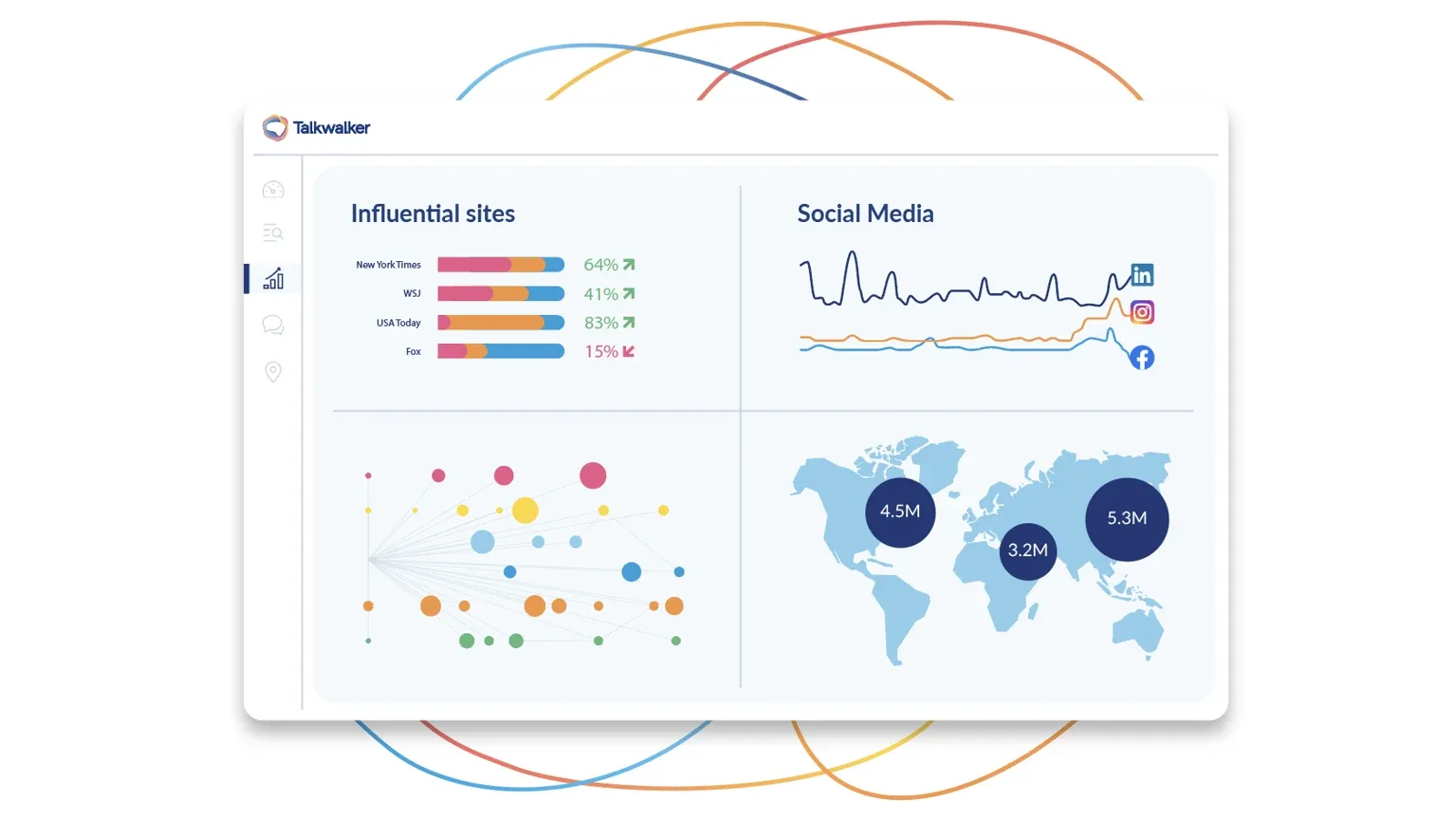
Talkwalker is still one of the strongest choices when you need genuinely broad monitoring across regions, languages, and media formats. This is the tool to shortlist when text-only social listening is not enough and your brand can surface in images, video clips, podcasts, broadcast coverage, or multilingual online conversations.
Its main strength is not simplicity. It is depth. Large organizations use it because the monitoring surface is wide and the analysis layer can handle serious benchmarking, trend work, and enterprise reporting.
Why it remains a top-tier option:
- Wide source coverage: strong fit for multinational brands and agencies.
- Visual and audio recognition: valuable when logos and products travel outside text.
- Multilingual monitoring: useful for regionally distributed brands.
- Enterprise analytics: better for benchmarking and intelligence work than lighter SMB tools.
Pricing signal: Talkwalker uses custom pricing.
5. Meltwater
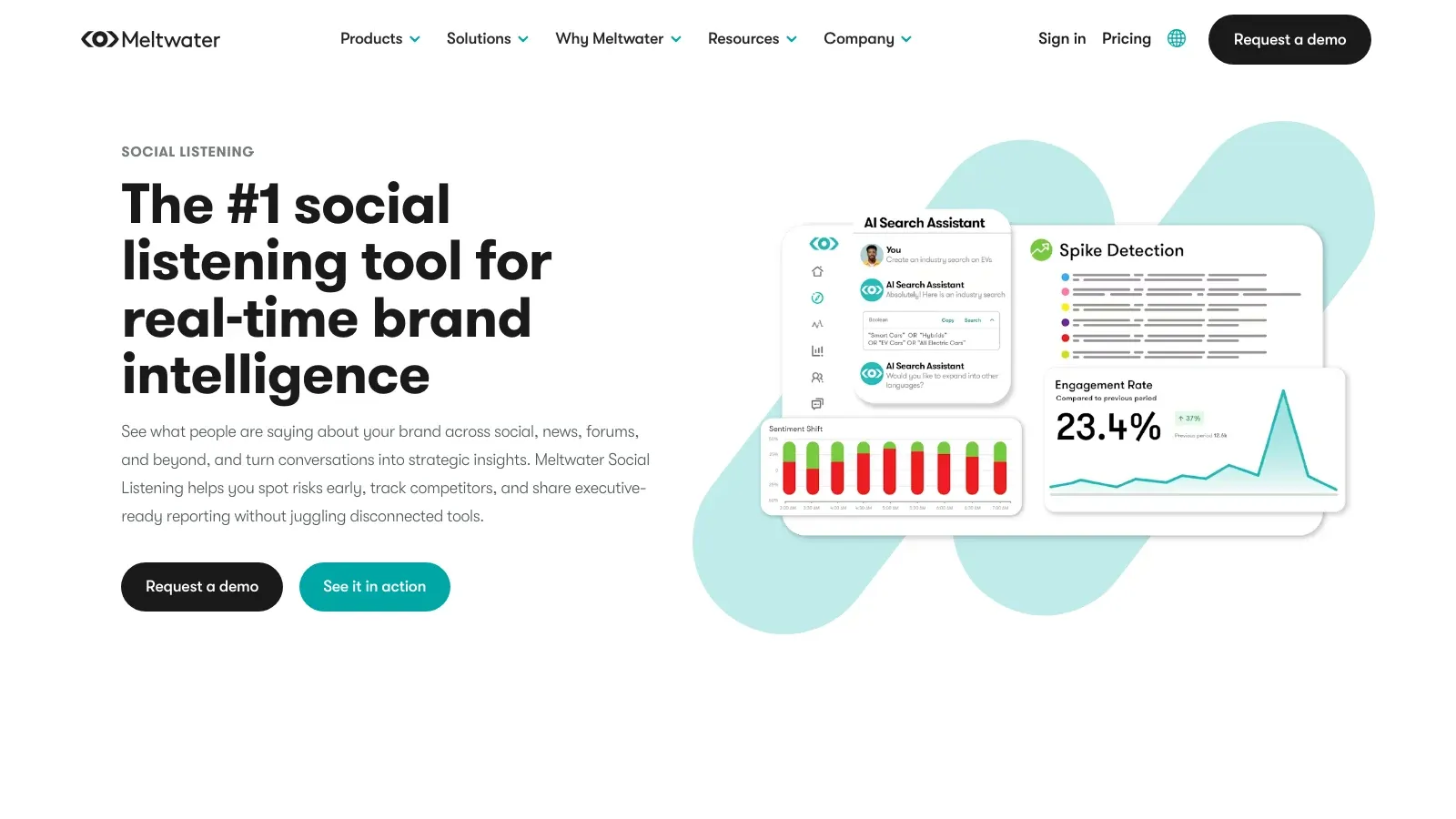
Meltwater remains one of the clearest choices for teams that do not want social listening in isolation. It is especially strong when monitoring work sits close to PR, corporate communications, executive reporting, and media intelligence. That blend of social and broader media coverage is the reason it stays relevant.
If your reporting stack still needs press mentions, journalist workflows, and social insight living together, Meltwater usually fits better than a social-only vendor.
Why enterprises still buy it:
- PR plus social coverage: strong fit for comms-led organizations.
- News and media context: useful when reputation work extends beyond consumer social channels.
- Enterprise reporting: practical for stakeholder updates and crisis summaries.
- Broad integration posture: easier to connect into larger reporting environments.
Pricing signal: Meltwater pricing is quote-based.
6. Mention
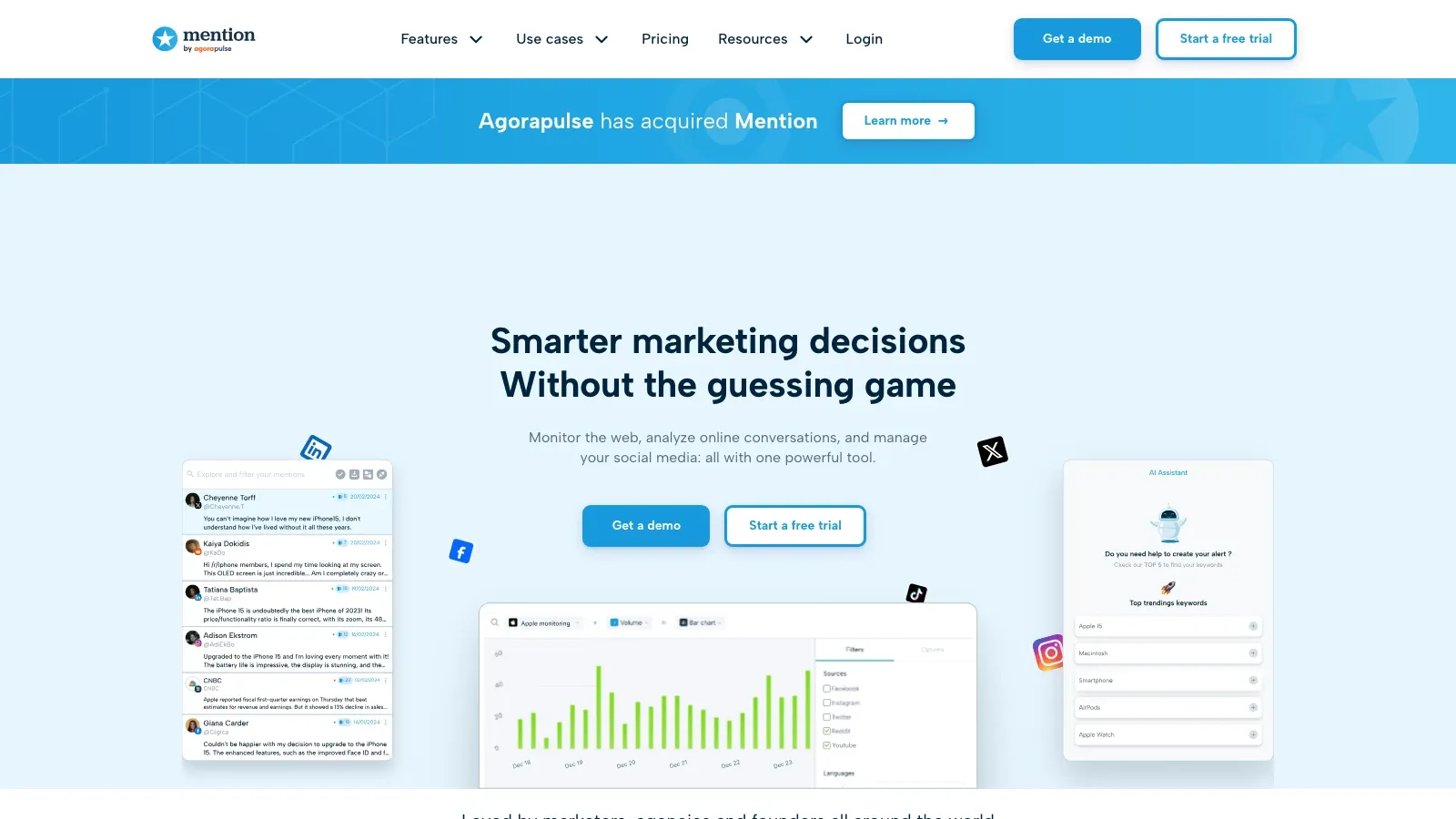
Mention used to be framed mostly as a simpler SMB alerting tool. In 2026, its pricing and positioning are more clearly company-focused. It still appeals to teams that want a more straightforward monitoring platform without jumping immediately to the heaviest enterprise analytics stack, but it is no longer the low-cost entry it once was.
That makes fit more important. Mention is best when your team wants a cleaner monitoring experience, not when budget is the primary reason for the shortlist.
What it still does well:
- Straightforward monitoring UI: easier to operate than some enterprise-heavy platforms.
- Social and web monitoring in one product: practical for communications and marketing teams.
- Usable reporting and collaboration: good for shared monitoring workflows.
- Competitor tracking and brand mention management: solid for teams that want a simpler operating model.
Pricing signal: Mention's Company plan is currently listed from $599 per month billed yearly.
7. Hootsuite Listening
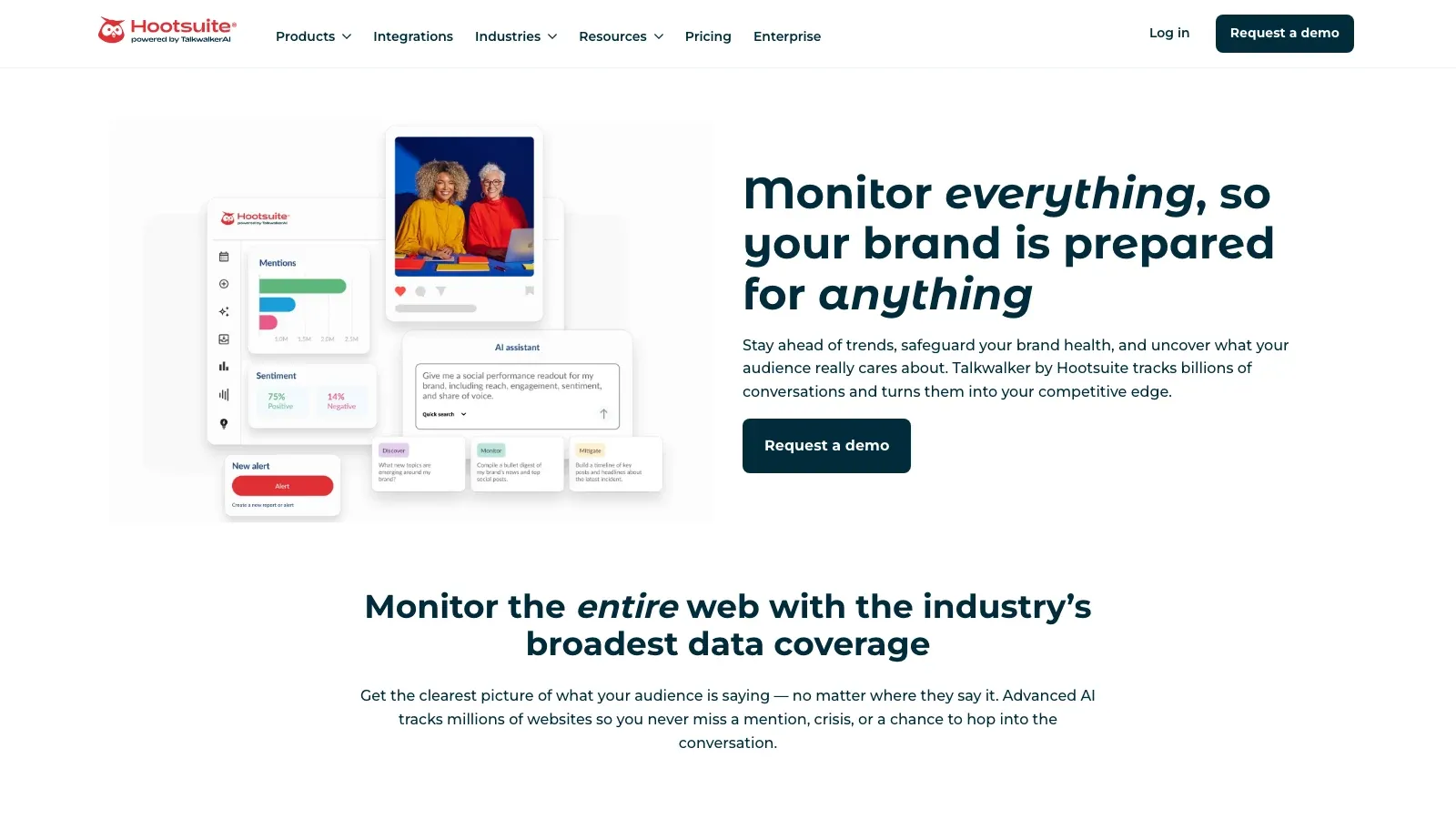
Hootsuite Listening is most compelling for teams already standardized on Hootsuite. That sounds obvious, but it matters. If publishing, approvals, engagement, and reporting already happen in Hootsuite, adding listening inside the same operational layer often beats forcing another separate tool into the mix.
The pitch here is workflow efficiency more than novelty. It is about keeping monitoring close to the rest of daily social operations.
Why it belongs on this list:
- Strong fit for existing Hootsuite customers: less context switching and less tool sprawl.
- Useful monitoring inside the broader social workflow: better for response speed.
- Premium listening depth on higher tiers: especially for teams that need broader listening data.
- Good operational fit for agencies and multi-brand teams already inside the Hootsuite ecosystem.
Pricing signal: Hootsuite plans currently start at $99 per user per month. Listening depth depends on plan and enterprise configuration.
If your team wants to see what more advanced in-platform listening looks like before buying, this Hootsuite walkthrough is a useful middle-of-funnel demo:
8. YouScan
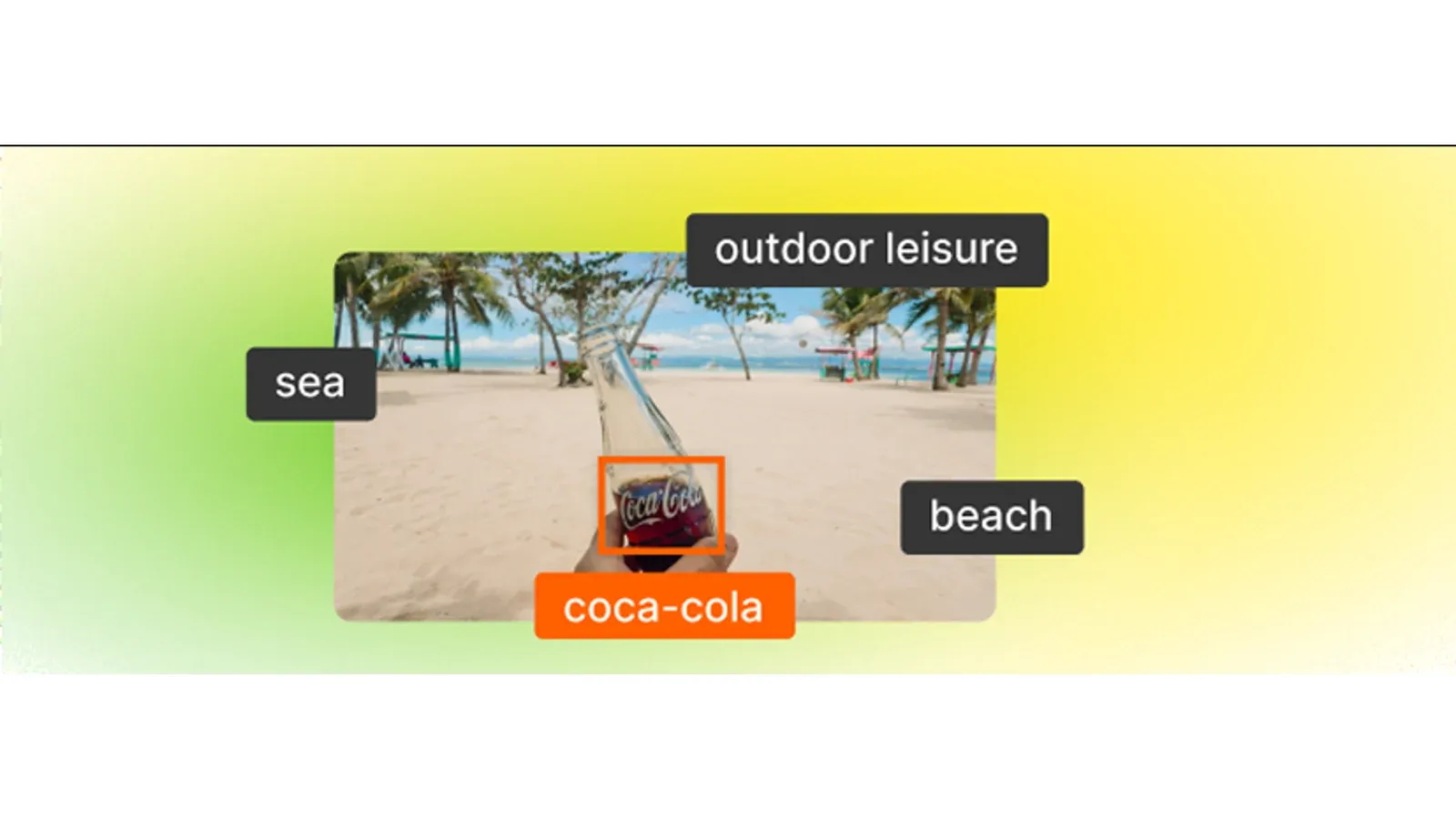
YouScan remains one of the clearest visual-listening specialists in the market. If your brand shows up in images, shelves, lifestyle content, or creator posts where the text is incomplete or unhelpful, YouScan deserves real attention. It is especially relevant for consumer brands where image context carries as much meaning as written sentiment.
That visual angle is the differentiator. Many tools now claim image recognition. Fewer make it central to the product story.
Why it still matters:
- Visual listening focus: especially relevant for CPG, retail, beauty, food, and lifestyle brands.
- Aspect-based sentiment: useful when you need to understand what part of the product or experience is driving opinion.
- Good brand-health use cases: especially for logo and object-led conversation.
- Stronger specialist fit than a generalist fit: valuable when images are a core source, not a nice extra.
Pricing signal: YouScan's Lite plan is currently listed from $499 per month billed annually.
9. Awario
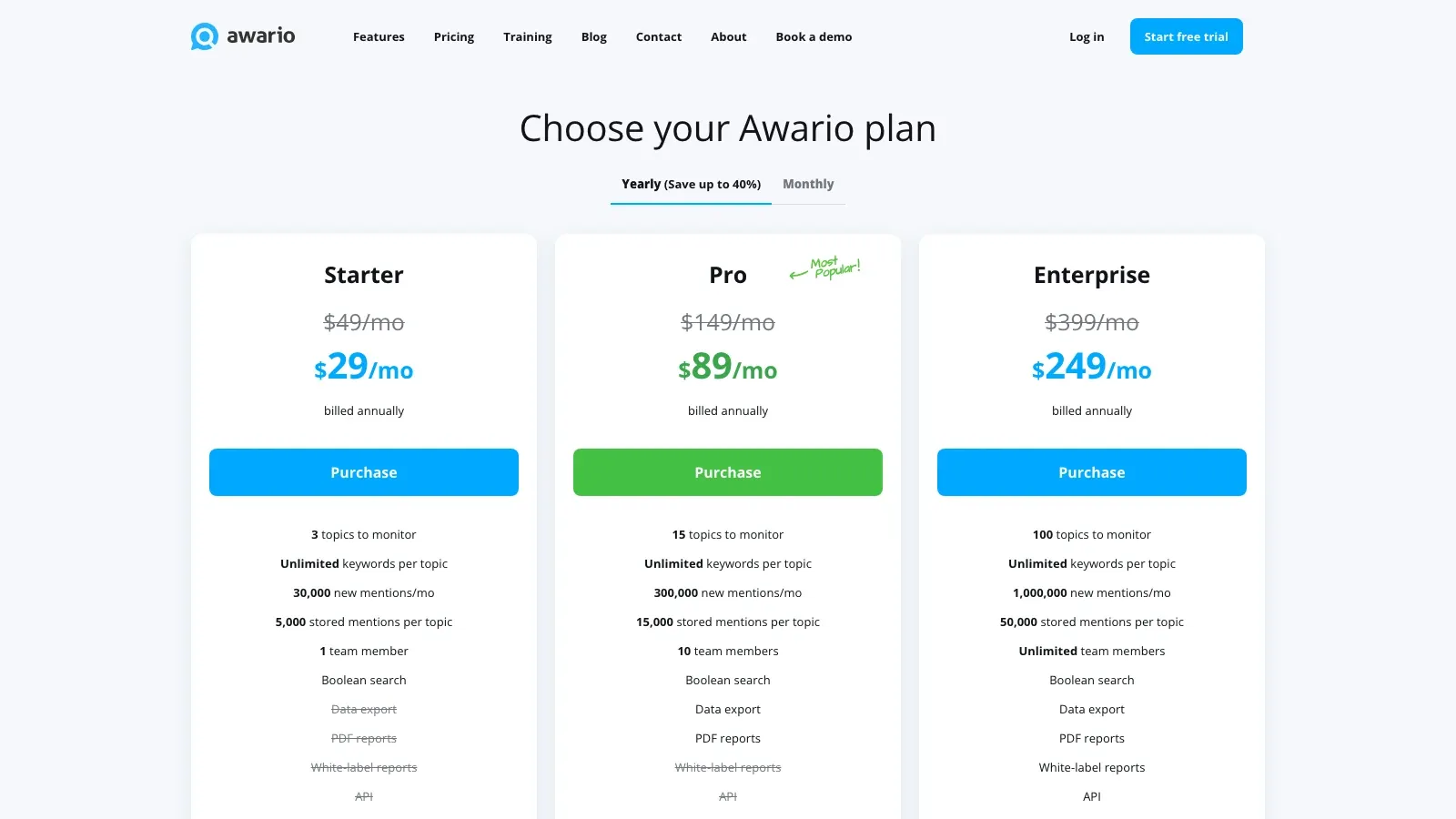
Awario is still one of the better budget-conscious monitoring choices for growing teams. It covers the core jobs well enough for many startups and agencies: track mentions, understand sentiment, monitor competitors, and find relevant conversations without enterprise-level spend.
It is not trying to out-enterprise Brandwatch or Talkwalker. It wins on affordability and accessibility.
Why it earns a slot:
- Affordable entry point: still attractive for lean teams.
- Broad monitoring surface for the price: useful for startups, consultants, and agencies.
- Lead-gen friendly workflows: practical when monitoring and outbound opportunity spotting overlap.
- Low-friction adoption: easier to test and roll out quickly.
Pricing signal: Awario's Starter plan is currently listed from $29 per month billed annually.
10. Brandwatch
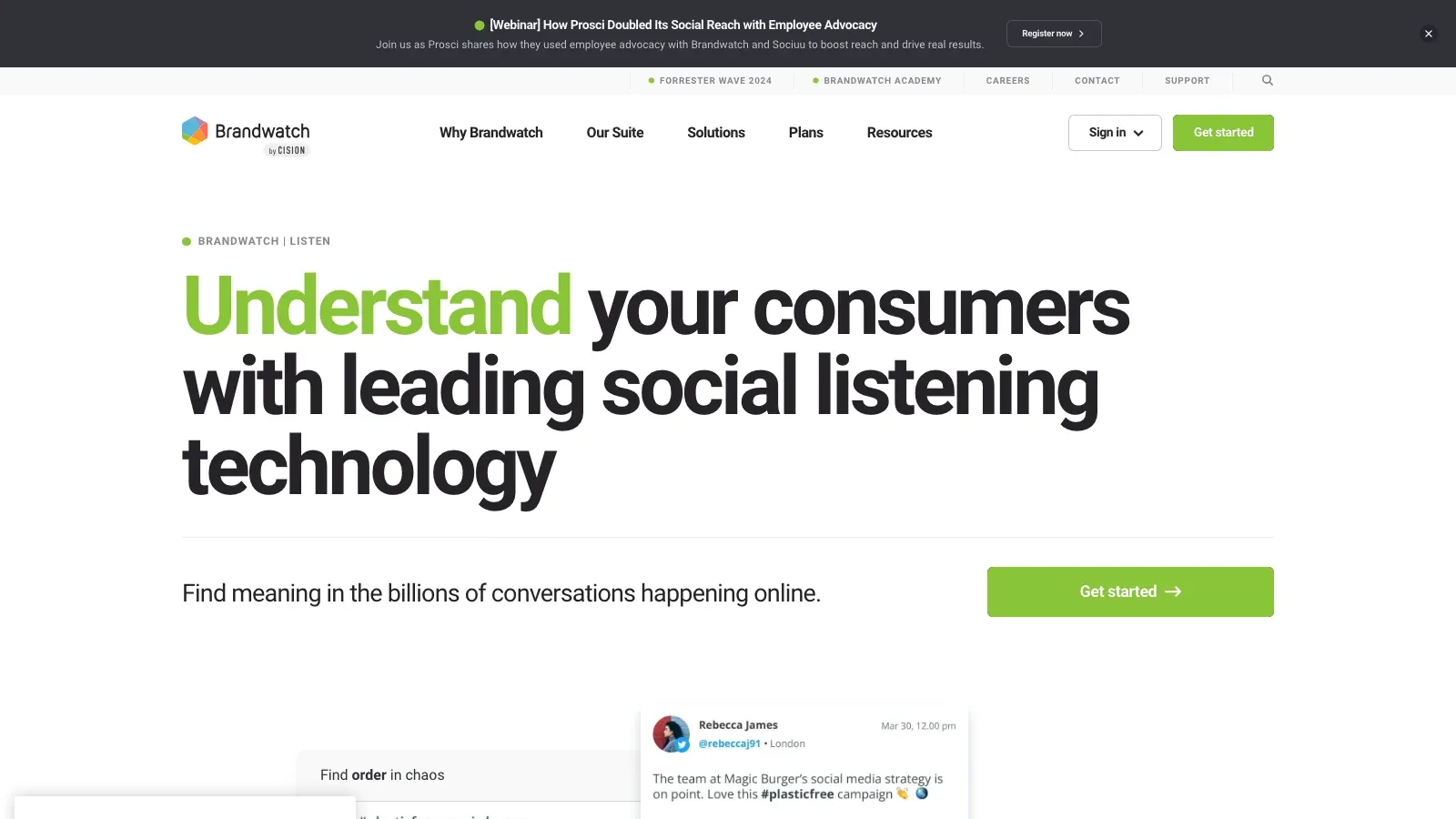
Brandwatch remains one of the deepest enterprise options in the category. It is the tool you shortlist when the monitoring job is tightly connected to research, audience intelligence, consumer insight, executive reporting, and long-horizon trend analysis. It is less about “never miss a mention” and more about turning large-scale conversation data into decision support.
For many smaller teams it is too much platform. For research-heavy enterprise teams, that is exactly the point.
Why it stays near the top:
- Serious analytics depth: strong for research, segmentation, and benchmarking.
- Enterprise consumer-intelligence positioning: good fit beyond pure social management.
- Broad data coverage: useful when monitoring is one layer in a bigger insight program.
- Stronger historical and command-center use cases: especially for large brands and agencies.
Pricing signal: Brandwatch pricing is custom.
How to Choose the Right Brand Monitoring Tool
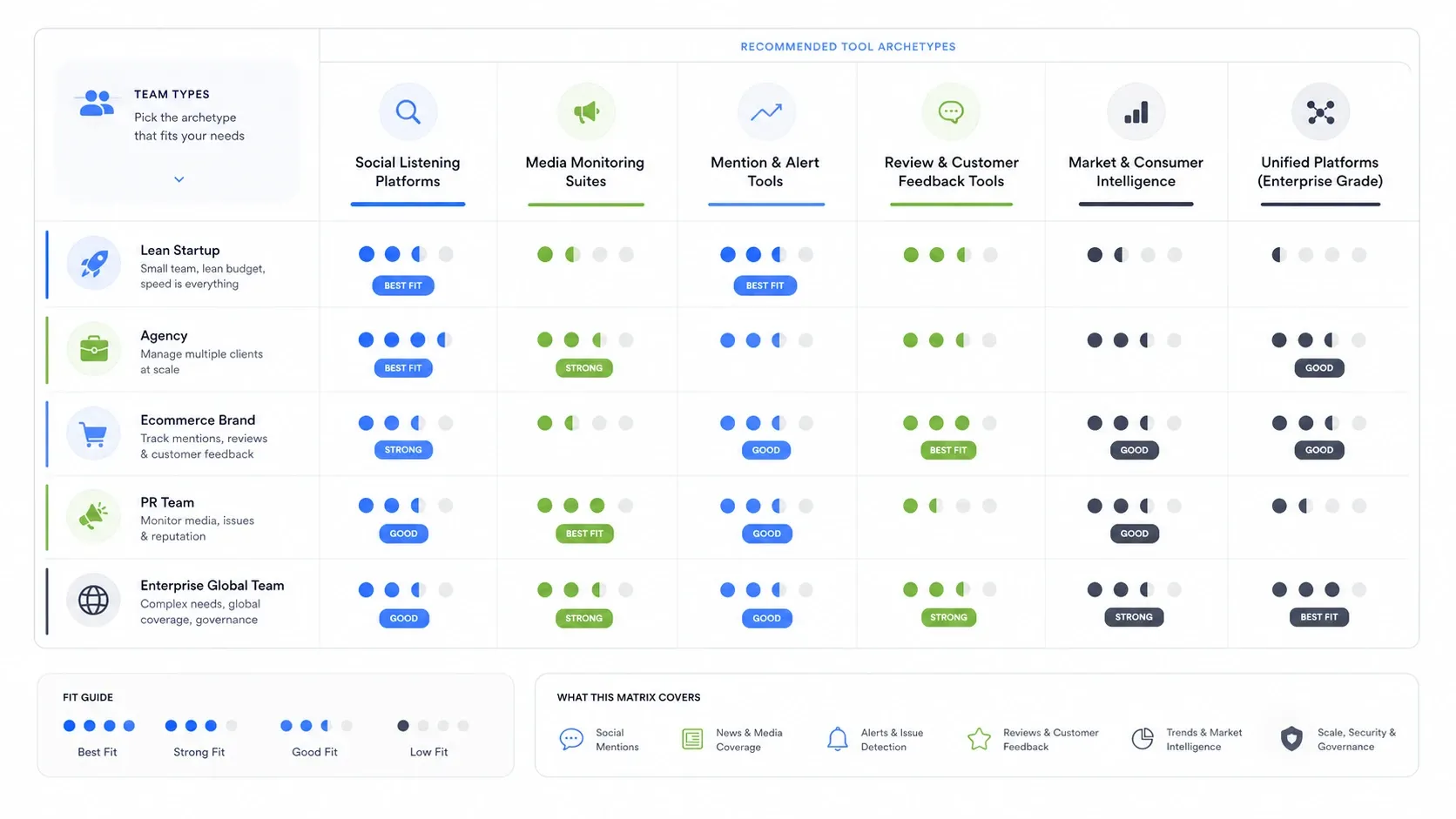
Most teams do not need the “best” tool in the abstract. They need the right compromise between coverage, speed, depth, and operational friction.
Use this shortlist logic:
- Start with sources, not vendors. Decide whether your biggest blind spot is social, PR/media, review sites, forums, or the wider web.
- Decide whether the job is response or research. Some tools are best for daily alerting. Others are best for deeper consumer intelligence.
- Check whether visuals matter. If image-based brand presence matters, YouScan or Talkwalker moves up fast.
- Map the output into the workflow. A monitoring tool that never reaches Slack, CRM, support, or reporting is usually wasted spend.
- Be honest about team maturity. Enterprise depth is not automatically better if the team only needs fast alerts and weekly summaries.
Brand Monitoring Beyond Social: Why Web Mentions Still Matter
One of the most common buying mistakes in this category is treating social listening as complete brand monitoring. It is not. Social data is crucial, but many brand-risk and brand-insight signals start somewhere else:
- niche forums and community boards
- review portals
- product pages and seller marketplaces
- trade publications and local news
- directories and industry-specific websites
That matters because web mentions are often more detailed than social reactions. They are also more likely to contain the exact language your product, support, PR, and SEO teams need to act on.
If your team needs to turn web pages, review threads, and long-tail sources into structured monitoring data, this Thunderbit demo shows the operational side of that workflow more clearly than another abstract listening explainer:
How Thunderbit Fits a Modern Monitoring Stack
Thunderbit is not a replacement for every listening platform in this list. It is most useful as the web-first layer that catches what social suites and classic listening feeds often miss.
A practical stack often looks like this:
- Track social conversation and brand sentiment in a suite like Sprout Social, Brand24, Hootsuite, Talkwalker, Meltwater, or Brandwatch.
- Use Thunderbit to monitor review pages, forum threads, directories, long-tail websites, marketplace listings, or news pages that need structured extraction.
- Export that web signal into Sheets, Excel, Airtable, Notion, or BI for trend review and response routing.
- Push urgent or negative findings into Slack, support, or PR workflows.
That combination is often stronger than expecting one social listening tool to handle every web-first monitoring use case well.
Try Thunderbit for Web-First Brand Monitoring Scrape brand mentions from any site and export them to Sheets or Notion in 1 click. Get Started Free
Best Practices for Operationalizing Brand Monitoring
- Route alerts by severity, not by source. A negative review page post can matter more than a routine social mention.
- Keep monitoring tied to response owners. Someone should own PR issues, customer support issues, product feedback, and competitor signal separately.
- Save context, not just the mention. The surrounding page, thread, or review often matters as much as the text snippet.
- Benchmark before you panic. Volume spikes are only useful if you understand what normal looks like.
- Use AI for triage, not judgment. Sentiment and summaries help, but human review still matters for public response and escalation.
Conclusion
The best brand monitoring tool in 2026 depends on where your real blind spot is:
- Choose Thunderbit if your missing signal lives on the open web and needs to become structured data.
- Choose Sprout Social if you want listening inside a broader social management stack.
- Choose Brand24 if fast alerts and accessible sentiment tracking matter most.
- Choose Talkwalker if you need global, multilingual, visual, and audio monitoring depth.
- Choose Meltwater if PR, media, and social monitoring need to live together.
- Choose Hootsuite Listening if your team is already standardized on Hootsuite.
- Choose YouScan if image-led brand visibility is central to your category.
- Choose Awario if you want an affordable monitoring entry point.
- Choose Brandwatch if the real job is enterprise research and consumer intelligence.
For most teams, the future-proof approach is not one tool. It is a stack: one system for social listening and response, plus one web-first layer for the broader internet.
Build a Web-First Brand Monitoring Stack with Thunderbit Get Started Free
FAQs
1. What is the difference between brand monitoring and social listening?
Brand monitoring is the broader discipline. It includes social listening, but also web mentions from forums, review sites, blogs, news, directories, and other public sources. Social listening is one important subset of that work.
2. Which tool is best for small teams that need alerts fast?
Brand24 and Awario are the most straightforward alert-first options in this list. Brand24 is stronger for faster operational monitoring, while Awario is friendlier for tighter budgets.
3. Which tool is best if visual mentions matter?
YouScan and Talkwalker are the strongest choices when logos, products, and image-based mentions matter as much as text.
4. Why should I monitor sources beyond social media?
Because a lot of brand risk and product feedback shows up first in reviews, forums, marketplaces, and news pages. Those sources also tend to contain richer detail than short social posts.
5. Where does Thunderbit fit if I already have a listening tool?
Thunderbit works best as the web-first complement to a listening platform. Use it to structure the long-tail web sources that classic social listening products often surface poorly or not at all.




