
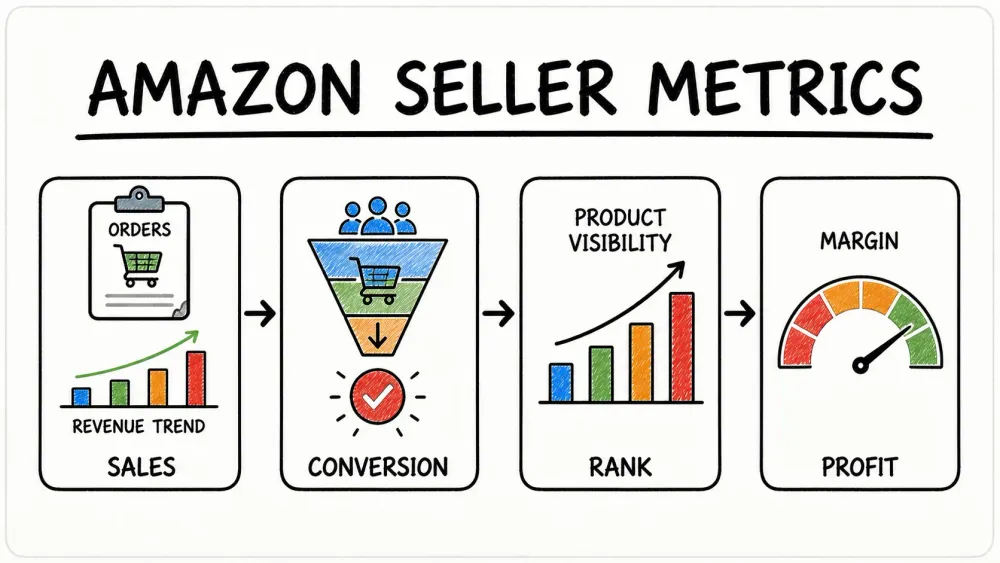
If you’ve ever tried to keep up with Amazon’s ever-shifting marketplace, you know it’s not for the faint of heart—or the faint of spreadsheet. The difference between a thriving Amazon business and one that’s stuck in neutral often comes down to how well you track and act on your seller metrics. I’ve seen firsthand (and sometimes with a little too much coffee) how the right data can turn a struggling product into a best-seller, or how missing a key metric can send your Buy Box dreams up in smoke.
Here’s the wild part: in 2023, over 10,000 Amazon merchants surpassed $1 million in annual sales. What do nearly all of them have in common? They’re obsessed with their numbers. Whether you’re a rookie seller or running a multi-brand empire, your ability to track, analyze, and improve your Amazon seller metrics is the not-so-secret sauce for growth. But with so many tools out there—ranging from AI-powered scrapers to all-in-one analytics suites—how do you pick the right one for your business?
 Let’s break down the top 7 Amazon seller metrics tools for 2025, compare their strengths, and help you find the perfect fit for your workflow (and your sanity).
Why Amazon Seller Metrics Matter for Every Seller
Extract Amazon Product and Review Data Point Thunderbit at any Amazon listing and it pulls product, pricing, and review data in one click. Get Started Free
Amazon isn’t just a marketplace—it’s a data-driven ecosystem where every click, shipment, and review feeds into a giant algorithmic blender. If you’re not watching your metrics, you’re basically flying blind. Here’s why tracking your Amazon seller metrics is non-negotiable:
- Visibility & Sales: Amazon’s algorithms reward sellers who hit performance benchmarks. Metrics like Order Defect Rate (ODR), Late Shipment Rate, and Buyer Feedback directly impact your search ranking and Buy Box eligibility. In fact, the Buy Box accounts for about 82% of Amazon’s sales.
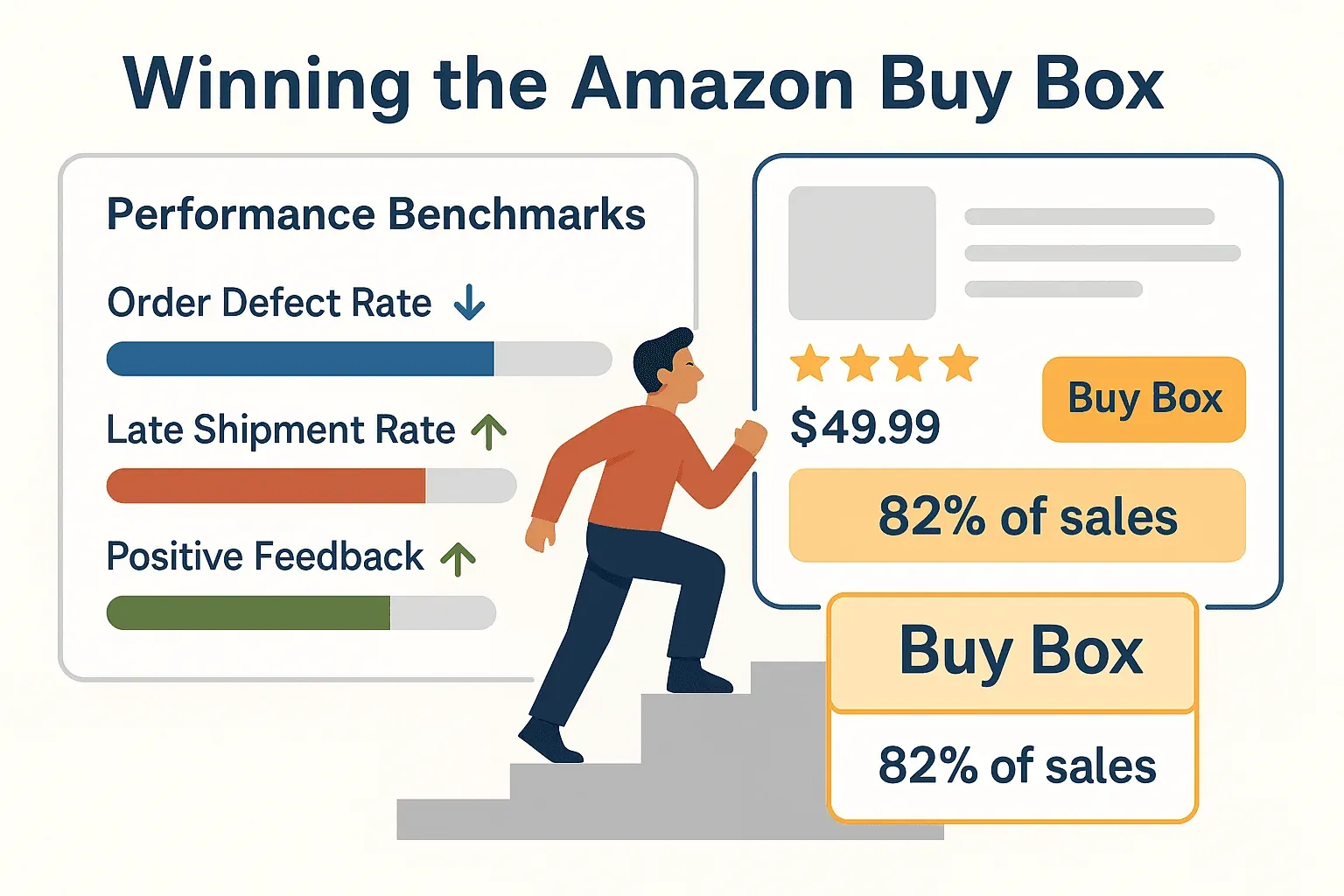
- Profitability: Metrics like Inventory Performance Index (IPI), conversion rates, and ad spend ROI help you spot leaks in your business and optimize for higher margins. Sellers who keep their IPI high (above 550) have seen storage cost reductions up to 30%.
- Customer Satisfaction: Your average rating, review count, and return rate all feed into Amazon’s trust signals. A one-star improvement in your product’s rating can drive ~26% higher sales.
- Risk Management: Neglecting your metrics can lead to account suspension, lost Buy Box, or wasted ad spend. Amazon requires an ODR below 1%—exceed that, even briefly, and you could be out of the game.
The bottom line? Metrics aren’t just numbers—they’re the levers you pull to grow, protect, and future-proof your Amazon business.
How We Evaluated the Best Tools for Amazon Seller Metrics
With so many options out there, I wanted to make this list genuinely useful—not just a parade of logos. Here’s how I compared each tool:
- Key Features: Does it cover the metrics that matter—sales, profit, inventory, ads, SEO, reviews, account health? Does it offer automation, AI insights, or custom reporting?
- Pros & Cons: What’s easy, what’s a headache, and what’s unique? Is it intuitive for non-techies? Does it break when Amazon changes a page layout?
- Best-Fit Users: Is this tool for beginners, scaling brands, agencies, or data geeks? Who gets the most value?
- Pricing: Is there a free tier? Is it credit-based, subscription, or “call us for a quote”? Does the value match the price?
I’ve also woven in real-world feedback, user reviews, and my own experience working with sellers who’ve tried just about everything short of reading tea leaves.
The Top 7 Amazon Seller Metrics Tools
- Thunderbit for AI-powered, no-code Amazon data extraction and custom metrics
- Seller Central Dashboard for built-in, real-time Amazon metrics and compliance
- Helium 10 for all-in-one analytics, automation, and deep insights
- Jungle Scout for product research, sales analytics, and growth tracking
- AMZ Tracker for SEO, keyword, and review management
- Sellics for unified dashboards and advanced PPC analytics
- SellerApp for customizable analytics, AI insights, and optimization
1. Thunderbit: Advanced Amazon Seller Metrics Extraction
Thunderbit is my go-to for sellers who want to extract Amazon metrics straight from the source—no code, no headaches, just results. As an agentic web scraper Chrome extension, Thunderbit lets you grab structured data from any Amazon page (or just about any website), whether it’s your own listings, competitor products, or even those elusive review counts.
Key Features:
- One Click Extract: Click once, and Thunderbit’s AI scans the page, suggests the best columns (like price, rating, ASIN, review count), and sets up your scraper.
- Subpage Scraping: Need more details? Thunderbit can visit each product’s detail page to pull extra metrics (think: seller info, specs, or even Q&A data).
- Instant Export: One-click export to Excel, Google Sheets, Airtable, or Notion—no paywall, no CSV drama.
- Handles Complex Data: Works with paginated lists, infinite scroll, images, emails, phone numbers, and more.
- Scheduled Scraping: Set it and forget it—Thunderbit can monitor your metrics on a schedule.
Pros:
- Ridiculously Easy: No code, no templates, no setup. Even my non-technical friends have used it to scrape Amazon data in minutes.
- Flexible: Scrape any metric you see on the page—even ones Amazon’s API doesn’t provide.
- Robust: AI adapts to page changes, so you’re not constantly fixing broken scrapers.
- Free Exports: Your data is yours—export as much as you want, for free.
Cons:
- Credit-Based Free Tier: The free plan covers 6 pages per month (or 10 with a trial boost), then you’ll need to buy credits or subscribe.
- Browser Dependent: Runs as a Chrome extension for most scrapes (though cloud scraping is available for public pages).
- No Built-In Analytics: Thunderbit gives you the data, but you’ll analyze it in your spreadsheet or BI tool of choice.
Best For: New sellers, business teams who want quick, custom data pulls, and anyone who needs to scrape competitor or market data without learning Python.
Pricing: Free for 6 pages/month; paid plans start at $15/month for 500 credits (1 credit = 1 row), with larger plans for heavy users. See Thunderbit Pricing
Try Thunderbit for Amazon Metrics Extraction Thunderbit's agentic web scraper reads Amazon seller and listing pages itself and pulls metrics in one click. Get Started Free
2. Seller Central Dashboard: Amazon’s Built-In Metrics Hub
Seller Central Dashboard is the control room for every Amazon seller. It’s where you’ll find real-time sales, order metrics, account health, and the all-important performance notifications.
Key Features:
- Account Health Dashboard: Tracks ODR, late shipment rate, cancellation rate, and policy compliance.
- Business Reports: Deep dives into sales by ASIN, page views, conversion rates, and more.
- Advertising & Brand Analytics: For those running ads or with Brand Registry, you get ad performance, search term data, and market basket analysis.
- Inventory Performance Index (IPI): Essential for FBA sellers to manage stock and avoid storage fees.
Pros:
- First-Party Data: Direct from Amazon—real-time, accurate, and the source of truth.
- Comprehensive for Core Metrics: Covers everything Amazon cares about for account health and compliance.
- No Extra Cost: Included with your seller account.
Cons:
- Limited Customization: Can’t build custom dashboards or combine metrics in new ways.
- Fragmented Data: Metrics are spread across different sections (Business Reports, Account Health, Ads, etc.).
- No Proactive Insights: You get the numbers, but not the “what should I do next?”
Best For: Every Amazon seller—especially beginners and anyone focused on compliance and day-to-day operations.
Pricing: Included free with your Amazon Seller Account (Professional plan is $39.99/month).
3. Helium 10: All-in-One Amazon Seller Metrics Suite
Helium 10 is the Swiss Army knife of Amazon seller tools. If you want a single platform to handle analytics, keyword research, inventory, and even refunds, Helium 10 is hard to beat.
Key Features:
- Profits Dashboard: Real-time view of sales, fees, ad spend, and net profit.
- Market Tracker: Monitor competitor market share and trends.
- Keyword Tracker & SEO Tools: Track keyword rankings, research new terms, and optimize listings.
- Inventory Management: Restock alerts, sell-through rates, and forecasting.
- Alerts & Automation: Get notified about hijackers, listing changes, or negative reviews.
Pros:
- Comprehensive: 30+ tools in one platform, from research to optimization.
- Deep Analytics: Visual dashboards, historical trends, and actionable insights.
- Strong Community: Tons of training, webinars, and user support.
- Scalable: Works for solo sellers up to agencies and aggregators.
Cons:
- Learning Curve: So many features, it can be overwhelming at first.
- Premium Pricing: Full power requires Platinum ($99/mo) or Diamond ($279/mo) plans.
- Usage Caps: Some tools have limits on lower plans.
Best For: Scaling sellers, agencies, and anyone who wants an all-in-one solution with deep analytics and automation.
Pricing: Free limited plan; paid plans start at $39/month (Starter), $99 (Platinum), $279 (Diamond). Annual discounts available.
4. Jungle Scout: Amazon Metrics for Product and Sales Insights
Jungle Scout made its name with product research, but it’s now a full-featured analytics and sales tracking suite—especially for sellers focused on launching and scaling products.
Key Features:
- Sales Analytics: Revenue, profit, ROI, and AI-generated performance reports.
- Product Tracker: Monitor competitor sales, price history, and rank.
- Keyword Scout & Rank Tracker: Find and track high-value keywords.
- Inventory Manager: Restock forecasting and alerts.
- Review Automation: Request reviews and monitor feedback.
Pros:
- User-Friendly: Clean interface, easy for beginners.
- Accurate Sales Estimates: Trusted for product and market research.
- AI Insights: Automated reports highlight trends and opportunities.
Cons:
- No Free Tier: Only a 7-day refund period—not a forever-free plan.
- Feature Gating: Some analytics (like ad performance) are only on higher plans.
- Narrower Scope: Slightly less breadth than Helium 10.
Best For: Sellers launching new products, growth-focused brands, and anyone who wants straightforward analytics plus research.
Pricing: Starter $49/mo, Suite $79/mo, Professional $129/mo. Annual plans save ~40%.
5. AMZ Tracker: Focused Amazon Seller Metrics for SEO and Reviews
AMZ Tracker is a specialist tool for sellers who live and breathe Amazon SEO and reputation management. If you’re obsessed with keyword rankings and review alerts, this is your playground.
Key Features:
- Keyword Rank Tracking: Real-time, daily updates on your product’s search positions.
- On-Page Analyzer: Listing optimization suggestions for better SEO.
- Review Alerts: Instant notifications for new negative reviews.
- Promotion Tools: Run discount campaigns to boost sales velocity.
- Super URL Generator: (For the old-school SEO crowd.)
Pros:
- SEO-Centric: Laser-focused on organic ranking and listing quality.
- Actionable Alerts: Never miss a bad review or a keyword drop.
- Simple Interface: Easy to use for tracking and optimizing SEO.
Cons:
- Limited Scope: No financial, inventory, or ad analytics.
- Outdated UI: Feels a bit old-school, and some users report bugs.
- Pricey for Features: Starts at $50/month for basic plans.
Best For: Sellers prioritizing organic growth, review management, and those launching new products with aggressive SEO strategies.
Pricing: Basic $50/mo (110 keywords), Professional $100/mo, God Mode $200/mo, Legend $400/mo. 7-day free trial.
6. Sellics: Unified Amazon Seller Metrics and PPC Analytics
Sellics (now part of Perpetua) is the analytics and PPC powerhouse for Amazon sellers who want everything in one dashboard—especially if you’re running serious ad campaigns.
Key Features:
- Cockpit Dashboard: Real-time sales, profit, PPC, reviews, and inventory all in one place.
- Profit Analytics: Net margins per product, automatic fee tracking.
- PPC Manager: Bid automation, campaign optimization, and deep ad analytics.
- Keyword Ranking & SEO Tools: Track organic positions and optimize listings.
- Review & Inventory Alerts: Stay ahead of problems before they hurt your metrics.
Pros:
- Unified View: Sales, profit, ads, and reviews in one dashboard.
- PPC Automation: Advanced ad management can lower ACoS and boost ROI.
- Global Support: Works across multiple marketplaces and supports teams.
Cons:
- Complex Pricing: Based on sales volume or ad spend—can get expensive for big sellers.
- Data History Limits: Only about 60 days of some metrics in-app.
- Learning Curve: Powerful, but can be overwhelming for beginners.
Best For: Established sellers, brands, and agencies managing multiple SKUs and significant ad spend.
Pricing: Seller Edition starts ~$50/mo; Advertising Advisor plan ~$259/mo. 14-day free trial.
7. SellerApp: Data-Driven Amazon Seller Metrics and Optimization
SellerApp is a data analytics and automation suite for sellers who want to squeeze every drop of insight from their metrics—and get actionable suggestions along the way.
Key Features:
- Profit Dashboard & Custom Reports: Visualize sales, profit, and key KPIs.
- Keyword Research & Tracker: Discover and monitor high-value keywords.
- Listing Quality Score: Audit and optimize your listings for better conversion.
- Product Intelligence: Compare your metrics to competitors and market trends.
- PPC Analytics: Track ad spend, ACoS, and get optimization tips.
- AI-Driven Insights: Automated suggestions for improving performance.
Pros:
- Actionable Analytics: Not just data, but recommendations on what to fix.
- Customizable Reports: Build dashboards for your exact needs.
- Freemium Model: Free tier for up to 50 ASINs.
- Strong Support: Tutorials, webinars, and account managers for higher plans.
Cons:
- Premium Pricing: Full features require $99–$149/month plans.
- Feature Overload: Can be overwhelming for small sellers.
- Limited Historical Data: Some keyword tracking is forward-looking only.
Best For: Data-driven sellers, brands focused on optimization, agencies, and anyone who wants analytics with a consulting vibe.
Pricing: Freemium (50 ASINs free), Pro $99/mo, Smart $149/mo. Managed services and API plans available.
Download Thunderbit Chrome Extension Install the free Chrome extension and start extracting Amazon seller metrics in one click. Get Started Free
At-a-Glance Comparison: Amazon Seller Metrics Tools
| Tool | Key Features | Pros | Cons | Best For | Pricing (Monthly) |
|---|---|---|---|---|---|
| Thunderbit | AI scraping, subpages, export | No-code, flexible, robust | Credit-based, browser-based | Custom data, quick insights | Free, $15+, pay-as-you-go |
| Seller Central | Built-in dashboards, account health | Accurate, free, compliance | Limited customization | All sellers, compliance | Free (with account) |
| Helium 10 | All-in-one analytics, automation | Deep analytics, scalable | Learning curve, premium cost | Scaling brands, agencies | Free, $39–$279 |
| Jungle Scout | Product/sales analytics, AI reports | User-friendly, accurate sales | No free tier, feature gating | Growth-focused sellers | $49–$129 |
| AMZ Tracker | SEO, keyword, review tracking | SEO-centric, actionable alerts | Limited scope, dated UI | Organic growth, review mgmt | $50–$400 |
| Sellics | Unified dashboard, PPC automation | All-in-one, strong PPC | Complex pricing, learning curve | Established brands, agencies | ~$50–$259+ |
| SellerApp | Custom analytics, AI insights | Actionable, customizable | Premium pricing, feature overload | Data-driven sellers, agencies | Free, $99–$149 |
Conclusion: Choosing the Right Amazon Seller Metrics Tool
See How Agentic Web Scraping Works Thunderbit's AI reads a page like a person would and extracts Amazon seller data in one click, no manual setup. Get Started Free
If there’s one thing I’ve learned from years in SaaS and automation, it’s that the best tool is the one you’ll actually use. Whether you’re just starting out and need to keep your ODR in check, or you’re running a multi-million dollar brand and want to squeeze every last point of margin from your ad spend, there’s a tool on this list for you.
- Just starting? Lean on Seller Central and try Thunderbit’s free tier for custom data pulls.
- Scaling up? Helium 10 and Jungle Scout offer deep analytics and automation to help you grow.
- Obsessed with SEO? AMZ Tracker and SellerApp will keep your rankings (and reviews) in top shape.
- Managing big ad budgets? Sellics is your PPC command center.
My advice? Take advantage of free trials and freemium plans. Plug in your real data, see which dashboard makes sense to you, and don’t be afraid to mix and match. The right metrics tool isn’t just about tracking numbers—it’s about giving you the confidence to make smarter, faster decisions every single day.
And if you want to see how easy it can be to extract, format, and export Amazon metrics, give Thunderbit a spin. Your future self (and your spreadsheets) will thank you.
FAQs
1. Why are Amazon seller metrics so important for business growth?
Amazon’s algorithms use seller metrics to determine your visibility, Buy Box eligibility, and account health. Tracking metrics like ODR, IPI, and conversion rates helps you optimize for higher sales, profitability, and customer satisfaction—while avoiding costly suspensions.
2. What’s the difference between Thunderbit and traditional analytics tools?
Thunderbit is an agentic web scraper that extracts any data you see on Amazon pages—perfect for custom reports, competitor research, or metrics not available in Seller Central. Traditional analytics tools like Helium 10 or Jungle Scout offer built-in dashboards, trend analysis, and automation, but may not let you scrape arbitrary data.
3. Can I use more than one tool for tracking Amazon seller metrics?
Absolutely. Many sellers use Seller Central for compliance, Thunderbit for custom data pulls, and a suite like Helium 10 or SellerApp for deep analytics and automation. The best stack depends on your workflow and business needs.
4. Are there free options for tracking Amazon seller metrics?
Yes! Seller Central’s dashboards are free with your account. Thunderbit offers a free tier for scraping up to 6 pages/month. SellerApp and Helium 10 both have limited free plans. For more advanced analytics, you’ll typically need a paid plan.
5. How do I choose the right Amazon seller metrics tool for my business?
Start by identifying your biggest pain points—compliance, profitability, SEO, ads, or custom data needs. Try free versions or demos, see which interface you like, and weigh the value against the price. The right tool should save you time, reduce stress, and help you make better decisions.
Want more tips on Amazon data, automation, and growth? Check out the Thunderbit Blog for deep dives, tutorials, and the latest in AI-powered seller tools.
Learn More
Try Thunderbit Agentic Web Scraper for Amazon Metrics Get Started Free




