

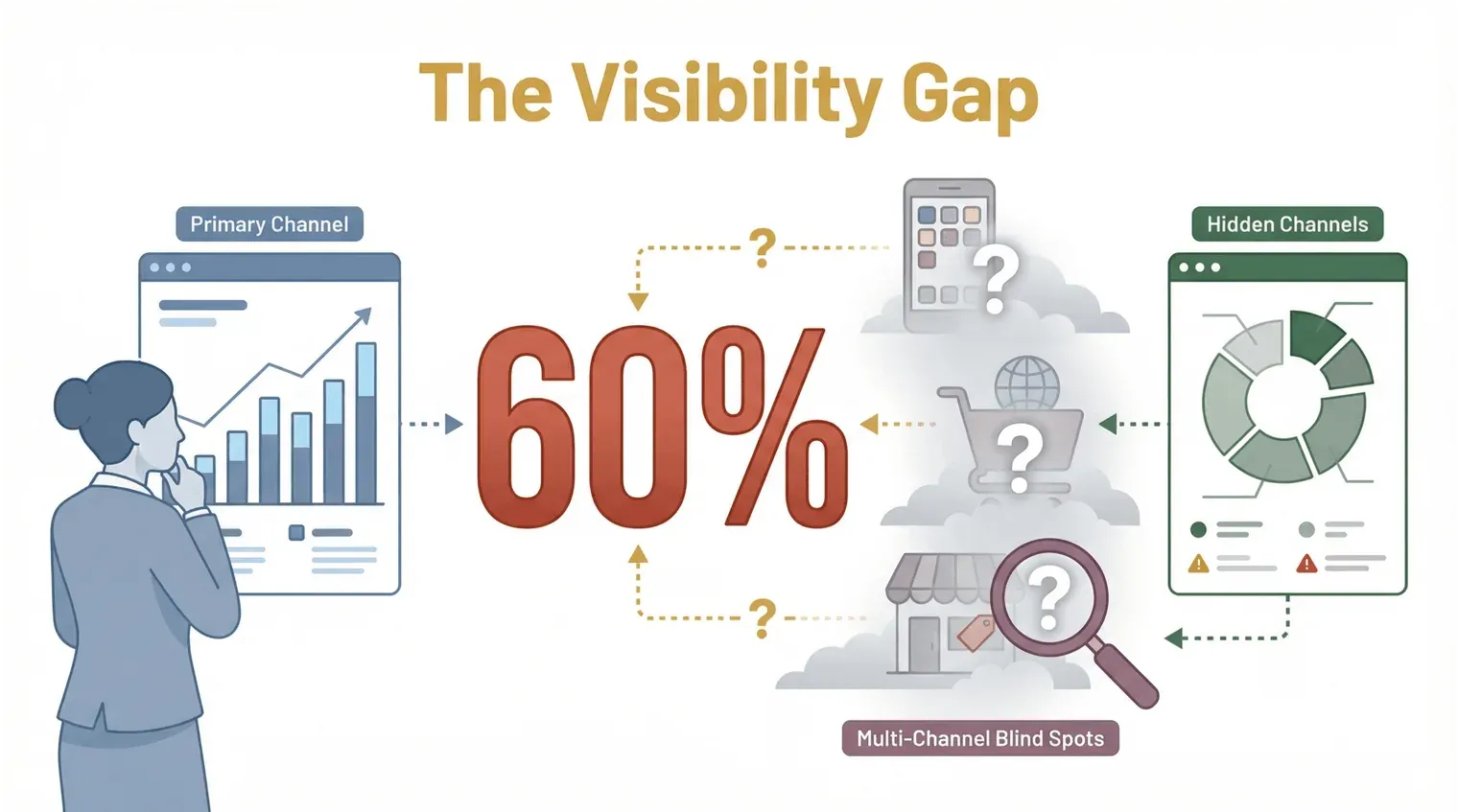
If you’ve ever played a game of telephone, you know how quickly information can get lost, twisted, or delayed as it passes from one person to another. Now, imagine that game—but with millions of dollars in inventory, hundreds of distributors, and thousands of retail shelves on the line. That’s the challenge many businesses face when it comes to secondary sales visibility. The further your product travels down the sales chain, the murkier things can get. In fact, a recent industry analysis found that over 60% of companies struggle with poor visibility beyond their primary sales channels. And when you can’t see what’s happening at the retail or end-customer level, you’re flying blind—risking stockouts, missed demand, and flawed strategies.
See How Thunderbit Powers Sales Visibility Get Started Free
So, what exactly is secondary sales visibility? Why is it suddenly a hot topic for modern businesses? And how are new tools like Thunderbit making it possible to see further, act faster, and outmaneuver the competition? Let’s break it all down, from the basics to the cutting-edge.
Understanding Secondary Sales Visibility: The Basics
Let’s start with a simple definition. Secondary sales visibility refers to a company’s ability to track, analyze, and respond to sales activity that happens after the first sale leaves their hands. In other words, it’s about seeing what happens after your product moves from you (the manufacturer or brand owner) to your distributors, wholesalers, retailers, and—ultimately—the end customer.
Here’s how the sales chain typically flows:
- Primary sales: Manufacturer → Distributor/Wholesaler
- Secondary sales: Distributor/Wholesaler → Retailer/Dealer → End Customer
While primary sales are usually tracked in real time (thanks to ERP systems and direct invoicing), secondary sales often remain a black box. You might know how many units you shipped to your distributor, but do you know how many actually made it to the shelf? Which SKUs are flying off the racks, and which are gathering dust? Are certain regions selling out while others are overstocked? That’s the realm of secondary sales visibility.
In industries like FMCG, pharmaceuticals, and electronics, secondary sales data is the missing puzzle piece for understanding true market performance (SalesBabu).
Why Secondary Sales Visibility Matters for Business Success
So, why does this extra layer of visibility matter so much? Because what you don’t know can—and will—hurt you. Let’s look at some concrete ways secondary sales visibility drives business value:
- Inventory Optimization: Knowing what’s actually selling at the retail level helps you avoid both stockouts and excess inventory. No more guessing how much to produce or ship.
- Demand Forecasting: Real-time secondary sales data lets you spot trends early and adjust your forecasts, reducing costly surprises.
- Sales Strategy Refinement: You can see which products, regions, or channels are underperforming and take targeted action—whether that’s a new promotion, a pricing tweak, or a supply chain shift.
- Market Responsiveness: When you see sales slowdowns or surges as they happen, you can respond faster than competitors.
- Channel Partner Management: Accurate data helps you support your distributors and retailers, building stronger relationships and reducing channel conflict.
Here’s a quick table summarizing the key benefits:
| Benefit | How Secondary Sales Visibility Helps |
|---|---|
| Inventory Optimization | Prevents stockouts/overstock, lowers holding costs |
| Demand Forecasting | Improves accuracy, reduces lost sales |
| Sales Strategy Refinement | Enables targeted promotions and pricing adjustments |
| Market Responsiveness | Speeds up reaction to trends and disruptions |
| Channel Partner Management | Strengthens relationships, reduces disputes |
A lack of visibility can lead to missed opportunities, excess costs, and even lost market share. As one industry expert put it, “Planning 2026 without secondary sales data is just guessing.”
The Limits of Traditional Sales Data Transparency
If secondary sales visibility is so valuable, why do so many companies struggle with it? The answer boils down to a few classic challenges:
- Data Silos: Distributors, retailers, and field teams often use different systems (or no system at all), making it hard to aggregate data.
- Manual Processing: Many companies still rely on spreadsheets, email reports, or even phone calls to collect secondary sales data (Medium).
- Delayed Reporting: By the time data is collected, cleaned, and shared, it’s often weeks out of date.
- Fragmented Systems: Integrating data from POS systems, online marketplaces, and field sales apps is a technical headache.
- Human Error: Manual entry invites mistakes, leading to flawed analysis and poor decisions (LinkedIn).
Imagine you’re a consumer electronics brand. You ship 10,000 units to your distributor, but you have no idea how many are actually sold to customers, which stores are moving the most product, or whether your new promotion is working. By the time you get a report, the opportunity to act has passed. That’s the risk of poor secondary sales visibility—and it’s all too common.
How Data Collection Tools Enhance Secondary Sales Visibility
Thankfully, the days of waiting for a monthly spreadsheet are numbered. Modern data collection tools—especially AI-powered web scrapers like Thunderbit—are making it possible to automate, centralize, and accelerate secondary sales data collection. Here’s how:
- Automated Data Gathering: Scrape distributor and retailer data from industry directories, store locators, and online listings (LocationsCloud).
- Customer Review Analysis: Pull and analyze reviews from e-commerce sites and social platforms to gauge real-world product performance and market acceptance (PowerReviews).
- Real-Time Endpoint Feedback: Extract data from POS systems, online listings, and field sales reports for up-to-the-minute insights.
Let’s break down a few of these use cases.
Scraping Distributor and Retailer Data
With Thunderbit, you can quickly build a list of all your channel partners—distributors, retailers, and even individual stores—by scraping public directories, store locators, or industry association websites. Just use Thunderbit’s “AI Suggest Fields” feature, and it will automatically detect and extract relevant data like store name, location, contact info, and more. No more hunting down lists or relying on outdated spreadsheets.
Having an accurate, up-to-date map of your sales network means you can spot coverage gaps, prioritize support, and even identify new partnership opportunities.
Analyzing Customer Feedback for Market Insights
Customer reviews are a goldmine for understanding how your products are performing at the shelf. With Thunderbit, you can scrape reviews from sites like Amazon, Walmart, or niche marketplaces, then use AI to categorize feedback, spot recurring issues, or identify top-performing SKUs. This kind of analysis can reveal everything from packaging problems to regional taste preferences—insights that feed directly into sales and marketing strategies (PowerReviews).
Real-Time Extraction of Sales Endpoint Feedback
Timeliness is everything. Thunderbit can extract real-time data from online listings, POS systems (where accessible), or even field sales reports posted on public portals. This means you can monitor sales velocity, inventory levels, and promotional effectiveness as they happen—not weeks later. For example, if a retailer’s online store suddenly lists your product as “out of stock,” you’ll know right away and can act to replenish.
Thunderbit: Making Secondary Sales Data Flow Effortless
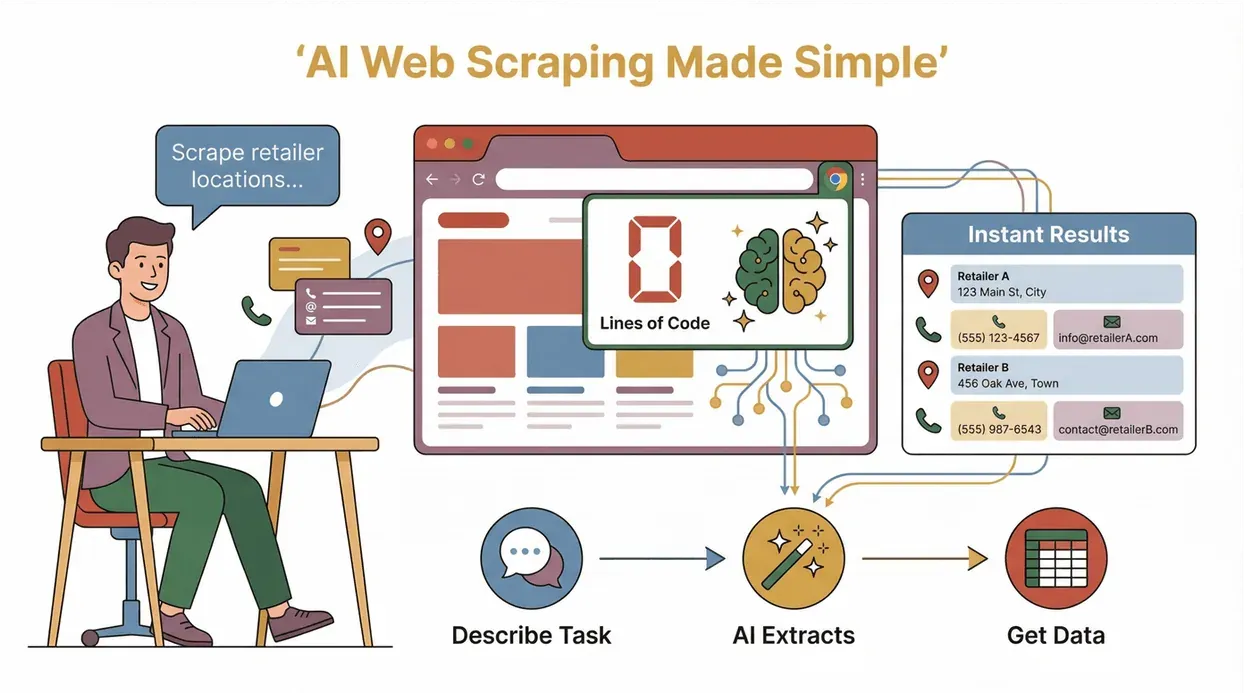 Here’s where Thunderbit really shines. As an AI-powered web scraper Chrome Extension, Thunderbit is built for business users—not just IT or data teams. You don’t need to write a single line of code. Just open the extension, describe what you want in plain English (“Scrape all retailer locations and contact info from this directory”), and let Thunderbit’s AI do the rest.
- No-Code, Natural Language Interface: Anyone can use Thunderbit to collect and structure data, regardless of technical background.
- AI Field Suggestions: Thunderbit reads the page and recommends the best columns to extract—store name, address, inventory, reviews, you name it.
- Subpage and Pagination Scraping: Need to go deeper? Thunderbit can automatically visit each subpage (like individual store or product pages) and pull additional details, even across multiple pages.
- Instant Export: Once your data is collected, export it directly to Excel, Google Sheets, Airtable, or Notion—ready for analysis or sharing.
Explore More Data Collection Use Cases Get Started Free
Thunderbit turns scattered, unstructured web data into clean, actionable insights in just a few clicks (Thunderbit Blog).
Try Thunderbit for Secondary Sales Data
From Data Collection to Actionable Insights
Once you’ve scraped your data, Thunderbit helps you organize and visualize it—making it easy to spot trends, gaps, and opportunities. Structured data can be plugged into your BI tools, CRM, or even used directly in sales presentations. Imagine showing your team a real-time dashboard of which retailers are selling out, which regions need more support, or how your latest promotion is performing—all powered by fresh, reliable data.
Overcoming the Challenges: From Management Need to Competitive Advantage
Here’s the big shift: improving secondary sales visibility isn’t just a management box to check. It’s a strategic lever for growth and market leadership. When you have integrated, real-time data flowing from every corner of your sales network, you can:
- React Faster: Spot and respond to market shifts before competitors.
- Match Supply and Demand: Reduce waste, avoid stockouts, and optimize your supply chain.
- Refine Sales Strategies: Double down on what’s working, fix what’s not, and experiment with confidence.
- Win Channel Loyalty: Support your distributors and retailers with data-driven insights, building stronger partnerships.
As one industry leader put it, “Secondary sales visibility is the hidden driver of market success.” With tools like Thunderbit, that driver is finally in your hands.
Key Takeaways: The Future of Secondary Sales Visibility
Let’s wrap up with the essentials:
- Secondary sales visibility means tracking what happens after your product leaves your hands—through distributors, retailers, and all the way to the end customer.
- It’s critical for inventory optimization, demand forecasting, sales strategy, and market responsiveness.
- Traditional methods—manual reports, spreadsheets, siloed systems—are too slow and error-prone for today’s fast-moving markets.
- Modern tools like Thunderbit make it easy to automate, centralize, and act on secondary sales data—no coding required.
- Enhanced visibility isn’t just about better management; it’s a competitive edge that helps you win in crowded markets.
If you’re ready to see further and act faster, now’s the time to rethink your approach to secondary sales visibility. Want to learn more about how Thunderbit can help? Check out the Thunderbit Blog for more insights, or try the Chrome Extension and see the difference for yourself.
FAQs
1. What is secondary sales visibility in simple terms?
Secondary sales visibility is the ability to track and analyze what happens to your products after they leave your warehouse—specifically, sales from distributors to retailers and from retailers to end customers.
2. Why is secondary sales visibility so important for businesses?
It helps companies optimize inventory, forecast demand, refine sales strategies, and respond quickly to market changes—leading to higher sales and lower costs.
3. What are the main challenges with traditional secondary sales tracking?
Common issues include data silos, manual data entry, delayed reporting, fragmented systems, and frequent human error—all of which slow down decision-making and reduce accuracy.
4. How does Thunderbit improve secondary sales visibility?
Thunderbit automates data collection from online sources, analyzes customer feedback, and extracts real-time sales endpoint data—turning unstructured information into actionable insights with no coding required.
5. How can I get started with Thunderbit for secondary sales visibility?
Install the Thunderbit Chrome Extension, use natural language prompts to define your data needs, and let Thunderbit handle the rest. Export your results to Excel, Google Sheets, or your preferred BI tool for instant analysis.
Try Thunderbit for Effortless Sales Data Visibility Get Started Free




