
It’s 2026, and the “future of work” is no longer a buzzword—it’s just work. If you’d told me back in 2020 that hybrid meetings, AI-powered project boards, and Slack pings at 7 a.m. would be my daily reality, I might have asked for a time machine (and a stronger coffee). But here we are: remote work tools aren’t just a lifeline for distributed teams—they’re the backbone of how modern organizations operate, collaborate, and compete.
What’s changed since the pandemic’s remote work surge? The numbers tell a story of stabilization, not retreat. Virtual team collaboration is now a mature, global phenomenon, with software adoption rates that would have seemed wild just a few years ago. In this post, I’ll dig into the latest remote work tools statistics, adoption, virtual team collaboration stats, and remote work software usage data for 2026—so you can see what’s driving productivity, retention, and innovation in the new world of work.
Remote Work Tools Statistics at a Glance: 2026 Headline Numbers
Let’s start with the headline stats—the kind you’ll want to drop in your next all-hands or board meeting. These numbers capture the scale, speed, and impact of remote work tool adoption in 2026:
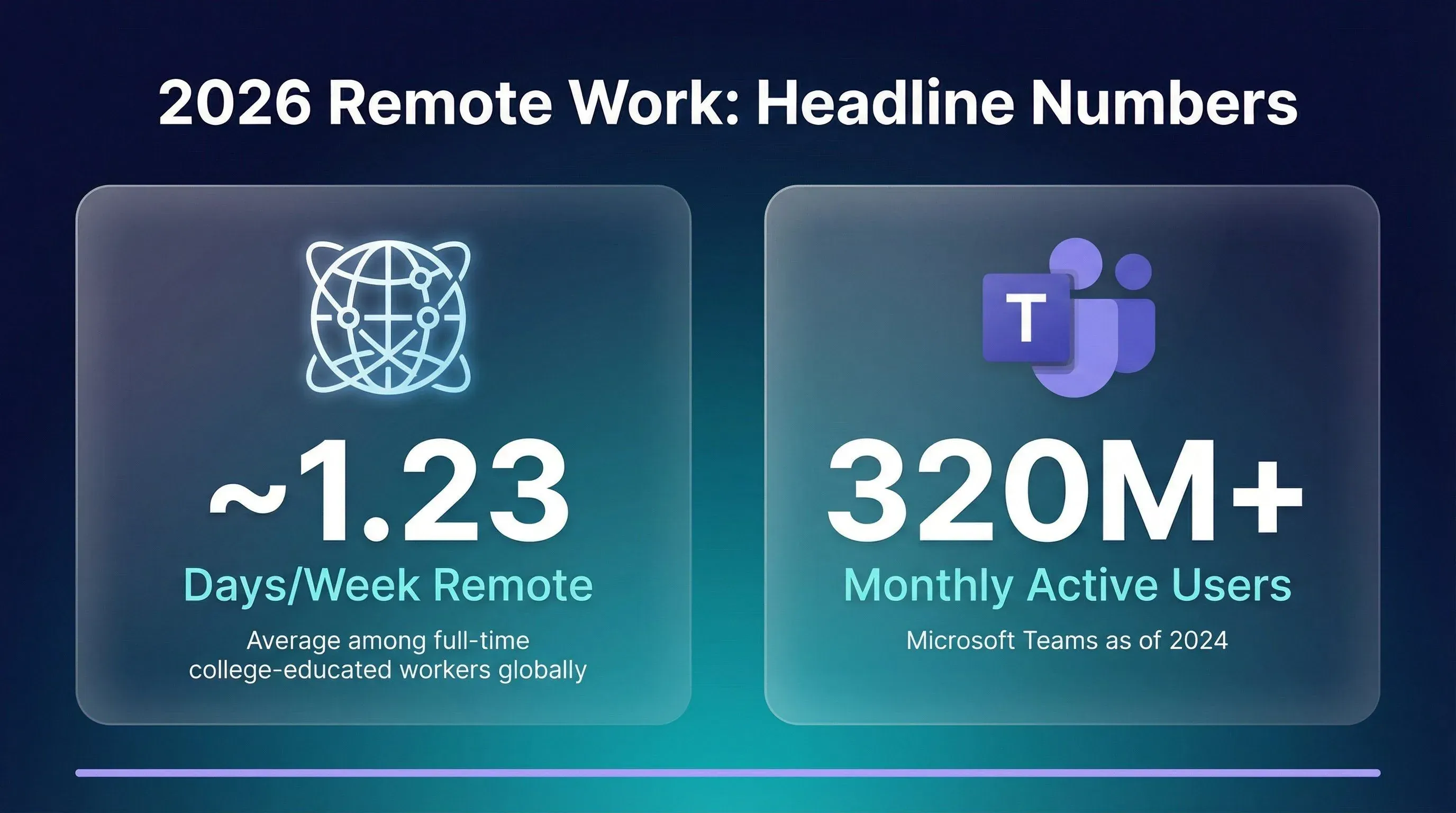
- Average remote work intensity among full-time, college-educated professionals is now ~1.23 days per week—about 25% of workdays—globally, holding steady after the post-pandemic surge.
- In the U.S., hybrid workers spend 46% of their week in the office (about 2.3 days), with remote-capable roles making up roughly half the workforce.
- Across the EU, hybrid is the dominant telework model at 44%, while fully remote dropped from 24% to 14% between 2023 and 2024.
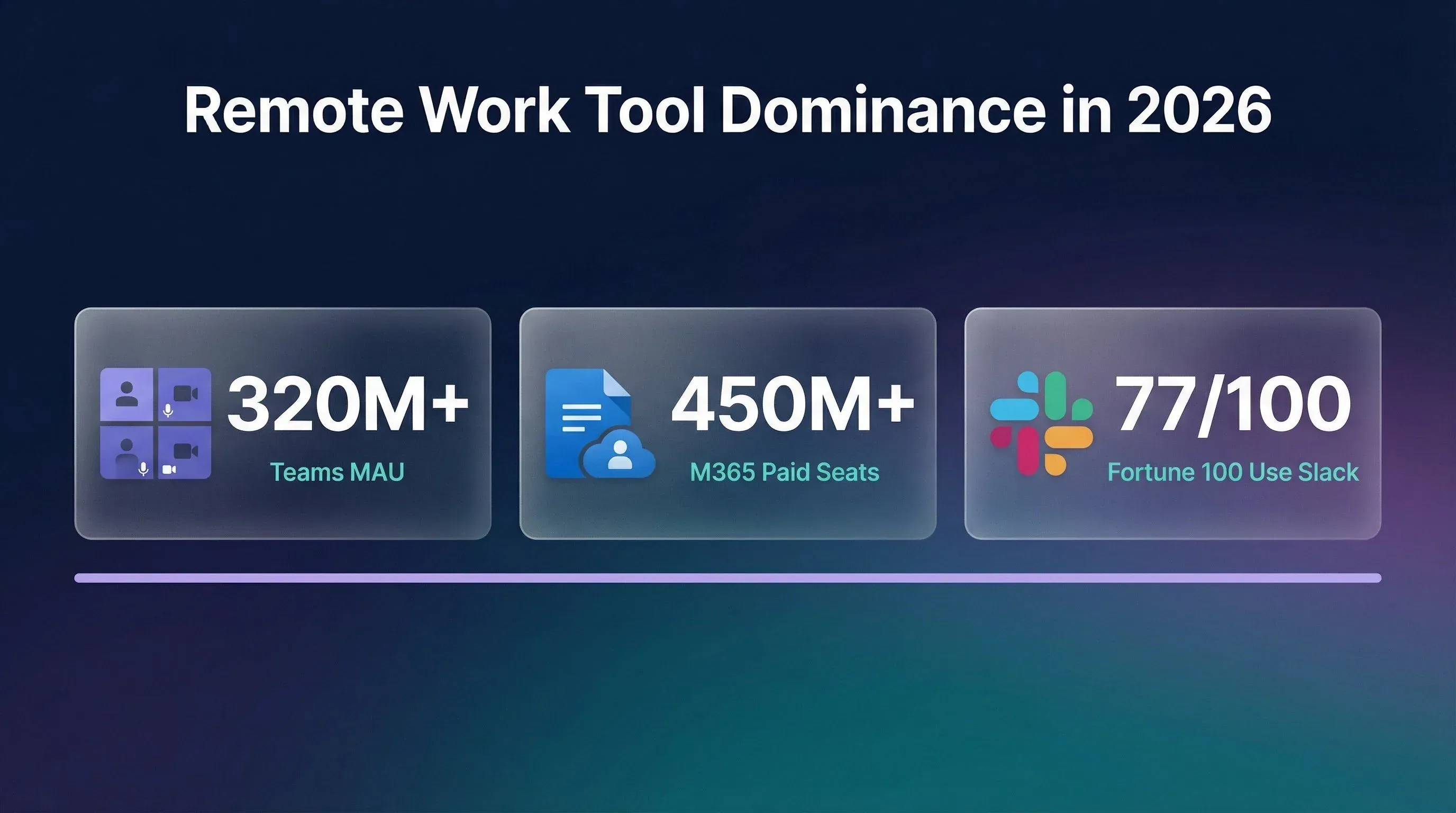
- Microsoft Teams boasts over 320 million monthly active users as of March 2024, while Microsoft 365 has over 450 million paid commercial seats in early 2026.
- Slack is used by 77 of the Fortune 100 and has over 200,000 paid customers.
- Zoom’s AI Companion is enabled on more than 4 million accounts, signaling the mainstreaming of AI in virtual meetings.
- 60% of apps in Okta’s ecosystem are “security and collaboration” tools—a sign that collaboration and security are now inseparable in the remote stack.
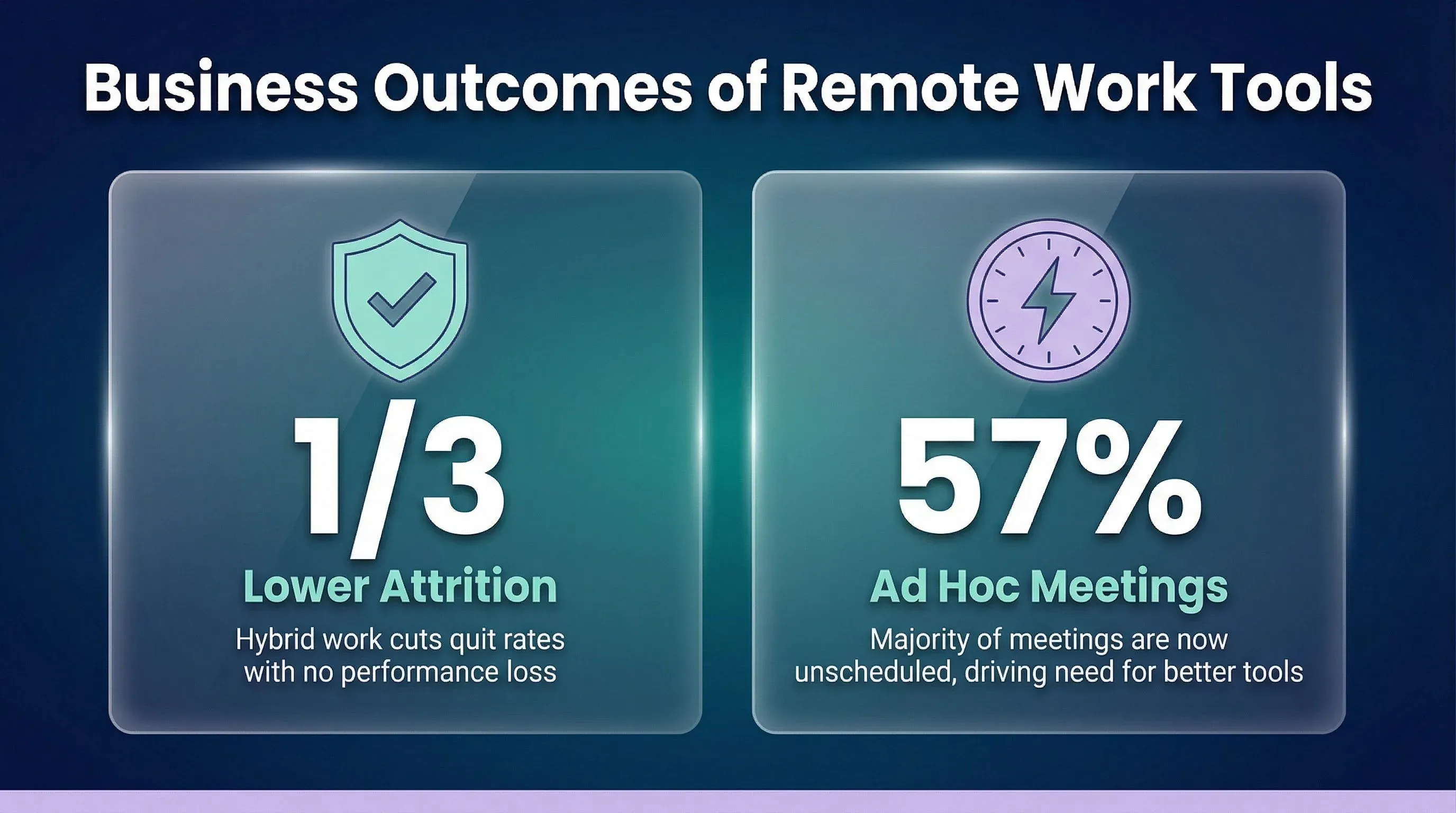
- A large-scale randomized trial found that hybrid work reduced quit rates by about one-third, with no negative impact on performance.
- 57% of meetings are now “ad hoc” (not scheduled in advance), and top users get a “ping” every 2 minutes—making efficient collaboration tools more vital than ever.
These stats aren’t just trivia—they’re the new reality for leaders, operations teams, and anyone trying to build a high-performing virtual team.
Try Thunderbit for Remote Work Data
Remote Work Tools Adoption: How Widespread Is Virtual Collaboration in 2026?
The adoption curve for remote work tools has been nothing short of dramatic. From the rocket-fueled growth of 2020–2022, we’ve now hit what I’d call the “high plateau” phase: remote and hybrid work are here to stay, but the wild swings have given way to steady, mature usage.
The Global Growth Curve
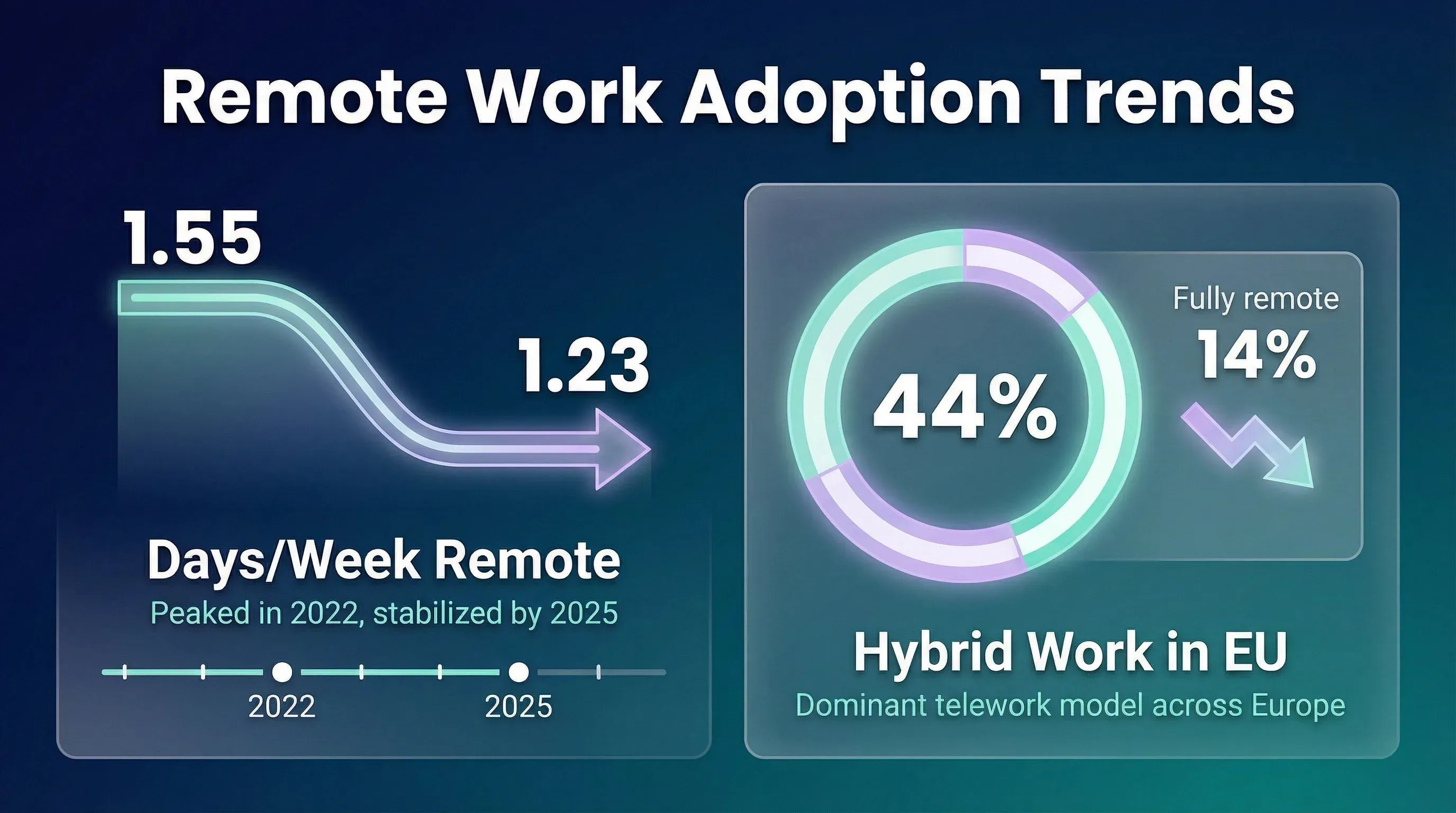
- Remote work intensity among college-educated, full-time workers peaked at 1.55 days/week in 2022, then stabilized at 1.23 days/week by early 2025.
- In the U.S., remote-capable jobs make up about half the workforce, but adoption is much higher in knowledge work sectors like tech and finance.
- In Europe, hybrid work is now the norm for 44% of teleworkable jobs, with a noticeable shift away from fully remote toward hybrid and on-site.
Regional and Industry Differences
- North America and Western Europe lead in remote work tool adoption, driven by tech, finance, and professional services.
- Asia-Pacific shows more variation, with hybrid adoption strongest in urban, knowledge-based economies.
- Healthcare, manufacturing, and retail remain more on-site, but even here, back-office and support teams are increasingly using virtual collaboration tools.
Which Tools Are Winning?
- Microsoft 365, Google Workspace, Zoom, Slack, Atlassian, and Asana dominate the remote work stack, according to Okta’s 2025 app usage rankings (Okta Businesses at Work).
- The shift is toward suite-led adoption: companies prefer integrated platforms over point solutions, especially as security and identity management become top priorities.
Virtual Team Collaboration Stats: Measuring the Impact on Team Efficiency
So, do all these tools actually make teams more productive? The data says yes—but with some important caveats.
Productivity and Retention
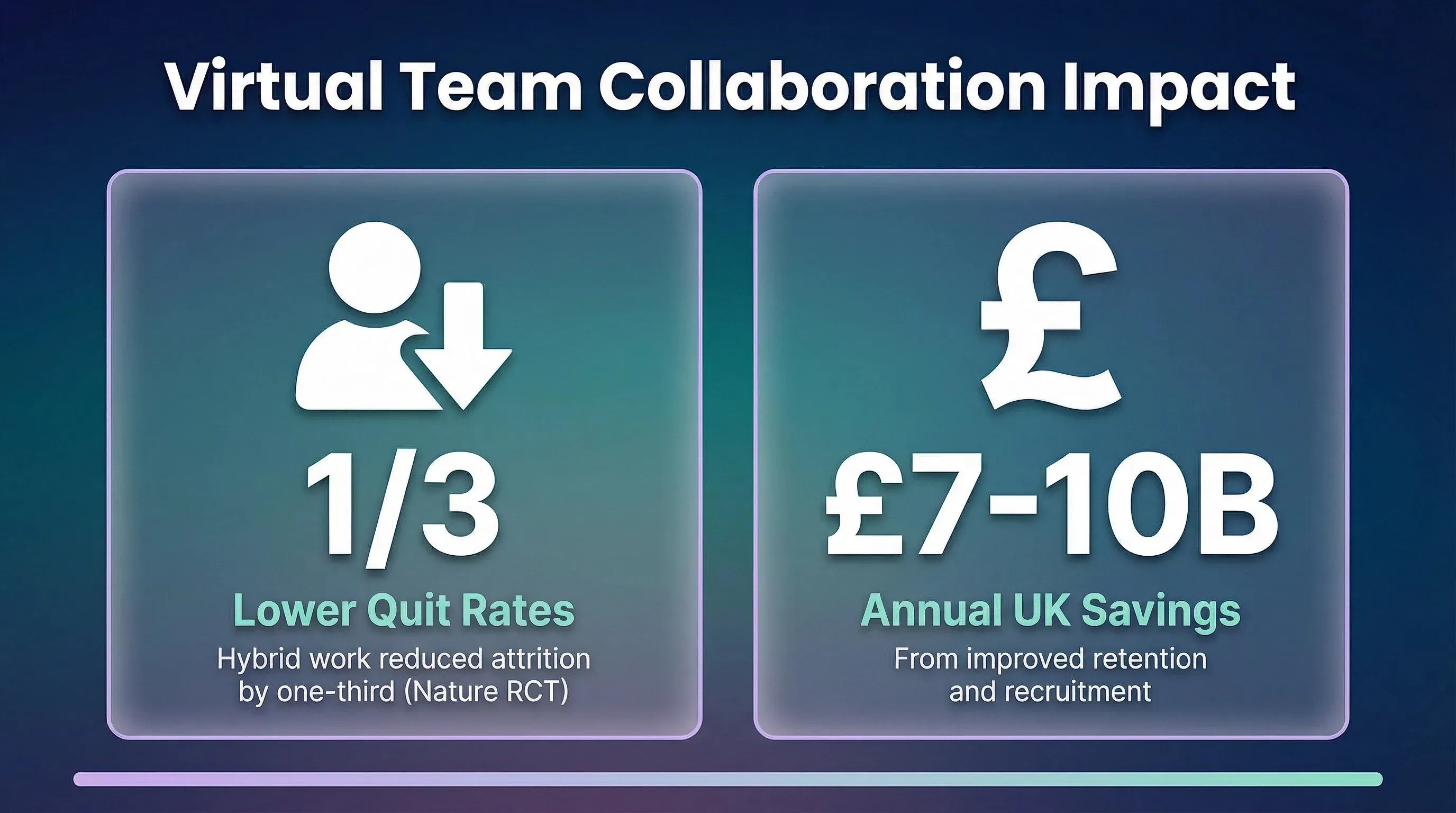
- A landmark randomized controlled trial found that hybrid work reduced employee quit rates by about one-third, with no negative impact on performance, promotions, or peer evaluations.
- UK employers estimate that annual savings from improved retention and recruitment due to hybrid work total £7–£10 billion.
Communication and Coordination
- According to Microsoft’s Work Trend Index, top users are interrupted every 2 minutes by meetings, emails, or chats.
- 57% of meetings are now unscheduled “ad hoc” calls, increasing the need for tools that streamline communication and reduce coordination overhead.
Perceptions of Collaboration
- Surveys show that managers increasingly view hybrid and remote teams as more productive, though the perceived magnitude varies year to year.
- Employees report higher job satisfaction and engagement when equipped with the right collaboration software, especially tools that support async work and minimize meeting overload.
Remote Work Software Usage Data: Which Tools Dominate in 2026?
Let’s get into the nitty-gritty: which remote work tools are actually being used, and by whom? Here’s a breakdown by category and vendor, using the most recent public data.
Most-Used Remote Work Tools (2026)
| Tool / Platform | Usage Signal (2024–2026) | Source |
|---|---|---|
| Microsoft Teams | 320M+ monthly active users | Microsoft |
| Microsoft 365 | 450M+ paid commercial seats | Microsoft |
| Slack | 200k+ paid customers; 77/100 Fortune 100 | Slack |
| Zoom | AI Companion on 4M+ accounts | Zoom |
| Atlassian Suite | 350k+ customers; Rovo >5M MAU | Atlassian |
| Asana | 180k+ paying customers | Asana |
| monday.com | 250k+ customers | monday.com |
| Notion | 100M+ users | Notion |
| Miro | 100M+ users; 250k+ customers | Miro |
Usage by Category
- Video Conferencing: Zoom, Microsoft Teams, Google Meet
- Project Management: Asana, monday.com, Atlassian Jira, Trello
- File Sharing & Docs: Google Workspace, Microsoft 365, Notion
- Chat & Messaging: Slack, Teams, Discord (for some creative/tech teams)
- Whiteboarding & Collaboration: Miro, Figma, Lucidchart
Trends by Company Size and Industry
- Enterprises lean toward Microsoft 365, Teams, and Atlassian for integrated security and compliance.
- SMBs and startups often prefer Google Workspace, Slack, and Notion for flexibility and ease of use.
- Tech and creative teams are early adopters of AI-powered features and multi-tool integrations.
The Evolution of Remote Work Tools: New Features Powering 2026 Trends
If you think remote work tools are just about video calls and shared docs, think again. The 2026 landscape is all about AI, automation, and seamless integration.
AI-Powered Collaboration
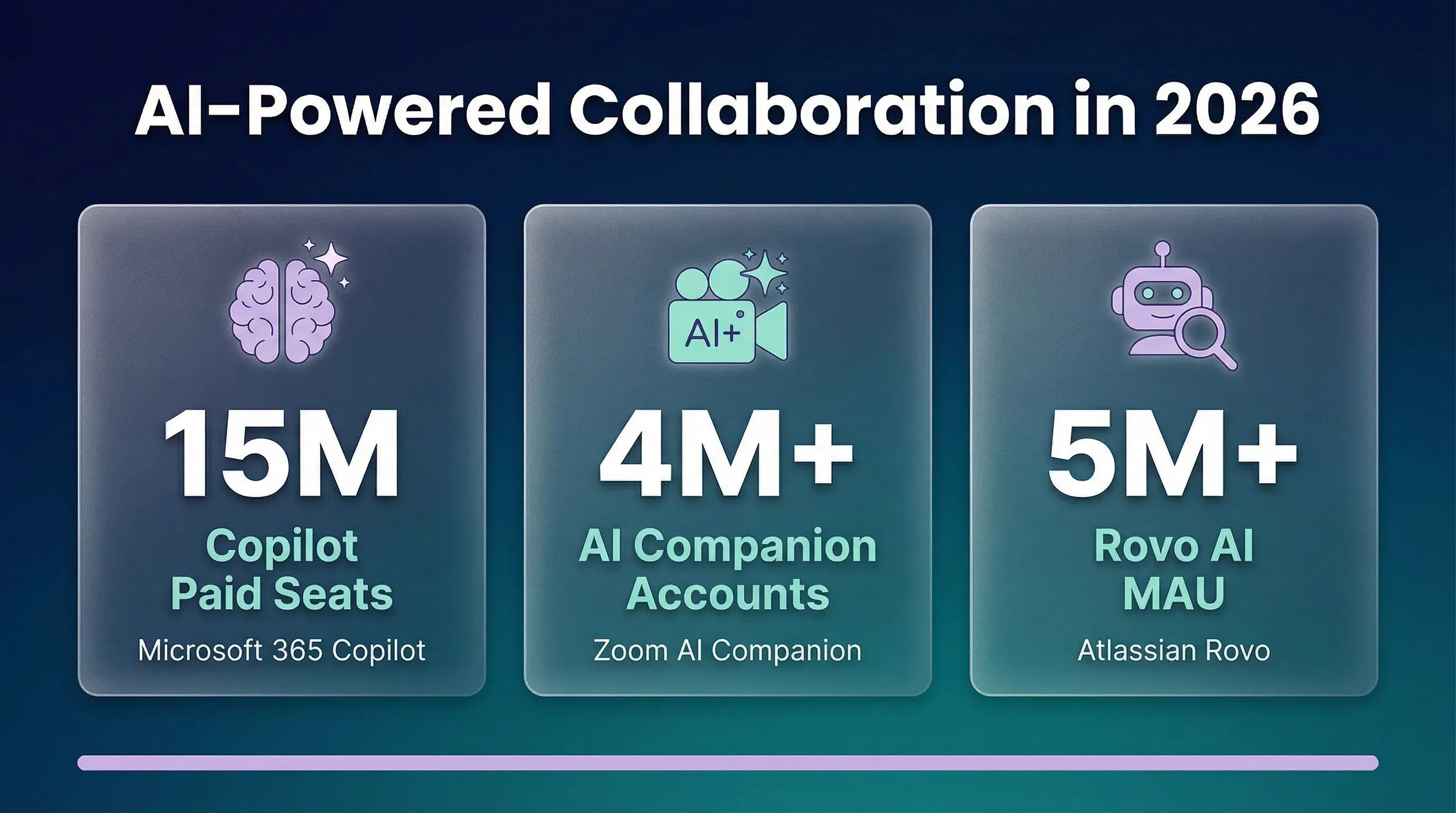
- Microsoft 365 Copilot has crossed 20 million paid seats as of Microsoft's FY26 Q3 disclosure (April 2026), up from 15 million in Q2 — and weekly engagement is now on par with Outlook. AI features like meeting summaries, smart search, and workflow automation are now baseline expectations.
- Zoom’s AI Companion is enabled on over 4 million accounts, offering real-time transcription, action item extraction, and automated follow-ups.
- Atlassian’s Rovo AI boasts over 5 million monthly active users, powering everything from ticket triage to knowledge management.
Security and Identity
- 60% of apps in Okta’s ecosystem are now “security and collaboration” tools, reflecting the growing need for secure, compliant remote work environments.
- Multi-factor authentication, zero-trust architectures, and granular permissions are now table stakes for any serious remote work platform.
User Experience and Integration
- The trend is toward suite consolidation: integrated platforms that combine chat, video, docs, project management, and AI in one place.
- Simplified UIs and cross-tool integrations (think: Slack messages triggering Asana tasks, or Notion docs embedded in Teams) are driving adoption and reducing friction.
Virtual Team Collaboration: Efficiency Gains and Business Outcomes
Let’s talk outcomes. What do all these tools and features actually mean for business performance?
Measurable Gains
- Hybrid work reduces attrition: A Nature-published RCT found a one-third drop in quit rates for hybrid teams, with no loss in performance.
- Cost savings are real: UK employers estimate £7–£10 billion in annual savings from improved retention and recruitment.
- Project timelines are shrinking: Teams using AI-powered project management tools report faster task completion and fewer bottlenecks (see Asana’s AI narrative).
- Employee engagement is up: Surveys show higher satisfaction and lower burnout when teams have access to async collaboration and automation features (Owl Labs).
Real-World Voices
Business leaders consistently cite the value of shared, up-to-date data and tools that reduce “coordination tax.” As one operations manager told me, “If I have to ask for the latest numbers one more time, I’m going to start sending invoices for my time.” (I feel you.)
Remote Work Tools Usage by Function: Video, Project Management, and More
Let’s break down remote work software usage data by function—because not all tools are created equal, and different teams have different needs.
Video Conferencing
- Zoom, Teams, and Google Meet remain the top choices, with Zoom leading for external meetings and Teams for internal collaboration in Microsoft-heavy orgs.
- AI features like live transcription, noise cancellation, and meeting summaries are now standard.
Project Management
- Asana, monday.com, Atlassian Jira, and Trello dominate, with AI-driven automation (task assignment, deadline prediction) gaining traction.
- Integration with chat and file-sharing tools is a must-have for most teams.
File Sharing & Documentation
- Google Workspace and Microsoft 365 are the backbone for docs and files, while Notion and Confluence are popular for knowledge bases and wikis.
- Real-time co-editing and version control are now expected features.
Chat & Messaging
- Slack and Teams are the go-to platforms for real-time communication, with Discord making inroads in creative and developer communities.
- Threaded conversations, emoji reactions, and AI-powered message search are standard.
Workflow Automation
- Zapier, Make (formerly Integromat), and native integrations in platforms like Asana and monday.com are used to connect tools and automate repetitive tasks.
- AI is increasingly handling routine follow-ups, reminders, and even data extraction.
Thunderbit’s Role in Remote Work: Data-Driven Collaboration and Market Insights
Now, let’s talk about how Thunderbit fits into this landscape. As remote and hybrid teams rely more on up-to-date, external data—think competitor pricing, market trends, or lead lists—the need for fast, accurate, and automated data extraction has never been greater.
Scrape external data for remote teams Get Started Free
How Thunderbit Supports Virtual Teams
- AI-Powered Web Scraping: Thunderbit lets teams extract structured data from any website, PDF, or image in just two clicks—no coding required. Just use “AI Suggest Fields,” and Thunderbit figures out what to pull.
- Subpage Scraping: Need more detail? Thunderbit can automatically visit each subpage (like product details or LinkedIn profiles) and enrich your dataset—perfect for sales, marketing, and research teams.
- Scheduled Scraping: Set up recurring scrapes to keep your data fresh—ideal for price monitoring, competitor tracking, or market analysis.
- Seamless Export: Push your data directly to Google Sheets, Notion, Airtable, or Excel, so your whole team stays aligned (and nobody has to ask, “Where’s the latest file?”).
Real-World Impact
- Trusted by 200,000+ users worldwide (Chrome Web Store), Thunderbit is helping distributed teams save hours on manual data entry and stay ahead of the competition.
- Teams report faster decision-making, fewer errors, and better collaboration when everyone is working from the same, up-to-date dataset.
- Thunderbit’s AI-driven approach means less time spent on setup and maintenance—so teams can focus on what matters.
Want to see how Thunderbit can help your remote team? Download the Chrome extension and try it for free.
Try Thunderbit for Remote Work Teams Get Started Free
Key Takeaways: What the 2026 Remote Work Tools Data Means for Your Team
Let’s wrap it up with the big lessons from the latest remote work tools statistics and virtual team collaboration stats:
- Remote and hybrid work are here to stay, but the wild growth has stabilized. The focus now is on optimizing collaboration, not just enabling it.
- Integrated suites (Microsoft 365, Google Workspace, Atlassian, Slack, Zoom) are the backbone of virtual teamwork, with AI and security features driving the next wave of adoption.
- Hybrid work delivers measurable business outcomes: lower attrition, higher satisfaction, and real cost savings—when paired with the right tools.
- AI-powered features are now mainstream, from meeting summaries to workflow automation. Teams that embrace these innovations are seeing faster project delivery and less burnout.
- Data-driven decision-making is critical for distributed teams. Tools like Thunderbit make it easy to keep everyone on the same page—literally and figuratively.
- The future is about continuous adaptation: as new features and tools emerge, the best teams will be those that stay curious, experiment, and keep their tool stack fresh.
FAQs on Remote Work Tools Statistics and Virtual Team Collaboration
1. How widespread is remote work tool adoption in 2026?
Remote work tools are now standard for remote-capable roles, especially in knowledge work sectors. Globally, about 25% of workdays are remote among full-time, college-educated workers, with hybrid models dominating in North America and Europe.
2. Which remote work tools are most popular in 2026?
The most widely used platforms are Microsoft 365, Teams, Google Workspace, Zoom, Slack, Atlassian, Asana, monday.com, Notion, and Miro. Enterprises prefer integrated suites for security and compliance, while SMBs often use more flexible, best-of-breed tools.
3. What impact do virtual team collaboration tools have on productivity?
Studies show that hybrid and remote teams equipped with modern collaboration tools experience lower attrition, higher satisfaction, and no loss in performance. AI-powered features and workflow automation further boost efficiency and reduce burnout.
4. How are remote work tools evolving in 2026?
The big trends are AI integration, enhanced security, and suite consolidation. Features like meeting summaries, smart search, and automated data extraction are now standard, and platforms are increasingly evaluated on their ability to integrate and secure the full workflow.
5. How does Thunderbit support remote and hybrid teams?
Thunderbit enables teams to extract, organize, and share up-to-date external data—like market trends, competitor info, or lead lists—without manual effort. Its AI-powered scraping, subpage enrichment, and scheduled exports help distributed teams stay aligned and make better decisions, faster.
Further Reading & Resources
If you want to dig deeper into the data and trends behind remote work tools in 2026, here are some of the best sources I relied on for this post:
- Global WFH Intensity and Trends (Stanford/PNAS)
- Gallup: Hybrid Work Patterns in the U.S.
- Eurofound: Telework in Europe
- Okta Businesses at Work 2025
- Microsoft Work Trend Index: The Infinite Workday
- Nature: Randomized Controlled Trial on Hybrid Work
- Zoom Annual Report 2026
- Atlassian Shareholder Letter Q2 FY26
- Thunderbit Official Website
- Thunderbit Chrome Extension Download Page
- Thunderbit Blog
For more on how to harness the power of remote work tools and AI-driven collaboration, check out the Thunderbit Blog or subscribe to our YouTube Channel.
Remote work isn’t just a trend—it’s a permanent shift. The teams that thrive in 2026 will be those who treat their tool stack as a living, evolving asset. And if you need a hand keeping your data (and your team) in sync, you know where to find us.
Explore Thunderbit for Remote Work Collaboration Get Started Free




