
Pricing has always been a high-stakes puzzle, but in 2025, it feels more like a high-speed chess match—one where the board keeps shifting under your feet. I’ve watched as companies big and small scramble to keep up with market swings, inflation, and competitors who seem to change prices faster than you can say “discount.” The good news? Pricing intelligence companies are stepping up as the secret weapon for businesses that want to stay ahead, boost profits, and make pricing a true strategic advantage.
If you’re wondering which pricing intelligence solution is right for your business, you’re in the right place. I’ve dug deep into the top 11 pricing intelligence companies of 2025, comparing everything from AI analytics to ease of use and integration. Whether you’re a startup, a retail giant, or somewhere in between, this list will help you find the best fit to outmaneuver the competition and make smarter pricing moves.
Why Pricing Intelligence Companies Matter for Modern Businesses
Let’s get real: pricing isn’t just about sticking a number on a product anymore. In today’s market, even a 1% price change can make or break your bottom line. ), and some have even reported a .
Why is this happening? Because pricing intelligence companies do more than just monitor competitors—they help you:
- React instantly to market changes: When a rival launches a flash sale, you’ll know before your coffee gets cold.
- Optimize for profit and market share: AI-driven tools can recommend the perfect price point to maximize revenue or margin.
- Build customer trust: Consistent, data-driven pricing means fewer surprises for your buyers and a stronger brand reputation.
With , it’s clear that pricing intelligence has moved from “nice-to-have” to absolutely mission-critical.
How to Choose the Right Pricing Intelligence Company: Key Criteria
Not all pricing intelligence companies are created equal. Here’s what I look for when evaluating these tools—and what you should, too:
Ease of Use: No-Code and Natural Language Tools
Let’s face it: if your team can’t use the tool, it doesn’t matter how powerful it is. The best solutions offer intuitive dashboards, no-code setup, and even natural language prompts. leads the way here, letting you scrape and analyze competitor prices in just two clicks—no technical skills required.
Data Coverage: Market and Competitor Insights
You want a tool that covers all your key markets, channels, and competitors. Some solutions, like and , aggregate massive datasets across online, offline, and even mobile channels. Others focus on specific verticals or regions.
Analytical Power: AI and Strategy Optimization
Raw data is great, but actionable insights are better. Look for platforms that use AI and machine learning to forecast demand, recommend optimal prices, and simulate “what-if” scenarios. and are standouts for their advanced analytics and predictive capabilities.
Integration Capabilities: Connecting to Your Business Systems
A pricing tool should plug right into your existing tech stack—ERP, ecommerce, CRM, you name it. and are known for seamless integrations, making it easy to sync pricing insights with your day-to-day operations.
With these criteria in mind, let’s dive into the top 11 pricing intelligence companies of 2025.
The Top 11 Pricing Intelligence Companies of 2025
- – Best for fast, no-code market data and competitor monitoring
- – Best for large enterprises needing end-to-end pricing optimization
- – Best for AI-powered price recommendations in retail
- – Best for SMBs and ecommerce price tracking
- – Best for real-time, large-scale retail analytics
- – Best for multi-channel data and automation
- – Best for flexible, global price monitoring
- – Best for high-accuracy data and integration
- – Best for dynamic pricing and assortment management
- – Best for AI/ML-driven pricing and demand forecasting
- – Best for strategic, global enterprise pricing
1. Thunderbit
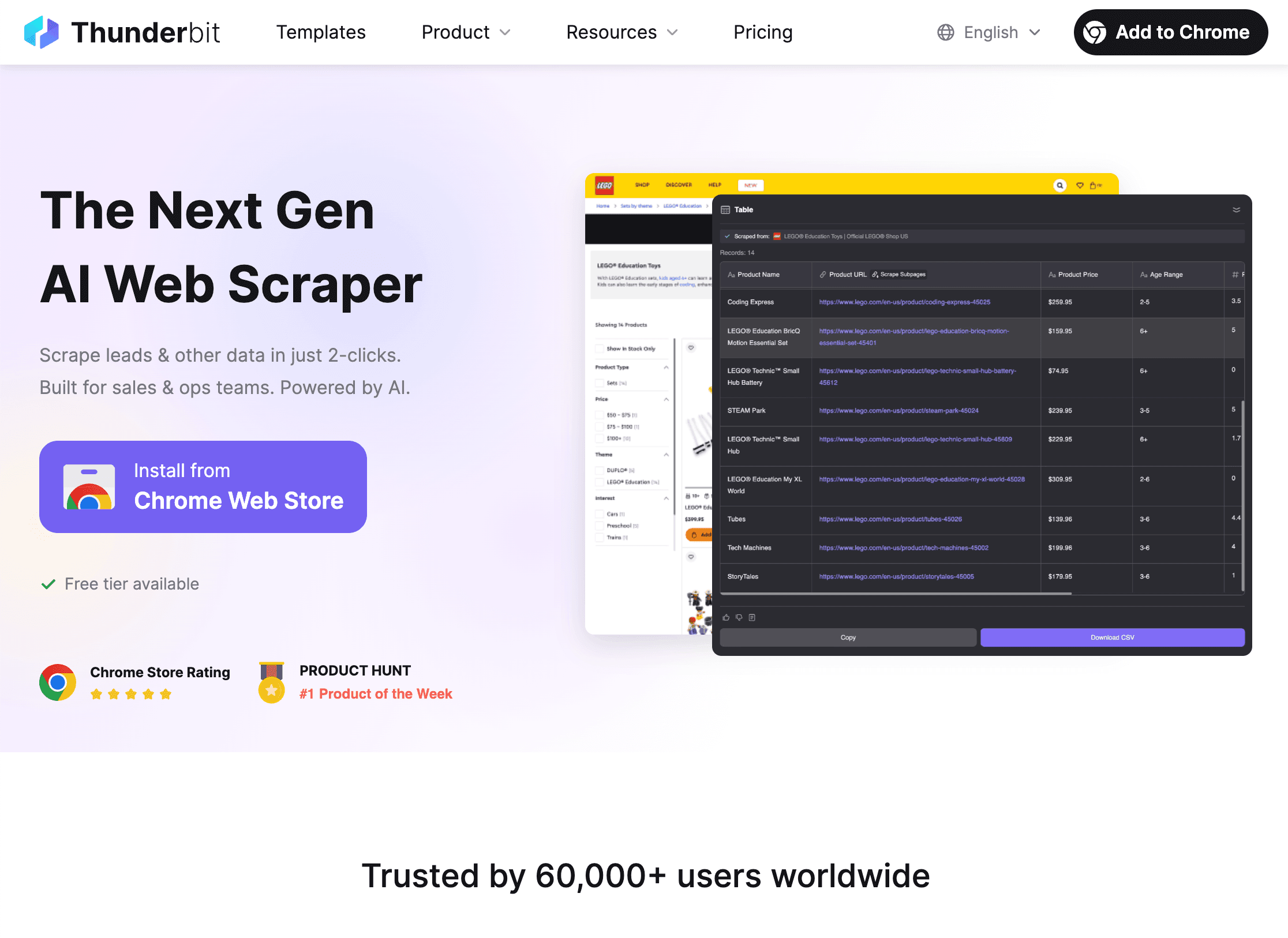 is shaking up the pricing intelligence space with its AI-powered web scraper and data automation platform. What makes Thunderbit different? It’s all about speed, flexibility, and accessibility—no coding, no templates, just results.
- No-Code, Natural Language Interface: Describe what you want (“Scrape all competitor prices from this category”), and Thunderbit’s AI does the rest.
- AI-Powered Data Extraction: Scrape any website, marketplace, PDF, or image in two clicks. The AI suggests fields, structures messy data, and even translates or categorizes on the fly.
- Subpage & Pagination Support: Need to analyze every SKU in a competitor’s catalog? Thunderbit can crawl through listings, click into product pages, and enrich your dataset automatically.
- Instant Export: Push data directly to Excel, Google Sheets, Airtable, or Notion—no extra steps.
- Scheduled Scraping: Set it and forget it. Thunderbit can monitor markets daily, alerting you to price changes in real time.
Thunderbit isn’t a traditional pricing analytics engine, but it’s a powerhouse for market research, competitor monitoring, and feeding fresh data into your pricing strategy. If you need to capture unstructured, real-time market shifts—and do it without an IT army—Thunderbit is a game-changer for sales, ecommerce, and ops teams.
Want to see how it works? or check out the for more use cases.
2. Pricefx
 is the go-to choice for enterprises that need a full-featured, cloud-based pricing suite. It covers everything from dynamic pricing and price optimization to CPQ (configure-price-quote) and advanced analytics.
- Comprehensive Feature Set: Manage prices, discounts, rebates, and promotions across B2B and B2C channels.
- AI-Driven Optimization: Simulate “what-if” scenarios, forecast the impact of price changes, and get real-time recommendations.
- Deep Integration: Certified connectors for SAP, ERP, CRM, and more.
- Modular & Scalable: Start with analytics, add CPQ or rebate management as your needs grow.
Pricefx is built for large organizations—think manufacturers, distributors, and global retailers—who want centralized control and the ability to optimize at scale. Customers have reported after implementation.
3. Competera
 is an AI-driven pricing platform that’s all about finding the “sweet spot” for every SKU. It’s especially popular with retailers and omnichannel brands.
- Dynamic Pricing & Promotion Optimization: Automate price changes based on rules and AI recommendations.
- Advanced Analytics: Ingests competitor prices, inventory, and conversion data to refine models.
- Proven Results: Users have seen .
- Integration: API access and connections to ecommerce platforms and data warehouses.
Competera is a top pick for mid-to-large retailers who want AI-powered price recommendations and deep competitive analytics.
4. Prisync
is the favorite of small and mid-sized ecommerce businesses looking for simple, effective price tracking.
- Real-Time Price Monitoring: Track hundreds of competitor products and get daily or instant updates.
- Customizable Alerts: Get notified if a competitor undercuts your price or runs out of stock.
- Dynamic Pricing Rules: Automatically adjust your prices to stay competitive.
- Easy Onboarding: Integrates with Shopify, Magento, WooCommerce, and more.
Prisync is all about ease of use and affordability. It’s not as heavy on advanced analytics, but for SMBs needing fast, reliable competitor monitoring, it’s a solid choice.
5. Intelligence Node
 brings serious AI muscle to retail pricing intelligence, with a focus on scale and speed.
- Real-Time Data: Refreshes pricing every 10 seconds, tracking over 1 billion products.
- AI Matching: 99% accuracy in matching products—even without UPCs.
- Predictive Analytics: Demand forecasting, price drop predictions, and actionable recommendations.
- Enterprise-Ready: Used by giants like Walmart and Toys"R"Us.
If you’re a large retailer needing instant, global market visibility and sophisticated AI insights, Intelligence Node is a proven partner.
6. Wiser
 is known for its comprehensive market data and powerful automation features.
- Multi-Channel Coverage: Aggregates online, in-store, and mobile pricing data.
- Fast Repricing: Adjusts prices in under five minutes when the market shifts.
- Dynamic Pricing Rules: Set rules based on competitor rank, stock, time of day, and more.
- MAP Enforcement & Promotions Tracking: Stay compliant and monitor all channels.
Wiser is ideal for mid-market to enterprise retailers and brands who want a one-stop shop for competitive data, pricing automation, and analytics.
7. Price2Spy
 is a veteran in the price monitoring space, trusted by over 600 clients worldwide.
- Real-Time Alerts: Get notified of competitor price changes instantly.
- Custom Reporting: Design and schedule detailed comparison reports.
- Global Coverage: Handles multiple currencies and markets.
- API Integration: Feed competitor data into your own pricing systems.
Price2Spy is flexible and scalable, making it a great fit for companies of all sizes that need reliable monitoring and alerting.
8. Minderest
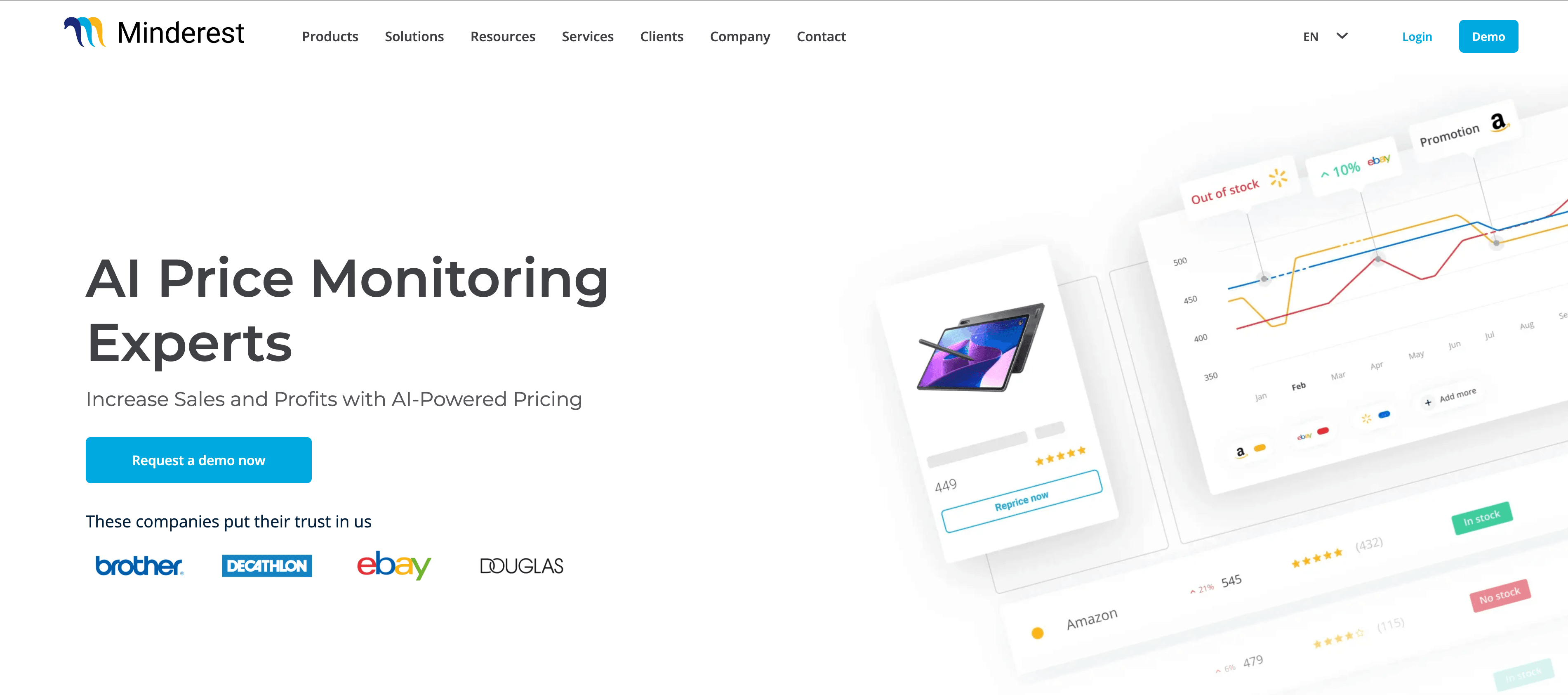
is a European leader in price intelligence, with a strong focus on data quality and seamless integration.
- Accurate Product Matching: Combines automated and manual methods for high-precision tracking.
- Rich Dashboards: Over 20 pre-built metrics and visualizations.
- API & BI Integration: Push data directly into your ERP, ecommerce, or BI tools.
- Strategic Insights: Analyze pricing index, promotional strategies, and market trends.
Minderest is trusted by 11 of the world’s 50 largest retailers and is perfect for enterprises needing high-quality data and deep integration.
9. Omnia Retail
 specializes in dynamic pricing and assortment management for online retailers and brands.
- Rule-Based Pricing Engine: Build complex pricing strategies and automate them across your catalog.
- Competitor Monitoring: Tracks prices from websites, Google Shopping, and more.
- Elasticity Analysis: Adjusts prices based on sales sensitivity.
- Integration: Direct connections to Shopify, Magento, and custom platforms.
Omnia Retail is a top choice for medium to large ecommerce businesses that need automation and flexibility for thousands of SKUs.
10. Blue Yonder
 (formerly JDA) is a heavyweight in AI-powered pricing and demand forecasting, especially for large-scale retailers.
- Integrated AI Platform: Combines pricing, demand forecasting, and inventory management.
- Machine Learning Algorithms: Optimize prices for profit, revenue, and sell-through targets.
- Markdown Optimization: Prevent overstocks and maximize margins on seasonal products.
- Deep Integration: Ties into ERP and merchandising systems.
Blue Yonder is best for grocery, apparel, and mass retail environments where pricing must align with supply chain realities.
11. Navetti
(now part of Vendavo) is all about strategic pricing management for global enterprises.
- Full Pricing Lifecycle: Set list prices, manage discounts, and handle regional pricing.
- Rules-Based Pricing: Automate adjustments based on costs, market changes, or competitive data.
- Advanced Analytics: Price waterfalls, margin analysis, and performance tracking.
- Enterprise Integration: Connects to SAP, ERP, and CRM systems.
Navetti is a favorite among manufacturers and industrial companies needing disciplined, value-based pricing at scale.
Side-by-Side Comparison: Pricing Intelligence Companies at a Glance
| Solution | Ease of Use | Data Coverage | Analytical Power | Integration | Best For |
|---|---|---|---|---|---|
| Thunderbit | Very high (no-code) | Any web source, live | Moderate (AI struct.) | Excel, Sheets, Notion | SMBs, market research, fast data needs |
| Pricefx | Moderate | Global, internal+ext. | Very high (AI/CPQ) | SAP, ERP, CRM | Large enterprise, end-to-end pricing |
| Competera | Moderate | Retail, ecom, sales | Very high (AI opt.) | API, ecom platforms | Mid-large retailers, AI optimization |
| Prisync | High (simple UI) | Online retail, SMB | Low-med (rules) | Shopify, Magento, API | SMB ecom, fast competitor tracking |
| Intelligence Node | Moderate | Global, real-time | High (AI analytics) | API, BI tools | Enterprise retail, instant insights |
| Wiser | Moderate | Multi-channel, fast | High (automation) | Ecom, BI, API | Mid-enterprise, automation+analytics |
| Price2Spy | Moderate | Global, flexible | Med (alerts, reports) | API, plugins | All sizes, monitoring/alerts |
| Minderest | Moderate | Daily, high accuracy | High (AI, dashboards) | ERP, BI, ecom | Enterprise, integration focus |
| Omnia Retail | Moderate | Ecom, Google Shopping | Med (rules, elastic) | Shopify, Magento, API | Medium-large ecom, rule automation |
| Blue Yonder | Low-mod (enterprise) | Internal, supply chain | Very high (AI/ML) | ERP, merchandising | Large retail, supply chain integration |
| Navetti | Low-mod (pro users) | Internal, market data | High (strategy) | SAP, ERP, CRM | Industrial, global B2B/B2C |
Conclusion: Which Pricing Intelligence Company Is Right for You?
Choosing the right pricing intelligence company is all about matching your needs to the tool’s strengths. Here’s my quick cheat sheet:
- Need fast, flexible market data (no coding)? is your best bet for real-time research and competitor monitoring.
- Running a large enterprise with complex pricing? , , or offer the analytics and integration muscle you need.
- Want simple, affordable price tracking? and are great for SMBs and growing ecommerce teams.
- Looking for deep AI analytics and predictive insights? and are top contenders.
- Need seamless integration with your business systems? and make it easy to connect pricing data to your workflows.
- Managing strategic, global pricing? is built for disciplined, value-based pricing at scale.
My advice? Request demos, take advantage of free trials, and involve both your pricing and IT teams in the decision. The right pricing intelligence partner can unlock 5–10% or more in profit uplift and keep you ahead of the curve—no matter how wild the market gets.
Want to keep learning? Check out the for more deep dives on pricing, AI, and automation.
FAQs
1. What is a pricing intelligence company?
A pricing intelligence company provides software and services that help businesses monitor competitor prices, analyze market trends, and optimize their own pricing strategies using data and AI.
2. How do pricing intelligence tools boost profitability?
By delivering real-time market data and AI-driven recommendations, these tools help businesses set the right prices, react quickly to competitors, and avoid over- or under-pricing—leading to higher sales and better margins.
3. What’s the difference between rule-based and AI-driven pricing?
Rule-based pricing uses predefined rules (like “always be $1 less than Competitor X”), while AI-driven pricing uses machine learning to predict demand, forecast outcomes, and suggest optimal prices dynamically.
4. Can pricing intelligence platforms integrate with my existing systems?
Yes—most leading platforms offer APIs and pre-built connectors for ERP, ecommerce, CRM, and BI tools. Integration is key for automating price updates and syncing data across your business.
5. Is Thunderbit a traditional pricing intelligence tool?
Thunderbit isn’t a classic pricing analytics engine—it’s an AI-powered data extraction platform that helps you gather real-time market and competitor data from any source, making it a powerful complement to traditional pricing tools.
Ready to take your pricing strategy to the next level? or explore more tips on the .