
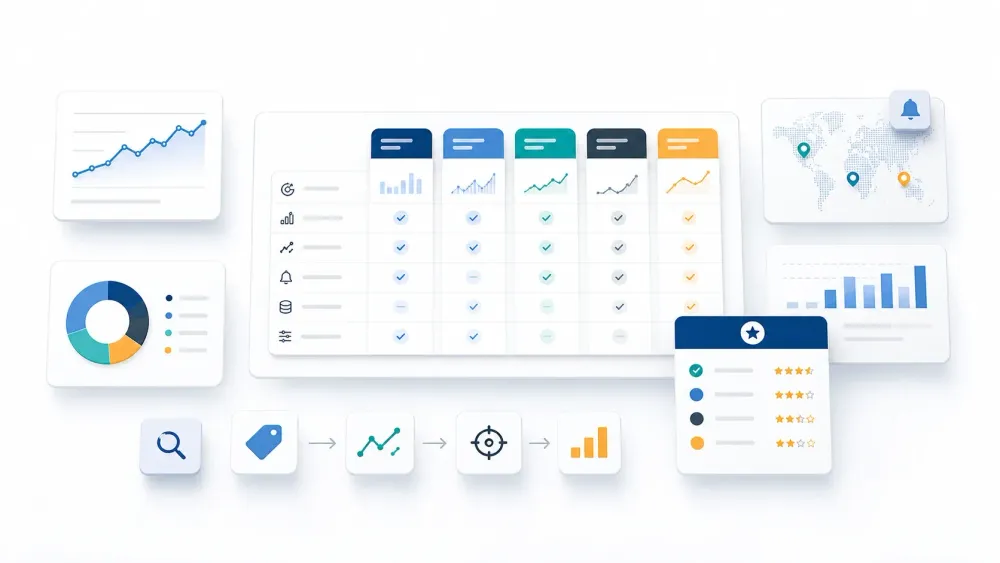
Pricing did not get simpler in 2026. It got faster. Shopify's current global ecommerce sales outlook says worldwide ecommerce sales are projected to reach roughly $6.4 trillion in 2026, while BCG reports that AI-powered retail pricing can lift gross profit by 5% to 10%. That is why pricing intelligence is no longer just a reporting layer. For many teams, it is the control system for margin, competitiveness, and reaction speed.
This refreshed guide is built for one job: helping you shortlist the right pricing intelligence company quickly. I re-checked the official product pages, live product positioning, and commercial signals for the vendors below on May 19, 2026, then tightened the list to eleven platforms that still have a clear pricing-intelligence story in the current market.
If your pricing workflow also depends on collecting live competitor data from public product pages, Thunderbit's guides to pricing tracking tools, what data scraping is and how it works, and AI web scraping tools are the fastest follow-on reads.
Quick Picks by Use Case
If you do not need the full ranking, start here:
| If your main need is... | Start with... | Why |
|---|---|---|
| Fast no-code competitor data capture | Thunderbit | Best fit when the workflow starts on live public pages and the team needs usable rows fast |
| Enterprise price optimization and governance | Pricefx or Competera | Stronger for optimization logic, scenario modeling, and retailer-scale decision support |
| SMB competitor tracking and repricing | Prisync or Price2Spy | Easier to operationalize than large enterprise suites, with clearer self-serve entry points |
| Real-time retail price intelligence at scale | Intelligence Node or Wiser | Better fit when market-wide visibility and retail execution matter as much as the dashboard |
| MAP, channel, and reseller visibility | Dealavo or Minderest | Stronger for multichannel price monitoring, partner oversight, and pricing consistency |
| Dynamic pricing automation for omnichannel retail | Omnia | Best fit when the team wants monitoring plus pricing action in one retailer-oriented stack |
| Market-wide pricing intelligence for enterprise analytics | DataWeave | Better fit when pricing data feeds a broader digital shelf or commerce intelligence program |
See Thunderbit's Price Scraper Workflow
Why Pricing Intelligence Companies Matter in 2026
The practical case is straightforward:
- Price changes compound faster than manual teams can react. Competitor discounts, stock shifts, shipping thresholds, and assortment changes move together.
- Good pricing decisions depend on usable data, not raw page checks. Teams need matching, alerts, exports, and history, not just snapshots.
- The value is operational speed. The question is not whether the market moved, but whether you can decide fast enough to hold, match, ignore, bundle, or reprice.
- Margin protection now depends on better segmentation. The best platforms help teams distinguish which SKUs need automation, which need analyst review, and which should remain rule-governed.
If you want a quick orientation on how price intelligence changes day-to-day retailer decisions, this Wiser explainer is the most useful early-stage watch in the category:
What to Look for in a Pricing Intelligence Company
The shortlist gets much easier if you evaluate these five things first:
- Collection and coverage: Can the platform see the channels, geographies, sellers, and assortment patterns you actually care about?
- Matching quality: Weak product matching ruins everything downstream, especially in variants, bundles, or reseller-heavy categories.
- Optimization depth: Some products stop at monitoring. Others add repricing rules, elasticity logic, AI recommendations, and scenario modeling.
- Operational fit: Browser-first teams, ecommerce operators, enterprise pricing managers, and retail analytics teams do not need the same tool.
- Commercial clarity: Public trial access, self-serve plans, or at least honest sales-led positioning matter when you are evaluating implementation friction.
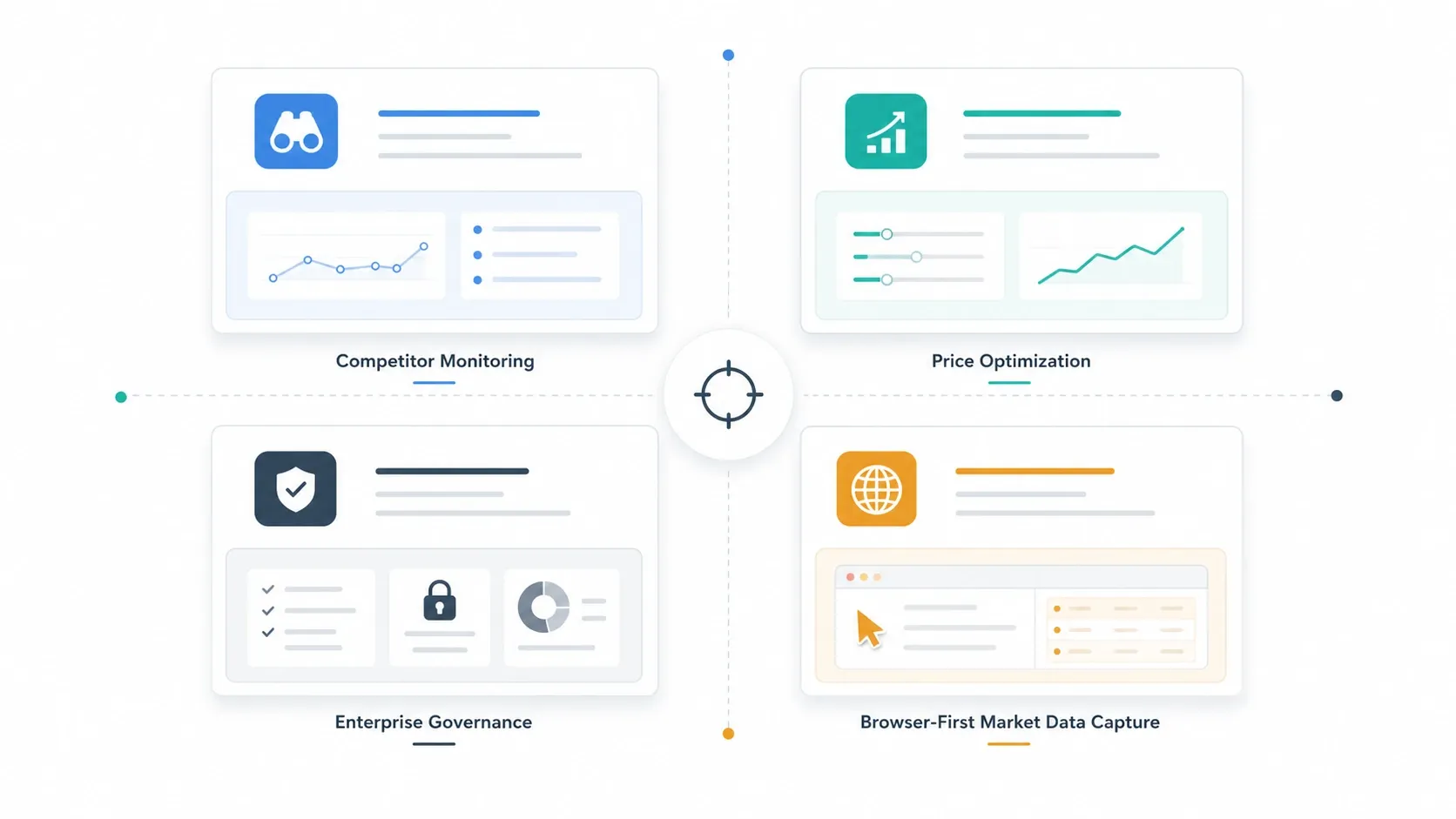
In practice, most buyers end up choosing among four paths:
- Competitor monitoring platforms for tracking price movements and alerts
- Dynamic pricing and repricing tools for automated pricing action
- Enterprise optimization suites for governance, scenario planning, and large-scale price strategy
- Browser-first market data capture tools for collecting current pricing data from live public pages
Quick Comparison Table: Best Pricing Intelligence Companies in 2026
Pricing signals below were checked against current official product, pricing, or sales pages on May 19, 2026.
| Company | Pricing signal | Best for | Standout angle |
|---|---|---|---|
| Thunderbit | Free entry point; self-serve and team plans | Market research, ecommerce ops, fast competitor data capture | Browser-first AI extraction from live pages, subpages, and pagination |
| Pricefx | Demo-led / custom pricing | Enterprise pricing teams | Full pricing stack with AI, price management, and scenario support |
| Competera | Demo-led / custom pricing | Enterprise retail pricing teams | Customer-centric pricing AI plus competitive data |
| Prisync | 14-day free trial; public pricing available | SMB ecommerce teams | Simple competitor monitoring and dynamic pricing automation |
| Intelligence Node | Demo-led / custom pricing | Large retailers and brands | Real-time price intelligence with strong matching and retail focus |
| Wiser | Sales-led pricing | Retailers and brands | Price intelligence tied to retail execution and margin protection |
| Price2Spy | Public pricing tiers and free trial | SMB to mid-market operators | Practical monitoring, reporting, MAP support, and repricing modules |
| Minderest | Demo-led / custom pricing | Enterprises needing strong integration and accuracy | AI price intelligence with broad retailer and category visibility |
| Omnia Retail | Demo-led / pricing plans via sales | Omnichannel retailers | Dynamic pricing automation in a retailer-first workflow |
| Dealavo | Free trial plus sales-led plans | Brands, distributors, and reseller-heavy teams | Price monitoring, dynamic pricing, and channel visibility in one stack |
| DataWeave | Demo-led / custom pricing | Enterprise digital shelf and pricing intelligence teams | Market-wide pricing intelligence tied to commerce analytics |
The 11 Best Pricing Intelligence Companies in 2026
1. Thunderbit
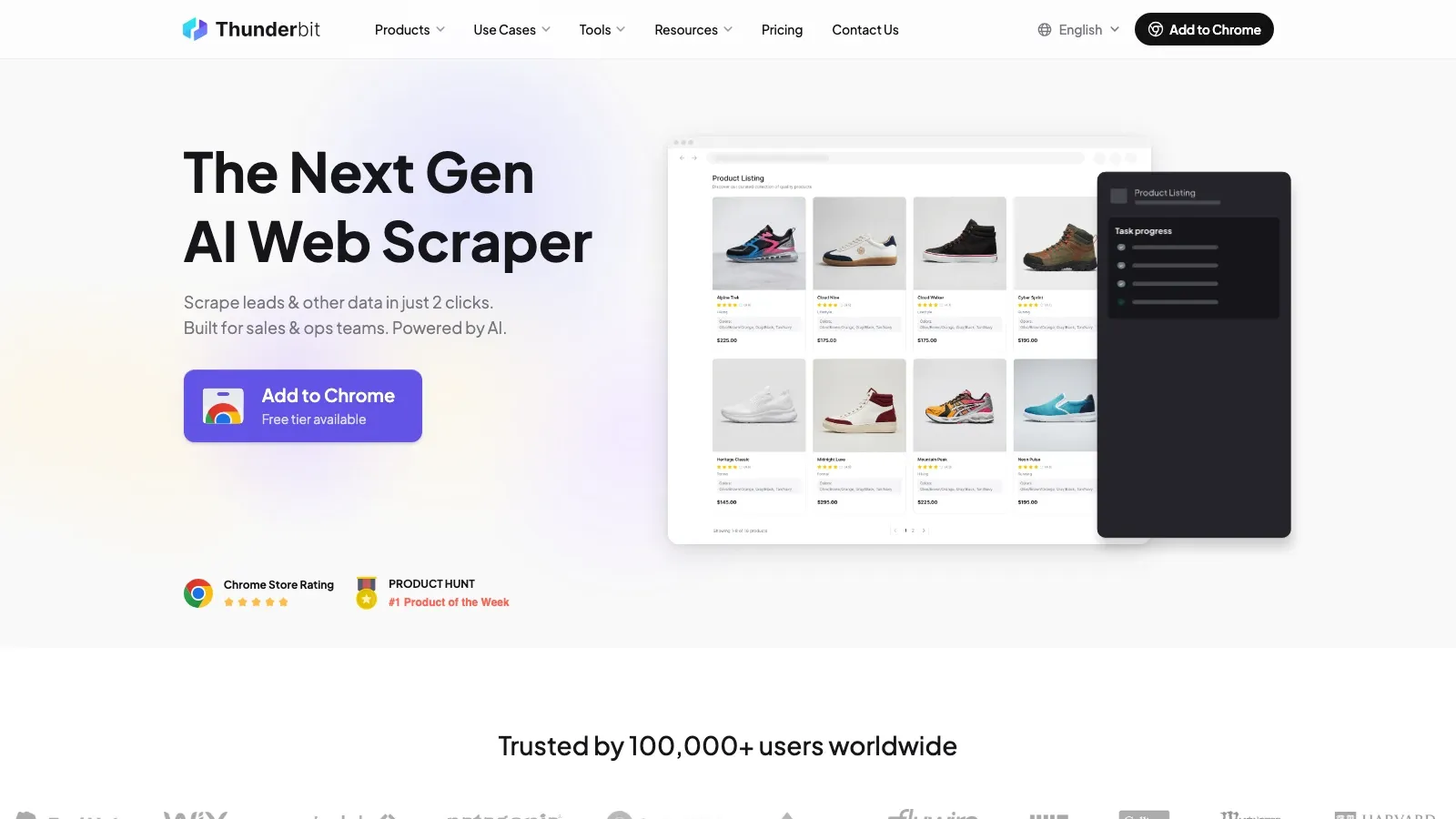
Thunderbit belongs in this list because many pricing workflows do not start inside a pricing suite. They start on live competitor pages, marketplaces, reseller listings, and category pages that somebody is otherwise copying by hand. Thunderbit is strongest when the problem is collecting fresh market data quickly without turning the task into an engineering project.
- Best for: ecommerce operators, market researchers, sourcing teams, and non-technical users who need current competitor pricing data quickly
- What stands out: AI field suggestion, subpage scraping, pagination handling, scheduled runs, and export to Sheets, Excel, Airtable, and Notion
- Why it made the list: it solves the "get the data first" problem faster than most enterprise pricing platforms
- Pricing signal: free entry point plus self-serve and team plans
Try Thunderbit for Competitor Price Tracking
2. Pricefx

Pricefx is still one of the clearest enterprise answers when pricing is no longer just about watching competitor pages. It is built for businesses that need a broader pricing operating system with management, optimization, workflows, and decision support layered together.
- Best for: enterprise pricing organizations, manufacturers, distributors, and large retailers
- What stands out: price management depth, AI-driven workflows, scenario planning, and broad enterprise positioning
- Why it made the list: it covers the whole pricing stack rather than stopping at price monitoring
- Pricing signal: demo-led and custom-priced
If your team is deciding whether you need monitoring alone or a deeper optimization layer, this Pricefx video is the most useful mid-article comparison watch:
3. Competera
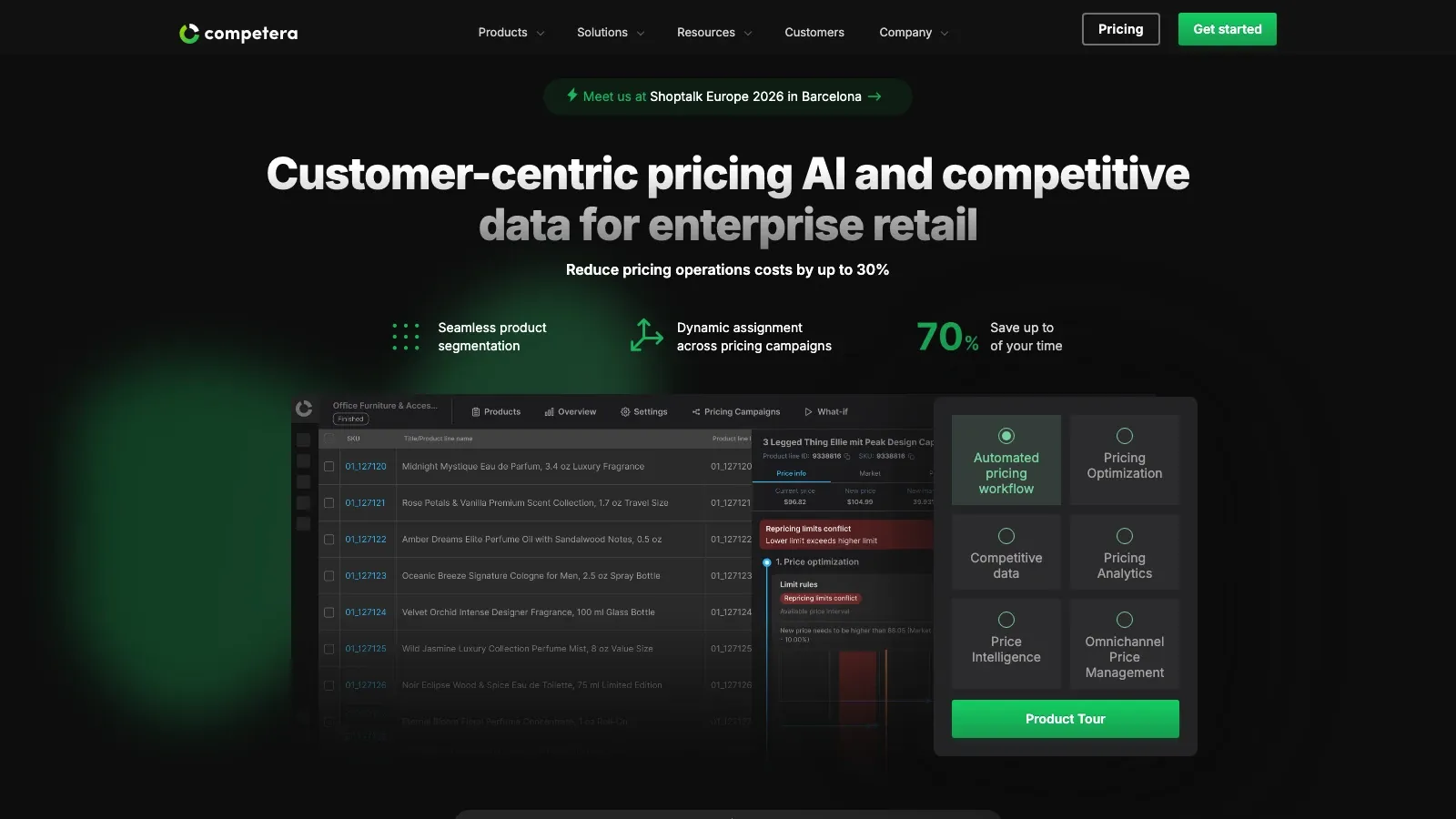
Competera remains one of the strongest retailer-focused platforms in this category because it combines competitive data with pricing AI instead of treating them as separate systems. Its official positioning is explicitly about customer-centric pricing and competitive data for enterprise retail.
- Best for: enterprise retail pricing teams and omnichannel brands
- What stands out: customer-centric pricing AI, competitive data, and workflow support for retail pricing campaigns
- Why it made the list: it is better positioned than simpler monitoring tools when pricing decisions need AI support at catalog scale
- Pricing signal: demo-led and custom-priced
4. Prisync
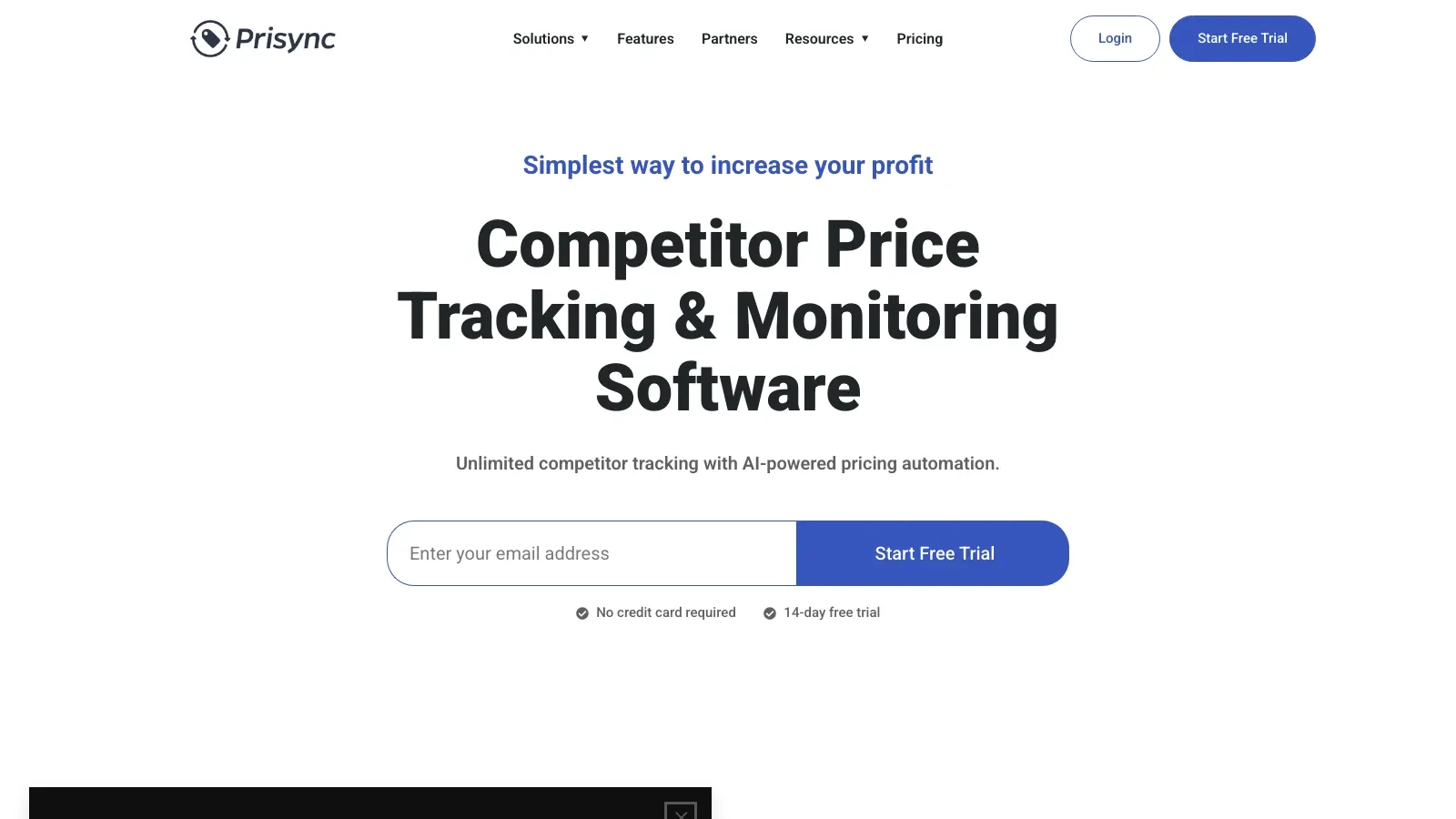
Prisync is still one of the most practical shortlist options for smaller ecommerce teams that want a direct path into competitor monitoring and dynamic pricing. The current product positioning is simple and clear: competitor price tracking and monitoring with AI-powered pricing automation.
- Best for: SMB ecommerce teams and fast-moving online stores
- What stands out: accessible setup, dynamic pricing automation, and public trial access
- Why it made the list: it keeps the workflow understandable without dropping the core pricing value
- Pricing signal: 14-day free trial and public pricing availability
5. Intelligence Node
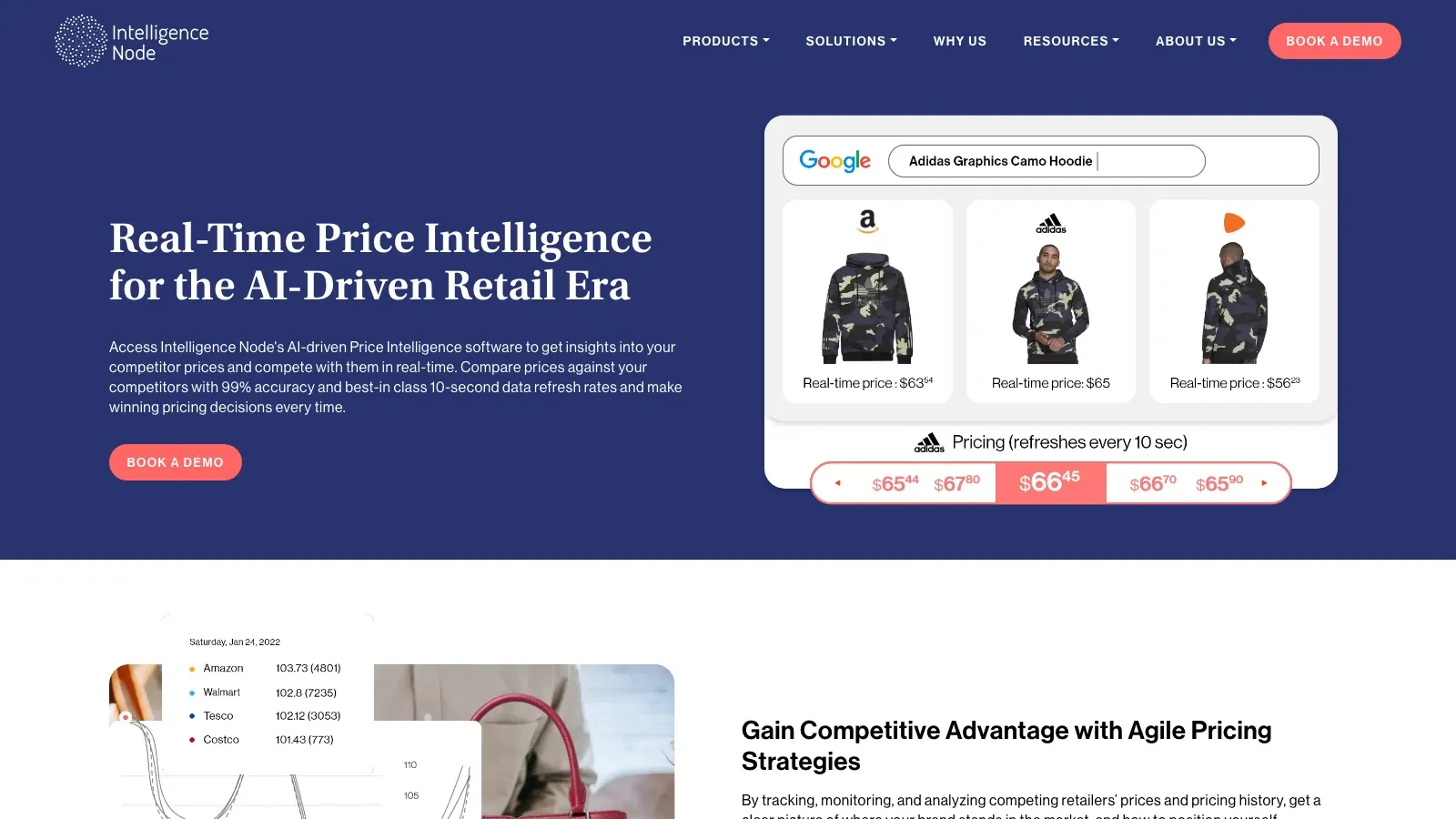
Intelligence Node is built for retailers that need wide market visibility and fast retail data, not just a small competitor list. Its current price intelligence positioning centers on real-time visibility, high matching accuracy, and fast data refresh for retail teams making live pricing decisions.
- Best for: large retailers, brands, and pricing teams that need market-wide visibility
- What stands out: real-time price intelligence, strong matching claims, and retailer-scale monitoring
- Why it made the list: it is a better fit than SMB tools when the market view itself is part of the product value
- Pricing signal: demo-led and custom-priced
6. Wiser
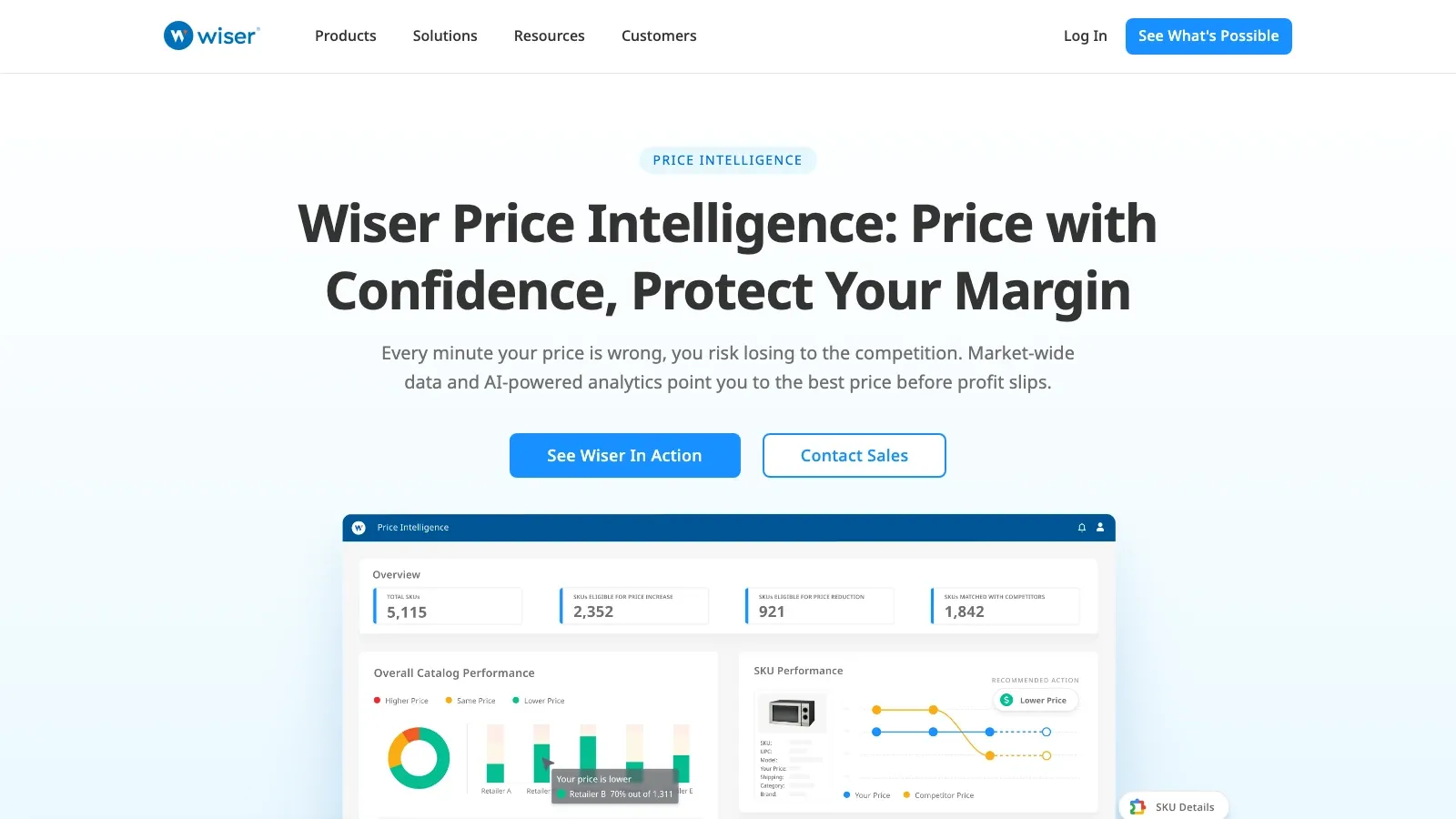
Wiser's current price intelligence story is not just about seeing prices. It is about executing better pricing decisions with confidence while protecting margin. That retailer-oriented framing still makes it one of the strongest choices for brands and merchants that care about price action, not just price observation.
- Best for: retailers and brands that want intelligence tied to execution
- What stands out: price intelligence plus margin-protection positioning and retailer execution focus
- Why it made the list: it sits between pure monitoring and heavier enterprise optimization
- Pricing signal: sales-led pricing
7. Price2Spy
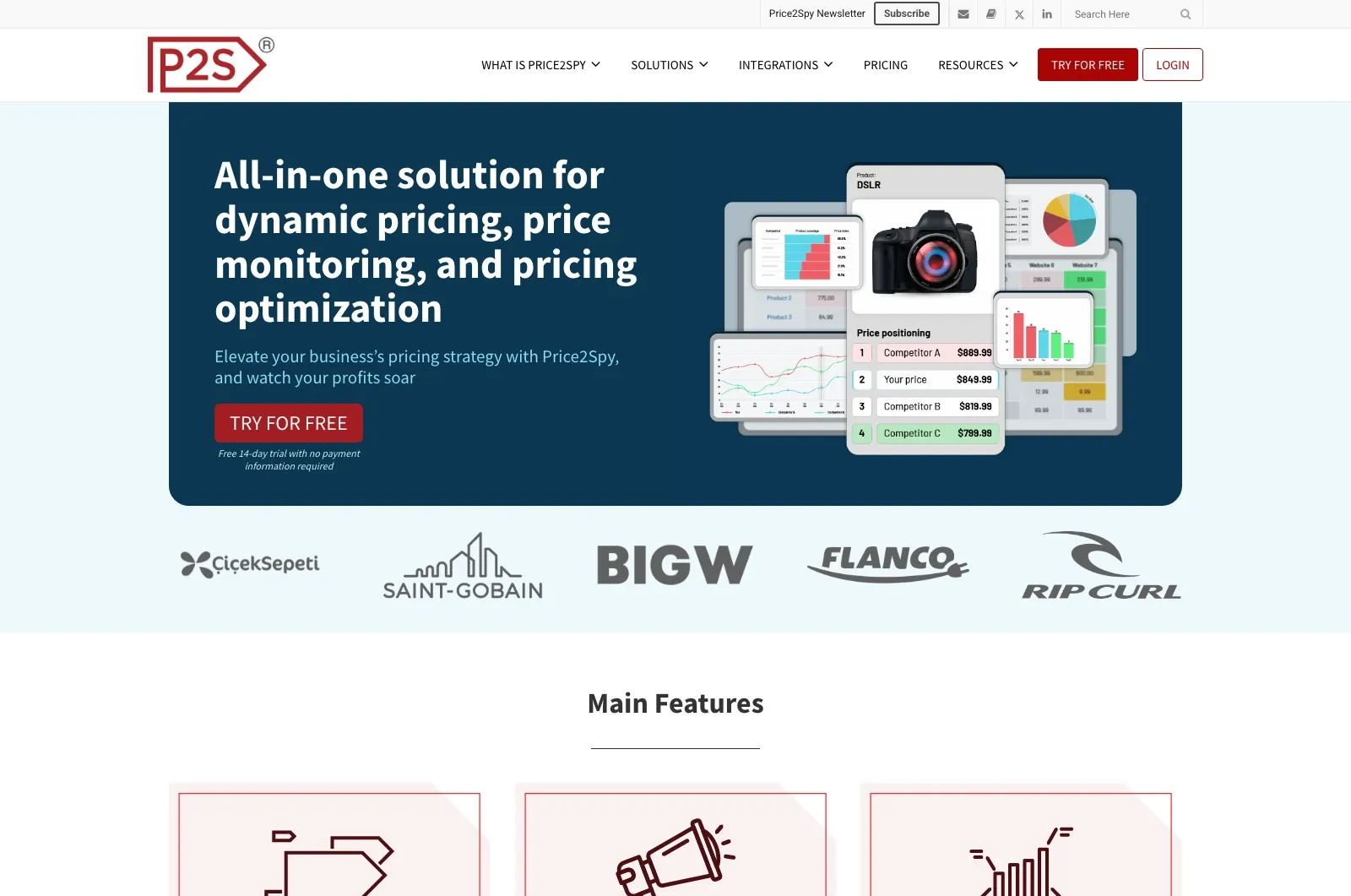
Price2Spy remains useful because it is practical. The product still frames itself as an all-in-one solution for dynamic pricing, price monitoring, and pricing optimization, which is exactly the mix many ecommerce operators want before they move into heavyweight enterprise tooling.
- Best for: SMB and mid-market ecommerce operators, brands, and MAP-conscious teams
- What stands out: monitoring, reporting, repricing modules, and public commercial clarity
- Why it made the list: it is one of the easier products in the category to evaluate and operationalize
- Pricing signal: public pricing tiers plus free-trial entry
8. Minderest
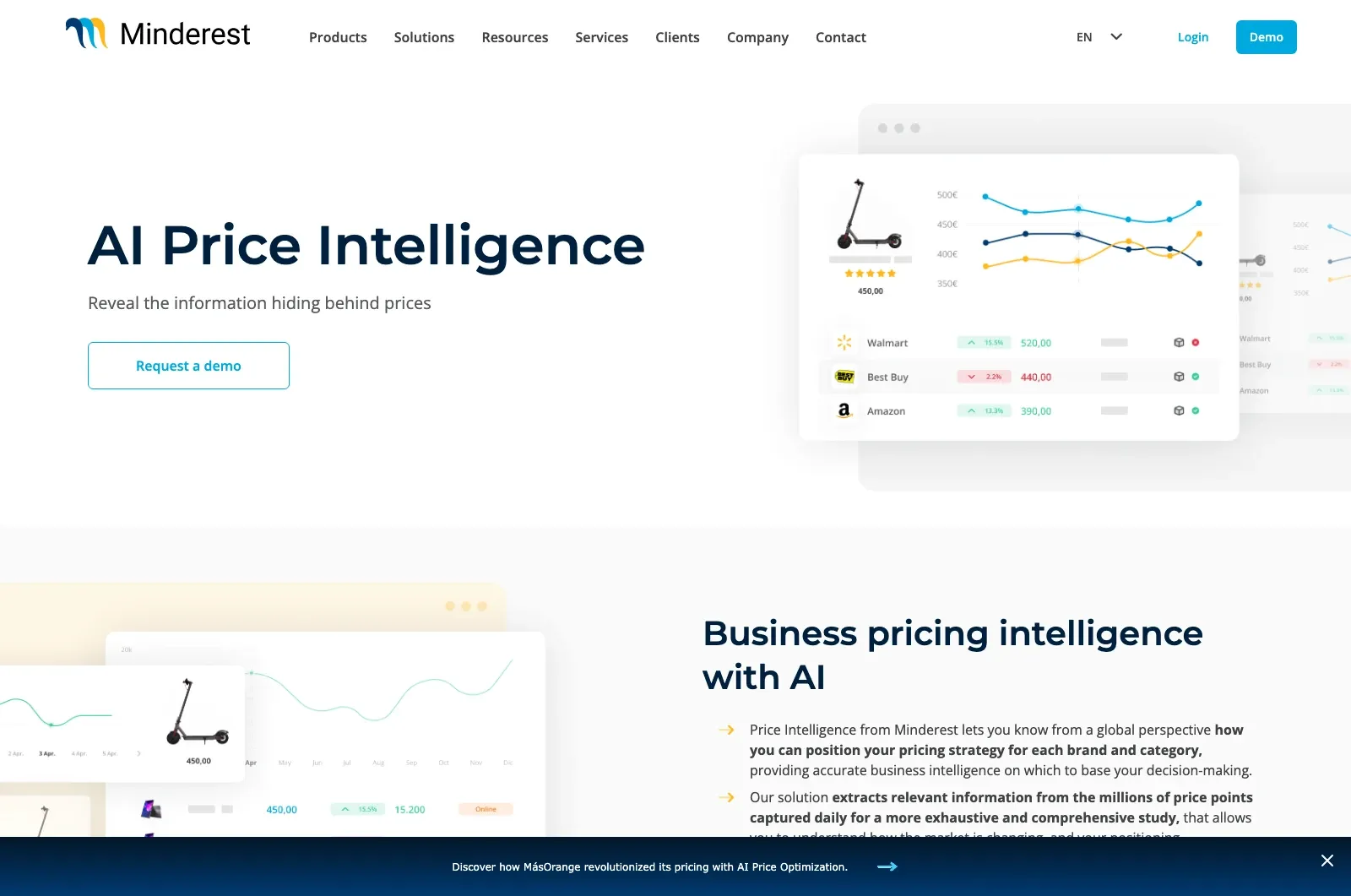
Minderest still stands out for enterprises that care as much about data accuracy and integration as they do about the dashboard itself. Its current positioning focuses on AI price intelligence and broad market visibility across brands and categories.
- Best for: enterprise retailers, brands, and pricing teams with downstream system dependencies
- What stands out: AI price intelligence, integration friendliness, and retailer-category visibility
- Why it made the list: it fits teams that need robust commercial workflows around pricing data
- Pricing signal: demo-led and custom-priced
9. Omnia Retail
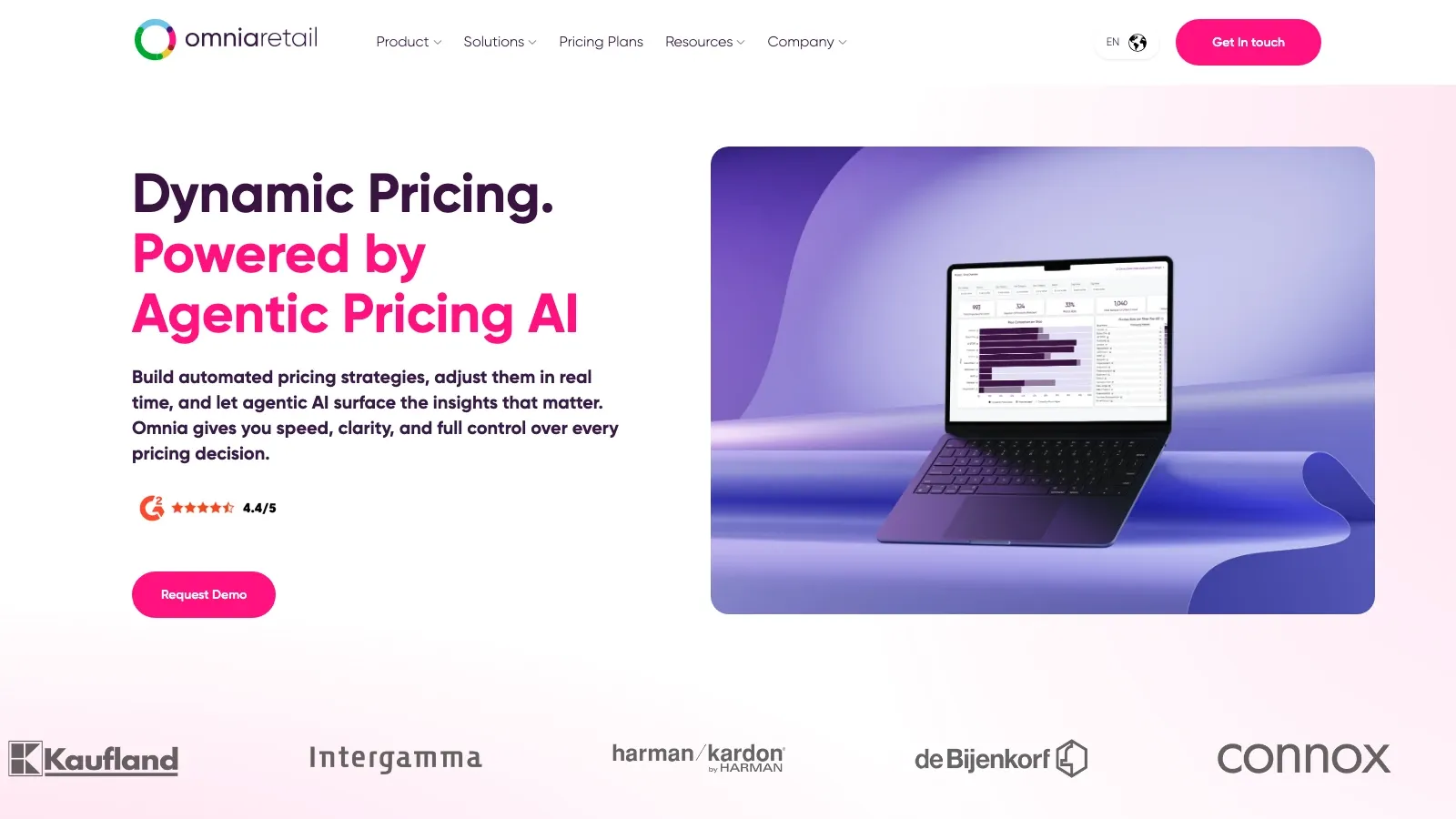
Omnia is most compelling when the team wants pricing automation rather than passive monitoring. Its current positioning leans hard into dynamic pricing powered by agentic pricing AI, which makes it an appealing option for omnichannel retailers trying to operationalize pricing decisions continuously.
- Best for: omnichannel retailers managing large product sets and frequent pricing updates
- What stands out: dynamic pricing automation and retailer-first pricing workflow design
- Why it made the list: it narrows the gap between intelligence and action better than many monitoring tools
- Pricing signal: demo-led with pricing-plan conversations through sales
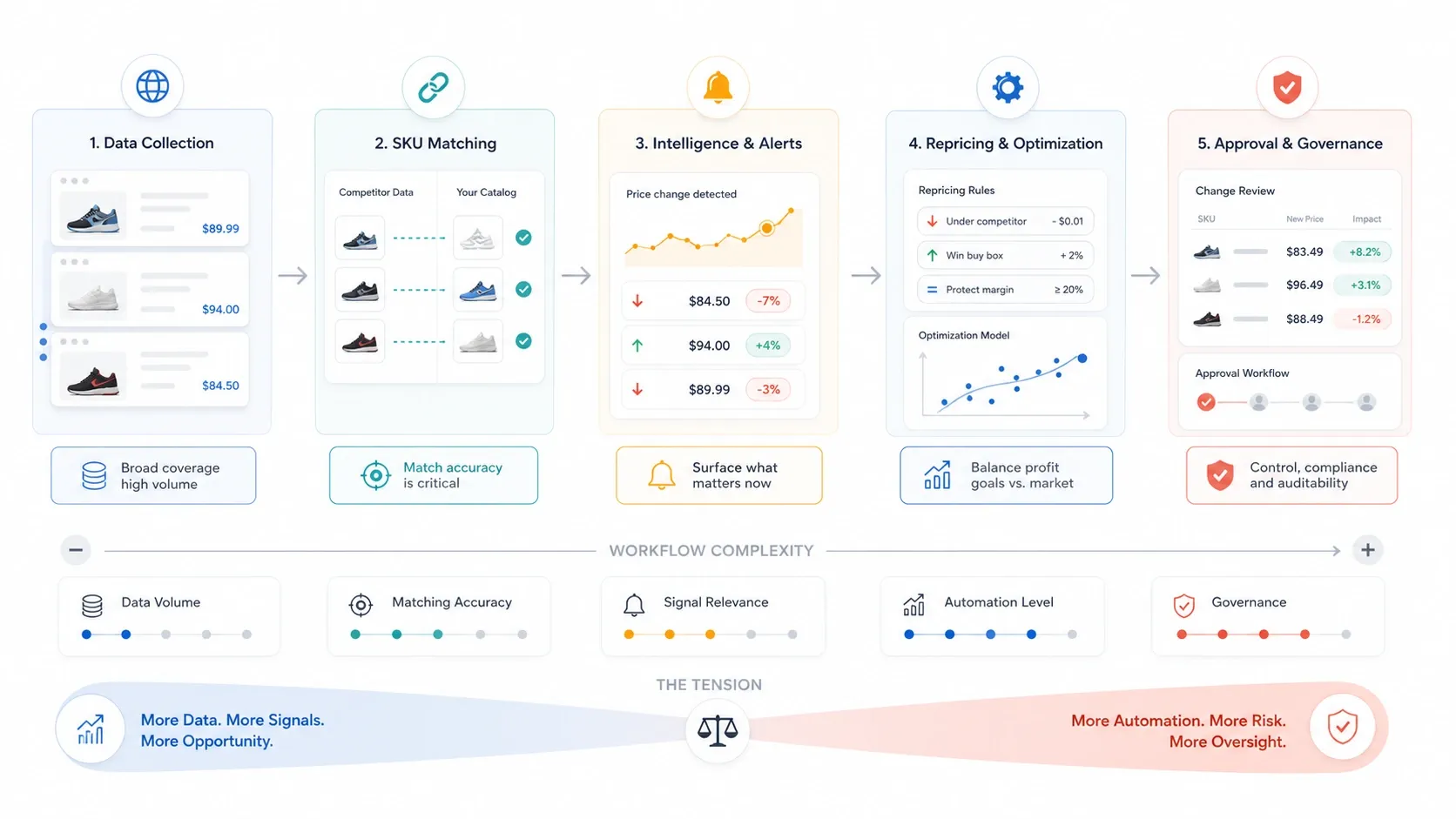
Where Pricing Intelligence Shortlists Usually Break
Most teams do not fail because they picked a bad-looking dashboard. They fail because they buy the wrong layer:
- Monitoring-only tools when they actually need automated pricing action
- Optimization suites when they still do not have clean competitive data
- Enterprise platforms before the team has the governance or process maturity to use them well
- Light browser tools when the business really needs auditable workflows, approvals, and scenario modeling
The real tension usually runs across four dimensions:
- Data breadth
- Matching accuracy
- Automation depth
- Governance and approval control
10. Dealavo
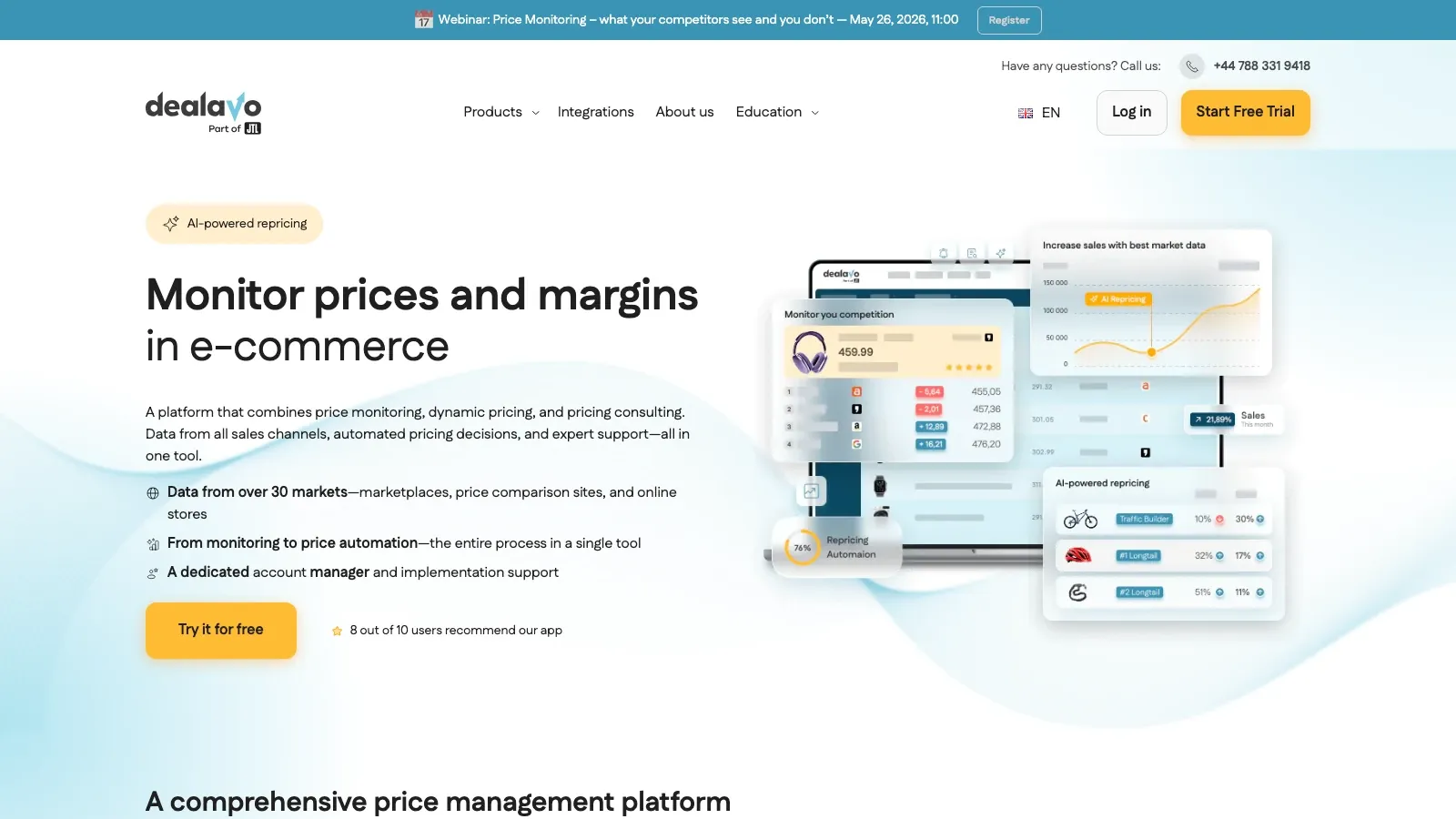
Dealavo earns a place in the refreshed list because it still offers a practical middle ground for brands and distributors that need both monitoring and price action across channels. Its current positioning is clear: monitor prices and margins in ecommerce, combine price monitoring with dynamic pricing, and keep the workflow in one platform.
- Best for: brands, distributors, and multichannel teams with reseller visibility needs
- What stands out: price monitoring, dynamic pricing, and channel visibility in a single product
- Why it made the list: it is a stronger fit than generic monitoring tools when channel behavior matters
- Pricing signal: free-trial path plus sales-led plans
11. DataWeave
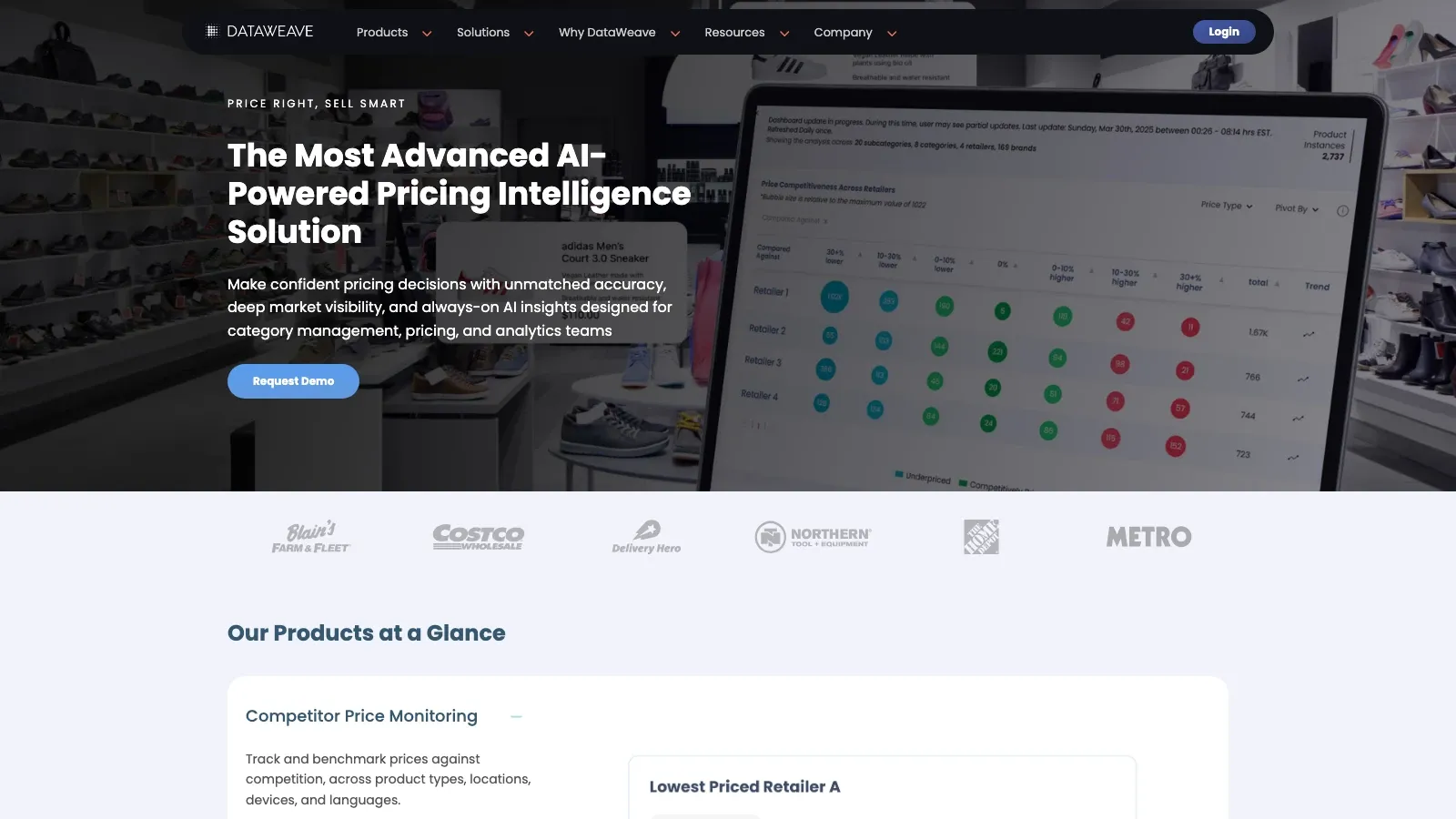
DataWeave is the enterprise data-heavy option in this ranking. Its current pricing intelligence page emphasizes AI-powered pricing intelligence designed for category management, pricing, and analytics teams that need deep market visibility rather than a lightweight operator tool.
- Best for: enterprise digital shelf teams, category analysts, and pricing-intelligence programs
- What stands out: market-wide pricing intelligence paired with broader commerce and analytics depth
- Why it made the list: it is a better fit than simpler tools when pricing data feeds a larger market-intelligence program
- Pricing signal: demo-led and custom-priced
Final Shortlist by Team Type
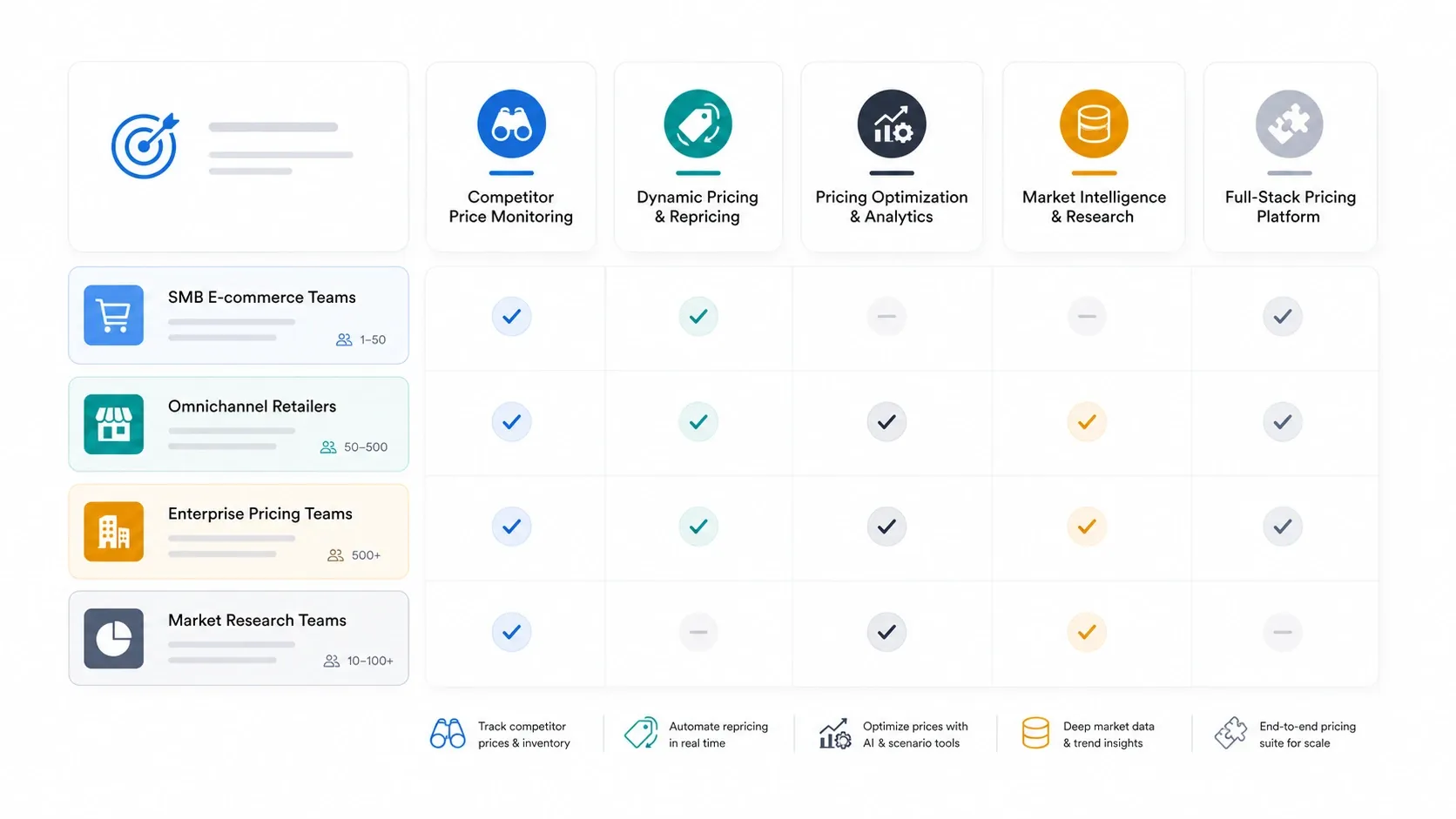
- SMB ecommerce teams: Prisync, Price2Spy, Thunderbit
- Omnichannel retailers: Omnia, Wiser, Competera
- Enterprise pricing teams: Pricefx, Competera, Minderest
- Market research and competitive intelligence teams: Thunderbit, DataWeave, Intelligence Node
If you want one final execution-oriented watch before moving from shortlist to rollout, this Pricefx simulation video is the best late-stage example of how price decisions become operational rather than theoretical:
Conclusion
The pricing intelligence market is no longer one simple category. It splits into different buying jobs.
- Thunderbit is the best fit when you need fast browser-first competitor data capture.
- Pricefx and Competera are stronger when the business needs enterprise-grade pricing logic and optimization depth.
- Prisync and Price2Spy are the easiest entry points for SMB ecommerce monitoring and repricing.
- Wiser, Intelligence Node, and Minderest are better when retail-scale visibility and category intelligence matter.
- Omnia is the cleanest retailer-first pricing automation option in this group.
- Dealavo and DataWeave are strong when channel visibility or market-wide analytics are central to the pricing workflow.
The simplest rule is to buy the lowest-complexity platform that still solves the real decision problem. If your team still struggles to collect current market pricing reliably, start there. If your data is already strong, move up into optimization, automation, and governance.
Explore Thunderbit for Pricing Intelligence Get Started Free
Related Reading
FAQs
1. What does a pricing intelligence company do?
A pricing intelligence company provides software that helps businesses monitor competitor prices, compare market positions, analyze price movement, and improve pricing decisions with alerts, rules, analytics, or AI.
2. What is the difference between price monitoring and price optimization?
Price monitoring shows what is happening in the market. Price optimization goes further by recommending or automating better prices based on margin goals, demand signals, rules, and competitive context.
3. Which pricing intelligence company is best for SMB ecommerce teams?
Prisync and Price2Spy are the easiest dedicated platforms to start with, while Thunderbit is the strongest option when the team first needs to collect live competitor data from public pages.
4. Which tools are best for enterprise pricing teams?
Pricefx and Competera are the strongest optimization-led options in this list, while Minderest, Wiser, and DataWeave are stronger when retail intelligence and broader market visibility matter.
5. Why is Thunderbit included if it is not a traditional pricing suite?
Because many pricing projects fail before optimization begins. Thunderbit solves the upstream data-collection problem by turning live public pages into structured pricing data without a heavy implementation cycle.




