List Crawling: Scalable Extraction of Structured Website Data

Last Updated on January 19, 2026

If you’ve ever tried to build a competitor price sheet, track new real estate listings, or just keep tabs on a sprawling e-commerce catalog, you know the pain: hours spent copying, pasting, and cleaning up messy data—only to realize the info is already outdated by the time you’re done. In 2025, with the web growing by billions of new pages every year, manual data collection just can’t keep up. Businesses are waking up to a new reality: structured web data isn’t a “nice to have”—it’s the backbone of smart decision-making, from sales and marketing to operations and product strategy.

That’s where listing crawlers and automated listing extraction come in. I’ve seen firsthand how teams using AI-powered tools like are transforming tedious, error-prone research into a fast, scalable, and even kind-of-fun process. Let’s dive into what listing crawling really means, how the latest AI-driven solutions work, and how you can use them to give your business a serious edge—without writing a single line of code (or losing your sanity).

What is a Listing Crawler? The Basics of Automated Listing Extraction

real-estate-listing-crawler-automation.png A listing crawler is a specialized tool designed to extract structured data from web pages that display multiple items in a consistent format—think product catalogs, property listings, job boards, or business directories. Unlike general web scrapers, which might pull data from any page (structured or not), a listing crawler zeroes in on repetitive, structured content and can scale across multiple pages, handling things like pagination and subpages with ease ().

How does it work? Imagine you’re looking at a real estate site with 50 homes per page. A listing crawler can automatically recognize each home’s details (address, price, bedrooms, etc.), extract them into a neat table, and then “click” to the next page to keep going—no manual copying required. Advanced crawlers can even follow links to detail pages (subpages) to grab extra info, like agent contact details or property descriptions.

Key difference: Listing crawlers are built for scale and structure. They’re like having a robot intern who never gets tired, never makes a typo, and can process thousands of listings in minutes.

Why Automated Listing Extraction Matters for Business

Let’s get practical: why do so many teams—from sales to product to operations—care about automated listing extraction? Here are some of the biggest use cases and the business value they unlock:

Use CaseBusiness FunctionBenefit
Lead Generation (scraping directories)Sales / Biz DevFill your CRM with fresh, qualified leads in minutes, not weeks
Competitor Price Monitoring (scraping catalogs)Marketing / ProductReal-time pricing intelligence, faster strategy pivots, revenue uplift
Inventory & Vendor MonitoringOperations / Supply ChainUp-to-date inventory data, prevent stockouts, catch supply changes immediately
Market Research (aggregating listings/reviews)Strategy / AnalyticsTrend analysis at scale, better product decisions, full-picture market understanding
Real Estate Listings TrackingReal Estate / InvestmentTimely alerts on new opportunities, price changes, comps—faster deal flow

The ROI is real: businesses using automated listing crawlers report 30–40% time savings on data gathering (), and data accuracy rates up to 99%—compared to manual entry’s 8× higher error rate (). What used to take a week now takes minutes, and the data is ready for analysis, not just sitting in a spreadsheet.

Traditional vs. AI-Powered Listing Crawlers: What’s the Difference?

traditional-vs-ai-powered-crawlers-comparison.png Let’s be honest—traditional listing crawlers (think Scrapy, BeautifulSoup, or even some “no-code” tools) can get the job done, but they come with a lot of baggage:

  • Manual setup: You have to define CSS selectors, write scripts, or build templates for every field you want to extract.
  • Fragile workflows: If the website changes its layout or class names, your scraper breaks—and you’re back to square one.
  • Limited dynamic handling: Infinite scroll, AJAX content, or interactive elements? Get ready for some late nights debugging.

AI-powered listing crawlers (like Thunderbit) flip the script. Instead of telling the tool how to extract data, you just show it the page (or describe your goal), and the AI figures out the rest. It recognizes patterns, adapts to layout changes, and can even handle dynamic content and subpages—all with minimal setup.

Key Advantages of AI-Driven Automated Listing Extraction

  • Faster Setup: One click of “AI Suggest Fields” and the tool proposes all relevant columns—no selectors or coding required.
  • Higher Accuracy: AI models recognize data contextually, cleaning and deduplicating as they go. Accuracy rates can hit 99.5% even on messy pages ().
  • Resilience to Changes: If a site tweaks its HTML, the AI adapts—no more broken scripts or endless maintenance ().
  • Handles Dynamic Content: Infinite scroll, pop-ups, or AJAX? AI crawlers can interact with the page like a human, ensuring nothing gets missed.
  • Scalability: Cloud-based AI crawlers can process thousands of pages in parallel, with built-in scheduling and automation.

Thunderbit Listing Crawler: Fast-Track Your Automated Listing Extraction

Now, I’m a little biased—but for good reason. was built to make listing crawling as easy as ordering takeout. Here’s how it works:

  1. Install the : It’s a two-click install, and you’re ready to roll.
  2. Navigate to a Listing Page: Open any site—ecommerce, real estate, directory, you name it.
  3. Click “AI Suggest Fields”: Thunderbit’s AI scans the page and suggests the best columns to extract (e.g., Product Name, Price, Image, URL).
  4. Customize Columns (if you want): Rename, add, or remove fields. Add custom AI prompts for advanced labeling or formatting.
  5. Click “Scrape”: Thunderbit pulls all the data, handles pagination, and can even visit subpages for extra details.
  6. Export Instantly: Send your data to Excel, Google Sheets, Notion, Airtable, or download as CSV/JSON—totally free.

Thunderbit also comes loaded with instant templates for popular sites (Amazon, Zillow, Shopify, Instagram, and more), so you can skip setup entirely for common use cases. And if you need to scrape PDFs or images, Thunderbit’s AI can handle that too.

Thunderbit vs. Other Listing Crawlers: Side-by-Side Comparison

Here’s how Thunderbit stacks up against other popular tools:

FeatureThunderbitOctoparseScrapyFirecrawlLinkUp
AI Field Suggestion⚠️ (basic)
No-Code Setup⚠️⚠️⚠️
Subpage Scraping⚠️⚠️
Pre-Built Templates
Export to Sheets/Excel⚠️⚠️⚠️
Free Data Export⚠️⚠️⚠️
Scheduled Scraping⚠️
Maintenance RequiredMinimalModerateHighLowLow
Pricing (Starter)$15/mo~$119/moFree*VariesVaries

*Scrapy is free but requires developer time and infrastructure.

Thunderbit’s sweet spot? It’s built for non-technical business users who want results fast—no steep learning curve, no hidden export fees, and no headaches when websites change.

Step-by-Step Guide: Using Thunderbit for Automated Listing Extraction

Ready to try it yourself? Here’s how to use Thunderbit as your listing crawler:

1. Install Thunderbit

Head to the and add Thunderbit. Sign up for a free account (the free tier lets you scrape up to 6 pages, or 10 with a trial boost).

2. Open Your Target Listing Page

Navigate to the site you want to scrape—say, a product category on Amazon, a Zillow search, or a business directory. Apply any filters you need using the site’s own interface.

3. Click “AI Suggest Fields”

Click the Thunderbit icon in your browser. Hit “AI Suggest Fields.” Thunderbit’s AI will read the page and propose columns like Product Name, Price, URL, Image, etc.

4. Customize Columns and Prompts

Review the suggested fields. Rename, add, or remove columns as needed. For advanced needs, add a Field AI Prompt (like “extract price as a number only” or “label as ‘Luxury’ if price > $2,000”).

5. Handle Pagination and Subpages

If your listing spans multiple pages, Thunderbit can auto-click “Next” or accept a list of URLs. For detail pages, click “Scrape Subpages” and Thunderbit will visit each link, grabbing extra info (like specs or contact details).

6. Run the Scrape

Click “Scrape.” Watch as Thunderbit fills a table with your data—live. For big jobs, use Cloud Scraping for speed (up to 50 pages at once).

7. Export Your Data

When done, export directly to Excel, Google Sheets, Notion, or Airtable. Thunderbit even uploads images to Notion/Airtable if needed.

Pro tip: Save your configuration as a template for future use, or schedule it to run automatically (see below).

Customizing Output: Setting Filters and Output Formats

Thunderbit gives you full control over your output:

  • Select specific fields: Only keep the columns you need.
  • Apply filters: Use the website’s own filters before scraping, or add logic in Field AI Prompts (e.g., “only extract listings where price < $500,000”).
  • Choose output format: Export as Excel, CSV, JSON, Google Sheets, Notion, or Airtable.
  • Advanced transformation: Use Field AI Prompts for formatting, splitting/combining fields, conditional extraction, categorization, or even translation (Thunderbit supports 34 languages).

For example, if you want to label listings as “Affordable” or “Luxury” based on price, just add a prompt: “Label as Luxury if price > $2,000, else Affordable.” Thunderbit will do the rest as it scrapes.

Business Upgrades: Leveraging Automated Listing Extraction for Competitive Advantage

Once you’ve got structured listing data, the possibilities are endless:

  • Competitor Analysis: Track prices, new products, and inventory across competitors in real time. One retailer boosted sales by 4% using scraped competitor data ().
  • Inventory Management: Monitor supplier sites for stock changes, price hikes, or new SKUs—automatically.
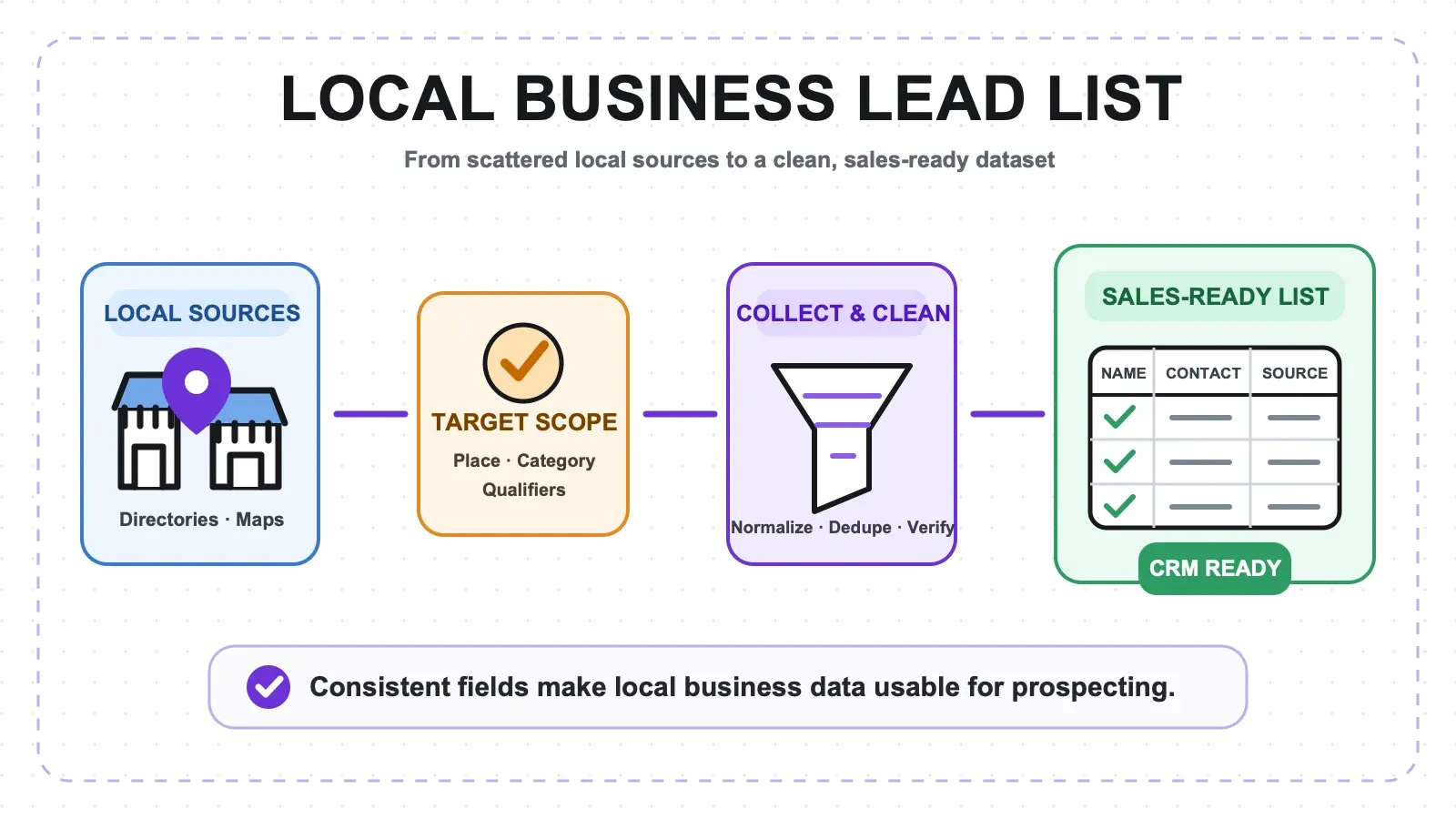
  • Lead Generation: Build targeted lists from directories, LinkedIn, or association sites—feed them straight into your CRM.
  • Market Research: Aggregate reviews, product features, or property data for trend analysis and smarter product decisions.
  • Content Aggregation: Power comparison sites, review aggregators, or SEO projects with always-fresh data.

Integrate your exported data with analytics tools (Tableau, PowerBI, Google Data Studio) for dashboards, trend analysis, or predictive modeling. With Thunderbit, you’re not just collecting data—you’re building a real-time competitive radar.

Dynamic Monitoring: Scheduling and Real-Time Listing Extraction

The web never sleeps, and neither should your data. Thunderbit’s Scheduled Scraper lets you automate ongoing monitoring:

  • Set up a schedule: Just describe it in plain English (“every day at 7am” or “every 4 hours”). Thunderbit’s AI handles the rest.
  • Input your URLs: Scrape one page or a whole list—Thunderbit will fetch them on schedule.
  • Export to Sheets/Airtable/Notion: Keep your data live and ready for your team each morning.

Use cases:

  • Ecommerce: Track competitor prices and stock daily—adjust your own pricing instantly.
  • Sales: Get a fresh lead list every week from directories or job boards.
  • Real Estate: Monitor new listings or price changes every hour—be the first to act.

Scheduled scraping means you’re always working with the latest data—no more flying blind or scrambling to catch up.

Key Takeaways: Scaling Your Data Extraction with Listing Crawlers

  • Structured web data is a must-have for modern business. Companies using automated listing crawlers see faster, smarter decision-making and real ROI ().
  • AI-powered tools like Thunderbit make listing crawling accessible to everyone. No code, no templates, no maintenance headaches—just results.
  • Automated listing extraction unlocks competitive advantage. From pricing intelligence to lead generation, the data you need is just a few clicks away.
  • Continuous monitoring is the new standard. With scheduled scraping, your team is always up to date—ready to react, analyze, and win.
  • Getting started is easy. Thunderbit offers a generous free tier and instant exports—so you can try it on your next data project with zero risk.

Ready to leave manual data collection in the dust? and see how easy scalable, automated listing extraction can be. And if you want to dig deeper, check out the for more guides, tips, and real-world use cases.

FAQs

1. What’s the difference between a listing crawler and a general web scraper?
A listing crawler specializes in extracting structured, repetitive data (like products or property listings) from web pages, handling pagination and subpages at scale. General web scrapers can extract any data but may require more manual setup and aren’t optimized for large, structured lists.

2. How does Thunderbit’s AI-powered listing crawler save time compared to manual methods?
Thunderbit’s AI automatically detects fields, handles pagination, and can visit subpages—turning hours of manual copy-paste into minutes of automated extraction. It also adapts to website changes, so you don’t have to rebuild your workflow every time a site updates.

3. Can I use Thunderbit to monitor competitor prices or inventory in real time?
Absolutely. With Thunderbit’s scheduled scraping, you can set up daily or hourly monitoring of competitor listings, prices, or stock. Data can be exported directly to Google Sheets, Airtable, or Notion for live dashboards and alerts.

4. What export formats does Thunderbit support?
Thunderbit lets you export data to Excel, CSV, JSON, Google Sheets, Notion, and Airtable. Image fields are uploaded to Notion/Airtable for proper display, and all exports are free—even on the free tier.

5. Do I need technical skills to use Thunderbit for automated listing extraction?
Nope! Thunderbit is designed for business users—just install the extension, click “AI Suggest Fields,” and you’re ready to extract data. No coding, no templates, and no maintenance required.

Want to see Thunderbit in action? or browse more how-to guides on the . Happy crawling!

Try AI Listing Crawler for Free

Learn More

Shuai Guan
Shuai Guan
Co-founder/CEO @ Thunderbit. Passionate about cross section of AI and Automation. He's a big advocate of automation and loves making it more accessible to everyone. Beyond tech, he channels his creativity through a passion for photography, capturing stories one picture at a time.
Topics
Listing crawlerAutomated listing extraction
Table of Contents

Try Thunderbit

Scrape leads & other data in just 2-clicks. Powered by AI.

Get Thunderbit It's free
Extract Data using AI
Easily transfer data to Google Sheets, Airtable, or Notion
Chrome Store Rating
PRODUCT HUNT#1 Product of the Week