
The digital marketplace in 2026 is a wild, ever-expanding frontier—think less “Oregon Trail” and more “data gold rush.” In a world where $3.8 trillion in GMV is flowing through the top 100 online marketplaces, and nearly a million new Amazon sellers joined the fray last year alone, the competition is fierce, the data is overwhelming, and the opportunities are massive. I’ve spent years helping sales and ops teams navigate this chaos, and if there’s one thing I know for sure, it’s this: the right marketplace analysis tool can make the difference between riding the wave and getting swept under.
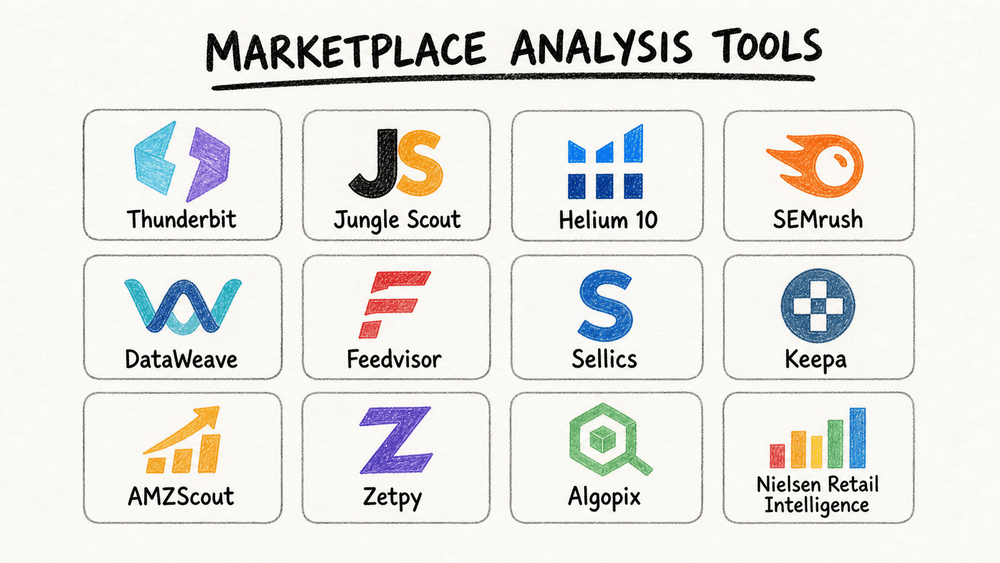
But with so many platforms promising “insights,” “automation,” and “AI-powered magic,” how do you actually pick the tools that deliver real, actionable value? I’ve rolled up my sleeves, dug into the trenches, and put together this definitive list of the 12 leading marketplace analysis tools for 2026. Whether you’re a solo Amazon seller, a multi-channel e-commerce brand, or a data-driven enterprise, there’s something here for you. Let’s break down what each tool does best, how they stack up, and how you can use them to outsmart the competition.
Quick Needs Triage
If you don’t want to read the whole list top to bottom, use this quick filter first:
| If your immediate need is... | Start with... | Why |
|---|---|---|
| Pull custom product, price, or review data from messy marketplace pages | Thunderbit | Fastest path to getting structured data without code |
| Validate an Amazon product idea before investing deeper | Jungle Scout or AMZScout | Strong product research and demand-checking workflows |
| Monitor price history and Buy Box behavior on Amazon | Keepa | Best lightweight starting point for trend and price tracking |
| Run a multi-channel catalog or operations workflow | Zetpy or Algopix | Better fit for cross-channel coordination and launch decisions |
| Benchmark macro traffic, category movement, and market share | SEMrush or NielsenIQ | Better for broader market intelligence than listing-level execution |
Why Marketplace Analysis Tools Matter in 2026
Let’s get real: marketplace analysis isn’t just a “nice-to-have” anymore—it’s the backbone of modern e-commerce strategy. With e-commerce now topping 20% of global retail sales, the difference between winning and losing often comes down to how quickly and accurately you can turn raw marketplace data into decisions. I’ve seen teams boost profit margins, spot new product trends, and react to competitor moves in real time—all thanks to the right analysis tools.
But here’s the catch: the data is massive, messy, and constantly changing. Manual analysis just can’t keep up. That’s where specialized marketplace analysis tools come in, helping you:
- Track competitor prices and stock in real time
- Spot emerging product opportunities before the crowd
- Monitor customer sentiment and reviews at scale
- Optimize your listings, ads, and inventory with AI-driven insights
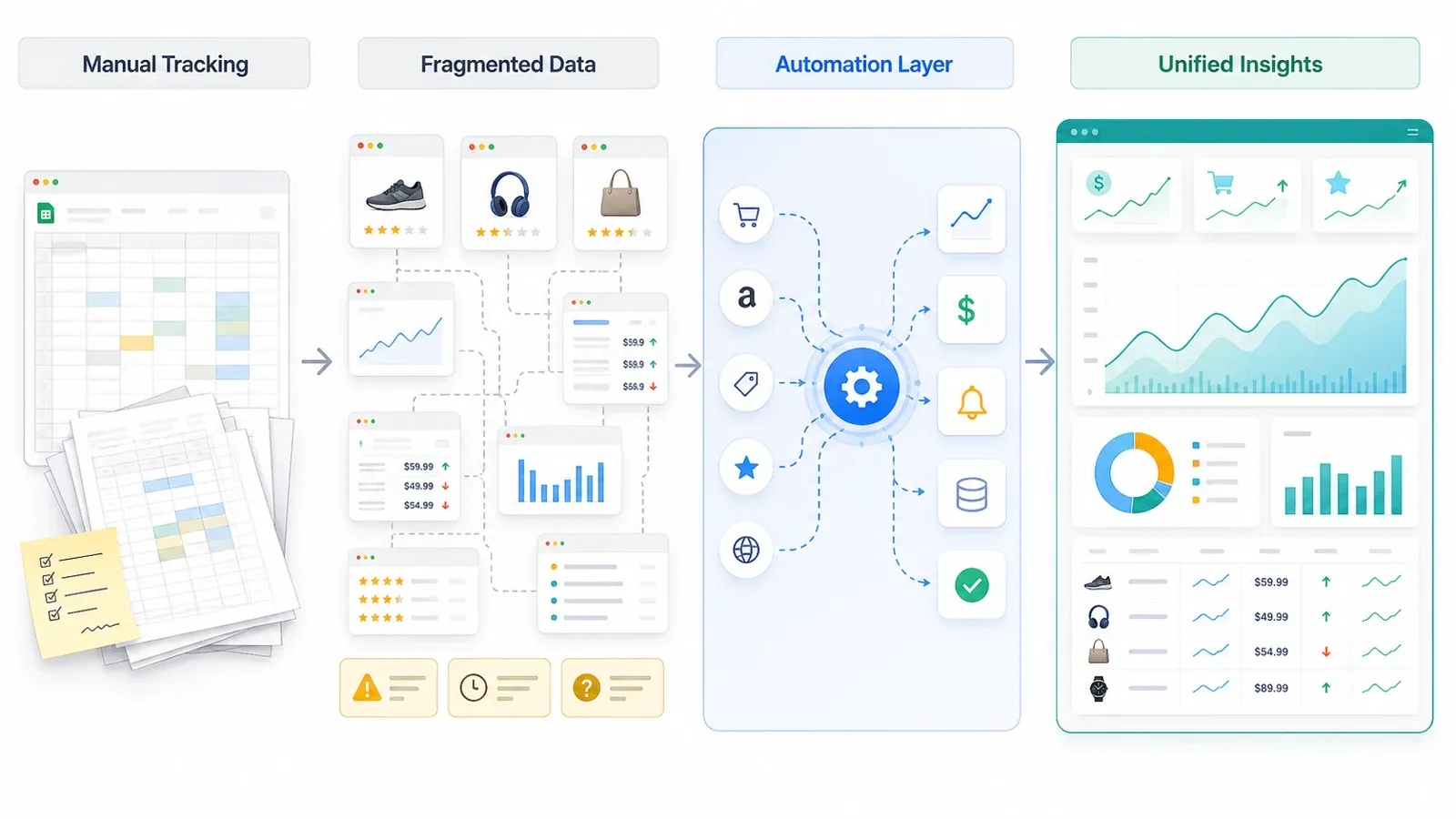
In short, these tools are your secret weapon for making smarter, faster, and more profitable decisions in a hyper-competitive landscape.
How I Selected the Best Marketplace Analysis Tools
I’ve worked with everyone from scrappy startups to Fortune 500s, and I know that no two teams have the exact same needs. So, I focused on tools that deliver real value for sales, operations, and marketing teams—especially those who don’t have a PhD in data science. Here’s what I looked for:
- Ease of use: Can non-technical users get actionable insights quickly?
- Feature set: Does the tool cover the essentials—price tracking, product research, competitor monitoring, SEO, and analytics?
- Data quality: Is the data accurate, up-to-date, and deep enough for real decisions?
- Integration & export: Can you get your data into Excel, Google Sheets, Notion, or your CRM without a headache?
- Pricing & scalability: Are there plans for SMBs and enterprises alike?
- Support & community: Is there solid customer support and a user community to learn from?
With that, let’s dive into the 12 tools that are leading the pack for marketplace analysis in 2026.
1. Thunderbit
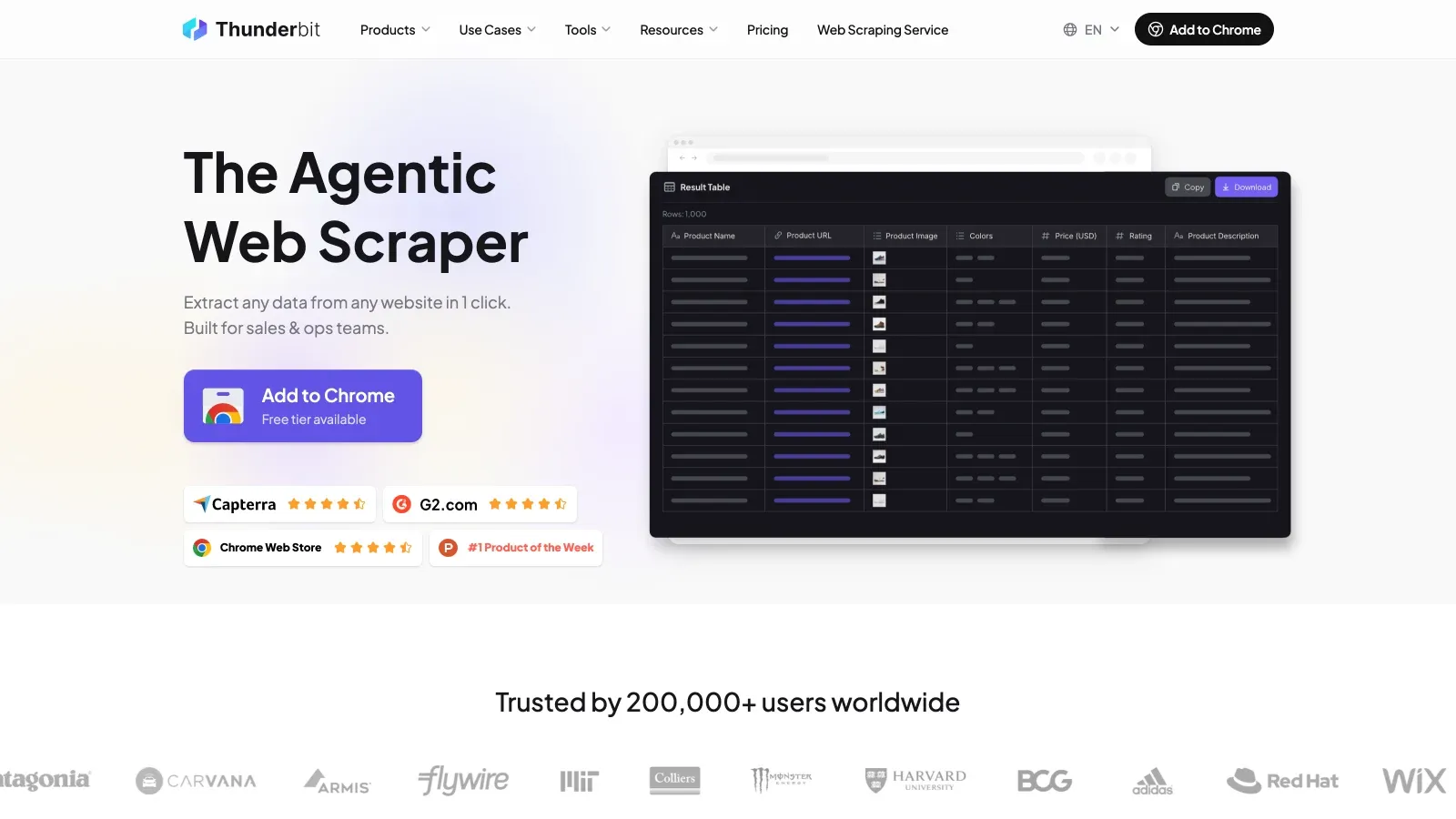
Thunderbit is my go-to for marketplace data collection and analysis—especially if you want to move fast without writing a single line of code. As the co-founder, I’m a little biased, but I built Thunderbit because I was tired of watching teams waste hours copy-pasting data or wrestling with clunky scrapers.
What makes Thunderbit unique? It’s an AI-powered Chrome extension that lets you extract structured data from any website using plain English. Just click “AI Suggest Fields,” and Thunderbit reads the page, suggests columns (like “Product Name,” “Price,” “Rating”), and builds a scraper for you. You can handle subpages, pagination, and even scrape text from PDFs or images—no templates, no coding, no headaches.
Key features:
- Natural language data extraction: Describe what you want, and Thunderbit’s AI does the rest.
- Subpage & pagination scraping: Grab data from product listings, reviews, and more—even across multiple pages.
- Instant templates: One-click scrapers for popular marketplaces like Amazon, Zillow, or Shopify.
- Free data export: Send your data straight to Excel, Google Sheets, Notion, or Airtable.
- AI Autofill: Automate online form filling for repetitive workflows (and yes, it’s totally free).
Use cases: Price tracking, competitor product monitoring, review sentiment analysis, lead generation, and more. Thunderbit is especially loved by sales and ops teams who need to pull custom data from messy or niche marketplaces.
Pricing: Free for up to 6 pages/month, with paid plans starting at $15/month for 500 credits (one credit = one output row). See Thunderbit Pricing.
2. Jungle Scout
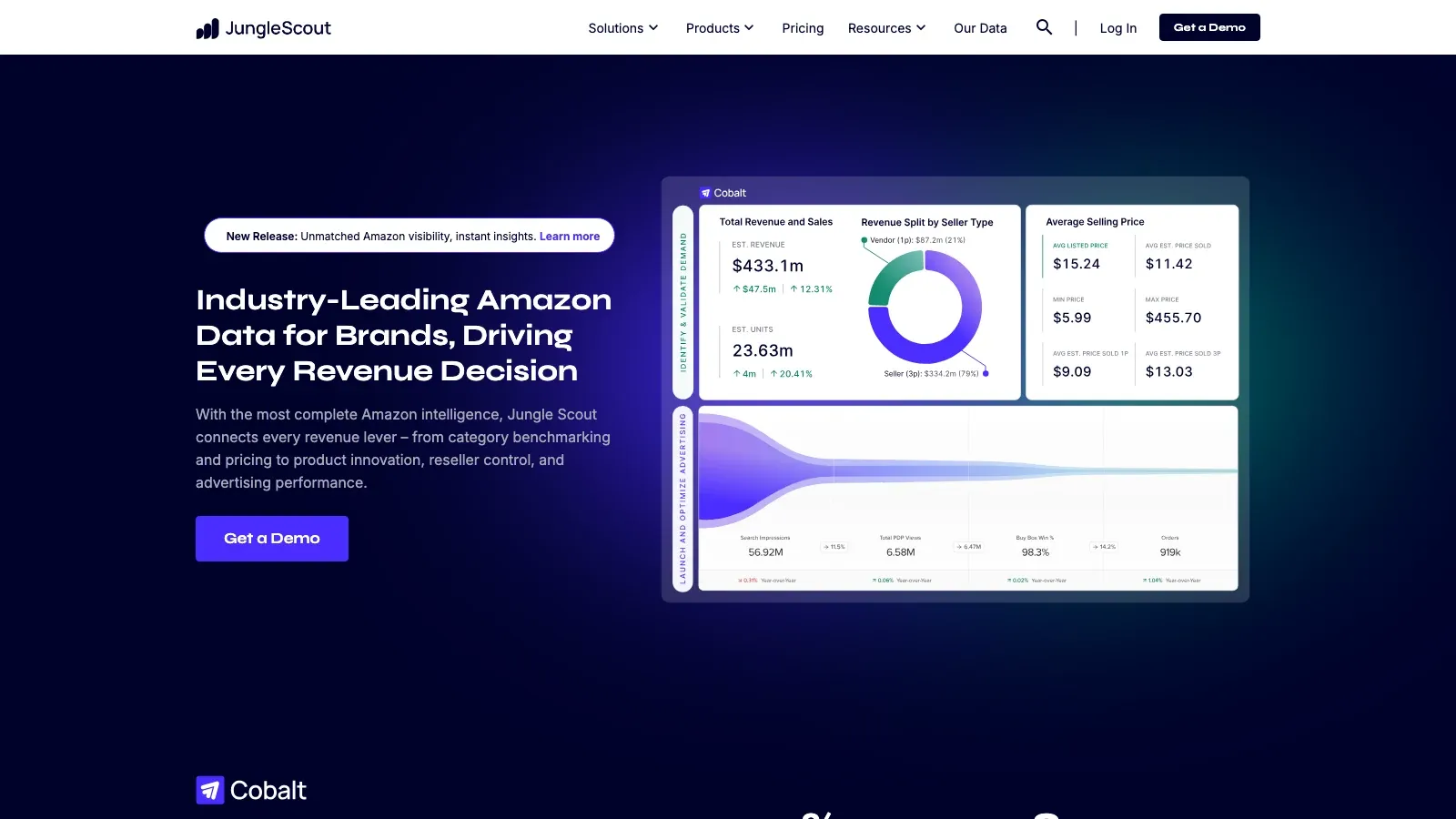
Jungle Scout is the OG Amazon product research toolkit, and it’s still the first stop for many FBA sellers. If you’re trying to find your next best-selling product or want to know exactly what’s moving on Amazon, Jungle Scout’s database, sales estimator (with ~84% accuracy), and keyword tools are hard to beat.
Core features:
- Product database and finder
- Keyword Scout for keyword research and tracking
- Sales estimator and profitability calculators
- Supplier database for sourcing
- Chrome extension for real-time insights while browsing Amazon
Best for: Amazon FBA sellers (from solo entrepreneurs to small brands) who want to launch and optimize products with confidence.
Pricing: Starts at $49/month for the basic plan, with more advanced plans at $79/month and $149/month (Jungle Scout Catalyst Pricing).
3. Helium 10
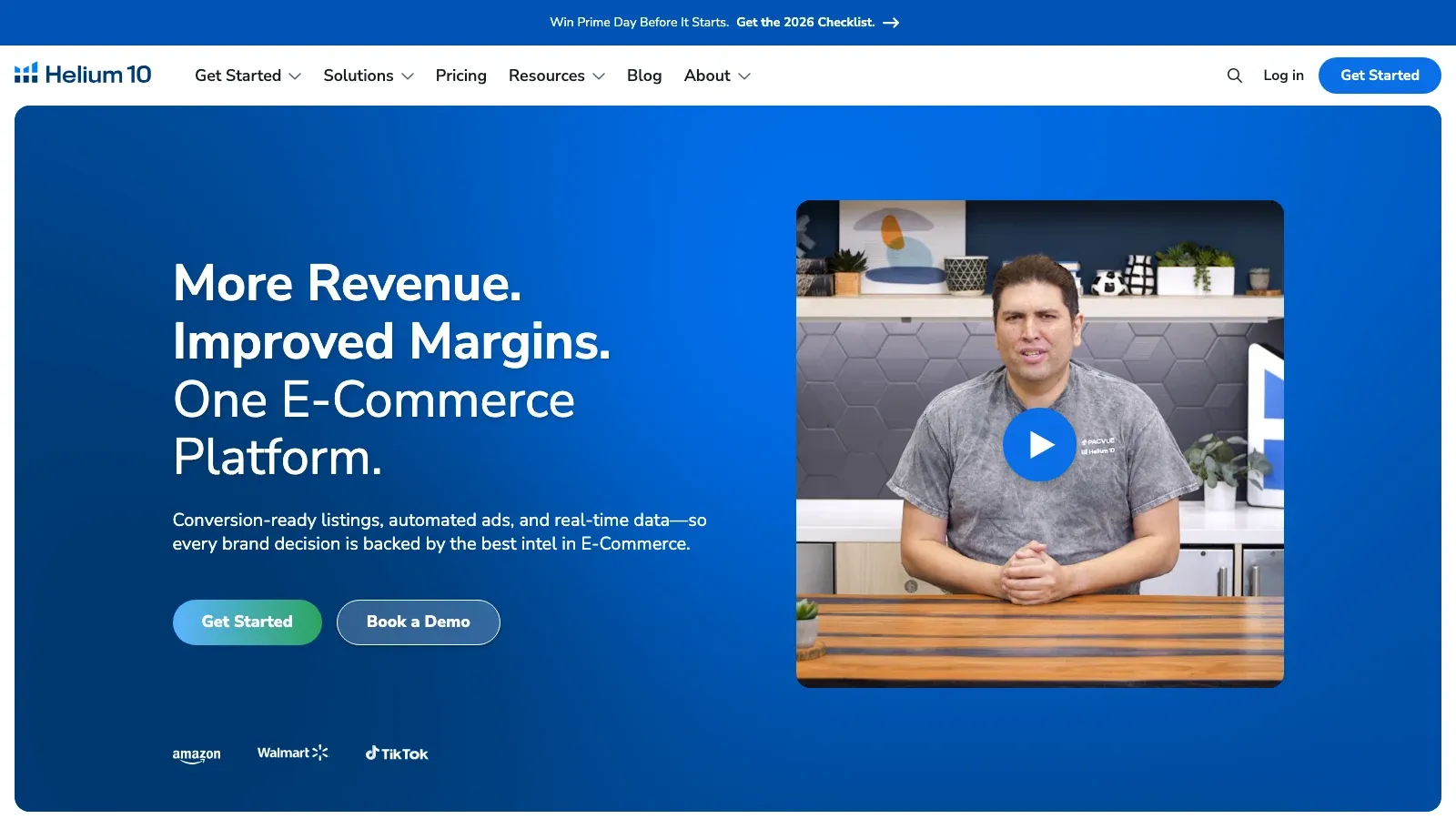
Helium 10 is the “Swiss army knife” for Amazon sellers, packing 30+ tools into one platform. If you want everything—product research, keyword optimization, listing management, AI-driven PPC, and even Walmart and TikTok Shop analytics—Helium 10 is your powerhouse.
Core features:
- Black Box (product discovery) and Cerebro (reverse ASIN lookup)
- AI-powered PPC management (Adtomic)
- Listing optimization, profit dashboard, and alerts
- Multi-channel support (Amazon, Walmart, Shopify, TikTok Shop)
- Extensive training resources and community
Best for: Ambitious Amazon sellers and agencies who want a comprehensive, scalable toolkit.
Pricing: Free limited plan; paid plans from $99/month (Platinum) and $279/month (Diamond) on yearly billing (Helium 10 Pricing).
4. SEMrush
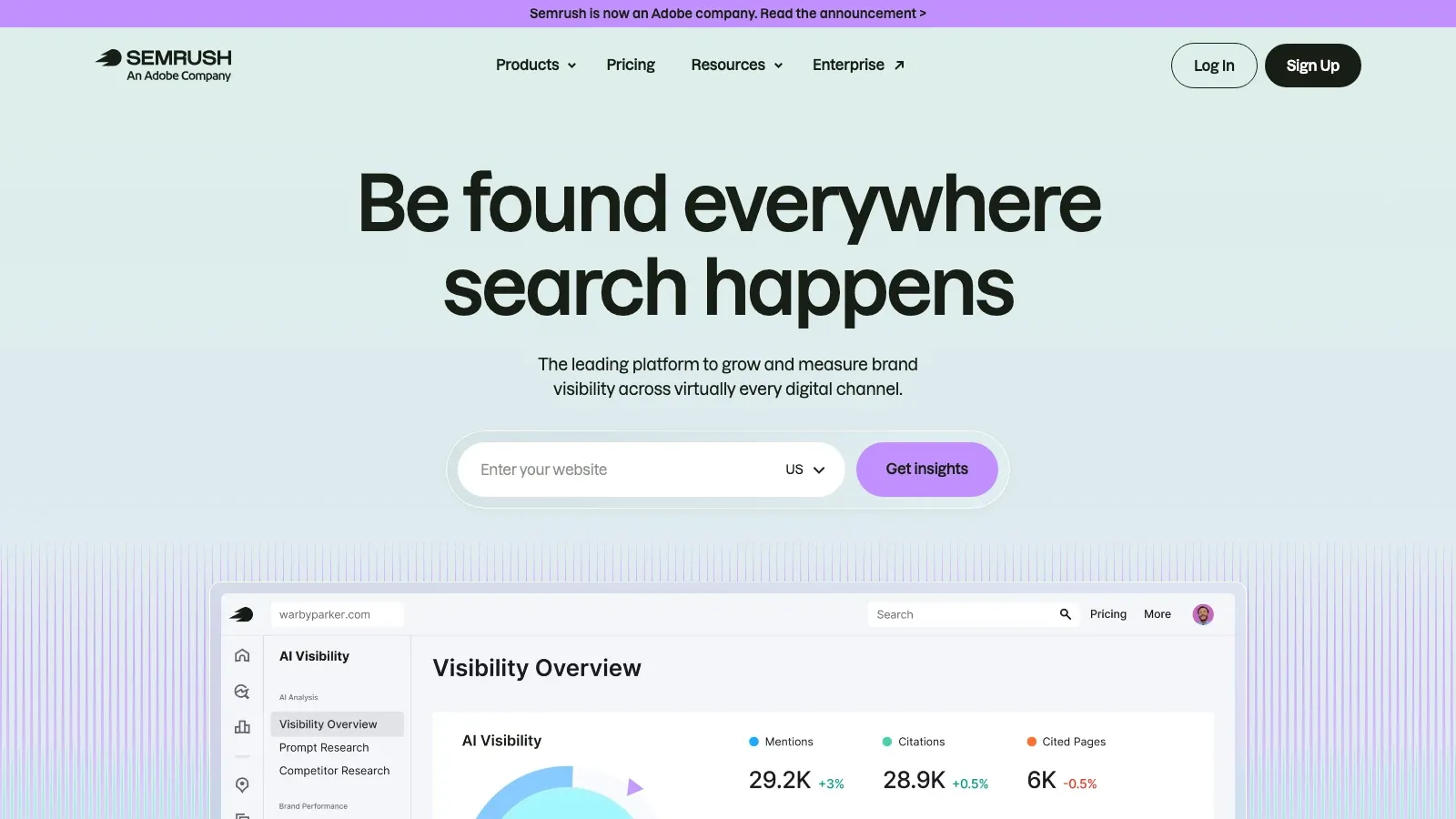
SEMrush isn’t just for SEO pros—it’s a powerhouse for marketplace trend spotting and competitor intelligence. With tools like Market Explorer and Traffic Analytics, you can benchmark your marketplace (or your own D2C site) against the competition, spot traffic surges, and uncover new opportunities.
Core features:
- Market Explorer (competitive landscape, share by domain)
- Traffic Analytics (website traffic sources, geo, audience)
- Keyword research and SEO tools
- Content and PPC analysis
Best for: Marketing and strategy teams who need macro-level insights across web and marketplace channels.
Pricing: Free trial, then paid plans from $119.95/month and up.
5. Dataweave
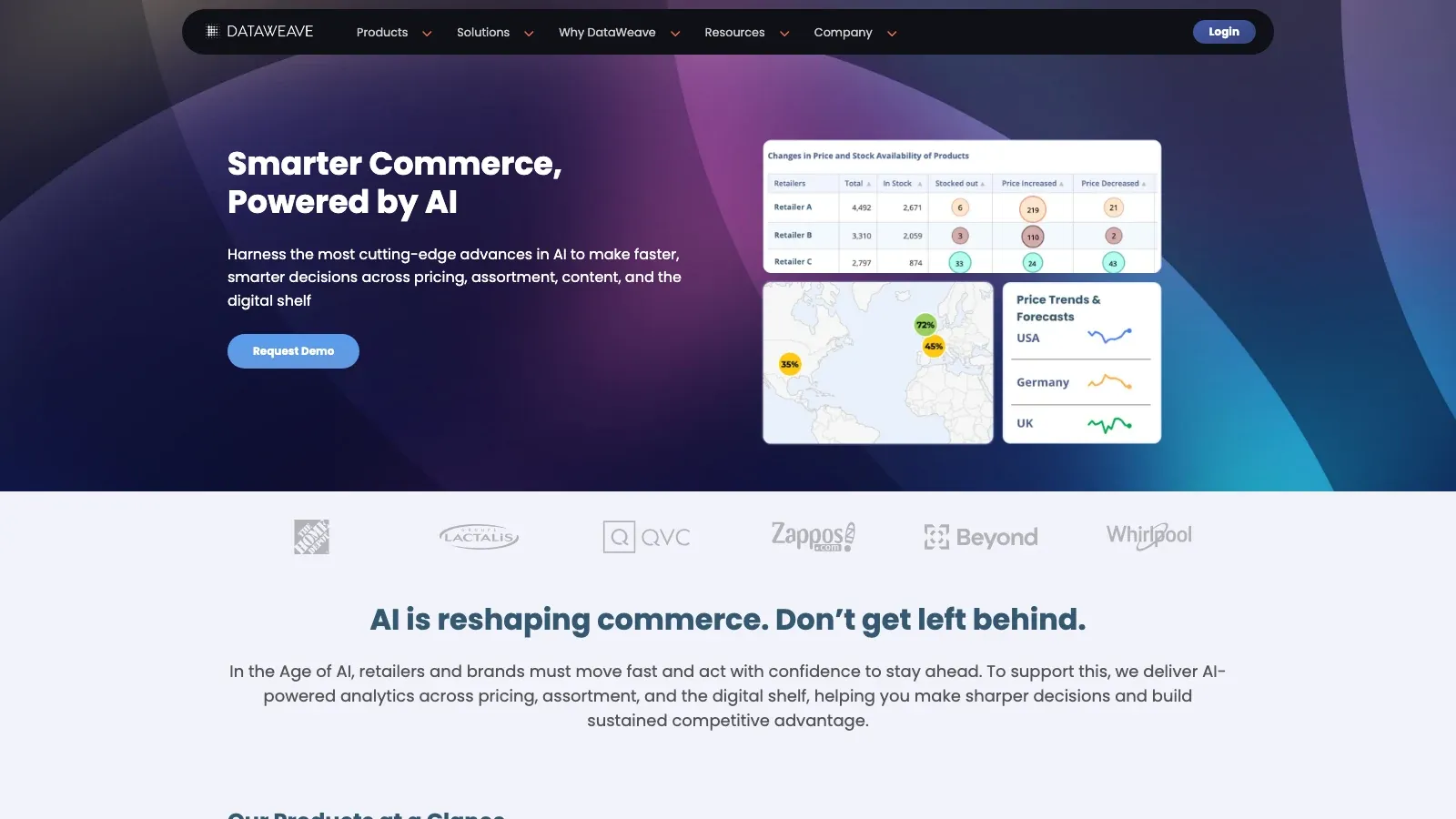
Dataweave is the enterprise-grade solution for automated pricing intelligence and catalog analytics. If you’re a retailer or brand managing thousands of SKUs across multiple marketplaces, Dataweave’s AI-driven dashboards help you monitor prices, track stock, and optimize your assortment in real time.
Core features:
- Competitive price monitoring (95%+ accuracy)
- Dynamic pricing recommendations
- Assortment gap analysis and stock tracking
- Promotion and compliance monitoring
Best for: Mid-to-large retailers and brands who need automated, always-on pricing and catalog insights.
Pricing: Custom/enterprise (typically starting around $199/month and up).
6. Feedvisor
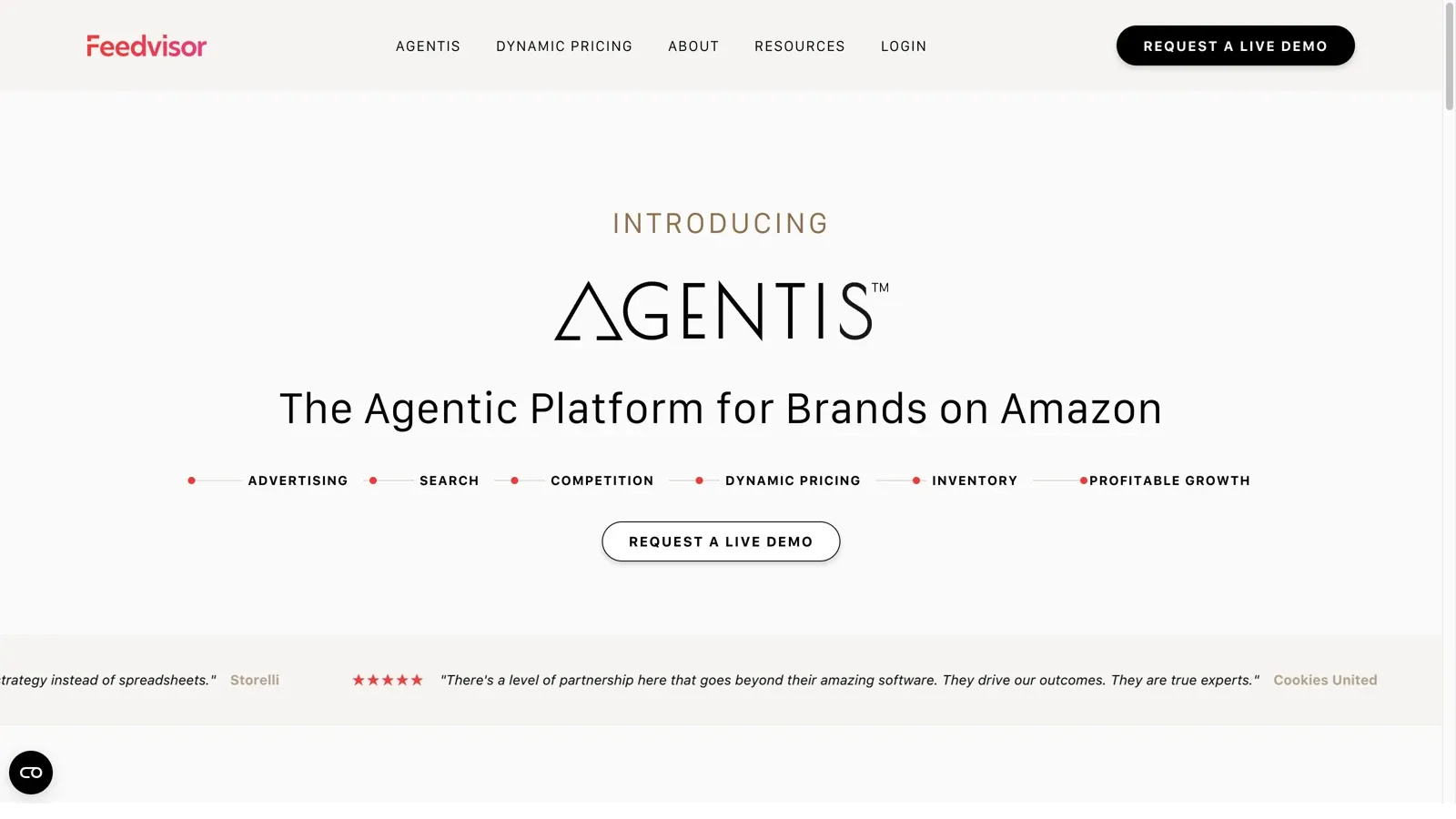
Feedvisor is all about AI-powered optimization for Amazon and Walmart sellers. Their platform combines real-time repricing, ad automation, and inventory management to help you win the Buy Box, maximize ad ROI, and keep your shelves stocked—without constant manual tweaking.
Core features:
- Algorithmic Buy Box repricer (real-time ML pricing)
- AI-driven Amazon ad platform
- 360° analytics dashboard
- Managed services for hands-off optimization
Best for: Large Amazon sellers, brands, and aggregators who want an “auto-pilot” for pricing and ads.
Pricing: Custom/enterprise (often based on GMV or ad spend).
7. Perpetua (formerly Sellics)
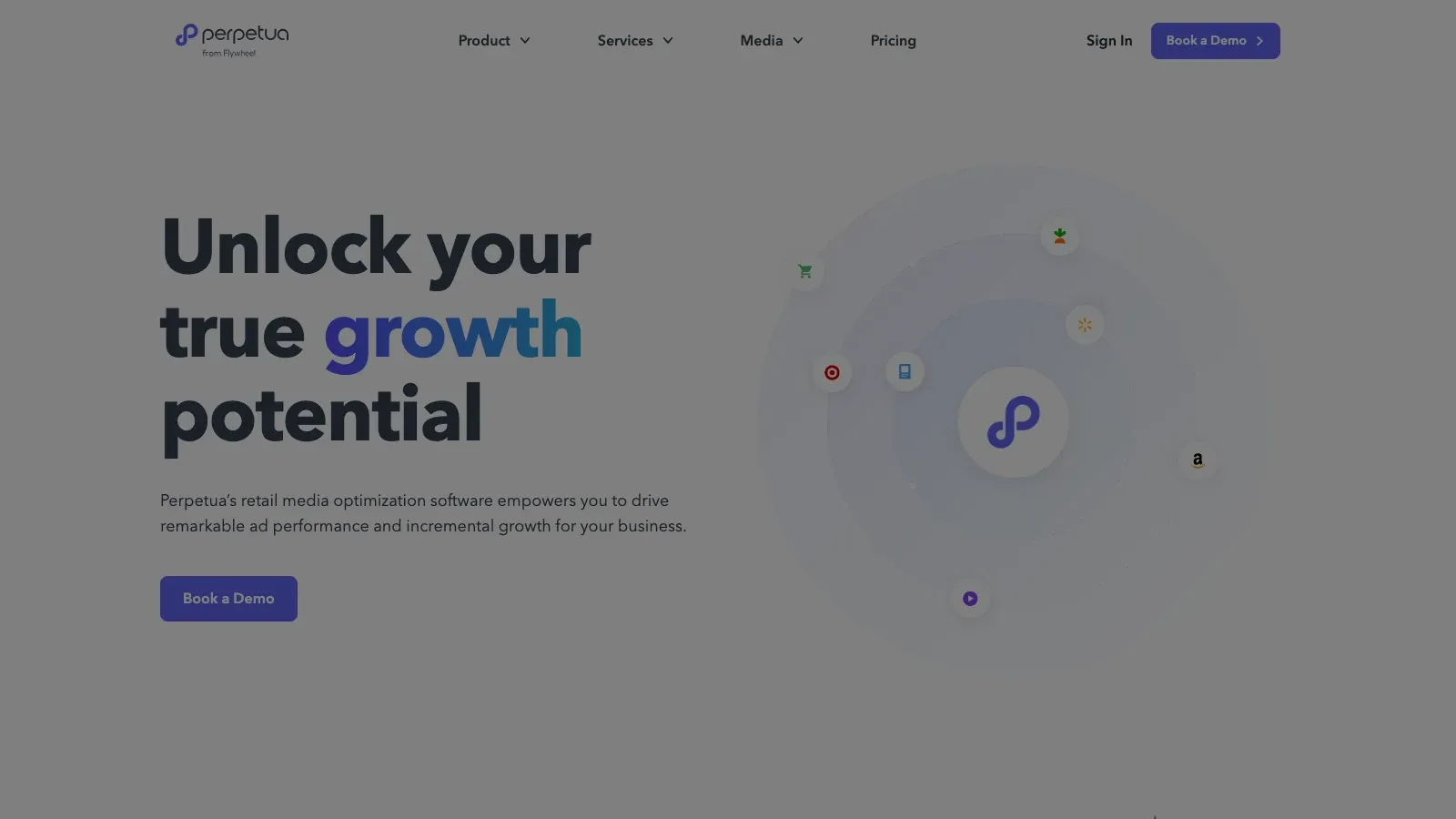
Perpetua (formerly Sellics) is a robust analytics and management suite for Amazon sellers. It shines in PPC campaign management, profit analytics, and review monitoring—making it a favorite for teams who want to optimize every aspect of their Amazon business.
Core features:
- PPC campaign automation and optimization
- Real-time profit dashboard (margins after all costs)
- Review tracking and alerts
- Keyword rank monitoring
Best for: Established Amazon sellers and brands aiming to scale and optimize ads, profitability, and reviews.
Pricing: Essentials starts at $695/month for up to $10k in monthly ad spend; Growth is $695/month plus a percentage of ad spend above that.
8. Keepa
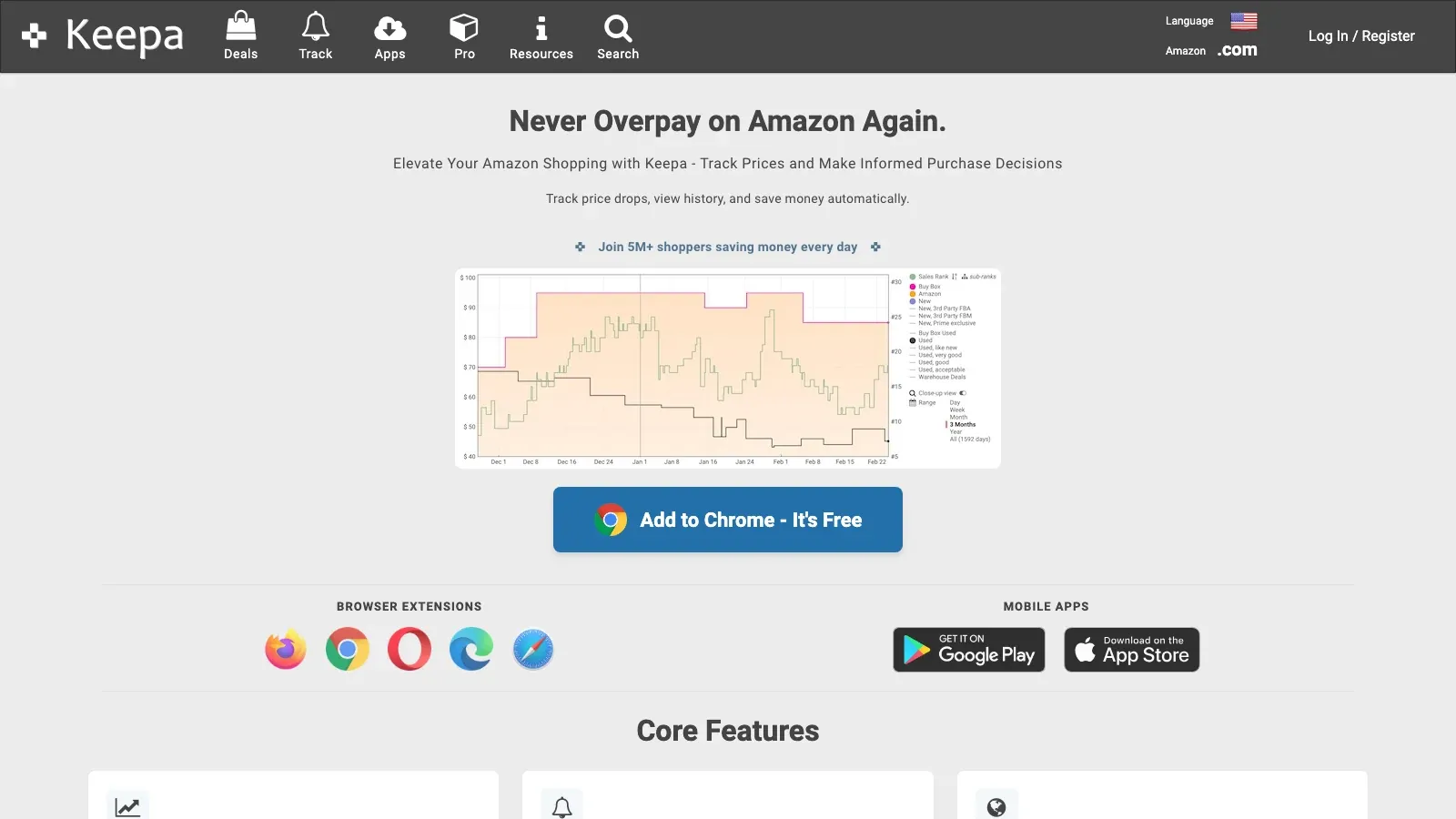
Keepa is the go-to for Amazon price tracking and history. If you want to see how a product’s price, sales rank, and Buy Box have changed over time, Keepa’s charts and alerts are indispensable for pricing decisions and inventory planning.
Core features:
- Price history charts (Amazon, 3P, Buy Box)
- Sales rank and offer count tracking
- Price drop and stock alerts
- API for advanced data export
Best for: All Amazon sellers (and even savvy shoppers) who want to analyze pricing trends and plan inventory.
Pricing: Free for basic use; Premium API ~€15/month.
9. AMZScout
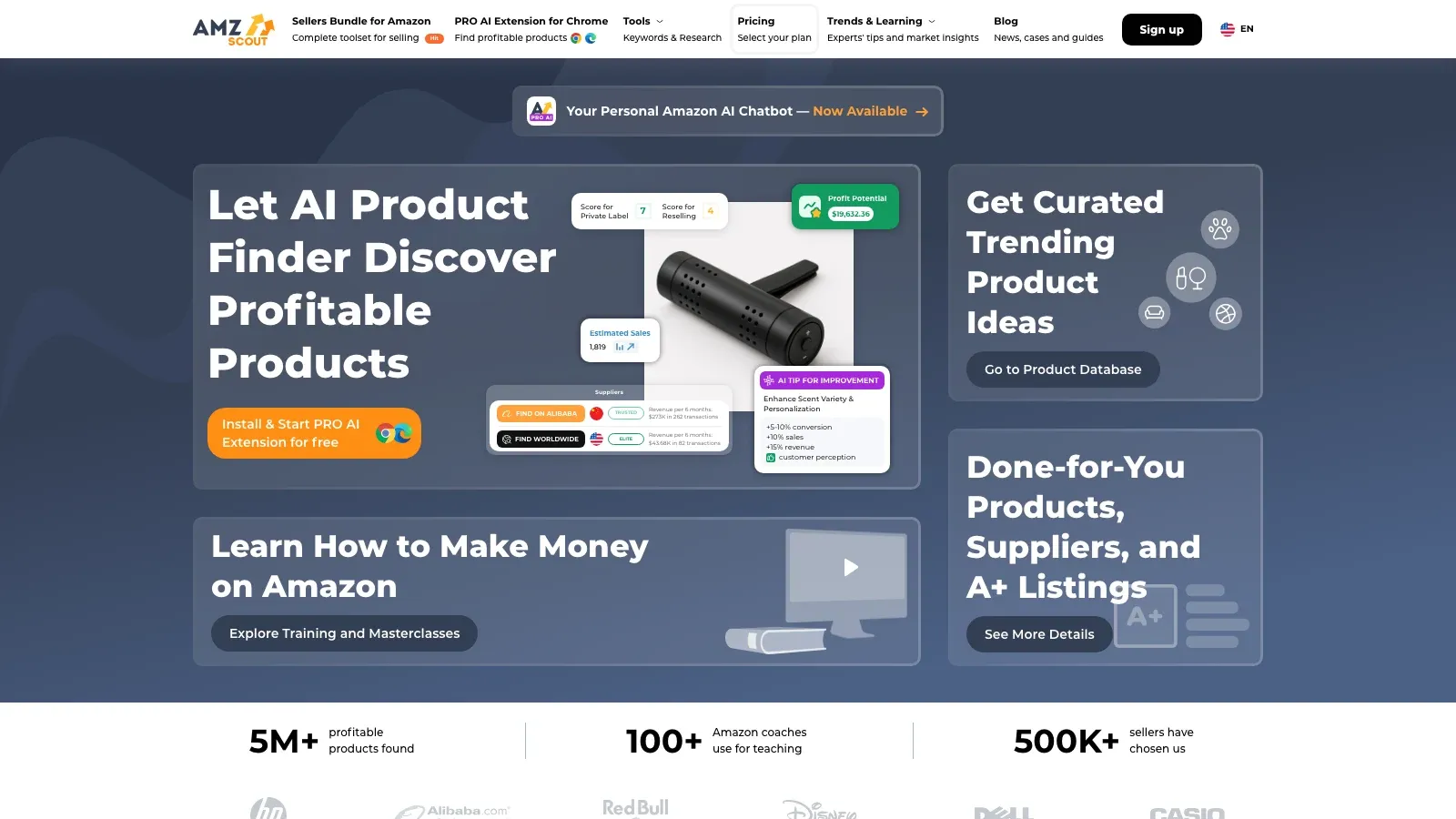
AMZScout is a budget-friendly Amazon product research tool, especially popular with new sellers. Its Chrome extension gives instant sales, revenue, and competition data as you browse Amazon—perfect for quick product validation.
Core features:
- Product database and Chrome Pro Extension
- Sales and revenue estimates
- FBA fee calculator
- Keyword and trend research
Best for: New Amazon sellers or side-hustlers who want the essentials at a lower cost.
Pricing: Extension one-time ~$149 or subscription; web app plans from $49–$59/month.
10. Zetpy
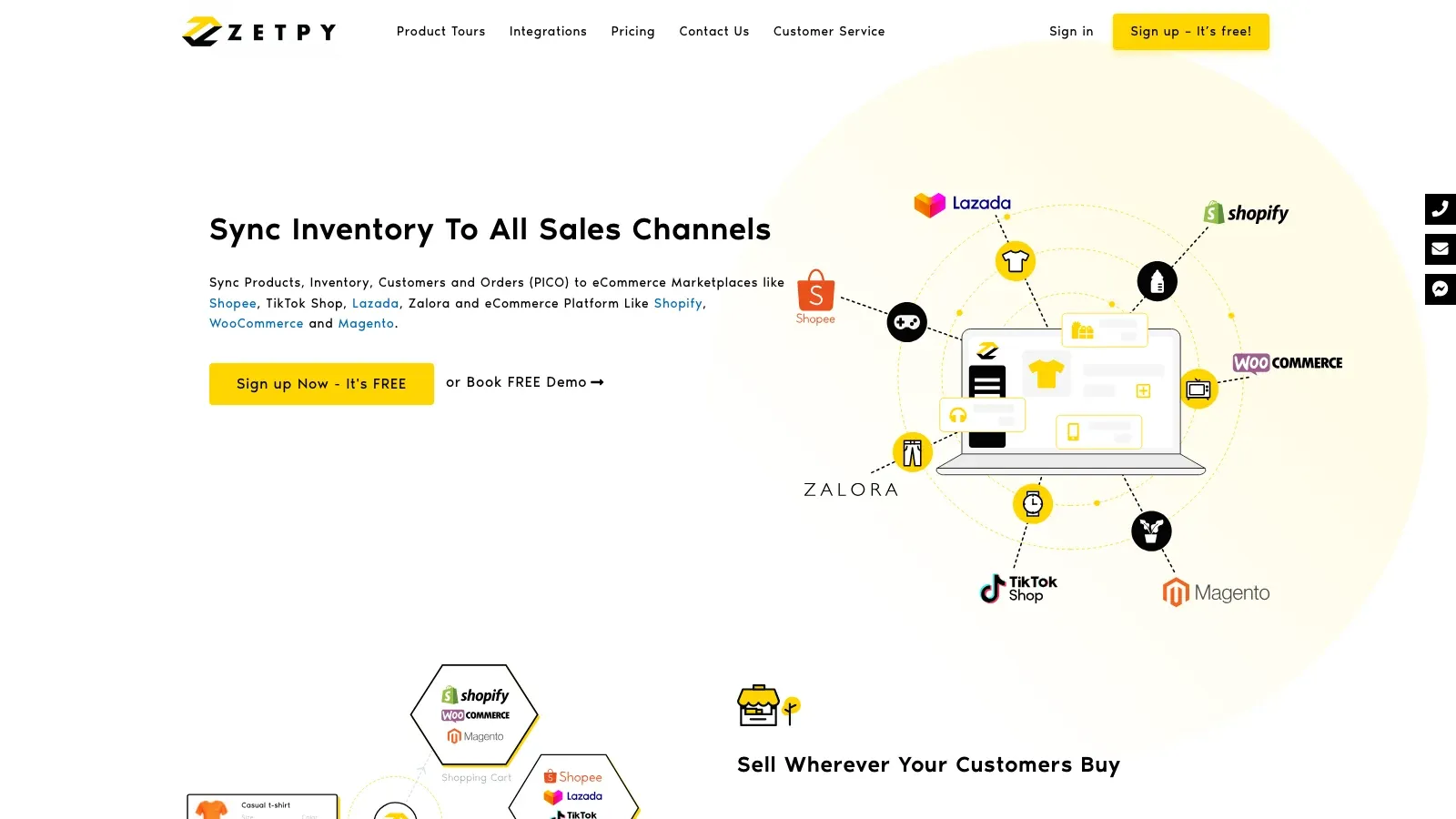
Zetpy is the ultimate multi-marketplace integration platform—especially if you’re selling across Southeast Asian channels like Shopee, Lazada, and TikTok Shop. Zetpy centralizes your product listings, inventory, and orders across all channels, so you never oversell or miss a beat.
Core features:
- Centralized product listing sync (Shopee, Lazada, TikTok, Shopify, etc.)
- Unified inventory and order management
- Chat integration (WhatsApp, Facebook Messenger)
- Integrations with accounting and POS systems
Best for: Multi-channel sellers (especially in Southeast Asia) who need to streamline operations and avoid overselling.
Pricing: Plans from $35/month.
11. Algopix
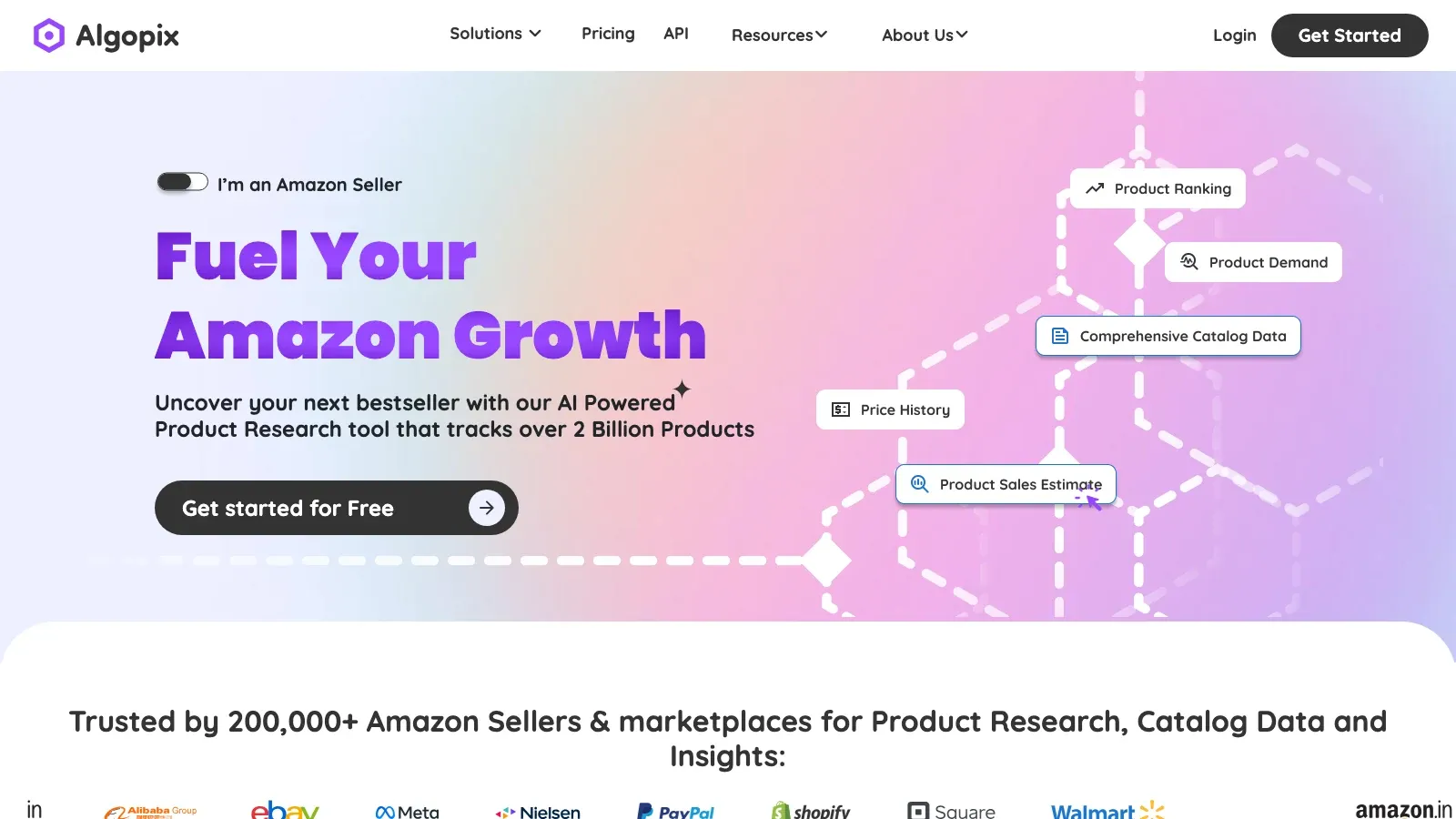
Algopix is your cross-marketplace research assistant. It analyzes demand, competition, and profitability for products across Amazon, eBay, and Walmart—helping you decide what to sell, where, and at what price.
Core features:
- Cross-market demand analysis (Amazon, eBay, Walmart)
- Profit calculator with fees and taxes per channel
- Competitive pricing and seller count per platform
- Bulk analysis for thousands of items
Best for: E-commerce sellers and wholesalers evaluating new products or deciding where to launch.
Pricing: Plans from $34.99/month.
12. Retail Intelligence (Nielsen)
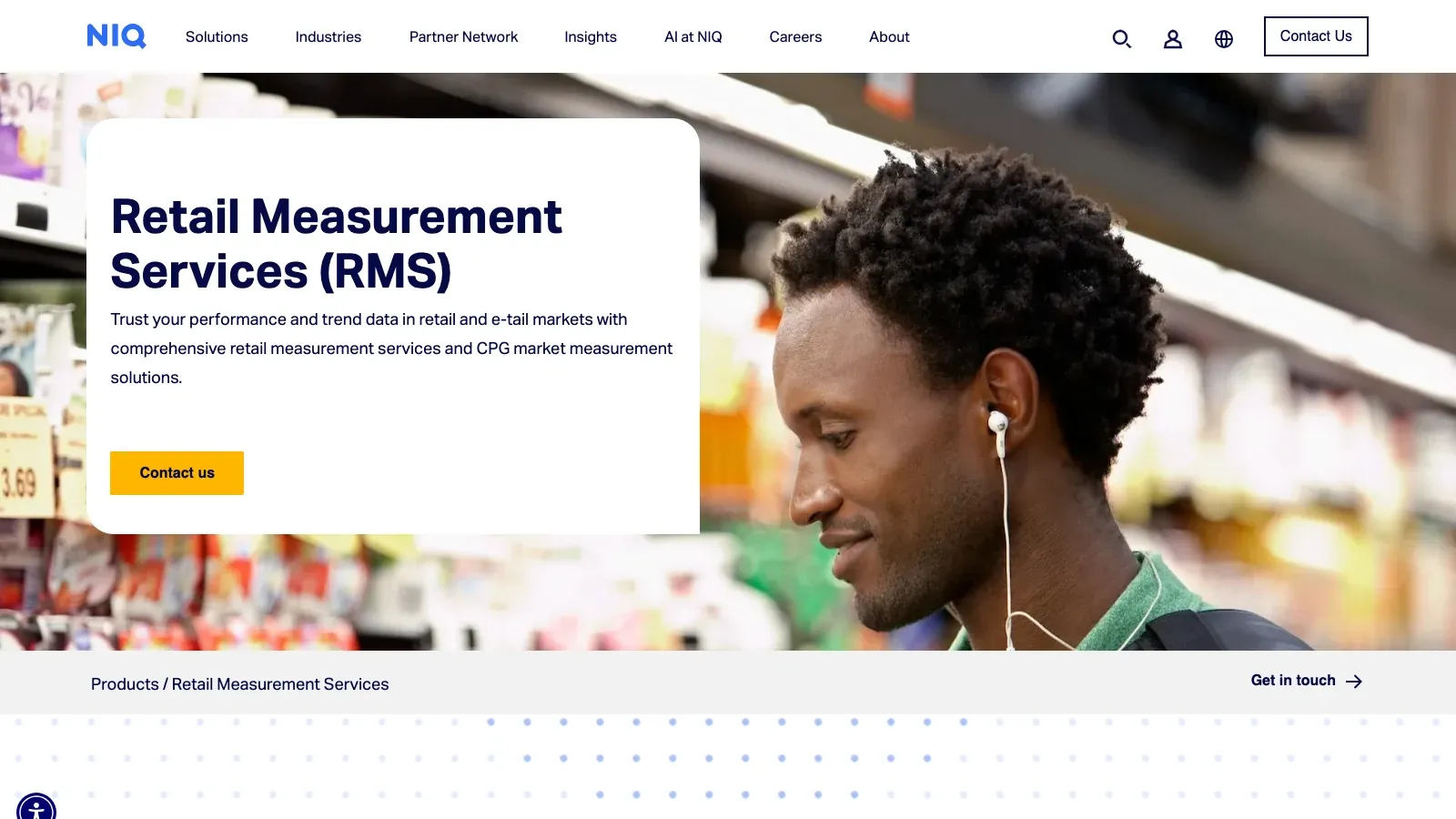
Retail Intelligence (Nielsen) (often branded as NielsenIQ or NIQ) is the gold standard for advanced market data, consumer trends, and competitive benchmarking. If you’re a large CPG or retail operation, Nielsen’s data is the foundation for category management, strategic planning, and performance evaluation.
Core features:
- Market share and sales tracking across categories and regions
- Consumer panel insights (demographics, loyalty, behavior)
- Competitive benchmarking (pricing, promotion, media spend)
- Trend reporting and predictive analytics
Best for: Large manufacturers, retail chains, and analysts who need comprehensive, enterprise-grade market intelligence.
Pricing: Enterprise subscription (custom pricing; typically annual contracts in the tens of thousands).
Marketplace Analysis Tools Comparison Table
Here’s a quick side-by-side to help you spot the right fit:
| Tool | Focus/Best For | Key Features | Pricing | Ideal Users |
|---|---|---|---|---|
| Thunderbit | AI web scraping for custom data | 2-click AI extraction, subpage/pagination, instant templates, free export | Free for 6 pages; Paid from $15/mo | Sales/Ops teams, SMBs, non-technical users |
| Jungle Scout | Amazon product research | Product database, sales estimator, keyword tools | From $49/mo | Amazon FBA sellers, beginners |
| Helium 10 | All-in-one Amazon suite | 30+ tools, AI PPC, listing optimization | Free limited; Paid from $99/mo (annual) | Power sellers, agencies |
| SEMrush | SEO & competitor intelligence | Market Explorer, Traffic Analytics, SEO tools | From $119.95/mo | Marketing/strategy teams |
| Dataweave | Enterprise price intelligence | Price monitoring, dynamic pricing, assortment analysis | Custom, ~$199/mo+ | Retailers, brands, analysts |
| Feedvisor | AI optimization for Amazon/Walmart | Algorithmic repricer, AI ad platform, analytics | Custom/enterprise | Large sellers, aggregators |
| Perpetua (formerly Sellics) | Amazon performance analytics | PPC automation, profit dashboard, review tracking | From $695/mo | Established sellers, brands |
| Keepa | Amazon price tracking/history | Price/sales rank charts, alerts, API | Free; Premium €15/mo | All Amazon sellers |
| AMZScout | Amazon product research (budget) | Chrome extension, sales estimates, FBA calculator | $49–$59/mo | New sellers, side-hustlers |
| Zetpy | Multi-marketplace integration | Product/inventory sync, order mgmt, chat | From $35/mo | Multi-channel sellers, SEA focus |
| Algopix | Cross-market analysis | Demand/profitability across Amazon/eBay/Walmart | From $34.99/mo | Sellers/wholesalers, product launchers |
| Nielsen Retail Intelligence | Advanced market data | Market share, consumer panels, benchmarking | Enterprise | Large CPG/retail, analysts |
Try a Low-Cost Workflow Sample Before You Commit
Before you pay for a full stack, run one cheap real-world test with your own workflow:
| If you want to test... | Lowest-friction move | Best starting tool |
|---|---|---|
| Custom marketplace extraction | Pull one live category page into Sheets or Excel | Thunderbit |
| Amazon price movement | Watch a handful of ASINs for a week | Keepa |
| Product viability | Run a quick product and keyword validation pass | Jungle Scout or AMZScout |
| Cross-channel fit | Compare where the same SKU performs best | Algopix |
This is the point in the article where a trial or sample makes sense: you already know your use case, but you haven’t committed to a deeper tool stack yet.
Run a Free Marketplace Data Sample
How to Choose the Right Marketplace Analysis Tool
Feeling overwhelmed? Here’s my cheat sheet for picking the right tool:
-
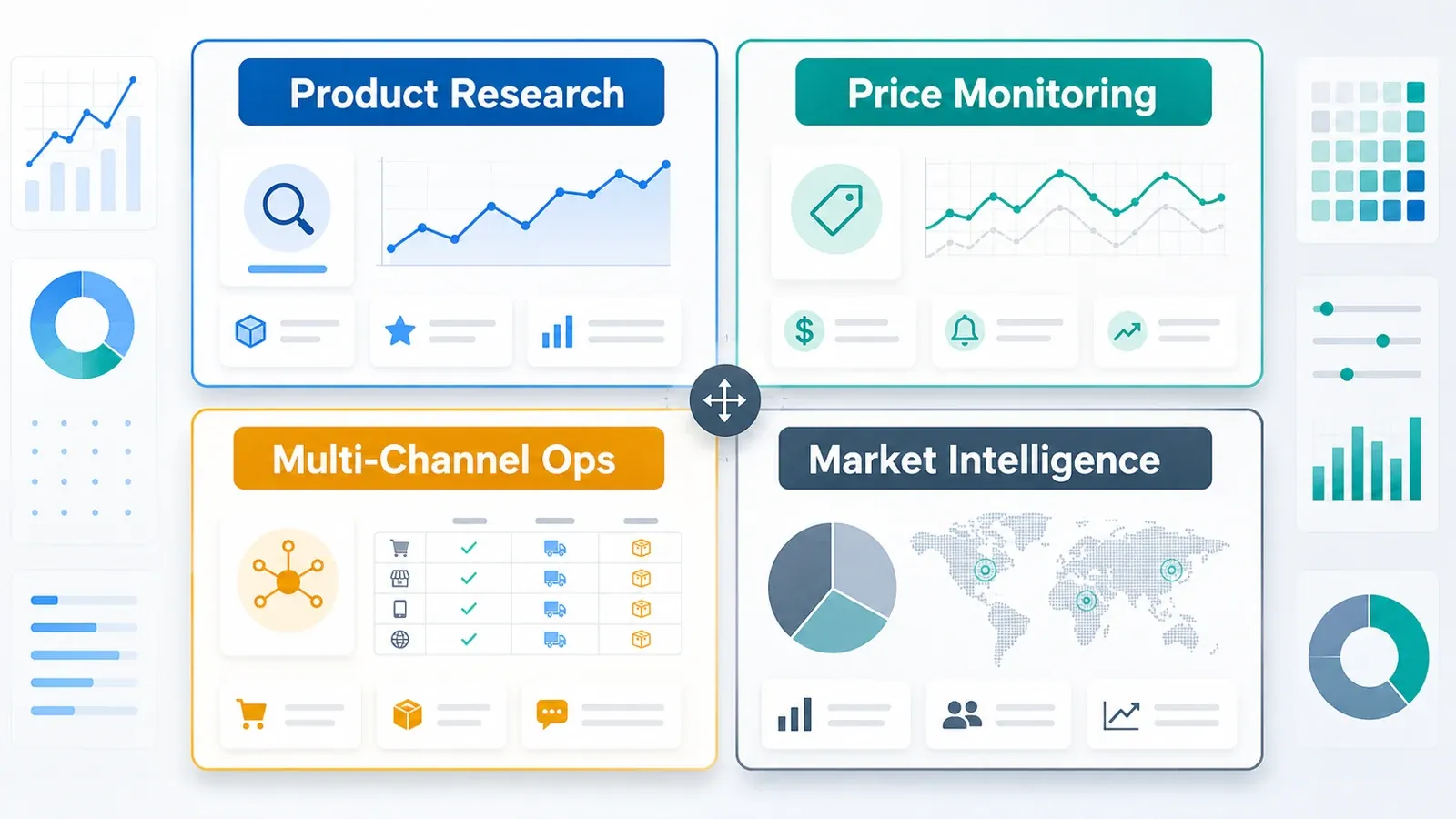
What’s your main goal?
- Product research? (Jungle Scout, Helium 10, AMZScout)
- Price tracking? (Keepa, Dataweave, Thunderbit)
- Multi-channel ops? (Zetpy, Algopix)
- Macro trends/SEO? (SEMrush, Nielsen)
-
Where do you sell?
- Amazon-only: Jungle Scout, Helium 10, Perpetua, Feedvisor, Keepa, AMZScout
- Multi-marketplace: Algopix, Zetpy, Dataweave
-
How technical is your team?
- Non-coders: Thunderbit, Jungle Scout, Helium 10, Zetpy
- Data pros: Dataweave, Feedvisor, Nielsen
-
What’s your budget?
- Free/low-cost: Keepa, Thunderbit (starter), AMZScout
- Mid-tier: Jungle Scout, Helium 10, SEMrush
- Enterprise: Dataweave, Feedvisor, Nielsen
-
Do you need integration/export?
- Sheets/Excel/Notion: Thunderbit, Helium 10, Jungle Scout
- API: Keepa, Dataweave, Feedvisor
Pro tip: Most tools offer free trials—test a few with your real data and see which one gives you the “aha!” moment.
Build Your Shortlist Before a Deeper Evaluation
Once you’ve narrowed the field, don’t jump straight from reading to buying. Use the shortlist logic below to choose the next page or conversation:
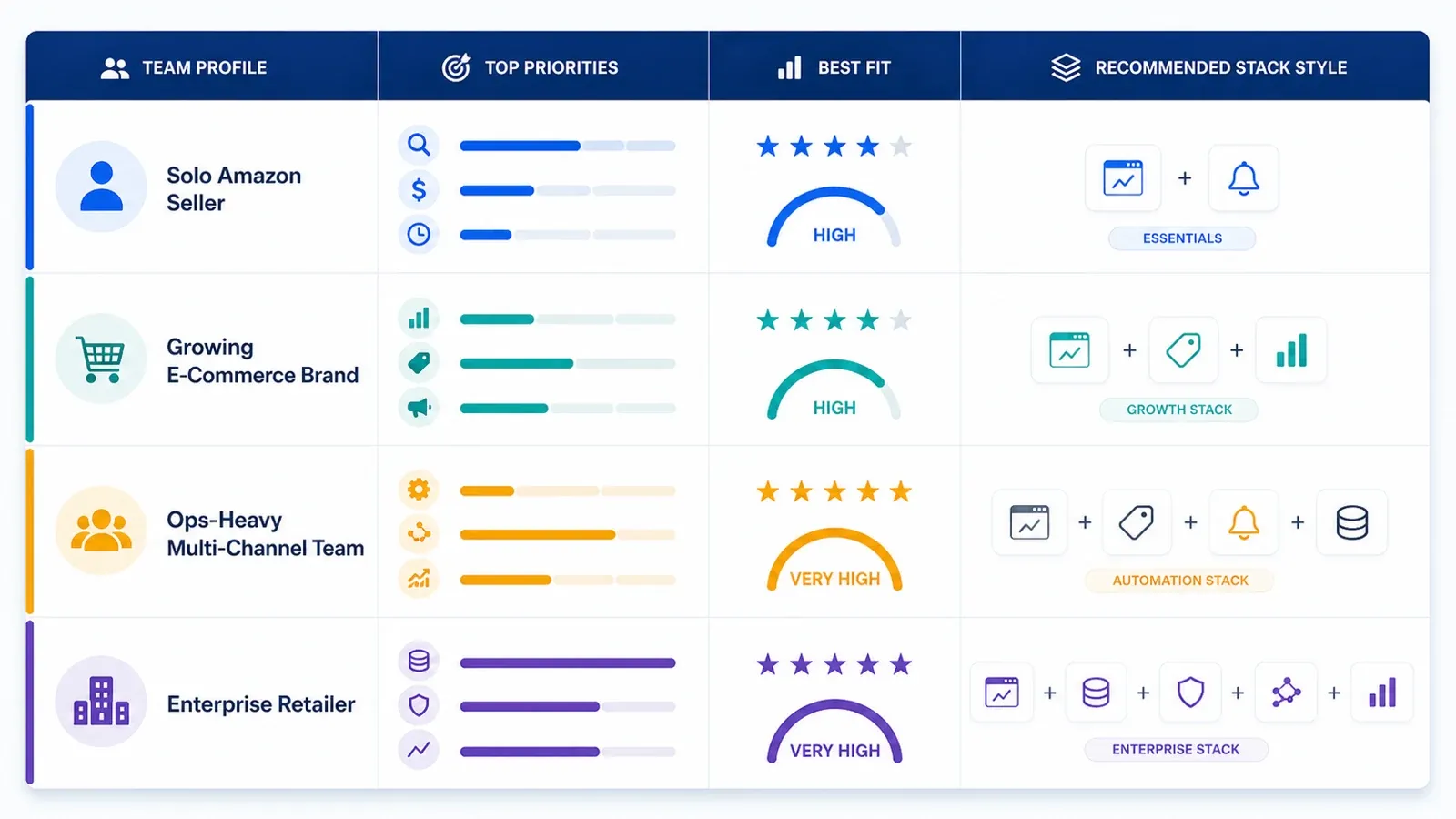
| Team type | Start shortlist with | Next step |
|---|---|---|
| Solo Amazon seller | Keepa, Jungle Scout, AMZScout | Compare ease of use and lowest-cost entry plan |
| Growing e-commerce brand | Thunderbit, Helium 10, SEMrush | Test one live workflow and compare export quality |
| Ops-heavy multi-channel team | Thunderbit, Zetpy, Algopix, Dataweave | Review integration depth and multi-channel coverage |
| Enterprise retailer or CPG team | NielsenIQ, Dataweave, Feedvisor | Move into vendor evaluation, pricing, and demo conversations |
If you’re at this stage, the right CTA is no longer “just try something.” It’s to compare your shortlist, open the product pages, and decide which tools deserve a serious evaluation.
Conclusion: Elevate Your Marketplace Analysis in 2026
Marketplace analysis isn’t just about dashboards and data dumps—it’s about making smarter moves, faster. The right tool can help you spot trends before your competitors, optimize your pricing and ads, and uncover opportunities hiding in plain sight. Whether you’re just starting out or running a global operation, investing in the right analysis stack is the best way to future-proof your business.
Ready to see what’s possible? Try Thunderbit for free or check out a few other tools from this list. And if you want to keep leveling up your data game, swing by the Thunderbit Blog for more deep dives and practical guides.
Here’s to smarter, data-driven decisions—and to never missing out on the next big opportunity.
Try Thunderbit AI Web Scraper for Marketplace Analysis Get Started Free
FAQs
1. What is marketplace analysis, and why is it important in 2026? Marketplace analysis is the process of collecting and interpreting data from online marketplaces (like Amazon, eBay, Walmart, etc.) to inform business decisions. In 2026, with digital sales booming and competition at an all-time high, effective analysis is crucial for pricing, product selection, and staying ahead of trends.
2. How do I choose between Amazon-specific tools and cross-marketplace tools? If you sell only on Amazon, tools like Jungle Scout, Helium 10, and Keepa offer deep, tailored insights. If you operate across multiple marketplaces or want to compare channels, look at Algopix, Zetpy, or Dataweave for broader analysis.
3. Can non-technical teams use these tools, or do I need a data analyst? Many tools—like Thunderbit, Jungle Scout, Helium 10, and Zetpy—are designed for business users with no coding required. For advanced automation or custom analytics, platforms like Dataweave or Nielsen may require more technical expertise.
4. What’s the best tool for tracking competitor prices and stock? For Amazon, Keepa is a must-have for price history and alerts. For custom or multi-marketplace tracking, Thunderbit’s AI web scraper lets you build your own dashboards, and Dataweave offers enterprise-grade, automated price intelligence.
5. How can I get started with marketplace analysis if I’m on a tight budget? Start with free or low-cost tools like Keepa (for price tracking), Thunderbit’s free tier (for custom scraping), or AMZScout’s Chrome extension. Use free trials to test out more advanced platforms, and scale up as your needs grow.
Want more tips on web scraping, e-commerce analytics, or sales automation? Check out the Thunderbit Blog for the latest guides and strategies.
Learn More




