
The world runs on data, and lately, it feels like every business is racing to turn raw web information into actionable insights. I’ve seen firsthand how the right data scraping specialist can transform a company’s decision-making, speed up market research, and even outmaneuver competitors. But here’s the catch: hiring the right person for the job isn’t as simple as posting a job ad and hoping for the best. The demand for skilled data scraping specialists is at an all-time high, and the difference between a good hire and a great one can mean the difference between clean, compliant, business-ready data and a pile of unusable noise.
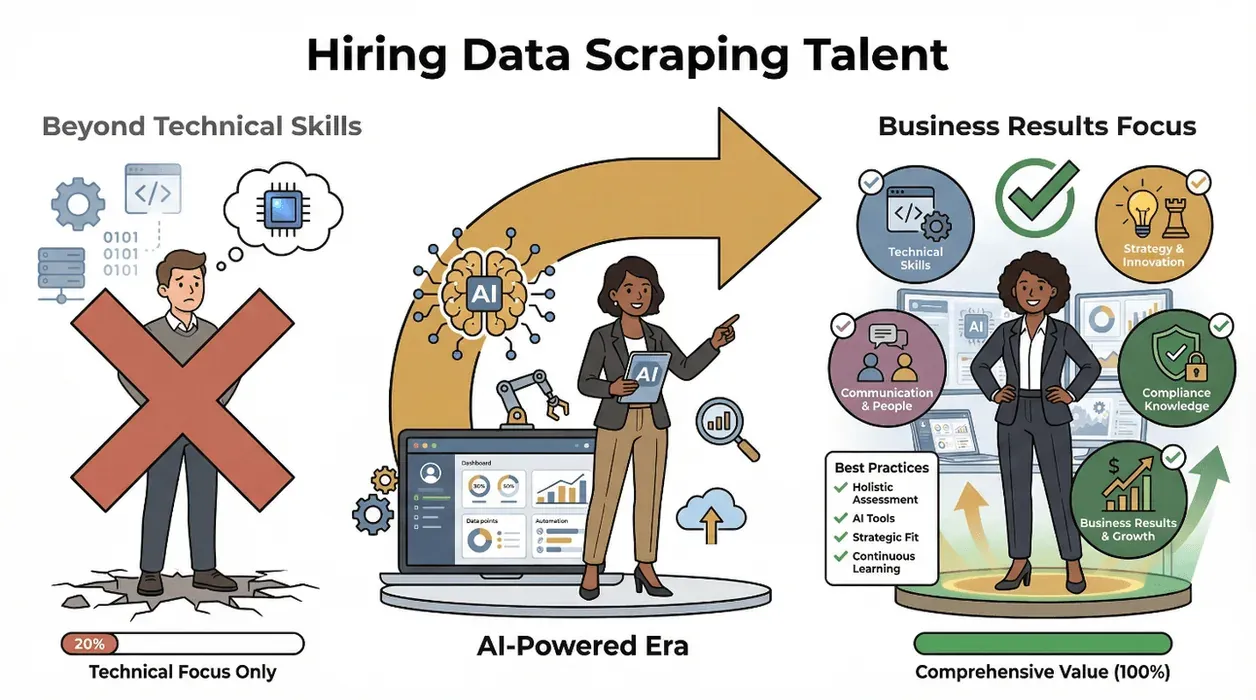 If you’re looking to hire data scraping specialists, you’re not alone. The web scraping market has been on a multi-year tear — the figures everyone quotes are from 2024–2025 industry write-ups (Kanhasoft), and even allowing for some marketing-deck inflation, the underlying trend (more buyers, more sectors, more compliance scrutiny) is clearly real. But as tools evolve—especially with the rise of AI-powered platforms like Thunderbit—and compliance requirements tighten, finding the right specialist means thinking beyond just technical skills. Let’s dive into the best practices I’ve learned (sometimes the hard way) for hiring data scraping talent that will actually move your business forward.
Clarify Your Data Scraping Needs Before You Hire
Scrape data from any website using AI Get Started Free
Before you even think about posting that job description, take a step back and ask: what exactly do we need to scrape, and why? I’ve seen too many projects go sideways because the hiring team couldn’t answer this question clearly. Are you looking for structured data (like neat tables of product prices), or do you need to wrangle messy, unstructured data (like reviews, images, or freeform text)? Do you need a one-time data dump, or ongoing, scheduled scraping?
Defining your requirements up front will help you map business objectives to technical needs, and it’ll make your hiring process a lot smoother. For example, scraping structured data from ecommerce sites might require a different skill set than extracting sentiment from social media posts or mining PDFs for legal information.
Leading companies often start by scoping their scraping needs in detail—listing target websites, data fields, update frequency, and compliance requirements—before they even look at resumes (Zyte). This clarity helps you attract candidates who actually fit your project, not just those who know how to run a script.
Structured vs. Unstructured Data: What’s the Difference?
Let’s break it down:
- Structured data is organized and predictable—think tables, spreadsheets, or databases. Examples include product listings, stock prices, or contact directories. Scraping structured data is usually more straightforward, and tools like Thunderbit excel at turning web tables into ready-to-use spreadsheets (ScraperAPI).
- Unstructured data is messy and unpredictable—think blog posts, images, PDFs, or user reviews. Extracting value here often requires advanced techniques, like AI-driven parsing, natural language processing, or even image recognition (ScraperAPI).
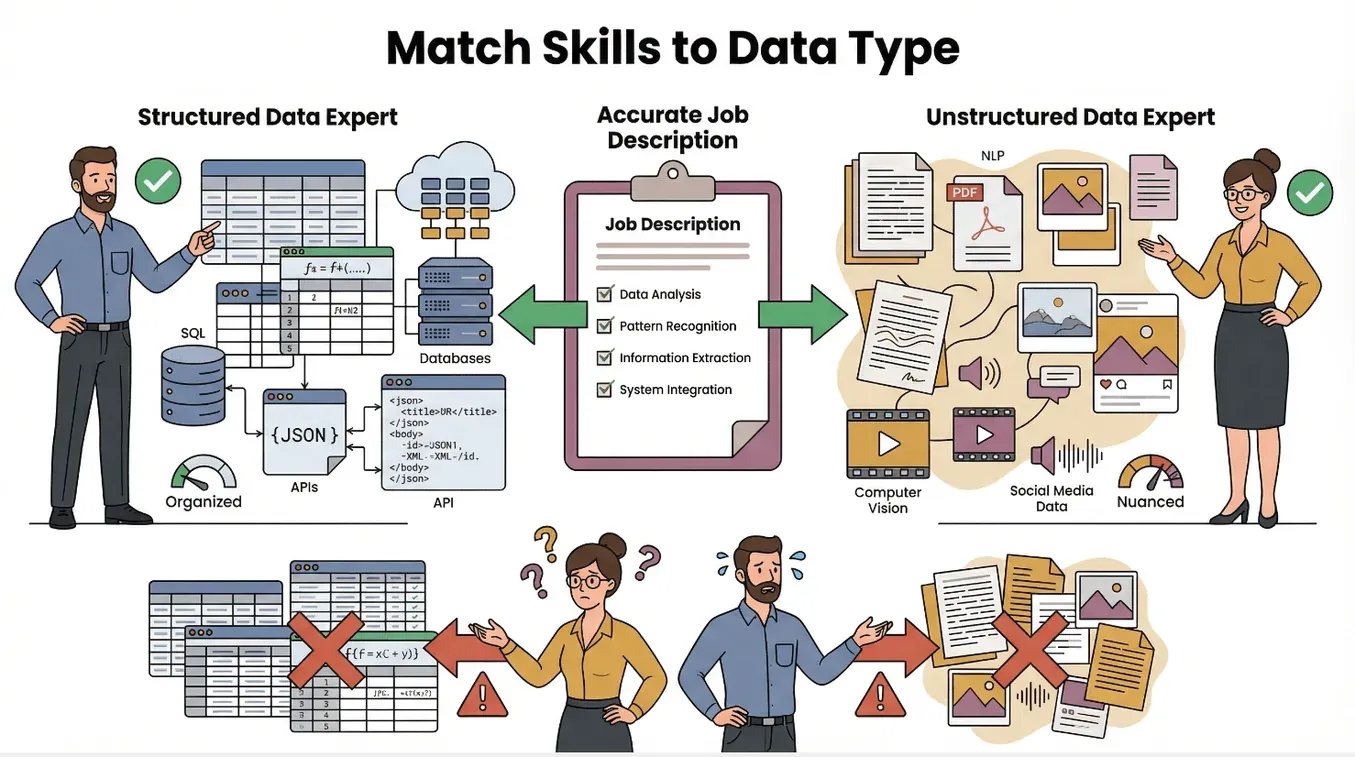 The complexity of your data shapes the profile of your ideal candidate. Someone who’s great at scraping structured data might struggle with the nuances of unstructured sources, and vice versa. Make sure your job description reflects the real challenges your project faces.
Map Candidate Skills to Your Project Requirements
Once you’ve nailed down your data needs, it’s time to map those requirements to candidate skills. Here’s what I look for:
- Technical skills: Familiarity with scraping tools (from code-based to no-code), understanding of HTML/CSS/JavaScript, experience with anti-bot techniques, and data cleaning chops (Scrape.do).
- Problem-solving: Can they handle unexpected website changes, CAPTCHAs, or shifting requirements?
- Attention to detail: Scraping isn’t just about grabbing data—it’s about getting the right data, in the right format, every time.
- Soft skills: Communication, autonomy, and adaptability. Data scraping projects often require back-and-forth with business teams, quick pivots, and a healthy dose of patience.
The best hires are those whose experience matches your specific data challenges. For example, if your project involves scraping sites with aggressive anti-bot defenses, look for candidates who can demonstrate experience with proxies, browser automation, or AI-driven tools that adapt to changing layouts.
Assessing Experience with Modern Tools (Thunderbit and Beyond)
The rise of AI-powered, no-code tools like Thunderbit has changed the game for data scraping specialists. Today, it’s not just about who can write the most elegant Python script—it’s about who can deliver results quickly, reliably, and at scale.
Thunderbit, for example, lets users describe what they want in plain English, click “AI Suggest Fields,” and let the AI handle the rest. It’s especially powerful for non-technical teams or when you need to scrape data in multiple languages (Thunderbit Chrome Extension). When hiring, I always ask candidates about their experience with tools like Thunderbit, and how they’ve used them to solve real-world problems.
Experience with AI-driven tools is a huge plus—it means your specialist can adapt to new sites faster, handle complex or dynamic content, and reduce manual maintenance (ScrapingAPI.ai). It also signals that they’re keeping up with the latest industry trends.
Evaluate Technical Proficiency and Real-World Problem Solving
Technical skills are table stakes, but how do you actually assess them? I’m a big believer in practical tests and portfolio reviews. Ask candidates to walk you through a recent project: What was the goal? What challenges did they face? How did they handle anti-bot measures or data cleaning?
You can also set up a take-home task that mirrors your real-world needs. For example, “Extract product names, prices, and images from this ecommerce site, and handle pagination and subpages.” Bonus points if they can do it using both code and a no-code tool like Thunderbit.
Look for candidates who can explain their approach clearly, document their process, and adapt when things don’t go as planned. The best specialists are those who treat scraping as an ongoing process, not a one-and-done task (Scrape.do).
Testing for Anti-Bot and Deep Scraping Skills
Websites are getting smarter about blocking scrapers, so your hire needs to be smarter, too. During the interview, ask about their experience with:
- Anti-bot defenses: How do they handle CAPTCHAs, IP blocks, or user-agent detection? Have they used browser automation or premium proxies (Scrape.do)?
- Deep-link scraping: Can they extract data not just from list pages, but from detail pages, subpages, or even PDFs and images?
- Adaptability: What do they do when a site changes its layout overnight?
A good technical test might involve scraping data from a site with basic anti-bot measures, or requiring the candidate to enrich a table by visiting subpages—something Thunderbit handles with its subpage scraping feature.
Prioritize Experience with AI-Powered and No-Code Scraping Tools
The days of relying solely on custom scripts are fading fast. AI-powered and no-code tools are making data scraping accessible to a wider range of users, and specialists who know how to leverage these platforms can deliver results faster and with less maintenance.
Thunderbit, for example, offers:
- AI Suggest Fields: The AI scans the page and recommends columns to extract—no manual setup required.
- Subpage scraping: Automatically visits each subpage and enriches your dataset.
- Multi-language support: The Chrome Web Store listing currently advertises 55 supported languages, which matters more than it sounds — most teams I've seen running into "scraper can't read this" walls were just hitting a UI-language gap, not a real technical limit.
- Instant data export: Send results directly to Excel, Google Sheets, Notion, or Airtable.
When hiring, look for candidates who can demonstrate proficiency with these features. Ask them to describe a project where they used Thunderbit (or a similar tool) to solve a complex scraping challenge, or have them perform a live demo during the interview.
Try Thunderbit for AI-Powered Scraping
Thunderbit as a Benchmark: What to Look For
Here are some Thunderbit-specific skills and features that indicate advanced proficiency:
- Custom AI instructions: Can they use Field AI Prompts to extract and label data precisely?
- Subpage and pagination scraping: Have they used Thunderbit to handle multi-level data extraction?
- Data export and integration: Are they comfortable exporting data to various platforms and cleaning it for business use?
- Continuous learning: Do they keep up with Thunderbit’s latest features and updates?
Sample interview questions:
- “Describe a time you used Thunderbit’s subpage scraping to enrich a dataset. What challenges did you face?”
- “How do you use AI Suggest Fields to speed up your workflow?”
- “Have you ever customized Field AI Prompts for a tricky data extraction task?”
Ensure Legal and Ethical Data Collection Practices
This is a big one. Just because data is visible on the web doesn’t mean you’re free to take it (Scrape.do). When you hire data scraping specialists, make sure they understand the legal and ethical boundaries of their work.
Key regulations to consider:
- GDPR (Europe): Protects personal data and privacy (ScraperAPI).
- CCPA (California): Regulates the collection of personal information about Californians (ScraperAPI).
- Copyright and database rights: Scraping copyrighted or proprietary data can be illegal, even if it’s publicly accessible (ScraperAPI).
- Terms of service: Many websites prohibit scraping in their T&Cs (ScraperAPI).
Recent US court decisions have generally favored scraping public data, but the landscape keeps shifting underneath you (ScraperAPI). The bigger 2026 question is Europe: the EU AI Act's high-risk-system provisions take full effect on 2026-08-02, and EU regulators have started landing real fines on scraping of publicly-visible personal data (the French CNIL's penalty against KASPR for harvesting LinkedIn contacts is the case people keep pointing to). A good specialist won't claim to have it all figured out — but they will be able to tell you which lawful basis they're relying on, and why.
Screening for Compliance Awareness
During interviews, test candidates’ understanding of compliance by asking:
- “How do you ensure your scraping projects comply with GDPR or CCPA?”
- “What steps do you take to avoid scraping copyrighted or sensitive data?”
- “How do you handle websites with explicit anti-scraping clauses in their terms of service?”
Red flags include vague answers, a lack of awareness about privacy laws, or a cavalier attitude toward ethics. You want someone who treats compliance as a core part of the job, not an afterthought.
Build a Culture of Continuous Learning and Adaptation
Web scraping is a moving target. Websites change, anti-bot measures evolve, and new tools hit the market every month. The best data scraping specialists are those who never stop learning.
When hiring, look for evidence of ongoing professional development:
- Do they follow industry blogs or participate in scraping communities?
- Have they experimented with new tools or features, like Thunderbit’s latest updates?
- Can they describe how they’ve adapted their workflow in response to changing regulations or technologies?
Encourage your team to stay current with Thunderbit’s feature releases, attend webinars, or even contribute to open-source projects. A culture of learning pays dividends in efficiency, data quality, and compliance.
Leveraging Thunderbit’s Latest Features for Ongoing Improvement
Thunderbit is always rolling out new features—like scheduled scraping, AI-powered field suggestions, and multi-language support. Specialists who stay on top of these updates can deliver better results, faster.
For example, using Thunderbit’s scheduled scraping, a specialist can automate regular data pulls, ensuring your datasets are always fresh. Or, by mastering Field AI Prompts, they can extract and label complex data with minimal manual intervention.
Hiring someone who’s proactive about learning and experimenting with new features is a huge asset—they’ll keep your data pipeline running smoothly, no matter what the web throws at them.
Soft Skills Matter: Communication, Autonomy, and Problem Solving
Technical chops are important, but soft skills are what make a data scraping specialist truly effective. Here’s what I value:
- Clear communication: Can they explain technical concepts to non-technical stakeholders?
- Autonomy: Are they comfortable working independently and making decisions?
- Persistence: Scraping projects often hit roadblocks—do they keep pushing, or give up at the first error message?
- Adaptability: Can they pivot when requirements change or a site redesigns its layout overnight?
Real-world example: I once worked with a specialist who not only delivered clean data, but also flagged potential compliance risks and suggested process improvements. That kind of initiative is worth its weight in gold.
Craft a Clear, Targeted Job Description to Attract Top Talent
A great hire starts with a great job description. Be specific about your needs, required skills, and compliance expectations. Here’s a checklist:
- Role expectations: What types of data will they scrape? What tools will they use?
- Required skills: List both technical (e.g., Thunderbit, Python, anti-bot techniques) and soft skills (communication, autonomy).
- Compliance notes: Highlight the importance of legal and ethical data collection.
- Continuous learning: Emphasize your commitment to ongoing training and tool mastery.
Use language that appeals to candidates with both technical and business acumen. Mentioning experience with Thunderbit or other AI tools can help attract forward-thinking specialists.
Sample Job Description Template
Here’s a customizable template to get you started:
| Job Title | Data Scraping Specialist |
|---|---|
| About Us | We’re a data-driven company seeking a talented Data Scraping Specialist to help us extract, clean, and deliver high-quality web data for business insights. You’ll work with cutting-edge tools like Thunderbit to automate and optimize our data collection workflows. |
| Responsibilities | - Scope and execute data scraping projects (structured and unstructured data) - Use AI-powered tools (Thunderbit, etc.) to extract data efficiently - Handle anti-bot measures, pagination, and subpage scraping - Ensure legal and ethical compliance (GDPR, CCPA, copyright, T&Cs) - Clean, structure, and export data to Excel, Google Sheets, Notion, or Airtable - Communicate findings and recommendations to business stakeholders - Stay up to date with the latest scraping tools and best practices |
| Requirements | - Proven experience with data scraping (portfolio or project examples required) - Familiarity with AI/no-code tools like Thunderbit - Strong problem-solving and communication skills - Understanding of data privacy laws and compliance - Commitment to continuous learning and improvement |
| Nice to Have | - Experience with multi-language scraping projects - Familiarity with Field AI Prompts and custom data labeling - Participation in web scraping communities or open-source projects |
Interview and Assessment Best Practices
Interviewing data scraping specialists is part art, part science. Here’s what works for me:
- Technical test: Give candidates a real-world scraping task, ideally using both code and a no-code tool like Thunderbit.
- Portfolio review: Ask for previous projects, code samples, or case studies.
- Behavioral interview: Probe for soft skills—communication, autonomy, adaptability.
- Compliance check: Test their knowledge of legal and ethical issues with scenario-based questions.
- Remote assessment: Use screen sharing for live demos, or set up take-home assignments with clear requirements.
A balanced approach—combining technical, practical, and soft skill assessments—will help you find a specialist who’s not just a scraper, but a true data partner.
Conclusion: Setting Up for Success When You Hire Data Scraping Specialists
Read more on the Thunderbit Blog Get Started Free
Hiring the right data scraping specialist is about more than just technical know-how. It’s about aligning your business needs with the right mix of skills, tools, and ethical practices. Define your requirements up front, look for candidates who can handle both structured and unstructured data, and prioritize experience with modern, AI-powered platforms like Thunderbit. Don’t forget to screen for compliance awareness and a commitment to continuous learning—because in this field, standing still means falling behind.
The payoff? Clean, actionable data that drives smarter decisions, faster execution, and a real competitive edge. Ready to get started? Check out Thunderbit’s Chrome Extension or browse the Thunderbit Blog for more tips on building your data team.
Start Scraping Smarter with Thunderbit
FAQs
1. What’s the difference between structured and unstructured data in web scraping?
Structured data is organized and predictable (like tables or databases), making it easier to extract and analyze. Unstructured data is messy (like text, images, or PDFs) and requires advanced techniques to process (ScraperAPI).
2. Why is experience with tools like Thunderbit important when hiring data scraping specialists?
AI-powered tools like Thunderbit enable faster, more reliable data extraction, especially for non-technical users or projects involving multiple languages. Specialists who know these tools can deliver results with less setup and maintenance (Thunderbit).
3. How can I assess a candidate’s technical proficiency in data scraping?
Use practical tests, portfolio reviews, and scenario-based interview questions. Ask candidates to complete a real-world scraping task, handle anti-bot measures, or enrich a dataset using subpage scraping.
4. What legal and ethical issues should I consider when hiring a data scraping specialist?
Make sure candidates understand GDPR, CCPA, copyright, and website terms of service. Responsible scraping means respecting privacy, intellectual property, and compliance requirements (ScraperAPI).
5. How do I encourage continuous learning in my data scraping team?
Promote a culture of ongoing education—encourage your team to follow industry blogs, experiment with new tools like Thunderbit, and participate in scraping communities. Continuous learning leads to better data quality and long-term success.
Ready to build your dream data team? Start with clarity, hire for both skill and mindset, and let the data (and Thunderbit) do the heavy lifting.
Try AI Web Scraper Get Started Free
Learn More
- Freelance Web Scraping Developers: A Complete Success Guide
- Is It Legal to Scrape Data from Websites? Best Practices Guide
- How to Choose the Right Web Scraping Framework for Your Needs
- How to Master Web Scraping for Price Comparison in 2025
- Outscraper Feedback: My Hands-On Experience
- The Best Web Scraping Tools & Software in 2025
- How to Scrape Any Website Using AI
- How to Scrape Website Data Efficiently with Top Tools
- Top 6 Essential Web Scraper Tools for 2025 Success
- Top 5 Best Web Data Scraping Software in 2026




