

The digital shelf isn’t just a buzzword thrown around in ecommerce boardrooms—it’s the new battleground for brands fighting for consumer attention, trust, and sales. By 2025, U.S. ecommerce sales had crossed $1.23 trillion — more than double the $601.7 billion logged in 2019 — and the global digital shelf has firmly settled into trillion-dollar territory (U.S. Census Bureau). But here’s the kicker: it’s not enough to simply “be online.” Winning brands are those who master the art and science of digital shelf strategy—transforming product pages, search results, and even customer reviews into engines of growth.
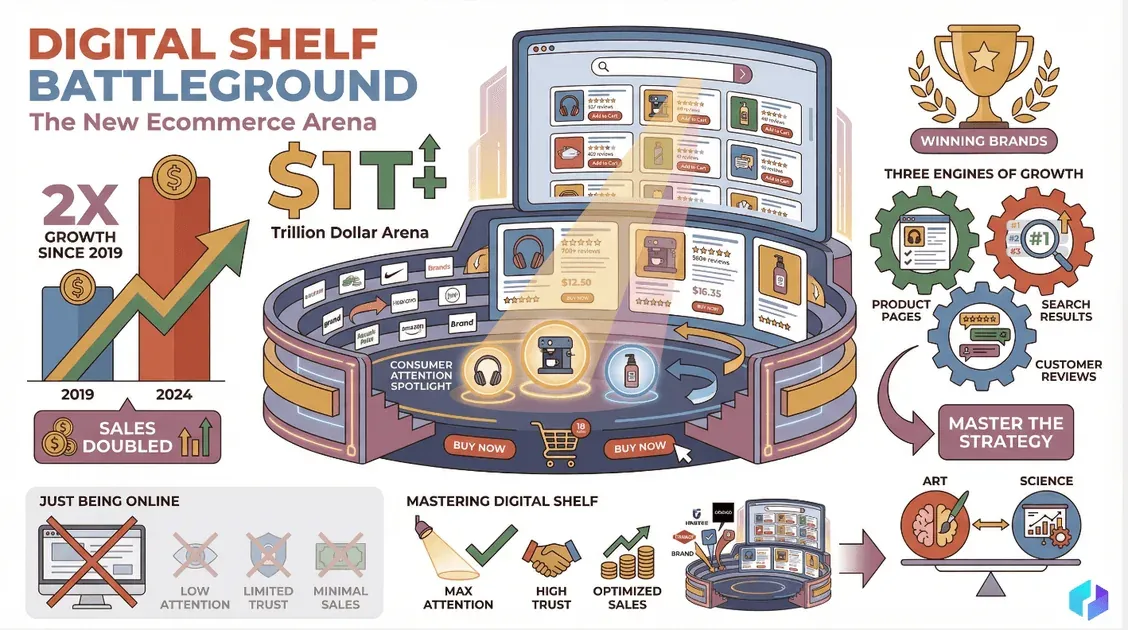 I’ve seen firsthand how a well-executed digital shelf strategy can turn a struggling product line into a category leader. In this guide, I’ll break down what a digital shelf strategy really means (spoiler: it’s way more than uploading a few SKUs), why it’s now essential for every brand, and how tools like Thunderbit are making it easier than ever to build, monitor, and optimize your digital presence—whether you’re a scrappy startup or a global powerhouse.
Try Thunderbit for Digital Shelf Optimization
Digital Shelf Strategy: Beyond the Buzzword
Let’s get this out of the way: a digital shelf strategy isn’t just a fancy way to say “put your products online.” It’s about orchestrating every digital touchpoint—product listings, images, reviews, pricing, stock, and even Q&A—to maximize discoverability, trust, and conversion (Influencer Marketing Hub).
Think of the digital shelf as the sum total of how your brand shows up wherever customers shop online: Amazon, Walmart, your own DTC site, Google Shopping, and a dozen other marketplaces. Unlike a physical shelf, the digital shelf is dynamic, data-driven, and fiercely competitive. A single missing image or outdated price can send your customer straight to a competitor.
The impact is real. Brands that invest in digital shelf optimization have seen conversion rates climb by 35% or more, while those who ignore it risk falling into digital obscurity. In today’s market, your digital shelf strategy is your brand’s frontline defense—and offense.
What Is Data Scraping and How to Do It in 2025 Get Started Free
Why Digital Shelf Strategy Matters for Modern Brands
The ROI of a strong digital shelf strategy is impossible to ignore. Here’s why:
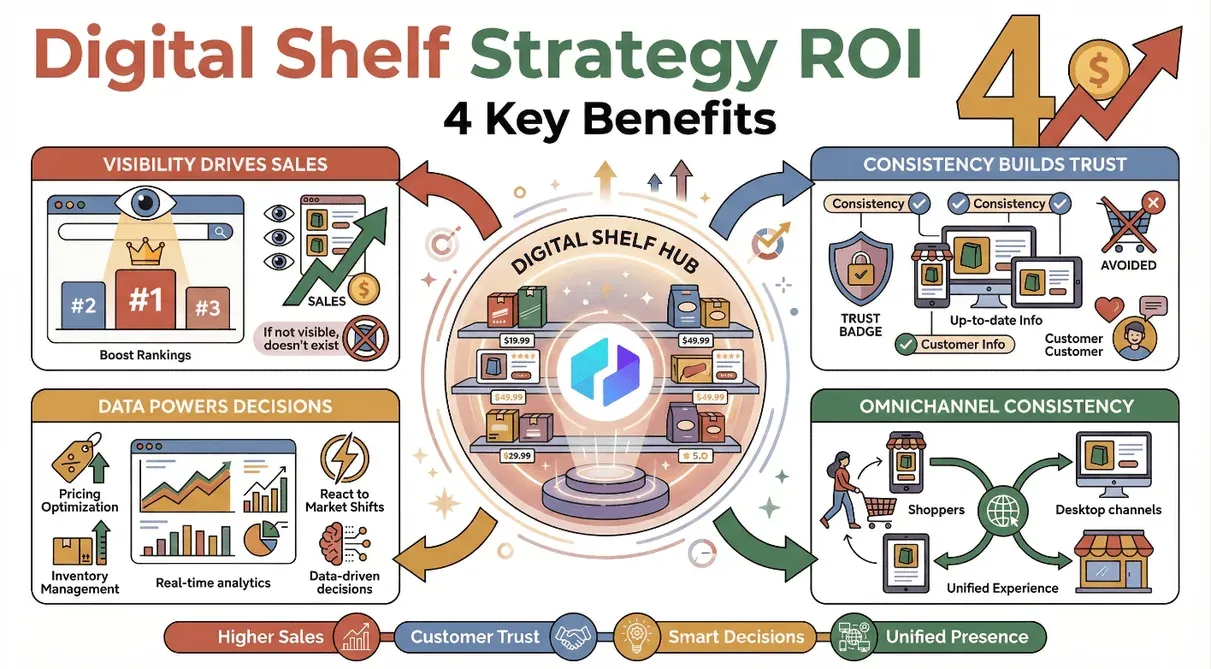
- Visibility Drives Sales: If your product isn’t showing up in search results, it might as well not exist. Optimized digital shelves boost your ranking and impressions, leading to more eyeballs and higher sales (Nimbleway).
- Consistency Builds Trust: Shoppers expect accurate, detailed, and up-to-date product info—everywhere. Inconsistent data leads to abandoned carts and lost loyalty (Inriver).
- Data Powers Decisions: Real-time analytics let you react to market shifts, optimize pricing, and manage inventory before issues snowball (Merkle).
- Omnichannel Consistency: Shoppers bounce between channels—your digital shelf needs to be unified across all of them (Krunchbox).
Here’s a quick table of digital shelf strategy use cases:
| Use Case | Impact on Business |
|---|---|
| Product Launches | Faster time-to-market, higher awareness |
| Price Monitoring | Stay competitive, avoid margin loss |
| Review Management | Build trust, improve conversion |
| Inventory Tracking | Prevent stockouts, optimize supply |
| Omnichannel Consistency | Boost customer trust, reduce returns |
Brands like ONE, a grocery company, saw their digital shelf optimization efforts pay off with a surge in sales and improved market share after implementing real-time analytics and content updates (Stackline).
The Five Core Principles of Building a Strong Digital Shelf Strategy
Over the years, I’ve distilled digital shelf mastery into five core principles. Nail these, and you’re already ahead of most competitors:
- Product Information Consistency
- Engaging Content
- Consumer Interaction
- Data-Driven Decision Making
- Agile Adaptation
Let’s break these down—and see how Thunderbit can help at every step.
1. Maintaining Product Information Consistency
Nothing tanks trust faster than inconsistent product info. Imagine a shopper sees different specs or prices for your product on Amazon and Walmart. Confusion leads to hesitation, and hesitation kills conversions (Inriver).
Best Practice: Audit your product listings across all channels, ensuring titles, images, specs, and prices are always in sync.
How Thunderbit Helps: Thunderbit’s AI-powered extraction lets you scrape and compare product data from multiple sites in minutes. Just use “AI Suggest Fields,” and Thunderbit structures the data for you—no coding, no templates. Spot inconsistencies and update them before they become a problem.
For marketplace-specific monitoring, a template can shorten setup even further. For example, ecommerce teams tracking department-store product pages can start from the Liverpool Scraper to collect product names, prices, descriptions, and listing details before feeding that data into a digital shelf audit.
2. Strengthening Consumer Interaction
Reviews, Q&A, and user-generated content are the lifeblood of the digital shelf. Over 93% of shoppers now read reviews before buying, and businesses that reply to reviews see higher loyalty and conversion (Fera.ai).
Best Practice: Monitor and respond to reviews and questions quickly. Use insights from feedback to improve products and messaging.
How Thunderbit Helps: Thunderbit can automatically scrape reviews, ratings, and Q&A from every product page—across Amazon, Walmart, and even niche marketplaces. Set up scheduled scrapes to keep tabs on sentiment and spot issues before they escalate.
3. Data-Driven Decision Making
Gut instinct is great, but data wins in the long run. Brands that track digital shelf KPIs—like share of shelf, conversion rate, and price competitiveness—are more effective at adapting to market changes (DragonflyAI).
Best Practice: Set up dashboards to monitor key metrics and automate reporting.
How Thunderbit Helps: Thunderbit exports structured data directly to Google Sheets, Notion, or Airtable. You can plug this into your analytics stack for real-time insights—no more manual copy-paste marathons.
4. Engaging Content
It’s not just about having a product page—it’s about making it irresistible. High-quality images, videos, and detailed descriptions drive more clicks and conversions (Nimbleway).
Best Practice: Regularly update your content to reflect new features, uses, or customer stories.
How Thunderbit Helps: Use Thunderbit to benchmark your content against top competitors. Scrape their listings, analyze what works, and iterate on your own pages.
5. Agile Adaptation
The digital shelf moves fast. Price wars, stockouts, and viral trends can change the game overnight. Brands that adapt quickly win market share (Merkle).
Best Practice: Monitor competitors and your own listings in real time. Set up alerts for price changes, stock issues, or negative reviews.
How Thunderbit Helps: Thunderbit’s scheduled scraping and AI-driven alerts mean you’re always the first to know—and act.
Step-by-Step Guide: Executing a Digital Shelf Strategy from Startup to Scale
Whether you’re just starting out or managing thousands of SKUs, the path to digital shelf mastery follows a clear roadmap:
Laying the Foundation: Digital Shelf Strategy for New Brands
- Define Your Goals: Are you aiming for brand awareness, sales, or both?
- Select Your Channels: Start with one or two key marketplaces (Amazon, Walmart, Shopify).
- Establish Data Processes: Use Thunderbit to onboard product data quickly—scrape competitor listings, benchmark content, and identify gaps.
- Optimize Listings: Focus on high-quality images, clear titles, and compelling descriptions.
- Monitor Performance: Track basic KPIs like impressions, clicks, and conversion rate.
Pro Tip: Even startups can use Thunderbit's free tier — 6 pages per month, no credit card — to get a jumpstart on digital shelf optimization.
Scaling Up: Managing Complexity as You Grow
As your catalog and channels expand, so do the challenges:
- Bulk Data Management: Use Thunderbit’s bulk extraction to update hundreds of listings at once.
- Multi-Channel Consistency: Scrape and compare data across all platforms to ensure alignment.
- Advanced Analytics: Integrate Thunderbit exports with BI tools for deeper insights.
- Continuous Improvement: Schedule regular audits and content refreshes.
Brands that scale their digital shelf strategy see not just higher sales, but also improved customer retention and lower return rates (Inriver).
How To Scrape Amazon Products and Reviews in 2025 using AI Get Started Free
Thunderbit’s Role in Optimizing Data-Intensive Digital Shelf Strategy
Here’s where Thunderbit really shines for data-heavy brands:
- Natural Language Data Capture: Just describe what you want (“extract product name, price, reviews”), and Thunderbit’s AI does the rest.
- AI-Driven Structuring: Thunderbit suggests fields, cleans data, and even enriches it with subpage scraping—perfect for large catalogs.
- Subpage Scraping: Need more details? Thunderbit can visit each product’s detail page, pulling in specs, reviews, or stock info.
- Ongoing Monitoring: Schedule scrapes to keep tabs on prices, reviews, and inventory—across every channel.
Workflow Example:
A global beauty brand uses Thunderbit to monitor 1,000+ SKUs across Amazon, Walmart, and Target. Every morning, Thunderbit scrapes product pages, updates a central dashboard, and flags any price changes or negative reviews. The brand’s ecommerce team can react instantly—adjusting prices, updating content, or responding to reviews.
Real-Time Digital Shelf Optimization: Staying Competitive Through 2026
The digital shelf is a living, breathing ecosystem. Prices change, competitors launch new products, and customer sentiment shifts overnight. Real-time optimization is the only way to stay ahead (Merkle).
How Thunderbit Makes It Possible:
- AI Custom Extraction: Set up custom rules to capture exactly the data you need—from price drops to new reviews.
- Scheduled Scraping: Automate data collection at any interval—hourly, daily, or weekly.
- Instant Alerts: Get notified when a competitor undercuts your price or when a product goes out of stock.
Brands using real-time digital shelf optimization report faster response times, higher conversion rates, and greater market share (DragonflyAI).
Measuring Success: Key Metrics for Your Digital Shelf Strategy
What gets measured gets managed. Here are the KPIs every brand should track:
| KPI | Why It Matters |
|---|---|
| Share of Digital Shelf | Measures your visibility vs. competitors |
| Conversion Rate | Tracks how many visitors become buyers |
| Review Sentiment | Gauges customer satisfaction and trust |
| Price Competitiveness | Ensures you’re not losing sales on price |
| Stock Availability | Prevents lost sales due to out-of-stock items |
Pro Tip: Use Thunderbit to automate data exports and feed your dashboards. Set up Google Sheets or Notion to visualize trends and spot issues fast.
Overcoming Common Digital Shelf Strategy Challenges
Let’s be real—digital shelf management isn’t always smooth sailing. Here are the biggest headaches (and how to fix them):
- Inconsistent Data: Use Thunderbit’s AI to audit and align product info across channels.
- Slow Updates: Schedule regular scrapes and automate exports for faster refreshes.
- Lack of Insights: Plug Thunderbit data into your analytics tools for actionable reporting.
- Cross-Channel Complexity: Thunderbit’s bulk and multi-channel scraping makes it easy to manage hundreds (or thousands) of listings at once.
Before-and-after: One apparel brand reduced abandoned carts by 20% after using Thunderbit to standardize product info across marketplaces (Inriver).
Conclusion: Elevate Your Brand with a Future-Proof Digital Shelf Strategy
The digital shelf is where brands win or lose in today’s ecommerce landscape. It’s not just about being present—it’s about being visible, consistent, and responsive. A robust digital shelf strategy drives sales, builds trust, and keeps you ahead of the competition.
With Thunderbit, you can automate the grunt work, focus on strategy, and scale your digital shelf management—no matter your team size or technical skills. Whether you’re launching your first product or managing a global portfolio, now’s the time to assess your digital shelf and take action.
Ready to get started? Download the Thunderbit Chrome Extension and see how easy digital shelf optimization can be. And for more tips, check out the Thunderbit Blog.
Download Thunderbit Chrome Extension
Start Optimizing Your Digital Shelf with Thunderbit Get Started Free
FAQs
1. What is a digital shelf strategy, and why is it important?
A digital shelf strategy is a comprehensive approach to managing how your products appear and perform across online channels. It’s crucial because it directly impacts visibility, trust, and conversion rates in an increasingly competitive ecommerce landscape.
2. How does Thunderbit help with digital shelf optimization?
Thunderbit uses AI to automate data extraction, structure product info, monitor reviews and prices, and keep your listings consistent across all channels. It’s designed for business users—no coding required.
3. What are the most important KPIs for digital shelf strategy?
Key KPIs include share of digital shelf, conversion rate, review sentiment, price competitiveness, and stock availability. Tracking these helps you spot issues and optimize performance.
4. Can small brands benefit from a digital shelf strategy?
Absolutely. Even startups can use digital shelf best practices to boost visibility and sales. Tools like Thunderbit make it easy to get started without a big team or technical resources.
5. How often should I update my digital shelf data?
Ideally, you should monitor and update your digital shelf data in real time or at least daily. Thunderbit’s scheduled scraping and instant export features make this process fast and automatic.
Want to future-proof your ecommerce brand? Start mastering your digital shelf strategy today—and let Thunderbit do the heavy lifting.
Learn More




