If you’ve ever wondered how Google seems to know about every corner of the internet—right down to that obscure blog post you wrote in 2012—you’re not alone. The secret isn’t magic or a team of caffeine-fueled interns reading the web 24/7. It’s crawlers: the digital explorers that tirelessly map, catalog, and index the world’s websites. As someone who’s spent years building automation and AI tools (and, yes, occasionally breaking a site or two in the process), I’ve come to appreciate just how much these bots shape what we all see online. If you manage a website, understanding crawlers isn’t just a geeky curiosity—it’s the difference between being found and being invisible.
Let’s pull back the curtain on what crawlers are, how they “see” your site, why they’re the backbone of SEO, and what you can do to make sure your content isn’t lost in the digital wilderness. And, since I’m a bit obsessed with smarter automation, I’ll show you how new AI-powered tools like are changing the game for both website owners and data-driven teams.
Crawlers Website Basics: What Are They and How Do They Work?
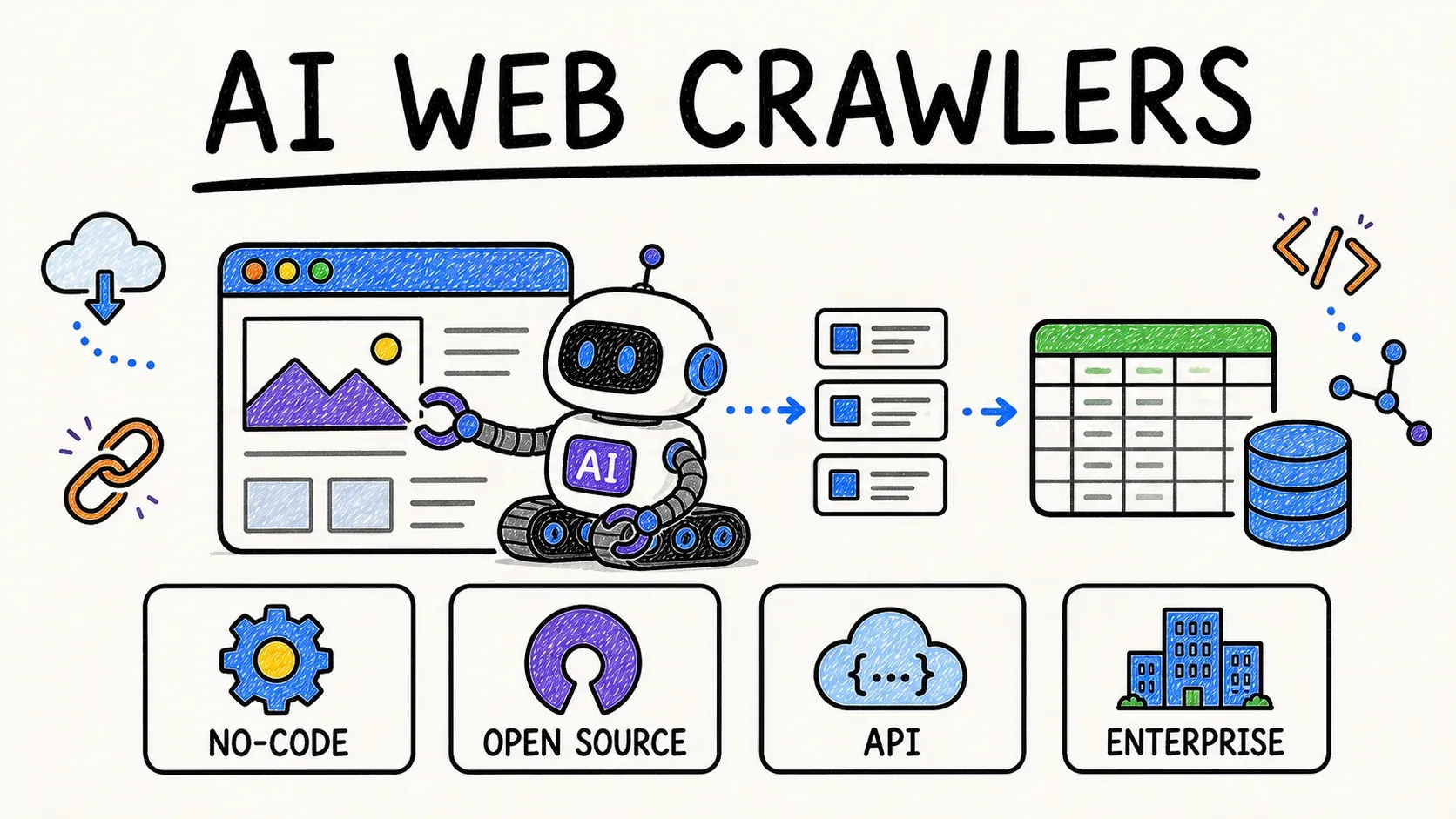
Think of a crawler as a digital librarian—or maybe a spider with a PhD in organization—whose job is to explore the web, one link at a time. In technical terms, a crawler (also called a spider or bot) is a software agent that systematically browses websites, fetching pages, following links, and collecting information about what it finds. It’s how search engines like Google, Bing, and others build their vast indexes of online content.
Here’s the basic workflow:
- Start with a list of known URLs (like your homepage or a set of “seed” sites).
- Fetch the HTML content of each page.
- Extract hyperlinks and add them to the list of pages to visit.
- Repeat the process, moving from link to link, cataloging new pages, and updating the search engine’s index.
If you’re picturing a librarian running through endless stacks, jotting down every book title and cross-referencing them—just at internet speed and scale—you’re on the right track. Without crawlers, most of the web would be hidden from search engines and, by extension, from users.
But here’s a fun fact: even with all this crawling power, Google only indexes about . The rest sits in the “deep web,” unseen by most bots. That means how you structure your site—and how friendly you are to crawlers—matters a lot.
How Crawlers View and Understand Website Content
Crawlers don’t see your website the way a human does. They don’t care about your fancy fonts, beautiful images, or that cool parallax effect you spent hours perfecting. Instead, they load the raw HTML, scan the text, read the tags, and follow the links. It’s a bit like reading the blueprint of a building instead of walking through the rooms.
Here’s what matters most to crawlers:
- HTML structure: They look for headings, paragraphs, lists, and links.
- Internal links: These are the roads that guide crawlers to different parts of your site. If a page isn’t linked, it’s basically invisible to a crawler.
- Navigation and sitemaps: Well-organized menus and up-to-date sitemaps act like a GPS, making sure crawlers find your most important content.
- Metadata and structured data: Tags like
<title>,<meta description>, and Schema.org markup help crawlers understand what a page is about—even if it’s not obvious from the main text.
If you want to geek out, think of your website as a city. Crawlers are the delivery drivers, and your internal links and sitemaps are the street signs and maps that help them reach every address.
The Role of Sitemaps and Robots.txt in Crawler Website Behavior
Two files play a starring role in how crawlers interact with your site:
-
XML Sitemap: This is a machine-readable list of your site’s key pages. It’s like handing the librarian a list of all your books and their locations. A good sitemap ensures crawlers don’t miss important content—even if your internal linking isn’t perfect. For large or complex sites, adding a comprehensive sitemap can .
-
robots.txt: This is a simple text file at your site’s root that tells crawlers where they’re allowed (or not allowed) to go. Want to keep bots out of your admin area or block duplicate pages? This is where you do it. But beware: a single typo (like
Disallow: /) can accidentally block your whole site from search engines—a classic SEO facepalm. Use robots.txt to .
Pro tip: Always point crawlers to your sitemap in robots.txt. It’s like saying, “Hey, start your tour here!”
Why Crawlers Matter for Your Website: SEO and Visitor Impact
Let’s get real: if a crawler can’t reach a page, it’s as good as invisible. No crawl = no index = no search traffic. All that effort you put into content, design, and branding? Wasted if Googlebot can’t find it.
Why does this matter? Because , and . If your site isn’t crawler-friendly, you’re missing out on the single biggest source of visitors.
A well-crawled site means:
- More pages indexed: More chances to show up in search results.
- Higher rankings: Search engines can better evaluate your content’s relevance.
- Faster updates: Fresh content gets indexed and ranked quickly.
- Better user experience: Users find what they need, boosting your credibility and traffic.
There are countless stories of websites that saw huge jumps in traffic just by fixing crawl issues—like broken links or stray noindex tags. It’s the classic “hidden in plain sight” problem.
Crawlers Website Influence on Search Rankings
Search engines use crawler data to determine which pages are most relevant for a given query. They look at:
- Content quality and keywords
- Internal and external links
- Page freshness and update frequency
- Mobile-friendliness (Google now uses mobile-first indexing)
For large sites, there’s also the concept of crawl budget—the number of pages a search engine will crawl in a given period. If your site has 100,000 pages but Googlebot only crawls 5,000 per day, it could take weeks to index everything. That’s why a (where most pages are just a few clicks from the homepage) is so powerful: it helps crawlers reach and re-crawl your content more efficiently.
The Limits of Traditional Crawlers: Challenges with Modern Websites
Here’s where things get tricky. The modern web is a jungle of JavaScript, dynamic content, and login walls. Traditional crawlers—especially the basic ones—can get lost, stuck, or just give up.
Common challenges include:
- Dynamic content and JavaScript: Many crawlers only see the initial HTML. If your content loads via JavaScript (like infinite scroll or “load more” buttons), a basic bot might see…nothing. Even Google’s crawler, which can render JavaScript, sometimes only partially indexes JS-heavy sites, especially if content loads slowly or after user interaction ().
- Content behind logins: If a page requires a login, most crawlers can’t get in. That’s usually by design, but sometimes important public content gets stuck behind a login wall by accident.
- Misconfigured robots.txt or meta tags: A single misstep can block crawlers from entire sections of your site.
- Anti-bot measures: CAPTCHAs, aggressive rate-limiting, or blocking unknown user agents can stop crawlers cold.
With , crawlers have had to get a lot smarter. But there are still plenty of ways for your content to go unseen.
When Crawlers Website Tools Fall Short: Dynamic Content and JavaScript
Let’s say you run an ecommerce site where products load as the user scrolls. A traditional crawler might only see the first 20 products, missing the rest entirely. Or maybe your reviews only appear after clicking a tab—again, invisible to most bots.
The result? Valuable content doesn’t get indexed, and you lose out on search traffic. The solution is to provide alternate paths (like pagination links or server-rendered HTML) and to test how crawlers see your site using tools like Google Search Console’s URL Inspection.
Smarter Crawlers Website Tools: How Thunderbit Handles Complex Pages
This is where I get excited—because this is exactly the kind of challenge we built to solve. Thunderbit isn’t just another crawler; it’s an AI-powered web scraping agent that can “read” websites like a human, extract structured data, and handle all the weirdness of modern web design.
What makes Thunderbit different?
- AI Suggest Fields: Instead of making you dig through HTML or write code, Thunderbit’s AI scans the page and suggests the best columns to extract—like “Product Name,” “Price,” or “Contact Email.” You can tweak the suggestions, but the heavy lifting is done for you.
- Subpage Scraping: Need more details? Thunderbit can automatically visit each subpage (like product details or user profiles), grab the extra info, and enrich your main dataset. No more manual clicking or copy-pasting.
- Handles JavaScript and logins: Since Thunderbit runs as a Chrome extension (or in a real browser in the cloud), it can execute JavaScript, wait for dynamic content, and even scrape pages you’re logged into.
- Adapts to site changes: Traditional scrapers break when a website’s layout changes. Thunderbit’s AI reads the page fresh each time, so minor tweaks don’t derail your workflow.
- Scheduled scraping: Want to monitor prices or update a lead list every morning? Just set a schedule in plain English (“every Monday at 9am”), and Thunderbit will handle the rest.
Thunderbit is designed for business users—sales, marketing, ecommerce, real estate—who need data, not headaches. And yes, exporting to Google Sheets, Notion, or Airtable is just one click (and totally free).
Thunderbit’s AI Features for Crawlers Website Optimization
Thunderbit’s real magic is in its natural language processing. It doesn’t just grab raw text—it understands context. For example, it knows the difference between a phone number, an email, and a product price, and it can extract, label, and even translate data as it goes.
User feedback has been fantastic. One reviewer said, “Thunderbit is my go-to for pulling influencer contact data. I used to pay for databases, now I build my own in minutes.” That’s the kind of workflow upgrade I love to see.
And if you’ve ever tried to scrape a site that changes its layout every week (looking at you, ecommerce platforms), you’ll appreciate Thunderbit’s “maintenance-free” approach. The AI adapts, so you don’t have to keep fixing broken scripts.
Optimizing Your Website for Crawlers: Structure, Strategy, and Smart Tools
So, what can you do to make your website a crawler’s paradise? Here are some proven strategies:
- Design a logical site architecture: Keep important pages no more than a few clicks from the homepage. A (broad navigation, shallow depth) improves crawl efficiency and indexation rates.
- Use robust internal linking: Connect related pages with contextual links. Audit for broken links and fix them regularly.
- Maintain an up-to-date XML sitemap: List all important URLs, and submit it to Google Search Console and Bing Webmaster Tools.
- Optimize your robots.txt: Allow access to key content, block only what’s necessary, and always double-check for accidental blocks.
- Speed matters: Fast-loading, error-free pages get crawled more efficiently. Optimize images, use a CDN, and fix server errors.
- Handle duplicate content: Use canonical tags and avoid wasting crawl budget on duplicate or near-duplicate pages.
- Leverage structured data and metadata: Implement Schema.org markup for products, articles, events, etc., and manage your meta tags smartly.
- Monitor crawl activity: Use Google Search Console’s Index Coverage and Crawl Stats reports to catch issues early.
- Test with smart tools: Use Thunderbit or similar tools to see how your site looks to a crawler and to keep your own data pipelines running smoothly.
Aligning Website Architecture with Crawlers Website Needs
A thoughtful site structure isn’t just good for bots—it’s good for users, too. Regular audits (using tools like Screaming Frog or Sitebulb) can help you spot crawl issues, broken links, and orphan pages before they hurt your rankings.
And don’t forget mobile: with Google’s mobile-first indexing, your mobile site needs to have all the important content and links your desktop site does. Otherwise, you risk leaving valuable pages out of the index ().
Thunderbit vs. Traditional Crawlers Website Tools: A Quick Comparison
Let’s break it down:
| Aspect | Thunderbit (AI Web Scraper) | Traditional Crawler/Scraper |
|---|---|---|
| Ease of Use | No-code, AI suggests fields, business users can start in 2 clicks. | Technical setup, often requires coding or manual selector configuration. |
| Adaptability | AI adapts to layout changes, minimal maintenance. | Breaks if site structure changes, requires manual updates. |
| Dynamic Content | Handles JavaScript, logins, and interactive elements by default. | Often limited to static HTML, struggles with JS or login-required content. |
| Subpage Crawling | Built-in subpage and pagination crawling, merges data automatically. | Manual setup for depth, recursive crawling requires extra work. |
| Data Structuring | AI outputs ready-to-use tables with meaningful columns, supports rich data types (text, numbers, emails, images, PDFs, etc.). | Raw output, user must define structure, limited to HTML unless custom coded. |
| Integration | One-click export to Google Sheets, Notion, Airtable, CSV, etc. | Usually requires manual export/import, few direct integrations. |
| Bot Obstacles | Handles proxies, user agents, retries automatically; waterfall approach to maximize success. | User must manage IP blocks, CAPTCHAs, etc.—often complex and costly. |
| Target Users | Non-technical business users: sales, marketing, ops, ecommerce, real estate. | Developers, IT, data engineers. |
| Pricing | Credit-based, free tier available, pay for what you use. | Subscription, seat-based, or server costs; often hidden costs for proxies or maintenance. |
In short: Thunderbit brings the power of advanced crawling to everyone, not just developers. It’s fast, accurate, and adapts to the ever-changing web.
Key Takeaways: Making the Most of Crawlers for Your Website
- Crawlers are the gatekeepers of web visibility. If your site isn’t crawler-friendly, you’re missing out on search traffic and new visitors.
- Structure and strategy matter. Logical navigation, internal links, sitemaps, and robots.txt are your best friends.
- Modern websites need smarter crawlers. JavaScript, dynamic content, and logins can trip up basic bots—but AI-powered tools like can handle the complexity.
- Continuous monitoring is key. Use Search Console, crawl audits, and smart scraping tools to keep your site healthy and visible.
- Upgrade your toolkit. Whether you’re optimizing for SEO or building your own data pipelines, consider how smarter crawlers can save you time, boost accuracy, and support better business decisions.
Ready to see how Thunderbit can help you crawl, index, and extract data from even the trickiest websites? and give it a spin. And for more tips on web scraping, SEO, and automation, check out the .
FAQs
1. What is a crawler, and why is it important for my website?
A crawler is a software bot that systematically browses and indexes website content for search engines. If your site isn’t crawler-friendly, your pages may not appear in search results, making it hard for users to find you.
2. How do sitemaps and robots.txt affect crawlers?
Sitemaps guide crawlers to your most important pages, while robots.txt tells them where they can and can’t go. Both are essential for efficient crawling and indexing.
3. What problems do traditional crawlers face with modern websites?
Traditional crawlers struggle with JavaScript-heavy content, dynamic elements, login-required pages, and anti-bot measures. As a result, they may miss or only partially index important content.
4. How does Thunderbit handle complex websites differently?
Thunderbit uses AI to “read” pages like a human, handle JavaScript and logins, and extract structured data—even from subpages and dynamic content. It adapts to site changes and requires no coding.
5. What are the best practices for making my website crawler-friendly?
Maintain a logical site structure, use internal links, keep your sitemap and robots.txt updated, optimize for speed, and monitor crawl activity regularly. Use smart tools like Thunderbit to test and improve your site’s crawlability.
Want to dive deeper? Explore more guides on or subscribe to our for the latest in web automation and AI scraping.
Learn More