8 Cold Email Automation Tools (and How to Stack Them)

Last Updated on April 28, 2026

Cold email still works. Campaigns with verified, well-targeted lists routinely hit , and the channel's ROI remains among the highest in B2B.

But most teams buy one sending tool, blast a stale list, and wonder why their numbers look like everyone else's mediocre .

The problem is rarely the sequencer. It's the system around the sequencer.

After spending months helping our team at Thunderbit think through outbound workflows — and watching dozens of sales teams wire up their stacks — I've come to a simple conclusion: cold email automation is a five-layer problem, and no single tool solves all five layers well. This article covers 8 tools that each own a different piece of that system, then shows you exactly how to stack them together so every layer actually works.

Why Cold Email Automation Starts Before You Hit Send

Most "best cold email tools" articles skip the uncomfortable truth: the tool you send through matters far less than the list going in. That's not my opinion — it's the consensus across dozens of practitioner threads. One Reddit user put it bluntly: "Same mailboxes. Same copy. Same volume. "

B2B contact data decays at roughly . That means if you're relying on a database you loaded six months ago, a quarter of those emails may already be dead. Meanwhile, sales reps still spend only about , with roughly 15% of each week consumed by prospect research alone. Building a 100-contact list manually can eat before outreach even starts.

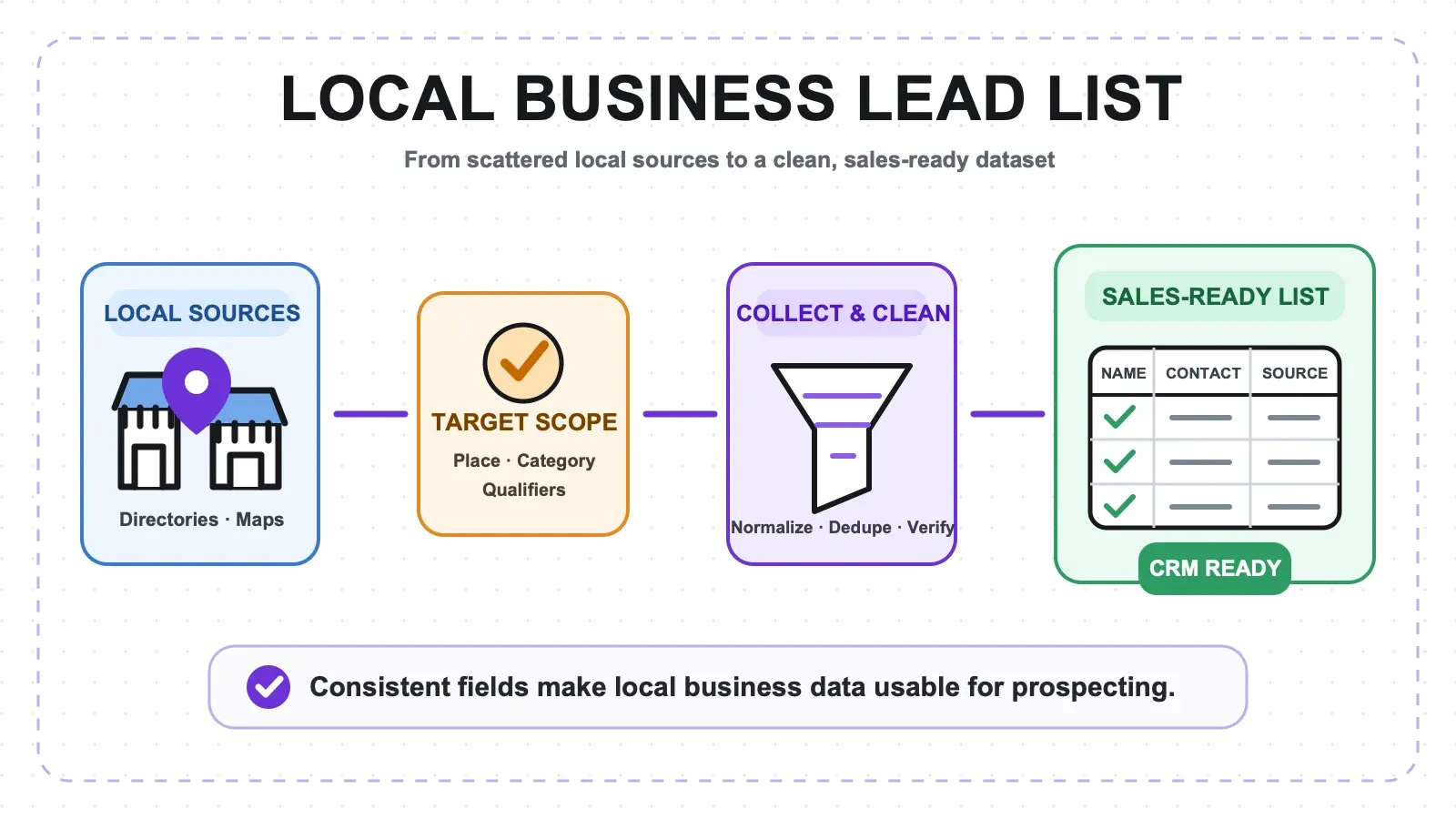
The first automation decision isn't "which sender?" It's "how do I build a fresh, accurate list without burning my week?"

List-Building ApproachTypical Lead AccuracyTime per 100 LeadsCost
Manual LinkedIn browsing + copy-pasteMedium15–33 hoursFree (just your time)
B2B database (Apollo, ZoomInfo)Medium-High (data decays ~25–35%/yr)15–60 min$49–$500+/mo
AI web scraping (Thunderbit) from niche sitesHigh (scraped live from source)10–45 minFree tier available
Purchased third-party listsLowInstant$0.10–$0.50/lead

The rest of this article walks through 8 tools that cover every stage of the cold email automation pipeline — from sourcing to sending to optimization — then shows how to combine them into a working system.

The 5-Stage Cold Email Automation Workflow (Map It Before You Buy)

Before picking any tool, map the workflow. Cold email automation is not a single purchase — it's a pipeline with five distinct stages, and each one needs different software.

StageWhat HappensTools from This List
1. Lead sourcing & scrapingBuild targeted prospect lists from websites, directories, LinkedIn, event pagesThunderbit, Apollo
2. Data verification & enrichmentVerify emails, enrich with firmographicsApollo (built-in); integrate with Findymail/MillionVerifier
3. Domain & warmup setupConfigure SPF/DKIM/DMARC, warm inboxes graduallyInstantly, Smartlead, Lemlist (Lemwarm), Woodpecker
4. Sequence creation & sendingWrite sequences, schedule sends, rotate inboxesInstantly, Smartlead, Lemlist, Woodpecker, Saleshandy, Mailshake
5. Analytics & optimizationTrack replies/bounces, A/B test, iterateAll sending tools; CRM for pipeline

Most teams that skip Stage 2 or rush Stage 3 end up with bounce rates that torch their domain reputation — and no amount of subject-line A/B testing will fix that. One cold email troubleshooting thread captured it perfectly: "What's your bounce rate looking like? ... "

What to Look for in a Cold Email Automation Tool

I evaluated these 8 tools across seven criteria, each grounded in the most common pain points surfacing in practitioner communities:

CriterionWhy It Matters
Lead sourcing & data qualityFresh, accurate inputs determine whether the rest of the stack can work at all
Email sequencing & follow-upsGood automation controls cadence, branching, and reply handling
Deliverability & warmupWithout clean infrastructure, even strong targeting and copy fail silently
AI personalizationUseful when it improves segmentation; dangerous when it mass-produces generic copy
CRM & integration ecosystemLess admin drag, better pipeline visibility
Pricing & scalabilitySticker price often hides mailbox, seat, credit, or add-on costs
Analytics & A/B testingTeams need to know what improves reply rate, not just what raises opens

On to the tools.

1. Thunderbit: Build Your Lead List from Any Website with AI

thunderbit-ai-web-scraper.webp is not a sending tool. It's the lead sourcing and data layer — the piece that fills the gap before any sequencer enters the workflow. If your prospects live on niche directories, trade-show exhibitor pages, Google Maps results, association listings, or industry-specific sites that big databases miss, Thunderbit is where your automation actually begins.

I work on the Thunderbit team, so I'll be upfront about that. But the reason we built it this way is precisely because we kept hearing the same complaint: "Apollo doesn't have good data for my niche," or "I spent three hours copying names off a directory page." Thunderbit collapses that into two clicks.

How It Works for Cold Email Automation

Open the , navigate to any website with prospect data, and click "AI Suggest Fields." The AI reads the page and proposes column names — company name, contact person, email, phone, location, whatever's there. You can add custom "Field AI Prompt" columns to simultaneously label and segment during extraction (e.g., auto-tag by industry, company size, or likely pain point). Then hit scrape.

Subpage scraping is where it gets especially useful for cold email. Scrape a directory listing, then automatically visit each company's detail page to enrich the rows with contact info, descriptions, or whatever else lives one click deeper. Hours of manual work, collapsed into one run.

Key Thunderbit Features for Cold Email Automation

  • AI Suggest Fields — reads the page and proposes a data schema automatically
  • Subpage scraping — scrape a list page, then auto-visit each detail page to enrich
  • Email and phone extractors — free, one-click extraction
  • Field AI Prompt — label, categorize, or segment leads during extraction (e.g., tag by industry or pain-point category)
  • Export to Google Sheets, Excel, Airtable, Notion — no paywall on exports

Who Thunderbit Is Best For

Sales teams prospecting from niche directories, event attendee lists, or industry-specific websites where big databases have weak coverage. Teams that want fresh, live-scraped data instead of decaying database records. If you're sending cold email to HVAC contractors, local SaaS companies, or exhibitors at a specific trade show, this is where your list quality advantage comes from.

Pricing: Free tier available (6 pages/month). Paid plans start at $15/month (monthly) or for 500 credits.

Best for: The lead sourcing stage — building accurate, segmented lists from live web sources before you even open your sending tool.

2. Instantly: High-Volume Sending and Inbox Warmup Made Simple

instantly.ai-homepage-1920x1080_compressed.webp is built for one thing: scaling outbound volume with strong deliverability. Unlimited email accounts, automatic warmup, inbox rotation, clean campaign dashboard. If you already have your list and need a reliable sending engine, Instantly is one of the most popular choices in 2026.

The warmup network is Instantly's standout. Instantly claims a , which means new inboxes get meaningful engagement signals before you start sending cold. Users on G2 consistently praise the warmup quality and the simplicity of campaign setup.

Key Instantly Features for Cold Email Automation

  • Unlimited email account connections and warmup — connect as many inboxes as you want
  • AI Copilot and AI Reply Agent — helps generate sequences and handle replies
  • Campaign analytics — open rate, reply rate, bounce, subsequences
  • Inbox rotation — distributes sends across accounts automatically
  • Lead finder add-on — exists, but not Instantly's core strength

Who Instantly Is Best For

Teams and agencies that already have their lead lists and need a scalable, reliable sending engine with strong warmup. Not the best choice if your primary need is lead sourcing or multichannel LinkedIn outreach.

Pricing: Growth plan at ; Hypergrowth at $97/month; annual billing reduces these. Free trial available.

Best for: High-volume email sending with built-in warmup and inbox rotation.

3. Smartlead: Inbox Rotation at Scale for Agencies

smartlead.ai-homepage-1920x1080_compressed.webp is the infrastructure-first option — designed for agencies managing multiple client campaigns that need airtight deliverability across dozens or hundreds of mailboxes. More controls, more configuration, more complexity than Instantly.

The unified Master Inbox pulls all replies from all accounts and all clients into one view. The warmup pools tier up as you upgrade, and add-ons like SmartServers and SmartDelivery give power users granular control over sending infrastructure.

Key Smartlead Features for Cold Email Automation

  • Unlimited mailboxes and sender rotation — no cap on connected accounts
  • AI-optimized warmup — pools improve at higher tiers
  • Centralized Master Inbox — manage replies across all accounts in one view
  • Multi-client/agency workspaces — built for managing multiple campaigns
  • Webhook and API integrations — connect to CRMs and custom workflows

Who Smartlead Is Best For

Agencies running cold email campaigns for multiple clients who need deliverability infrastructure at scale. Not the friendliest option for solo users or first-time senders — the UI has been by some reviewers, and reply visibility can sometimes lag.

Pricing: Base plan at ; Pro at $94/month; Unlimited Smart at $174/month. Annual billing saves 17%.

Best for: Agency-scale inbox rotation and deliverability management.

4. Apollo: All-in-One B2B Database Plus Cold Email Automation

apollo-ai-sales-platform-homepage.webp is the closest thing to an all-in-one cold email platform — a massive B2B contact database (230M+ contacts) combined with built-in email sequencing, warmup, AI writing, and CRM features. If you want sourcing and sending in one place and don't mind a steeper learning curve, Apollo is the obvious candidate.

The database is genuinely broad — advanced filters for role, industry, company size, tech stack, and more. The sequences support email, calls, tasks, and social actions. The helps with writing and workflow optimization. And the free tier is generous enough to validate the tool before committing.

The tradeoff: Apollo's interface is complex, and new users often feel overwhelmed. And some G2 reviewers note that — some records are outdated enough to create higher bounce rates than expected. That's the inherent limitation of any large prebuilt database versus live-scraped data.

Key Apollo Features for Cold Email Automation

  • 230M+ contact database with advanced filters (role, industry, company size, etc.)
  • Multi-step email sequences with AI writing assistance
  • Built-in warmup (uses under the hood)
  • CRM sync with Salesforce and HubSpot
  • Chrome extension for prospecting from LinkedIn or any website

Who Apollo Is Best For

Sales teams that want lead sourcing and sending in one platform and are comfortable with a steeper learning curve. Especially strong for broad B2B prospecting across common industries and roles.

Pricing: Free tier available. Basic at ; Professional at $79/user/month; Organization at $119/user/month (3-user minimum).

Best for: All-in-one prospecting and outreach for teams that want database + sequencing in one place.

5. Lemlist: Multichannel Cold Email Automation (Email + LinkedIn)

lemlist.com-homepage-1920x1080_compressed.webp is the pick when your outreach strategy isn't email-only. It weaves email sequences together with LinkedIn touchpoints — profile visits, connection requests, messages — in a single coordinated workflow. Prospects active on LinkedIn? Lemlist lets you surround them from multiple angles.

Custom image and video personalization helps teams stand out visually in crowded inboxes. Lemwarm (built-in warmup) is included on the main plans. And the dynamic AI variables let you inject personalized content at scale without writing each email from scratch.

Key Lemlist Features for Cold Email Automation

  • Multichannel sequences — email + LinkedIn + calls in one workflow
  • Lemwarm — built-in warmup included on main plans
  • Custom image/video personalization — embed personalized visuals in emails
  • AI variables — dynamic content generation for each recipient
  • Unified inbox — manage replies across channels

Who Lemlist Is Best For

Sales teams that rely heavily on LinkedIn alongside email and want coordinated multichannel outreach from one platform. Less ideal if you're purely email-focused or need deep lead sourcing capabilities.

Pricing: Email Pro at (or $63/user/month yearly); Multichannel Expert at $109/month (or $87/user/month yearly). Enterprise custom.

Best for: Multichannel outreach combining email and LinkedIn in a single sequence.

6. Woodpecker: Deliverability-First Cold Email Automation

woodpecker.co-homepage-1920x1080_compressed.webp doesn't try to be everything. It tries to keep you in the inbox — and it's built around that single obsession. Its Adaptive Sending algorithm mimics human email behavior — varying send times, pausing when it detects risk signals — and Woodpecker's own data shows this can reduce inbox blocks by compared to standard sending patterns.

In an internal comparison of 1,300 inboxes with Adaptive Sending versus 1,600 without, Woodpecker recorded 7,674 fewer inbox blocks — 2.4x fewer. That's not a marginal improvement.

The agency panel is well-built for managing multiple client campaigns. Condition-based branching lets you create sophisticated sequence logic. And the free warmup and catch-all verification are included.

Key Woodpecker Features for Cold Email Automation

  • Adaptive Sending — mimics human email behavior to avoid spam triggers
  • Bounce shield and deliverability monitoring — real-time protection
  • Condition-based branching — sophisticated sequence logic
  • Agency dashboard — manage multiple client campaigns
  • Free warmup and catch-all verification — included on all plans
  • A/B testing — test subject lines, copy, and send times

Who Woodpecker Is Best For

Agencies and teams that prioritize inbox placement above all else and want granular control over sending behavior. AI features are more basic than competitors — this is a deliverability tool, not an AI writing tool.

Pricing: Usage-based model with free warmup, unlimited accounts, and unlimited team members. shows a calculator approach rather than fixed tiers.

Best for: Teams that treat deliverability as a system design problem, not just a checkbox.

7. Saleshandy: Budget-Friendly Cold Email Automation That Scales

saleshandy.com-homepage-1920x1080_compressed.webp is one of the clearest value plays in cold email automation right now. The headline: unlimited email accounts and on all paid plans. For teams that have been burned by per-seat pricing, that's a meaningful differentiator.

The AI Sequence CoPilot auto-generates sequences from your website URL and prospect list. The Content Guide scores your email copy in real-time before you send. And the B2B Lead Finder (800M+ contacts) gives you a sourcing option, though it runs on a separate credit system.

Key Saleshandy Features for Cold Email Automation

  • Unlimited email accounts and team members — no per-seat pricing
  • AI Sequence CoPilot — auto-generates sequences from your inputs
  • Real-time Content Guide — scores email copy before sending
  • B2B Lead Finder — 800M+ contacts (add-on with credits)
  • Sender rotation and warmup — built-in
  • Email verifier — included

Who Saleshandy Is Best For

Small businesses and growing sales teams that need to scale sending volume without per-seat pricing eating into their budget. Not the strongest option for LinkedIn automation or complex multichannel workflows.

Pricing: Outreach Starter at (or $25/month annually); Outreach Pro at $99/month (or $69/month annually); Outreach Scale at $199/month (or $139/month annually).

Best for: Budget-conscious teams that want unlimited accounts and team members without per-seat pain.

8. Mailshake: Simple Cold Email Automation for Beginners

mailshake.com-homepage-1920x1080_compressed.webp has long been the "easy mode" cold email tool. Clean interface, fast setup, and you don't need to understand inbox rotation theory to get your first campaign running. Older comparison articles often said Mailshake lacked native warmup — but as of April 2026, Mailshake's pricing page now lists on all plans.

The copy analyzer (SHAKEspeare AI) flags spam-trigger language before you send. Small feature, but it saves beginners from mistakes they wouldn't catch on their own. LinkedIn automation and a phone dialer are available on the top-tier plan.

Key Mailshake Features for Cold Email Automation

  • Drag-and-drop sequence builder — simple campaign creation
  • SHAKEspeare AI — AI email writing and copy analysis
  • Unlimited email warmup — now included on all plans
  • Unlimited email verification — included
  • Multichannel add-ons — LinkedIn automation and phone dialer on Sales Engagement plan
  • Native CRM integrations — Salesforce, HubSpot, Pipedrive

Who Mailshake Is Best For

Beginners and small teams that want a clean, straightforward interface without a steep learning curve. Not the most powerful option for agency-scale operations or complex inbox rotation.

Pricing: Starter at (or $25/month yearly); Email Outreach at $49/month (or $45/month yearly); Sales Engagement at $99/month (or $85/month yearly).

Best for: First-time cold emailers who want simplicity over configurability.

Cold Email Automation Tools Compared: Side-by-Side Table

ToolBest ForLead SourcingSending & SequencesWarmupAI FeaturesStarting Price
ThunderbitLead list building from any website✅ AI-powered scraping + email/phone extraction❌ (not a sending tool)✅ AI suggest fields, data enrichment & segmentationFree tier; from $9/mo yearly
InstantlyHigh-volume sending & warmup⚠️ Basic lead finder add-on✅ Built-in (large network)✅ AI Copilot, AI Reply Agent~$47/mo
SmartleadInbox rotation at scale✅ Built-in (tiered pools)✅ AI warmup optimization~$39/mo
ApolloAll-in-one data + outreach✅ 230M+ B2B database✅ (third-party)✅ AI Assistant, AI writingFree; paid ~$49/user/mo
LemlistMultichannel (email + LinkedIn)⚠️ Limited✅ Lemwarm✅ AI variables~$79/mo
WoodpeckerDeliverability-first agencies⚠️ Basic AIUsage-based
SaleshandyBudget-friendly scaling⚠️ Lead finder add-on✅ AI Sequence CoPilot~$36/mo
MailshakeBeginners & simple workflows✅ (now included)⚠️ SHAKEspeare AI~$29/mo

No single tool covers every stage. Apollo comes closest to all-in-one breadth. Thunderbit is stronger than Apollo on live niche-web sourcing. Instantly and Smartlead are stronger on sending-scale infrastructure. Lemlist wins on multichannel coordination.

How to Actually Land in the Inbox: A Deliverability Playbook

Deliverability is the #1 concern in every cold email community I've read through, and for good reason. If your emails hit spam, nothing else matters.

Yet most tool comparisons just check a "✅ warmup included" box and move on. That's not enough.

Setting Up Secondary Domains for Cold Email Automation

Do not send cold emails from your primary company domain. Google's bulk sender guidelines apply enforcement at the , and once your main domain's reputation is damaged, your transactional emails, team communications, and marketing all suffer.

A conservative rule of thumb: one secondary domain for roughly every 100 to 200 daily cold emails. So if you're sending 500/day, plan for 3 to 5 domains. Naming conventions like outreach-yourcompany.com or try-yourcompany.com work fine. Register them, point DNS correctly, and treat them as expendable sending infrastructure.

Within each domain, connect . Conservative operators keep each inbox under . More aggressive setups push toward 50 per inbox, but that's where risk increases.

On the DNS side, configure SPF (which servers can send on your behalf), DKIM (cryptographic message signing), and DMARC (tells receivers how to handle failed authentication). Google enforcement , so these are no longer optional.

The Warmup Debate: What Actually Works in 2026

Warmup isn't dead. But it isn't a silver bullet, either.

On the pro side: InboxKit's 2026 data shows mailboxes that complete a full 14-day warmup reach in their first month, versus 54% for mailboxes that skip warmup. That's a massive gap.

On the skeptical side: Mailivery's March 2026 analysis argues that are increasingly detected and discounted by Gmail and Outlook. The quality of the warmup pool matters as much as whether warmup exists at all.

How the tools compare:

  • Instantly — large warmup network (4.2M+ accounts); generally well-reviewed
  • Smartlead — tiered warmup pools that improve at higher plans
  • Lemlist — Lemwarm included; solid for moderate volumes
  • Woodpecker — free warmup plus Adaptive Sending that reduces blocks by 59%
  • Saleshandy — warmup through partner infrastructure
  • Mailshake — now includes unlimited warmup on all plans

My take: always warm new inboxes for at least 2 weeks before sending cold. Warmup doesn't compensate for bad lists, broken authentication, or aggressive volume jumps.

A Sample 4-Week Ramp Schedule

WeekCold Sends per Inbox per DayNotes
Week 15–10Warmup-first; only small cold volume after auth is verified
Week 210–20Keep warmup running; watch bounce and placement closely
Week 320–35Add real campaign volume gradually; no spikes
Week 435–50Only if reply, bounce, and placement remain healthy

Sources: ,

How to Use AI in Cold Email Automation (Without Sounding Like a Robot)

AI in cold email has a branding problem. Every tool claims "AI personalization," but the actual impact varies wildly depending on how you use it. The practitioner insight that keeps surfacing: "Don't use AI to write copy. Use it to segment lists so templates hit specific pains."

A practical breakdown:

AI Use CaseEffectiveness (Per User Reports)Example Tool/Method
AI-written entire email body⚠️ Low — "sounds like every other AI email"Lemlist AI, Saleshandy AI
AI-generated first line from prospect research✅ Medium-High — personal but risks hallucinationApollo AI, Clay + OpenAI
AI for list segmentation & enrichment✅ High — right message to right segmentThunderbit (AI scrape + label data)
AI for A/B test variant creation✅ Medium — useful for iteration speedInstantly, Smartlead

AI for List Segmentation (Where It Shines)

Thunderbit's Field AI Prompt feature is especially relevant here. During extraction, you can add AI-powered columns that label each prospect — for example, "industry bucket," "likely company size," or "probable pain point based on their services page." The AI processes each row during scraping, so by the time you export to your sending tool, the list is already segmented.

Concrete example: scrape a local-business directory. Collect name, company, website, phone, email. Add Field AI Prompts for "industry category" and "likely pain point." Export. Now your sending tool receives pre-segmented groups, and you can write 3 tailored templates instead of one generic blast. That's the kind of AI usage that actually moves reply rates.

AI for Email Copy (Where to Be Careful)

Fully AI-generated email bodies tend to hurt reply rates because they sound like... fully AI-generated email bodies. Experienced senders report much better results when they:

  • Use AI to draft variants for A/B testing, not the canonical message
  • Use AI to generate personalized first lines from research data
  • Use AI to adapt a base template for different segments
  • Never send AI copy without human review

Tools that offer AI writing (Apollo, Lemlist, Saleshandy, Instantly, Mailshake) are useful for speed — but treat their output as a first draft, not a finished product.

The Real Monthly Cost of a Cold Email Automation Stack

The question I see most often: "What does this actually cost when you add everything up?" No competing article gives a straight answer, so I built out the math at three scale tiers.

Starter Stack (~100 Emails/Day)

Cost ItemEstimate
Domains (1–2, amortized monthly)~$1–$3
Sending tool (Instantly Growth or Saleshandy Starter)$25–$47
Lead sourcing (Thunderbit free tier + Apollo free)$0
Verification (MillionVerifier or similar)~$5–$10
Approximate total~$35–$75/mo

Growth Stack (~500 Emails/Day)

Cost ItemEstimate
Domains (3–5, amortized monthly)~$5–$8
Sending tool (Smartlead Pro or Instantly Hypergrowth)$94–$97
Lead sourcing (Thunderbit paid + Apollo Basic)$9–$49
Verification (Findymail or similar)~$30–$60
Approximate total~$150–$300/mo

Agency Stack (~1,000+ Emails/Day)

Cost ItemEstimate
Domains (8–15, amortized monthly)~$10–$20
Sending tool(s) (Smartlead + Instantly)$174–$271+
Lead sourcing (Thunderbit + Apollo paid)$38–$125
Verification (Findymail or dedicated)$40–$100
Approximate total~$400–$600/mo

This lines up closely with the practitioner estimate of The biggest variable isn't domain cost (domains are cheap). It's whether you're paying for one or two sending tools and how much you spend on lead sourcing.

Thunderbit's positioning here is straightforward: for niche industries where Apollo or ZoomInfo have weak coverage, scraping live sources with Thunderbit yields fresher, more accurate data at a fraction of the cost of a premium database subscription.

How to Stack These Cold Email Automation Tools Together

Three recommended stack combinations based on team size and budget:

Solo SDR Starter Stack: Thunderbit + Instantly

  • Thunderbit handles niche list building from live sites
  • Instantly handles warmup, mailbox scaling, and campaign sending
  • Total cost can stay under $100/month

Growth Team Stack: Thunderbit + Apollo + Smartlead

  • Thunderbit fills gaps that broad databases miss (niche directories, event pages)
  • Apollo provides enrichment and a second source of contacts
  • Smartlead handles higher-volume deliverability infrastructure

Agency Stack: Thunderbit + Apollo + Instantly + Smartlead

  • Thunderbit for custom prospecting across client verticals
  • Apollo for broad coverage and enrichment
  • Instantly for account-heavy outbound execution
  • Smartlead for agency workspaces, unified reply management, and deliverability infrastructure

Few teams should expect one tool to solve sourcing, verification, infrastructure, multichannel, and optimization equally well. The right stack depends on your volume, budget, and whether you need lead sourcing, multichannel, or maximum deliverability.

If you want to see what modern lead sourcing looks like before you even touch a sending tool, give a try. Scrape a directory, export to Sheets, and see how much faster your list-building becomes. Then plug that list into whichever sender fits your workflow.

If you want to go deeper on outbound strategy, we've written guides on , , and . You can also watch walkthroughs on the .

FAQs

1. What is cold email automation?

Cold email automation is the use of software to send personalized outbound emails to prospects who haven't opted in, with automated follow-up sequences triggered by recipient behavior (opens, replies, no-response). It typically includes inbox rotation, scheduling, analytics, and CRM syncing — all designed to scale outreach without manually writing and sending each message.

2. Is cold email automation legal?

Yes, in most jurisdictions, as long as you comply with applicable regulations. In the US, requires a real business address, clear sender identity, non-deceptive subject lines, and an easy opt-out mechanism. In the EU, allows B2B outreach under legitimate interest but requires transparency and respect for data rights. Always include an unsubscribe link and honor opt-outs promptly.

3. How is cold email software different from email marketing software?

Cold email tools send one-to-one messages from personal or workspace inboxes, with inbox rotation and low-volume sending patterns designed to mimic human behavior. Email marketing tools (Mailchimp, HubSpot Marketing) send one-to-many campaigns from shared infrastructure with different deliverability models and compliance requirements. Using marketing tools for cold outreach will almost certainly get you flagged as spam.

4. What does a complete cold email automation tech stack look like?

A complete stack covers five stages: (1) lead sourcing and scraping, (2) data verification and enrichment, (3) domain setup and inbox warmup, (4) sequence creation and sending, and (5) analytics and optimization. No single tool excels at all five — which is why most successful teams combine a sourcing tool (like Thunderbit or Apollo) with a sending tool (like Instantly or Smartlead) and a verification layer.

5. Can I start cold email automation for free?

Yes, at a small scale. Combine Thunderbit's free tier for lead scraping, Apollo's free plan for supplemental data, and a sending tool's free trial. You'll hit volume limits quickly, but it's enough to validate your targeting, copy, and workflow before investing in paid plans. A realistic "free start" might support 20–50 emails per day for 1–2 weeks.

Try Thunderbit for Cold Email Lead Sourcing

Learn More

Ke
Ke
CTO @ Thunderbit. Ke is the person everyone pings when data gets messy. He's spent his career turning tedious, repetitive work into quiet little automations that just run. If you've ever wished a spreadsheet could fill itself in, Ke has probably already built the thing that does it.
Table of Contents

Try Thunderbit

Scrape leads & other data in just 2-clicks. Powered by AI.

Get Thunderbit It's free
Extract Data using AI
Easily transfer data to Google Sheets, Airtable, or Notion
Chrome Store Rating
PRODUCT HUNT#1 Product of the Week