
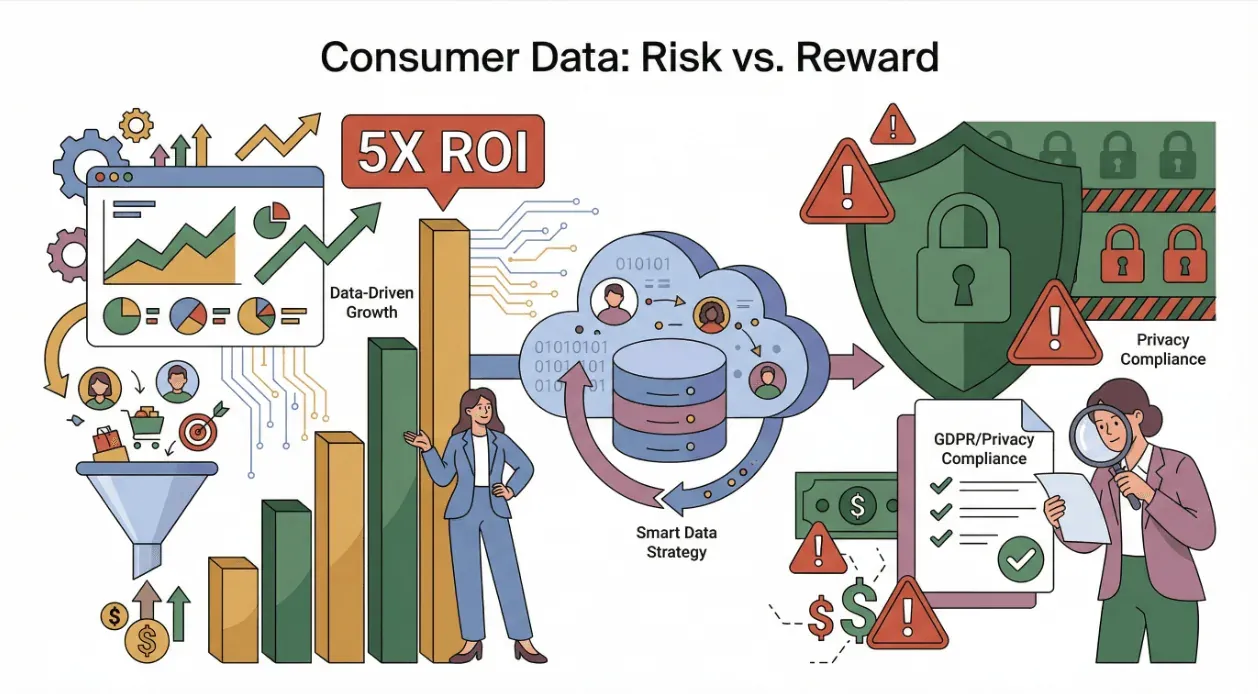
The demand for buying consumer data has exploded in recent years—especially as sales and operations teams chase every edge in a hyper-competitive market. It’s easy to see why: businesses leveraging data-driven strategies are seeing up to 5x higher ROI on their marketing spend. But here’s the catch—one wrong move with consumer data, and you could end up in a regulatory minefield, facing not just fines but serious brand damage. Just ask the companies recently hit with multi-million dollar penalties for privacy violations.
 So, how do you buy consumer data without falling into the usual traps? That’s the million-dollar question. In this guide, I’ll walk you through the realities of buying consumer data—what it really means, why it matters, and how to do it smartly (and safely) using modern automation tools like Thunderbit. I’ll share practical steps, hard-won lessons, and a few stories from the trenches—because, let’s face it, nobody wants to be the next cautionary tale in a privacy lawsuit.
What Is Buying Consumer Data? Understanding the Process and Privacy Traps
What Is Data Scraping and How to Do It in 2025 Get Started Free
Let’s start with the basics. Buying consumer data means acquiring information about individuals—think demographics, behaviors, preferences, purchase histories, and even online reviews—from external sources to fuel your business decisions. This data can come in many flavors:
- Demographic data: Age, gender, location, income, education
- Behavioral data: Purchase history, website visits, app usage
- Psychographic data: Interests, values, lifestyle choices
- Engagement data: Email opens, social media activity, product reviews
The typical process? You identify a need (say, targeting new customers), find a data provider or broker, negotiate a price, and receive a dataset—often as a spreadsheet or API feed. Sounds simple, right? Not so fast.
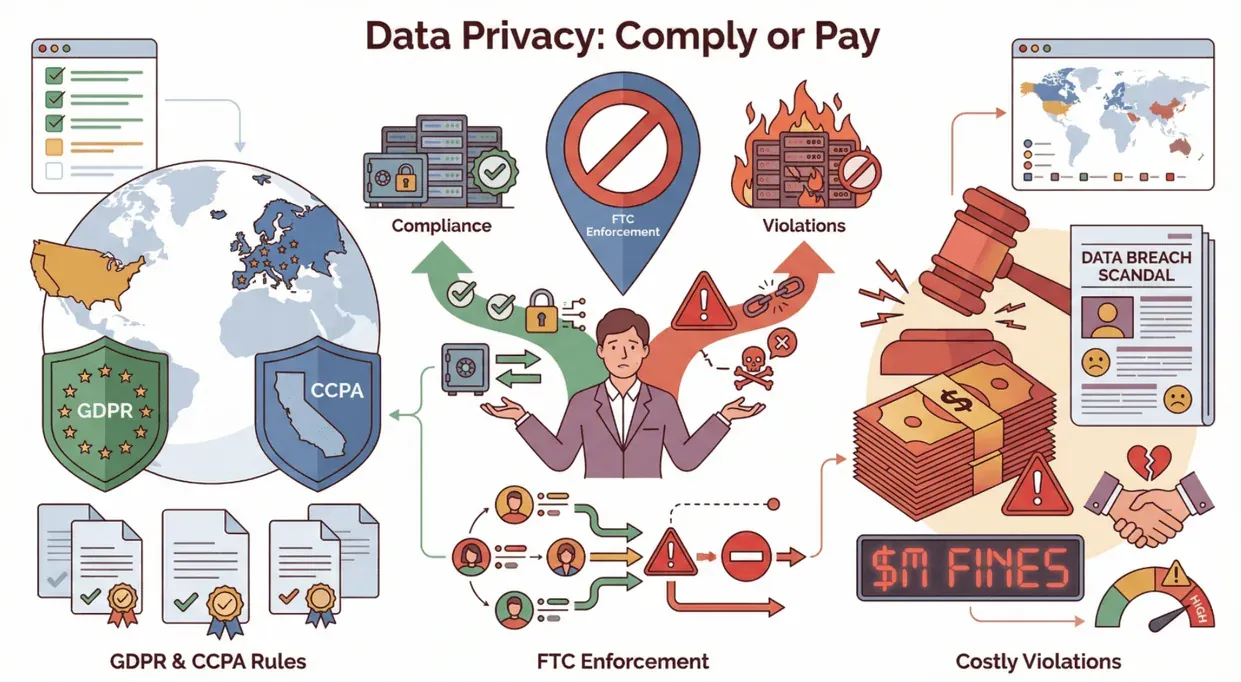 Here's where things get tricky: compliance and privacy. With regulations like GDPR in Europe and the CCPA in California, businesses are now on the hook for how they source, store, and use consumer data. California raised the stakes again in 2026: the state's DROP platform went live on January 1, letting consumers tell every registered data broker to stop selling their info in a single request, and starting August 1, 2026, broker violations carry a $200-per-consumer-per-day penalty. The risks? Fines, lawsuits, and a PR nightmare if you mishandle sensitive info or buy from shady sources. The FTC has kept the pressure on, banning Kochava and its subsidiary in May 2026 from selling sensitive location data tied to hundreds of millions of mobile devices without affirmative express consent. It's part of a longer line of cases—including the 2024 Gravy Analytics/Venntel action—that makes it clear: if your broker can't show consent, the liability doesn't stop at them.
Bottom line: Buying consumer data is a high-reward, high-risk game. You need to balance innovation with responsibility, or risk learning the hard way why privacy matters.
Why Buying Consumer Data Matters for Business Growth
Why do so many teams chase after consumer data? Because when you get it right, the payoff is huge. Here’s what the numbers say:
- Businesses using data-driven approaches see up to 20% higher revenue growth.
- Marketers report a 5x increase in campaign ROI when leveraging accurate consumer insights.
- Sales teams using fresh, targeted data close deals 10–15% faster.
Let’s break it down with a quick table:
| Use Case | Pain Point (Without Data) | Benefit of Buying Consumer Data |
|---|---|---|
| Lead Generation | Low-quality, generic outreach | Hyper-targeted campaigns, higher conversion |
| Market Research | Guesswork, slow trend detection | Real-time insights, faster product pivots |
| Workflow Automation | Manual data entry, slow response | Automated triggers, faster sales cycles |
| Customer Segmentation | One-size-fits-all messaging | Personalized offers, increased loyalty |
| Compliance Monitoring | Blind spots, risky assumptions | Proactive risk management, fewer surprises |
The right data, at the right time, can mean the difference between a campaign that fizzles and one that delivers real business impact.
Traditional Buying Consumer Data Methods: How They Work and Their Limitations
Let’s talk about how most companies have bought consumer data for years—and why it’s not always the best route.
The Old-School Approach
Traditionally, businesses buy consumer data from:
- Data brokers (like Acxiom, Experian, CoreLogic): They aggregate info from public records, loyalty programs, surveys, and more, then resell it to marketers, insurers, and real estate firms (Built In).
- Third-party platforms: Online marketplaces where you can purchase lists filtered by demographics, interests, or behaviors.
- Direct providers: Companies that collect their own data (think survey firms or loyalty card operators) and sell it directly.
The workflow usually looks like this: you request a dataset, pay a hefty fee, and get a file with thousands (or millions) of consumer records. Easy, right?
The Catch: Major Limitations
But here’s what they don’t tell you:
- Data freshness: Many brokers update their databases quarterly (or less). By the time you get the data, it could be months old—meaning you’re targeting people who may have moved, changed emails, or lost interest (Phys.org).
- Accuracy: Studies show that up to 40% of purchased consumer data can be outdated or inaccurate (Phys.org).
- Compliance risks: If the broker didn't obtain proper consent, you could be liable for privacy violations—even if you bought in good faith. The FTC's PADFAA warning letters to 13 brokers in February 2026 and California's Data Broker Enforcement Strike Force, which has now brought more than ten actions, show how active downstream scrutiny has become.
- Lack of customization: You get what’s in the database, not what’s most relevant to your business right now.
- High cost: Quality data isn’t cheap, and you often pay for way more than you actually use.
Comparing Traditional and Modern Data Acquisition
Let’s put it side by side:
| Criteria | Traditional Brokers | Automated AI Solutions (Thunderbit) |
|---|---|---|
| Data Freshness | Quarterly/annual | Real-time, on-demand |
| Customization | Limited (pre-set fields) | Fully customizable (any field, any site) |
| Compliance | Risky, opaque | Transparent, direct from public sources |
| Cost | High, per-list | Pay-as-you-go, lower incremental cost |
| Speed | Days/weeks | Minutes/hours |
| Maintenance | Manual updates needed | AI adapts to site changes automatically |
It’s no wonder more teams are looking for smarter, more flexible ways to source consumer data.
Automating High-Value Consumer Data Discovery with Thunderbit
Scrape Consumer Data with AI Get Started Free
Here’s where things get exciting. Instead of buying a static list from a broker, what if you could automatically identify and extract high-value consumer data directly from the web—no middlemen, no stale info, and no compliance gray areas?
That’s exactly what we set out to solve with Thunderbit. Thunderbit is an AI-powered web scraper Chrome Extension that lets you:
- Find and extract consumer data from any website—think reviews, forum posts, social media, public directories, and more.
- Use AI to suggest the best fields to extract (like “Name,” “Location,” “Review Sentiment,” “Purchase Intent”).
- Scrape subpages and handle pagination—so you don’t miss hidden data buried in product pages or user profiles.
- Export your data directly to Excel, Google Sheets, Airtable, or Notion—no extra fees, no manual cleanup.
The best part? You don’t need to be a coder. Just point, click, and let Thunderbit’s AI do the heavy lifting.
Key Features of Thunderbit for Consumer Data Acquisition
Here’s what makes Thunderbit stand out for business users:
- AI Suggest Fields: Thunderbit reads the page and recommends the most valuable columns to extract—saving you hours of setup.
- Subpage Scraping: Need more detail? Thunderbit can visit each subpage (like individual reviews or user profiles) and enrich your dataset automatically.
- Pagination Handling: Whether it’s a “Next” button or infinite scroll, Thunderbit grabs all the data—no manual clicking required.
- Instant Data Templates: For popular sites (Amazon, Yelp, Shopify, etc.), use pre-built templates to scrape data in one click.
- Free Data Export: Download your results as CSV, Excel, or push directly to your favorite tools—no hidden charges.
- User-Friendly: Designed for non-technical teams—if you can use a browser, you can use Thunderbit.
Thunderbit is trusted by over 100,000 users worldwide, from sales teams to ecommerce operators and real estate pros.
Try Thunderbit AI Web Scraper for Free
Step-by-Step Guide: Validating Consumer Data Value and Source Credibility
Okay, so you’ve found a juicy data source. How do you make sure it’s worth your time—and safe to use? Here’s my go-to workflow with Thunderbit:
1. Identify Your Target Data
Decide what you need: Are you after product reviews, consumer contact info, behavioral signals, or something else? The more specific, the better.
2. Use Thunderbit to Scrape the Data
- Install the Thunderbit Chrome Extension.
- Navigate to your target website.
- Click the Thunderbit icon and hit “AI Suggest Fields.” Adjust columns as needed.
- For deeper data, enable subpage scraping (e.g., to pull full review text or user profiles).
- Click “Scrape” and let Thunderbit do its thing.
3. Validate Data Freshness and Accuracy
- Check timestamps or review dates—Thunderbit captures these automatically.
- Spot-check a sample of records for accuracy (e.g., does the email or review match what’s on the page?).
- Use Thunderbit’s AI to summarize or categorize data for easier review.
4. Assess Source Credibility
- Prefer official or reputable sites (brand websites, trusted directories, major review platforms).
- Avoid scraping personal data from sites where consent isn’t clear.
- Document your data sources for compliance and transparency.
5. Export and Organize
- Export your data to Excel, Google Sheets, or your CRM.
- Use Thunderbit’s AI to categorize, tag, or translate data as needed.
Pro tip: Always double-check that your data usage aligns with the site’s terms of service and privacy policies.
Tips for Avoiding Common Pitfalls When Buying Consumer Data
- Don’t buy blind: Always verify the age and source of any dataset before using or purchasing.
- Watch for duplicates: Thunderbit can help you deduplicate records during export.
- Prioritize compliance: Stick to public, non-sensitive data unless you have explicit consent.
- Test before you buy: Use Thunderbit to scrape a small sample and validate quality before committing to a large purchase.
- Keep a paper trail: Document your data sources and acquisition process for future audits.
Leveraging Thunderbit’s AI Analysis for Smarter Marketing Decisions
Having a mountain of consumer data is great—but making sense of it is where the real magic happens. Thunderbit’s AI features help you:
- Analyze and categorize data: Automatically group consumers by behavior, sentiment, or demographics.
- Segment audiences: Build targeted lists for personalized outreach—think “recent negative reviewers” or “high-value repeat buyers.”
- Personalize campaigns: Use fresh, granular data to tailor your messaging and offers.
- Track trends in real time: Monitor changes in consumer sentiment, product feedback, or market demand as they happen.
For example, a sales team can use Thunderbit to scrape recent product reviews, categorize them by sentiment, and prioritize outreach to dissatisfied customers with special offers. Or a marketing team can segment consumers by purchase history and send personalized recommendations—boosting open rates and conversions.
Creating Personalized Marketing Strategies with Thunderbit
Here’s a simple workflow:
- Scrape consumer reviews or profiles with Thunderbit.
- Use AI to tag each record by sentiment, product interest, or engagement level.
- Export segmented lists to your email or ad platform.
- Launch personalized campaigns—track results and iterate.
The result? Higher ROI, happier customers, and a marketing team that actually enjoys working with data.
Ensuring Compliance and Ethical Standards When Buying Consumer Data
This is where a lot of businesses stumble. To stay safe:
- Know the laws: Familiarize yourself with GDPR, CCPA, and any local regulations.
- Get consent: Only use data where you have clear, documented consent—or stick to public, non-sensitive info.
- Be transparent: Let consumers know how you’re using their data, and offer opt-outs where required.
- Secure your data: Store and process data securely to prevent leaks or unauthorized access.
- Audit regularly: Review your data sources and usage practices to stay ahead of new rules.
A quick compliance checklist for business users:
- Is the data source reputable and transparent?
- Is the data up to date and accurate?
- Do you have (or need) consumer consent?
- Are you following all relevant privacy laws?
- Is your data storage and usage secure?
Conclusion & Key Takeaways: Buying Consumer Data the Smart, Safe Way
Buying consumer data can supercharge your sales and marketing—but only if you do it right. Here’s what I’ve learned (sometimes the hard way):
- Traditional data brokers are slow, expensive, and risky. You’re often paying for outdated, generic info that could land you in hot water.
- Modern, AI-powered tools like Thunderbit put you in control. You get fresher, more relevant data—customized to your needs, with less risk and lower cost.
- Validation and compliance are non-negotiable. Always check your sources, verify data quality, and follow the rules.
- AI analysis unlocks the real value. Segment, personalize, and act on your data for smarter marketing and happier customers.
Ready to see what smarter, safer consumer data acquisition looks like? Download Thunderbit and try scraping a dataset that matters to your business. And if you want to dig deeper into ethical data sourcing, check out the Thunderbit Blog for more guides and best practices.
Start Scraping Consumer Data with Thunderbit
FAQs
1. Is it legal to buy consumer data for marketing or sales?
Yes, but only if you comply with privacy laws like GDPR and CCPA, and ensure you have proper consent for any personal data. Always verify your sources and stick to public or consented information.
2. What are the biggest risks when buying consumer data?
The main risks are buying outdated or inaccurate data, violating privacy regulations, and damaging your brand’s reputation. Regulatory fines can be severe, and consumer trust is hard to win back.
3. How does Thunderbit help avoid compliance pitfalls?
Thunderbit lets you extract data directly from public, reputable sources, giving you full transparency and control. You can validate data freshness, document sources, and avoid the gray areas common with third-party brokers.
4. Can I use Thunderbit without technical skills?
Absolutely. Thunderbit is designed for business users—just point, click, and let the AI handle the rest. No coding or complex setup required.
5. How do I know if my consumer data is high quality?
Check for recent timestamps, verify accuracy against the source, and use Thunderbit’s AI to categorize and clean your data. Always test a sample before making big decisions or purchases.
Ready to level up your data game? Give Thunderbit a spin and see just how easy—and safe—buying consumer data can be.
Try AI Web Scraper Get Started Free
Learn More
- Data Leads for Sale: Top 15 Sources to Buy Sales Leads in 2025
- Should You Still Buy Leads in 2025? Here’s a Better Alternative
- Buy Location Data: Cell Phone Location Insights Explained
- How to Purchase Public Data Sets for Business Growth
- How to Generate and Purchase High-Quality Plumbing Leads
- Should You Still Buy Leads in 2025? Here’s a Better Alternative
- Top 20 B2B Data Providers and Vendors to Know in 2025
- Top 20 Data Providers and Integrators to Know in 2025
- What Are Telemarketing Data Providers and How to Choose One
- Top 9 Online Data Collection Services to Explore in 2025




