If you are comparing web scraping solutions in 2026, the real question is usually not "which product has the most features?" It is "which option gets my team from messy website to usable data with the least friction?"
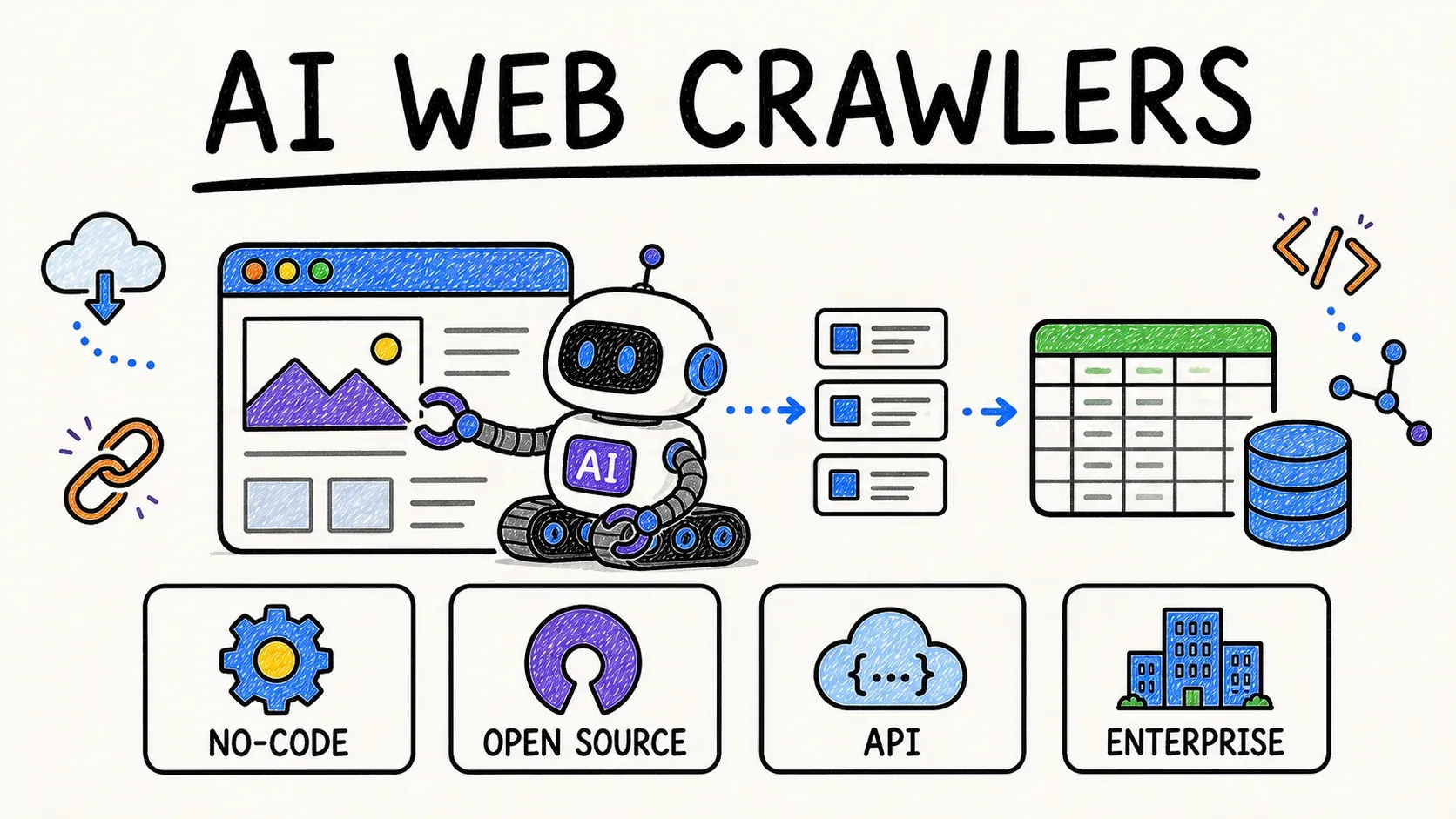
That decision splits quickly once you look at the actual job. Sales and ops teams usually want browser-first extraction and exports. Analysts want repeatable no-code workflows. Technical teams care more about APIs, anti-bot handling, and whether they should own the crawler stack themselves.
This refreshed annual shortlist replaces the broader 2025-era 15-tool draft. I re-checked the official product pages, pricing signals, and current positioning for the products below on May 19, 2026, then kept the list focused on the ten options that still make sense for real business and developer workflows.
Quick Picks by Workflow
- Need the fastest path from website to spreadsheet? Start with Thunderbit.
- Need recurring no-code monitoring or cloud runs? Shortlist Browse AI, Octoparse, and ParseHub.
- Need platform flexibility or scraping infrastructure? Look closely at Apify, Bright Data, Oxylabs, and ScrapingBee.
- Need full code ownership? Scrapy and Playwright belong at the top of the developer shortlist.
Try a Web Scraper on a Live Page
Why Web Scraping Solutions Still Matter for Business Teams
Most teams do not need "web scraping" as a technical hobby. They need structured data from public pages for lead generation, price monitoring, marketplace research, recruiting, content operations, or competitive tracking. The problem is that raw website data still shows up in formats that are slow to reuse manually.
That is why the best tools now compete on workflow fit, not just extraction power. The useful questions are whether the tool can handle pagination, subpages, and dynamic pages, whether it exports cleanly into Sheets or internal systems, and how much maintenance the team has to absorb after setup.
If you want a fast example of what a browser-first extraction workflow looks like on a live search result page, this current Browse AI video is a good early reference:
How We Chose the Best Web Scraping Solutions
This is an annual shortlist page, not a warehouse of every product that still has a homepage. I prioritized tools that still show credible product motion in 2026 and that fit at least one of four real operating models:
- AI-first business scraping: fastest setup, lowest friction, spreadsheet-ready output.
- No-code repeatable scraping: visual workflows, scheduling, and more explicit extraction control.
- Platform and API scale: cloud execution, unblock infrastructure, and programmable access.
- Developer-owned pipelines: open-source frameworks and browser automation libraries for teams that want full control.
The scoring filters were straightforward:
- Time to first useful scrape: how fast a real user can reach exportable data.
- Maintenance burden: whether the setup stays practical once pages or workflows change.
- Scale ceiling: whether the product still makes sense after the first successful scrape.
- Pricing clarity: whether there is a usable free plan, self-serve tier, or at least an honest enterprise motion.
- Team fit: whether the tool actually matches the buyer's operating model.

Quick Comparison Table: Best Web Scraping Solutions in 2026
Pricing signals below were checked against current official product, pricing, or support pages on May 19, 2026.
| Tool | Pricing signal | Core model | Best for |
|---|---|---|---|
| Thunderbit | Free plan; Starter from $15/month; Pro from $38/month; business pricing | AI web scraper and browser workflow tool | Sales, ops, ecommerce, and research teams that want the fastest setup |
| Browse AI | Free plan; Personal from $19/month billed annually; Professional from $69/month billed annually; Premium from $500/month billed annually | AI no-code robot platform | Monitoring, change detection, and recurring business scraping |
| Octoparse | Free plan; Standard from $69/month; Professional from $249/month | Visual no-code scraper with cloud runs | Analysts and operators running larger recurring jobs |
| ParseHub | Free plan; paid plans start at $189/month | Desktop visual scraper for dynamic sites | Users who want more control without writing code |
| Apify | Free plan; Starter from $29/month; Scale from $199/month; Business from $999/month | Cloud actor platform and scraping infrastructure | Hybrid teams that need both ready-made tools and custom workflows |
| Bright Data | Usage-based and product-based pricing across scraper APIs, proxies, and data products | Enterprise data collection stack | Large-scale, compliance-aware public-web data programs |
| Oxylabs | Web Scraper API from $49/month; broader proxy and unblocker pricing varies by product | Proxy and scraper API infrastructure | Teams buying reliability and unblock capability as infrastructure |
| ScrapingBee | Freelance from $49/month; Startup from $99/month; Business from $249/month | Rendering-focused scraping API | Developers scraping JavaScript-heavy sites without running their own browser fleet |
| Scrapy | Free and open-source | Python crawling framework | Developer teams building owned scraping pipelines |
| Playwright | Free and open-source | Modern browser automation library | Teams that want scripted browser control across Chromium, Firefox, and WebKit |
The 10 Best Web Scraping Solutions in 2026
1. Thunderbit

Thunderbit is the strongest starting point when the job begins with, "I need this data in a sheet today." Its product direction is built around AI field suggestion, subpage enrichment, and exports that make sense for business users instead of scraper developers.
- Best for: sales, operations, ecommerce, real estate, and browser-heavy research workflows.
- What it does well: suggests fields automatically, handles pagination and subpages, and exports quickly to Sheets, Excel, Airtable, Notion, CSV, and JSON.
- Why it made the list: it still has the shortest path from public page to structured output for non-coders.
- Pricing signal: free plan, Starter from $15/month, Pro from $38/month, plus business pricing.
Try Thunderbit AI Web Scraper for Free
2. Browse AI

Browse AI remains one of the most credible no-code alternatives for teams that want repeatable robots, monitoring, and spreadsheet-friendly outputs without writing code. Its current positioning is strongest when scraping and change detection matter at the same time.
- Best for: competitor monitoring, price tracking, directory scraping, and recurring change detection.
- What it does well: robot recording, repeatable monitoring, browser-like extraction, and premium-site support.
- Why it made the list: it is still one of the clearest no-code choices when the workflow is ongoing, not one-off.
- Pricing signal: free plan, Personal from $19/month billed annually, Professional from $69/month billed annually, Premium from $500/month billed annually.
3. Octoparse

Octoparse stays near the top because it is still one of the best upgrade paths once a one-click browser scraper is not enough. It gives you a more explicit task builder, cloud extraction, and a better control ceiling than lighter extension-based tools.
- Best for: analysts, pricing teams, and operators running recurring extraction jobs at higher volume.
- What it does well: visual task setup, cloud runs, templates, anti-blocking options, and recurring schedules.
- Why it made the list: it remains one of the cleanest bridges between simple business scraping and heavier no-code automation.
- Pricing signal: free plan, Standard from $69/month, Professional from $249/month.
If you want to compare a structured task-builder workflow against the lighter AI-first tools, this current Octoparse walkthrough is the clearest midpoint:
4. ParseHub

ParseHub still belongs on the shortlist for users who need more control over dynamic navigation but are not ready to maintain a codebase. Its workflow is heavier than Thunderbit or Browse AI, but it still helps when a page structure needs more explicit desktop-driven logic.
- Best for: users scraping interactive or dynamic sites who can tolerate more setup.
- What it does well: desktop-based flow building, AJAX handling, nested navigation, and custom extraction logic.
- Why it made the list: it gives users more control than lightweight browser tools without requiring a full engineering workflow.
- Pricing signal: free plan; paid plans start at $189/month according to ParseHub's current official support documentation.
Best Platform and API Tools for Scale

Once the question shifts from "Can I scrape this page?" to "Can I run this reliably at scale?", the shortlist changes. Platform tools matter more when rendering, unblock rate, proxy routing, or programmable workflows become the real bottleneck.
5. Apify

Apify is the most flexible platform on this list if you want both ready-made scrapers and room to build custom automation later. Its actor marketplace plus custom runtime gives it much more range than a typical browser extension.
- Best for: hybrid teams that want one platform for ready-made scrapers, APIs, and custom workflows.
- What it does well: actor marketplace, cloud runs, API access, integrations, and room for custom code.
- Why it made the list: it bridges self-serve scraping and real infrastructure better than most competitors.
- Pricing signal: free plan, Starter from $29/month, Scale from $199/month, Business from $999/month.
6. Bright Data

Bright Data is here for teams that are not just buying a scraper. They are buying unblock capability, proxy inventory, managed acquisition options, and a broad data-collection stack that can survive harder targets and higher volume.
- Best for: enterprise collection programs, compliance-aware public-web data operations, and teams that need more than a simple scraper app.
- What it does well: scraper APIs, proxy networks, managed datasets, browser tooling, and infrastructure depth.
- Why it made the list: it remains one of the strongest answers when reliability and scale matter more than simplicity.
- Pricing signal: Bright Data uses product-based and usage-based pricing across scraper APIs, proxies, and managed data offerings.
7. Oxylabs

Oxylabs remains one of the clearest infrastructure buys for teams that want reliable public-web data collection without assembling the whole unblock and proxy stack themselves. The product line is especially strong for price monitoring, market research, and ongoing data programs.
- Best for: teams buying scraping as infrastructure rather than as a point-and-click tool.
- What it does well: Web Scraper API, Web Unblocker, proxy products, and enterprise-friendly procurement.
- Why it made the list: it is still one of the most credible options when the buyer cares about reliability and support more than low-friction setup.
- Pricing signal: Web Scraper API starts from $49/month; other proxy and unblocker products vary by product and usage.
8. ScrapingBee

ScrapingBee is a strong fit when the real ask is, "Render the page, rotate the proxies, and let my team focus on parsing." It is narrower than a broad platform like Apify, but that focus is exactly why many engineering teams like it.
- Best for: developers scraping JavaScript-heavy sites who do not want to run their own browser fleet.
- What it does well: headless browser rendering, rotating proxies, geotargeting, and a simpler API-first workflow.
- Why it made the list: it offloads the ugliest browser infrastructure problems without forcing a full platform commitment.
- Pricing signal: Freelance from $49/month, Startup from $99/month, Business from $249/month.
Best Developer-Owned Frameworks
9. Scrapy

Scrapy is still the open-source crawler framework that matters most when a team wants to own the pipeline. It is not the easiest route to the first scrape, but it remains one of the best answers for long-lived internal crawling systems.
- Best for: Python teams building internal crawlers or production-grade data pipelines.
- What it does well: high-performance crawling, middleware, pipelines, and extensibility.
- Why it made the list: it still gives technical teams one of the best power-to-maturity ratios in open-source scraping.
- Pricing signal: free and open-source.
10. Playwright

Playwright is my default recommendation when a team wants modern scripted browser control rather than a classic crawler framework. The current official site makes the position clear: one API for Chromium, Firefox, and WebKit across testing, scripting, and agent workflows.
- Best for: modern browser automation, JavaScript-heavy sites, and teams that care about developer ergonomics.
- What it does well: reliable waiting behavior, multi-browser coverage, and rich automation control for scripted workflows.
- Why it made the list: it is often the cleanest option once the work requires true browser interaction rather than pure HTTP crawling.
- Pricing signal: free and open-source.
My Shortlist by Team Type

- Sales and ops teams: start with Thunderbit, then compare Browse AI if monitoring matters more than subpage enrichment.
- Analysts and recurring extraction teams: Octoparse first, then ParseHub if you need more explicit page logic.
- Hybrid technical teams: Apify if you want one platform for ready-made tools plus custom workflows.
- Enterprise data programs: Bright Data and Oxylabs if unblock rate, procurement, and reliability matter most.
- Developer-owned pipelines: Scrapy for crawler ownership, Playwright for browser-first scripted automation.
If your shortlist is already shifting from browser extension to repeatable monitoring and marketplace-scale workflows, this current Apify video is a better late-stage reference than another generic roundup clip:
How to Choose Without Overbuying
The most common mistake in this category is buying the wrong layer.
- Choose a browser-first AI scraper if the main problem is setup time and business-user accessibility.
- Choose a no-code workflow tool if recurring jobs, cloud runs, or tricky pagination matter more than one-click simplicity.
- Choose a platform or API stack if rendering, proxy rotation, and unblock rate are now the real requirement.
- Choose open-source frameworks only if engineering already owns the maintenance burden and wants the control.
The practical rule is simple: buy the lightest tool that can reliably finish the job you actually have today.
Conclusion
There is no universal best web scraping solution because the category now covers several different buying paths. Thunderbit is the best fit when the work starts in the browser and needs to end in a spreadsheet fast. Browse AI, Octoparse, and ParseHub are better fits once repeatability and explicit no-code control matter more. Apify, Bright Data, Oxylabs, and ScrapingBee matter once infrastructure becomes the bottleneck. Scrapy and Playwright are the right answers when engineering wants to own the stack.
Start with the Lightest Tool That Can Actually Do the Job Get Started Free
Related Reading
- Best AI Web Scraper Tools in 2026
- How to Scrape Any Website Using AI
- How to Scrape Website Data into Excel
FAQs
1. What is the best web scraping tool for non-technical users in 2026?
For most non-technical users, Thunderbit is the best place to start because it minimizes setup work and exports quickly into business tools. Browse AI and Octoparse are strong follow-up options once recurring monitoring or more explicit no-code control becomes important.
2. Which web scraping tool is best for recurring no-code workflows?
Octoparse is the strongest middle ground if you need cloud runs, templates, and repeatable scheduled extraction. Browse AI is better when monitoring and change detection are core to the job.
3. What should developers choose if they need more scale or control?
Apify is the strongest platform choice if you want cloud infrastructure plus reusable tools. Scrapy is the better answer when your team wants to own a Python crawler stack. Playwright is the better fit when browser automation is the center of the workflow.
4. When do Bright Data or Oxylabs make more sense than a browser scraper?
They make more sense when the hard part is not extracting one page, but handling infrastructure: unblock rate, proxy routing, procurement, compliance, or reliable large-scale collection.
5. Are free and open-source tools enough for serious scraping work?
They can be, but only if your team is ready to own maintenance, parsing logic, anti-bot work, retries, and infrastructure. That tradeoff is often worth it for engineering teams, but it is usually the wrong starting point for business users.