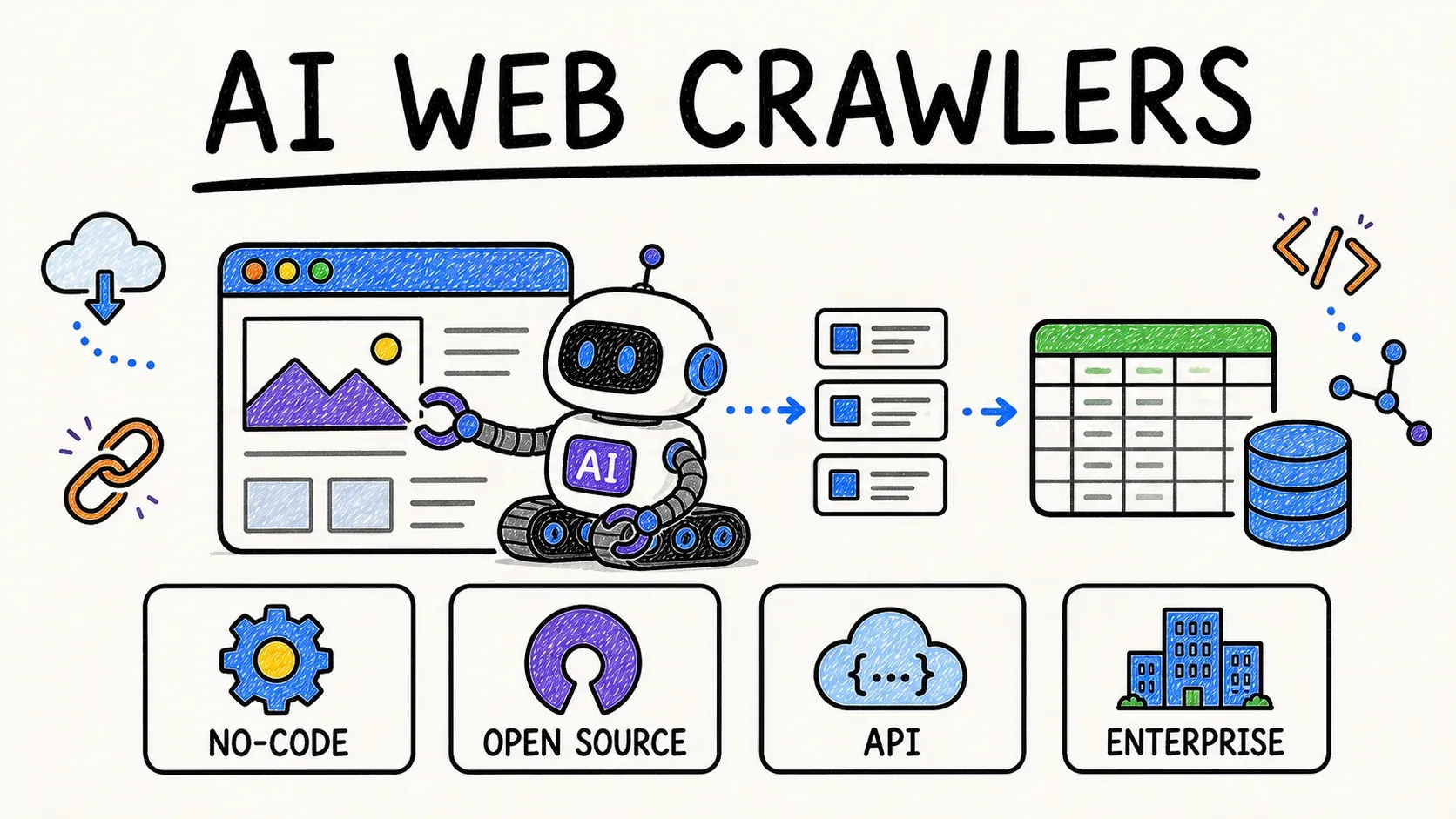
The web is overflowing with data, and in 2026, the race to turn that chaos into business gold is more intense than ever. I’ve watched sales, ecommerce, and operations teams transform their workflows by automating what used to be hours of mind-numbing copy-paste. These days, if you’re not using web data scraping software, you’re not just falling behind—you’re probably still stuck in spreadsheet purgatory while your competitors are already sipping their second coffee.

Here’s the reality: to feed analytics, sales, and decision-making. The global web data extraction market is already worth , and it’s projected to double by 2030. Sales reps spend up to on non-selling tasks like data entry and research. That’s a lot of time that could be spent actually closing deals—or at least enjoying a lunch break.

So, what’s the best web data scraping software for 2026? I’ve dug deep into the top five tools that are changing the game for teams of all sizes and technical backgrounds. Whether you’re a non-coder who just wants to click and go, or a developer looking for ultimate flexibility, there’s something here for you.
What Makes the Best Web Data Scraping Software?
Let’s get real: not all web scrapers are created equal. The best web data scraping software in 2026 stands out by making data extraction fast, reliable, and accessible to everyone—not just the folks who dream in Python.
Here are the key criteria I look for (and what business users care about most):
- Ease of Use: Can non-technical users set up a scrape in minutes? No-code and AI-driven interfaces are a must for most teams.
- Data Source Flexibility: Does it handle web pages, PDFs, images, and dynamic content (like infinite scroll or AJAX)? The more sources, the better.
- Automation & Scheduling: Can you schedule recurring scrapes, handle pagination, and automate subpage navigation? Automation is the difference between “set it and forget it” and “set it and babysit it.”
- Integration & Export: Does it export directly to Excel, Google Sheets, Notion, Airtable, or via API? The less manual wrangling, the happier your team.
- Technical Skill Required: Is it truly no-code, or do you need to brush up on your regex? The best tools cater to both non-coders and power users.
- Scalability: Can it handle scraping hundreds or thousands of pages without breaking a sweat?
- Support & Community: Is there good documentation, responsive support, and an active user base?
These criteria aren’t just nice-to-haves—they’re what separate tools that save you hours from those that cost you days. In 2026, with , having the right scraper is a competitive advantage.
Now, let’s dive into the top five.
The Top 5 Best Web Data Scraping Software in 2026
- for no-code, AI-powered, multi-source scraping
- for enterprise-grade, integrated data pipelines
- for open-source, developer-driven flexibility
- for visual, no-code scraping with scheduling
- for user-friendly, point-and-click data extraction
1. Thunderbit: The Easiest AI-Powered Web Data Scraping Software
is my go-to recommendation for anyone who wants to scrape web data without writing a single line of code. And yes, I’m a little biased—I helped build it. But hear me out: Thunderbit is built for business users who want results, not headaches.
What makes Thunderbit stand out?
- AI Suggest Fields: Just click “AI Suggest Fields” and Thunderbit’s AI reads the page, recommends what to extract, and sets up the scraper for you. No selectors, no templates, no drama.
- Multi-Source Scraping: Scrape not just web pages, but also PDFs and images. Thunderbit can extract text, links, emails, phone numbers, and images—all in two clicks.
- Subpage & Pagination Automation: Need to grab details from every product or profile page? Thunderbit’s subpage scraping follows links, grabs extra info, and merges it into your table. It also handles infinite scroll and pagination like a champ.
- Batch & Scheduled Scraping: Paste a list of URLs, schedule recurring jobs, and let Thunderbit do the heavy lifting—whether it’s daily price monitoring or weekly lead updates.
- Instant Export: Export directly to Excel, Google Sheets, Airtable, Notion, CSV, or JSON. No more copy-paste marathons.
- Custom AI Prompts: Want to categorize, translate, or label data as you scrape? Add a custom instruction and Thunderbit’s AI will handle it.
- Cloud or Browser Mode: Run scrapes in the cloud for speed (50 pages at a time) or locally for sites that require login.
Thunderbit is trusted by over , from sales teams to real estate agents to indie ecommerce shops. The free tier lets you scrape up to 6 pages (or 10 with a trial boost), and you only pay for what you use—one credit per output row.
Why I love it: Thunderbit is the only tool I’ve seen where a non-technical user can go from “I need this data” to “Here’s my spreadsheet” in under five minutes. The interface is genuinely friendly (we obsessed over it), and the AI adapts to website changes so you’re not constantly fixing broken scrapers.
Best for: Sales, ecommerce, operations, and anyone who wants no-code, AI-powered scraping with zero maintenance.
Check out the for more guides.
2. Import.io: Enterprise-Grade Web Data Scraping and Integration
is the heavyweight champion for enterprises that need web data at scale—and need it plugged directly into business systems.
What sets Import.io apart?
- Enterprise-Ready Pipelines: Import.io isn’t just a scraper; it’s a full-blown web data integration platform. Think “data-as-a-service” with continuous, automated feeds.
- Self-Healing AI: If a website changes, Import.io’s AI tries to remap fields automatically, so your pipelines don’t break overnight.
- Robust Automation: Schedule scrapes hourly, daily, or on custom intervals. Get alerts if something goes wrong or if the data looks funky.
- Interactive Workflows: Handle sites with logins, forms, or multi-step navigation. Import.io can record and replay complex sequences.
- Compliance & Governance: Automated PII detection, masking, and audit logs—crucial for regulated industries.
- API & Integration: Stream data directly into Google Sheets, Excel, Tableau, Power BI, databases, or your own apps via API.
Import.io is trusted by brands like Unilever, Volvo, and RedHat. It’s the go-to for use cases like price monitoring across thousands of ecommerce sites, market intelligence, or feeding AI/ML models with fresh web data.
Pricing: Import.io is a premium solution, starting around $299/month for self-service plans. There’s a free trial, but no long-term free tier. If web data is mission-critical, the ROI is there.
Best for: Enterprises and data-centric organizations that need reliability, scale, compliance, and deep integration.
3. Scrapy: Open-Source Web Scraping Framework for Developers
is the open-source powerhouse for developers who want ultimate flexibility and control. If you (or your team) can code in Python, Scrapy is the Swiss Army knife of web scraping.
Why developers love Scrapy:
- Full Customization: Write spiders (scripts) to crawl, parse, and process data exactly how you want. Handle multi-page flows, custom logic, and complex data cleaning.
- Asynchronous & Fast: Scrapy’s architecture is built for speed and scale—scrape hundreds of pages per minute, or millions with distributed crawlers.
- Extensible: Huge ecosystem of plugins and middleware for proxies, headless browsers (Splash/Playwright), and integrations.
- Free & Open Source: No license fees. Run it on your own hardware or cloud, and scale as big as you need.
- Community Support: Over 55,000 GitHub stars and a massive user base. If you hit a snag, someone’s probably solved it.
Caveats: Scrapy requires Python skills and command-line comfort. There’s no point-and-click UI—this is code-first territory. But for custom projects, AI training data, or massive crawls, nothing beats it.
Best for: Organizations with in-house developers, custom data pipelines, or large-scale, complex scraping needs.
4. Octoparse: Visual Web Data Scraping Made Simple
is a favorite among non-coders who want powerful scraping with a visual, point-and-click interface.
Why Octoparse is popular:
- Visual Workflow Builder: Click on elements in a built-in browser, and Octoparse auto-detects patterns. No coding, just click and extract.
- Handles Dynamic Content: Scrape AJAX, infinite scroll, and login-protected sites. Simulate clicks, scrolls, and form submissions.
- Cloud Scraping & Scheduling: Run tasks in the cloud (faster, parallelized) and schedule recurring jobs for always-fresh data.
- Pre-Built Templates: Hundreds of templates for popular sites (Amazon, Twitter, Zillow, etc.) let you start scraping instantly.
- Export & API: Download results as CSV, Excel, JSON, or pull data via API. Integrate with Google Sheets or databases.
Octoparse is often described as “super easy to use, even for beginners.” The free tier is limited, but paid plans (starting around $83/month) unlock cloud runs, scheduling, and more speed.
Best for: Non-technical users, marketers, researchers, and small teams needing regular, automated data collection without coding.
5. ParseHub: User-Friendly Data Extraction for Everyday Tasks
is another no-code favorite, especially for small businesses and freelancers who want to automate everyday data tasks.
What makes ParseHub shine:
- Point-and-Click Simplicity: Select data by clicking on elements in a browser view. Build workflows visually—no coding required.
- Handles JS & Dynamic Sites: Scrape JavaScript-heavy pages, infinite scroll, and multi-step navigation.
- Cloud & Local Runs: Run scrapes on your desktop or in the cloud. Schedule recurring jobs and access results via API (on higher plans).
- Export Options: Download data as CSV, Excel, or JSON. API access for automation.
- Cross-Platform: Available on Windows, Mac, and Linux.
ParseHub’s free plan is limited (200 pages/run), but paid plans (starting around $189/month) unlock more power, speed, and API access.
Best for: Small businesses, freelancers, and teams with straightforward scraping needs who want a reliable, visual tool.
Comparison Table: Best Web Data Scraping Software at a Glance
| Tool | Ease of Use | Data Sources | Automation & Scheduling | Integration & Export | Technical Skill | Pricing |
|---|---|---|---|---|---|---|
| Thunderbit | No-code, AI-driven | Web, PDF, Images | Subpage, pagination, scheduled, batch | Excel, Sheets, Notion, Airtable, CSV, JSON | None | Freemium (pay per row) |
| Import.io | Point-and-click UI | Web (static/dynamic, login) | Self-healing, scheduled, alerts | API, BI tools, Sheets, Excel, DB | Low–Medium | $299+/month |
| Scrapy | Code required | Web, APIs, (JS via add-ons) | Full automation via code | Any (via code) | Python devs | Free (open source) |
| Octoparse | Visual, no-code | Web (dynamic, login) | Cloud scheduling, templates | CSV, Excel, JSON, API | None | $83+/month |
| ParseHub | Visual, no-code | Web (JS, dynamic) | Cloud/local, scheduled | CSV, Excel, JSON, API | None | $189+/month |
How to Choose the Best Web Data Scraping Software for Your Business
Not sure which tool is right for you? Here’s my cheat sheet:
- Non-technical users, fast results: Go with or . Thunderbit is unbeatable for instant, AI-powered scraping and multi-source support (web, PDF, images). Octoparse is great for visual, scheduled scrapes.
- Enterprise integration, compliance, and scale: is your best bet. It’s built for continuous, reliable data pipelines and deep integration.
- Developers, custom projects, or massive crawls: is the way to go. You’ll need Python chops, but you get unlimited flexibility.
- Small businesses, freelancers, or everyday tasks: is a solid, user-friendly choice for point-and-click scraping and moderate automation.
Tips for picking the right tool:
- Match the tool to your team’s technical skills and data needs.
- Consider the complexity of the sites you need to scrape (dynamic content? logins?).
- Think about how you’ll use the data—do you need direct export to Sheets, or deep API integration?
- Start with a free trial or freemium plan to test real-world tasks.
- Don’t underestimate the value of good support and documentation.
Conclusion: Unlocking Business Value with the Best Web Data Scraping Software
Web data is the fuel for smarter business decisions in 2026. The right web data scraping software can save you hours, reduce errors, and give your team a real edge—whether you’re building lead lists, monitoring competitors, or feeding your analytics engine.
To recap:
- Thunderbit is the easiest, AI-powered no-code scraper for business users.
- Import.io is the enterprise-grade solution for continuous, integrated data pipelines.
- Scrapy is the open-source toolkit for developers who want full control.
- Octoparse and ParseHub make visual, no-code scraping accessible to everyone.
Most of these tools offer free trials or freemium plans—so take them for a spin. Automate the boring stuff, unlock new insights, and let your team focus on what really matters.
Happy scraping—and may your data always be fresh, structured, and ready for action.
FAQs
1. What is web data scraping software used for?
Web data scraping software automates the process of extracting information from websites, PDFs, and images. It’s used for lead generation, price monitoring, market research, content aggregation, and more.
2. Is web data scraping legal?
Web scraping is legal when collecting publicly available data and respecting website terms of service and privacy laws. Always review the site’s policies and use data responsibly.
3. Do I need to know how to code to use web data scraping software?
Not necessarily! Tools like Thunderbit, Octoparse, and ParseHub are designed for non-coders. For more complex or custom projects, developer tools like Scrapy may be required.
4. How do I export scraped data to Excel or Google Sheets?
Most modern scrapers (Thunderbit, Octoparse, ParseHub) offer one-click export to Excel, Google Sheets, CSV, or even direct integration with Notion and Airtable.
5. Can web data scraping software handle dynamic sites or logins?
Yes—top tools like Import.io, Octoparse, and ParseHub can handle dynamic content (AJAX, infinite scroll) and login-protected sites. Thunderbit also supports scraping from dynamic pages and subpages.
Want to see what modern web scraping looks like? or explore the for more tips, tutorials, and deep dives into the world of AI-powered data extraction.