
Back in college, I was the unofficial deal detective for my friend group. I used to burn hours checking three tabs, two coupon sites, and one questionable forum thread just to save a few dollars on groceries or gadgets. In 2026, the job is less romantic but a lot more efficient: comparison tools now do the crawling, matching, and alerting for you.
That matters because price pressure is still shaping how people buy. Ibotta's 2026 State of Spend report says 62% of shoppers now choose price over brand (Nasdaq). AlixPartners' 2026 grocery study says 65% of shoppers compare prices before shopping (AlixPartners PDF). And Google's Shopping Graph now contains more than 50 billion product listings, with more than 2 billion refreshed every hour (Google, January 12, 2026). In other words: comparison behavior is no longer optional background behavior. It is the default buying workflow.
This guide keeps the original shortlist structure, but refreshes it for the current market. I focus on the tools that matter for three real jobs:
- finding the best price as a consumer,
- tracking competitors as a retailer or brand,
- building a repeatable pricing workflow instead of reacting manually.
Why Price Comparison Software Matters in 2026
Price comparison software now sits at the intersection of shopper expectations and business survival.
- Consumers expect instant transparency. If a better price is one search away, hidden pricing advantage disappears fast.
- Retailers need live market signals. Manual spot checks are too slow when marketplaces and big-box listings move throughout the day.
- Pricing teams need more than screenshots. They need history, alerts, filters, and enough structure to act without chasing noise.
- Sales and ecommerce teams increasingly work with AI-assisted workflows. IBM and NRF's January 7, 2026 study found 45% of consumers turn to AI for help during buying journeys (IBM).
If you want a quick shopper-side orientation before diving into the software categories, this walkthrough is a reasonable starting point.
What Is Price Comparison Software?
At the simplest level, price comparison software collects prices for the same product from multiple sources and makes them comparable fast enough to influence a decision.
For consumers, that usually means:
- seeing multiple sellers side by side,
- checking price history,
- finding coupons, cashback, or local inventory,
- setting alerts for drops.
For businesses, it usually means:
- monitoring competitor prices,
- tracking promotions, stock signals, and assortment changes,
- matching equivalent products across sites,
- automating repricing or routing alerts into a larger workflow.
The same category label covers both worlds, which is why buyers get confused. Google Shopping, Flipp, and PCPartPicker help people make purchase decisions directly. Tools like Price2Spy and Vendavo are more about operating a pricing strategy behind the scenes.
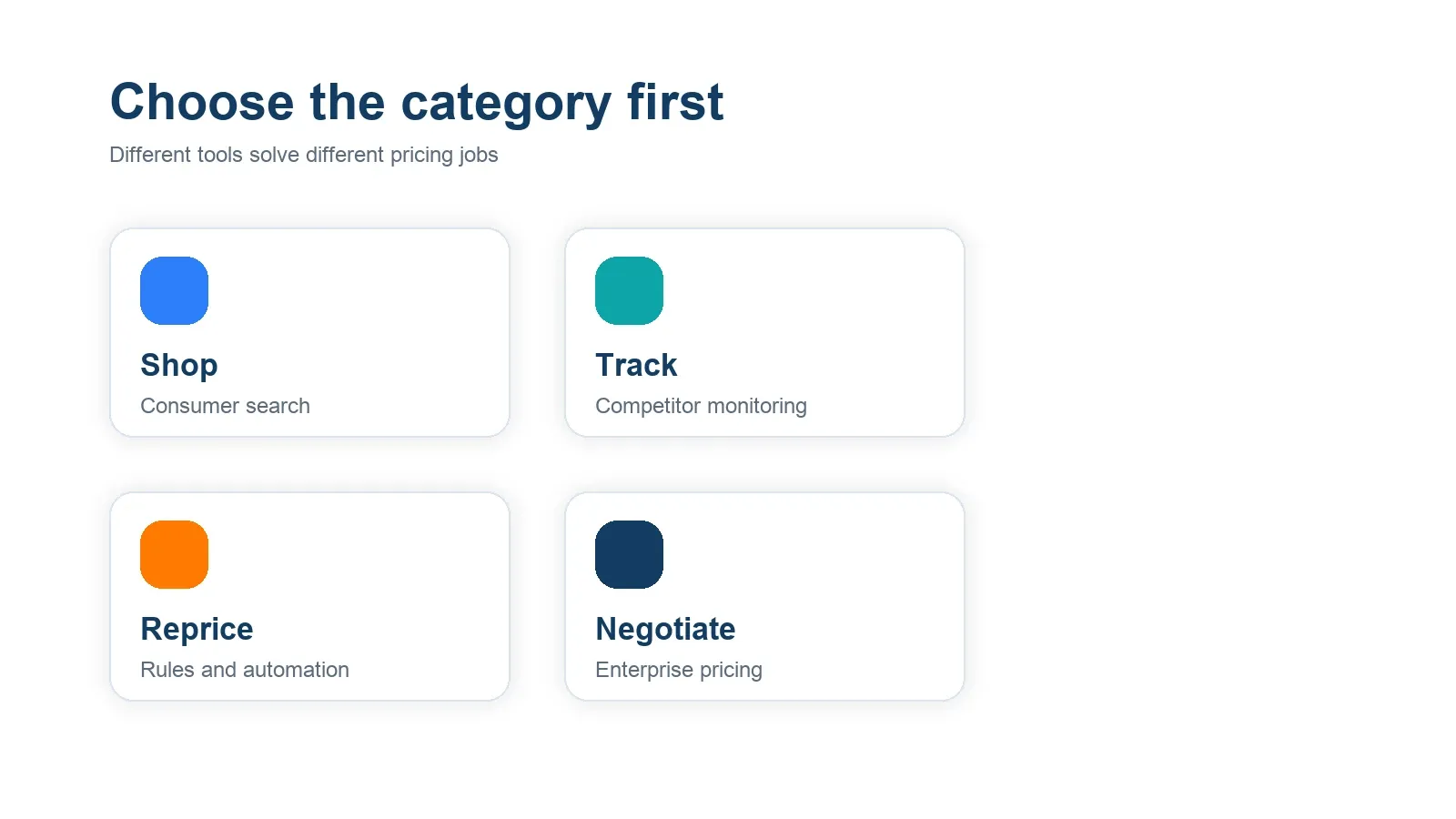
Check Whether You Need a Consumer Tool or a Competitor Monitoring Workflow
How Price Comparison Software Supports a Pricing Strategy
The best tools do more than surface a cheaper listing. They change how pricing decisions get made.
- Real-time monitoring: watch the market continuously instead of sampling it occasionally.
- Price history and context: distinguish a real discount from a temporary badge or recycled promotion.
- Rule-based repricing: react with guardrails instead of emotional one-off changes.
- Negotiation support: give sales or marketplace teams current benchmarks when they need to defend pricing.
- Coverage across messy websites: handle marketplaces, local retailers, and long-tail sources that do not all expose clean structured feeds.
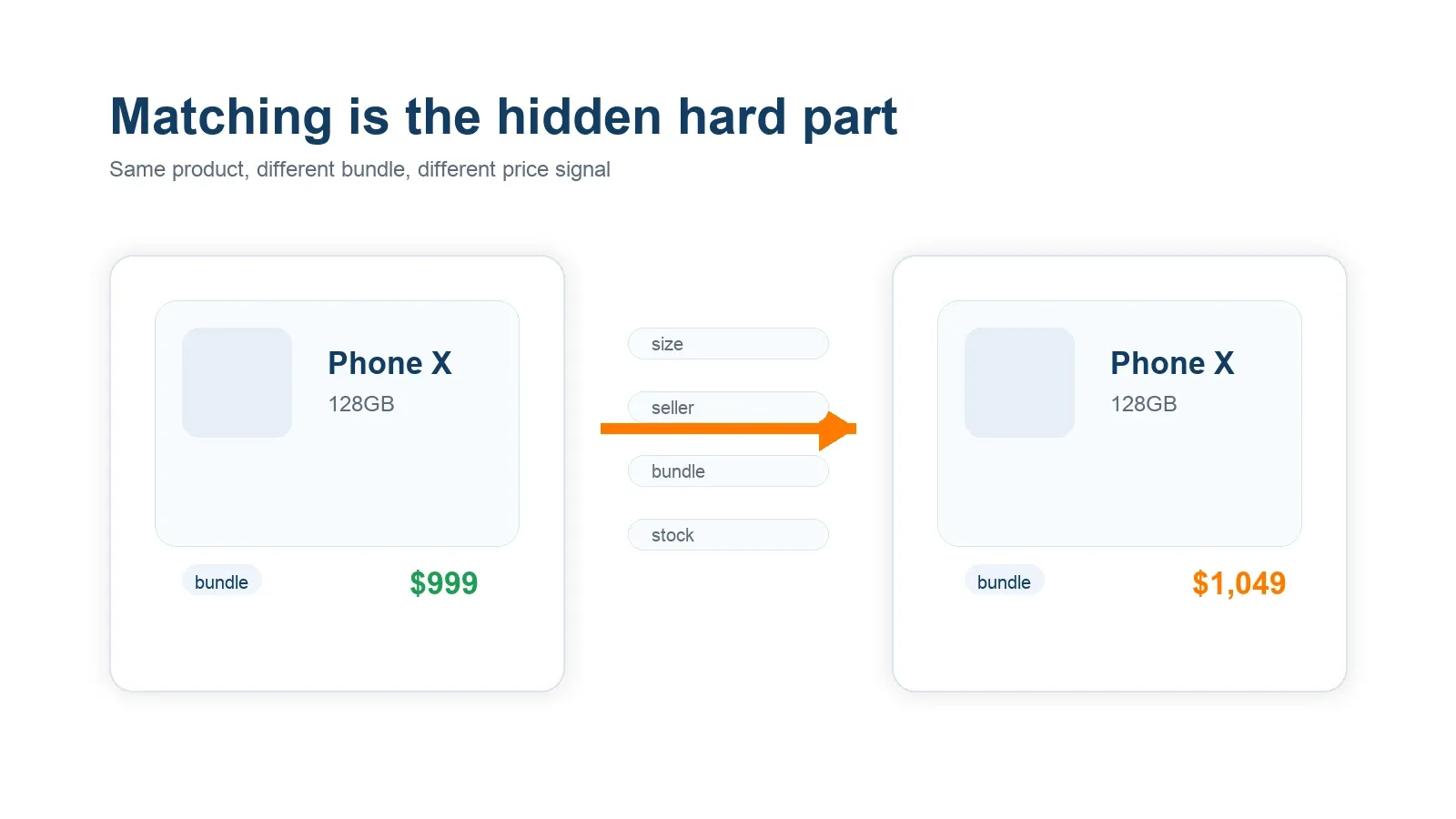
The operational gap usually appears at product matching. It is easy to say "monitor competitor prices." It is much harder to identify the exact comparable item across dozens of websites, formats, packs, bundles, and currency contexts.
Criteria for Choosing the Best Price Comparison Software
I used eight filters for this refresh:
- Coverage: Does it actually cover the sites, regions, or seller types that matter to you?
- Matching quality: Can it compare equivalent items reliably without constant manual cleanup?
- Price history and alerts: Can you see movement over time and get notified when action is needed?
- Ease of use: Can a real team adopt it without specialist support for every change?
- Workflow fit: Is it built for shopper savings, ecommerce operations, enterprise pricing, or some mix of them?
- Automation depth: Does it stop at observation, or can it help trigger repricing or exports?
- Geographic relevance: Several tools are strongest in Europe or Australia rather than the U.S.
- Integration and export: APIs, feeds, CSV/XLS exports, or direct connections matter once the workflow scales.
One official product video worth watching here is Price2Spy's repricing tutorial. It is business-oriented, but it shows the category's core shift clearly: from "compare prices manually" to "act on price deltas with rules."
The Top 11 Price Comparison Software Tools for 2026
1. Google Shopping
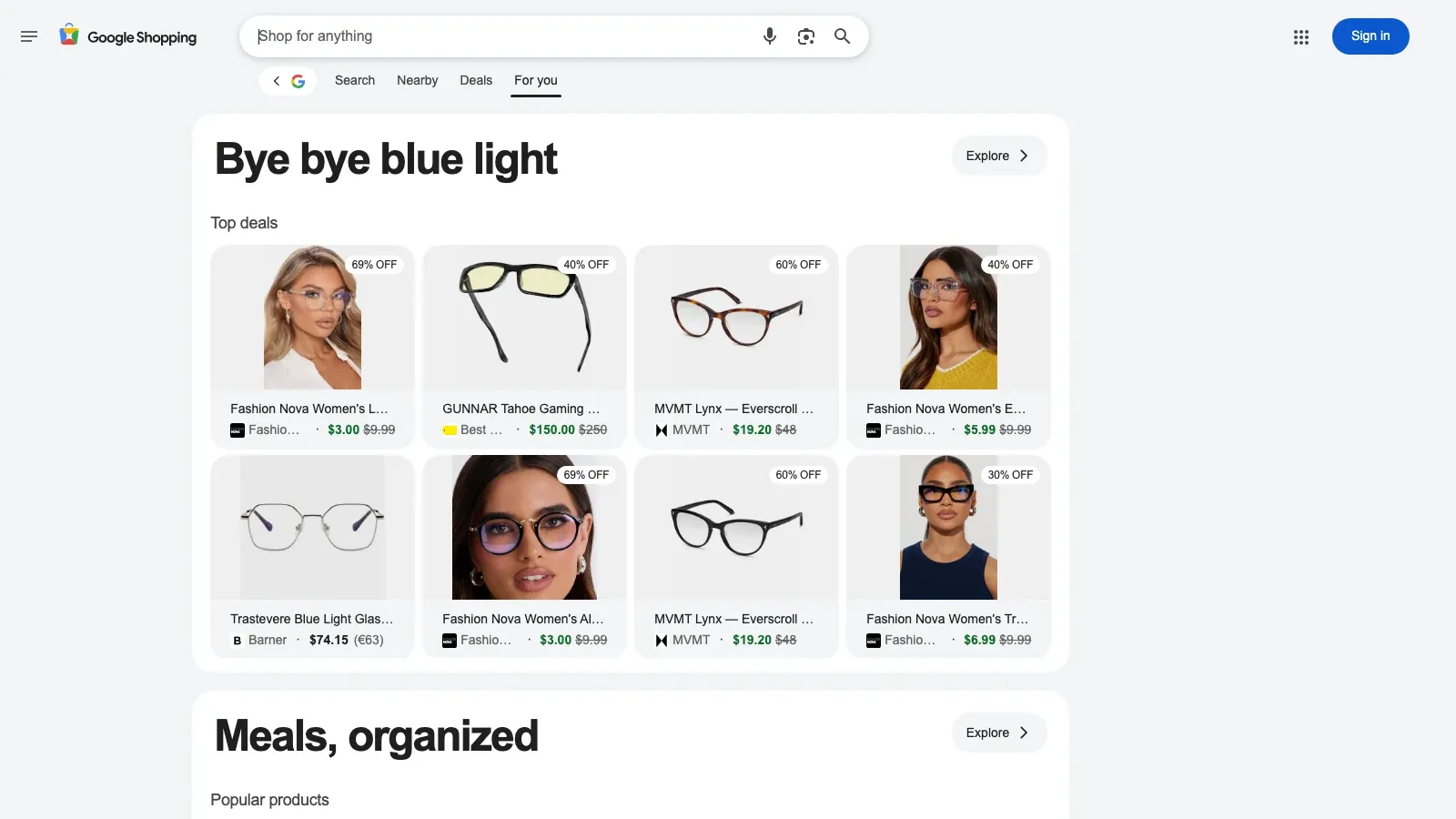
Google Shopping is still the default consumer-facing comparison engine because it combines breadth, speed, and distribution. Google's latest public remarks say the Shopping Graph now covers more than 50 billion listings refreshed in near real time, which makes it the widest discovery layer in this roundup.
- Best for: Consumers, merchants, and product teams that need visibility into broad web pricing.
- Key strengths: Search-native product discovery, local inventory, filters, price tracking, and Merchant Center data for sellers.
- Watch-outs: Better for visibility and shopper comparison than deep competitor analytics.
2. CamelCamelCamel
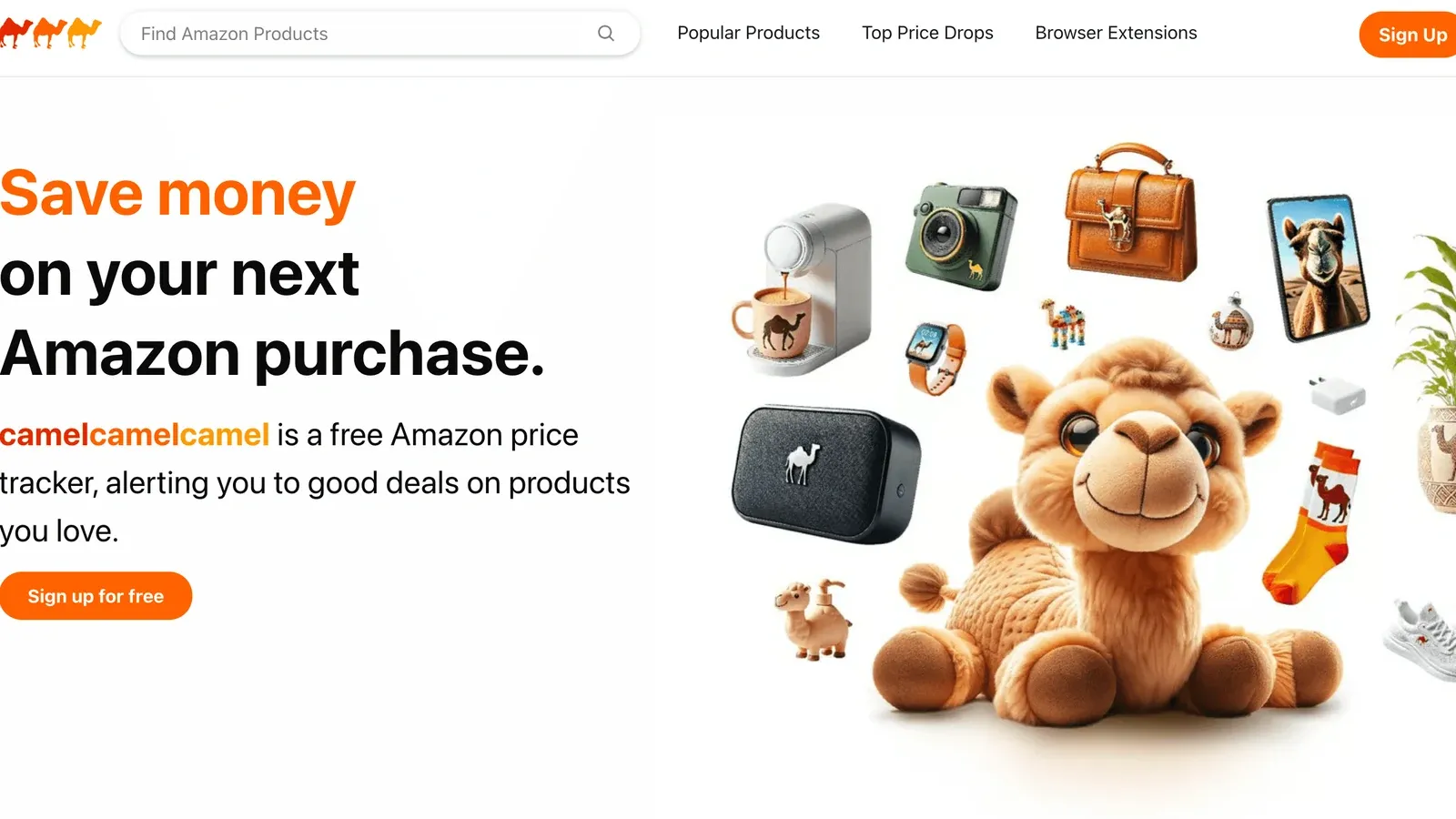
CamelCamelCamel stays relevant because Amazon-specific price history is still a separate need from general web comparison. If your purchase decision lives on Amazon, historical context is often more valuable than one more comparison widget.
- Best for: Amazon shoppers and sellers who care about timing purchases and promotions.
- Key strengths: Clean historical charts, alerts, browser support, and simple usability.
- Watch-outs: Narrow scope by design; it is not a general competitor-monitoring platform.
3. BuyVia
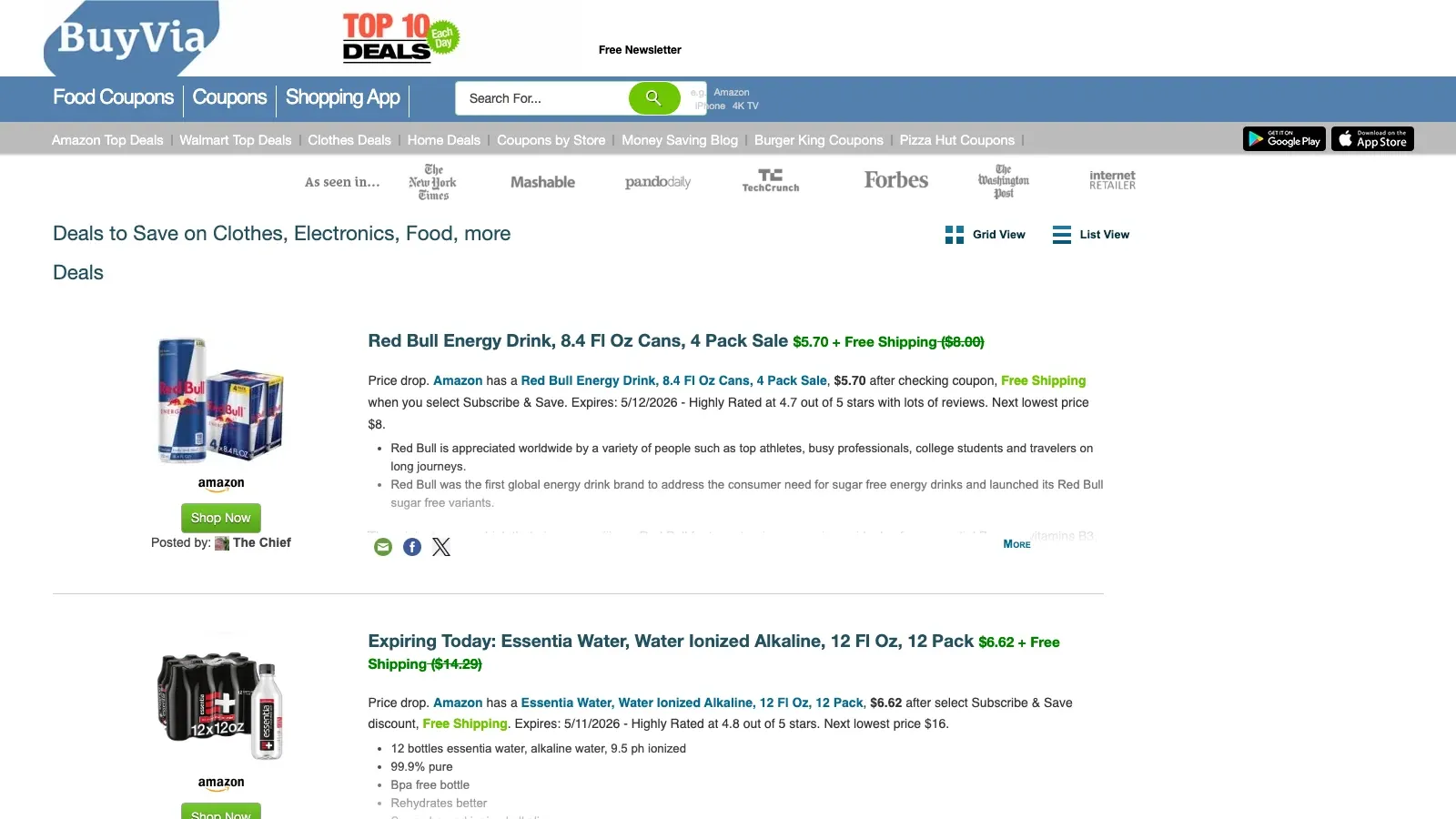
BuyVia blends classic price comparison with deals, couponing, and mobile-first shopping behavior. It is most useful for consumers who want one workflow for search, barcode checks, and discounts instead of juggling separate apps.
- Best for: Deal-driven shoppers, especially for electronics and home purchases.
- Key strengths: Search plus barcode scan, local and online comparisons, coupon aggregation, alerts.
- Watch-outs: More consumer-deals oriented than business analytics oriented.
4. Flipp
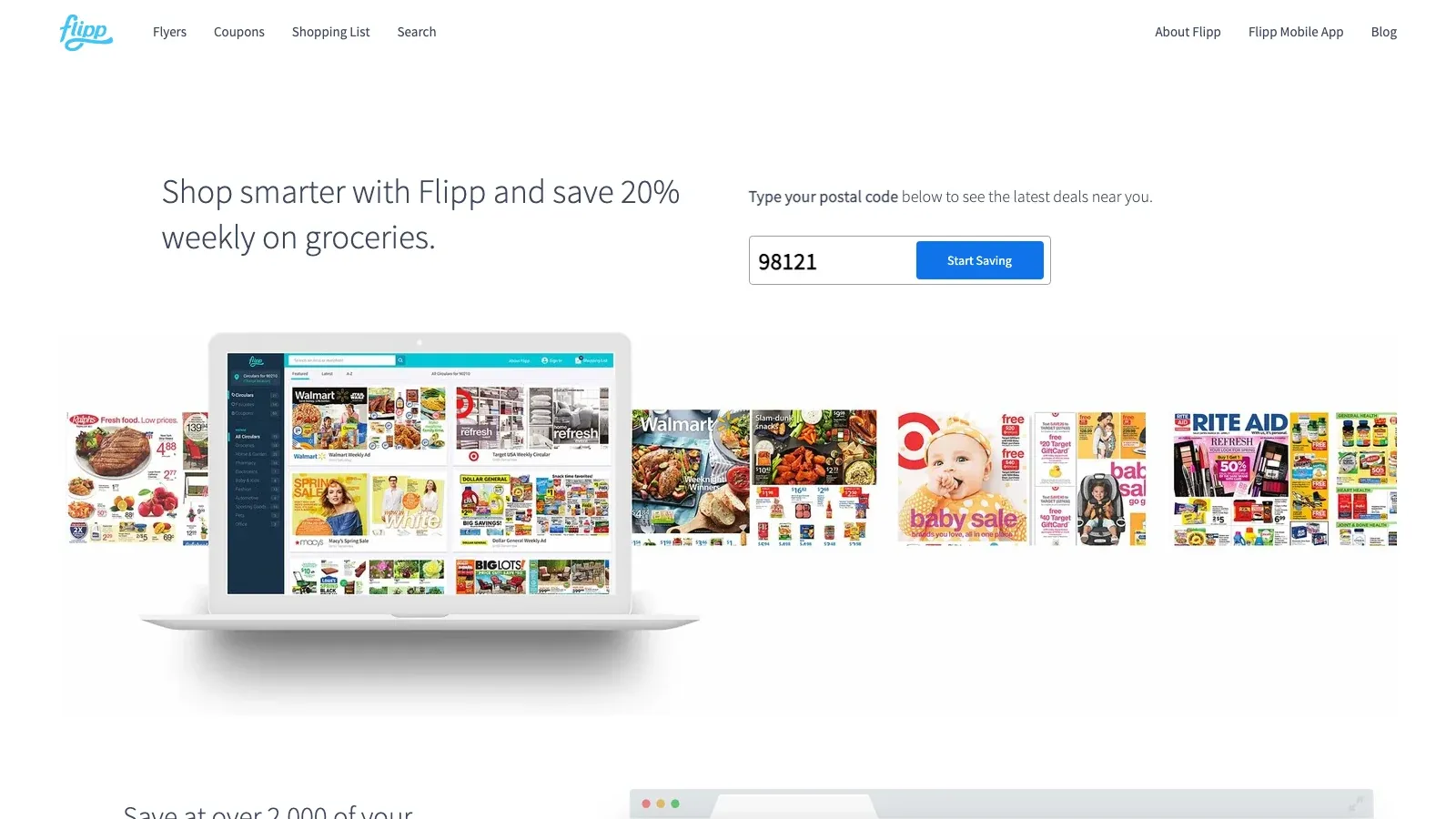
Flipp remains one of the strongest grocery and weekly-ad comparison tools. Flipp's own company site says the app is used by millions of shoppers every week and reports 2.1 billion annual opens (Flipp).
- Best for: Grocery shoppers, household budgeting, and retailers promoting circular-style deals.
- Key strengths: Digital flyers, searchable promotions, shopping lists, coupon and local-retail relevance.
- Watch-outs: Less useful for categories where weekly retail ads are not the buying trigger.
5. Price.com
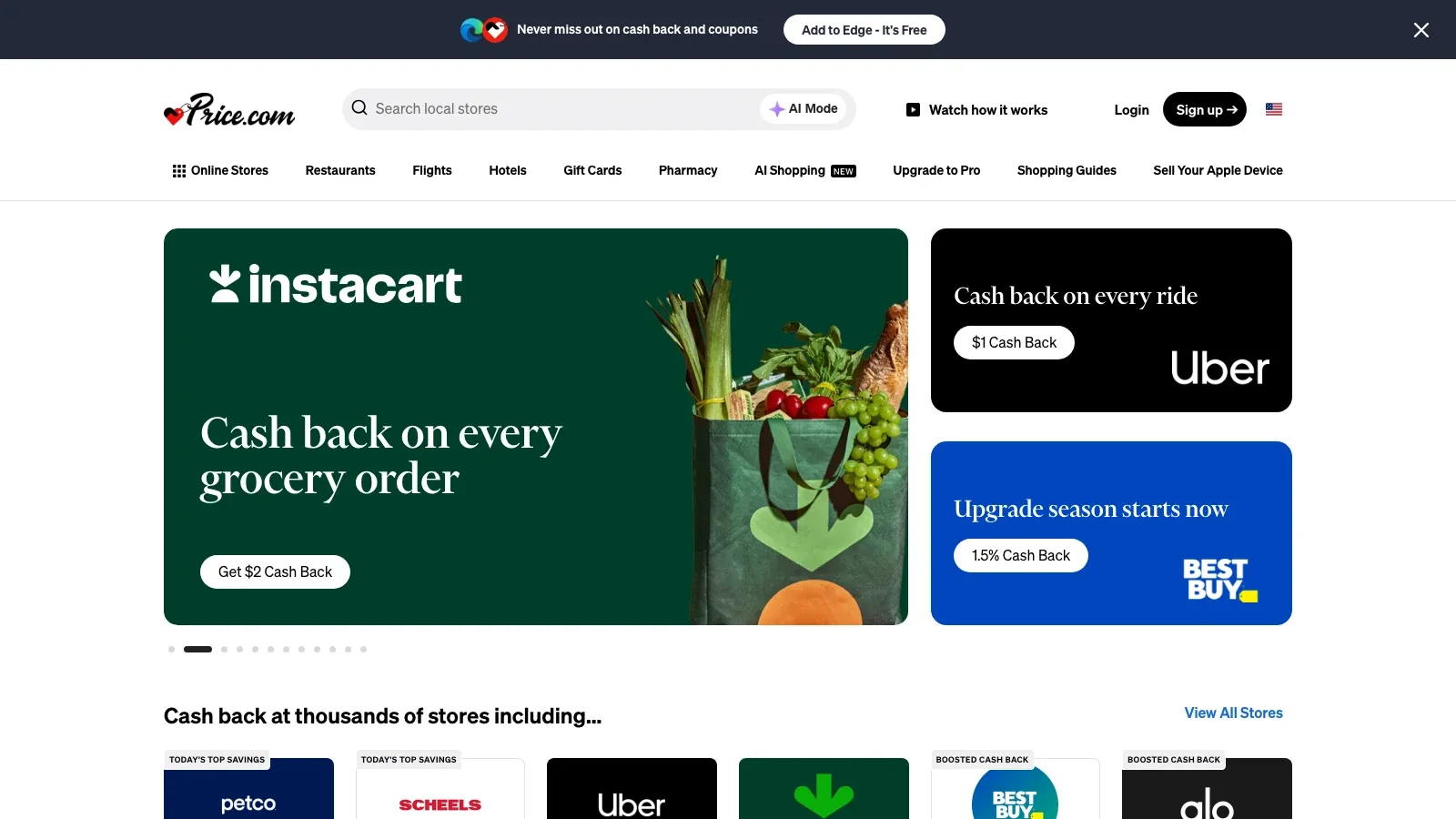
Price.com packages price comparison with cashback, coupons, and price history into a more savings-stack style experience.
- Best for: Consumers who want automated savings signals while browsing.
- Key strengths: Browser extension workflow, coupon application, cashback discovery, price history.
- Watch-outs: The value proposition is strongest for retail savings, not for enterprise pricing teams.
6. PriceRunner

PriceRunner is still a strong comparison destination in Europe, especially for higher-consideration purchases where reviews and merchant trust matter alongside raw price.
- Best for: European consumers and merchants targeting northern European comparison traffic.
- Key strengths: Reviews, history, filters, merchant visibility, regional market fit.
- Watch-outs: Regionally strong, but not the right answer if your market is primarily U.S.-centric.
7. Idealo
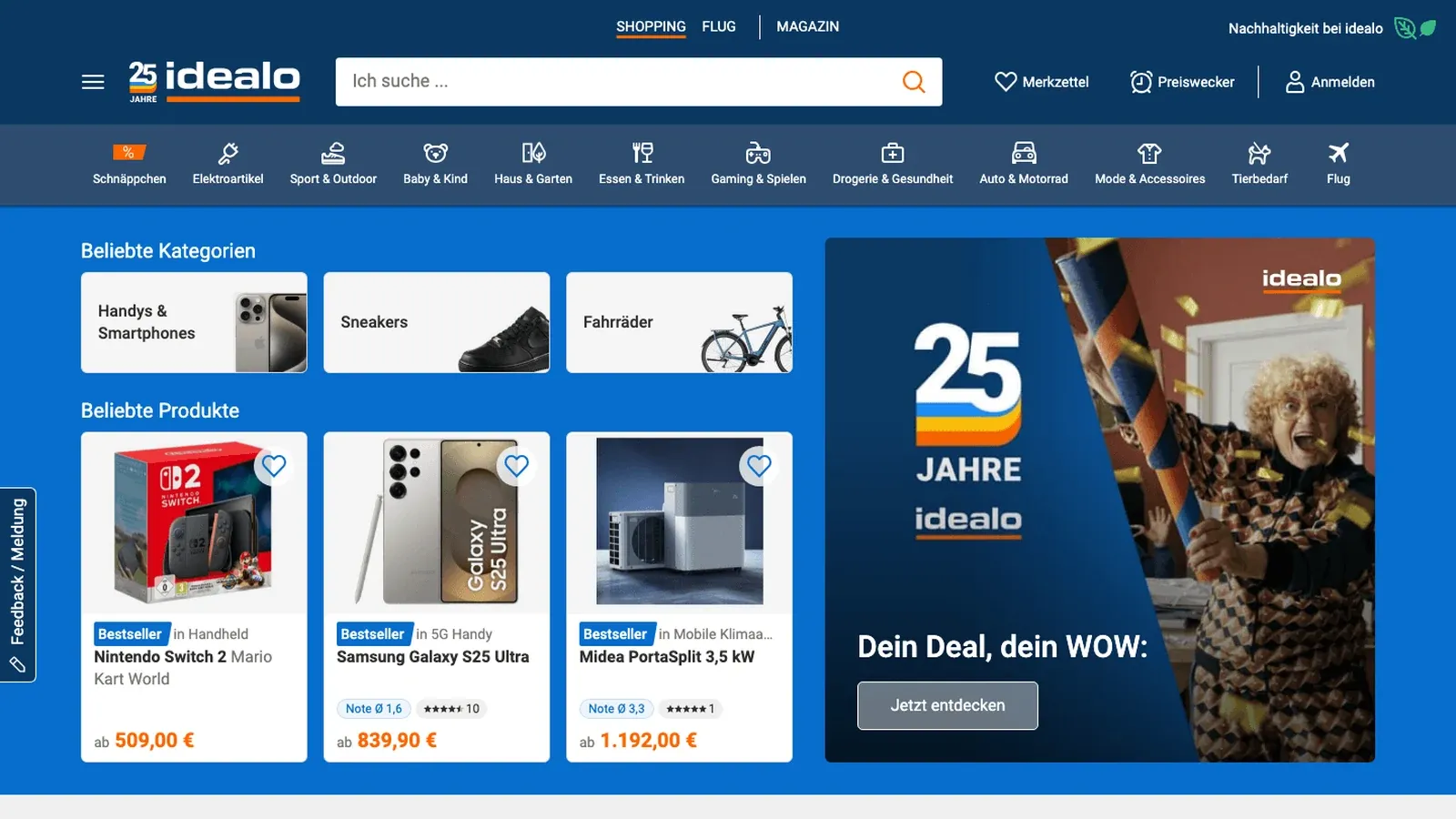
Idealo remains one of Europe's most important comparison platforms. It is particularly strong when the user wants both price comparison and store-trust signals in the same decision flow.
- Best for: European shoppers and retailers that need broad comparison exposure.
- Key strengths: Mature category coverage, store ratings, alerts, filters, and product comparison depth.
- Watch-outs: More useful in its strongest European markets than outside them.
8. PCPartPicker
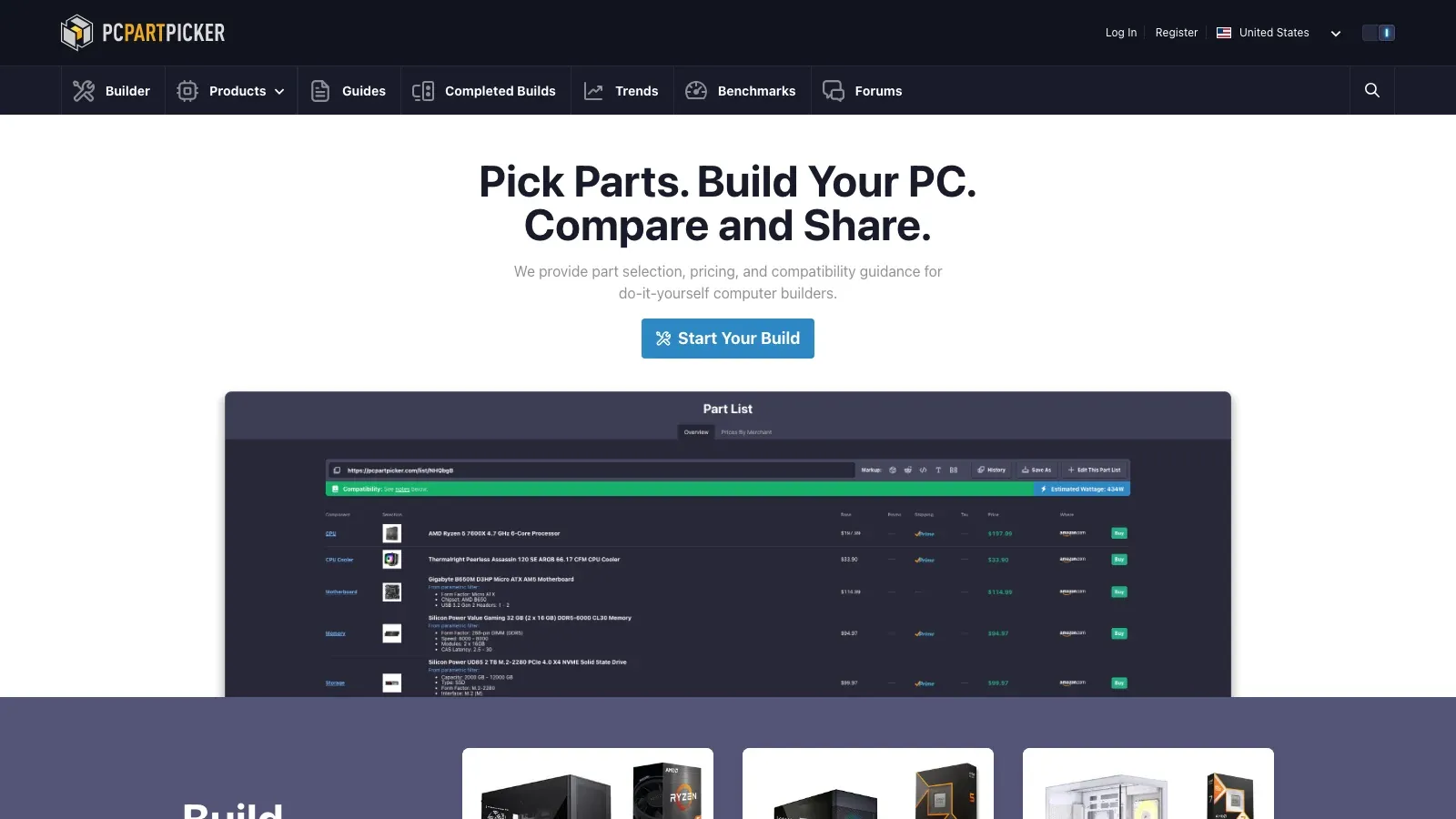
PCPartPicker is still the best example of a niche comparison tool beating generic platforms by understanding the workflow deeply. For PC builders, compatibility matters as much as price.
- Best for: PC builders, system integrators, and buyers comparing component-level builds.
- Key strengths: Compatibility checking, retailer comparisons, build sharing, part-specific price history.
- Watch-outs: Purpose-built for PC hardware; not a broad comparison engine.
9. Price2Spy
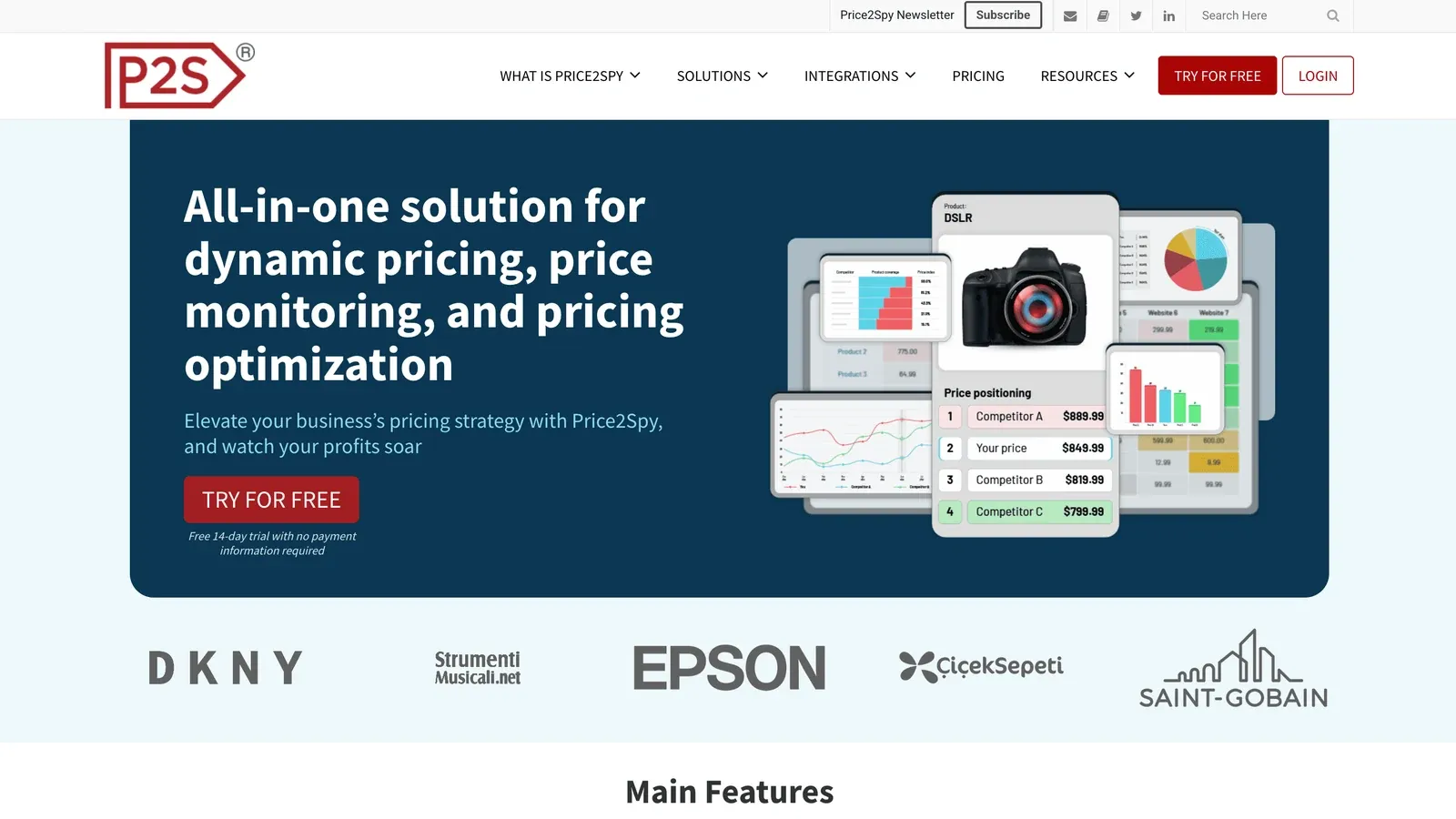
Price2Spy is one of the clearest business-facing tools in this roundup. Its public materials emphasize competitor tracking at scale, reporting, and repricing. Its FAQ also says users can monitor prices up to 8 times per day depending on plan and need (Price2Spy FAQ).
- Best for: Ecommerce retailers, brands, and manufacturers running structured price-monitoring workflows.
- Key strengths: Reporting depth, alerting, extraction services, repricing support, scale.
- Watch-outs: Not consumer-facing; requires a clearer operational workflow than simple shopping tools.
10. Zyft
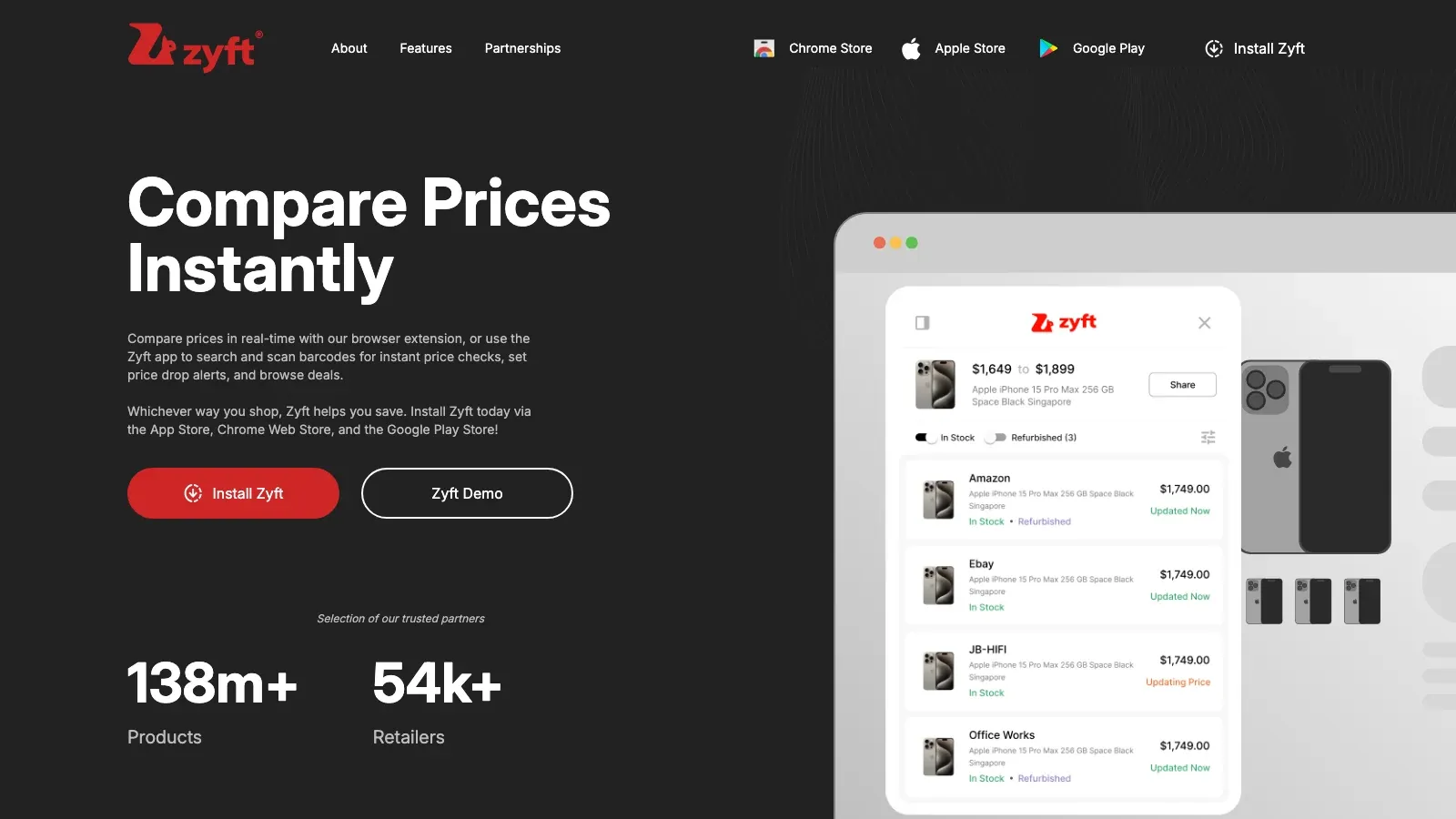
Zyft stays relevant because it focuses tightly on Australia and keeps the shopper workflow simple: compare prices quickly, including in-store checks.
- Best for: Australian shoppers and retailers that care about local price visibility.
- Key strengths: Regional relevance, barcode scanning, quick comparisons, browser extension behavior.
- Watch-outs: Geographic focus is the product advantage and the natural limitation.
11. Vendavo
Vendavo sits at the enterprise end of the category. It is not trying to help a shopper find a cheap laptop. It is built for large organizations dealing with margins, CPQ, channel complexity, and pricing governance.
- Best for: Manufacturers, distributors, and enterprise pricing teams.
- Key strengths: Price optimization, analytics, CPQ integration, enterprise workflow depth.
- Watch-outs: Too heavyweight for simple comparison shopping or lightweight store monitoring.
Side-by-Side Comparison Table
| Tool | Platform Type | Main Strength | Best For | Pricing Model | Region Fit |
|---|---|---|---|---|---|
| Google Shopping | Consumer comparison engine | Search-scale product discovery | Consumers, merchants | Free for shoppers; merchant ad/feed model | Global |
| CamelCamelCamel | Amazon tracker | Price history and alerts | Amazon shoppers, sellers | Free | Multi-region Amazon markets |
| BuyVia | Consumer deals app | Mobile comparison plus coupons | Deal-seeking shoppers | Free | Primarily U.S. |
| Flipp | Grocery deals app | Weekly ads and local savings | Grocery shoppers, retailers | Free | Primarily North America |
| Price.com | Savings extension | Coupons, cashback, price checks | Online shoppers | Free / affiliate | Primarily U.S. |
| PriceRunner | Comparison marketplace | Reviews plus comparison | Consumers, merchants | Free / CPC-style merchant model | Europe |
| Idealo | Comparison marketplace | Deep EU comparison coverage | Consumers, merchants | Free / merchant participation | Europe |
| PCPartPicker | Niche comparison tool | Compatibility plus pricing | PC builders | Free / affiliate | Multi-country |
| Price2Spy | Pricing SaaS | Monitoring and repricing workflows | Retailers, brands | Subscription | Global business use |
| Zyft | Regional shopper tool | Fast local price checks | Australian shoppers | Free / affiliate | Australia |
| Vendavo | Enterprise pricing suite | Optimization and governance | Enterprise pricing teams | Enterprise contract | Global enterprise |
Which Tool Fits Which Use Case?
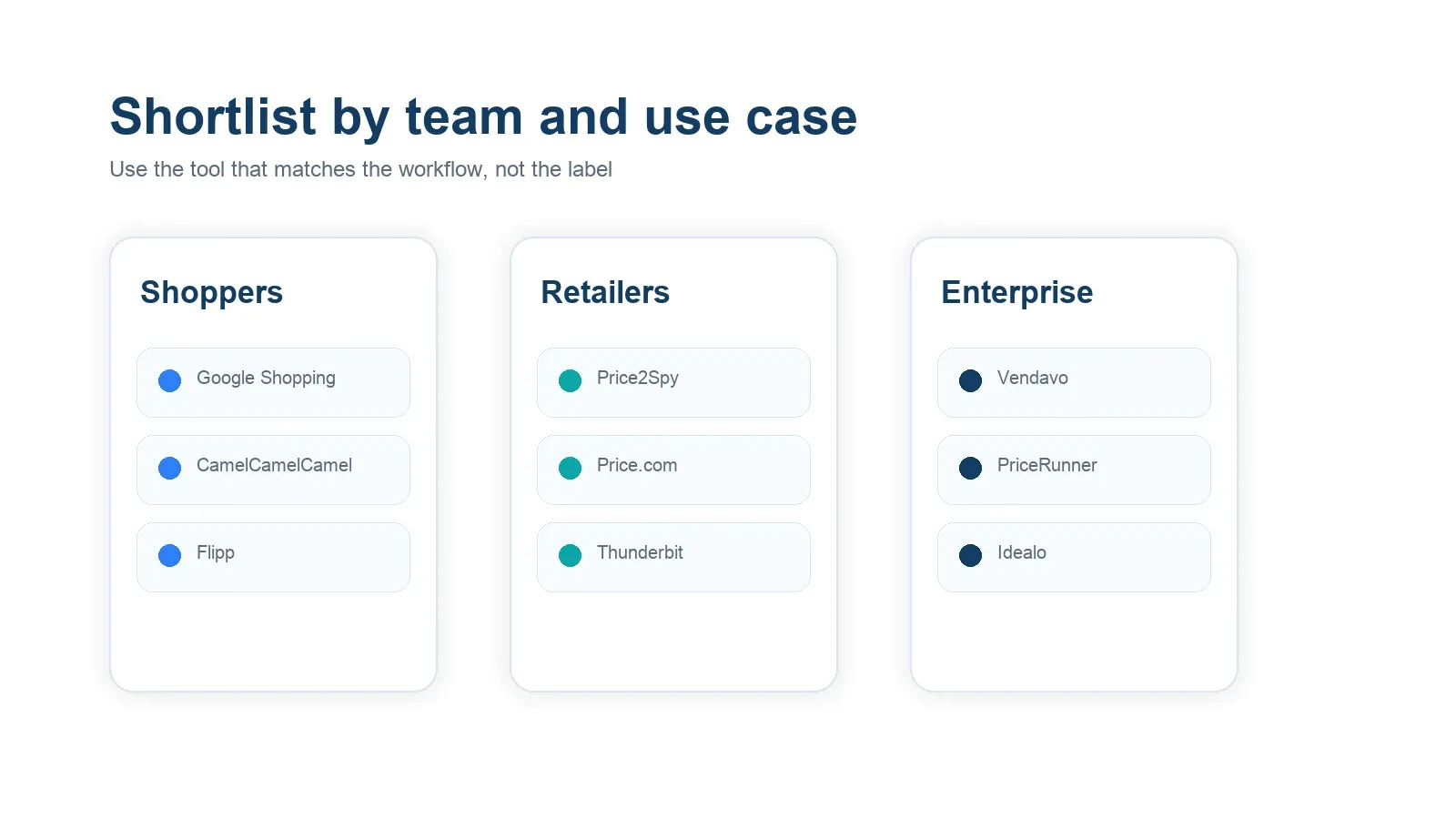
This is the shortlist logic I would actually use:
- Best general consumer comparison: Google Shopping
- Best Amazon-only tracker: CamelCamelCamel
- Best grocery and local-ad workflow: Flipp
- Best savings-stack browser workflow: Price.com
- Best Europe-first comparison platforms: PriceRunner and Idealo
- Best niche enthusiast workflow: PCPartPicker
- Best structured competitor monitoring for ecommerce teams: Price2Spy
- Best Australia-specific shopper tool: Zyft
- Best enterprise pricing platform: Vendavo
If you need to move from "I can see competitor prices" to "I can operationalize this data," the most execution-specific video in this refresh is Thunderbit's setup walkthrough. It is useful for teams that need to collect competitor pricing from websites that are outside the major comparison engines.
How to Implement Price Comparison Software in Your Business
Rolling one of these tools out successfully is mostly a workflow question, not a software-installation question.
- Define the exact job. Consumer savings, marketplace monitoring, competitor benchmarking, or enterprise pricing governance are different problems.
- Start with a narrow catalog or category. You want to validate matching quality before scaling alerts.
- Map your comparable products carefully. Product matching is where most pricing workflows quietly break.
- Set thresholds before alerts go live. Not every price change deserves action.
- Separate observation from automation. Track first, then automate repricing only after you trust the signal.
- Connect exports into your real workflow. Sheets, BI, ERP, ecommerce platform, or CRM should receive the output.
- Review margin guardrails weekly. Cheap is not always strategic.
Try Thunderbit AI Web Scraper for Price Comparison Workflows
For many teams, the practical stack is hybrid:
- consumer-facing comparison tools for market visibility,
- one structured monitoring platform for repeat reporting,
- and an AI scraper like Thunderbit for websites the mainstream engines do not cover well.
Final Verdict
If you are a shopper, the winners are mostly about convenience and trust:
- start with Google Shopping,
- use CamelCamelCamel for Amazon,
- use Flipp for groceries,
- use PCPartPicker when compatibility matters as much as cost.
If you are a business, the decision is less about "best overall tool" and more about workflow maturity:
- Price2Spy is the best fit here for dedicated competitor price monitoring.
- Vendavo makes sense when pricing is already an enterprise discipline, not an ad hoc function.
- Thunderbit is the right addition when you need competitor price data from websites that are hard to structure or not covered by the big comparison ecosystems.
Try Thunderbit AI Web Scraper for Price Monitoring Get Started Free
Related Reading
- What Is Data Scraping and How to Do It
- AI Web Scraping: What It Is and Why It Matters
- How to Scrape Any Website Using AI
FAQs
1. What is price comparison software and who uses it?
Price comparison software collects prices for the same or comparable products from multiple sources so users can make faster decisions. Consumers use it to save money; retailers, brands, and pricing teams use it to monitor competitors and structure pricing decisions.
2. Why is price comparison software more important in 2026 than it used to be?
Because comparison behavior is now built into the buying journey. Current 2026 research shows shoppers are more price-driven, more deliberate, and increasingly assisted by AI during research and decision-making.
3. What should businesses look for first when choosing a tool?
Coverage and matching quality. If the software cannot reliably find the right comparable products on the right websites, every alert and dashboard that comes after it is lower value.
4. What is the difference between consumer comparison tools and business price monitoring tools?
Consumer tools help buyers find the best deal directly. Business tools help teams monitor markets, analyze price movement, and automate or guide pricing actions internally.
5. When should a team use a web scraper instead of a standard comparison platform?
When the important competitor sites are not covered well by the mainstream comparison engines, when the source pages are messy or niche, or when the team needs custom structured exports rather than a public comparison interface.




