
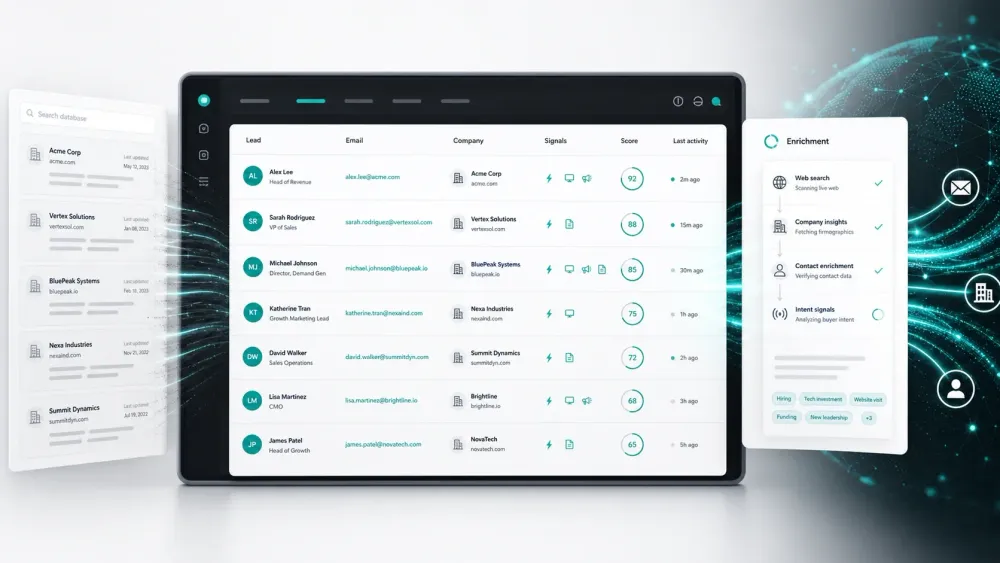
Every sales team I've ever talked to has the same complaint: they're paying for leads that bounce. After spending years building automation tools at Thunderbit, I decided to actually test twelve of the most widely discussed lead intelligence platforms side by side instead of just reading their marketing pages.
What I found was predictable and frustrating in equal measure. The B2B sales intelligence market is projected to reach roughly the high-single-digit billions by 2032, depending on category scope and forecast method. That is a lot of money chasing better prospecting. But Salesforce's 2026 State of Sales report still says reps spend nearly one full workday per week prospecting, teams use an average of eight tools, and 42% of reps feel overwhelmed by the stack. Meanwhile, B2B contact data keeps decaying in real time. That is the backdrop for this review, and why I think the conversation around lead intelligence needs to shift away from "who has the biggest database" toward "who gives me the most usable signal right now."
What Is Lead Intelligence Software (And Why Most Tools Give You the Same Leads)
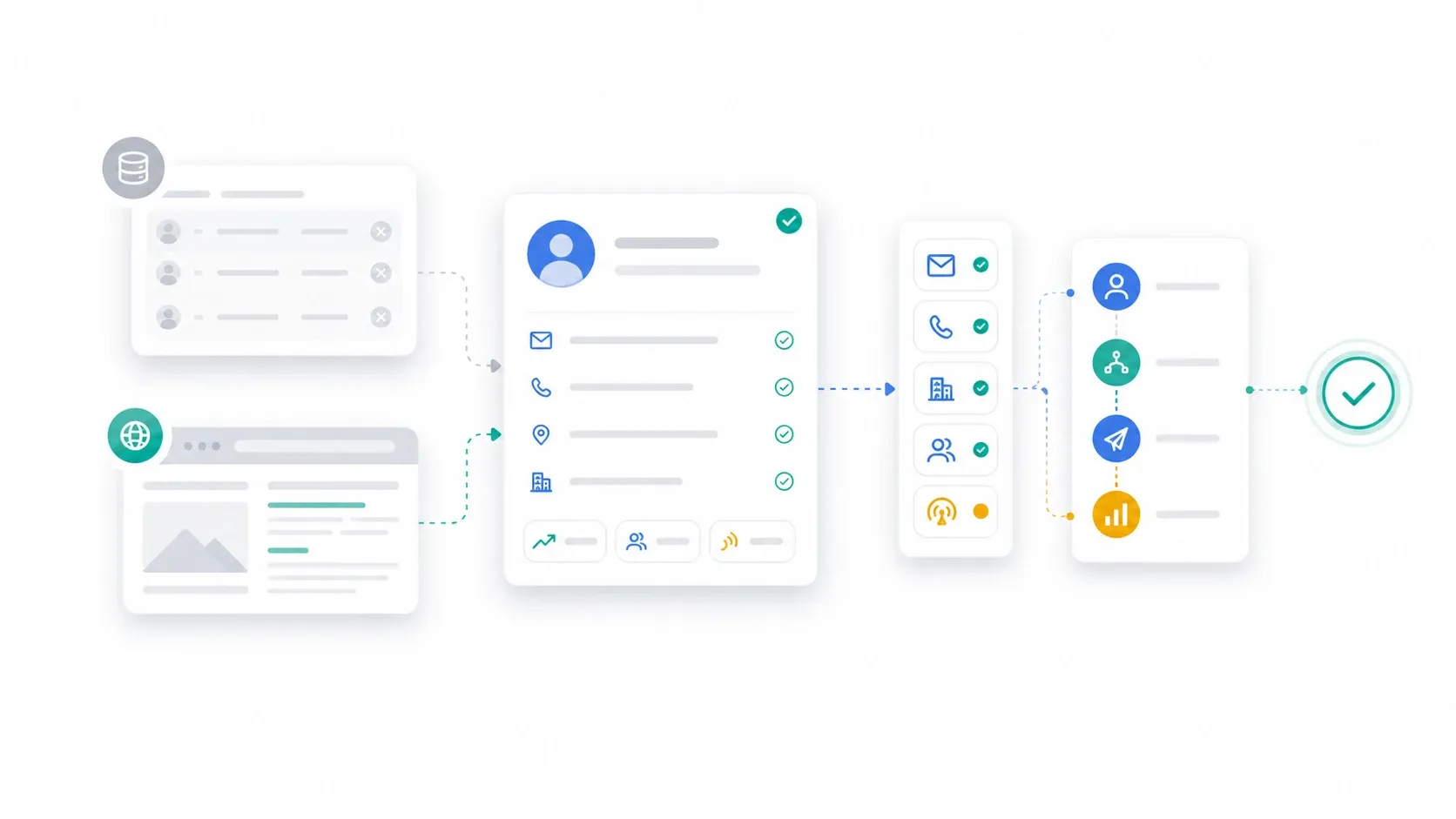
Lead intelligence software helps sales and marketing teams find, enrich, and prioritize prospects using external data: emails, direct dials, firmographics, intent signals, job changes, and buying behavior. A CRM records what your team has already done. Lead intelligence tells you who to contact and why now.
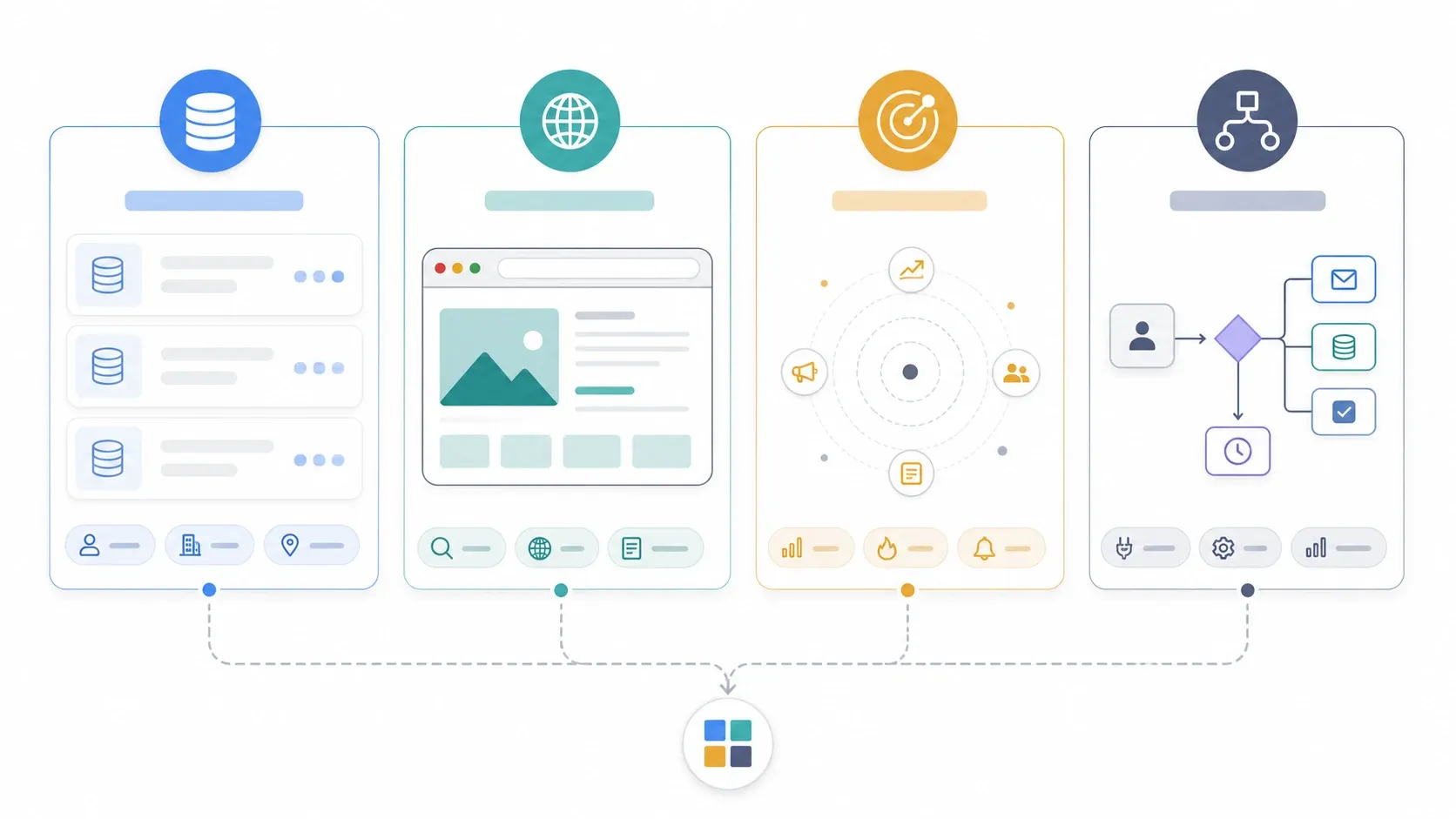
The uncomfortable truth most vendors will not say plainly is that many platforms draw from overlapping upstream sources. Public registries, business filings, social-profile crawls, contributed signature data, and a relatively small number of third-party co-ops feed multiple products. When you switch from Tool A to Tool B, you often get the same stale contacts inside a different UI.
Reddit threads are full of this frustration. One user put it bluntly: most vendors are repackaging the same underlying databases with a little AI layered on top. Another team reported 8% bounce from manual prospecting versus 23% from their automation tools. That gap is the real cost of the "same database problem."
Not every tool sources data identically. Some rely on licensed databases. Others blend crawling, contributed data, and intent signals. A few, including Thunderbit, skip the static database entirely and pull data from live pages you are already looking at.
Understanding how each tool gets its data is the first step to choosing one that actually solves your problem.
Check Whether Live Web Sourcing Fits Your Prospecting Workflow
If you want a compact category-level view before comparing the products one by one, this official ZoomInfo clip does a decent job explaining how sales-intelligence workflows evolved from contact lookup into broader signal and workflow systems.
How I Evaluated These 12 Lead Intelligence Software Tools
I evaluated each tool against six criteria that map directly to what real users complain about instead of generic marketing categories.
| Criteria | Why It Matters |
|---|---|
| Data Accuracy / Bounce Rate | The primary user pain point. If contacts bounce, you are paying for nothing. |
| Data Freshness / Refresh Cadence | B2B data decays fast. A bigger database is not better if it is stale. |
| Pricing Transparency (Cost Per Usable Contact) | Sticker price lies when a meaningful share of contacts bounce. |
| Best-Fit Team Size & Role | SDRs, demand gen, and RevOps do not need the same thing. |
| Coverage Outside US Markets | Accuracy drops fast outside major US markets for many tools. |
| CRM Integration Depth | With eight tools per team on average, fewer handoffs matter. |
Most competitor articles still stop at feature lists and logo grids. I wanted a shortlist that reflected actual buying tradeoffs.
My methodology was straightforward: sign up for free tiers or trials where available, run sample pulls, cross-check results against known-valid contacts where possible, and lean on user reviews, Reddit threads, pricing pages, and authoritative vendor materials where vendors hide the numbers.
1. Thunderbit
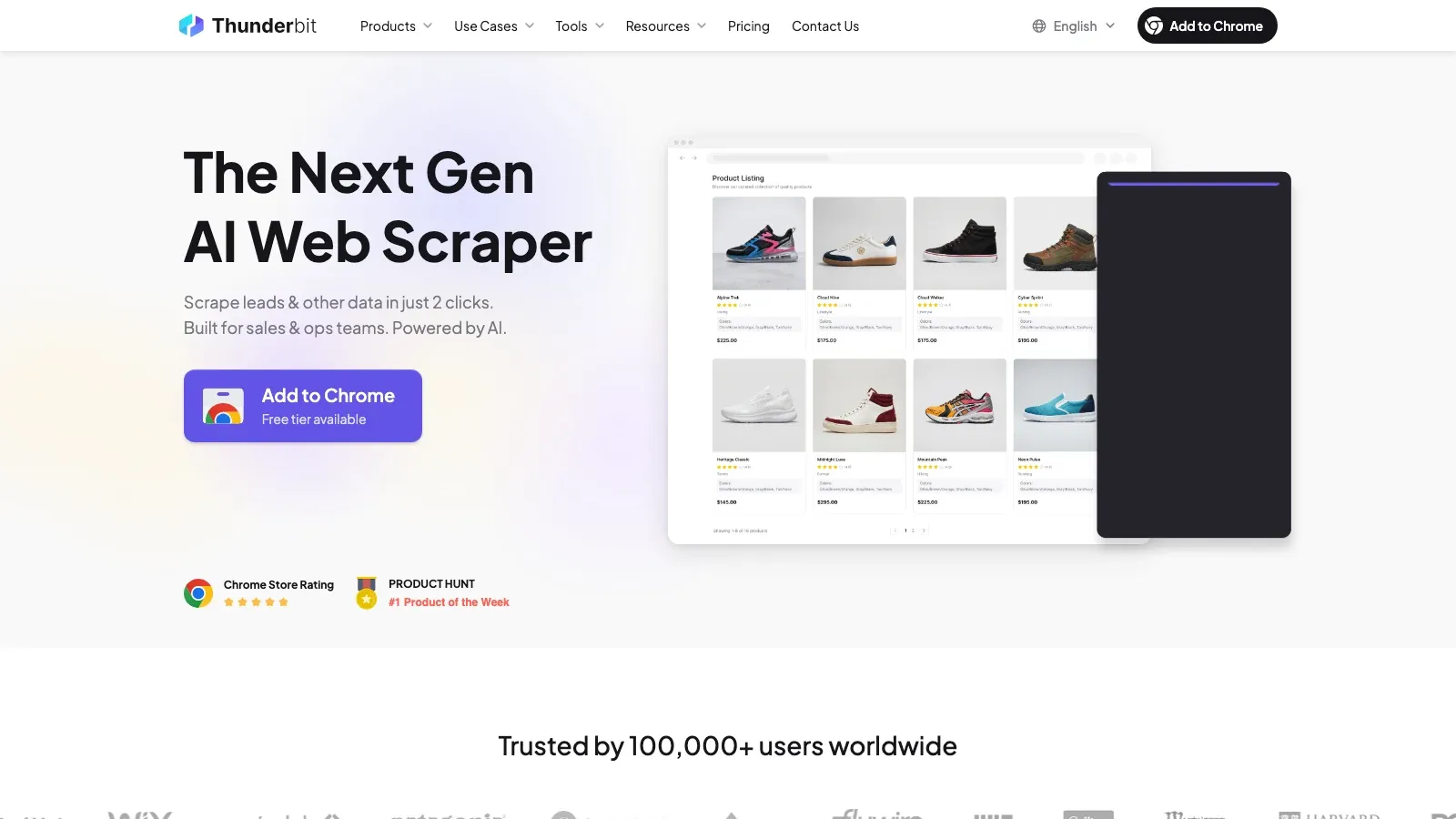
Thunderbit takes a fundamentally different approach to lead intelligence. Instead of querying a prebuilt database, it scrapes lead information such as emails, phone numbers, names, and company details directly from live websites in real time. The data is only as old as the page itself.
We built Thunderbit because we kept running into the same wall: niche directories, event speaker pages, international business listings, and association rosters simply are not in any commercial database. And when they are, the records are often months old. Thunderbit's workflow is two clicks: AI Suggest Fields and then Scrape. No code, no setup wizards, no onboarding call required.
Key Features for Lead Intelligence
- AI-powered field suggestion: Thunderbit reads page structure and recommends extraction columns automatically.
- Subpage scraping for enrichment: Scrape a directory, then have AI visit each detail page to pull contact info without another tool.
- Scheduled scraping: Monitor directories, career pages, or event rosters on a recurring basis.
- 34-language support: Helps with the international coverage gap that database tools often struggle with.
- Field AI Prompt: Label, categorize, or translate data during extraction instead of after export.
- Free email and phone number extractors: Useful for quick tests.
- Export to Excel, Google Sheets, Airtable, and Notion: Export is not hidden behind a separate enterprise layer.
Pricing and Credits
Thunderbit uses a transparent credit model: 1 credit = 1 output row. The Free tier gets you started, and the Starter plan is listed at $15/month for 500 credits. If you need more volume, higher tiers scale credits rather than seats.
One honest caveat: live scraping does not replace email verification. You are getting fresher data from the source page, but scraped emails should still be run through a verifier before bulk outreach.
Best for: Solo or startup sales teams, niche verticals, international markets, and anyone tired of stale database contacts.
2. ZoomInfo
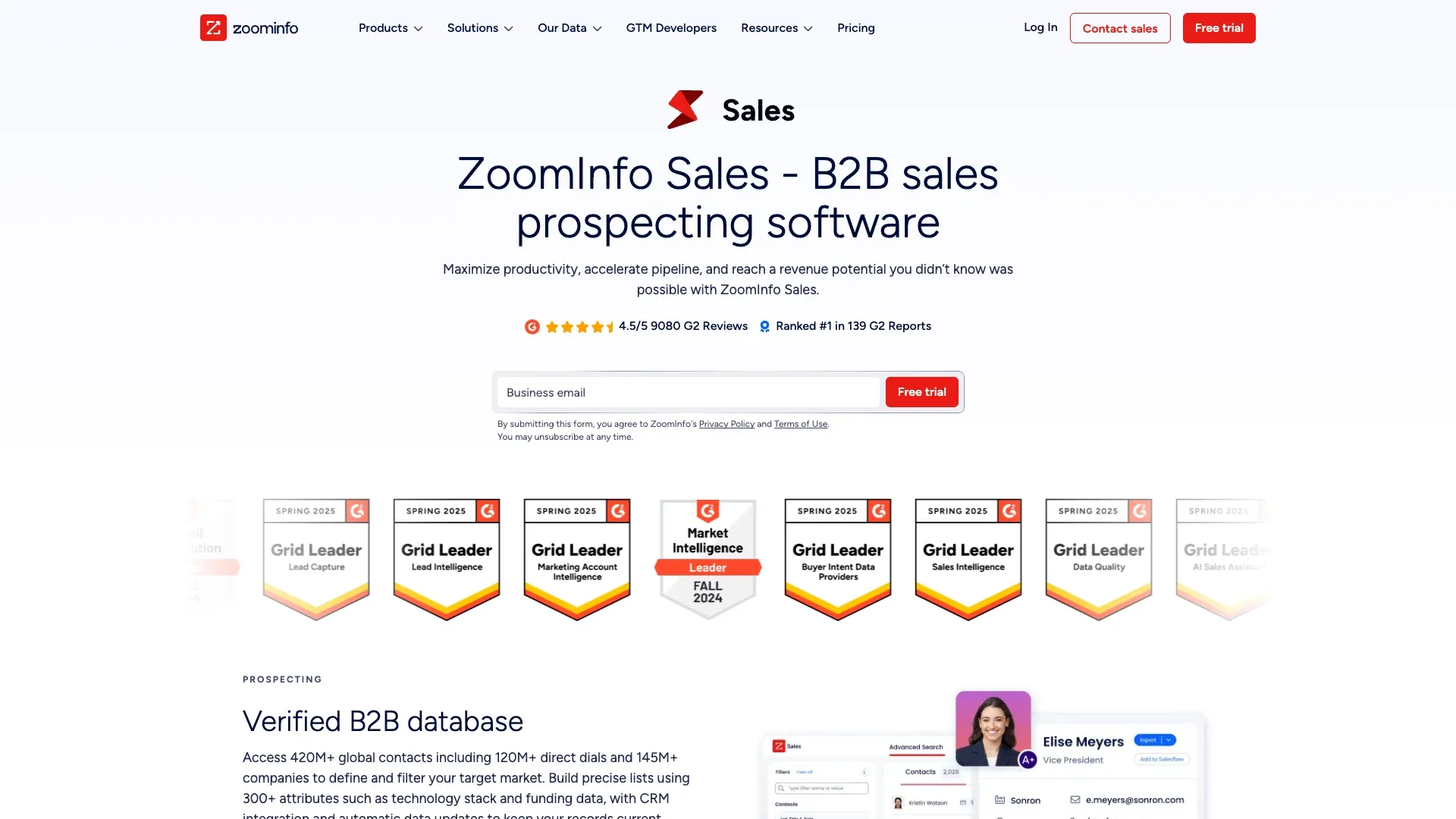
ZoomInfo is still the reference brand for enterprise sales intelligence, and it remains polarizing for good reason. Its current positioning is closer to a go-to-market operating system than a basic contact finder: large-scale company and contact intelligence, workflow layers, intent signals, and AI assistance.
- Key Features: Large-scale contact and company intelligence, Copilot AI recommendations, intent and account layers, and broad Salesforce-centric integrations.
- Pricing: Not publicly listed. Third-party benchmarks such as SpendHound continue to place entry pricing around the mid-five-figure annual range, with larger enterprise commitments rising from there.
- Best for: Enterprise sales orgs, ABM teams, and companies with large US-focused TAMs.
- Watch-outs: Expensive for smaller teams, weaker value outside the US, and user complaints about stale records have not disappeared.
3. Cognism
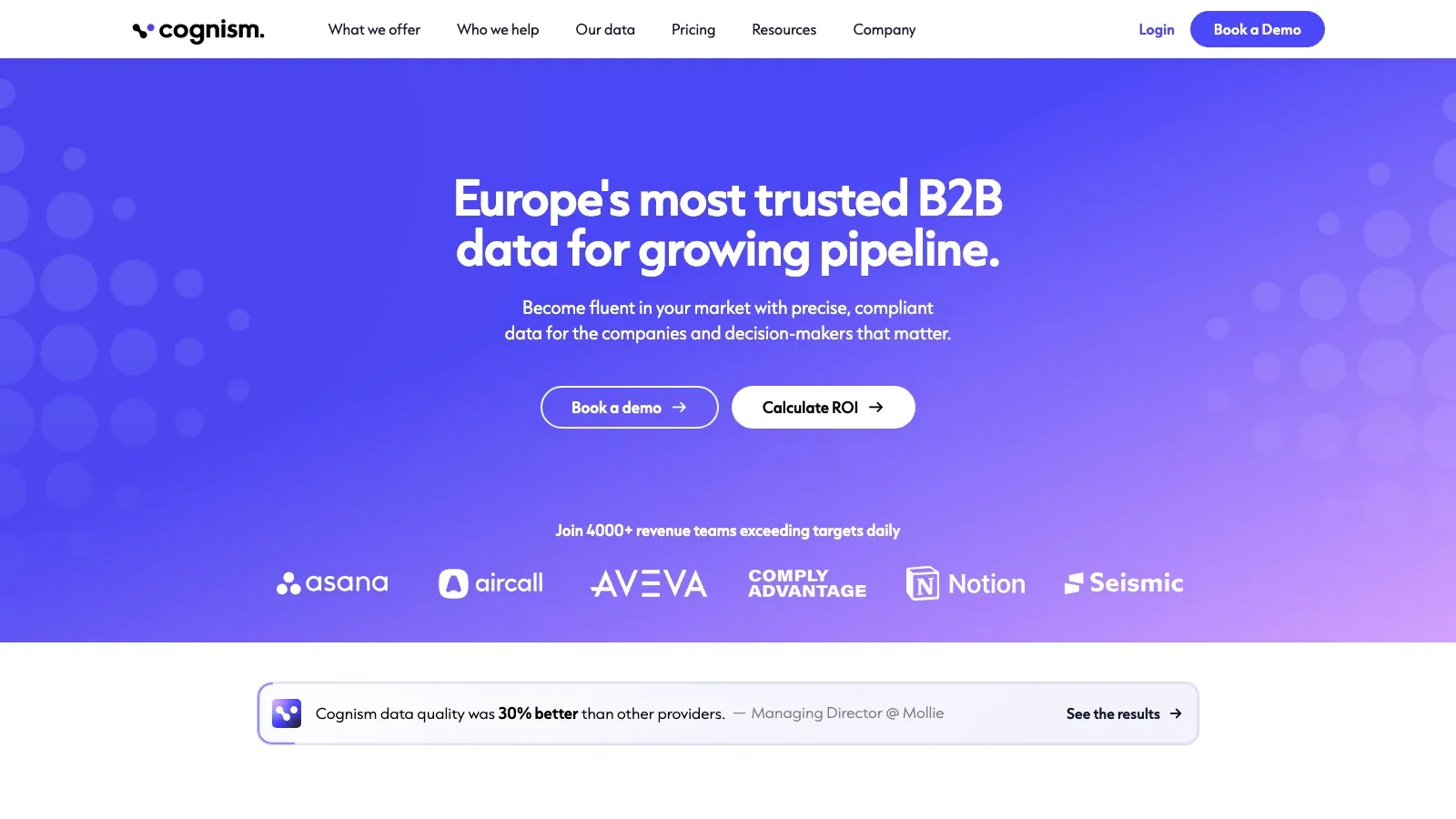
Cognism makes the most sense when EMEA coverage, GDPR comfort, and mobile-number quality matter more than having the biggest US database. Its data-quality materials still emphasize a proprietary fusion model drawing from registries, filings, press releases, and validated third-party sources.
- Key Features: EMEA-heavy database, Diamond Data phone-verification layer, Bombora intent integration, browser extension, and CRM enrichment.
- Pricing: Quote-based. Public third-party comparisons still place small-team packages in the low four figures monthly.
- Best for: Mid-market teams selling into Europe and compliance-sensitive industries.
- Watch-outs: US depth is less competitive than ZoomInfo, and very small teams may find the cost hard to justify.
4. Apollo.io
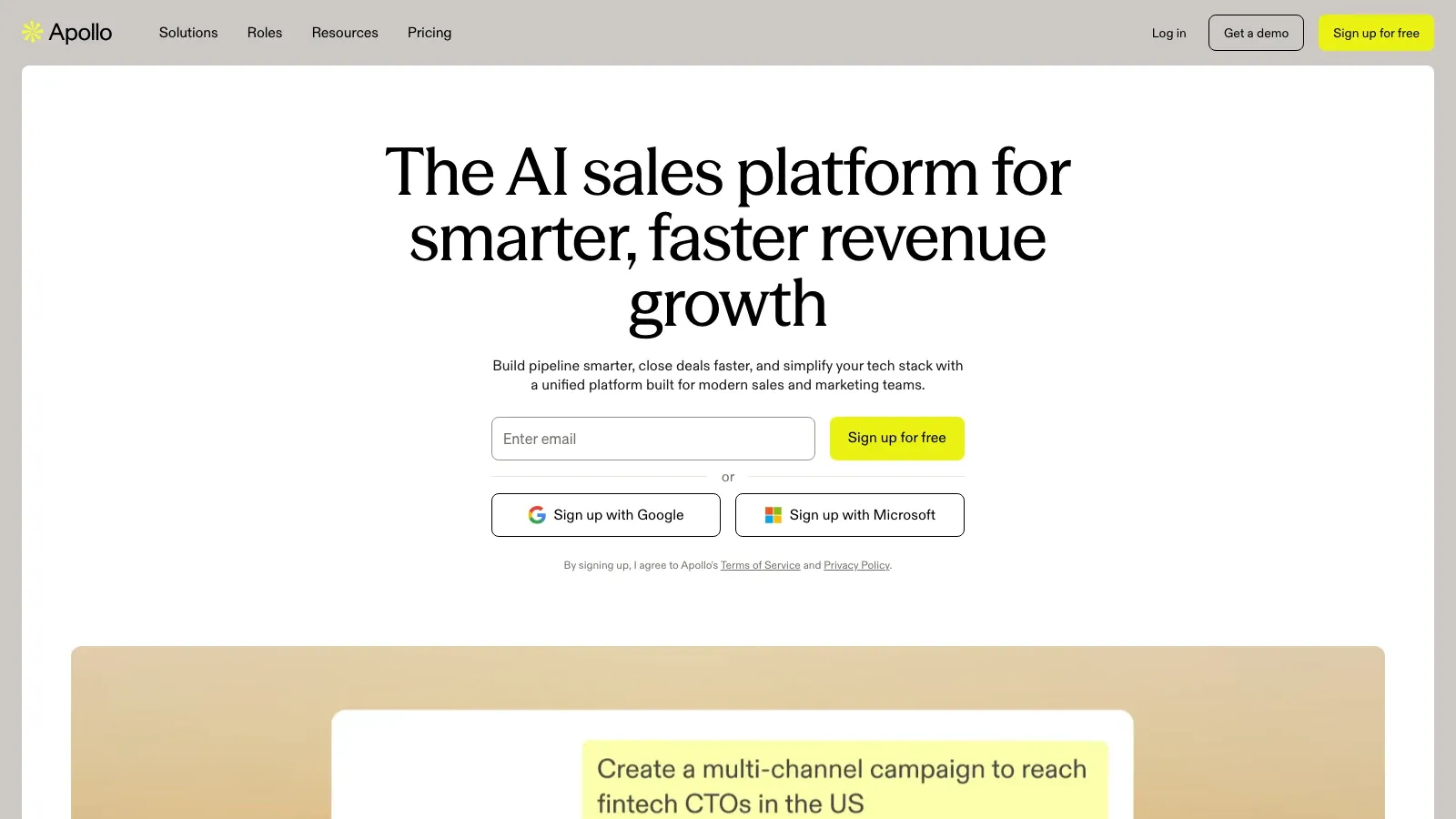
Apollo.io remains the clearest example of startup-friendly bundling in this category. It combines a large database, outbound sequencing, prospecting workflows, and basic automation inside one product. It also remains more transparent on entry pricing than most of the enterprise vendors around it.
- Key Features: Database plus outbound sequences, Chrome extension for LinkedIn-led prospecting, native CRM integrations, and lightweight workflow automation.
- Pricing: Apollo continues to publish a free tier and paid plans starting from $49/user/month for entry paid access, with higher tiers layered above that.
- Best for: Solo founders, startup SDRs, and lean teams that want one tool instead of several.
- Watch-outs: User complaints about bounce rates still show up regularly, international quality degrades faster than many buyers expect, and no single capability is best-in-class on its own.
5. 6sense
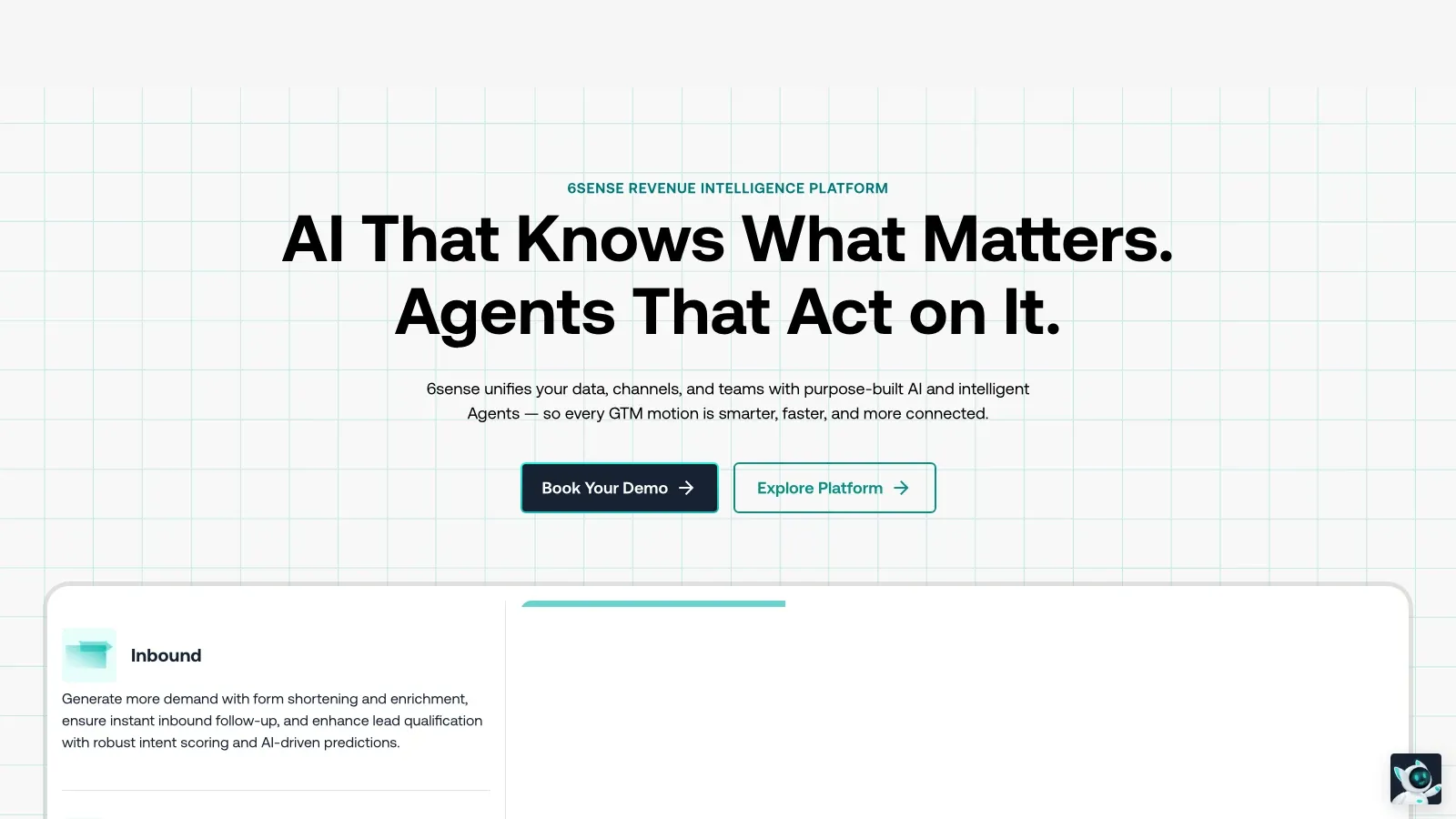
6sense is an ABM and revenue-AI platform first and a contact-database substitute second. Its platform messaging still centers on anonymous account identification, predictive analytics, buying-stage detection, and multi-stakeholder buying-team visibility.
- Key Features: Predictive account scoring, buying-stage and buying-team identification, anonymous visitor identification, and multi-channel orchestration.
- Pricing: Not public. Third-party benchmarks continue to place it in the five-figure to low-six-figure annual range.
- Best for: Enterprise marketing and RevOps teams with mature ABM programs.
- Watch-outs: Overkill for lightweight prospecting, lengthy implementation, and it does not solve "I need a direct dial right now."
6. Clearbit
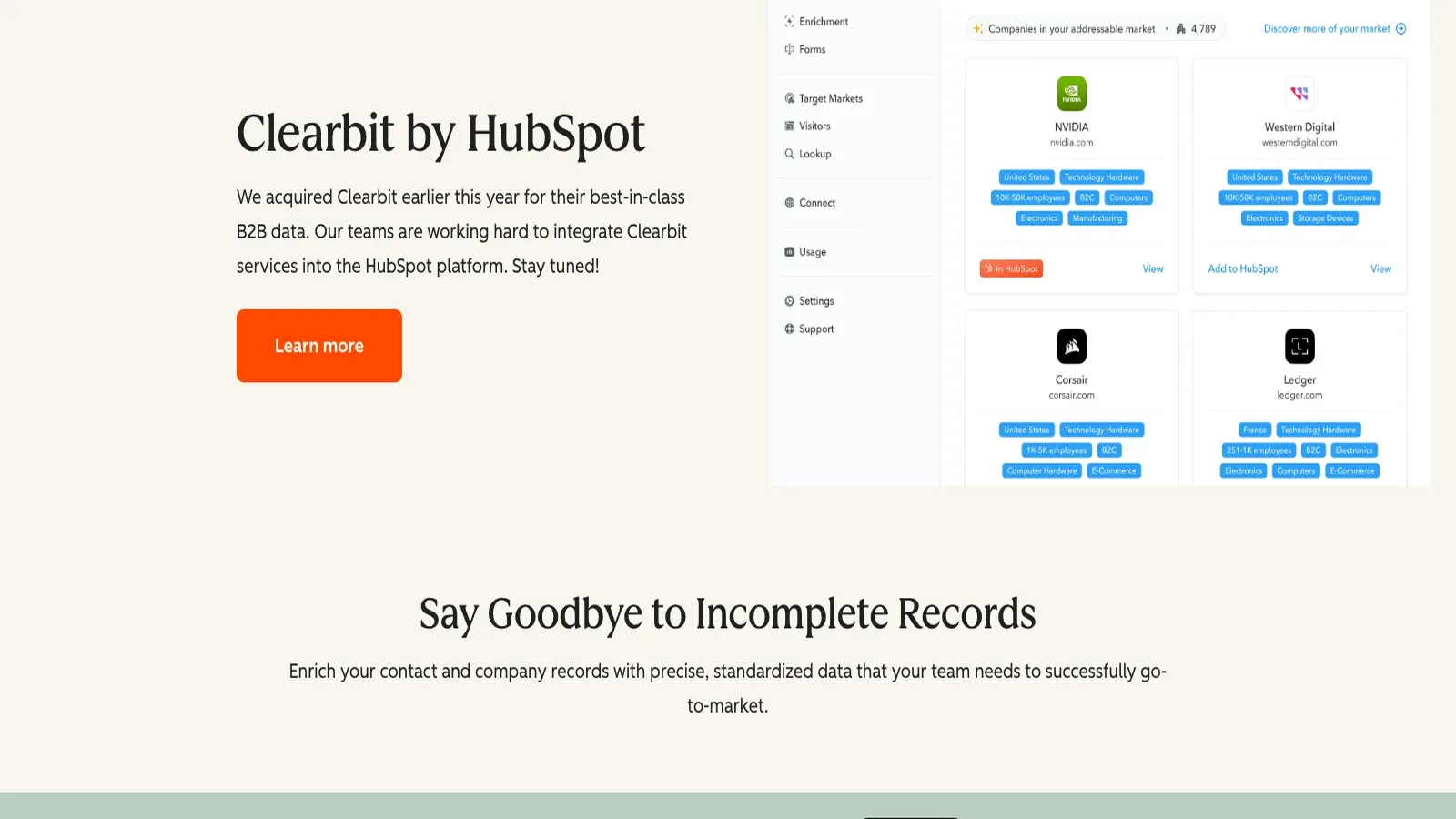
Clearbit is no longer the standalone lightweight free-tool brand many teams remember. Post-acquisition, it sits inside HubSpot and is now much more firmly positioned around enrichment, buyer intent, and HubSpot-native workflows. The older free Clearbit tools were sunset on April 30, 2025, which matters because many older comparison pages still talk about them as if they are independently available.
- Key Features: Firmographic enrichment, visitor identification, and HubSpot-native data workflows.
- Pricing: Bundled into HubSpot's broader commercial model rather than sold as a simple standalone contact database.
- Best for: Demand-gen teams already standardized on HubSpot and focused on inbound enrichment.
- Watch-outs: Not a strong answer for outbound list building in 2026 and not a standalone searchable contact graph in the old sense.
7. Lusha
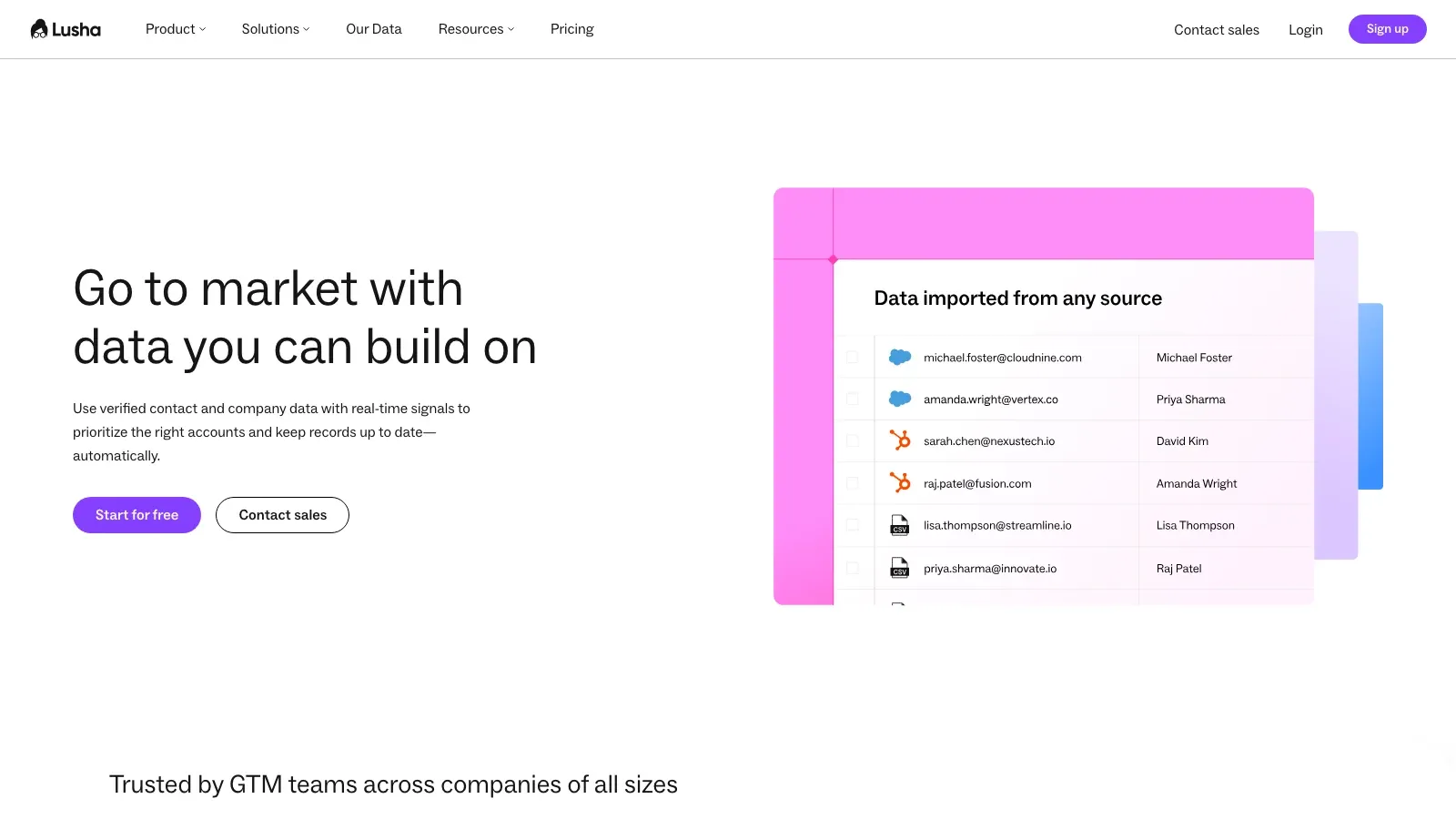
Lusha is still best understood as a lightweight lookup layer for individual contacts rather than a full high-volume prospecting system. Its pricing remains refreshingly explicit, which is useful because the credit model is also where the tradeoff becomes clear.
- Key Features: One-click email and phone lookup, browser extension, simple CRM workflows, and transparent credits.
- Pricing: The public pricing page continues to show Starter at $49.90/month for 400 credits, Professional at $69.90/month for 600 credits, and Premium at $399.90/month for 3,400 credits.
- Best for: Solo SDRs who occasionally need a phone number or email for a specific person right now.
- Watch-outs: Credit consumption gets expensive fast for phone-heavy workflows because direct dials consume far more credits than emails.
8. Dealfront
Dealfront remains strongest for European account intelligence and website-visitor identification. Its data materials still emphasize official trade registers, public websites, financial filings, social sources, and partner datasets.
- Key Features: Website visitor identification by company, European company intelligence, trigger events, and GDPR-friendly positioning.
- Pricing: Quote-based. Credits are generally tied more to export and sync motions than basic searching.
- Best for: Mid-market teams selling into DACH and broader European markets.
- Watch-outs: Limited US depth and more account-level than contact-level in orientation.
9. Bombora
Bombora is the easiest product on this list to misclassify. It is not a contact database. It is an intent-data layer built from a large B2B content co-op and is often embedded inside broader systems such as Cognism and ZoomInfo.
- Key Features: Cooperative intent signals, deep topic taxonomy, and integration into broader ABM and prospecting stacks.
- Pricing: Not public. Usually sold as a five-figure annual layer or consumed indirectly through another platform.
- Best for: Marketing and demand-gen teams that already have contacts but need better timing signals.
- Watch-outs: Not sufficient on its own for list building or contact acquisition.
10. Clay
Clay is orchestration infrastructure, not a source-of-truth database. That distinction matters. Clay connects teams to many providers, automates enrichment and routing, and is often the glue layer for stacks that combine databases, scraping, enrichment, and outreach.
- Key Features: Multi-provider enrichment orchestration, AI research agents, workflow automation, and broad provider flexibility.
- Pricing: Clay's current pricing page still points to a paid entry point in roughly the $149-$185/month range depending on billing mode and package structure, with larger plans scaling sharply from there.
- Best for: RevOps teams building custom enrichment flows and teams that want to combine multiple sources instead of betting on one vendor.
- Watch-outs: Output quality depends on the providers you connect, the learning curve is real, and credit discipline matters.
11. Demandbase
Demandbase is a full ABM platform combining account identification, intent, advertising, and sales intelligence. It behaves more like an ABM execution layer than a prospecting database.
- Key Features: Account scoring and selection, anonymous visitor identification, advertising tied to target-account strategy, and deeper enterprise GTM workflows.
- Pricing: Enterprise quote-based. Public marketplace signals continue to confirm serious enterprise-budget positioning.
- Best for: Enterprise marketing organizations running mature ABM programs.
- Watch-outs: Too much platform for teams that simply need a better prospect list, and implementation is rarely lightweight.
12. LeadIQ
LeadIQ is strongest when a rep is actively prospecting and wants to capture or enrich contacts in the moment instead of operating from a giant centralized database.
- Key Features: Real-time capture while prospecting, job-change alerts, and integrations with Salesforce, Outreach, and Salesloft.
- Pricing: LeadIQ's pricing page still highlights a free plan and paid usage that scales with credits and seats, with public references commonly putting practical paid entry around the $100/month range.
- Best for: SDR and BDR teams doing heavy LinkedIn or Sales Navigator prospecting.
- Watch-outs: Narrower database depth than ZoomInfo or Apollo and better thought of as a capture tool than a full intelligence platform.
Lead Intelligence Software Comparison Table: All 12 Tools Side by Side
| Tool | Best For | Data Sources | Accuracy Range | Approx. Starting Price | CRM Integrations | Standout Feature |
|---|---|---|---|---|---|---|
| Thunderbit | Live niche sourcing | Live public web pages and subpages | Freshness tied to page | $15/mo | Sheets, Airtable, Notion, exports | AI Suggest Fields plus subpage scraping |
| ZoomInfo | Enterprise US GTM | Hybrid first-party plus third-party database | Not published; user complaints persist | Mid-five-figure annual benchmark | Salesforce and major GTM stack | Enterprise breadth and workflows |
| Cognism | EMEA plus compliance | Public registries, filings, validated vendors | Phone-verified layer | Quote-based | Salesforce, HubSpot | EMEA coverage and Diamond mobile data |
| Apollo.io | Startup all-in-one | Database plus engagement stack | Vendor claims high verification; users report mixed results | $49/user/mo | Salesforce, HubSpot, sales tools | Database plus sequencing in one |
| 6sense | Enterprise ABM | First-party plus partner plus third-party intent | Not a direct contact tool | Quote-based | Enterprise GTM stack | Predictive account timing |
| Clearbit | Inbound enrichment | HubSpot-native enrichment layer | Not comparable to outbound tools | HubSpot-bundled | HubSpot | Firmographic enrichment |
| Lusha | One-off lookups | Credit-based lookup database | Not published | $49.90/mo | CRM and extension workflows | Fast direct-dial lookup |
| Dealfront | Europe account intel | Trade registers, public web, partner data | Not published | Quote-based | CRM sync and export | European visitor intelligence |
| Bombora | Intent signals | B2B-site co-op | Not a contact database | Quote-based | Layer into ABM stack | Intent timing depth |
| Clay | Multi-source orchestration | Dozens of providers | Depends on selected providers | ~$149-$185/mo | CRM and outbound automation | Workflow orchestration |
| Demandbase | ABM execution | Account, intent, and advertising layers | Not a direct contact database | Enterprise quote-based | Enterprise GTM stack | Full-funnel ABM layer |
| LeadIQ | Live SDR prospecting | Mixed public and private sources | Not published | ~$100/mo benchmark | Salesforce, Outreach, Salesloft | Capture while prospecting |
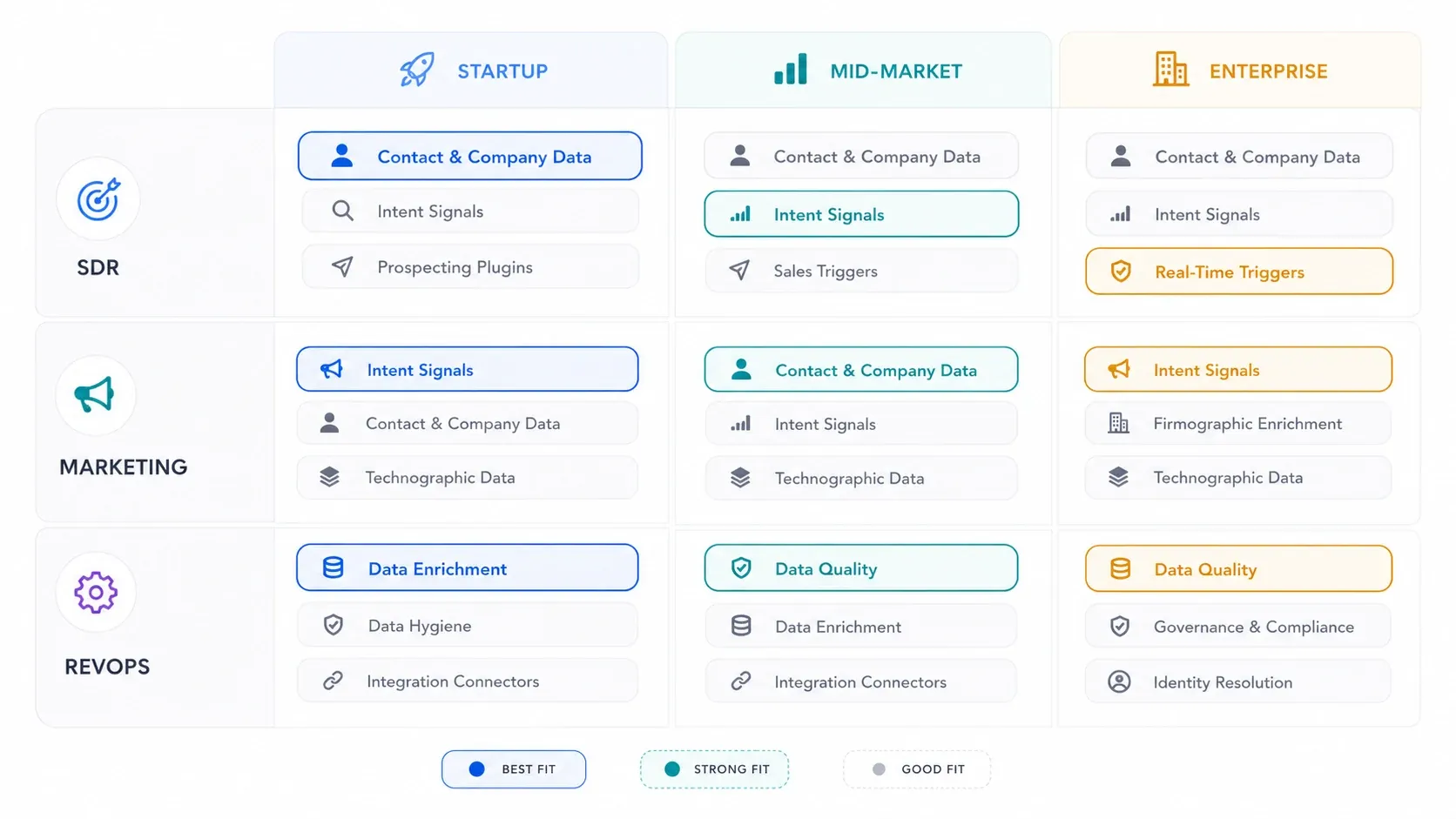
Which Lead Intelligence Software Fits Your Team Size and Role
This is the matrix most competitor articles still skip, and it is the one I wish I had when evaluating these tools for our own team.
| Solo/Startup (<10 reps) | Mid-Market (10-50 reps) | Enterprise (50+) | |
|---|---|---|---|
| SDR/BDR | Apollo, Thunderbit, Lusha | Cognism, LeadIQ | ZoomInfo, 6sense |
| Marketing/Demand Gen | Clearbit, Thunderbit | Bombora, Demandbase | 6sense, Demandbase |
| RevOps/Ops | Clay, Thunderbit | Dealfront, Clay | ZoomInfo, 6sense |
Why does Thunderbit show up across multiple cells? Because it fills the gaps that database tools do not cover well: niche verticals, international markets, event rosters, directories, and live-page sourcing. It is not trying to replace ZoomInfo for enterprise US account coverage. It is solving a different problem.
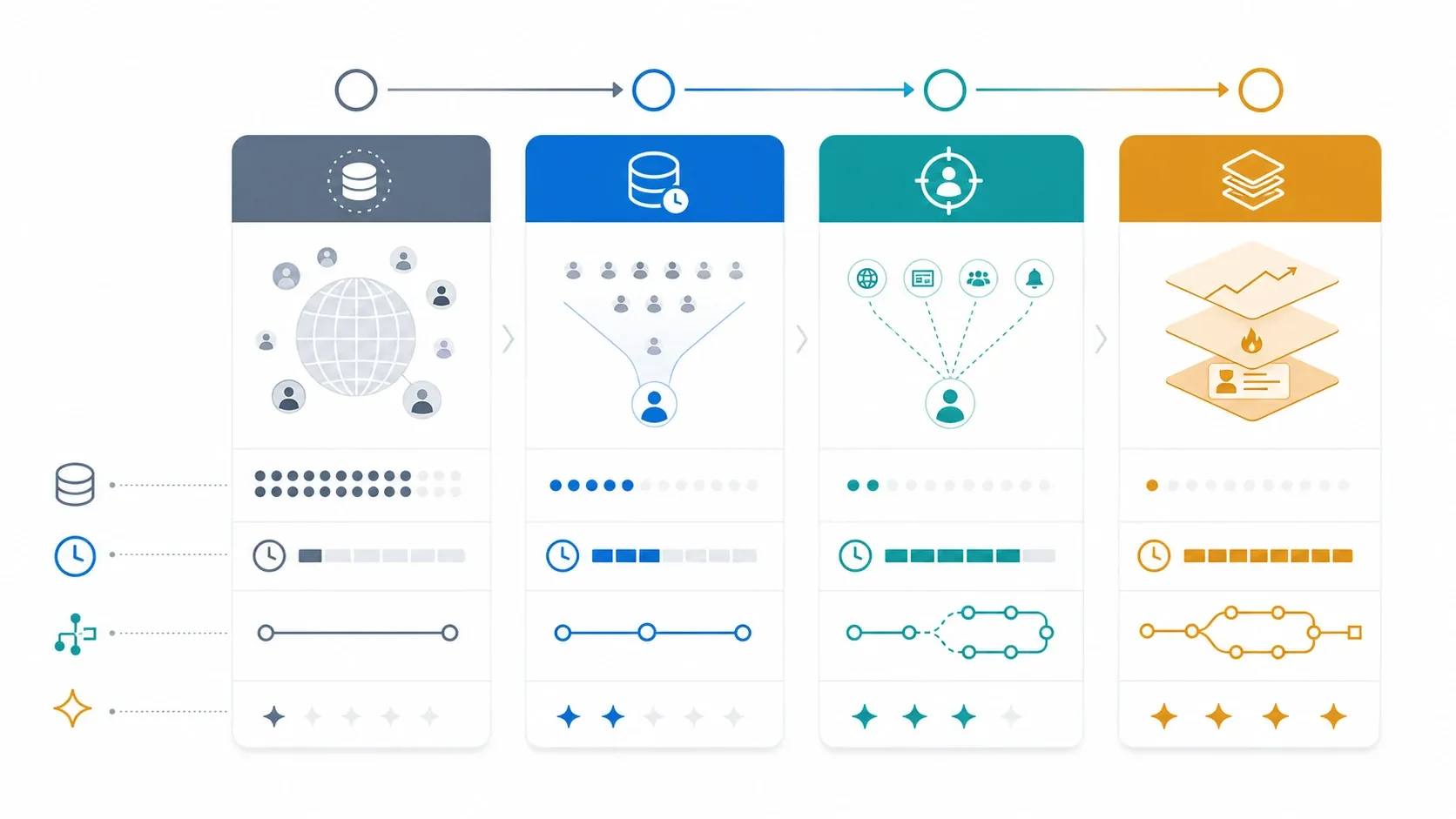
The smartest stacks I see in 2026 are combined stacks: Apollo or ZoomInfo for broad US coverage, Thunderbit for niche and live pages, Bombora or 6sense for timing signals, and Clay for orchestration.
Run a Free Lead-Source Test on a Live Directory or Event Page
If you are evaluating whether your team needs a single database or a multi-source operating layer, this official Clay video is useful because it frames Clay correctly: not as another database, but as the orchestration layer on top of multiple systems.
The True Cost Per Usable Contact: A Pricing Reality Check
Sticker price is misleading when a meaningful share of contacts bounce or never connect. Here is the formula I use:
Effective Cost = (Monthly Price ÷ Credits Used) ÷ (1 - Bounce Rate)
Worked example: a tool at $99/month for 500 contacts with 20% bounce does not cost $0.20 per contact. It costs $0.25 per usable contact.
| Tool | Public Plan Used | Raw Unit Math | Bounce / Verification Caveat | Effective Cost Note |
|---|---|---|---|---|
| Thunderbit | $15/mo, 500 rows | $0.03/row | Not a database bounce issue; verify emails separately | Cheapest extraction, but add verifier cost |
| Apollo.io | $49/user/mo entry tier | Export capacity varies by plan | Cannot compute honestly from public pricing alone | Not fully transparent on usable-contact math |
| Lusha Starter | $49.90/mo, 400 credits | Email: $0.125; Phone: $1.25 (10 credits) | At 20% email bounce: about $0.156 per usable email | Phone-heavy workflows get expensive fast |
| LeadIQ | ~$100/mo benchmark | Email credits vary by package | At 20% bounce, real usable cost rises quickly | Hard to justify as a bulk database |
| Clay | ~$149-$185/mo benchmark | Depends on provider mix and credit burn | Quality depends on connected providers | Great when the workflow is disciplined |
Hidden costs worth watching:
- Annual contracts with auto-renew windows.
- Add-on modules for intent, enrichment, or exports.
- Per-seat expansion that punishes collaboration.
- Credit systems that look generous until phone reveals or premium enrichments cost far more than basic lookups.
2026 Shift: From Static Databases to Agentic Lead Intelligence
The competitive edge in lead intelligence is shifting. "Bigger database" is not the moat it used to be.
Three developments matter most:
- Agentic AI scrapers that browse the web like a human researcher. Thunderbit's AI reads any page and structures data automatically without waiting for a vendor to update a central index.
- LLM-powered enrichment that turns raw public data into labeled, categorized intelligence during extraction rather than in a separate cleanup step.
- Privacy regulation shifts that make first-party and publicly available web data relatively more defensible than opaque third-party data-sharing chains. The IAPP's US state privacy tracker continues to expand, and European enforcement pressure remains active.
The durable advantage in 2026 is less "who owns the biggest stale database" and more "who helps me turn live public and intent signals into usable workflow fastest."
When to Skip the Database Entirely: Direct Web Scraping for Lead Intelligence
For common enterprise US accounts, database tools like ZoomInfo and Cognism often work well enough.
But many lead-intelligence needs simply are not covered well in commercial databases:
| Scenario | Database Tool Works? | Direct Scraping Better? | Why |
|---|---|---|---|
| Enterprise account contacts (US) | Usually yes | Sometimes overkill | Databases already cover many of these |
| Niche vertical directories | Often sparse or outdated | Yes | The source page is the truth |
| International and non-English markets | Often weaker coverage | Yes | Live-page sourcing is language-agnostic |
| Event and conference attendees | Rarely covered well | Yes | Speaker and roster pages exist publicly but are not normalized |
| Real-time job-posting signals | Often delayed | Yes | Live career pages beat refresh cycles |
One Reddit thread reported 8% bounce from manual prospecting versus 23% from automation tools. That does not prove every database is bad. It does show why "live source quality" matters more than vanity database size in some workflows.
This is where a live-sourcing workflow becomes useful in practice. The official Thunderbit tutorial below is specific enough to show the execution model clearly: identify a public lead source, let AI define fields, and export structured contact data from the live page instead of waiting for a database vendor to refresh its index.
Final Verdict: How to Choose the Right Lead Intelligence Software
After testing all twelve, my decision framework is simple:
- Startup SDR on a budget: Apollo.io for the bundle, Thunderbit for the gaps.
- Enterprise with large ABM programs: ZoomInfo, 6sense, or Demandbase.
- Selling into Europe: Cognism or Dealfront.
- Need niche, multilingual, or live public data: Thunderbit.
- Need orchestration across multiple sources: Clay plus a verified data source.
- Need occasional quick lookups: Lusha or LeadIQ.
The strongest modern stack is rarely one product. It is usually a combination. Thunderbit for live niche sourcing, a database vendor for broad coverage, an intent layer for timing, and orchestration where the workflow justifies it.
Try Thunderbit's Free Tier on a Real Lead Source
If you want to see what agentic lead intelligence looks like in practice, try Thunderbit's free tier on a directory, speaker page, or association list that is not well covered in a commercial database. That is where the difference becomes obvious fastest.
Related Reading
If you are building a multi-source prospecting workflow instead of relying on a single static database, these next guides are the most relevant follow-ups:
- AI Web Scraping: What It Is and Why It Changes Lead Sourcing
- How to Scrape Any Website Using AI
- What Is List Crawling?
- How to Automate a Sales Pipeline After Lead Capture
FAQs
1. What is the difference between lead intelligence software and a CRM?
A CRM stores relationship history: deals, notes, activities, and pipeline stages. Lead intelligence software adds external data such as contact info, firmographics, intent signals, and buying behavior. It tells you who to contact and why now, while the CRM records what happened after outreach started.
2. How accurate is lead intelligence software data in 2026?
It varies widely. Vendors publish aggressive accuracy claims, but practitioner reports still describe meaningful bounce rates from popular platforms. The honest answer is that accuracy depends on the tool, the market, the workflow, and how recently the underlying record was refreshed.
3. Can lead intelligence software work well outside the US?
Some tools perform materially better than others outside the US. Cognism and Dealfront have clearer European positioning. For multilingual or non-English markets, direct web-scraping tools like Thunderbit are often stronger because they are not limited by a fixed US-centric database.
4. How much does lead intelligence software typically cost?
The category ranges from free tiers and sub-$100 monthly entry plans to five-figure or six-figure annual enterprise contracts. The more honest comparison is cost per usable contact after accounting for bounce rates, credit burn, and verification costs.
5. What is "agentic" lead intelligence and why does it matter?
Agentic lead intelligence means AI systems that actively browse websites and extract structured data in real time, more like a human researcher than a static database query. It matters because it improves freshness, covers niche sources databases miss, and adapts to new websites without waiting for a vendor to update an index.




