I Tested 8 Lead Generation Chrome Extensions — Here's My Pick

Last Updated on April 28, 2026

Most sales reps spend actually selling. The rest? Admin work, manual prospecting, copying names and emails from websites into spreadsheets, and staring at LinkedIn profiles wondering if that phone number is still valid.

I've been building automation tools at for a while now, and the question I keep hearing from sales teams, founders, and ops people is always some version of: "Which Chrome extension should I install to get more leads, faster, without blowing my budget?" So I did what any reasonable person would do — I installed 8 of the most popular lead generation Chrome extensions, ran them through real prospecting workflows, and took notes on everything from data accuracy to free-tier math. What surprised me most: the usual "best lead gen extension" lists only cover LinkedIn email finders. But a huge chunk of prospecting happens off LinkedIn — on directories, review sites, conference pages, local business portals, and niche industry listings. This guide covers both worlds.

What Actually Counts as a Lead Generation Chrome Extension in 2026

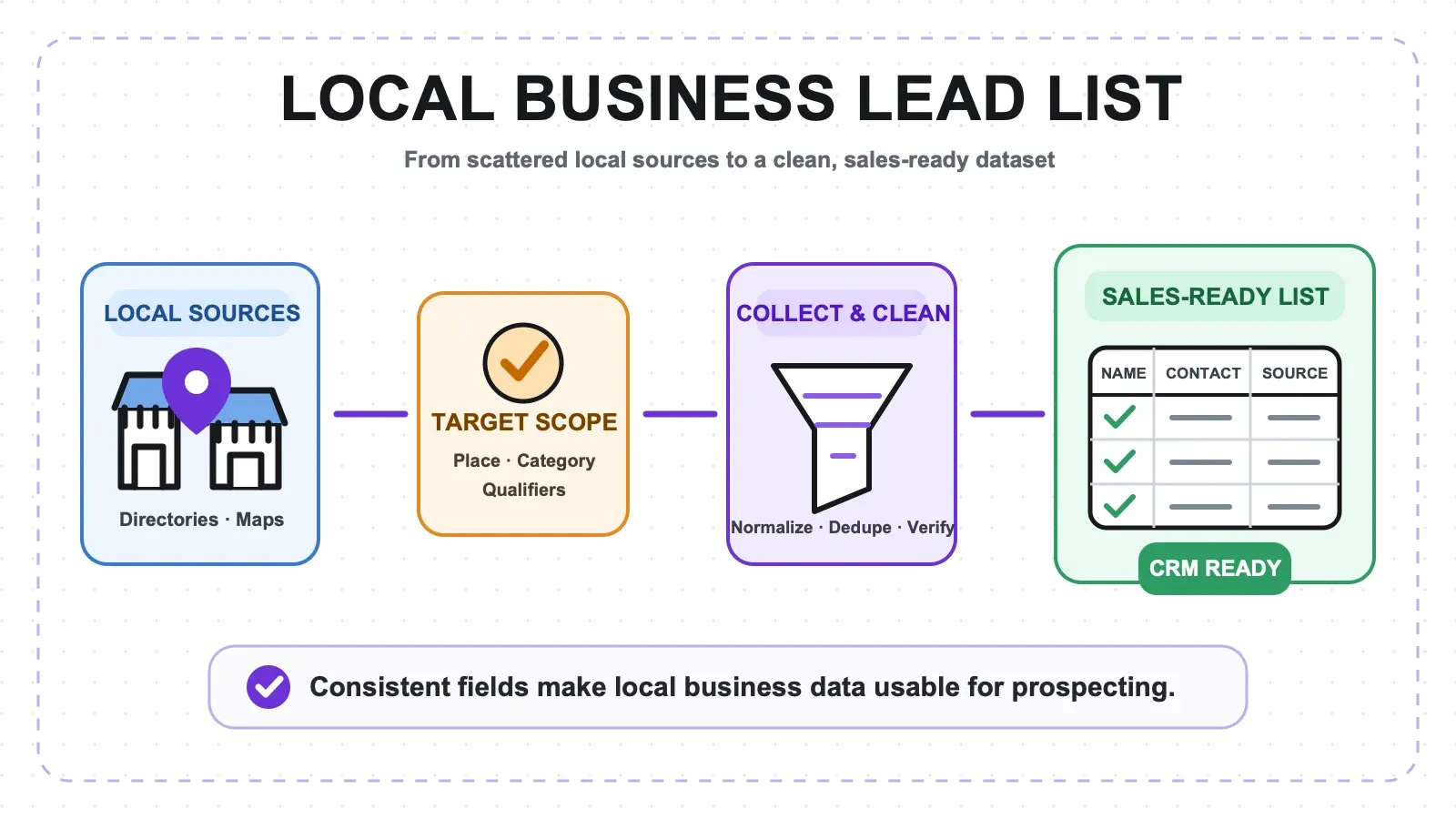
If you search "lead generation Chrome extension," you'll mostly find lists of LinkedIn email finders. And sure, those are useful. But the real definition is broader: a lead generation Chrome extension is any browser add-on that turns the web pages you're already looking at into usable lead lists — names, emails, phones, companies, and whatever else you need, exported to a spreadsheet or CRM.

That matters because not every team's leads live on LinkedIn. Local agencies prospect from Yelp and chamber directories. Ecommerce operators source from supplier listings and competitor pages. Real estate agents pull from Zillow and MLS portals. Recruiters sometimes start on GitHub or niche community sites.

This roundup spans the full range: LinkedIn overlays, domain email finders, recruiter-focused extensions, and AI web scrapers that extract contacts from virtually any structured page. Here are the 8 tools, and what makes each one worth (or not worth) your time.

How I Evaluated These 8 Lead Generation Chrome Extensions

Every tool was tested on real prospecting tasks — not just feature pages. Six criteria guided the evaluation:

CriterionWhy It Matters
Data AccuracyBad data wastes SDR time, drives bounce, and damages sender reputation. Apollo's own guidance says senders should aim for under 2% bounce to preserve deliverability.
LinkedIn SafetySome extensions merely read websites; others inject overlays or automate LinkedIn activity — which can trigger restrictions.
Free Tier GenerosityFree plans range from "real work" to "barely a demo." Credits are not standardized: 1 credit might mean 1 email, 1 phone, or 1 exported row depending on the tool.
CRM/Export OptionsA lead is only useful if it moves into Sheets, CSV, Airtable, Notion, or your CRM.
Data Sources CoveredLinkedIn-only tools solve a different problem than website and directory scrapers.
Ease of SetupTime from install to first usable lead matters more than feature-count theater.

One more thing: Gartner's widely cited data-quality benchmark puts the average cost of poor data quality at for organizations. That number alone should make anyone think twice before trusting a tool with a 30% bounce rate.

1. Thunderbit

is the lead generation Chrome extension our team built for a simple reason: most leads don't live on LinkedIn. They're scattered across directories, listing pages, review sites, event attendee lists, real estate portals, government databases, and company websites. Thunderbit is an AI web scraper that reads any structured web page and turns it into a clean, exportable lead list — no code, no setup, no maintenance.

The workflow is genuinely two clicks. Open the extension, click AI Suggest Fields, and Thunderbit's AI reads the page and proposes columns like Name, Email, Phone, Company, Address, or whatever fits. Click Scrape, and the data populates a table you can export to Google Sheets, Excel, Airtable, or Notion — all for free.

The feature that separates Thunderbit from typical email-finder extensions is subpage scraping. Say you scrape a chamber of commerce directory and get 50 business names. Thunderbit can then visit each business's detail page and enrich your table with direct emails, phone numbers, specialties, and more. That turns a shallow list into a rich lead database in minutes.

There's also scheduled scraping — set it to monitor a listing page weekly and get notified when new leads appear. This is huge for ecommerce operators tracking competitor product pages or real estate agents watching new listings.

tool01thunderbit_v4.png

Key Features for Lead Generation

  • AI Suggest Fields: Automatic column detection — no manual selector setup
  • Subpage scraping: Enrich shallow lists by visiting each profile or detail page
  • Free email and phone extractors: One-click extraction from any page
  • Export to Sheets, Excel, Airtable, Notion: All free, no paywall
  • Cloud scraping: Handle up to 50 pages at a time; browser scraping for login-required sites
  • 34 languages supported
  • Instant templates: Pre-built scrapers for popular sites like Amazon, Zillow, Yelp, and more

Where Thunderbit Shines (and Where It Doesn't)

StrengthsLimitations
Works on any structured website, not just LinkedInNot a giant hidden B2B contact database like Apollo or Lusha
AI adapts to layout changes — no maintenanceBest at visible page data, not invisible database-only enrichment
Subpage scraping turns shallow lists into rich lead tablesLess useful if your workflow is entirely Sales Navigator-driven
Page-based pricing: one scrape of a 50-row directory = 50 leadsCost per record depends on how much enrichment you ask for
Low LinkedIn safety risk — doesn't need LinkedIn at all

Free tier: 6 pages of scraping with unlimited rows per page. Paid: .

Best for: Sales, marketing, and ops teams whose leads live on directories, listing pages, review sites, or any website outside LinkedIn.

2. Apollo.io

is the closest thing to a full-cycle sales platform with a Chrome extension bolted on. The extension overlays LinkedIn profiles with contact data, buying signals, and conversation starters, but the real value is the broader Apollo ecosystem: a massive B2B database (), built-in sequencing, intent data, and deep CRM integrations with .

In my testing, Apollo was the most feature-rich tool in the set — but also the one where the gap between "headline features" and "actual free-tier experience" was widest. The free plan offers about 50 credits and 5 mobile credits, but exporting a fully enriched contact can consume multiple credits, so the real yield is closer to 8–10 usable records on free.

Data accuracy is a mixed bag. Apollo's marketing claims depending on the page, but practitioner sentiment is still mixed enough that I'd recommend running a separate verification step before launching any outbound campaign. The sequencer is genuinely useful if you want to go from "found a lead" to "sent an email" without leaving the platform.

tool02apollo_v4.png

Free tier: ~50 credits, 5 mobile credits (export and enrichment steps consume credits).
Paid: Public pricing is not cleanly exposed in the logged-out view; paid plans start around $49/month.

Best for: SDRs and AEs running LinkedIn-heavy outbound at scale, especially teams that want contact data plus sequencing in one vendor.

LinkedIn safety risk: Medium — operates as a LinkedIn overlay.

3. Lusha

is the fastest "show me the contact now" tool in this list. Hover over a LinkedIn profile, and Lusha reveals verified emails and direct phone numbers from its proprietary database. The UI is clean, results are fast, and the integrations with HubSpot, Salesforce, and Pipedrive are solid.

The free tier is actually better than most older reviews suggest. Lusha now offers , where 1 email reveal costs 1 credit and 1 phone reveal costs 10 credits. That means:

WorkflowEffective Free Allowance
Email-only outreachAbout 70 leads/month
Phone-only outreachAbout 7 direct dials/month
Mixed workflowDepends on your email-to-phone ratio

That credit math is the thing most reviews skip. If you're an email-only team, Lusha's free plan is surprisingly generous. If you need phones, it gets expensive fast.

tool03lusha_v4.png

Paid: Entry pricing is not transparently exposed in the logged-out view.

Best for: SDRs who want fast direct-dial lookups from LinkedIn profiles.

LinkedIn safety risk: Medium — Lusha says it doesn't automate browsing, but are broader than that.

4. Kaspr

is the specialist pick for teams prospecting in Europe. It extracts emails and phone numbers from LinkedIn profiles in one click, with particularly strong coverage in France, Germany, and the UK. It also automates LinkedIn connection requests, which is convenient but raises the safety bar.

The free tier is clear: . The Starter plan is $49/month for 100 phone credits and unlimited B2B email credits. If your main value is phone data, that works out to about $0.49 per phone reveal.

Where Kaspr falls short is North American prospecting — the data quality outside EMEA is noticeably weaker. And the heavier LinkedIn automation features push it into a higher risk tier.

tool04kaspr_v4.png

Best for: SDRs and recruiters targeting European prospects who need direct dials in EMEA markets.

LinkedIn safety risk: Medium-High — bulk LinkedIn exports and automated actions increase exposure.

5. Hunter.io

is the tool I keep coming back to when I already know which company I want to reach. Paste a domain, get the email pattern and verified addresses. That's it. No LinkedIn overlay, no phone numbers, no sequencer, no feature bloat.

Hunter's pricing is refreshingly transparent: , Starter at $34/month for 2,000 credits. One credit equals one email found; verification costs half a credit. That means:

  • $34 / 2,000 email-find credits ≈ $0.017 per found email
  • Email verification ≈ $0.0085 per verified email

That's some of the cheapest per-lead math in this entire list. The tradeoff is scope — no phones, no LinkedIn workflow, no bulk list-export theater. But if you already have a list of target companies, Hunter is hard to beat for speed and simplicity.

tool05hunter_v4.png

Best for: Freelancers, startups, and consultancies doing targeted domain-based email outreach.

LinkedIn safety risk: Low — works on websites, not LinkedIn.

6. Snov.io

is the budget all-in-one play. It combines email finding, verification, and outreach automation in a single Chrome extension. The free tier gives you . Each email verification and each prospect costs 1 credit, and the Starter credit pricing works out to about .

The temptation with Snov is the "one tool does everything" story. And for a bootstrapped founder running lightweight outbound, it genuinely works. But there are hidden costs: LinkedIn automation is a separate add-on at $69/month per slot, and if you need a secondary verification layer (which I'd recommend), that eats into the savings.

I'd pair Snov with a separate lead-source tool like Thunderbit rather than relying on it for both finding and verifying contacts.

tool06snov_v4.png

Best for: Budget-conscious teams that want email finding plus light sequencing without buying an enterprise stack.

LinkedIn safety risk: Medium — depends on whether you use the LinkedIn-adjacent features.

7. ContactOut

is the recruiter's favorite for a reason. It specializes in finding personal and professional email addresses from LinkedIn and GitHub profiles, with coverage for and a database of 350M+ professionals. The free tier offers 5 credits per day, and integrations include Lever, Greenhouse, Zapier, Salesforce, HubSpot, and Bullhorn.

The differentiator is personal email coverage. Most B2B tools only surface corporate addresses. ContactOut surfaces personal emails too, which is critical for recruiting (candidates often don't check their work email for job opportunities).

The downside: ContactOut's public pricing isn't as transparent as Hunter or Kaspr. The suggests teams can use it for under $99/month in some configurations, but there's no neat self-serve pricing matrix.

tool07contactout_v4.png

Best for: Recruiters and talent acquisition teams sourcing candidates on LinkedIn and GitHub.

LinkedIn safety risk: Medium — deeply LinkedIn-centered, even though it also works on company sites.

8. Wiza

is purpose-built for one thing: turning LinkedIn Sales Navigator searches into validated email lists at scale. If you're already paying for Sales Navigator, Wiza is the fastest way to export those saved searches and lead lists into CSV or CRM format.

The free tier is modest: . The Starter plan is $49/month for 100 emails and 100 phone numbers. At that tier, a fully enriched lead (email + phone) costs about $0.49.

Wiza's value proposition collapses if you're not already working from Sales Navigator. Its value increases sharply if you are.

tool08wiza_v4.png

Best for: Sales teams already paying for LinkedIn Sales Navigator who need to export large lists.

LinkedIn safety risk: Medium-High — the whole pitch is built around bulk LinkedIn exports.

Side-by-Side Comparison: All 8 Lead Generation Chrome Extensions

ToolBest ForData SourcesFree TierEntry Paid PriceCRM/Export OptionsLinkedIn Safety Risk
ThunderbitScraping leads from any websiteDirectories, listings, company sites, portals6 free pages$15/mo StarterSheets, Excel, Airtable, Notion🟢 Low
Apollo.ioFull-cycle outbound teamsApollo DB, LinkedIn, Gmail, company sites~50 credits + 5 mobile~$49/moSalesforce, HubSpot, Outreach, SalesLoft🟡 Medium
LushaQuick phone/email lookupsLinkedIn + Lusha DB70 credits/moNot cleanly exposedHubSpot, Salesforce, Pipedrive🟡 Medium
KasprEMEA direct-dial prospectingLinkedIn-centric15 emails, 5 phones, 5 direct$49/mo StarterHubSpot, Salesforce, Pipedrive🔴 Medium-High
Hunter.ioDomain-first email findingCompany websites/domains50 credits/mo$34/mo StarterHubSpot, Salesforce, Pipedrive, CSV🟢 Low
Snov.ioBudget find + verify + sequenceWebsites, LinkedIn-adjacent50 credits, 100 recipients~$0.039/credit at StarterHubSpot, Pipedrive🟡 Medium
ContactOutRecruiters, personal emailLinkedIn, GitHub, company sites5 credits/dayUnder $99/mo (some configs)Lever, Greenhouse, Salesforce, HubSpot🟡 Medium
WizaBulk Sales Nav exportsSales Navigator, LinkedIn20 emails, 5 phones$49/mo StarterCRM integrations, CSV🔴 Medium-High

Which Lead Generation Chrome Extension Fits Your Role

Instead of leaving you to figure out which tool matches your situation, here's a decision matrix by persona:

If You Are…Your Core NeedStart With
Early-stage founder (pre-revenue)Cheapest path to verified contactsThunderbit (free web scraping) + Snov.io (50 free credits)
SDR / Account ExecutiveLinkedIn-to-CRM pipelineApollo.io or Lusha
RecruiterCandidate emails + phones off LinkedInContactOut or Kaspr
Ecommerce operatorCompetitor product/pricing data + vendor contactsThunderbit (AI scraping + scheduled monitoring)
Real estate agentProperty listing data + owner contacts from directoriesThunderbit (directory scraping, subpage enrichment)

Quick Workflow Examples

  • Founder workflow: Scrape a niche directory with Thunderbit → verify emails with Snov.io → export to Sheets for manual follow-up.
  • SDR workflow: Use Apollo or Lusha on LinkedIn → sync to HubSpot or Salesforce → verify before launch.
  • Recruiter workflow: Source on LinkedIn or GitHub with ContactOut → push into ATS or CRM.
  • Ecommerce workflow: Schedule Thunderbit to monitor competitor listings weekly → enrich top targets from subpages.
  • Real estate workflow: Scrape local listing portals with Thunderbit → export owner or broker details into Sheets.

The Honest Free-Tier Showdown (With Per-Lead Cost Math)

This is the section that answers the "Clay is powerful but expensive" frustration I keep hearing in forums and on Reddit. Here's what you actually get at $0 — and what each lead costs once you start paying.

ToolWhat You Get for $0Entry Paid PriceApproximate Cost Per Lead
Thunderbit6 pages (unlimited rows per page)$15/mo for 500 credits~$0.03/row if 1 row = 1 credit
Apollo.io~50 credits + 5 mobile credits~$49/moVaries; not transparently published
Lusha70 credits/moNot cleanly exposed~$0 for emails; ~$0.50+/phone on paid
Kaspr15 emails, 5 phones, 5 direct$49/mo Starter~$0.49/phone reveal
Hunter.io50 credits/mo$34/mo for 2,000 credits~$0.017/email found
Snov.io50 credits, 100 recipients~$0.039/credit at Starter~$0.039/prospect or verification
ContactOut5 credits/dayUnder $99/mo (some configs)Varies; not cleanly exposed
Wiza20 emails, 5 phones$49/mo Starter~$0.49/full lead at Starter

The key insight: Thunderbit's model is page-based, not per-contact. One scrape of a 50-row public directory page produces 50 leads at effectively $0 on the free tier. Compare that to Lusha's 70 free email reveals or Wiza's 20 free emails. For high-density listing pages, the math isn't even close.

LinkedIn Safety: What You Need to Know Before Installing

The anxiety around this is justified — I get asked about it constantly. LinkedIn's current help pages are unambiguous: the platform does not permit third-party software that LinkedIn. Their also warns users to remove extensions causing unusually high profile-view activity.

Here's how the 8 tools stack up by architecture:

Risk LevelExtension BehaviorTools
🟢 LowDoesn't touch LinkedIn; scrapes open webThunderbit, Hunter.io
🟡 MediumLinkedIn overlay, moderate API callsApollo.io, Lusha, Snov.io, ContactOut
🔴 Medium-HighBulk LinkedIn exports, automated actionsWiza, Kaspr

Practical Safety Tips

  • Keep daily activity human-looking and moderate
  • Don't run multiple LinkedIn overlay extensions at the same time
  • Use separate browser profiles for high-volume prospecting
  • Prefer tools that work on non-LinkedIn sources when your category allows it
  • Treat verification as a separate step — a reveal doesn't equal a deliverable lead

Safest approach: use a tool like Thunderbit or Hunter for primary lead sourcing, and reserve LinkedIn-based tools for targeted enrichment rather than bulk scraping.

Stack Your Extensions: Combining Tools for a Complete Lead Gen Workflow

No single lead generation Chrome extension does everything well.

The smartest teams I've talked to combine 2–3 tools for different stages of the workflow. Three stacks I've seen work in practice:

Stack A: Budget Outbound

  1. Thunderbit scrapes a niche directory, chamber listing, or local-results page
  2. Hunter.io verifies likely company-domain emails
  3. Export to Google Sheets for manual qualification or a light outbound motion

Why it works: cheap acquisition plus transparent verification economics, with virtually zero LinkedIn risk.

Stack B: LinkedIn-Heavy Outbound

  1. Apollo.io finds and enriches contacts from LinkedIn
  2. Thunderbit scrapes company websites or directory pages for additional context via subpage scraping
  3. Export or sync into HubSpot or Salesforce

Why it works: Apollo handles the database and sequencing layer; Thunderbit adds visible-site enrichment that database tools often miss.

Stack C: Ecommerce Intel

  1. Thunderbit with scheduled scraping monitors competitor product pages weekly
  2. Snov.io finds and verifies decision-maker emails at those companies
  3. Launch a lightweight outreach sequence from the same stack

Why it works: one tool monitors the market; the other turns company names into reachable contacts.

One tip on extension conflicts: Keep only one LinkedIn overlay enabled during live LinkedIn sessions. Use Thunderbit and Hunter in a different browser profile if you want a cleaner LinkedIn environment.

Final Verdict: My Pick for the Best Lead Generation Chrome Extension

There's no single "best" for everyone — but there are clear category winners:

ScenarioBest Pick
Best for scraping leads from any websiteThunderbit
Best for full-cycle LinkedIn salesApollo.io
Best for quick phone lookupsLusha
Best for European B2B prospectingKaspr
Best for simple domain email findingHunter.io
Best budget all-in-oneSnov.io
Best for recruitersContactOut
Best for bulk Sales Navigator exportsWiza

For most non-technical business users who want the fastest path from "website" to "lead list in a spreadsheet," Thunderbit is the strongest overall pick — broadest data-source coverage, least setup friction, and the best free-tier economics on high-density pages. If you want to see what it looks like in practice, try the — you might be surprised how many leads you can pull from a single page.

And if your workflow is LinkedIn-first, Apollo or Lusha will serve you well. Just remember to verify before you send, and keep your LinkedIn activity looking human.

Happy prospecting — and may your bounce rates stay low and your lead lists stay clean.

Try Thunderbit for Faster Lead Generation

FAQs

1. What is a lead generation Chrome extension?

A lead generation Chrome extension is a browser add-on you install in Google Chrome that helps you find, capture, and organize potential customer contact information — emails, phone numbers, names, companies — while you browse the web. Some work on LinkedIn; others, like Thunderbit, work on any website.

2. Are lead generation Chrome extensions safe to use with LinkedIn?

It depends on the extension's architecture. Tools that inject code into LinkedIn's page or automate activity carry higher risk of account restrictions — LinkedIn's own policies scraping and overlay extensions. Tools that operate on non-LinkedIn websites (like Thunderbit or Hunter.io) carry minimal risk.

3. Can I use a lead generation Chrome extension for free?

Yes. All 8 tools in this list offer a free tier, though the value varies widely — from 5 credits per month to 6 full pages of unlimited-row scraping. Thunderbit's page-based model is especially generous for high-density listing pages.

4. Which lead generation Chrome extension is best for small teams on a budget?

Thunderbit plus Snov.io is the strongest low-cost stack. Thunderbit handles lead acquisition from public directories and websites (with ), while Snov.io adds verification and light sequencing with 50 free credits.

5. Do I need technical skills to use these lead generation Chrome extensions?

No. All 8 tools are designed for non-technical users and work in 1–2 clicks. Thunderbit's AI even suggests the data fields automatically, so there's no selector setup or coding required. For more tips on using AI tools for lead generation, check out our .

Learn More

Shuai Guan
Shuai Guan
Co-founder/CEO @ Thunderbit. Passionate about the cross-section of AI and Automation. He's a big advocate of automation and loves making it more accessible to everyone. Beyond tech, he channels his creativity through a passion for photography, capturing stories one picture at a time.
Table of Contents

Try Thunderbit

Scrape leads & other data in just 2-clicks. Powered by AI.

Get Thunderbit It's free
Extract Data using AI
Easily transfer data to Google Sheets, Airtable, or Notion
Chrome Store Rating
PRODUCT HUNT#1 Product of the Week