I still remember my first field ride-along with a sales rep. We were somewhere in suburban New Jersey, lost in a maze of cul-de-sacs, with a trunk full of product samples and a Google Sheet that was more wishful thinking than a real route plan. By lunchtime, we'd already missed two appointments, and our "lead list" was mostly a collection of half-remembered business cards.
Fast forward to 2026, and the field sales world is unrecognizable. AI, mobile-first workflows, territory intelligence, and real-time rep activity data have turned what used to be a logistical headache into something much more measurable.
But here's the gap most field sales software roundups still miss: the best tool is not just about route planning or rep check-ins. It is about connecting two different jobs:
- figuring out who is worth visiting
- helping reps move through that territory efficiently once the list exists
That is where the newest stack pattern stands out. Traditional field sales platforms are better than ever at mapping, territory control, and activity capture. Meanwhile, AI-powered sourcing tools can now build prospect lists directly from live directories, local business sites, trade listings, and PDFs before a rep ever starts driving. This guide is built for teams that need both sides of that workflow.
What Makes the Best Field Sales Software Stand Out?
Field sales is a contact sport. Reps are juggling appointments, leads, routing, follow-up, and the occasional "the decision-maker is out until next quarter" surprise. The best field sales software in 2026 is not a digital clipboard. It is the operating layer that keeps the team pointed at the right accounts and moving with as little wasted motion as possible.
The tools that consistently stand out tend to be strong in six areas:
- Mapping and route optimization: Reps need to see territories, sequence stops intelligently, and avoid wasting a day on bad routing.
- Lead capture and upstream discovery: Many products assume the lead list already exists. In practice, plenty of field teams still need to build or enrich lists from web directories, local business pages, or trade portals.
- CRM connectivity: Field notes, pipeline changes, and post-visit follow-up should not get stranded in a separate app.
- Mobile usability: Fast check-ins, simple note capture, offline support, and low-friction updates matter more than fancy desktop views.
- Manager visibility: Good tools let leaders see coverage gaps, rep activity, conversion patterns, and bottlenecks without manually chasing updates.
- Workflow fit by industry: A retail execution team, a B2B outside sales team, and a service contractor all need different defaults.
In other words, the best field sales software bridges the gap between "who should we target?" and "how do we cover that territory well?"

How I Evaluated These 15 Field Sales Software Tools
I ranked these tools against the criteria that actually affect rep productivity and manager visibility, not just the bullet lists on pricing pages.
| Criteria | Why It Matters |
|---|---|
| Territory and route management | Field reps lose selling time when coverage is messy or daily routes are inefficient. |
| Lead and account workflow | Some teams already have leads; others still need to source or enrich them before territory planning starts. |
| Mobile rep experience | If reps cannot update notes, orders, or visits quickly from the field, adoption drops fast. |
| CRM and workflow integration | Field tools should push data back into the systems the rest of the revenue team already uses. |
| Analytics and coaching value | Good software should help managers understand rep coverage, conversion, and execution quality. |
| Pricing transparency and trialability | Public pricing, free tiers, and real demos reduce buying risk for teams testing a new workflow. |
I also paid attention to whether each product fits a modern field-sales stack or only solves one slice of it. That distinction matters. A routing tool is not a lead-generation tool. A retail execution app is not the same thing as a B2B outside sales platform. A service-management suite is not automatically the best option for prospecting-heavy teams.
If you want a quick visual overview of how a dedicated field sales platform is positioned today, this official SalesRabbit overview is a useful orientation point before you compare the products one by one.
Quick Comparison Table: Best Field Sales Software at a Glance
| Tool | Best For | Standout Strength | Main Watch-Out | Pricing Signal | Trial / Demo Signal |
|---|---|---|---|---|---|
| Thunderbit | Teams that need to build lead lists before routing | AI web scraping, contact extraction, subpage enrichment | Not a route planner by itself | Free plan + paid from $15/mo | Free plan |
| SalesRabbit | Door-to-door and canvassing teams | Territory control, rep tracking, route planning | Less differentiated for upstream web lead sourcing | Paid plans from $75/user/mo; enterprise custom | Free Lite app + demo |
| SPOTIO | Territory-heavy B2B or B2C field teams | Territory management, field activity capture, leaderboards | Pricing is sales-led | User-based custom pricing | Demo |
| Badger Maps | Reps covering large geographic territories | Route optimization and map-first account planning | Not a standalone lead discovery tool | Paid plans by edition | 7-day free trial |
| Skynamo | Distribution, manufacturing, and FMCG teams | Offline-capable mobile sales execution and order capture | Pricing is quote-based | Custom pricing | Demo |
| Repsly | Retail execution and merchandising teams | Retail audits, shelf execution, image-enabled reporting | No public free trial | Plans from public pricing page; enterprise upsell | Demo / proof of concept |
| Map My Customers | B2B account reps and outside sales teams | Account mapping, routing, rep visibility | Less robust for raw web lead discovery | Starts at $55/mo for solo plan | 7-day free trial |
| LeadSquared | High-velocity field sales teams | Lead assignment, automation, mobile CRM | UI and setup can be heavier | Quote-based | Free trial available |
| Salesforce Field Service | Enterprise field operations | Scheduling, dispatch, mobile workflows, Salesforce depth | Cost and setup complexity | Salesforce-style seat pricing plus add-ons | Sales-led trial path |
| KloudGin | Utilities, construction, and asset-heavy service orgs | Unified field work, service, and asset workflows | More field-ops oriented than pure prospecting | Custom pricing | Demo |
| Freshsales | SMBs that want CRM plus mobile sales workflows | Simple CRM, mobile access, AI-assisted pipeline management | Mapping is lighter than specialist field tools | Free plan; paid from $9/user/mo annually | Free plan + trial |
| GoSpotCheck by FORM | Retail and CPG field execution teams | Task management, photo capture, image recognition | Not built as a full CRM | Essentials starts at $40/user/mo with minimums | Demo |
| Zendesk Sell | Teams that want CRM plus support alignment | Unified CRM, communication, simple pricing | Basic mapping relative to specialists | Starts at $19/user/mo | Free trial |
| FieldEdge | Home services and contractor teams | Scheduling, dispatch, invoicing, customer history | Not meant for classic B2B prospecting | Custom pricing | Demo |
| ServiceTitan | Sales-driven service businesses | Full service-business operating system | Expensive and implementation-heavy | Custom pricing | Demo |
1. : Best for Web-Based Lead Discovery Before the Route Gets Built

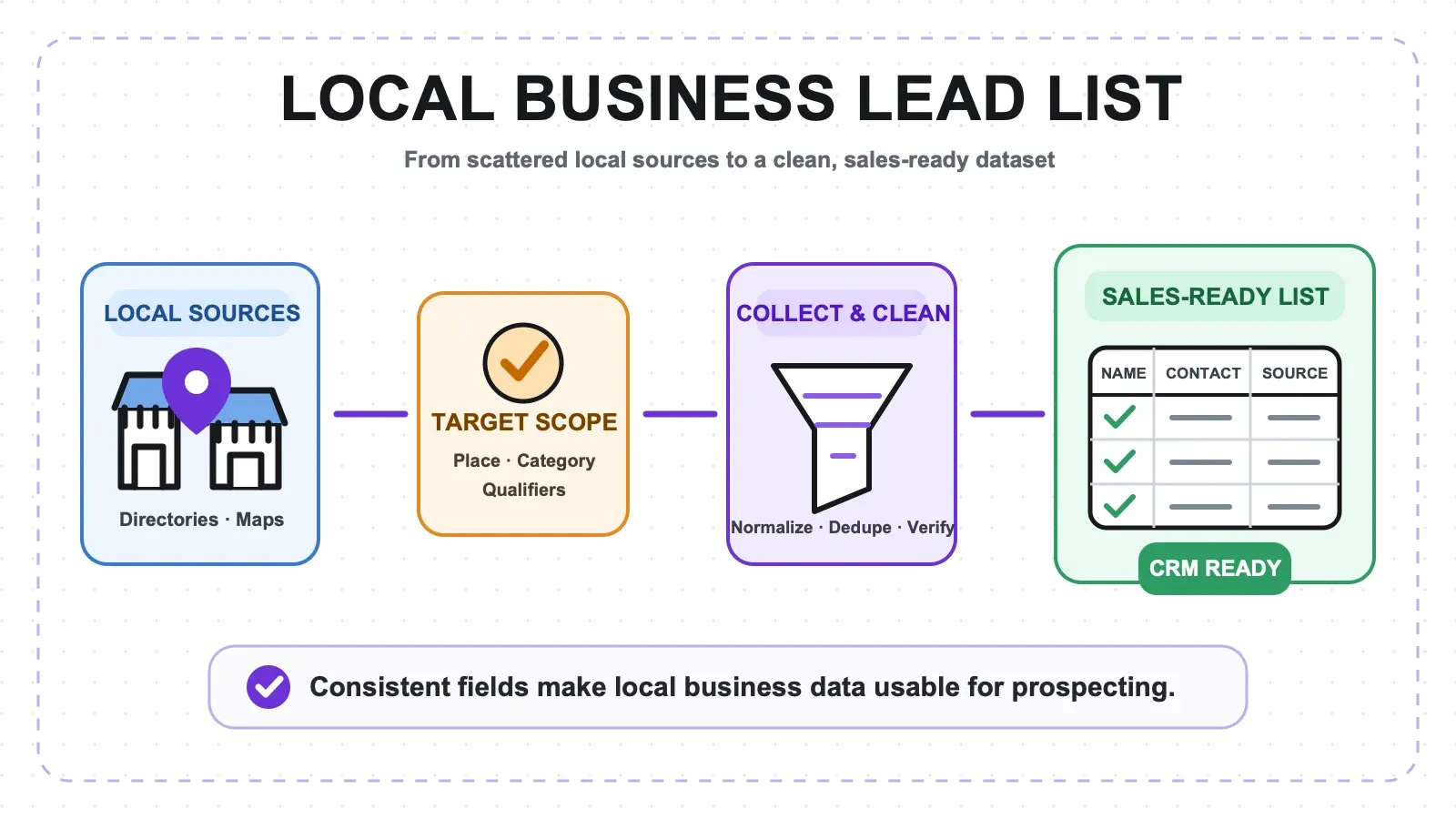
Most field sales software is strongest after you already know who the rep should visit. is the exception on this list because it is built for the upstream problem: creating or enriching the lead list before territory execution starts.
Thunderbit's AI web scraper can extract names, emails, phone numbers, addresses, titles, and other structured fields from websites, directories, PDFs, and linked profile pages. That makes it useful for field teams working from chamber-of-commerce listings, association directories, local business pages, franchise rosters, real estate portals, or niche B2B supplier directories.
Why it matters for field sales
- Build lists from live web sources: Pull contacts from the pages your team is already researching instead of relying only on a static vendor database.
- Scrape subpages automatically: If a directory has one profile page per business, Thunderbit can visit those subpages and enrich each row automatically.
- AI Suggest Fields: Thunderbit reads the page and recommends the right schema, which keeps setup time low for non-technical users.
- Export into the rest of your stack: Send data to Excel, Google Sheets, Airtable, or Notion, then push it into a CRM or field mapping tool.
This is why Thunderbit belongs in a field sales stack even though it is not a route planner. It solves the part of the workflow that most field sales apps assume away.
Best for: B2B prospecting, real estate, local-market canvassing, franchise development, trade directories, and teams that need to create territory-ready lead lists from the web.
If you want to see how that upstream workflow looks in practice, this Thunderbit walkthrough is the most relevant video in the article because it shows how AI prospecting can feed the rest of a field sales process.
2. : Best for Route Planning and Team Management

remains one of the most recognizable names in field sales for a reason. It is purpose-built for canvassing, door-to-door selling, and territory-based field teams that need both execution structure and manager oversight.
What stands out
- Territory mapping and rep assignment
- Route planning
- Real-time rep activity tracking
- Check-in and follow-up workflows
- Add-on intelligence layers such as DataGrid AI
SalesRabbit is strongest when the operational challenge is coverage, coordination, and rep accountability in the field. It is not as differentiated for raw lead discovery from the public web, but once the list exists, it does a good job helping teams act on it.
Best for: Door-to-door sales, home services canvassing, setter-closer teams, and managers who need high visibility into daily field activity.
3. : Best for Territory and Performance Visualization

is one of the clearest fits for teams that want field activity capture, territory control, and performance visibility inside the same operating layer.
Why teams choose it
- Strong territory assignment and boundary control
- Lead and activity visualization on the map
- Field activity capture with location verification
- Leaderboards and performance dashboards
- Route optimization and prospecting by territory
SPOTIO fits especially well when leadership wants granular reporting on rep movement, coverage quality, and territory productivity.
Best for: B2B field sales teams, telecom, solar, and other orgs where territory structure matters as much as CRM hygiene.
4. : Best for Route Optimization Across Large Territories

is built for outside reps who spend a large part of the week driving. Its core value is straightforward: help reps see accounts on a map, prioritize stops, and cut drive time without making CRM data harder to use.
Standout strengths
- Daily route optimization
- Map-based account planning
- In-app navigation handoff
- CRM synchronization
- Light lead discovery within territory
Badger Maps is not trying to be an end-to-end field sales operating system. It is a route-and-territory layer first. For many teams, that focus is exactly why it works.
Best for: Pharma, distribution, medical devices, and classic outside sales teams covering large geographic books of business.
5. : Best for Mobile-First Field Sales and Order Capture

is strongest in B2B environments where the rep is not just logging visits but also taking orders, checking product history, and working in places where connectivity is inconsistent.
What it does well
- Mobile-first sales rep app
- Offline support
- Order capture and customer history
- ERP-connected workflows
- Visit planning and reporting
Skynamo feels more like a field execution platform for distribution and manufacturing than a lightweight map tool, which is exactly why it is a good fit for those industries.
Best for: Manufacturing, wholesalers, distributors, FMCG, and rep teams that need reliable mobile order-entry workflows.
6. : Best for Retail Execution and Merchandising Teams

is less about classic B2B territory prospecting and more about executing in stores: merchandising, shelf checks, compliance, promotion rollout, and retail team performance.
Key strengths
- Retail task and mission management
- Shelf execution workflows
- Photo capture and reporting
- Scheduling and territory coverage
- Image-recognition add-ons
This matters because "field sales software" is not one market. Retail execution teams need proof-of-execution and store-level visibility more than they need deep opportunity management.
Best for: CPG brands, retail field teams, merchandising programs, and beverage or consumer-goods sales orgs.
7. : Best for Visual Account Mapping in B2B

has a very direct value proposition: give outside reps and field managers a CRM designed around maps, routes, territories, and rep activity instead of desk-first pipeline views.
Why it earns a spot here
- Map-based CRM experience
- Routing and territory planning
- Rep check-ins and reporting
- Lead Finder add-on
- Straightforward pricing compared with many enterprise tools
It is one of the cleaner fits for teams that want field-native account visibility without immediately jumping to a much heavier enterprise stack.
Best for: B2B outside sales, account managers, and teams that want a more field-centric CRM experience.
8. : Best for High-Velocity Field Sales Automation

is strongest when lead flow is high and the team needs structured assignment, follow-up automation, and mobile rep workflows across distributed field teams.
Where it shines
- Lead capture and assignment
- Sales automation
- Mobile CRM for reps on the move
- Geo-tracking and visit management
- Field-force workflow configuration
LeadSquared is more workflow-heavy than some of the map-first tools in this list, which can be a good thing for organizations with higher operational complexity.
Best for: Insurance, financial services, education, consumer sales, and lead-heavy field organizations.
9. : Best for Enterprise Field Operations

is the enterprise option when the field organization is deeply tied to the Salesforce ecosystem and the operational problem goes beyond rep routing into scheduling, dispatch, work orders, and cross-team service workflows.
Enterprise advantages
- Deep Salesforce integration
- Scheduling and dispatch
- Mobile technician and rep workflows
- Analytics and AI add-ons
- Large-scale configurability
It is powerful, but it also comes with the usual enterprise tradeoffs: more implementation work, more pricing complexity, and more overhead than a lighter specialist tool.
Best for: Large enterprises, utilities, telecom, and complex field-service-led sales organizations.
10. : Best for Unified Field Work, Service, and Asset Operations

sits at the boundary between field service, construction work, and asset-intensive operations. It is not the first tool I would pick for a lightweight canvassing team, but it is highly relevant when sales activity is closely tied to service delivery, infrastructure work, or asset visibility.
Best-fit strengths
- Unified field and asset workflows
- Mobile-native execution
- Scheduling and work management
- Service-to-billing workflow support
This is a niche but important category: organizations where a field team is selling, servicing, and documenting work in one continuous operating process.
Best for: Utilities, construction-adjacent teams, infrastructure providers, and service orgs with operational complexity.
11. : Best for SMB Teams That Want CRM Plus Mobile Sales Workflow

is not a specialist route-optimization platform, but it earns its place because many smaller field teams do not need a dedicated field stack yet. They need a clean CRM, mobile access, automation, and enough territory awareness to keep the team organized.
Why it works
- Simple CRM deployment
- Mobile CRM access
- AI-assisted lead and pipeline features
- Free plan and transparent paid pricing
If your field motion is real but relatively lightweight, Freshsales can cover a lot without the procurement and onboarding burden of heavier systems.
Best for: SMBs, early-stage field teams, and teams that want to consolidate into an easier CRM stack.
12. : Best for Field Data Collection and Retail Task Management

is built for field execution teams that need structured task completion, photo proof, reporting, and increasingly image-based store intelligence.
Standout capabilities
- Mobile task management
- Photo capture and reporting
- Field sales and performance workflows
- Image recognition options
- Configurable reporting
GoSpotCheck is not pretending to be a general-purpose CRM. It is much more useful when the field team needs disciplined execution and visual proof across many locations.
Best for: Retail, CPG, restaurants, and operational field teams that live on checklists, photos, and compliance.
13. : Best for CRM Plus Omnichannel Sales Communication

sits in a middle ground. It is a general sales CRM with mobile access and straightforward pricing, but it becomes especially relevant when the team also wants closer alignment between sales and customer service.
Why some teams prefer it
- Simple public pricing
- Unified sales communication workflows
- Mobile CRM
- Service-and-sales alignment
For teams whose field process is still CRM-led rather than route-platform-led, Zendesk Sell can be a better fit than a specialist product that solves mapping but adds another layer of system fragmentation.
Best for: SMB and mid-market teams that want practical CRM functionality with fewer pricing surprises.
14. : Best for Service Businesses That Need Scheduling, Dispatch, and Sales Follow-Through

is built for service businesses first, which means it is strongest when your "field sales" motion is tied to jobs, estimates, dispatch, payments, and customer history.
What it is good at
- Scheduling and dispatch
- Customer management
- Quotes and invoicing
- Technician mobile workflows
- Home-services operating fit
If you are running HVAC, electrical, plumbing, or similar field operations, that operating fit matters more than whether the tool looks like a classic outside-sales app.
Best for: Contractors, home services, and service-led sales motions.
15. : Best for All-in-One Service-Business Scale

is the heavyweight option for service businesses that need sales, scheduling, dispatch, customer history, pricebook management, technician workflows, and operational reporting inside one platform.
Why it stands out
- Broad service-business coverage
- Field sales and estimate workflows
- Operational reporting
- Scalable platform for larger trade businesses
The tradeoff is the usual one for this category: cost, implementation time, and platform weight. But for larger service businesses, the all-in-one model can be worth it.
Best for: Larger residential and commercial service organizations with sales-driven field teams.
The 2026 Stack Pattern: Lead Sourcing + Territory Execution + CRM + Service Ops
One reason these tools can feel hard to compare is that they do not all solve the same problem.
In practice, most modern field teams are mixing tools across four layers:
| Stack Layer | Primary Job | Best-Fit Tools in This List |
|---|---|---|
| Lead sourcing | Build or enrich the visit list before reps hit the road | Thunderbit |
| Territory and route execution | Assign coverage, optimize routes, capture visits, coach reps | SalesRabbit, SPOTIO, Badger Maps, Map My Customers |
| CRM and lead workflow | Manage pipeline, automate follow-up, keep account data synchronized | Freshsales, Zendesk Sell, LeadSquared |
| Service and operational execution | Tie field activity to scheduling, jobs, assets, and invoicing | Salesforce Field Service, KloudGin, FieldEdge, ServiceTitan |
That is why the "one best field sales software" question often has a misleading answer. Many teams do best with a combination, not a monolith.

If route efficiency is the biggest immediate constraint in your current process, this Badger Maps walkthrough is a useful complement to the sourcing and CRM tools above because it focuses on the on-the-road execution problem directly.
Which Field Sales Software Is Best for Your Team?
The right choice depends less on generic rankings and more on where your team is losing time right now.
| Team Type | Best Starting Point | Why |
|---|---|---|
| Door-to-door / canvassing | SalesRabbit or SPOTIO | Strong territory control, rep tracking, and route workflow |
| B2B outside sales | Badger Maps or Map My Customers, paired with Thunderbit | Map-first account planning plus better lead sourcing |
| Retail / CPG field execution | Repsly or GoSpotCheck by FORM | Better for shelf execution, audits, and photo-driven reporting |
| Lead-heavy field sales teams | LeadSquared plus Thunderbit | Automation plus a stronger upstream sourcing layer |
| Service-led field businesses | FieldEdge or ServiceTitan | Scheduling, dispatch, invoicing, and field workflows in one stack |
| Enterprise field operations | Salesforce Field Service or KloudGin | Better fit for complex process, scheduling, and cross-functional visibility |

My practical recommendation is simple:
- If you already have plenty of leads but poor field execution, start with a route and territory platform.
- If reps are driving around weak lists or stale CRM data, fix lead sourcing first.
- If your field motion is tied directly to service operations, choose a platform that treats dispatch, jobs, and customer history as first-class workflows.
The most effective stack I see most often looks like this:
- Thunderbit for web-based lead discovery and list building
- SalesRabbit, SPOTIO, Badger Maps, or Map My Customers for territory execution
- A CRM layer such as Freshsales, Zendesk Sell, or LeadSquared for pipeline and follow-up
Key Takeaways for Field Sales Teams in 2026
The field sales category is no longer just about pins on a map.
- Lead quality matters earlier: Teams that can source live leads from directories, local listings, and niche web sources start with better territory plans.
- Routing still matters enormously: Even a great list underperforms if reps waste hours on poor daily sequencing.
- Mobile adoption is the real test: If the app is awkward in the field, the process breaks no matter how strong the dashboard looks in a demo.
- The best answer is often a stack: One tool rarely wins every layer from sourcing to route execution to service ops.
If you are evaluating your stack this quarter, start with one question: is your bottleneck lead creation, territory execution, or field-service complexity? Once that answer is clear, the shortlist gets much easier.
FAQs
1. What is the best field sales software for discovering new leads in 2026?
Thunderbit stands out when the core problem is building lists from live web sources before route planning starts. It is especially useful for directories, local business listings, trade associations, and real estate or franchise research workflows.
2. Which field sales apps are strongest for route planning and territory management?
SalesRabbit, SPOTIO, Badger Maps, and Map My Customers are the strongest route-and-territory specialists in this list, with different strengths around team management, mapping depth, and reporting.
3. Are there all-in-one options for service businesses with field sales needs?
Yes. FieldEdge and ServiceTitan are the clearest fits for service businesses, while Salesforce Field Service and KloudGin make more sense for larger or more complex operational environments.
4. Should field sales teams use one platform or combine multiple tools?
Many teams perform better with a stack. A sourcing tool such as Thunderbit can feed better leads into a route platform such as SalesRabbit or Badger Maps, while a CRM keeps follow-up and pipeline management synchronized.
5. Which tools are best for retail and merchandising field teams?
Repsly and GoSpotCheck by FORM are the clearest retail-execution choices here because they are built around store visits, task completion, photo capture, and compliance workflows rather than classic B2B pipeline management.