
The world of sales and marketing has always been a bit of a numbers game—lots of hustle, lots of follow-ups, and, let’s be honest, a whole lot of copy-pasting. But in 2026, the rules have changed. Automated lead generation software isn’t just a shiny new toy; it’s become the backbone of every high-performing sales team. Why? Because sales reps are still spending up to 70% of their time on non-selling tasks, like researching prospects and entering data. That’s not just a productivity killer—it’s a morale killer, too.
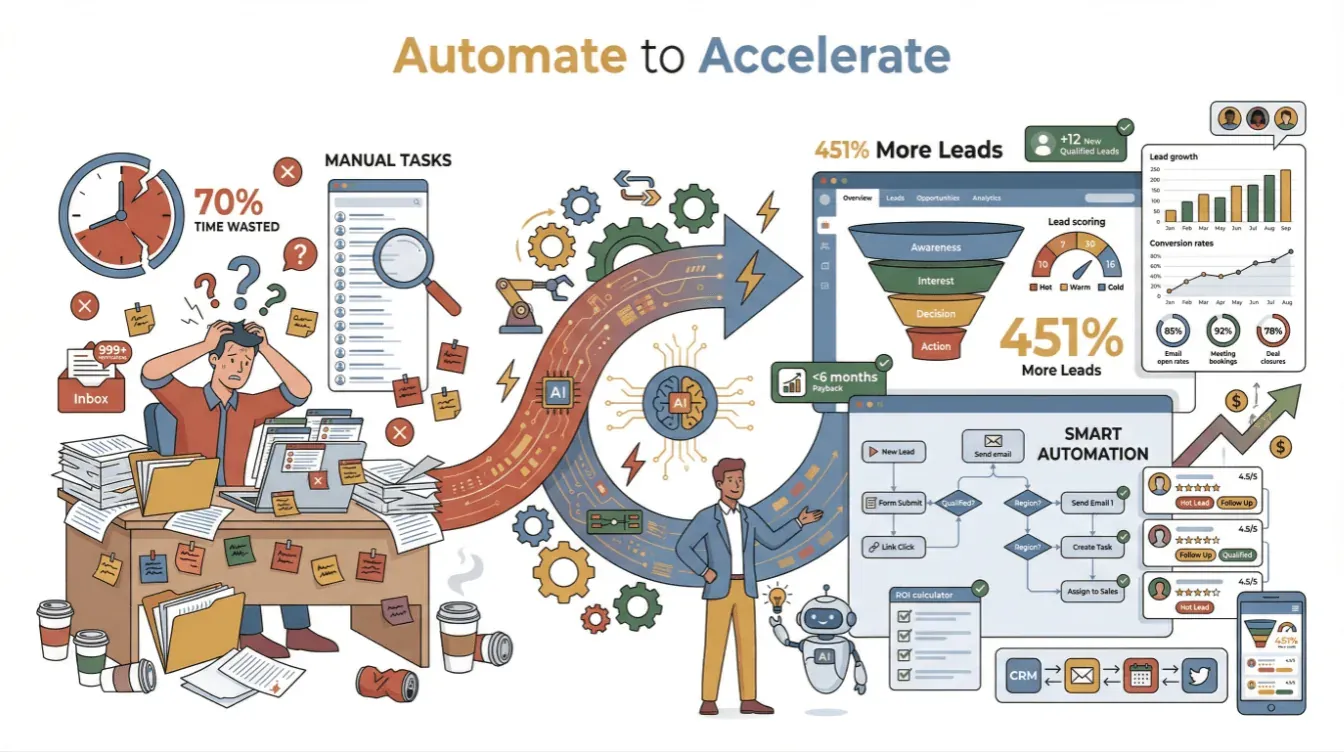
I’ve seen firsthand how manual lead generation can be a grind: error-prone, slow, and, frankly, a little soul-crushing. But here’s the good news: automation is turning that grind into growth. Companies using automated lead generation tools are seeing 451% more qualified leads and recouping their investment in under six months. So, whether you’re a startup founder, an enterprise sales leader, or just someone tired of chasing spreadsheets, this list is for you. Let’s dive into the top 15 automated lead generation software tools for 2026—and help you find the right fit for your business.
Why Automated Lead Generation Software Is Essential in 2026
Automate Lead Generation with AI Discover how Thunderbit can help you reclaim hours and boost lead quality with AI-powered automation. Get Started Free
The impact of automated lead generation software on business growth is hard to overstate. For starters, automation saves massive amounts of time—freeing up your sales and marketing teams to focus on building relationships and closing deals, not just hunting for contact info. In fact, 67% of sales reps spend at least 11 hours a week on research and follow-up, but automation can reclaim those hours for higher-value work.
But it’s not just about speed. Automation improves lead quality by using intelligent algorithms to qualify and score leads, so your team can prioritize the best opportunities. 39% of marketers say automation leads to better lead quality, and companies report a 14.5% increase in sales productivity after adopting these tools.
And let’s not forget scalability. Automated lead generation software allows you to nurture thousands of prospects with personalized, timely outreach—something no human team could do manually. The result? 50% more sales-ready leads and up to 60% lower customer acquisition costs for companies using AI-powered lead gen. In short, if you want to grow your pipeline without growing your headcount (or your stress levels), automation is the way forward.
How We Selected the Best Automated Lead Generation Software
Picking the right lead generation tool can feel like searching for a needle in a haystack—there are hundreds of options, each promising to be “the one.” Here’s how I narrowed it down:
- Ease of Use: Can business users (not just IT) get up and running quickly?
- Automation Features: Does it handle lead capture, enrichment, scoring, and follow-up with minimal manual work?
- Integration: Will it play nicely with your CRM, email, and other tools?
- Scalability: Is it built for your business size—startup, SMB, or enterprise?
- Unique Capabilities: What makes it stand out? (AI-driven scraping, social selling, e-commerce focus, etc.)
- Pricing: Is there a free tier or affordable entry point?
Each tool on this list brings something unique to the table, from AI-powered web scraping to advanced marketing automation. I’ll highlight what each is “best for” and the scenarios where it shines.
1. Thunderbit
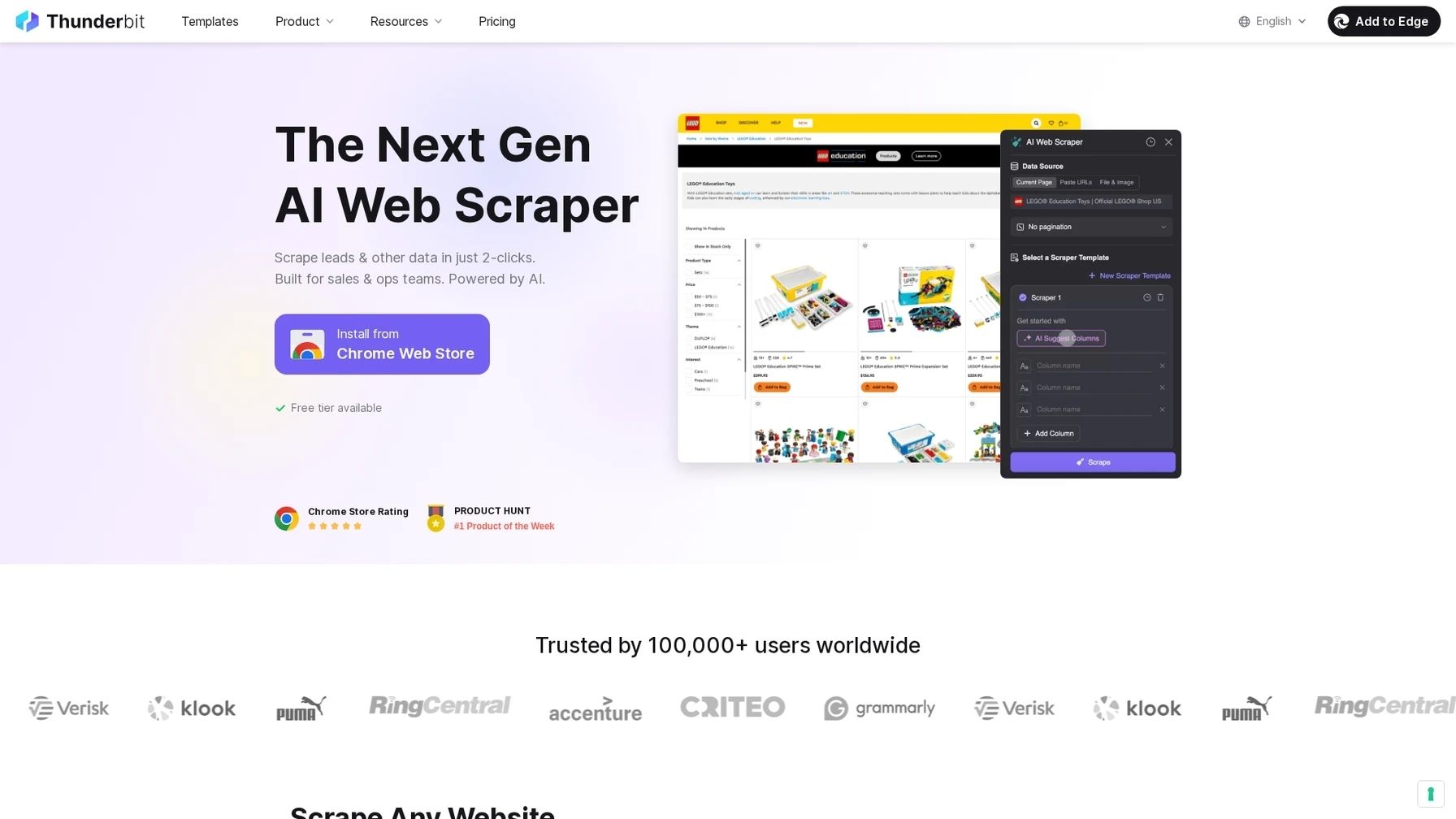
Thunderbit is the only AI-powered web data extraction tool on this list—and it’s a total game changer for sales and operations teams who need to find leads in places other tools can’t reach. Imagine needing to pull contact info from a directory, marketplace, or even a PDF—Thunderbit’s AI reads the page, suggests the best data fields (“AI Suggest Fields”), and scrapes the data into a structured table with just a couple of clicks.
But what really sets Thunderbit apart is its ability to handle unstructured or non-standard data. Need to scrape LinkedIn profiles, e-commerce SKUs, or real estate listings? Thunderbit’s AI can navigate subpages, handle pagination, and even extract data from images or PDFs. No coding, no templates, no headaches.
Other standout features:
- Subpage Scraping: The AI can visit each subpage (like individual profiles or product pages) and enrich your table automatically.
- Scheduled Scraping: Set up recurring scrapes to keep your lead lists fresh.
- Instant Data Templates: One-click scraping for popular sites.
- Free Data Export: Export to Excel, Google Sheets, Airtable, or Notion at no extra cost.
Thunderbit is perfect for teams that need to extract leads from the web at scale—especially when those leads are buried in places other tools can’t parse. It’s like having a tireless research assistant, but without the coffee breaks.
Try Thunderbit AI Web Scraper for Free
2. HubSpot
HubSpot is the all-in-one platform that’s become a favorite for small and mid-sized businesses. With HubSpot, you get everything: forms, landing pages, live chat, chatbots, email automation, and a built-in CRM. The magic is in the integration—capture a lead on your website, and they’re instantly in your CRM and enrolled in a personalized email sequence.
HubSpot’s Workflows feature lets you build sophisticated automation with a visual flow builder. And with new AI features like “Breeze” agents, you can optimize send times and even draft emails automatically. The results speak for themselves: HubSpot customers report 129% more leads and 36% more deals closed after a year.
Best for: SMBs that want a unified platform for marketing and sales, with robust automation and analytics.
3. Leadfeeder
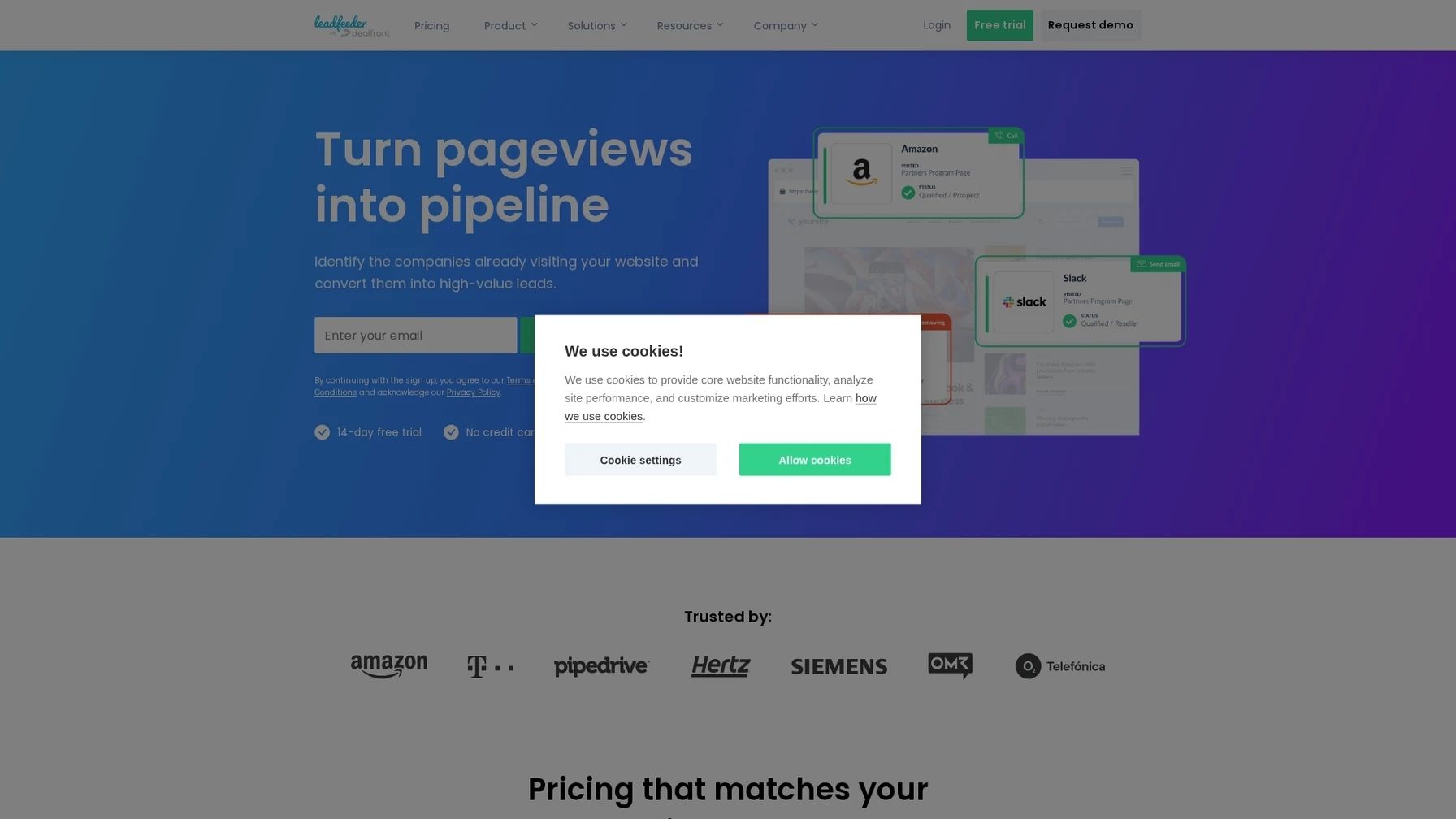
Leadfeeder solves a classic B2B problem: most website visitors never fill out a form. Leadfeeder identifies those anonymous visitors by company, using IP matching and enrichment. You’ll know which companies are browsing your site—even if they never say hello.
Key features:
- Lead Scoring: Automatically ranks visitors by engagement.
- Real-Time Alerts: Get notified when a target account visits your site.
- CRM Sync: Pushes leads directly into your CRM for follow-up.
Leadfeeder is a must-have for B2B teams who want to capitalize on website traffic and never miss a high-intent visitor.
4. Pipedrive (with LeadBooster)
Pipedrive is a visual CRM that’s beloved by sales teams—and with the LeadBooster add-on, it becomes a powerful lead generation machine. LeadBooster combines a chatbot, live chat, web forms, and a massive Prospector database (400M+ contacts) right inside your CRM.
Why it stands out:
- Chatbot & Live Chat: Qualify leads 24/7 and hand off to sales reps in real time.
- Prospector: Search and reveal new outbound leads by industry, title, and more.
- Automated Assignment: Route leads to the right rep instantly.
Pipedrive is ideal for small to mid-sized sales teams who want both inbound and outbound lead gen in one easy-to-use system.
5. Marketo (Adobe Marketo Engage)
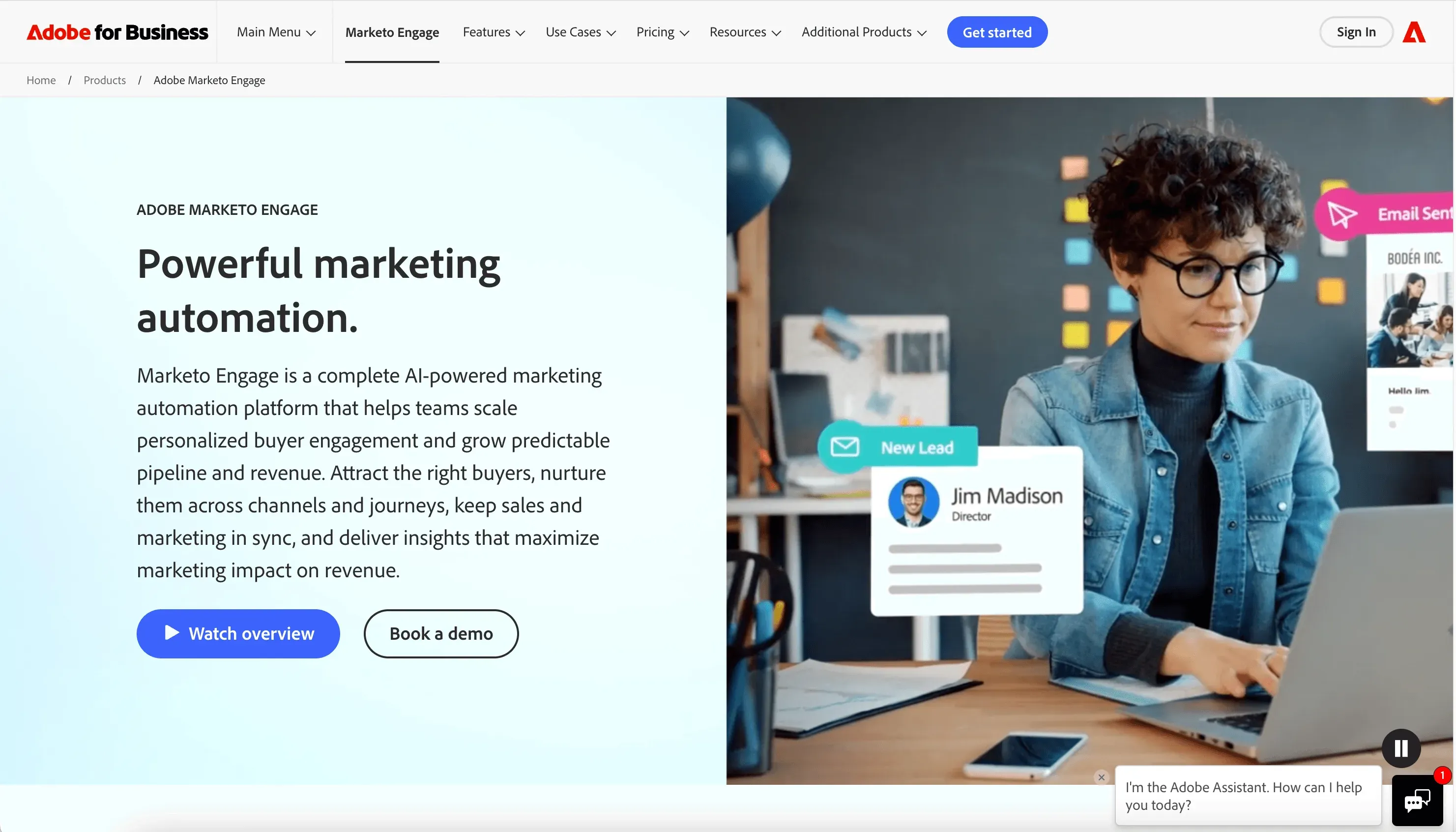
Marketo (now called Adobe Marketo Engage) is the gold standard for enterprise marketing automation—especially if you need to nurture leads over long, complex sales cycles. It’s built for multi-channel campaigns, advanced segmentation, and deep analytics.
What makes Marketo special:
- Advanced Lead Scoring: Custom rules for precise qualification.
- Account-Based Marketing: Personalize campaigns for target accounts.
- Salesforce Integration: Seamless handoff from marketing to sales.
Marketo is best for large organizations with sophisticated marketing needs and dedicated ops teams.
6. Zoho CRM
Zoho CRM offers a flexible, customizable platform at a competitive price. It captures leads from web forms, social media, email, and even live chat (via Zoho SalesIQ). The workflow rules engine lets you automate assignments, follow-ups, and notifications.
Key features:
- Multi-Channel Communication: Phone, email, SMS, chat, and social—all in one CRM.
- Zia AI Assistant: Predicts which leads are most likely to convert.
- Custom Workflows: Tailor automation to your exact process.
Zoho CRM is perfect for businesses of all sizes that want affordable, flexible automation.
7. Salesforce Pardot
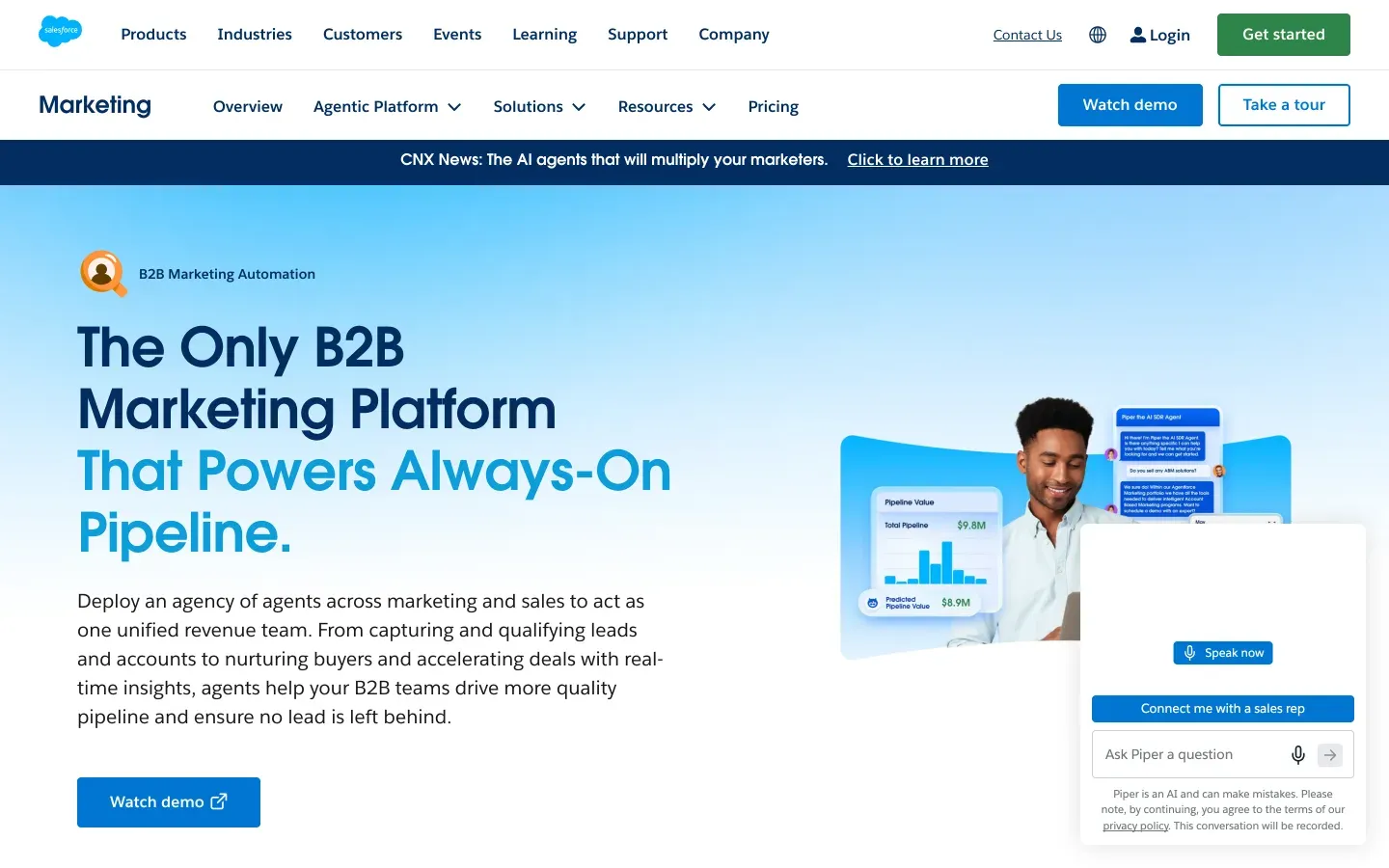
Salesforce Pardot (now called Marketing Cloud Account Engagement) is built for B2B lead nurturing and long sales cycles. It’s tightly integrated with Salesforce CRM and excels at email drip campaigns, landing pages, and lead scoring.
Why Pardot?
- Engagement Studio: Visual builder for complex nurture tracks.
- Sales Alerts: Notifies reps when leads take key actions.
- ROI Reporting: Tracks funnel performance and campaign impact.
Pardot is a natural fit for medium to large B2B companies already using Salesforce.
8. ActiveCampaign
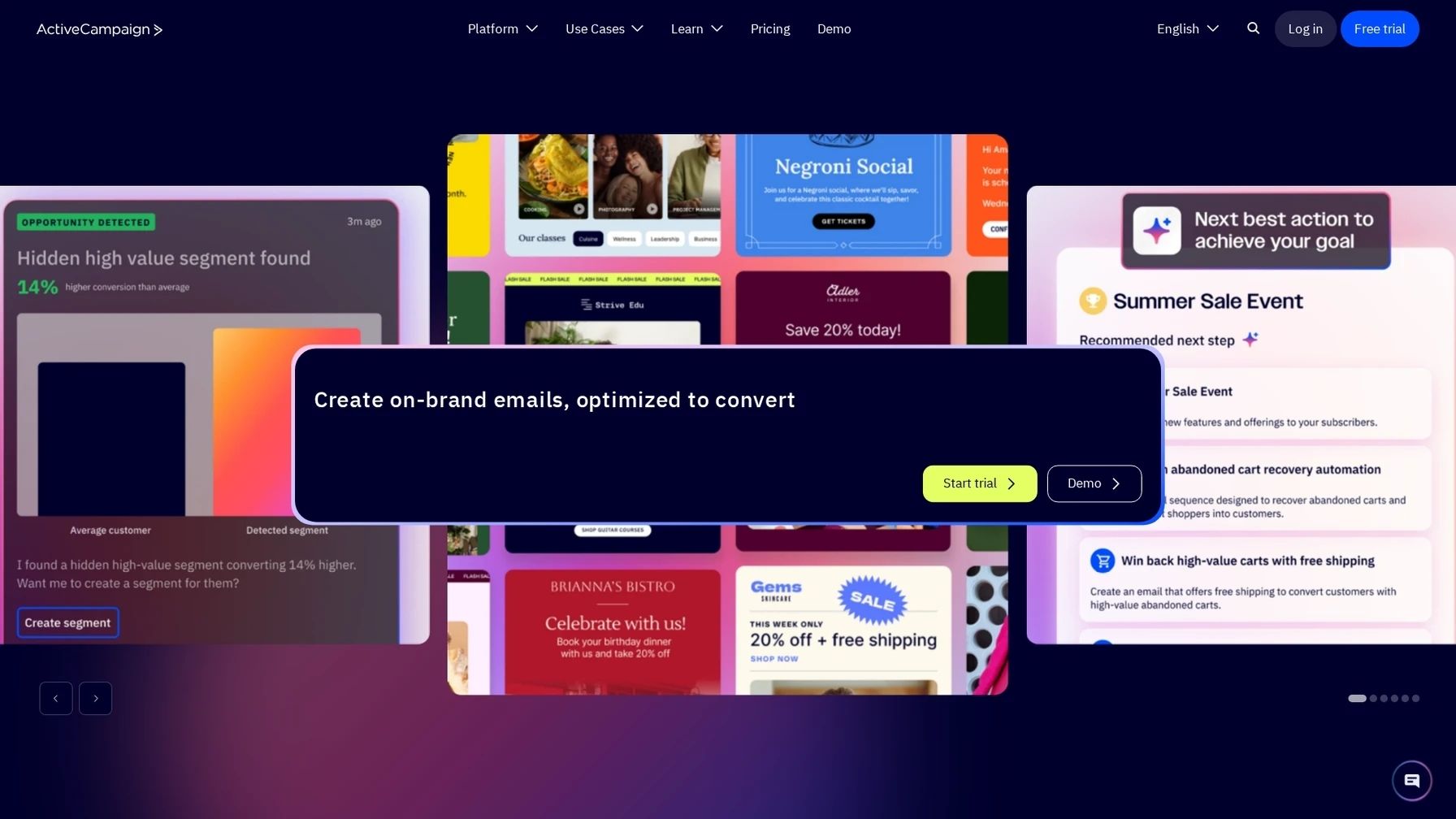
ActiveCampaign is a powerhouse for email marketing, automation, and lightweight CRM. Its visual automation builder lets you create sophisticated workflows—think welcome series, lead scoring, SMS reminders, and automated deal assignments.
Best for:
- Personalized Nurturing: Dynamic content and segmentation.
- Site & Event Tracking: Trigger automations based on behavior.
- Affordable Power: Enterprise features for SMB budgets.
ActiveCampaign is great for growing businesses that want advanced automation without the enterprise price tag.
9. Keap
Keap (formerly Infusionsoft) is designed for small businesses and solopreneurs who want to capture leads and follow up automatically. It combines CRM, email marketing, appointment scheduling, and even invoicing.
Highlights:
- Easy Automation Templates: Set up lead follow-ups and reminders in minutes.
- SMS Integration: Automate texts for quick responses.
- User-Friendly: Rated as one of the easiest CRMs for non-technical users.
Keap is perfect for entrepreneurs who want to never miss a lead and keep follow-up on autopilot.
10. Intercom
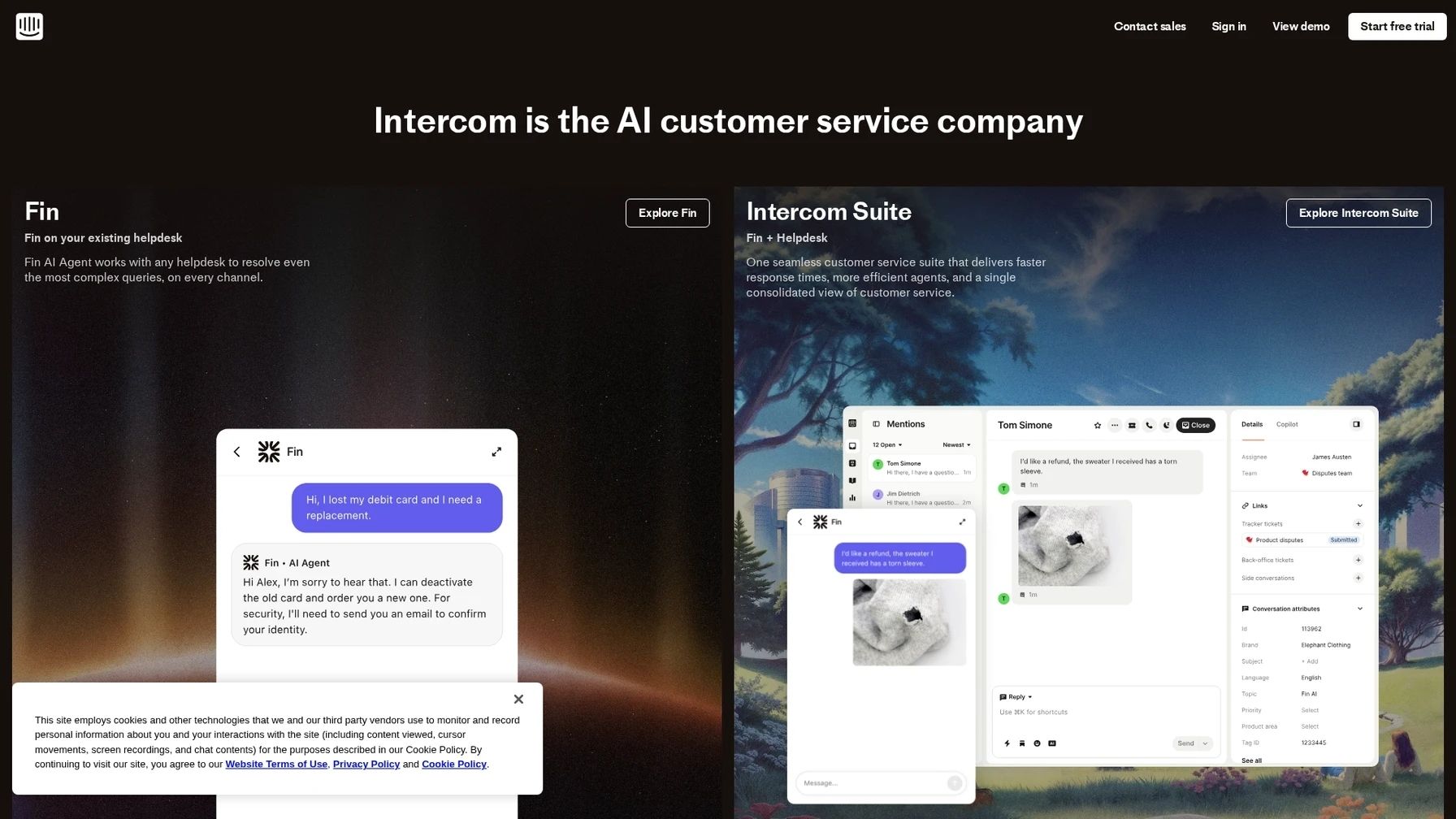
Intercom is the king of conversational marketing. Its website messenger and chatbots engage visitors in real time, qualify leads, and route them to the right sales rep or support agent.
Why Intercom?
- Behavior-Triggered Messaging: Engage visitors when their interest is highest.
- AI-Powered Qualification: Chatbots ask and score leads 24/7.
- Unified Inbox: Manage conversations across chat, email, and social.
Intercom is a must for SaaS and web-based businesses who want to capture and qualify leads in real time.
11. Freshworks CRM (Freshsales)
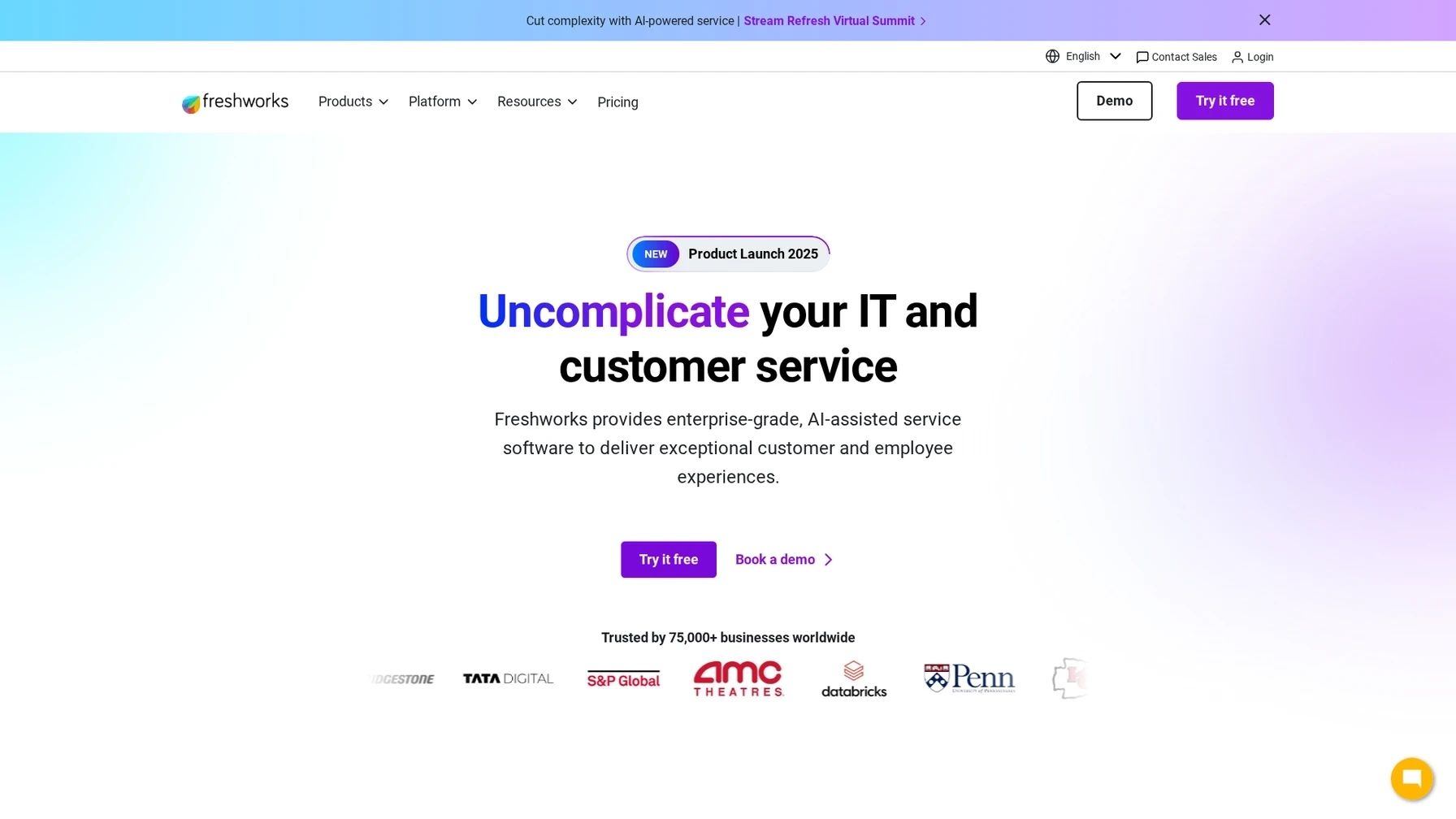
Freshworks CRM (aka Freshsales) unifies sales and marketing automation with built-in AI (“Freddy AI”). It offers web forms, chatbots, email sequences, and a visual sales pipeline.
Key features:
- AI Lead Scoring: Focus on the hottest prospects.
- Lead Generation Bot: Captures and qualifies website visitors.
- Workflow Automation: Automate repetitive tasks and follow-ups.
Freshworks CRM is ideal for SMBs and mid-market teams who want everything in one place.
12. Mailchimp
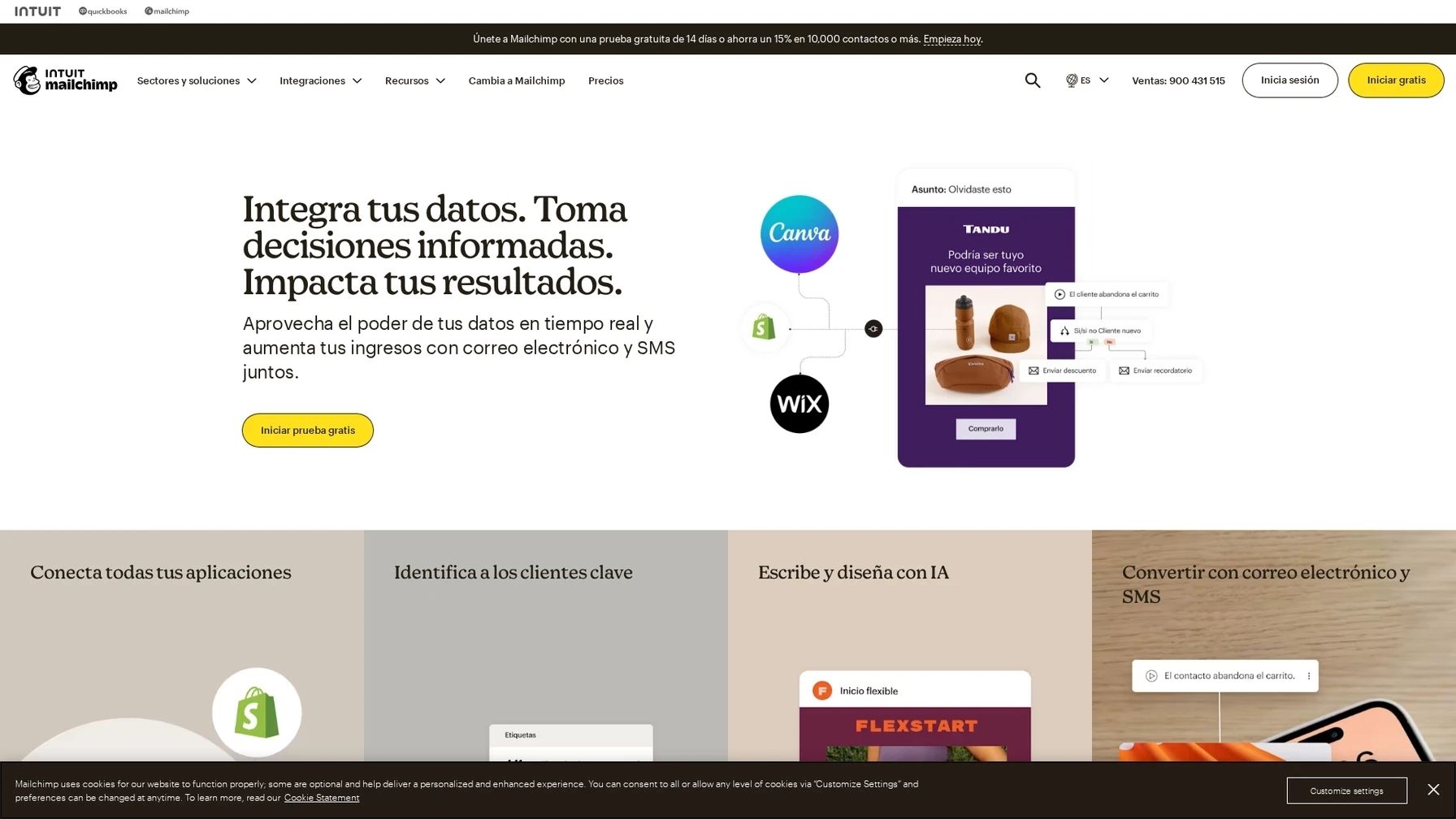
Mailchimp is the OG of email marketing, but it’s grown into a full-fledged marketing platform. With drag-and-drop builders, customer journey automations, and predictive segmentation, it’s perfect for building and nurturing email lists.
Why Mailchimp?
- Pre-Built Automation Templates: Welcome series, cart recovery, and more.
- E-commerce Integration: Product recommendations and abandoned cart flows.
- Predictive Analytics: Segment leads by likelihood to buy or churn.
Mailchimp is a great starting point for small businesses and e-commerce brands.
13. LinkedIn Sales Navigator
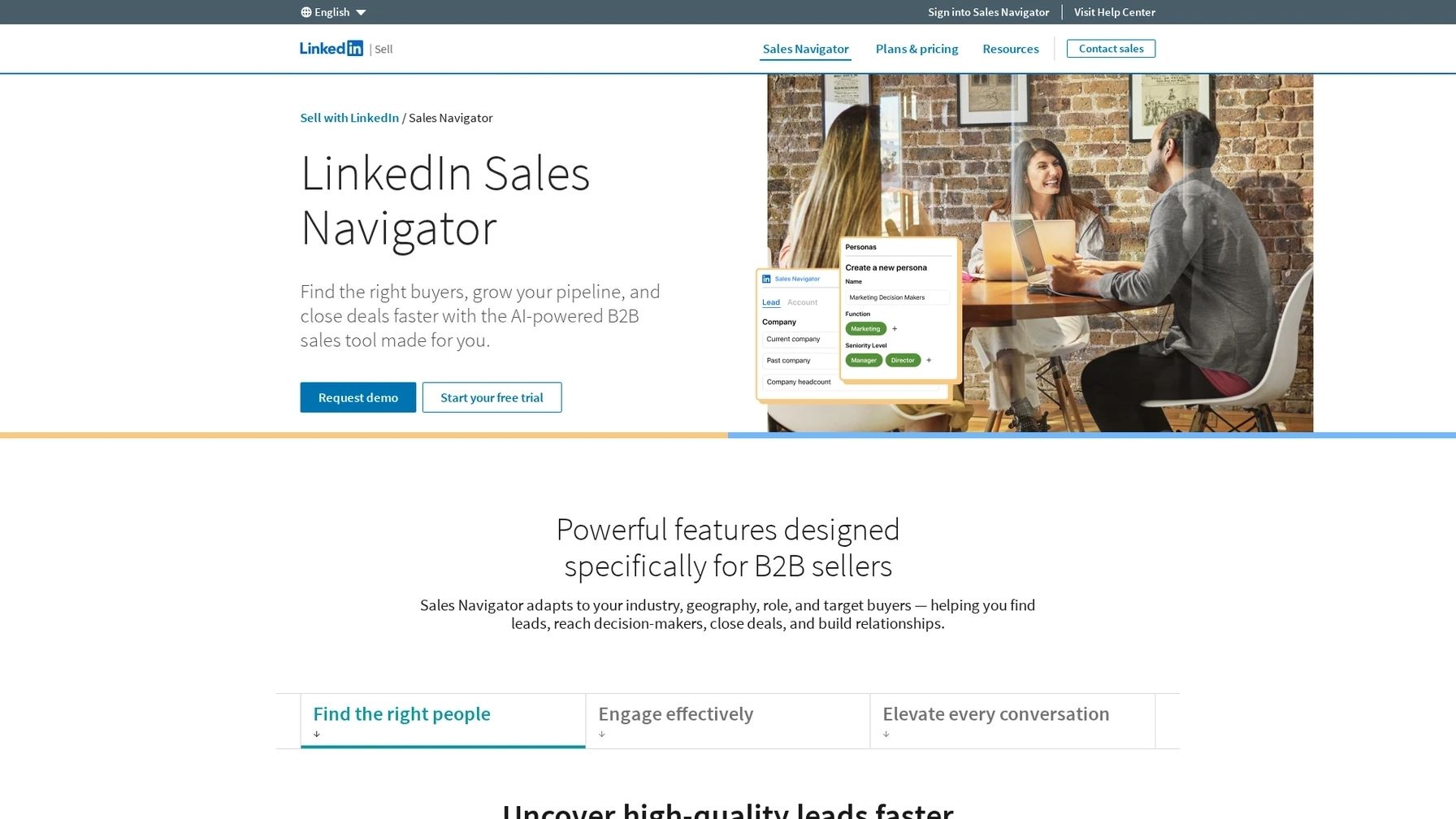
LinkedIn Sales Navigator is the ultimate tool for social selling. It automates lead discovery and tracking on LinkedIn, with advanced search filters and AI-driven recommendations.
Best for:
- B2B Prospecting: Find decision-makers by role, industry, and more.
- Lead Recommendations: Get new prospects delivered automatically.
- CRM Sync: Keep your pipeline up to date.
If your leads live on LinkedIn, Sales Navigator is a must-have.
14. Outgrow
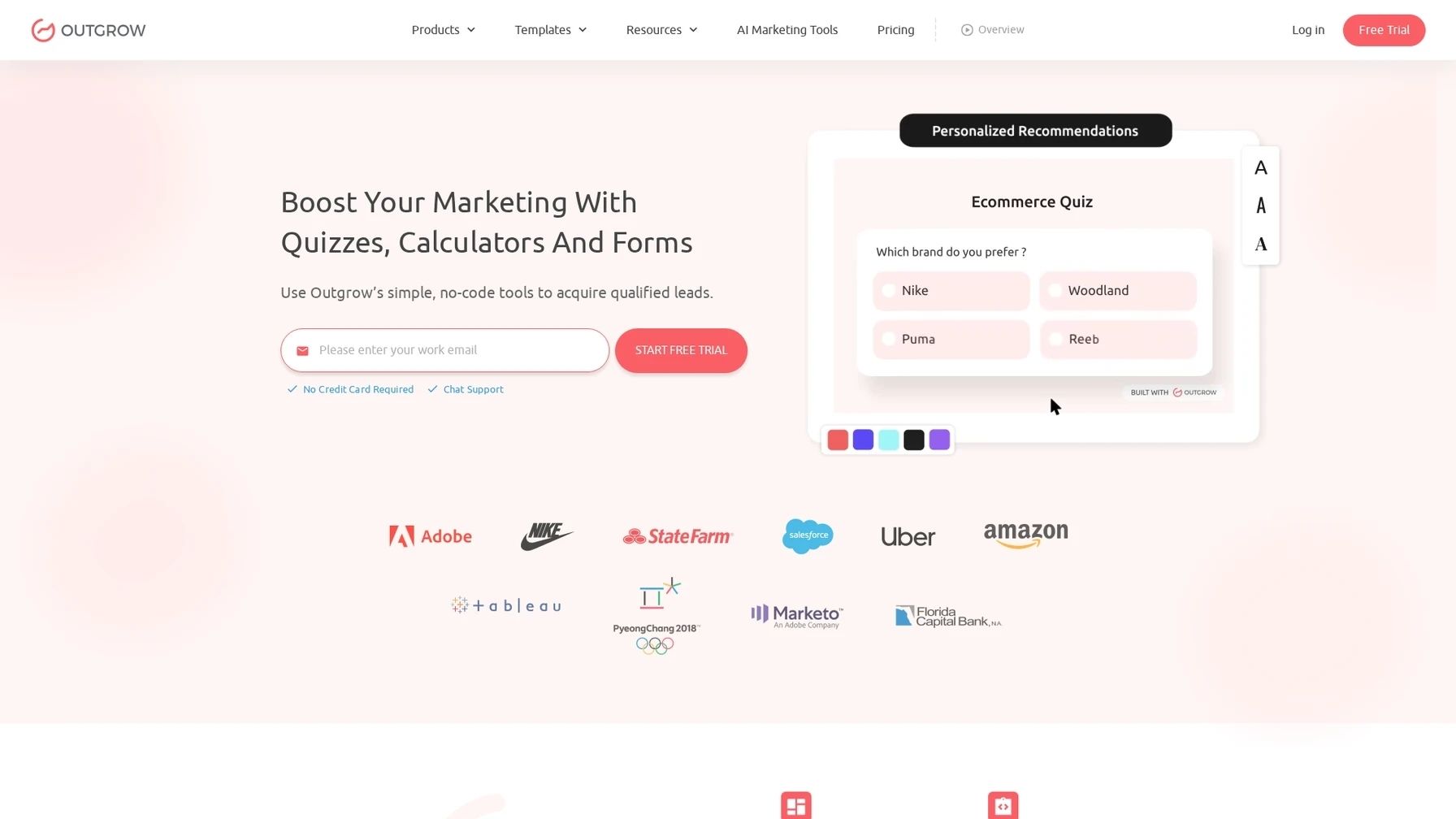
Outgrow takes a creative approach to lead gen with interactive content—quizzes, calculators, surveys, and more. These experiences engage visitors, capture their info, and even qualify them based on their answers.
Why Outgrow?
- No-Code Builder: 1000+ templates for every industry.
- Conditional Logic: Segment and score leads as they interact.
- CRM Integration: Send leads straight to your pipeline.
Outgrow is perfect for marketers who want to boost conversion rates with engaging, value-driven content.
15. Drip
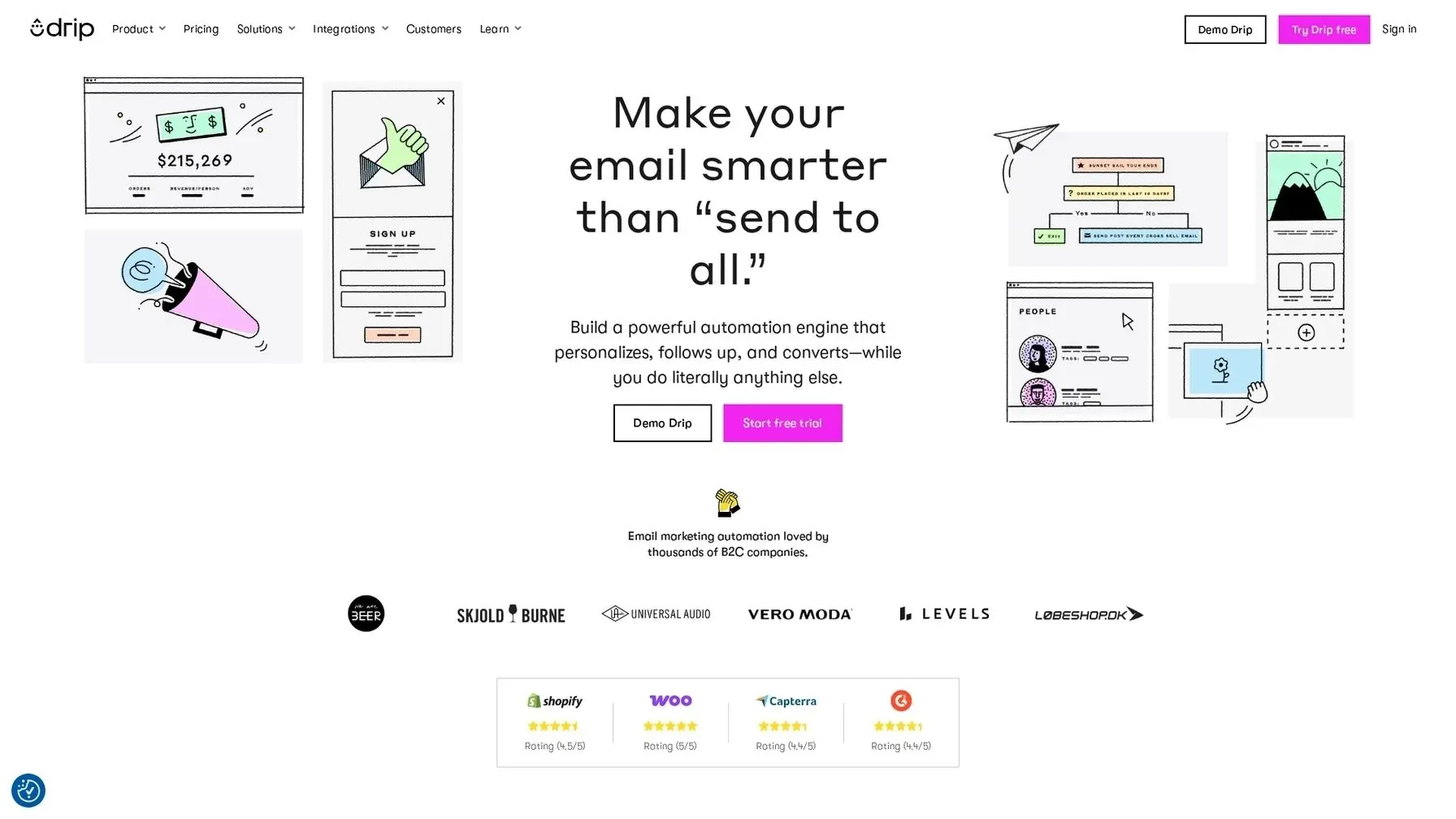
Drip is built for e-commerce businesses that want to turn browsers into buyers. It specializes in automated email and SMS campaigns—think abandoned cart reminders, product recommendations, and win-back flows.
Key features:
- Pre-Built E-commerce Workflows: Set up in minutes.
- Dynamic Segmentation: Target leads by shopping behavior.
- Multi-Channel: Combine email, SMS, and even Facebook ads.
Drip is the go-to for online retailers who want to nurture leads and maximize customer lifetime value.
Automated Lead Generation Software Comparison Table
| Tool Name | Best Use Case | Main Features | Pricing Range | Unique Strength |
|---|---|---|---|---|
| Thunderbit | Web data extraction, CRM import | AI-driven scraping, subpage & PDF support | Free / Paid plans | Only AI web scraper for unstructured data |
| HubSpot | SMB marketing automation | Forms, chatbots, CRM, workflows | Free / From $20/seat/mo | All-in-one, seamless CRM + marketing |
| Leadfeeder | B2B website visitor ID | Company reveal, lead scoring, CRM sync | From €79/mo | Uncovers anonymous web visitors |
| Pipedrive + LeadBooster | CRM + lead capture for sales teams | Chatbot, Prospector DB, forms, scheduler | CRM $15+/mo + $32/mo | Visual CRM with built-in outbound/inbound tools |
| Marketo (Adobe Marketo Engage) | Enterprise, deep analytics | Multi-channel, scoring, segmentation | Enterprise pricing | Handles complex, large-scale nurturing |
| Zoho CRM | Flexible, affordable CRM automation | Multi-channel, AI, custom workflows | Free / From $14/mo | Customizable for any industry or team size |
| Salesforce Pardot (Marketing Cloud Account Engagement) | B2B nurture, Salesforce integration | Drip campaigns, scoring, analytics | From $1,250/mo | Deep Salesforce CRM alignment |
| ActiveCampaign | Email & sales automation, SMBs | Visual builder, CRM, SMS, segmentation | From $29/mo | Advanced workflows for a moderate price |
| Keap | Small business, easy automation | Templates, CRM, SMS, scheduling | From $299/mo | User-friendly, all-in-one for solopreneurs |
| Intercom | Conversational, real-time engagement | Chatbots, live chat, lead routing | From $29/seat/mo | Real-time, behavior-based lead capture |
| Freshworks CRM (Freshsales) | Unified sales & marketing, SMB/mid | AI scoring, chatbots, workflows | From $9/user/mo | AI-driven insights, all-in-one suite |
| Mailchimp | Email list building, e-commerce | Templates, journeys, predictive analytics | Free / From $13/mo | Simplicity, e-commerce automations |
| LinkedIn Sales Navigator | Social selling, B2B prospecting | Advanced search, recommendations, CRM sync | From $119.99/user/mo | Leverages LinkedIn’s massive network |
| Outgrow | Interactive content lead capture | Quizzes, calculators, CRM integration | From $14/mo | Engaging, high-conversion interactive tools |
| Drip | E-commerce email/SMS automation | Pre-built flows, segmentation, multi-channel | From $39/mo | Built for online retailers, deep e-comm focus |
How to Choose the Right Automated Lead Generation Software for Your Business
With so many strong options, how do you pick the right one? Here’s my cheat sheet:
- Need to extract non-standard web data? Go with Thunderbit. It’s the only AI-powered web scraper that can handle messy, unstructured sources and export directly to your CRM or spreadsheet.
- Want all-in-one marketing automation for SMB? HubSpot or Zoho CRM are both excellent, with HubSpot offering deeper integration and Zoho excelling in flexibility.
- Looking for complex enterprise automation? Marketo (Adobe Marketo Engage) or Salesforce Pardot (Marketing Cloud Account Engagement) are built for large teams with sophisticated nurturing needs.
- Focused on social selling? LinkedIn Sales Navigator is your best bet for B2B prospecting and relationship building.
- Running an e-commerce store? Drip and Mailchimp both offer powerful, pre-built automations for online retailers.
- Want to engage leads in real time? Intercom or Freshworks CRM (Freshsales) are great for chat-based, behavior-triggered engagement.
- Need easy, template-driven automation for a small team? Keap is designed for non-technical users who want to get started fast.
The best advice? Start with a free trial or demo. Most of these tools let you test-drive their features before you commit. Map your needs—where your leads come from, how you want to engage them, and what your team can realistically manage. And remember, the right tool should feel like an extension of your workflow, not another chore.
Conclusion: Unlocking Growth with Automated Lead Generation Software
If there’s one thing I’ve learned building and scaling SaaS businesses, it’s that the teams who automate their lead generation are the ones who win. The ROI is real: every $1 spent on marketing automation yields $5.44 in return), and 91% of marketers say automation is essential for success.
So, take a hard look at your current process. Are you still stuck in spreadsheet purgatory, or are you ready to let automation do the heavy lifting? Whether you’re scraping leads from the web, nurturing prospects with email, or engaging them in real time, there’s a tool here that can help you scale smarter—not harder.
Ready to see what modern lead generation looks like? Try Thunderbit’s free Chrome extension or check out the Thunderbit Blog for more automation tips and deep dives.
Start Automating Your Lead Generation with Thunderbit Get Started Free
FAQs
1. What is automated lead generation software?
Automated lead generation software uses AI and workflow automation to capture, qualify, and nurture leads with minimal manual effort. It can include tools for web scraping, email marketing, chatbots, CRM integration, and more.
2. How does Thunderbit differ from other lead generation tools?
Thunderbit is the only tool on this list that uses AI to extract leads from any website—including unstructured or non-standard data sources. Its “AI Suggest Fields” feature and subpage scraping make it uniquely powerful for sales and operations teams needing custom data.
3. Which tool is best for small businesses?
HubSpot, Zoho CRM, Keap, and Mailchimp are all excellent for small businesses. They offer user-friendly interfaces, affordable pricing, and plenty of automation templates to get started quickly.
4. What’s the best automated lead generation software for e-commerce?
Drip and Mailchimp are both tailored for e-commerce, with pre-built workflows for cart abandonment, product recommendations, and customer journeys. They integrate directly with platforms like Shopify and WooCommerce.
5. How do I choose the right tool for my business?
Consider your business size, industry, lead sources, and integration needs. Start with a free trial, map out your workflow, and pick the tool that best fits your goals and team capacity. And don’t be afraid to mix and match—many teams use more than one tool to cover all their bases.
Want to dig deeper into automation and lead generation? Check out these resources:
- Unlocking AI Lead Generation: The Ultimate 2025 Guide
- What Is Data Scraping and How to Do It in 2025
- How to Scrape Website Data into Excel using AI
Here’s to working smarter and watching your pipeline grow—one automation at a time.
Learn More




