Top 10 AI Web Scraping Tools to Boost Efficiency in 2026

Last Updated on January 15, 2026

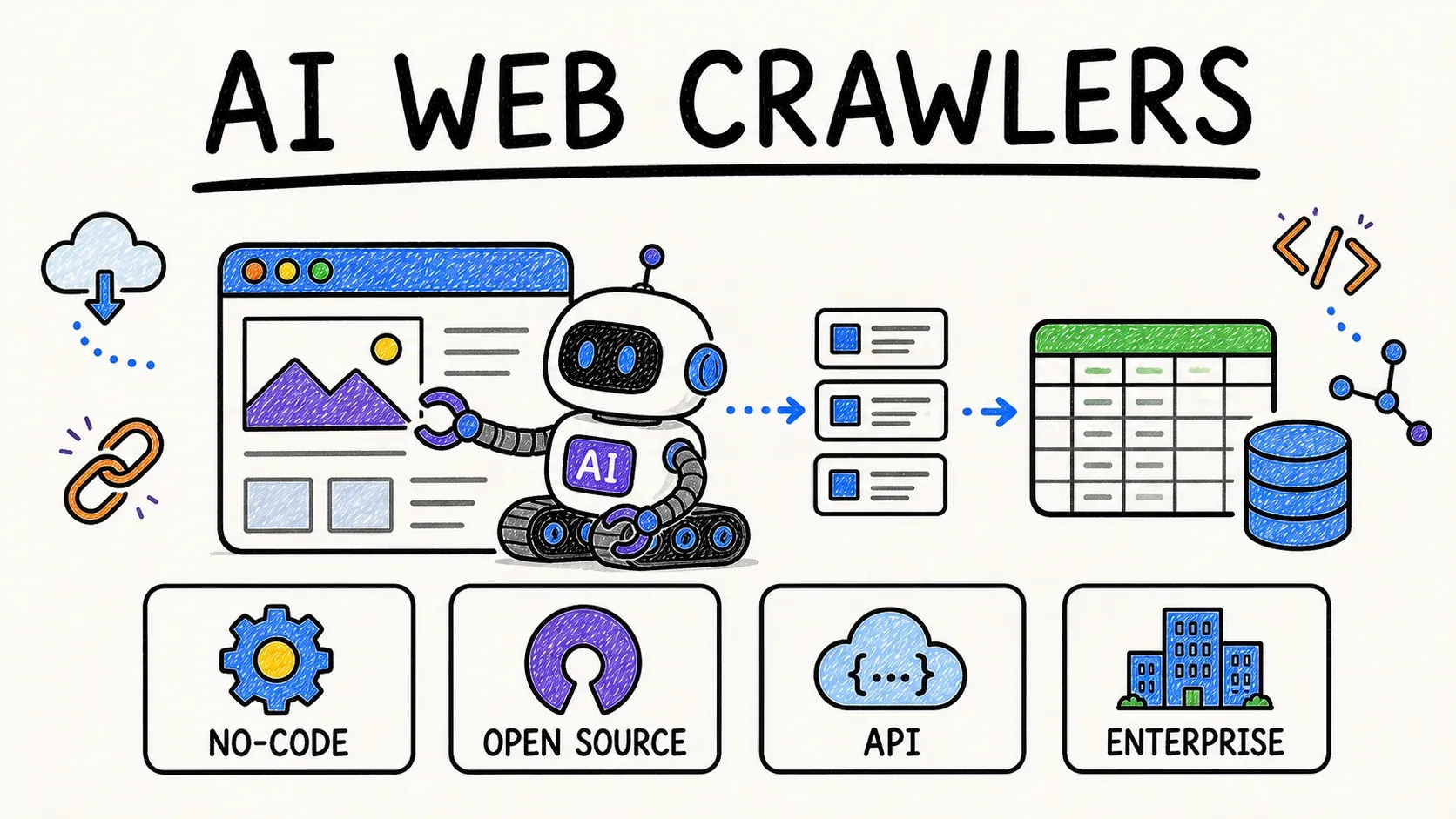
The web is growing at a pace that would make even the most caffeinated business analyst dizzy. By 2026, the , fueled by companies hungry for fresh, actionable data. But here’s the catch: traditional scraping is a headache—scripts break, anti-bot defenses get smarter, and unless you moonlight as a coder, you’re left copy-pasting like it’s 1999. That’s where AI web scraping tools come in, transforming data extraction from a technical slog into a productivity superpower for sales, operations, and anyone who needs web data to make smarter decisions.

I’ve spent years in SaaS and automation, and I’ve seen firsthand how AI-powered scraping is changing the game. Whether you’re building a lead list, tracking competitors, or just trying to keep your spreadsheets up to date, the right tool can save you hours (and maybe a few gray hairs). So, let’s dive into the top 10 AI web scraping tools for 2026—covering everything from no-code wonders to developer favorites, and helping you pick the best fit for your workflow.

Why AI Web Scraping Tools Are Essential for Modern Businesses

Web data is the new oil, but extracting it shouldn’t require a hard hat and a degree in computer science. The old way—hand-built scripts, endless maintenance, and fighting off anti-bot measures—just doesn’t cut it anymore. tools have flipped the script, making it possible for business users (not just developers) to gather, structure, and export data with minimal fuss.

Here’s what’s changed:

  • No more fragile scripts: AI adapts to website changes, so you’re not constantly fixing broken code ().
  • No-code and low-code options: Sales, ops, and marketing teams can now scrape data without IT bottlenecks.
  • Smarter extraction: AI recognizes patterns, fills in missing fields, and even summarizes or categorizes data on the fly.
  • Scalability: Modern tools handle everything from one-off scrapes to scheduled, high-volume jobs.

The result? Companies using AI-powered scrapers report and much faster turnaround for business-critical projects.

Common use cases:

  • Lead generation: Build targeted lists from directories, LinkedIn, or event sites.
  • Market research: Monitor prices, reviews, and trends across competitors.
  • Operations: Automate data entry, inventory tracking, and compliance checks.

How We Selected the Best AI Web Scraping Tools

With so many tools out there, picking the right one can feel like speed-dating at a tech conference. Here’s how I narrowed down the top 10:

  • Ease of use: Can non-coders get started quickly? Is there a learning curve?
  • AI adaptability: Does the tool handle changing websites, dynamic content, and unstructured data?
  • Automation: Support for scheduling, cloud scraping, and workflow integration.
  • Pricing: Is there a free tier? Transparent pricing for business users?
  • Support and community: Good documentation, active user base, and responsive support.
  • Best-fit scenarios: Is it built for business users, developers, or enterprise ops?

I’ve included a mix of no-code, code-based, browser extensions, and cloud platforms—so whether you’re a solo founder or an enterprise data team, you’ll find a fit.

1. Thunderbit

thunderbit-ai-web-scraper-promo.png

is my top pick for business users who want AI web scraping without the headaches. As the co-founder, I’m a little biased—but Thunderbit was built for folks who don’t want to mess with code, templates, or endless setup. Just describe what you want in plain English, click “AI Suggest Fields,” and let the AI do the heavy lifting.

Key features:

  • 2-click scraping: Natural language prompts + AI field suggestion = instant results.
  • Subpage & pagination support: Scrape detail pages, reviews, or listings with zero setup.
  • Instant templates: One-click scrapers for Amazon, Zillow, Shopify, and more.
  • Free data export: Send your results to Excel, Google Sheets, Notion, or Airtable.
  • AI autofill: Automate form-filling and workflows, not just data extraction.
  • Progressive learning curve: Start simple, unlock advanced features as you grow.

Why Thunderbit stands out:
It’s the easiest way for non-technical users to extract structured data—even from messy, login-protected, or dynamic sites. Sales and ops teams love it for lead gen, price monitoring, and real estate data. Plus, there’s a generous free tier (scrape up to 6 pages, or 10 with a trial boost), and paid plans start at just $15/month.

Want to see it in action? or check out our for tutorials.

2. Octoparse

octoparse-web-scraping-homepage.png

is a visual, no-code AI web scraper with a slick UI and a massive library of pre-built templates. It’s perfect for business users who want flexibility without writing code.

Key features:

  • Visual workflow builder: Point-and-click to define what you want to scrape.
  • AI-powered field detection: Auto-detects data fields on most sites.
  • Template library: 60,000+ ready-made templates for popular sites.
  • Cloud & local scraping: Run jobs on your desktop or in the cloud.
  • Scheduling & automation: Set recurring scrapes for up-to-date data.

Pricing:
Free plan for small jobs (up to 10 tasks, 50,000 rows/month). Paid plans start at $75/month for more volume and advanced features.

Best for:
Teams who want a visual, template-driven approach and need to scrape a variety of sites regularly.

3. Scrapy

scrapy-open-source-framework-homepage.png

is the gold standard for developers who need custom, scalable, and open-source web scraping. Built in Python, it’s highly extensible and integrates well with machine learning and AI modules.

Key features:

  • Full code control: Build custom spiders for any site or workflow.
  • Scalable pipelines: Handle millions of pages, integrate with databases and ML models.
  • Active community: Tons of plugins, documentation, and support.
  • AI integration: Pair with NLP or computer vision for advanced data structuring.

Pricing:
Free and open-source—just your time and infrastructure.

Best for:
Technical users, data engineers, and anyone building custom, large-scale scraping projects.

4. ParseHub

parsehub-web-scraper-homepage.png

offers a click-based, visual interface for scraping even the most complex, JavaScript-heavy sites. No code required, but you can get pretty advanced with its logic.

Key features:

  • Point-and-click setup: Select elements visually, even on dynamic pages.
  • AI-powered recognition: Handles tricky layouts and nested data.
  • Cloud scraping & scheduling: Automate recurring jobs, export to Excel/JSON.
  • API access: Integrate with your workflows.

Pricing:
Free plan for basic use. Paid plans start at $149/month for higher volume and advanced features.

Best for:
Business users who need to scrape complex sites and want a visual, logic-driven approach.

5. DataMiner

data-miner-web-scraping-tool-chrome-extension.png

is a Chrome/Edge extension for quick, template-driven scraping. It’s great for small jobs, lists, or when you need data in a hurry.

Key features:

  • Browser-based: No installs—just add the extension.
  • 60,000+ public templates: Scrape Google search, LinkedIn, directories, and more.
  • One-click export: Download to CSV, Excel, or Google Sheets.
  • Custom recipes: Build your own templates for recurring tasks.

Pricing:
Free for up to 500 pages/month. Paid plans start at $19/month for more volume and features.

Best for:
Sales, research, or anyone who needs to grab data on the fly without leaving their browser.

6. WebHarvy

webharvy-no-code-web-scraper.png

is a desktop app (Windows) with a point-and-click interface and automatic pattern detection. It’s especially strong for scraping images and mixed content.

Key features:

  • Visual selection: Click elements to extract text, images, or links.
  • Pattern recognition: Auto-detects repeating data for batch scraping.
  • Handles pagination: Scrape multi-page lists with ease.
  • Export options: Excel, CSV, XML, or direct to databases.

Pricing:
One-time license (around $139), includes one year of updates/support.

Best for:
Non-technical users who want a desktop tool for image-rich or complex sites.

7. Import.io

ai-data-extraction-website.png

is a cloud-based platform built for large-scale, automated AI web scraping. It’s enterprise-friendly, with robust scheduling, workflow, and compliance features.

Key features:

  • Cloud automation: Schedule recurring scrapes, handle high-volume jobs.
  • AI-powered extraction: Handles logins, CAPTCHAs, and dynamic content.
  • Workflow integration: Connect to BI tools, CRMs, and more.
  • Data cleaning: Built-in tools for deduplication and validation.

Pricing:
Custom quotes, typically starting around $299/month. No free tier.

Best for:
Enterprises and data teams needing managed, scalable, and compliant web data pipelines.

8. Content Grabber

enterprise-web-data-pipelines-platform.png

is an enterprise-grade desktop/web scraper with advanced automation and integration options. It’s built for operations teams managing large-scale data extraction and reporting.

Key features:

  • Automation: Schedule, monitor, and manage multiple scraping agents.
  • Integration: Export to databases, APIs, or custom workflows.
  • Error handling: Robust logging and recovery for mission-critical jobs.
  • Custom scripting: Extend with C# or .NET for deep customization.

Pricing:
No free tier; paid plans start around $2,995 (one-time license).

Best for:
Large organizations, agencies, or anyone needing industrial-strength scraping and reporting.

9. BeautifulSoup

beautiful-soup-python-library-homepage.png

is a lightweight Python library for parsing HTML and XML. It’s a favorite for developers building custom scraping solutions, especially when paired with AI for data structuring.

Key features:

  • Flexible parsing: Extract and clean data from messy HTML.
  • Integrates with AI: Use with NLP or ML models for smarter extraction.
  • Open-source: Free, with a huge developer community.

Pricing:
Free and open-source.

Best for:
Developers who want granular control and are comfortable coding in Python.

10. Apify

apify-web-scraping-tools-dashboard.png

is a cloud platform with thousands of ready-made “Actors” (pre-built scrapers) and an AI SDK for custom workflows. It’s all about scale, automation, and managed infrastructure.

Key features:

  • Actor marketplace: 10,000+ ready-to-use scrapers for popular sites.
  • AI SDK: Build, deploy, and schedule custom AI-powered workflows.
  • Cloud scaling: Run jobs in parallel, handle massive data volumes.
  • Integration: Export to Sheets, databases, or via API.

Pricing:
Free tier (limited runs), paid plans start at $39/month.

Best for:
Teams needing managed, automated scraping at scale, or who want to build custom AI workflows without managing servers.

AI Web Scraping Tools Comparison Table

Here’s a quick side-by-side to help you pick the right tool for your needs:

ToolUser ExperienceTechnical SkillAutomationPricingBest For
ThunderbitNo-code, 2-click, AINoneYesFree/$15+/moNon-tech, sales, ops
OctoparseVisual, templatesLowYesFree/$75+/moBusiness, recurring jobs
ScrapyCode-based, flexibleHighYesFreeDevelopers, custom projects
ParseHubVisual, logic-drivenLowYesFree/$149+/moComplex, dynamic sites
DataMinerBrowser extensionNoneLimitedFree/$19+/moQuick, small tasks
WebHarvyDesktop, point-clickNoneYes$139 (one-time)Images, non-tech users
Import.ioCloud, enterpriseLow/MedYes$299+/moEnterprise, high volume
Content GrabberDesktop, enterpriseMed/HighYes$2,995+ (license)Ops, large-scale reporting
BeautifulSoupPython libraryHighNoFreeDevs, custom parsing
ApifyCloud, actors, SDKLow/MedYesFree/$39+/moScale, managed automation

How to Choose the Right AI Web Scraping Tool for Your Business

Picking the best tool comes down to your team’s skills, data needs, and budget. Here’s a quick cheat sheet:

  • Non-technical users: or Octoparse—easy setup, no code, fast results.
  • Developers: Scrapy or BeautifulSoup—full control, custom workflows, open-source.
  • Complex/dynamic sites: ParseHub or WebHarvy—visual logic, handles tricky layouts.
  • Quick, small jobs: DataMiner—browser-based, instant export.
  • Enterprise/scale: Import.io, Content Grabber, or Apify—automation, scheduling, integrations.

Consider:

  • How often will you scrape? (One-off vs. recurring)
  • What’s your data volume? (Small lists vs. millions of rows)
  • Do you need workflow integration? (Export to Sheets, CRMs, APIs)
  • What’s your budget? (Free, pay-as-you-go, or enterprise)

If you’re not sure, start with a free trial—most tools offer one. And remember, the best tool is the one your team will actually use.

Conclusion: Future-Proof Your Data Strategy with AI Web Scraping

Web data is only getting more valuable—and more complex to extract. AI web scraping tools are leveling the playing field, letting business users and developers alike tap into the web’s richest data sources without the usual headaches. Whether you’re building a lead list, tracking the market, or just trying to keep your CRM fresh, the right tool can save you time, money, and a lot of frustration.

Ready to see what AI web scraping can do for your team? or explore the other tools on this list. And if you want more deep dives, tips, and tutorials, check out the .

Happy scraping—and may your data always be clean, structured, and ready for action.

Try AI Web Scraper

FAQs

1. What is AI web scraping, and how is it different from traditional scraping?
AI web scraping uses machine learning to recognize, extract, and structure data from websites—even when layouts change or content is unstructured. Unlike traditional scraping, which relies on brittle scripts, AI scrapers adapt to changes and require less maintenance.

2. Which AI web scraping tool is best for non-technical users?
and Octoparse are top picks for non-coders. Both offer visual interfaces, AI field suggestion, and easy export to Excel or Google Sheets.

3. Can these tools handle dynamic or login-protected websites?
Yes—tools like Thunderbit, ParseHub, and Import.io support scraping dynamic content and can work with login-protected pages, though setup may vary.

4. How much does AI web scraping cost?
Pricing ranges from free (Scrapy, BeautifulSoup) to affordable SaaS (Thunderbit from $15/month, Octoparse from $75/month) to enterprise (Import.io, Content Grabber). Most offer free trials or tiers for small jobs.

5. Is web scraping legal and safe for business use?
Web scraping is legal when done responsibly—always respect website terms, avoid personal data misuse, and comply with privacy laws. Most AI tools include features to help you stay compliant and manage scraping speeds.

Want to learn more?
Check out these resources:

Shuai Guan
Shuai Guan
Co-founder/CEO @ Thunderbit. Passionate about cross section of AI and Automation. He's a big advocate of automation and loves making it more accessible to everyone. Beyond tech, he channels his creativity through a passion for photography, capturing stories one picture at a time.
Topics
AI Web Scraping
Table of Contents

Try Thunderbit

Scrape leads & other data in just 2-clicks. Powered by AI.

Get Thunderbit It's free
Extract Data using AI
Easily transfer data to Google Sheets, Airtable, or Notion
Chrome Store Rating
PRODUCT HUNT#1 Product of the Week