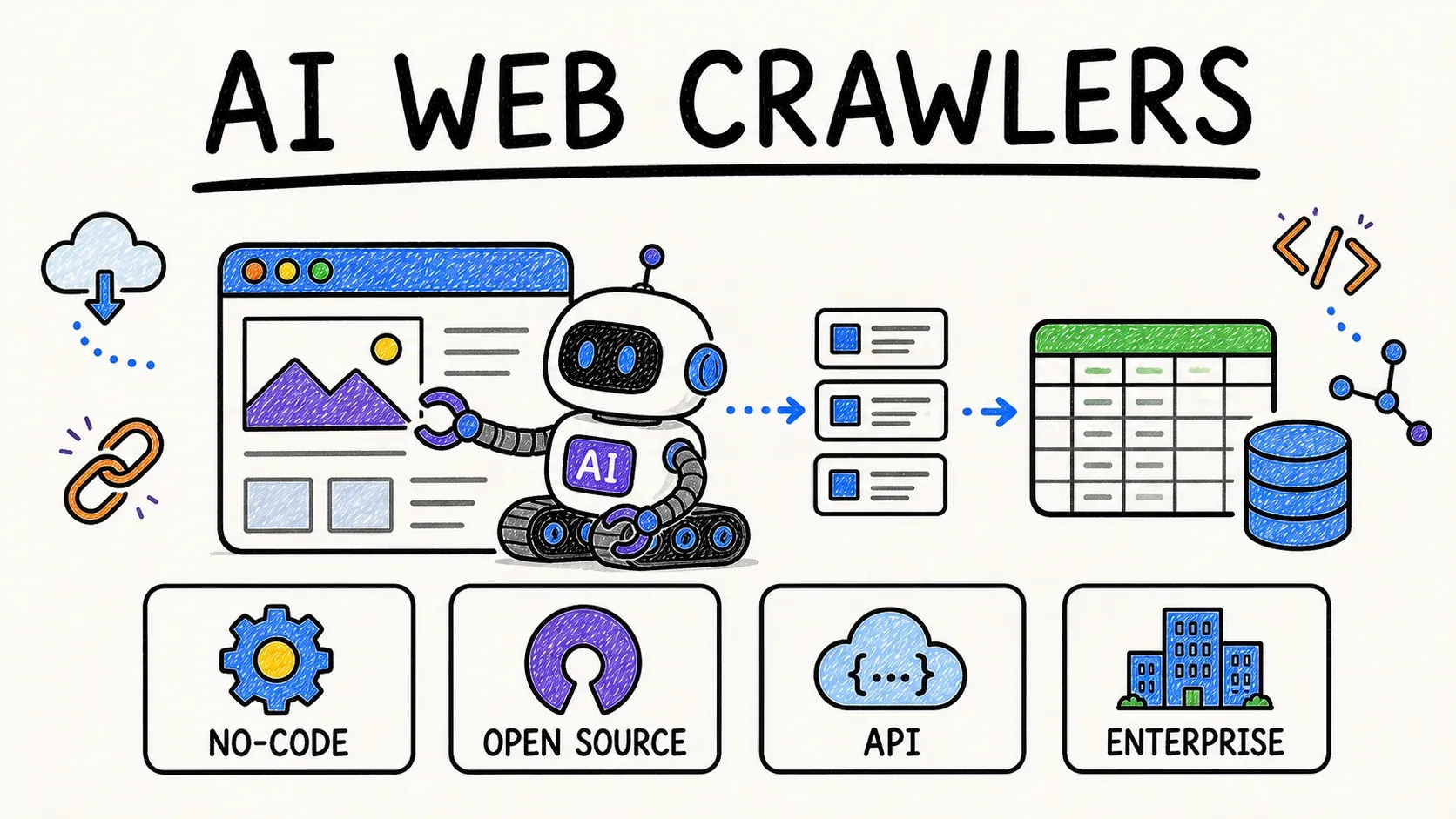
The web is growing at a pace that makes my morning coffee feel slow. Every day, businesses are racing to tap into this ocean of online data—whether it’s tracking competitor prices, finding new leads, or analyzing customer sentiment. But here’s the catch: doing this by hand is like trying to empty a swimming pool with a teaspoon. That’s why AI web scrapers have become the unsung heroes of modern business, quietly powering everything from sales prospecting to market research. I’ve watched this space explode over the past few years, and let me tell you—2026 is the year AI web scrapers go from “nice to have” to “absolutely essential.”
So, which tools are actually worth your time? I’ve dug deep, tested the top contenders, and compared their strengths for real-world business users. Whether you’re a sales pro, an ecommerce operator, or just someone tired of copy-paste marathons, here are the five best AI web scraper tools you need on your radar for 2026.
Why AI Web Scraper Tools Are a Must-Have for Modern Businesses
Let’s get real: data is the new oil, but only if you can extract it efficiently. In today’s data-driven landscape, AI web scrapers act like 24/7 virtual assistants, tirelessly pulling valuable insights from the internet—no caffeine required. They automate repetitive data collection, freeing up your team to focus on strategy instead of spreadsheets.
Here’s what makes AI web scrapers indispensable:
- Real-time market intelligence: Instantly track competitor prices, monitor product availability, or analyze customer reviews for sentiment ().
- Lead generation at scale: Build targeted lists from directories, LinkedIn, or industry sites—no more manual hunting.
- Operational efficiency: Automate daily data pulls, schedule recurring scrapes, and integrate results directly into your workflow.
- Accessibility for everyone: Modern AI scrapers are no longer just for developers. With natural language prompts and visual interfaces, even non-technical teams can extract structured data in minutes.
The numbers back it up: businesses adopting AI web scrapers report saving , and the global web scraping software market is projected to hit $2.5 billion by 2027 (). In short, if you’re not using an AI web scraper, you’re leaving money—and insights—on the table.
How We Chose the Best AI Web Scraper Tools
With dozens of options out there, picking the right AI web scraper can feel like speed-dating at a tech conference. Here’s how I narrowed it down:
- Ease of use: Can non-coders get started quickly? Is there a steep learning curve?
- Data accuracy: Does the tool reliably extract the right data, even from messy or dynamic sites?
- Speed & scalability: Can it handle large-scale projects, cross-page scraping, and scheduled tasks?
- Supported output formats: Does it export to Excel, Google Sheets, Airtable, Notion, or via API?
- Pricing: Is it affordable for startups and scalable for enterprises?
- Integration & automation: Can it fit into your existing workflow with minimal fuss?
I also looked at user reviews, support resources, and real-world business use cases. The result? A list of five tools that cover the spectrum—from no-code simplicity to developer-grade flexibility.
1. Thunderbit
is my top pick for business users who want to scrape data without the headaches. As a Chrome Extension powered by AI, Thunderbit is all about making web scraping accessible—no code, no templates, just results.
What sets Thunderbit apart? It’s the only tool I’ve seen where you can literally click “AI Suggest Fields,” let the AI read the page, and then hit “Scrape.” Whether you’re pulling leads from a directory, monitoring competitor SKUs, or extracting property listings, Thunderbit structures the data and exports it directly to Excel, Google Sheets, Airtable, or Notion. It even handles images, PDFs, and subpages with ease.
Thunderbit’s Standout Features
- Natural language prompts: Describe what you want (“Extract all product names and prices”), and the AI does the rest.
- AI Suggest Fields: Thunderbit scans the page and recommends the best columns to extract—no guesswork.
- Subpage & pagination support: Need to grab details from product pages or follow “Next” buttons? Thunderbit handles it automatically.
- Instant templates: For popular sites like Amazon, Zillow, and Shopify, just apply a pre-built template and go.
- Free data export: Download your results as CSV, Excel, or push directly to your favorite tools—no paywall surprises.
- Scheduled scraping: Set it and forget it—Thunderbit can run scrapes on a schedule for real-time monitoring.
- Built-in email, phone, and image extraction: One click to pull contact info or images from any page.
Thunderbit is especially popular with sales, ecommerce, and real estate teams who need quick, accurate data from any website. And with a free tier (scrape up to 6 pages, or 10 with a trial boost), you can try it risk-free.
Pricing: Free for small jobs; paid plans start at $15/month for 500 credits (1 credit = 1 output row). See the .
User Ratings:
For a deeper dive into how Thunderbit works, check out the or .
2. Octoparse
is a heavyweight in the AI web scraper world, known for its robust template library and advanced configuration options. If you need to scrape at scale—think thousands of pages, proxies, and captcha solving—Octoparse delivers.
Why choose Octoparse? It’s ideal for users who want more control over their scraping projects. The desktop app (Windows/Mac) lets you visually build workflows, interact with dynamic web elements, and leverage over 500 pre-built templates for common sites (like Twitter, Google Maps, and TikTok).
Octoparse Templates and Automation
- Template-rich: Start fast with templates for e-commerce, social media, job boards, and more.
- Advanced automation: Schedule recurring scrapes, rotate IPs, and solve captchas for uninterrupted data collection.
- Cloud & local runs: Run scrapes on your machine or in the cloud for speed and reliability.
- Export options: Download as CSV, Excel, JSON, or push to databases and APIs.
Pricing:
- Free plan: $0/month for up to 10 tasks
- Standard: $83/month for 100 tasks and 500+ templates
- Professional: $299/month for 250 tasks and advanced API support
- Enterprise: Custom pricing
User Ratings:
Octoparse is best for teams with some technical background or those tackling high-volume, complex sites.
3. ParseHub
is the go-to AI web scraper for anyone dealing with tricky, dynamic websites. Its visual, point-and-click interface guides you through building extraction workflows—even on sites with JavaScript rendering or complex layouts.
Why ParseHub? It’s perfect for users who want the power of custom scraping without writing code. The tool walks you through selecting elements, handling pagination, and extracting structured data step by step.
ParseHub’s Visual Workflow Builder
- Intuitive interface: Click on elements to build your scrape—no CSS selectors or scripting required.
- Handles dynamic content: Works with JavaScript-heavy sites, pop-ups, and interactive elements.
- Free & paid plans: Start for free (up to 5 projects), scale up as your needs grow.
- Export to CSV, Excel, JSON: Flexible output for any workflow.
Pricing:
- Free: 5 projects, 200 pages per run
- Standard: $149/month for more projects and cloud runs
- Professional: $499/month for enterprise features
User Ratings:
ParseHub is a favorite for marketers, researchers, and anyone facing websites that don’t play nice with basic scrapers.
4. Scrapy
is the open-source, Python-based framework that’s beloved by data scientists and technical teams. If you want full control—custom spiders, advanced logic, and integration into big data pipelines—Scrapy is your playground.
Why Scrapy? It’s not for the faint of heart (or the non-coder), but it’s unbeatable for large-scale, custom scraping projects. You can extend it with AI models, plug in your own data processing, and scale to millions of pages.
Scrapy for Custom AI Web Scraper Solutions
- Highly customizable: Write spiders in Python to scrape anything, anywhere.
- Scalable: Handles distributed crawling, asynchronous requests, and massive datasets.
- Open-source & free: No licensing fees; huge community support.
- Integrates with AI: Plug in NLP models, sentiment analysis, or custom data enrichment.
Best for: Technical teams, data scientists, and anyone building bespoke scraping solutions.
User Ratings:
If you’re comfortable with Python, Scrapy is as powerful as it gets.
5. Import.io
is a cloud-based AI web scraper focused on real-time data integration for analytics and business intelligence. It’s all about turning web data into live feeds for your dashboards, spreadsheets, or applications.
Why Import.io? It excels at extracting, transforming, and delivering data directly into your BI tools—think automated price monitoring, news aggregation, or supply chain tracking.
Import.io’s Data Delivery and API Features
- Real-time data feeds: Set up automated pipelines to keep your data fresh.
- API access: Integrate scraped data directly into your apps or analytics stack.
- Enterprise-grade: Scales for large teams and mission-critical projects.
- Flexible output: Export to CSV, Excel, JSON, or push to cloud storage.
Pricing:
- Custom quotes based on usage and integration needs
- Free trial available
User Ratings:
Import.io is a top choice for data analysts and teams needing up-to-date, integrated web data.
At-a-Glance Comparison: Which AI Web Scraper Fits Your Needs?
| Tool | Key Features | Best For | Ease of Use | Pricing (Starting) | Output Formats |
|---|---|---|---|---|---|
| Thunderbit | Natural language, 1-click, subpage & PDF/image scraping | Sales, real estate, ecommerce | ⭐⭐⭐⭐⭐ | $15/mo | Excel, Sheets, Airtable, Notion, CSV, JSON |
| Octoparse | Template-rich, proxies, scheduling, advanced config | Large-scale, technical users | ⭐⭐⭐⭐ | $83/mo | CSV, Excel, JSON, API |
| ParseHub | Visual builder, dynamic sites, free tier | Complex/dynamic websites | ⭐⭐⭐⭐ | Free/$149/mo | CSV, Excel, JSON |
| Scrapy | Python framework, fully custom, open-source | Data science, custom projects | ⭐⭐ | Free | Custom (CSV, JSON, DB, etc.) |
| Import.io | Real-time feeds, API, enterprise integration | BI, analytics, data integration | ⭐⭐⭐ | Custom | CSV, Excel, JSON, API |
Quick Recommendations:
- No-code users: Thunderbit, ParseHub
- Large-scale/technical: Octoparse, Scrapy
- Real-time integration: Import.io
- Best for sales/ecommerce: Thunderbit
- Best for custom data science: Scrapy
Choosing the Right AI Web Scraper: Key Takeaways
Each of these AI web scraper tools brings something unique to the table:
- Thunderbit is the easiest for non-technical users—perfect for sales, operations, and ecommerce teams who want fast, accurate data with zero setup.
- Octoparse is a powerhouse for large-scale, template-driven scraping—great for teams with technical chops or big data needs.
- ParseHub shines on complex, dynamic sites—ideal for marketers and researchers who need a visual, step-by-step approach.
- Scrapy is the gold standard for developers—if you want to build custom, scalable scraping pipelines, this is your tool.
- Import.io is all about real-time data delivery and integration—best for analysts and enterprises needing live data feeds.
My advice? Start with a free trial or demo. Match the tool to your team’s technical skills, data requirements, and budget. And don’t be afraid to experiment—AI web scrapers are evolving fast, and the right tool can turn hours of grunt work into a few clicks.
If you’re curious to see Thunderbit in action, and give it a spin. And for more tips, tutorials, and deep dives, check out the .
FAQs
1. What is an AI web scraper and how is it different from traditional scrapers?
An AI web scraper uses artificial intelligence to understand and extract data from websites, often with natural language prompts and automatic field detection. Unlike traditional scrapers that require coding or manual setup, AI web scrapers are more accessible, adapt to layout changes, and can handle unstructured data.
2. Which AI web scraper is best for non-technical users?
Thunderbit and ParseHub are both excellent for non-coders. Thunderbit stands out for its 1-click, natural language-driven workflow, while ParseHub offers a visual, point-and-click interface.
3. Can AI web scrapers handle dynamic or JavaScript-heavy websites?
Yes—tools like ParseHub and Octoparse are designed to handle dynamic content, pop-ups, and JavaScript rendering. Scrapy (with the right plugins) can also tackle complex sites, but requires programming knowledge.
4. How do AI web scrapers help with business tasks like lead generation or price monitoring?
AI web scrapers automate the collection of leads from directories, LinkedIn, or event sites, and can monitor competitor prices or product availability in real time. This saves hours of manual work and delivers up-to-date insights for sales, marketing, and operations teams.
5. Is web scraping legal, and how can I use these tools responsibly?
Web scraping is legal when done responsibly—always respect website terms of service, avoid scraping personal data without consent, and use scraped data ethically. Many AI web scrapers include features to help you stay compliant, such as throttling, scheduling, and data cleaning.
Ready to supercharge your data workflows? Try out one of these AI web scrapers and see how much time (and sanity) you can save. And if you want to keep learning, the is packed with guides, best practices, and the latest in AI-powered data extraction.