
Let’s be honest: market research used to feel like running a marathon in flip-flops. You’d spend weeks wrangling spreadsheets, stalking competitor websites, and reading customer reviews until your eyes glazed over—only to realize the market had already shifted by the time you finished. I’ve been there, and I still have nightmares about copy-pasting product prices at 2 a.m. (If you’ve ever tried to scrape 500 SKUs by hand, you know what I mean.)
But here’s the good news: the AI revolution has finally come for market research, and it’s not just for the data scientists or the Fortune 500. Today, AI tools can track your competitors, spot emerging trends, analyze thousands of customer reviews, and even build you a battlecard before your coffee gets cold. In fact, 77% of businesses are already using or exploring AI, and 83% consider it a top priority. If you’re still relying on manual methods, you’re not just behind—you’re probably missing out on insights your competitors are already acting on.
So, what’s the secret sauce? In this post, I’ll break down the best AI for market research, show you what these tools actually do, and share practical tips for business users (not just the techies). Whether you’re in sales, marketing, product, or just tired of copy-paste fatigue, there’s something here for you.
What is AI for Market Research? A Simple Guide
Let’s start with the basics. When people talk about “AI for market research,” what does that actually mean? In plain English, it’s about using artificial intelligence—think machine learning, natural language processing (NLP), and automation—to do the heavy lifting in gathering and analyzing market data.
Instead of spending hours sifting through competitor websites or reading every single customer review, AI tools can:
- Track competitor pricing and product changes in real time
- Analyze thousands of customer reviews to spot sentiment and themes
- Scan social media and search trends to catch what’s about to go viral
For example, imagine you want to know if your competitor just dropped their prices or launched a new feature. An AI tool can monitor their website, flag the change, and send you an alert—no more late-night website refreshes required. Or, say you want to understand what customers love (or hate) about your product. AI can read through thousands of reviews, categorize the feedback, and tell you exactly what’s driving satisfaction or churn.
Best AI Web Scraping Tools Explore the top AI web scraping tools for market research and data extraction. Get Started Free
The real magic is that AI doesn’t just crunch numbers—it can interpret unstructured data, like open-ended survey responses or social media chatter, and turn it into structured, actionable insights. That’s a game I want to play.
If you want a deeper dive into how AI web scraping fits into this, check out Thunderbit’s guide to web scraping tools.
Why Use AI Tools for Market Research? The Business Case
Let’s get practical. Why bother with AI market research tools when you could just hire more analysts or keep doing things the old way? Here’s the business case, plain and simple:
- Speed and Real-Time Insights: AI can analyze data in seconds, not weeks. Reports that used to take a month now land in your inbox before lunch. Ipsos used AI to process thousands of survey responses across languages, cutting analysis time dramatically.
- Improved Accuracy and Depth: AI reduces human error and can spot subtle patterns you’d miss. It pulls from multiple sources—websites, social, news—so you don’t miss a thing.
- Scale and Efficiency: Need to monitor 50 competitors or analyze 100,000 survey responses? AI doesn’t break a sweat. Greyhound saved over $200,000 in labor by automating feedback coding, and achieved a 95% reduction in analysis time.
- Cost Savings and ROI: By automating manual research, you cut outsourcing and labor costs. Marketers using generative AI report saving 5+ hours per week, which adds up to over a month per year.
- Actionable and Predictive Insights: AI doesn’t just tell you what happened—it predicts what’s coming. Unilever used AI-based trend forecasting to launch a new product line ahead of competitors.
Here’s a quick table summarizing key use cases and the value AI delivers:
| Use Case | Value Delivered |
|---|---|
| Competitor Monitoring | Real-time alerts, faster response |
| Lead Generation | Automated data enrichment, better leads |
| Trend Spotting | Early-mover advantage, new opportunities |
| Customer Feedback Analysis | Actionable themes, faster improvements |
| Brand Tracking | Continuous measurement, campaign ROI |
| Market Sizing & Benchmarking | Clearer strategy, smarter investments |
The bottom line: 9 out of 10 organizations use AI to gain a competitive advantage. If you’re not on board, you’re probably helping your competitors win.
How to Choose the Best AI for Market Research
With so many shiny new tools out there, how do you pick the right one? Here’s my go-to checklist (and yes, I’ve learned some of these the hard way):
- Define Your Goals: What do you actually need? Tracking competitors? Analyzing customer feedback? Spotting trends? Be specific.
- Data Sources & Integration: Does the tool pull from all the places you care about—websites, social, internal databases? Can it connect to your CRM or BI dashboard?
- AI Capabilities: Does it use NLP for text? Machine learning for predictions? Can you customize or fine-tune the AI for your industry?
- Usability: Is the interface intuitive? Can non-technical users get value without a PhD in data science?
- Reporting & Actionability: Does it spit out clear, decision-ready insights? Can you share findings easily?
- Pricing: Does it fit your budget? Are there free trials or scalable plans?
- Compliance & Privacy: Does it meet your data privacy needs (GDPR, CCPA, etc.)?
Pro tip: Read real user reviews and case studies. A tool that looks great in a demo might not fit your workflow in practice.
The 10 Best AI for Market Research Tools in 2025
Here’s a quick anchor list for easy navigation:
- Crayon: Real-Time Competitive Intelligence
- Glimpse: Spotting Trends Before They Go Mainstream
- Thunderbit: Scrape and Analyze Web Data with AI
- Clay: Automate Data Enrichment and Research
- SparkToro: Audience Insights Made Easy
- Kompyte: AI-Powered Competitive Tracking
- Releasenote.ai: Turn Engineering Updates into Release Notes
- Latana: AI-Driven Brand Tracking
- Semrush Market Explorer: Market and Competitor Analysis
- Thematic: AI-Powered Feedback Analysis
1. Crayon: Real-Time Competitive Intelligence
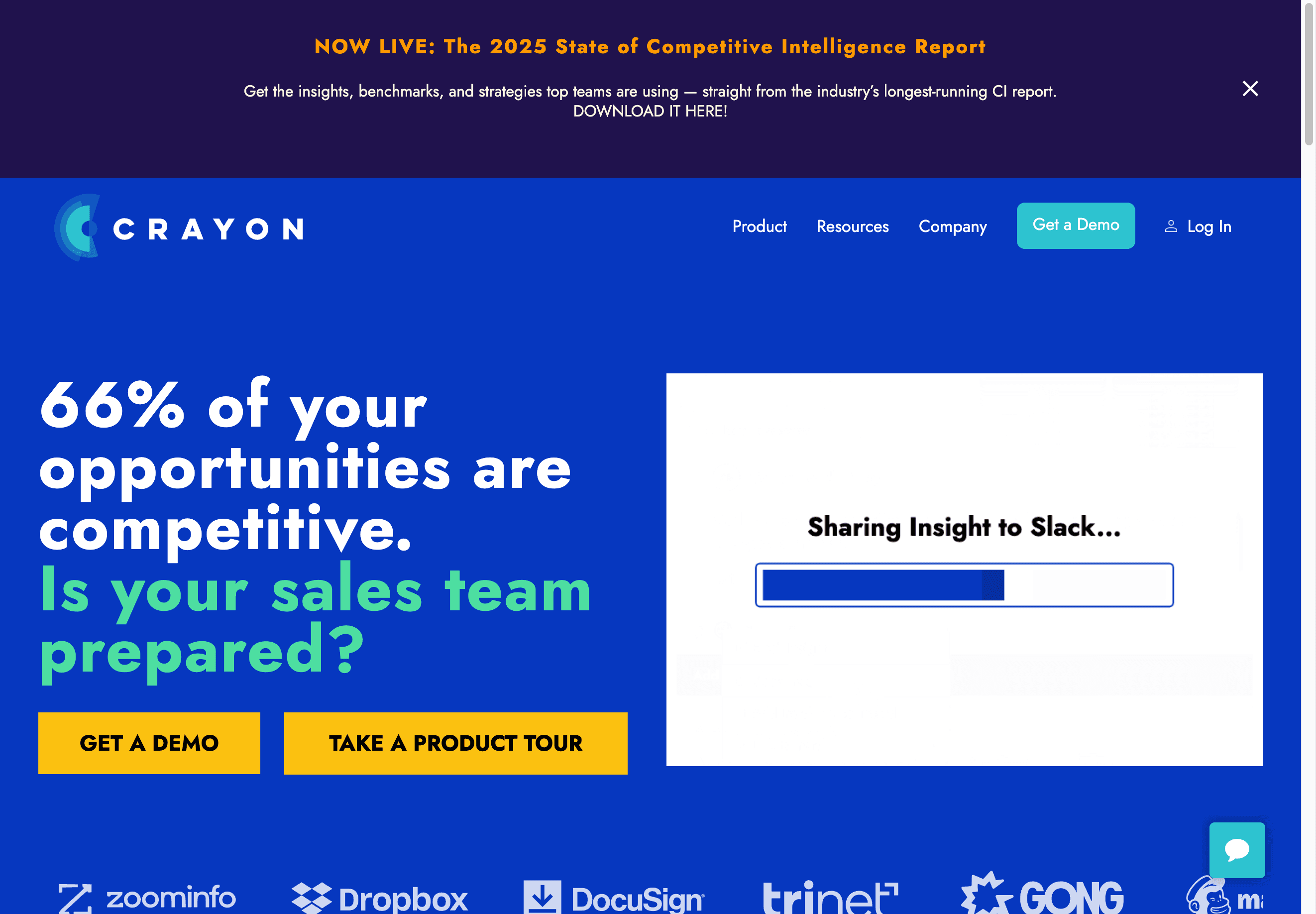
Crayon is like having a 24/7 competitive intelligence analyst who never sleeps (and never asks for a raise). It automatically tracks your competitors across hundreds of digital sources—websites, pricing pages, social media, news—and flags important changes in real time. If a rival updates their product page or drops their prices, Crayon’s AI catches it and sends you an alert.
The real star? Dynamic Battlecards—auto-generated briefs that give your sales and marketing teams the latest intel, from product differentiators to recent headlines. No more scrambling to answer “How do we compare to Competitor X?” in a sales call.
Best for: Sales enablement, product marketing, strategy teams who need a continuous pulse on competitors.
2. Glimpse: Spotting Trends Before They Go Mainstream
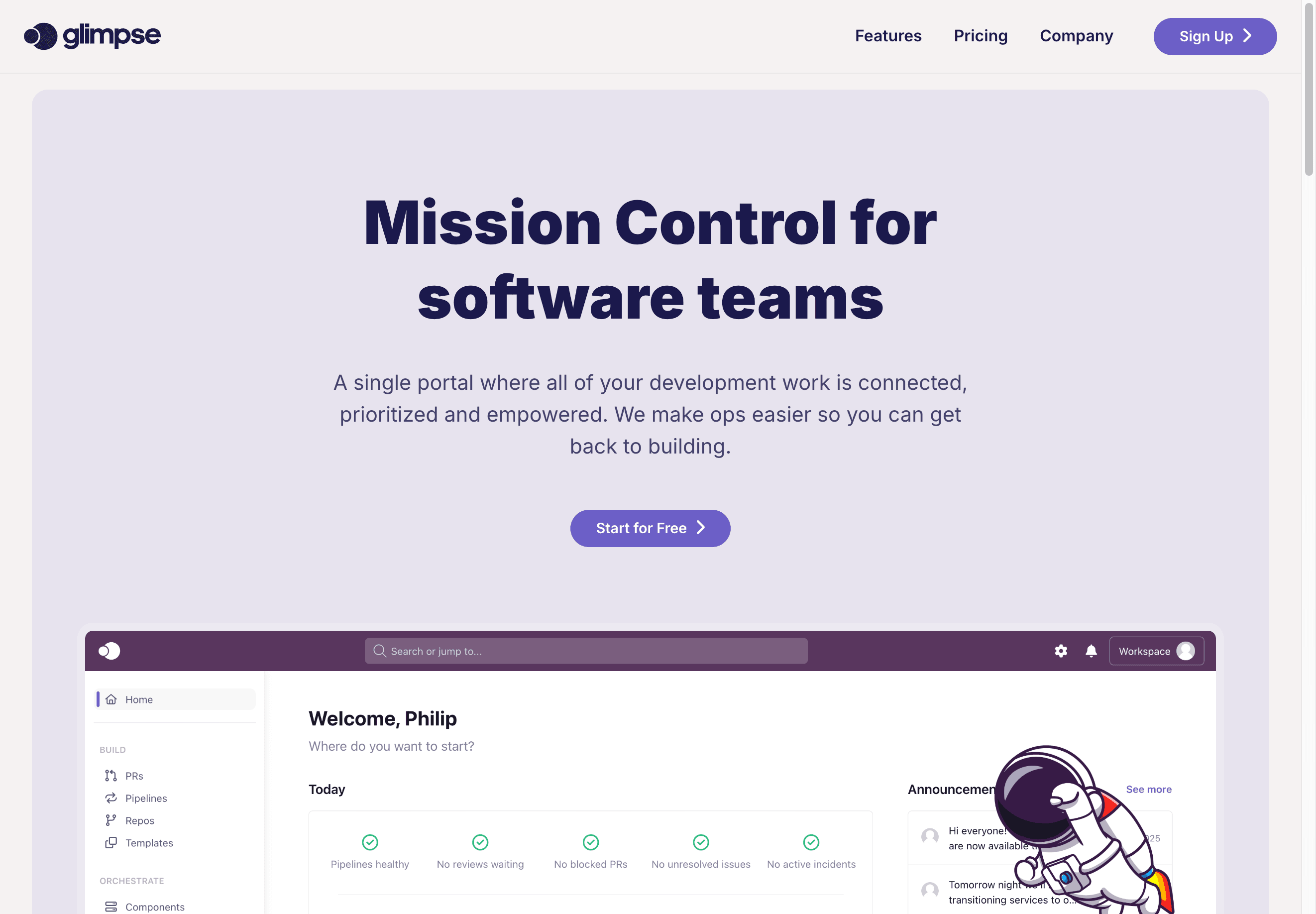
Glimpse is your AI-powered crystal ball for trend discovery. It analyzes millions of consumer behavior signals—search queries, social media, ecommerce data—to spot under-the-radar trends before they explode. Want to know what’s about to go viral in your industry? Glimpse can tell you, with predictive modeling that claims 95%+ accuracy.
The dashboard is a breeze: explore trending topics, set up alerts for keywords, and see which channels (TikTok, Reddit, etc.) are driving the buzz.
Best for: Product development, innovation, marketing teams who want to catch trends early.
3. Thunderbit: Scrape and Analyze Web Data with AI
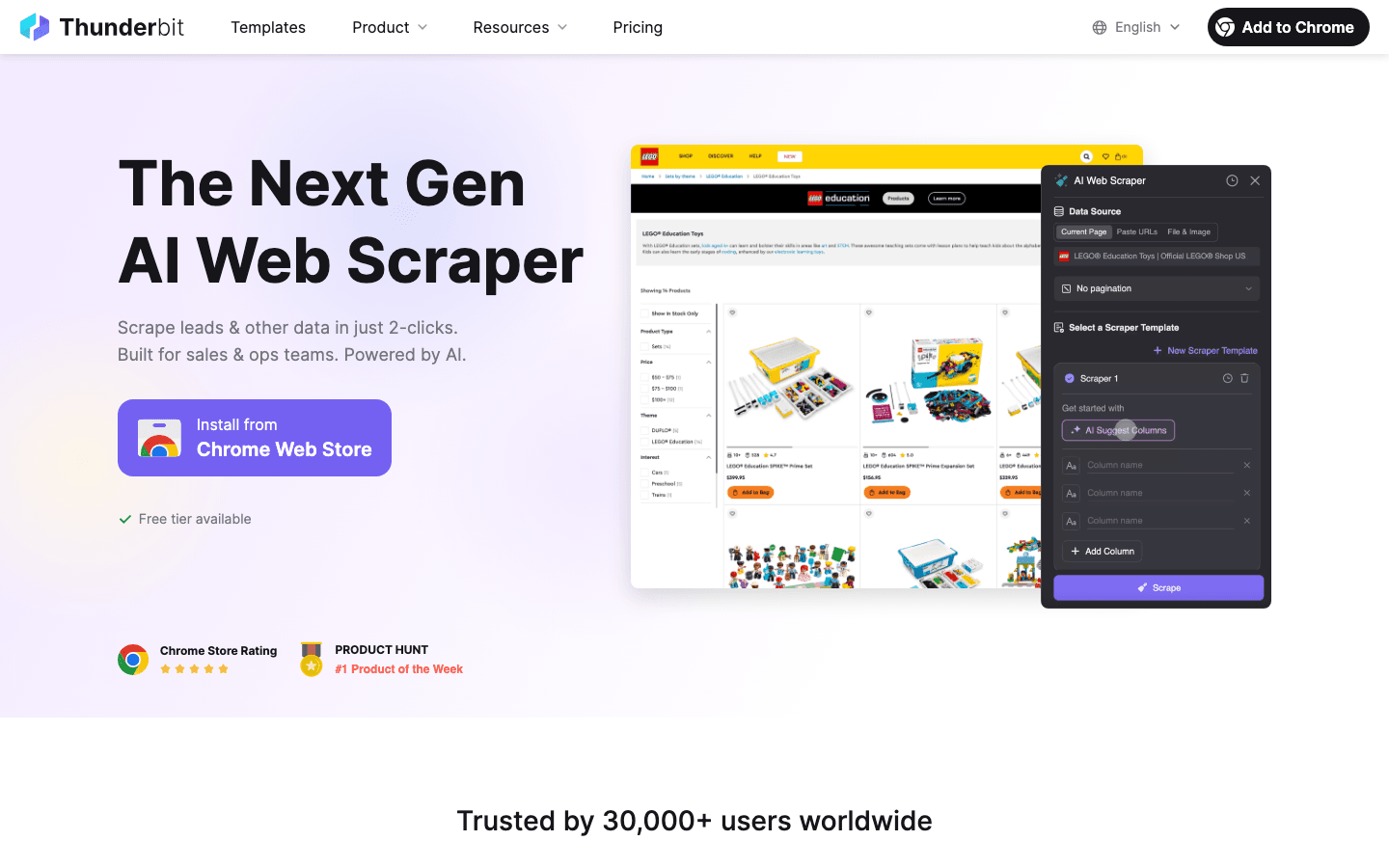
Okay, I’m a little biased here, but Thunderbit is the tool I wish I’d had years ago. Thunderbit is an AI web scraper Chrome Extension that lets you extract structured data from any website in just a couple of clicks—no coding, no IT tickets, no headaches.
Here’s how it works:
- Navigate to the page you want to scrape (say, a competitor’s product listing).
- Click “AI Suggest Fields”—Thunderbit reads the page and proposes which data fields to extract (product name, price, rating, etc.).
- Adjust if needed, then hit “Scrape.” Thunderbit pulls all the data—even across paginated or infinite scroll pages.
- Need more detail? Use subpage scraping to visit each product’s detail page and enrich your dataset.
- Export to Excel, Google Sheets, Airtable, or Notion—free.
Thunderbit also offers pre-built templates for popular sites (Amazon, Zillow, LinkedIn), scheduled scraping, and one-click extractors for emails, phone numbers, and images. It’s designed for non-technical users—if you can use a browser, you can use Thunderbit.
Best for: Sales teams building lead lists, ecommerce analysts tracking competitor SKUs and prices, marketing teams collecting customer reviews.
Read more about Thunderbit’s features
Try Thunderbit for AI Market Research
4. Clay: Automate Data Enrichment and Research
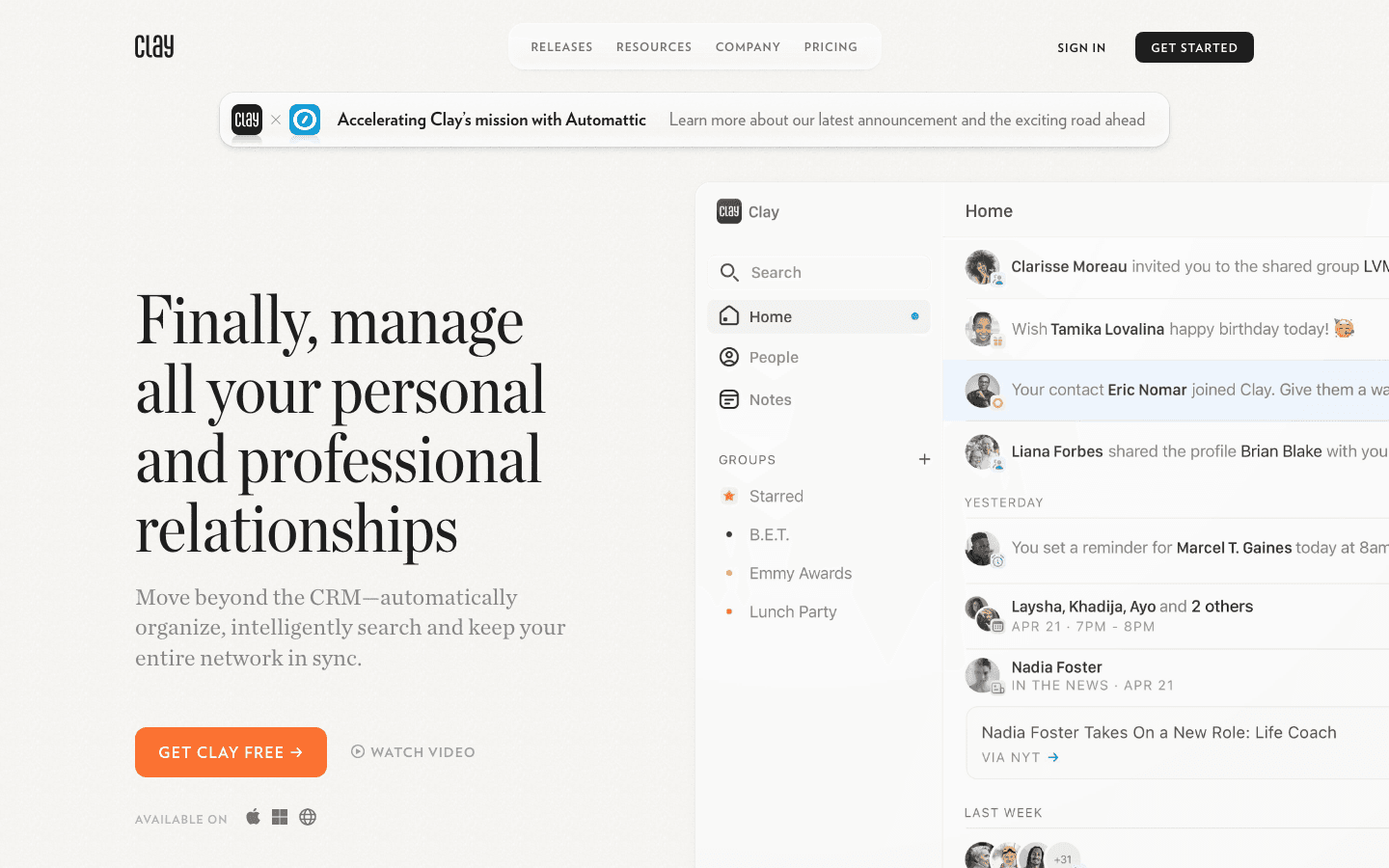
Clay is the Swiss Army knife for lead research and data enrichment. Imagine a smart spreadsheet that connects to 100+ data sources—LinkedIn, Crunchbase, Google Maps, and more—and fills in the blanks for you. Want to build a list of companies and automatically find their websites, key contacts, and recent news? Clay does it.
Clay’s AI agent can even handle unstructured tasks, like searching the web for recent job openings or press releases. It integrates with your CRM, supports waterfall enrichment (if one source fails, try another), and can generate personalized outreach copy using GPT.
Best for: B2B sales, growth, and RevOps teams automating prospecting and market mapping.
5. SparkToro: Audience Insights Made Easy
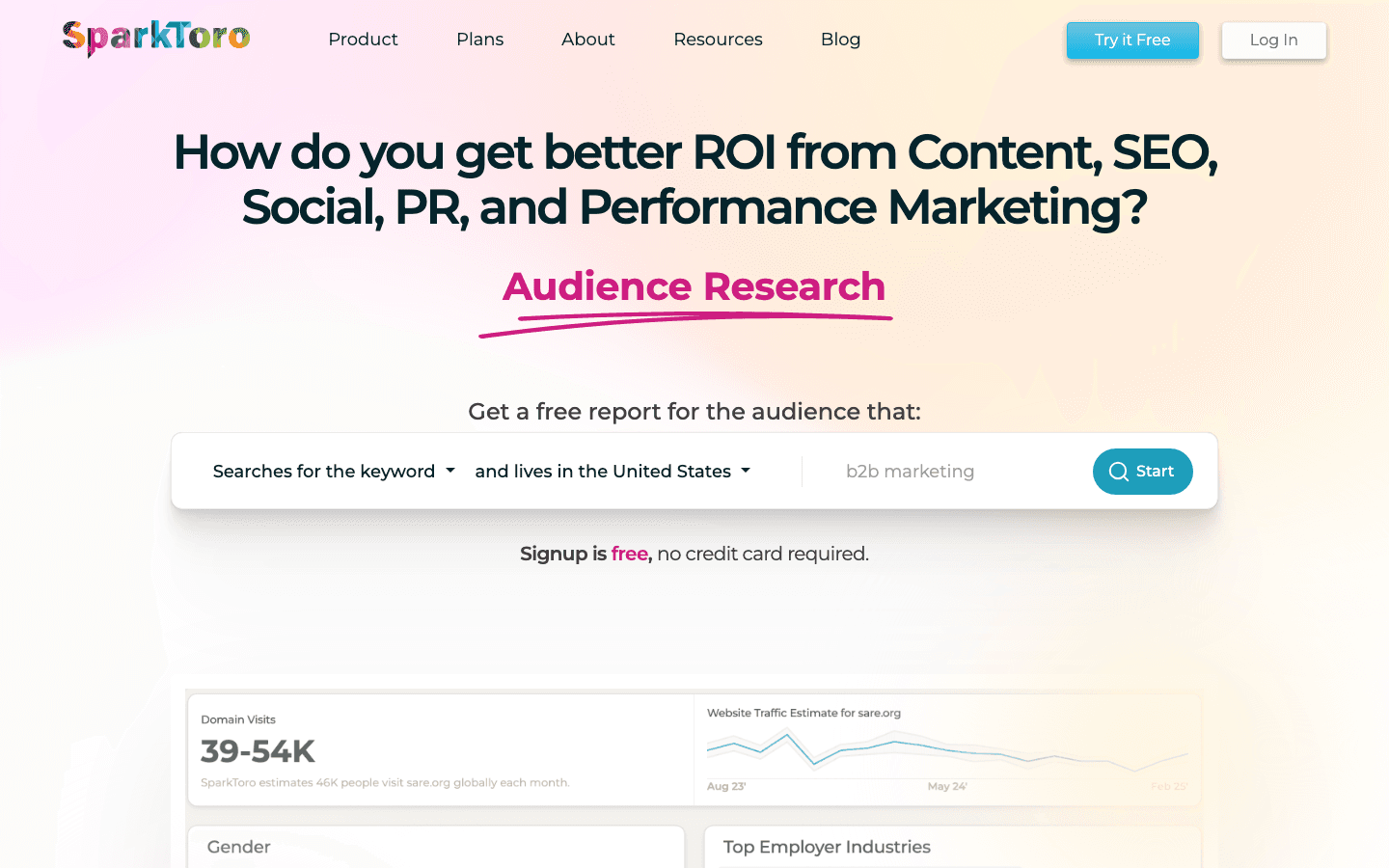
SparkToro is the answer to “Where does my audience hang out online?” It crawls social profiles and public web data to show you the websites, podcasts, YouTube channels, and influencers your target audience actually pays attention to.
Type in “VP Marketing” or “JavaScript developer,” and SparkToro tells you what that group reads, listens to, and follows. It’s a goldmine for content planning, influencer discovery, and media buying—no more guessing where to place your ads or pitch your story.
Best for: Marketing strategists, content marketers, brand managers focused on targeting and influencer marketing.
6. Kompyte: AI-Powered Competitive Tracking
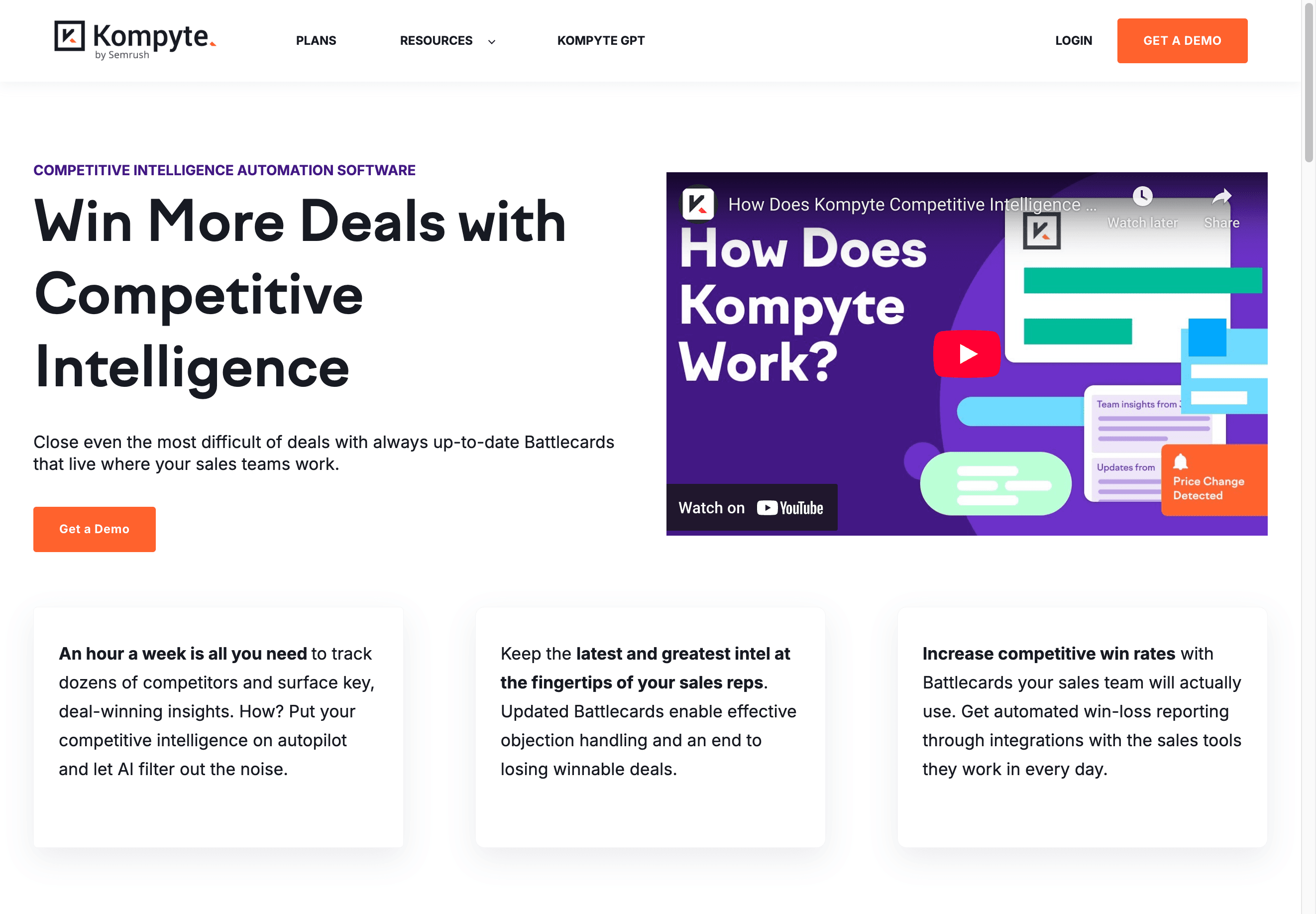
Kompyte (now part of the Semrush family) automates competitor monitoring and sales enablement. Feed it a list of competitors, and Kompyte tracks their websites, social media, ads, job postings, and more—then uses AI to filter out the noise and highlight what matters.
The real kicker? Always-updated battlecards that live inside your CRM or Slack, so sales reps always have the latest talking points. Kompyte also supports win-loss analysis and collaborative reporting.
Best for: Product marketing, competitive intelligence, sales enablement teams in medium to large organizations.
7. Releasenote.ai: Turn Engineering Updates into Release Notes
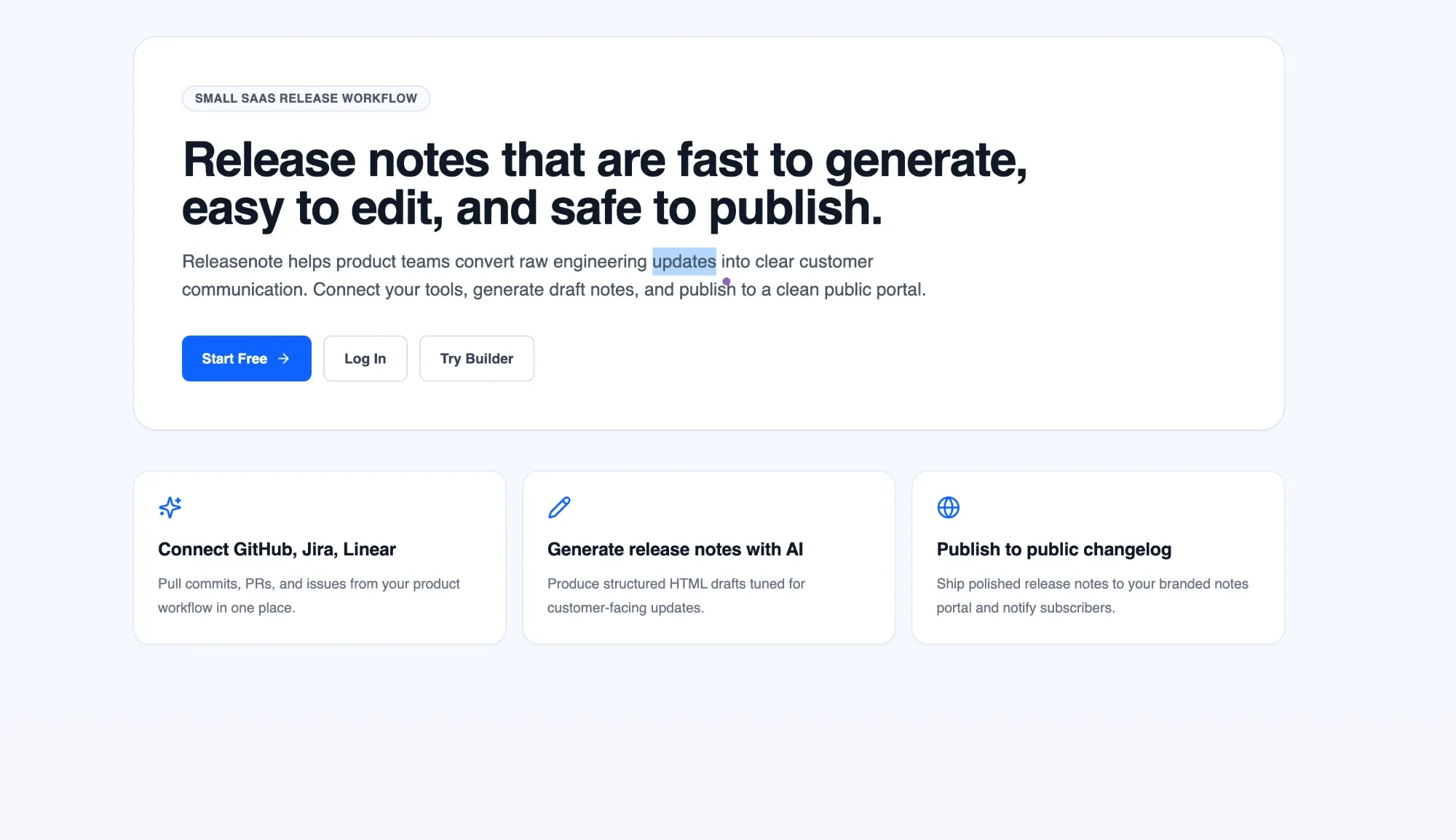
Releasenote.ai is your AI-powered release notes writer. It connects to GitHub, Jira, and Linear, turns raw commits, PRs, and issues into customer-ready draft notes, and publishes them to a clean public changelog. No more translating technical jargon by hand—just the highlights your users need.
You can draft from your existing workflow, edit before anything ships, and notify subscribers the moment the changelog updates. Perfect for product managers, technical writers, and anyone who hates writing release notes from scratch.
Best for: Product managers, technical writers, small SaaS teams.
Learn more about Releasenote.ai
8. Latana: AI-Driven Brand Tracking
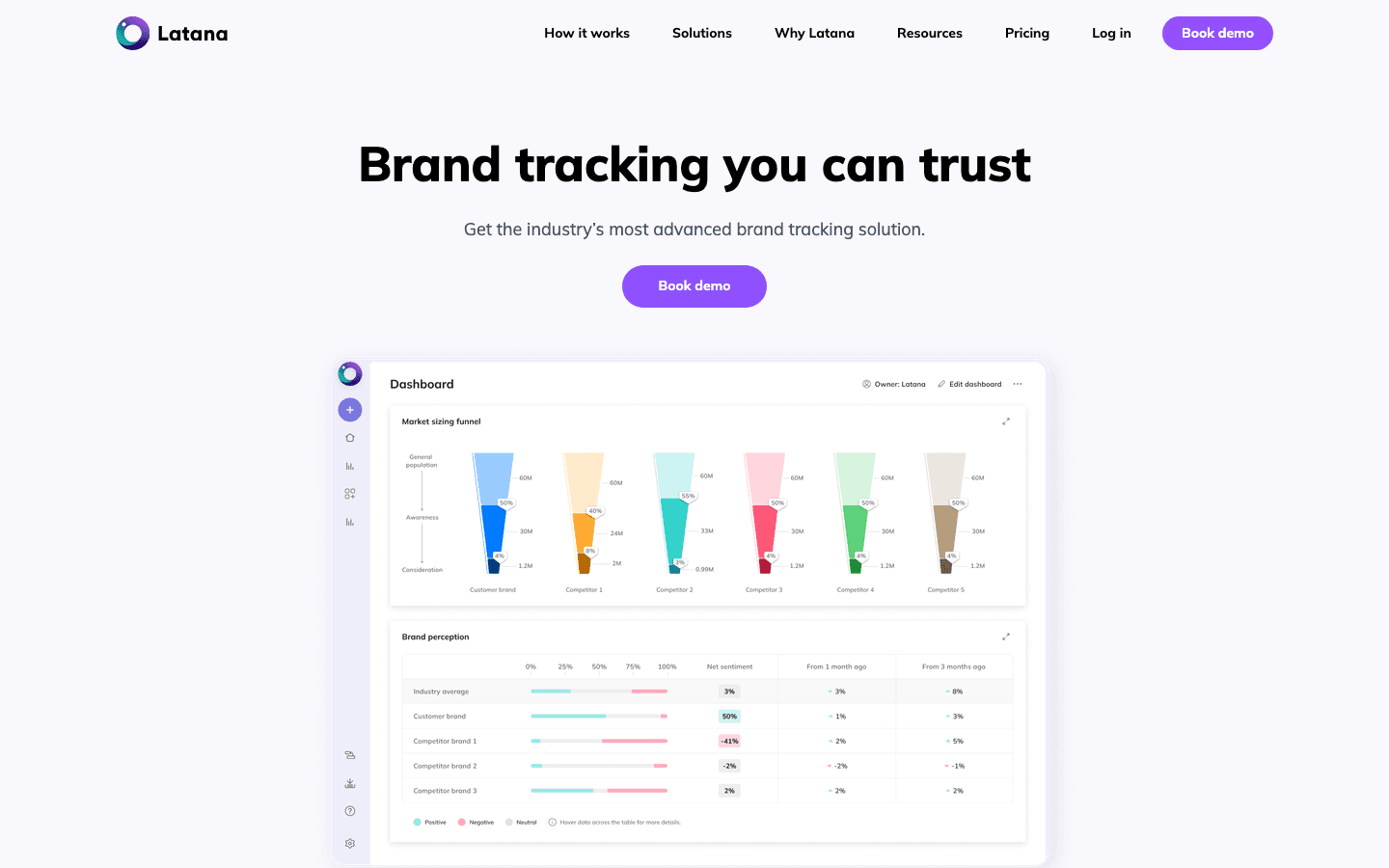
Latana brings AI to brand tracking and consumer insights. It uses mobile-enabled surveys and machine learning to measure brand awareness, perception, and campaign effectiveness across markets and demographics. The dashboard lets you slice and dice by segment, benchmark against competitors, and track changes over time.
Latana’s advanced analytics ensure the data is accurate and actionable—even for niche segments or new markets.
Best for: Brand managers, CMOs, marketing analysts monitoring brand health and campaign impact.
9. Semrush Market Explorer: Market and Competitor Analysis
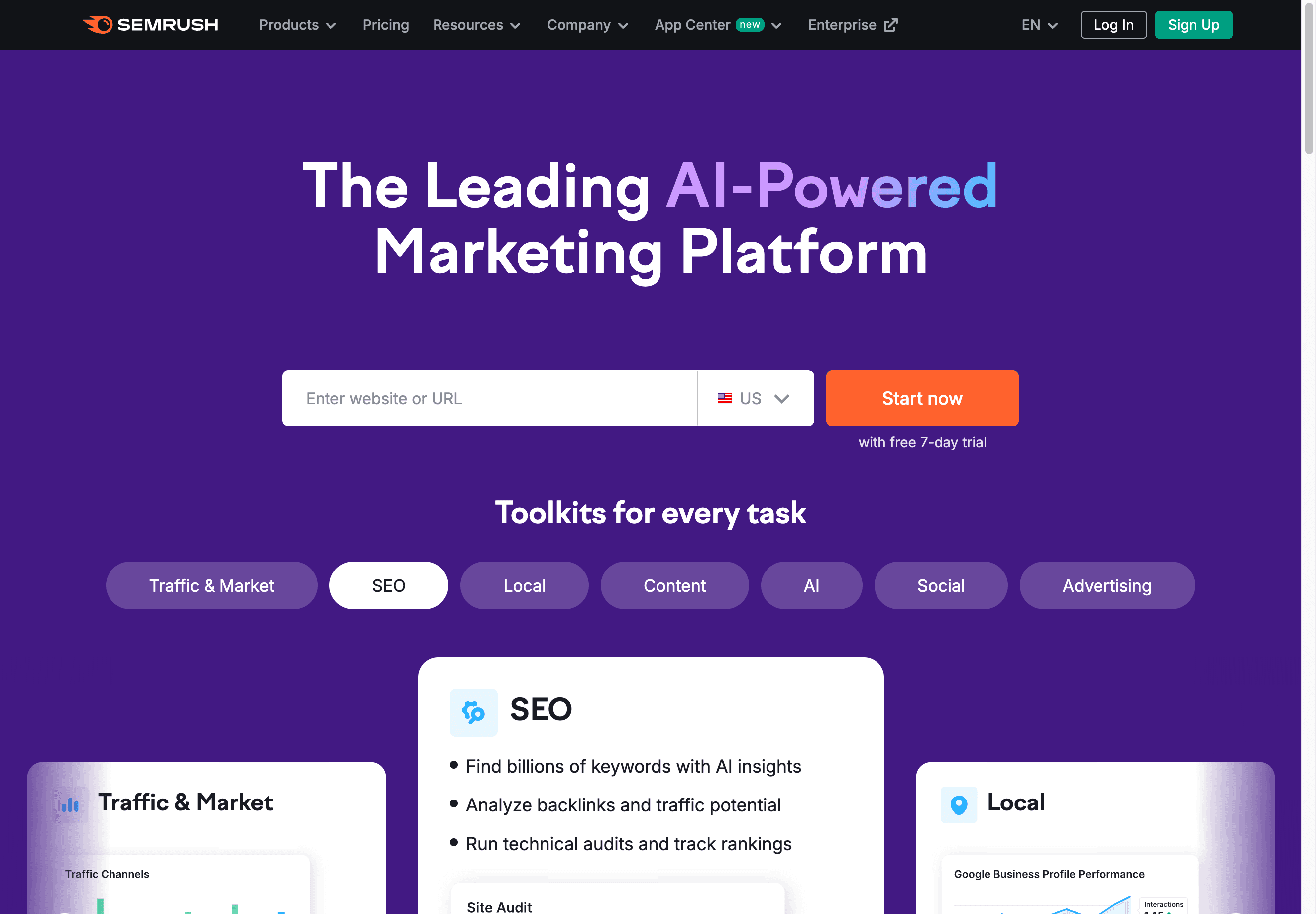
Semrush Market Explorer is like an X-ray for your industry. Enter a domain, and it maps out the entire online market—showing you the main players, their traffic share, growth rates, audience demographics, and traffic sources.
The Growth Quadrant visualization is especially handy for presentations: instantly see who’s leading, who’s growing, and who’s about to disrupt the market.
Best for: Strategic planners, market researchers, digital marketing teams.
Explore Semrush Market Explorer
10. Thematic: AI-Powered Feedback Analysis
Thematic is your AI-powered feedback analyst. Feed it open-ended survey responses, reviews, or support tickets, and it automatically tags and groups feedback into themes and sub-themes, analyzing sentiment for each. Want to know what’s driving NPS up or down? Thematic tells you, with clear visuals and actionable alerts.
It’s not a black box—you can review, merge, or rename themes, ensuring the insights fit your business context.
Best for: Customer experience teams, market researchers, product teams dealing with large volumes of feedback.
Quick Comparison Table: Best AI Market Research Tools
| Tool | Best For | Main Features | Pricing | Ideal Users |
|---|---|---|---|---|
| Crayon | Real-time competitor intel | AI tracking, alerts, dynamic battlecards | Enterprise (custom) | Sales, product marketing, strategy |
| Glimpse | Trend spotting | Trend discovery, predictive analytics, alerts | Freemium, paid ~$49+/mo | Innovation, product, marketing |
| Thunderbit | Web data scraping (no-code) | AI field detection, subpage/pagination, templates, export | Free trial, paid credits | Sales, ecommerce, non-technical users |
| Clay | Lead research & enrichment | 100+ data sources, AI agent, CRM integration | Free tier, paid from $149/mo | Sales, growth, RevOps |
| SparkToro | Audience intelligence | Audience affinities, influencer discovery, easy querying | Free limited, paid ~$50/mo | Marketing, content, brand |
| Kompyte | Competitor monitoring | Automated tracking, AI summaries, battlecards, CRM/Slack integration | Enterprise (custom/Semrush) | Product marketing, sales enablement |
| Releasenote.ai | Product update tracking | Monitors release notes, AI summaries, impact analysis | Subscription (TBD) | Product, tech, sales enablement |
| Latana | Brand awareness tracking | AI-driven surveys, ML analytics, competitor benchmarks | From €7,900/market/yr | Brand, CMO, marketing analysts |
| Semrush Market Explorer | Market mapping | Market share, Growth Quadrant, audience/traffic insights | Guru/Business plans ~$229+/mo | Strategy, market research, digital marketing |
| Thematic | Feedback analysis (text) | NLP theme detection, sentiment, filtering, alerts, integrations | From $25,000/yr | CX, market research, product |
How to Get Started with AI Market Research Tools
Ready to dip your toes in? Here’s my playbook for piloting and adopting a new AI market research tool:
- Start with a Clear Goal: Pick one pain point—maybe it’s competitor tracking, or analyzing customer feedback faster. Define what success looks like.
- Get Stakeholder Buy-In: Show your team how AI will help them (not replace them). Share quick wins and case studies.
- Leverage Free Trials: Most tools offer demos or free credits. Use your real data to see the value.
- Measure and Communicate Wins: Track time saved, new insights, or improved accuracy. Share these wins internally to build momentum.
- Integrate with Workflows: Connect the tool to your CRM, Slack, or dashboards so insights flow where your team already works.
- Train and Experiment: Host a quick training, encourage experimentation, and don’t be afraid to challenge the AI’s output.
- Mind Data Quality and Privacy: Clean your data, check compliance, and work with IT or data governance early.
- Manage Change: Frame AI as an enhancement, not a replacement. Set realistic expectations—there’s always a learning curve.
- Scale Up: Once you see value in a pilot, expand to more teams or use cases. Keep iterating and collecting feedback.
If you want a deeper step-by-step guide, this resource is a great place to start.
The Future of AI in Market Research: What’s Next?
AI in market research is just getting started. Here’s what I’m watching for:
- Predictive and Prescriptive Analytics: AI will move from describing what happened to telling you what to do next.
- Hyper-Personalization: Insights will get more granular—think “segments of one” instead of broad demographics.
- Multi-Modal Analysis: AI will analyze not just text and numbers, but speech, images, even video and biometric data.
- End-to-End Automation: From survey design to report generation, AI will automate more of the research process.
- Real-Time Insights: Continuous monitoring and instant alerts will become the norm.
- Ethical AI and Privacy: Expect more built-in governance, transparency, and privacy features.
- Integration Everywhere: AI insights will show up in your CRM, project management, and even your email client.
- New Data Sources: AI will infer insights from big data, sometimes replacing traditional panels or surveys.
What Is List Crawling and How to Do It Using AI Learn how AI can automate list crawling for market research and lead generation. Get Started Free
The upshot? As one industry report noted, AI market research tools will increasingly auto-detect industry shifts, sentiment changes, and competitive threats—giving you real-time alerts and proactive recommendations.
Conclusion: Choosing the Best AI for Your Market Research Needs
The age of AI-powered market research is here, and the benefits are undeniable: faster insights, richer analysis, and more confident decisions. The best AI for market research isn’t just about features—it’s about fit. Match the tool to your goals, your team’s workflow, and your budget. And remember, user adoption is everything—a tool is only as good as the people who use it.
If you’re ready to get started, shortlist a couple of tools from this list, schedule demos, and run a pilot with real data. In my experience, the “aha” moment comes fast—sometimes before you’ve even finished your coffee.
And if you’re curious about how AI web scraping can supercharge your research, give Thunderbit a try. You might just find yourself with more time, better data, and—dare I say—a little more fun in your day.
Start AI-Powered Market Research with Thunderbit
Happy researching, and may your insights always be actionable (and your spreadsheets a little less terrifying).
Want more tips and guides on AI-powered productivity? Check out the Thunderbit Blog for deep dives on scraping website data into Excel, list crawling with AI, and more.
Try AI Web Scraper for Market Research Get Started Free
FAQs
1. What is AI for market research and how does it work?
AI for market research uses technologies like machine learning and natural language processing to automate the collection, analysis, and interpretation of market data. These tools can track competitor activity, analyze customer feedback, spot emerging trends, and turn unstructured data (like reviews or social media posts) into actionable insights—saving time and improving accuracy compared to manual methods.
2. What are the main benefits of using AI tools for market research?
AI tools offer several benefits:
- Speed: Analyze large datasets in seconds instead of weeks.
- Accuracy: Reduce human error and uncover subtle patterns.
- Scalability: Monitor multiple competitors or analyze thousands of responses effortlessly.
- Cost Savings: Automate manual tasks, reducing labor and outsourcing costs.
- Actionable Insights: Move beyond reporting what happened to predicting trends and suggesting next steps.
3. How do I choose the best AI market research tool for my business?
To choose the right tool, consider:
- Your specific goals (e.g., competitor tracking, trend spotting, feedback analysis)
- Data sources and integration needs (websites, social, CRM, etc.)
- AI capabilities (text analysis, predictive modeling, customization)
- Usability for non-technical users
- Reporting features and ease of sharing insights
- Pricing and scalability
- Compliance with data privacy regulations
4. What are some top AI tools for market research in 2025 and what are they best for?
Some leading tools and their best use cases include:
- Crayon: Real-time competitor intelligence and dynamic battlecards
- Glimpse: Early trend spotting and predictive analytics
- Thunderbit: No-code web data scraping and analysis
- Clay: Automated lead research and data enrichment
- SparkToro: Audience insights and influencer discovery
Each tool has unique strengths, so the best choice depends on your business needs.
5. How can I get started with AI market research tools in my organization?
Start by identifying a clear goal or pain point to address. Get buy-in from stakeholders by demonstrating potential benefits. Take advantage of free trials or demos using your real data. Track and communicate early wins, integrate the tool with existing workflows, provide training, and ensure data quality and privacy compliance. Scale up usage as you see value and gather feedback from your team.




