What Is AI That Can Read Links? Exploring Its Functions

Last Updated on January 27, 2026

Every week, I talk to business users who are drowning in a sea of web links—product pages, competitor sites, customer reviews, you name it. And let’s be honest: nobody dreams of spending hours copying and pasting data from one tab to another. Yet, the average knowledge worker spends about 2.5 hours a day just searching for information in emails and websites, and racks up more than 1,000 copy-paste actions per week (, ). That’s not just tedious—it’s expensive, error-prone, and, frankly, a recipe for burnout. No wonder so many teams are turning to AI to make sense of the endless web. ai-reads-links-infographic.png

But what if you could hand a pile of links to an AI and have it “read” each page, summarize the key info, and spit out a neat, structured table—without you ever opening a single tab? That’s the promise of “AI that can read links.” In this post, I’ll break down what this technology really is, how it works, why it matters for business, and how tools like are making it accessible for everyone (even if your coding skills stop at “copy and paste”).

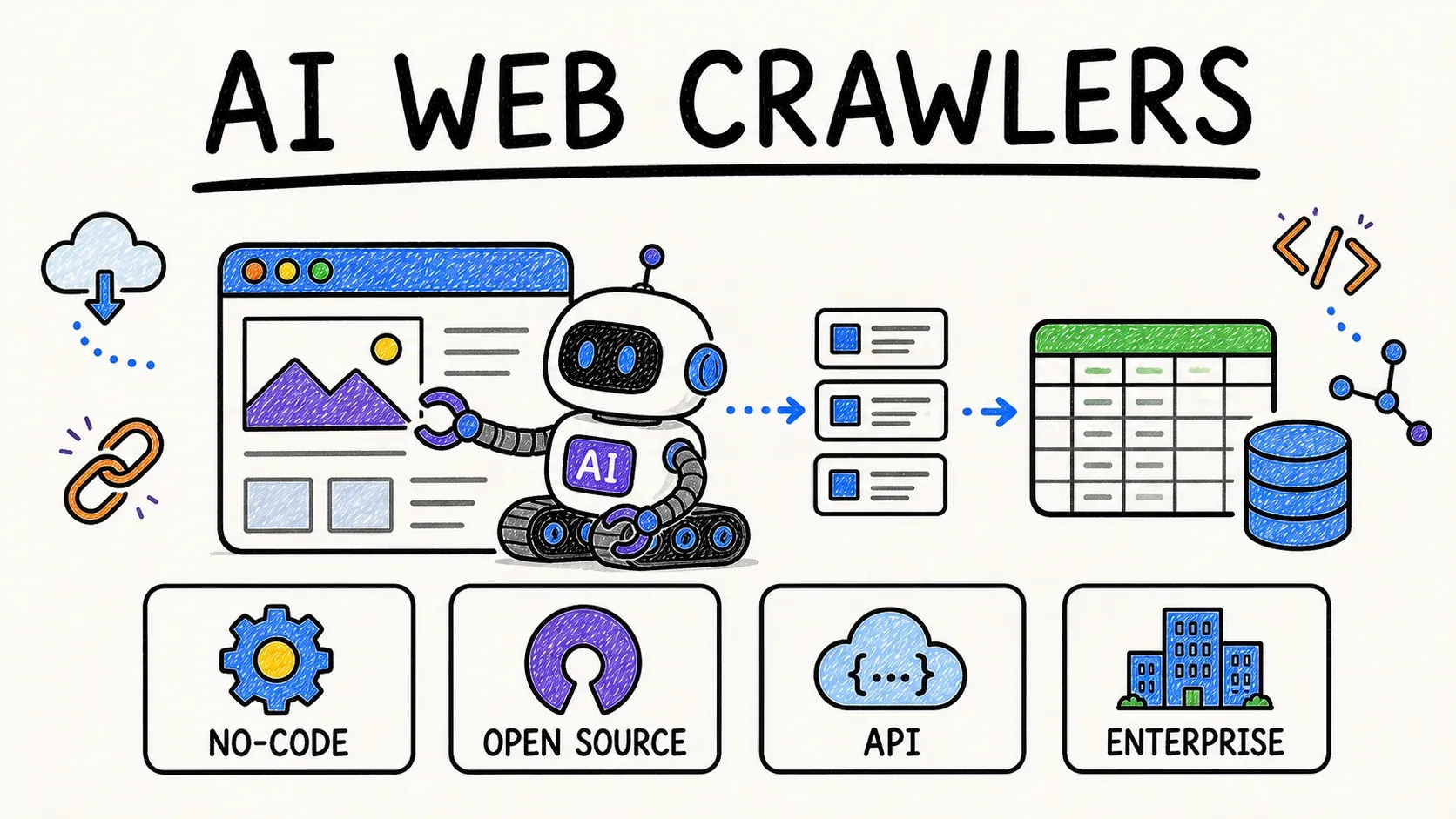
So, what exactly is “AI that can read links”? In plain English, it’s an AI-powered system that can take a web link—say, a product page, a news article, or a directory listing—visit that page, and intelligently extract the information you care about. It’s not just grabbing the URL or the raw HTML; it’s actually “reading” the content, understanding what’s important, and giving you structured, actionable data.

Think of it like forwarding a webpage to a super-smart assistant who instantly hands you a summary, a table of key facts, or a list of contact details—without you lifting a finger. This is a huge leap from the old days of manual review or brittle scripts. Instead of slogging through tabs, you get the insights you need, ready to use. ai-link-reading-process.png

And the shift is happening fast. Companies using AI-driven web scraping are seeing 30–40% time savings on data extraction tasks (), and the global market for these tools is growing at nearly 18% a year (). In other words: AI is quickly becoming the new normal for making sense of the web.

Let’s peek under the hood. When you give an AI tool a link, here’s what typically happens:

  1. Fetching the Page: The AI visits the link (just like your browser would), loads all the content—including stuff that appears after clicking or scrolling.
  2. Parsing and Understanding: Using natural language processing (NLP), the AI reads the text, identifies key sections (like product names, prices, reviews), and understands the context—much like a human would ().
  3. Extracting and Structuring Data: Machine learning models (often large language models) decide what’s important, pull out the relevant info, and organize it into a spreadsheet, summary, or database.
  4. Learning and Improving: Some tools let you correct or refine the output, so the AI gets smarter over time—especially handy if you’re scraping similar pages every week.
  • Natural Language Processing (NLP): Enables the AI to “read” and understand human language on web pages, so it can distinguish between a product description and a “Buy Now” button.
  • Machine Learning & AI Models: These are the brains—trained on millions of web pages, they recognize patterns, summarize content, and adapt to new layouts.
  • Web Scraping Automation: The hands and feet—automating the process of visiting pages, clicking through links, and collecting data.

Put it all together, and you have an AI that doesn’t just copy what’s on the page—it understands it, summarizes it, and gives you exactly what you need.

Let’s get real: the web is a goldmine of business intelligence, but only if you can actually use the data. Here’s where AI link reading shines for different teams:

  • Sales: Instantly pull contact info, company details, and social profiles from directories or LinkedIn—no more manual research.
  • Marketing: Monitor competitor product launches, pricing changes, and customer reviews across dozens of sites—automatically.
  • Ecommerce: Track prices, ratings, and stock status on marketplaces like Amazon or Walmart, so you can adjust your own listings in real time.
  • Operations: Aggregate supplier info, regulatory updates, or inventory data from multiple sources—without endless copy-paste.

And the numbers back it up: a sports tech company saw a 25% increase in high-quality leads and a 15% drop in lead gen costs after automating with AI (). Retailers using AI for product data updates cut manual input by 70% and improved accuracy by 30% (). That’s not just a little better—it’s a whole new ballgame.

Use Case Table: Practical Applications

Business ScenarioData Extracted by AIResulting Benefit
Sales: Lead GenerationNames, titles, emails, phone numbers from profilesBuilds prospect lists in minutes, improves outreach quality
Marketing: Competitor TrackingProduct listings, blog posts, pricing, ad copiesReal-time insights, faster campaign adjustments
Ecommerce: Price MonitoringPrices, stock info from marketplacesDynamic pricing, prevents lost sales, 40% better pricing efficiency
Operations: Data AggregationMulti-source inventory, compliance dataEliminates manual cross-checking, ensures complete datasets
Product/Support: Review SummariesCustomer reviews, forum Q&AQuick sentiment analysis, faster product improvements

Here’s where I get excited—because this is exactly what we’re building at . Thunderbit is an designed for business users, not just developers. Our goal? Make AI link reading so easy that anyone—sales, ops, marketing, real estate—can use it in two clicks.

What Makes Thunderbit Different?

  • AI Suggest Fields: Just click a button, and Thunderbit scans the page, suggests what data to extract (like “Product Name,” “Price,” “Rating”), and sets up the columns for you.
  • Subpage Scraping: Need more details? Thunderbit can automatically visit every link on a list page (like product or property listings), read each subpage, and enrich your table—no manual clicking required.
  • Pagination Handling: Whether it’s a “Next Page” button or infinite scroll, Thunderbit can grab data from all pages in a section, not just the first.
  • Instant Templates: For popular sites (Amazon, Zillow, LinkedIn, etc.), Thunderbit offers one-click templates—no setup, no AI prompts needed.
  • Free Data Export: Export your results to Excel, Google Sheets, Airtable, Notion, or JSON—no paywall, no hassle.
  • No-Code Simplicity: If you can browse the web, you can use Thunderbit. No coding, no scripts, just point, click, and go.

Thunderbit in Action: Example Workflow

Let’s say you’re a real estate agent who wants to pull property details from a listing site:

  1. Open the property search page in Chrome.
  2. Click the Thunderbit extension and hit “AI Suggest Fields.” Thunderbit suggests columns like “Address,” “Price,” “Bedrooms.”
  3. Enable subpage scraping to grab extra details (like square footage or agent contact) from each property’s page.
  4. Click “Scrape.” Thunderbit visits every listing, reads each page, and builds a table.
  5. Export to Google Sheets—ready to share with your team or upload to your CRM.

What used to take hours (or a team of interns) now takes minutes. And the same workflow applies to ecommerce, sales, or marketing research.

Let’s be honest: before AI, you had two options—manual data entry or traditional automation (like RPA or basic web scrapers). Here’s how they stack up:

AspectManual EffortTraditional RPA/ScriptsAI-Powered Link Reading (Thunderbit)
Setup TimeNone, but scales linearlyHigh (scripts for each site)Low—AI auto-detects fields, minimal setup
Speed & ThroughputSlow (minutes per page)Fast, but only for stable sitesVery fast—hundreds of pages/hour, scalable
AccuracyVariable, prone to errorsGood for simple, stable layoutsUp to 99.5% accuracy (ScrapingAPI)
AdaptabilityHigh (for small jobs)Low—breaks if site changesHigh—AI adapts to new layouts/context
MaintenanceOngoing laborFrequent updates neededMinimal—AI updates in background
ScalabilityPoor—add more peopleGood for repetitive tasksExcellent—cloud-based, handles big volumes
CostHigh per unitHigh upfront, moderate ongoingModerate and dropping—plans from ~$15/month

AI-powered link reading combines the best of both worlds: the judgment of a human, the speed of a machine, and the flexibility to handle messy, real-world web data.

Of course, no technology is perfect. Here are some things to keep in mind:

  • Dynamic or Complex Websites: Some sites use heavy JavaScript, infinite scroll, or anti-bot measures. While AI tools like Thunderbit handle most cases, truly tricky sites may require extra setup or even human review ().
  • Context and Accuracy: AI is smart, but not infallible. Always spot-check results, especially for critical data. For high-stakes tasks, consider a human-in-the-loop review ().
  • Legal and Ethical Use: Just because you can scrape data doesn’t mean you should. Always respect website terms of service and privacy laws ().
  • Maintenance: While AI reduces upkeep, major website redesigns may still require prompt tweaks or retraining.

Tips for Maximizing Accuracy:

  • Craft clear prompts or instructions for the AI.
  • Use sample outputs as training examples if your tool supports it.
  • Monitor results, especially in the first few runs.
  • Respect rate limits and optimize for the data you actually need.

The pace of change in this space is wild (and, honestly, a little thrilling for a tech nerd like me). Here’s what’s coming next:

  • Smarter, More Context-Aware AI: New models (like GPT-5 and beyond) will handle even messier web pages, larger documents, and multimodal content (images, videos, charts).
  • Deeper Integration: AI link reading will become a background feature in CRMs, BI tools, and even browsers—think “summarize this page” or “extract data” as a built-in button ().
  • Industry-Specific Agents: Expect specialized AI tuned for finance, law, healthcare, and more—able to extract the exact data that matters for each field.
  • Conversational and Goal-Driven Agents: Soon, you’ll be able to ask, “Monitor these 50 sites and alert me when a new product is launched over $500,” and the AI will handle the rest.
  • Better Compliance and Ethics: Built-in respect for privacy, robots.txt, and data provenance will become standard.
  • Lower Costs and Wider Access: As the tech matures, AI link reading will be affordable for even the smallest teams—and possibly just a standard browser feature.

The bottom line? AI that can read links is moving from “nice-to-have” to “must-have” for any data-driven business.

Ready to ditch the copy-paste grind? Here’s how to get rolling:

  1. Identify High-Impact Use Cases: Where are you (or your team) spending hours gathering data from links? Lead lists, competitor monitoring, review aggregation—these are all great starting points.
  2. Pick the Right Tool: For most business users, a no-code tool like is the fastest way to start. Look for features like AI field suggestions, subpage scraping, and easy exports.
  3. Pilot on a Small Scale: Test the tool on a single workflow—say, scraping product info from a handful of links. Measure the time saved and the quality of the output.
  4. Train Your Team: Show colleagues how to use the tool, and encourage them to experiment. The learning curve is surprisingly gentle.
  5. Monitor and Iterate: Spot-check results, refine prompts, and expand to new use cases as you gain confidence.
  6. Scale Up: Once you see the ROI (and you will), roll out AI link reading to more teams and bigger projects.

AI that can read links is transforming how businesses gather, process, and act on web data. By automating the grunt work of reading and extracting information from links, teams save time, reduce errors, and make better decisions—faster. The stats are clear: 30–40% time savings, up to 99.5% accuracy, and a massive reduction in manual labor ().

And with tools like , you don’t need to be a developer to get in on the action. Whether you’re in sales, marketing, ecommerce, or operations, AI link reading is now just a couple of clicks away.

So, if you’re ready to reclaim your time, boost your team’s productivity, and stay ahead in the data race, give AI link reading a try. Your future self (and your team) will thank you.

For more tips, tutorials, and deep dives into AI-powered data extraction, check out the .

Try AI Link Reading with Thunderbit

FAQs

1. What does “AI that can read links” actually mean?
It refers to AI systems that can visit a web link, read the content behind it (not just the URL), and extract or summarize the information you care about—turning unstructured web pages into structured, usable data.

2. How is this different from traditional web scraping?
Traditional web scraping relies on fixed rules or scripts and often breaks if a website changes. AI link reading uses natural language processing and machine learning to “understand” the page, adapt to new layouts, and extract more nuanced information.

3. What business problems does AI link reading solve?
It saves hours of manual research, improves data accuracy, and enables faster, smarter decisions in sales, marketing, ecommerce, and operations—anything that involves gathering info from the web.

4. What makes Thunderbit stand out for AI link reading?
Thunderbit is a no-code Chrome extension that uses AI to suggest fields, handle subpages and pagination, and export data to Excel, Sheets, Notion, and more. It’s designed for business users, not just developers.

5. Are there any risks or limitations to using AI that can read links?
While AI is powerful, it’s not perfect—dynamic sites, anti-bot measures, or ambiguous content can pose challenges. Always review critical data, respect privacy and legal guidelines, and use human oversight for high-stakes tasks.

Ready to see AI link reading in action? and start transforming your workflow today.

Learn More

Shuai Guan
Shuai Guan
Co-founder/CEO @ Thunderbit. Passionate about cross section of AI and Automation. He's a big advocate of automation and loves making it more accessible to everyone. Beyond tech, he channels his creativity through a passion for photography, capturing stories one picture at a time.
Topics
AI that ca read links
Table of Contents

Try Thunderbit

Scrape leads & other data in just 2-clicks. Powered by AI.

Get Thunderbit It's free
Extract Data using AI
Easily transfer data to Google Sheets, Airtable, or Notion
Chrome Store Rating
PRODUCT HUNT#1 Product of the Week