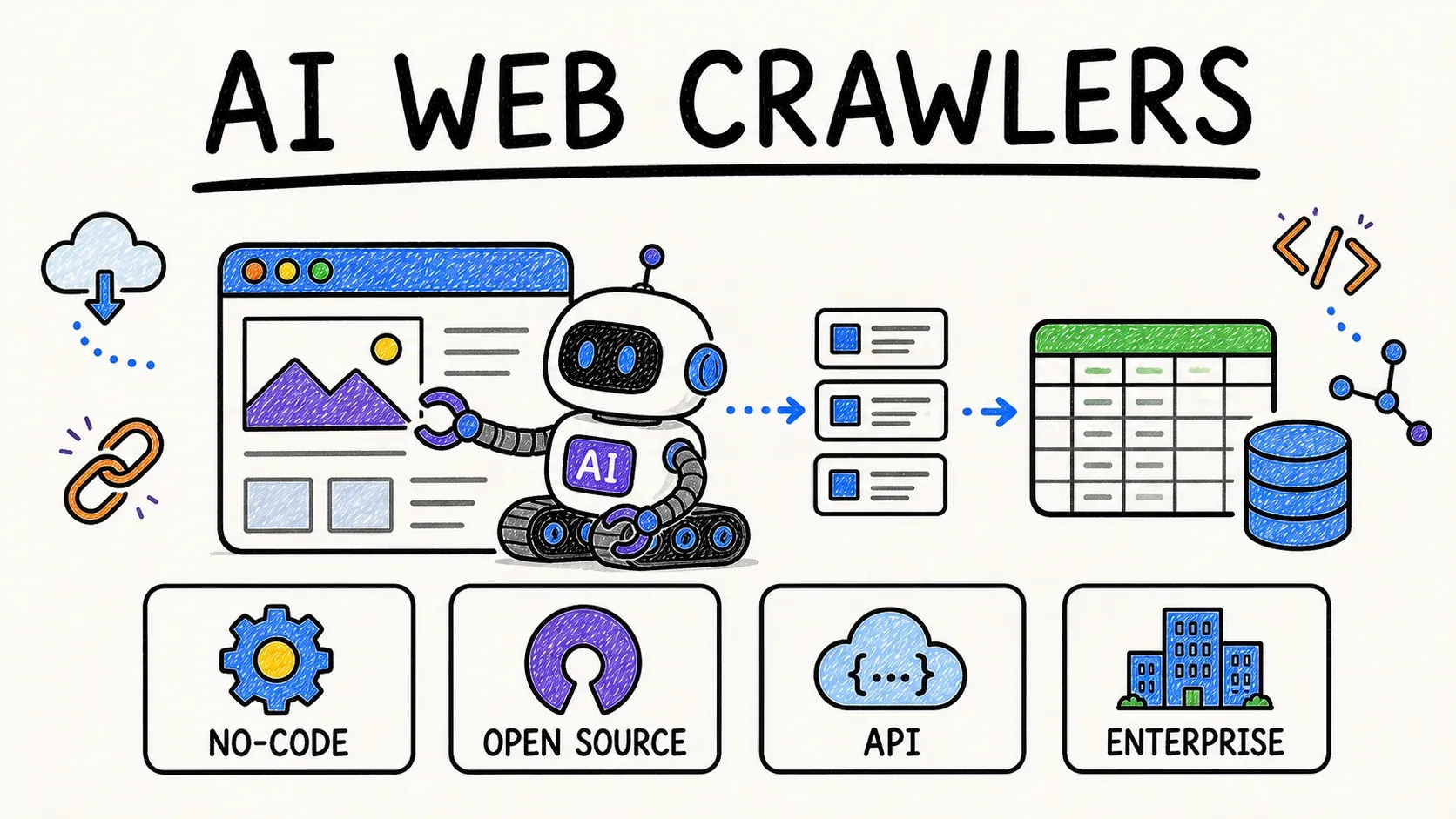
The web in 2025 is a wild place—part digital goldmine, part obstacle course. Every day, I talk to teams who need to turn messy websites into clean, actionable data for sales, operations, or market research. But let’s be real: the days of simple copy-paste or basic scripts are long gone. Modern sites are loaded with JavaScript, infinite scrolls, and anti-bot defenses that would make Fort Knox jealous. And yet, the demand for web data has never been higher— now rely on web scraping for real-time decisions, and the global web data extraction market is on track to double by 2030.
So, how do you keep up? Whether you’re a non-coder who just wants a spreadsheet, or a developer building a data pipeline, picking the right web scraping technique is the difference between hours of frustration and a few clicks to victory. I’ve spent years in SaaS and automation, and I’ve seen firsthand how the right tool can turn a business challenge into a competitive edge. In this guide, I’ll break down the top 5 advanced web scraping techniques for 2025—each with its own strengths, quirks, and ideal use cases. Let’s get into it.
Why Web Scraping Techniques Matter for Modern Businesses
Web scraping isn’t just a tech hobby anymore—it’s a core business function. Sales teams use it to automate lead generation, pulling contacts from directories and social media. Ecommerce managers monitor competitor prices and stock in real time, adjusting their own strategies on the fly. Market researchers aggregate reviews and forum chatter to spot trends before they hit the mainstream. Even real estate analysts scrape property listings to track market shifts across regions ().
But here’s the catch: websites are getting more complex, not less. Dynamic content, anti-bot measures, and multi-page navigation are now the norm. According to recent industry stats, during scraping. And as anyone who’s tried to scale up a simple script knows, what works for one page can break on a thousand.
That’s why choosing the right scraping technique—one that matches your technical skill, business needs, and the quirks of your target sites—is absolutely crucial. The good news? Whether you’re a “just give me the data” operator or a Python power user, there’s a solution built for you.
How We Selected the Top 5 Web Scraping Techniques
With so many tools out there, narrowing it down wasn’t easy. Here’s what I looked for:
- Adaptability: Can it handle both static and dynamic sites? Does it work with multi-page navigation, subpages, and tricky layouts?
- Ease of Use: Is it accessible for non-coders, or does it require developer skills? Natural language prompts and visual workflows got extra points.
- Scalability: Can it handle large-scale scraping, scheduling, and automation? Is it cloud-ready?
- Data Output & Integration: Does it export clean data to Excel, Google Sheets, Airtable, or databases? Bonus for APIs and workflow integrations.
- Real-World Proof: Has it made a real impact for business users? I looked at user reviews, recent advancements, and community adoption.
Each of the following techniques brings something unique to the table. Whether you need instant results, deep customization, or just a way to avoid another CAPTCHA, you’ll find your match below.
1. Thunderbit: AI-Powered Web Scraping for Everyone
is the tool I wish I’d had years ago. It’s a Chrome extension that puts AI front and center—no coding, no templates, just describe what you want and let the AI do the heavy lifting. Seriously, you can type “Extract all product names and prices from this page,” hit “AI Suggest Fields,” and Thunderbit figures out the rest. It’s like having a data-savvy intern who never takes a coffee break.
What makes Thunderbit stand out?
- Natural Language Prompting: Just describe your data needs in plain English. The AI reads the page, suggests columns, and even creates extraction logic for you.
- AI Suggest Fields: One click, and Thunderbit scans the site to recommend the best fields and data types—no more fiddling with selectors.
- Subpage Scraping: Need more details? Thunderbit can automatically visit each subpage (like product details or LinkedIn profiles) and enrich your table.
- Handles Pagination and Infinite Scroll: Whether it’s a “Next” button or endless scrolling, Thunderbit keeps going until it gets all the data.
- Cloud or Browser Scraping: Choose Cloud Mode for speed (up to 50 pages at once), or Browser Mode for sites behind logins or CAPTCHAs.
- Instant Export: Send your data straight to Excel, Google Sheets, Airtable, or Notion—no extra steps, no hidden fees.
- Free Data Extractors: Instantly grab all emails, phone numbers, or images from any page, totally free.
- Affordable and Accessible: Free tier lets you scrape up to 6 pages (or 10 with a trial boost), and paid plans start at just $15/month for 500 credits.
Who is it for? Thunderbit is perfect for non-technical business users—sales, ops, marketing, real estate—who need data fast, without a technical learning curve. I’ve seen everyone from indie ecommerce founders to realtors use it to monitor competitors, generate leads, and automate tedious web tasks ().
Real-world impact: I’ve heard from users who replaced hours of copy-paste with a couple of clicks—scraping directories, product listings, or even extracting text from PDFs and images using built-in OCR. And because it’s AI-driven, it adapts to layout changes automatically—no more broken templates.
Bottom line: If you want the fastest, easiest path from “I need this data” to “Here’s my spreadsheet,” Thunderbit is your best friend. Try the and see for yourself.
2. Beautiful Soup: Flexible HTML Parsing for Python Users
is a classic for a reason. It’s a Python library that makes parsing HTML and XML a breeze. If you’re comfortable writing a bit of code, Beautiful Soup gives you total control over how you extract, clean, and structure your data.
What makes Beautiful Soup special?
- Flexible Parsing: Navigate HTML trees, search by tag, class, or CSS selector, and pull out exactly what you need—even from messy, irregular pages.
- Custom Logic: Write your own scripts to handle unique page structures, filter data, or process text on the fly.
- Integration with Python Stack: Combine with
requests,pandas, orcsvto fetch pages, analyze data, and export results. - Forgiving of Bad HTML: Many real-world sites aren’t perfectly structured—Beautiful Soup does its best to make sense of it all.
- Open Source and Free: No licensing fees, just pure Python goodness.
Who is it for? Developers, analysts, and data scientists who want fine-grained control over scraping. It’s especially handy for small-scale, custom jobs or prototyping new data workflows ().
Sample use case: Need to pull a table from a Wikipedia page, or grab headlines from a news site for a quick report? A few lines of Beautiful Soup code and you’re done.
Limitations: It’s not a crawler—you’ll need to manage navigation and requests yourself. And it can’t handle JavaScript-heavy sites out of the box (for that, you might combine it with Selenium or Playwright).
When to use it: If you’re already in Python and want full control, or need to parse tricky static pages, Beautiful Soup is your go-to tool.
3. Scrapy: Scalable Web Crawling for Complex Projects
is the heavy machinery of web scraping. It’s a Python framework built for large-scale, automated crawling—think thousands or millions of pages, recurring jobs, and complex data pipelines.
Why Scrapy is a powerhouse:
- Asynchronous, High-Speed Crawling: Fetch dozens of pages in parallel, handling massive volumes efficiently.
- Full Crawl Architecture: Define “spiders” to navigate sites, follow links, and extract data across multiple levels.
- Built-in Middlewares: Rotate proxies, randomize user agents, handle retries, and even integrate headless browsers for dynamic content.
- Data Pipelines: Clean, validate, and export data to JSON, CSV, or databases automatically.
- Scheduling and Automation: Run crawls on a schedule, integrate with cloud platforms, and keep your data fresh.
- Open Source: No licensing costs—just your own infrastructure and coding skills.
Who is it for? Developers and technical teams building ongoing, large-scale scraping projects—like price aggregators, job boards, or social media analytics ().
Real-world scenario: Imagine crawling every product on a major ecommerce site, following pagination and subpages, and updating your database daily. Scrapy can handle it—just be ready for a learning curve.
Limitations: Not for the faint of heart. You’ll need solid Python skills, and handling JavaScript-heavy sites requires extra setup (like integrating Splash or Playwright).
Best for: When you need scale, reliability, and customization—and you have the technical chops to match.
4. ParseHub: Visual Scraping for Dynamic and Interactive Sites
is a visual, no-code web scraper that’s all about point-and-click simplicity. It’s a desktop app (Windows, Mac, Linux) where you navigate to your target site, click on the data you want, and let ParseHub figure out the rest.
Why ParseHub is a favorite:
- Handles Dynamic Content: Built-in browser executes JavaScript, clicks buttons, fills forms, and scrolls pages—perfect for sites with dropdowns, infinite scroll, or AJAX-loaded content.
- Visual Workflow: Define actions step-by-step—select elements, click through subpages, paginate, and extract.
- Cloud Scheduling: Run scrapes on ParseHub’s servers, schedule recurring jobs, and avoid tying up your own computer.
- API Access: Integrate scraped data into your workflows or trigger projects programmatically.
- Generous Free Tier: Up to 5 public projects and 200 pages per run—great for small jobs or testing.
- Paid Plans: Standard plan starts at $189/month for more projects, private runs, and advanced features.
Who is it for? Semi-technical users—analysts, marketers, journalists—who need to scrape dynamic, interactive sites without writing code ().
Learning curve: While it’s no-code, mastering complex workflows (like conditional selectors or Regex) can take some practice. But once you get the hang of it, ParseHub can tackle sites that stump simpler tools.
Best for: When you need to scrape data behind lots of clicks, logins, or dynamic elements—and want to do it all visually.
5. Octoparse: User-Friendly Templates and Cross-Platform Support
is the “easy button” for web scraping—especially if you’re targeting popular sites. It’s a no-code platform with a huge library of ready-made templates (over 100 and counting), so you can often start scraping with just a click.
What makes Octoparse shine:
- Template Library: 100+ pre-built templates for sites like Amazon, eBay, LinkedIn, Zillow, and more—just select, input your parameters, and go.
- Auto-Detect Mode: Paste a URL and let Octoparse’s AI highlight tables, lists, and fields automatically.
- Visual Designer: For custom sites, point and click to build your own scraper—no coding required.
- Cloud Scraping: Run multiple tasks in parallel on Octoparse’s servers, schedule recurring jobs, and keep your data up to date.
- Multiple Export Formats: Excel, CSV, JSON, or direct to databases like MySQL or SQL Server.
- Affordable Plans: Free tier for up to 10 local tasks, Standard plan at $75/month, and Professional at $249/month for more power and collaboration.
Who is it for? Business users—ecommerce managers, market researchers, sales teams—who need fast, reliable data from common websites, or want to automate bulk data collection ().
Real-world example: Need to monitor competitor prices on Amazon? Use the Amazon template, input your search, and you’ll have a spreadsheet in minutes—no setup, no code.
Limitations: For highly custom or unpredictable sites, you may need to tweak the workflow or use XPath/Regex. And while Octoparse’s cloud is fast, scraping sites with aggressive anti-bot measures may require extra care.
Best for: When speed, ease, and templates are your top priorities—especially for ecommerce and lead generation.
Comparing the Top 5 Web Scraping Techniques
Here’s a side-by-side look at how these tools stack up:
| Tool | Ease of Use | Capabilities & Strengths | Best For | Technical Requirements | Pricing (2025) |
|---|---|---|---|---|---|
| Thunderbit | Extremely easy (AI, 2-click) | AI auto-detects fields, subpage/pagination, instant export | Non-technical users, fast data, sales/ops | Chrome browser, no coding needed | Free (6 pages), $15/mo (500 rows) |
| Beautiful Soup | Moderate (Python scripting) | Flexible HTML/XML parsing, custom scripts | Developers, analysts, static sites | Python coding | Free (open source) |
| Scrapy | Steep (for developers) | High-speed, scalable crawling, plugins, automation | Technical teams, big data, ongoing projects | Python, setup, scraping concepts | Free (open source) |
| ParseHub | User-friendly GUI | Visual workflow, dynamic sites, cloud scheduling | Semi-technical users, dynamic/interact. sites | Desktop app, logic understanding | Free (5 projects), $189/mo+ |
| Octoparse | No-code, beginner-friendly | Templates, auto-detect, cloud scraping, multi-export | Business users, ecommerce, fast data | Desktop/web app, no coding needed | Free (10 tasks), $75/mo+ |
For more details, check out the .
Conclusion: Choosing the Right Web Scraping Technique for 2025
Web scraping in 2025 is both more powerful and more accessible than ever. Here’s my quick advice:
- Want the fastest, easiest path to data (no code, no hassle)? Go with . Its AI-driven approach is perfect for business users who just want results.
- Need full control and don’t mind a little Python? is your flexible, lightweight friend.
- Building a large-scale, ongoing data pipeline? is the industrial-strength solution—if you have the technical muscle.
- Need to scrape tricky, dynamic sites visually? gives you the power of a GUI with deep customization.
- Want instant results from popular sites, with templates and cloud speed? is hard to beat for ecommerce and research.
My advice? Try a couple of these tools on your next project. Most have free tiers, so you can see which one fits your workflow and technical comfort. The right technique will save you hours (or days), unlock new insights, and give your business a serious edge.
Happy scraping—and may your data always be clean, structured, and ready for action. If you want more tips, tutorials, or deep dives, check out the .
FAQs
1. What’s the difference between static and dynamic web scraping?
Static scraping targets pages where the data is present in the initial HTML. Dynamic scraping handles sites where content loads via JavaScript, requiring tools that can execute scripts or interact with the page (like Thunderbit, ParseHub, or Octoparse).
2. Can non-technical users really scrape data from any website?
Yes! Tools like and are designed for non-coders. With AI-powered field detection and templates, you can extract structured data in just a few clicks.
3. Which tool is best for large-scale, recurring scraping projects?
is ideal for developers managing ongoing, high-volume scrapes. It’s built for speed, automation, and reliability—but requires Python skills.
4. How do these tools handle anti-bot measures like CAPTCHAs?
Most tools offer workarounds: Thunderbit’s Browser Mode lets you scrape while logged in, Scrapy supports proxy rotation and plugins, and ParseHub/Octoparse can mimic user actions. For heavy defenses, manual intervention or specialized proxies may be needed.
5. What’s the most cost-effective option for small businesses?
For quick, one-off jobs, the free tiers of Thunderbit, ParseHub, or Octoparse are often enough. For ongoing needs, Thunderbit’s $15/month plan is very affordable, while Beautiful Soup and Scrapy are free if you have coding resources.
Ready to see what modern web scraping can do for your business? and start turning the web into your next big advantage.
Learn More