
דמיינו את זה: בכל שבוע נכנסים ל‑Walmart יותר אנשים ממספר התושבים בברזיל. זו לא הגזמה—זו המציאות של ענקית קמעונאות שמדווחת על 270 מיליון ביקורי לקוחות בשבוע, עם הכנסות שנתיות שחצו את 681 מיליארד דולר ב‑2025—מספר שמאפיל על התמ״ג של מדינות שלמות כמו שווייץ או ערב הסעודית (). Walmart היא הרבה יותר מחנות; היא תופעה, מראה לחיים האמריקאיים, ומדד מוקדם למגמות קמעונאות עולמיות.
למה כל כך הרבה אנליסטים, משווקים ומנהלים בכירים “נדלקים” על סטטיסטיקות walmart? כי להבין את הנתונים של Walmart—דמוגרפיית לקוחות walmart, סטטיסטיקות מכירות walmart והיקף פעילות—זה כמו לשבת בשורה הראשונה ולראות בלייב איך התנהגות צרכנים משתנה בקנה מידה עצום. בין אם אתם באיקומרס, בנדל״ן, או פשוט מנסים להבין איפה אמריקאים שורפים את תקציב הקניות שלהם—המספרים האלה הם לא רק טריוויה; הם הדופק של הקמעונאות המודרנית.
סטטיסטיקות Walmart 2026: המספרים המרכזיים במבט מהיר
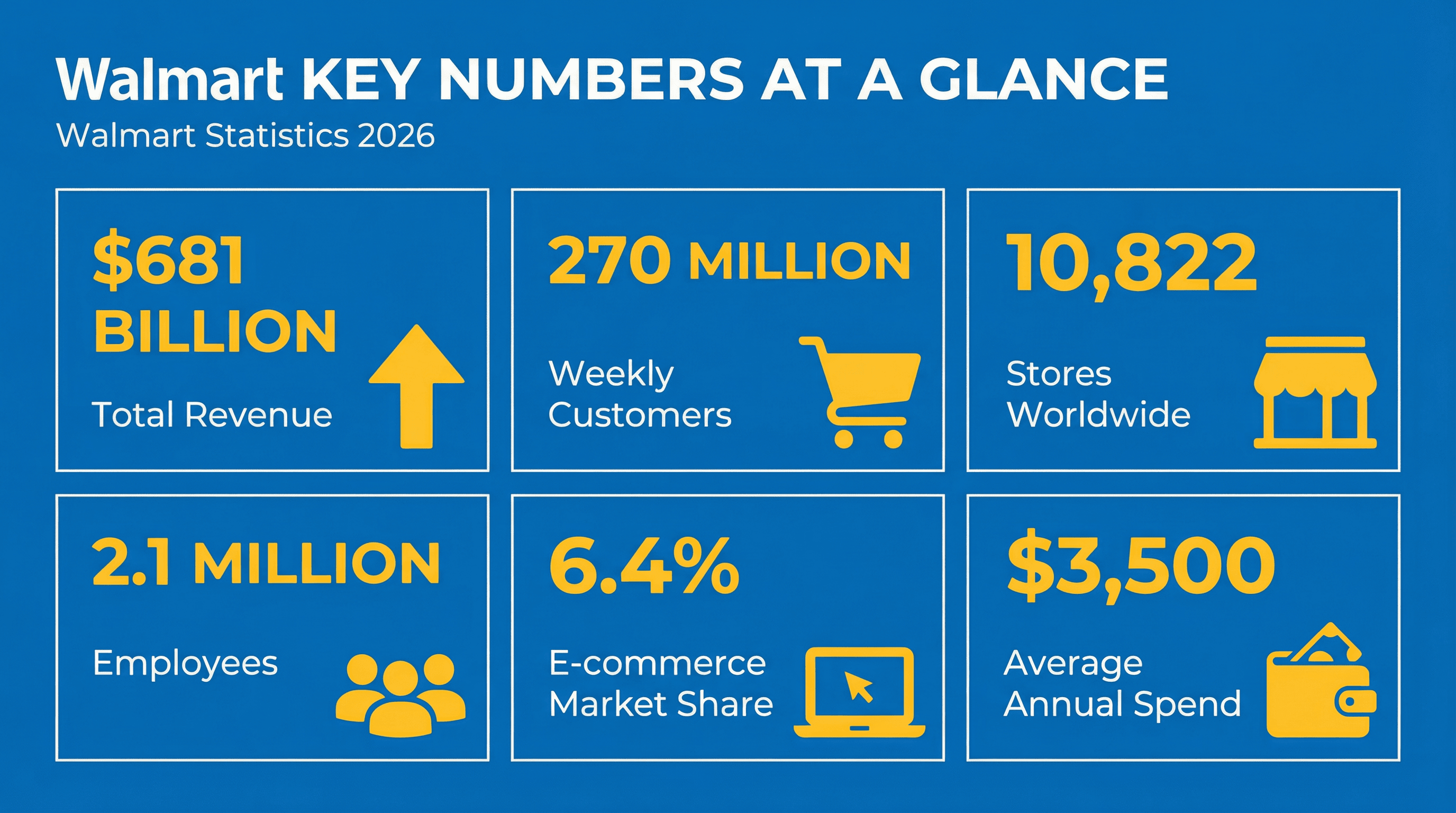 בואו נפתח עם תמונת מצב זריזה על הגודל וההשפעה הפסיכיים של Walmart ב‑2026:
| מדד | ערך 2025–2026 | למה זה חשוב |
|---|---|---|
| הכנסות כוללות | 681.0 מיליארד דולר (DemandSage) | הקמעונאית הגדולה בעולם; גדולה יותר מהתמ״ג של מדינות רבות |
| ביקורי לקוחות שבועיים | 270 מיליון (DemandSage) | תנועת קונים שאין לה תחרות; חלון להרגלי צריכה המוניים |
| מספר חנויות בעולם | 10,822 חנויות ב‑19 מדינות (DemandSage) | פריסה גלובלית, כשכמעט מחצית מהחנויות מחוץ לארה״ב |
| מספר חנויות בארה״ב | 4,606 חנויות Walmart, ו‑601 סניפי Sam’s Club (Walmart Corporate) | נוכחות כמעט בכל מקום—מעל 90% מהאמריקאים גרים במרחק עד 10 מייל מ‑Walmart (Fortunly) |
| עובדים | 2.1 מיליון בעולם, 1.6 מיליון בארה״ב (Walmart Corporate) | המעסיק הפרטי הגדול בעולם |
| נתח שוק באיקומרס (ארה״ב) | 6.4% (DemandSage) | הקמעונאית המקוונת #2 בארה״ב, אחרי Amazon |
| חלק המכולת מההכנסות בארה״ב | 60% (~276 מיליארד דולר) (Food Trade News) | דומיננטיות בשוק המזון הקמעונאי בארה״ב |
| חברי Walmart+ (ארה״ב) | 32 מיליון (Reuters) | התשובה של Walmart ל‑Amazon Prime, שמחזקת נאמנות וצמיחה דיגיטלית |
| מוכרים במרקטפלייס | 160,000+ (Marketplace Pulse) | הרחבת מגוון המוצרים אונליין, פי שלושה בתוך שנתיים |
| הוצאה שנתית ממוצעת לקונה | ~3,500 דולר (Business Insider) | Walmart תופסת נתח משמעותי מתקציב משקי הבית |
כל אחד מהמספרים האלה מספר סיפור על כוח המשיכה של Walmart ביקום הקמעונאות. לשם השוואה: המכירות השנתיות של Walmart גבוהות יותר משל שלוש הקמעונאיות הבאות בארה״ב יחד, ותנועת הלקוחות השבועית שלה גדולה מאוכלוסיית רוב המדינות בעולם.
מדדי חנויות Walmart: פריסה עולמית ופריסה בארה״ב
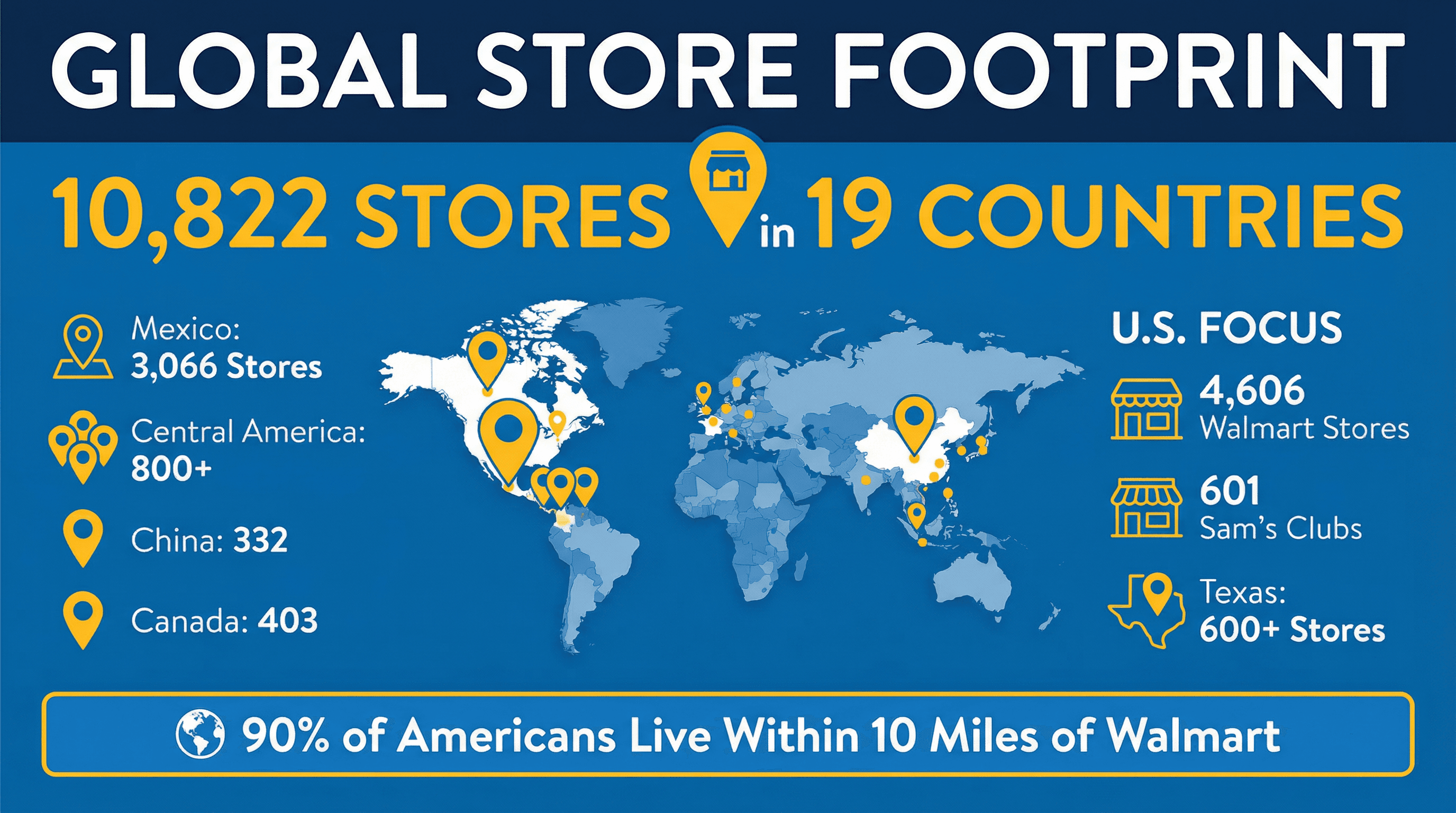 רשת החנויות של Walmart היא הנשק הסודי (ולא כזה סודי) שלה—נוכחות פיזית רחבה ועמוקה. נכון לסוף 2025, Walmart מפעילה 10,822 חנויות ברחבי העולם ב‑19 מדינות (). זו עלייה קטנה לעומת השנה הקודמת, שמרמזת על חזרה להתרחבות מתונה אחרי תקופה של צמצומים ויציאה משווקים (שלום ולא להתראות, Walmart UK ויפן).
בארה״ב—מגרש הבית של Walmart—הפריסה בנויה על יעילות: 4,606 חנויות Walmart ו‑601 סניפי Sam’s Club נכון ל‑2024 (). זה פחות מהשיא של 4,769 ב‑2019, כש‑Walmart סוגרת נקודות חלשות ומתמקדת בסניפי Supercenter וב‑Neighborhood Markets בעלי נפח גבוה. ועדיין, מעל 90% מהאמריקאים גרים במרחק נסיעה של עד 10 מייל מ‑Walmart (). אם ניסיתם פעם להתחמק מ‑Walmart בטיול כביש—אתם יודעים שזה כמעט משימה בלתי אפשרית.
חנויות Walmart לפי מדינה ומדינה בארה״ב
הנוכחות הבינלאומית של Walmart נשענת בעיקר על מקסיקו (3,066 חנויות), אחריה מרכז אמריקה (800+), סין (~332) וקנדה (403) (). בארה״ב, טקסס מובילה עם מעל 600 חנויות, אחריה פלורידה (386) וקליפורניה (320) (). הדרום והמערב התיכון רוויים במיוחד ב‑Walmart, מה שהופך “קפיצה ל‑Walmart” לטקס שבועי עבור מיליונים.
מספר החנויות של Walmart הגיע לשיא של 11,718 ב‑2018, ירד כשהחברה יצאה משווקים פחות רווחיים, וכעת התייצב מעל 10,800 (). בערך מחצית מהחנויות של Walmart נמצאות כיום מחוץ לארה״ב—סימן לכך שהצמיחה הבינלאומית הופכת קריטית יותר ויותר לעתיד החברה.
דמוגרפיית לקוחות Walmart: מי קונה ב‑Walmart?
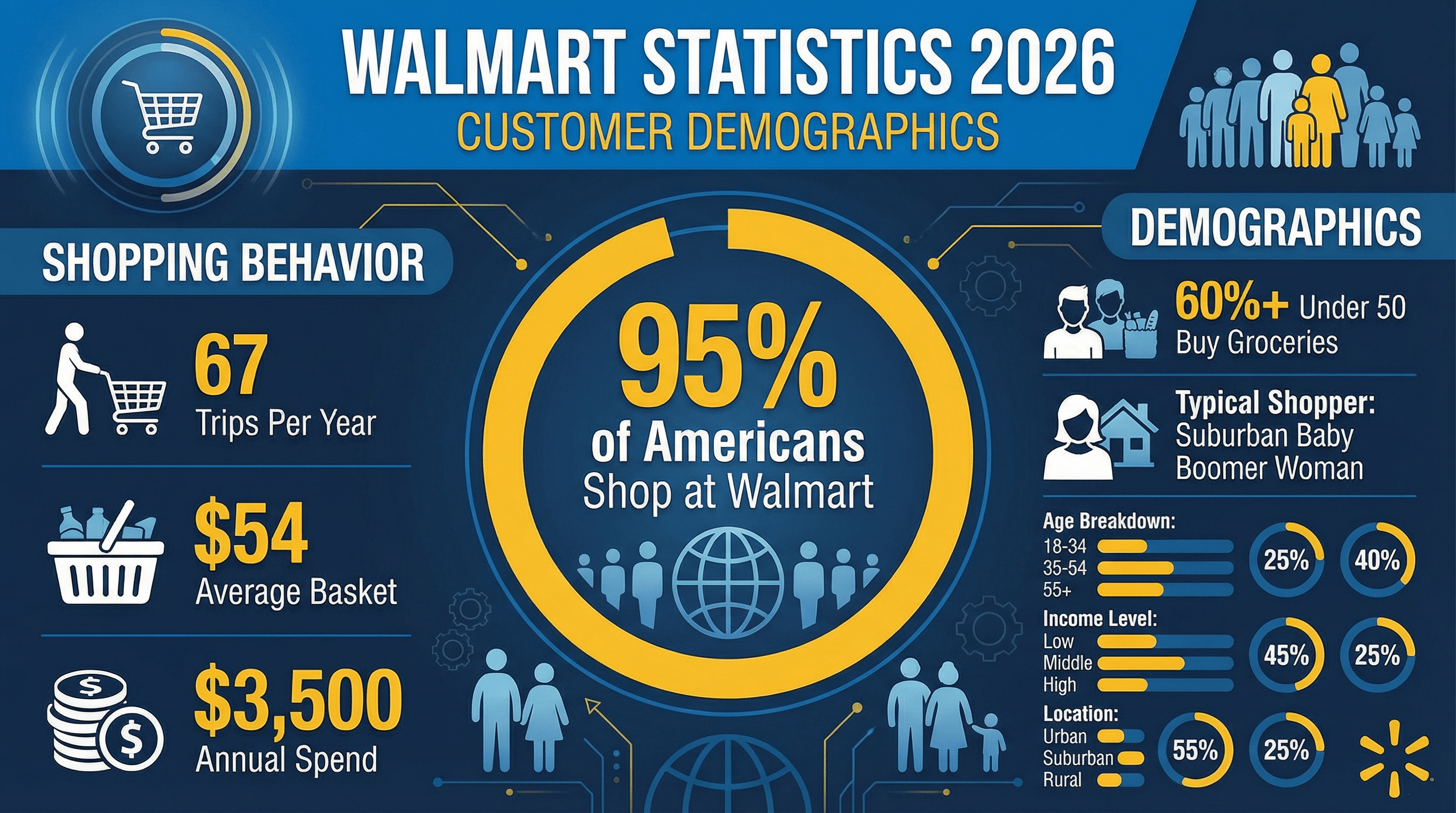 קהל הלקוחות של Walmart הוא חתך רוחב אמיתי של אמריקה. לפי Numerator, 95% מהאמריקאים קנו ב‑Walmart לפחות פעמיים בשנה האחרונה (). מי היא “הקונה הטיפוסית” של Walmart? אישה לבנה, פרברית, מבייבי בומרס, בגיל 60–75, נשואה, וחיה במשק בית עם הכנסה מתחת ל‑80,000 דולר (). סביר שהיא גם בעלת בית וממוקדת מאוד בתמורה למחיר.
אבל אל תיתנו לסטריאוטיפ לעבוד עליכם. ההשפעה של Walmart מגיעה חזק גם אל:
- דורות צעירים: מעל 60% מהאמריקאים מתחת לגיל 50 קונים מצרכי מזון ב‑Walmart ().
- משקי בית בעלי הכנסה גבוהה: נרשמה עלייה בולטת במספר הקונים שמרוויחים מעל 100,000 דולר ().
- גיוון אתני: בסיס הקונים בארה״ב הוא בערך 70–75% לבנים, עם ייצוג משמעותי של היספנים (~10–15%) ושחורים (~10–15%) ().
- מגדר: מעט יותר נשים מגברים, אבל הפער מצטמצם ככל ש‑Walmart+ ואיסוף אונליין מושכים יותר גברים ומשפחות צעירות.
בשורה התחתונה: אם אתם מחפשים “קונה טיפוסי” של Walmart, יש מצב טוב שתמצאו אותו במראה. הסיכוי שאתם (או השכן שלכם) כבר שם—גבוה מאוד.
התנהגות קונים ב‑Walmart: תדירות והוצאה
קוני Walmart ידועים בנאמנות שלהם. הלקוח הממוצע בארה״ב מבצע 67 ביקורים בשנה—כלומר יותר מפעם בשבוע (). גודל סל הקנייה הממוצע? 54 דולר לביקור עבור כ‑13 פריטים. לאורך שנה, הקונה הטיפוסי מוציא כ‑3,500 דולר ().
מה דוחף את התדירות הזו? מכולת היא המגנט המרכזי—Walmart היא סופרמרקט עיקרי עבור חלק עצום מהמדינה. אבל יש גם את אפקט “הכול במקום אחד”: אפשר לקנות בננות, גרביים ורישיון דיג באותה נסיעה. (וכן, בננות הן המוצר הנמכר ביותר ב‑Walmart. מי היה מאמין?)
סטטיסטיקות מכירות Walmart: הכנסות, רווח וצמיחה
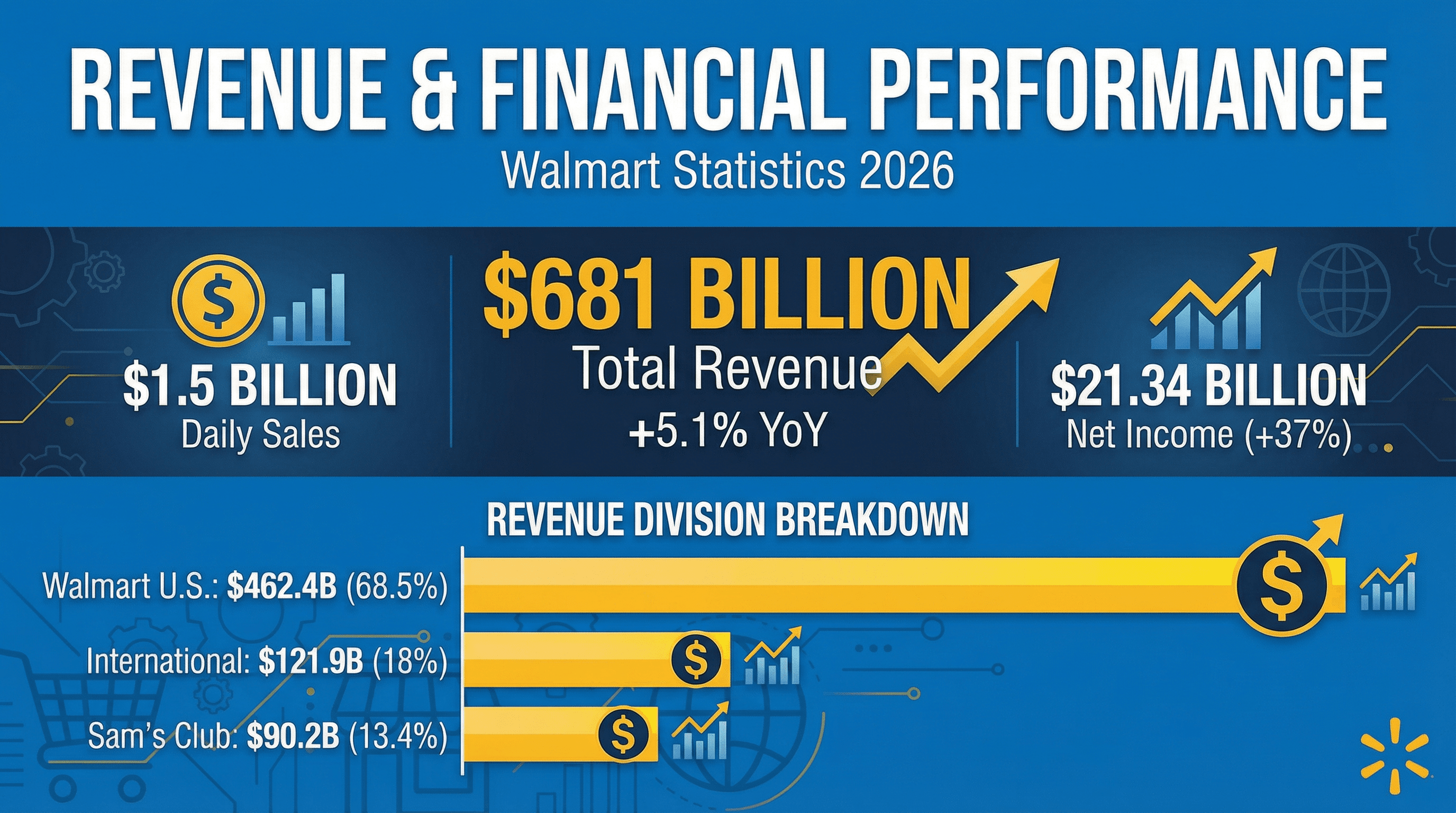 הנתונים הפיננסיים של Walmart הם כמעט מיתולוגיים. בשנת הכספים 2025, ההכנסות הגיעו ל‑681.0 מיליארד דולר, עלייה של 5.1% משנה לשנה (). זה כמעט 1.5 מיליארד דולר מכירות בכל יום. הרווח הגולמי עמד על 169.2 מיליארד דולר, הרווח התפעולי על 28.98 מיליארד דולר, והרווח הנקי זינק ל‑21.34 מיליארד דולר—עלייה של 37% לעומת השנה הקודמת ().
שולי הרווח של Walmart דקים (כ‑3% נטו), אבל הנפח כל כך עצום שגם שיפור קטן מתורגם למיליארדים. ולמרות הגודל, Walmart ממשיכה לצמוח מהר יותר מחלק מהמתחרות, בזכות מכירות מכולת חזקות ודחיפה דיגיטלית שמתחילה להחזיר את ההשקעה.
מכירות Walmart לפי חטיבה: ארה״ב, בינלאומי, Sam’s Club
- Walmart U.S.: 462.4 מיליארד דולר במכירות נטו (68.5% מסך ההכנסות) ()
- Walmart International: 121.9 מיליארד דולר (18%)
- Sam’s Club: 90.2 מיליארד דולר (13.4%)
החטיבה האמריקאית היא המנוע, אבל השווקים הבינלאומיים (במיוחד מקסיקו וסין) הופכים חשובים יותר ויותר. Sam’s Club, למרות שהיא קטנה יותר, היא כוח משמעותי בפני עצמו—90 מיליארד דולר מכירות זה יותר ממה שיש לרשתות קמעונאות שלמות.
איקומרס וצמיחה דיגיטלית ב‑Walmart
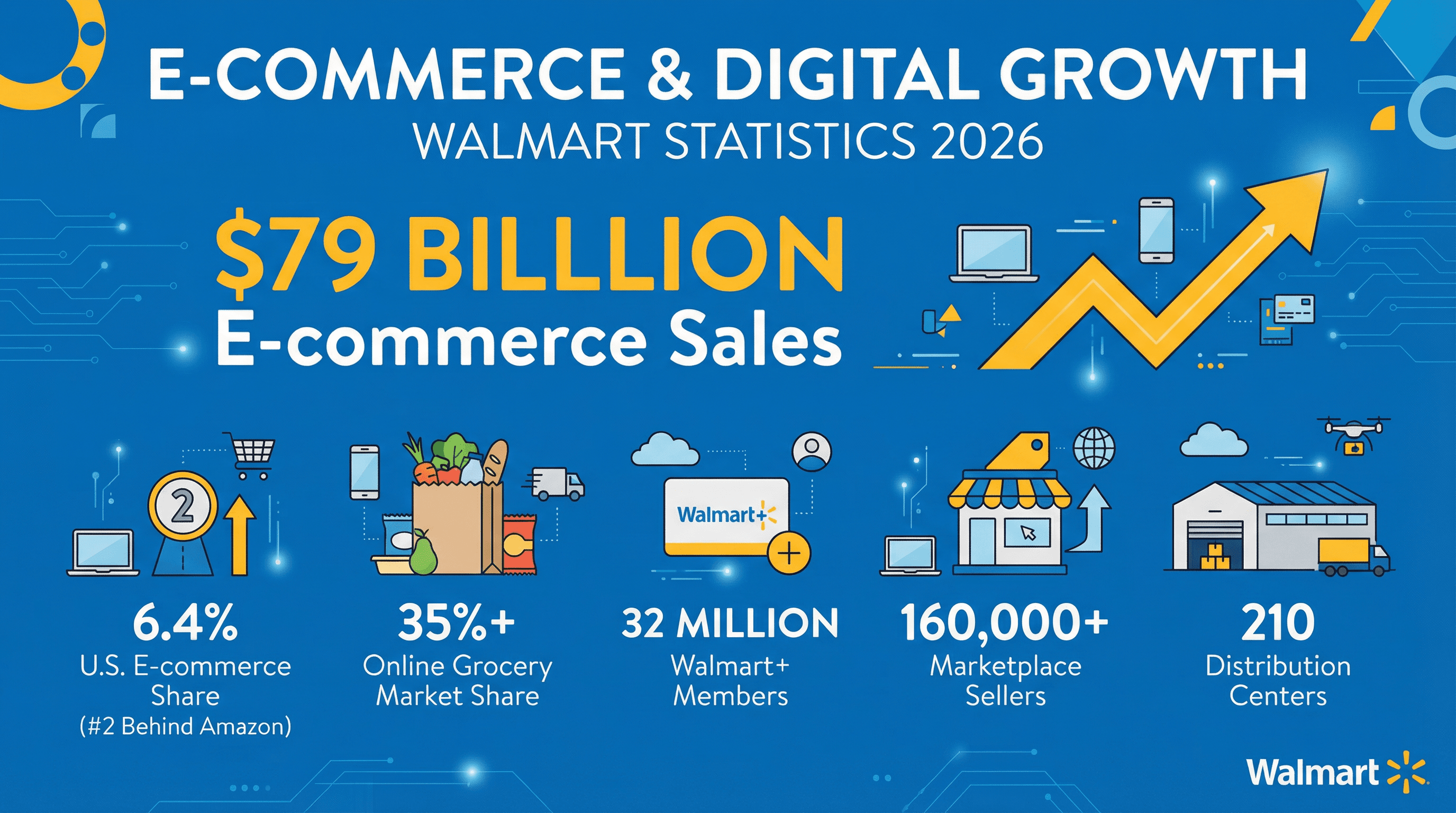 Walmart עברה מלהיות אנדרדוג דיגיטלי למתחרה רצינית באונליין. ב‑2025, מכירות האיקומרס הגלובליות הגיעו ל‑79 מיליארד דולר (), כמעט פי שניים מאז 2020 (). כיום Walmart מחזיקה בכ‑6.4% ממכירות האיקומרס בארה״ב, שנייה רק ל‑Amazon ().
איך הם עשו את זה? באמצעות הפיכת יותר מ‑4,000 חנויות בארה״ב למרכזי ליקוט והפצה מקומיים, הצעת איסוף מהיר לרכב ומשלוח באותו יום, ובניית מרקטפלייס צד‑שלישי עם 160,000+ מוכרים (). חברות ב‑Walmart+ (32 מיליון) מוסיפה שכבת נאמנות נוספת ומחזקת את ההיצמדות הדיגיטלית ().
מכולת אונליין ומערך אספקה
Walmart היא מלכת המכולת אונליין, עם נתח של 35%+ בשוק האמריקאי (). הסוד? קנייה אונליין ואיסוף מהחנות (BOPIS), ורשת משלוחים פנימית (Spark) שמנצלת את פריסת החנויות העצומה. מעל 90% מהאמריקאים יכולים לקבל הזמנות מ‑Walmart במהירות—לעיתים באותו יום ().
רשת הלוגיסטיקה של Walmart היא פלא: 210 מרכזי הפצה, 9,000+ טרקטורים, 80,000 נגררים ו‑11,000 נהגי משאיות שמועסקים ישירות בחברה (). זה כמו מערכת המחסנים של Amazon—רק שכאן המחסנים הם גם חנויות.
נתח שוק Walmart: ארה״ב והקמעונאות העולמית
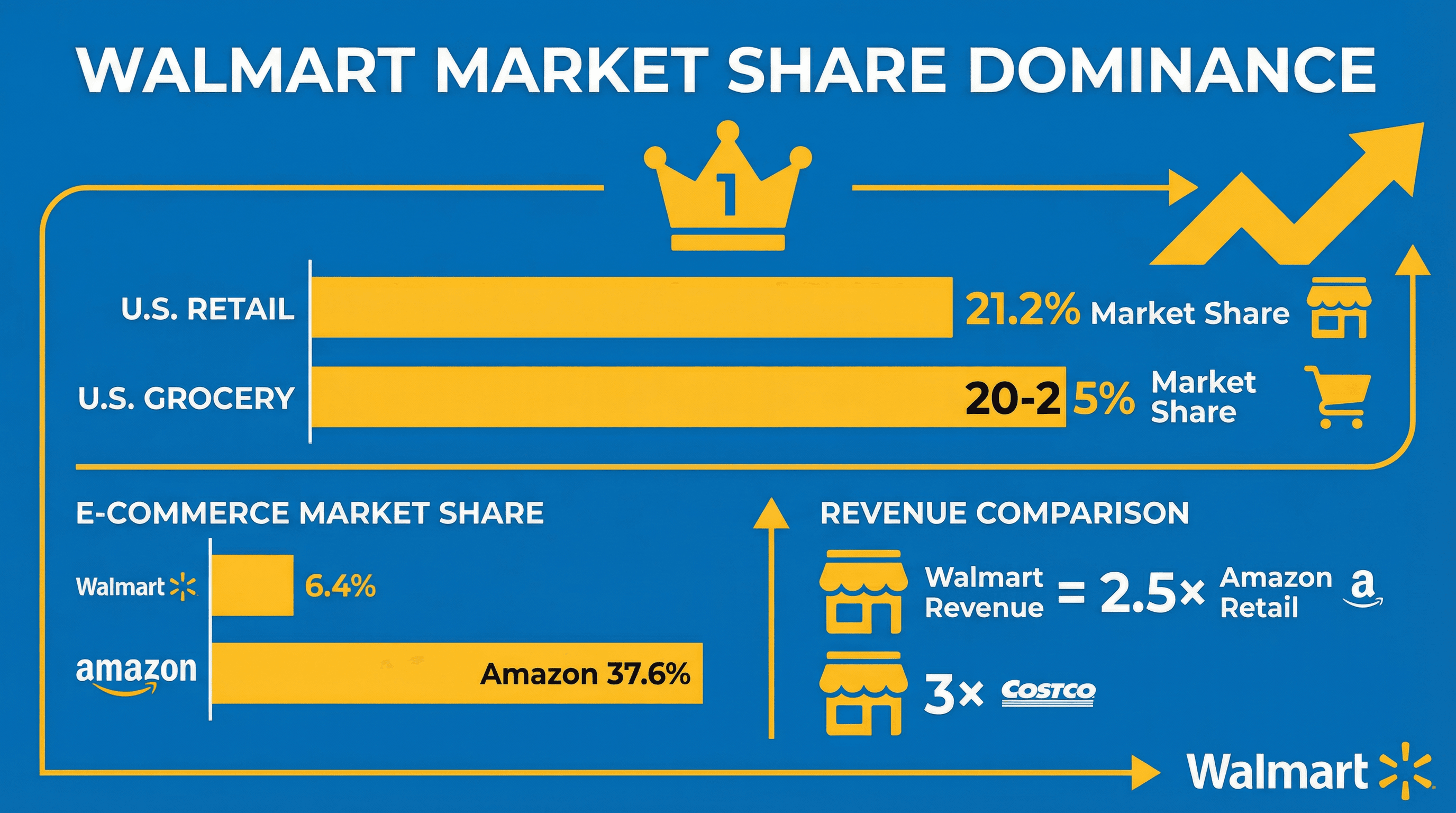 נתח השוק של Walmart הוא חומר לסיוטים אצל מתחרים:
- קמעונאות בארה״ב (קטגוריות מרכזיות): 21.2% ()
- מכולת: 20–25% מכלל ההוצאה על מכולת בארה״ב ()
- איקומרס: 6.4% (שנייה ל‑37.6% של Amazon) ()
- קמעונאות עולמית: ההכנסות של Walmart הן פי 2.5 ממקטע הקמעונאות של Amazon ופי 3 מ‑Costco ()
המהלכים של Walmart—במחירים, בשכר או באסטרטגיית אומניצ׳אנל—מכתיבים את הטון לכל התעשייה. ספקים, מתחרים ואפילו מקבלי החלטות עוקבים אחרי כל צעד.
סטטיסטיקות עובדים ב‑Walmart: היקף כוח האדם ומגמות
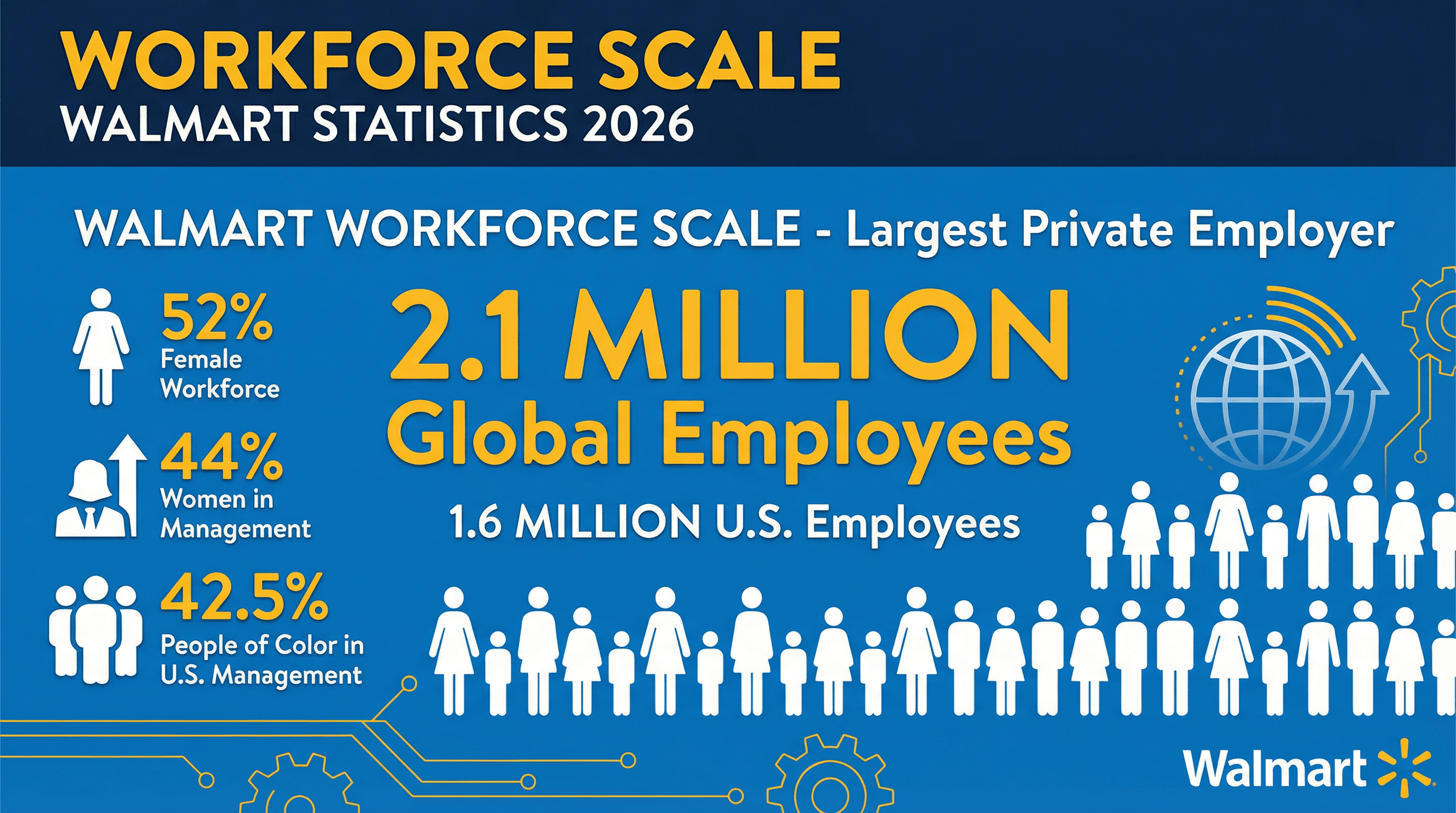 Walmart מעסיקה 2.1 מיליון עובדים ברחבי העולם, כולל 1.6 מיליון בארה״ב (). זה יותר מאוכלוסיית דאלאס, וזה הופך את Walmart למעסיק הפרטי הגדול בעולם.
- גיוון בכוח העבודה: 52% נשים, 44% מתפקידי הניהול מאוישים על ידי נשים, ו‑42.5% מתפקידי הניהול בארה״ב מאוישים על ידי אנשים מקבוצות מיעוט ().
- שכר: שכר התחלתי לשעה הוא 14$+ (ממוצע מעל 17$), עם הרחבת הטבות וסיוע בשכר לימוד.
- אוטומציה: Walmart משקיעה ברובוטיקה ובטכנולוגיה כדי לאוטומט משימות חוזרות, ומעבירה יותר עובדים לתפקידים מול לקוחות.
לנהל כוח אדם בהיקף כזה זה הישג בפני עצמו—והחלטות ה‑HR של Walmart משפיעות בפועל על כל שוק העבודה הקמעונאי.
תמהיל מוצרים ב‑Walmart: מה נמכר הכי הרבה?
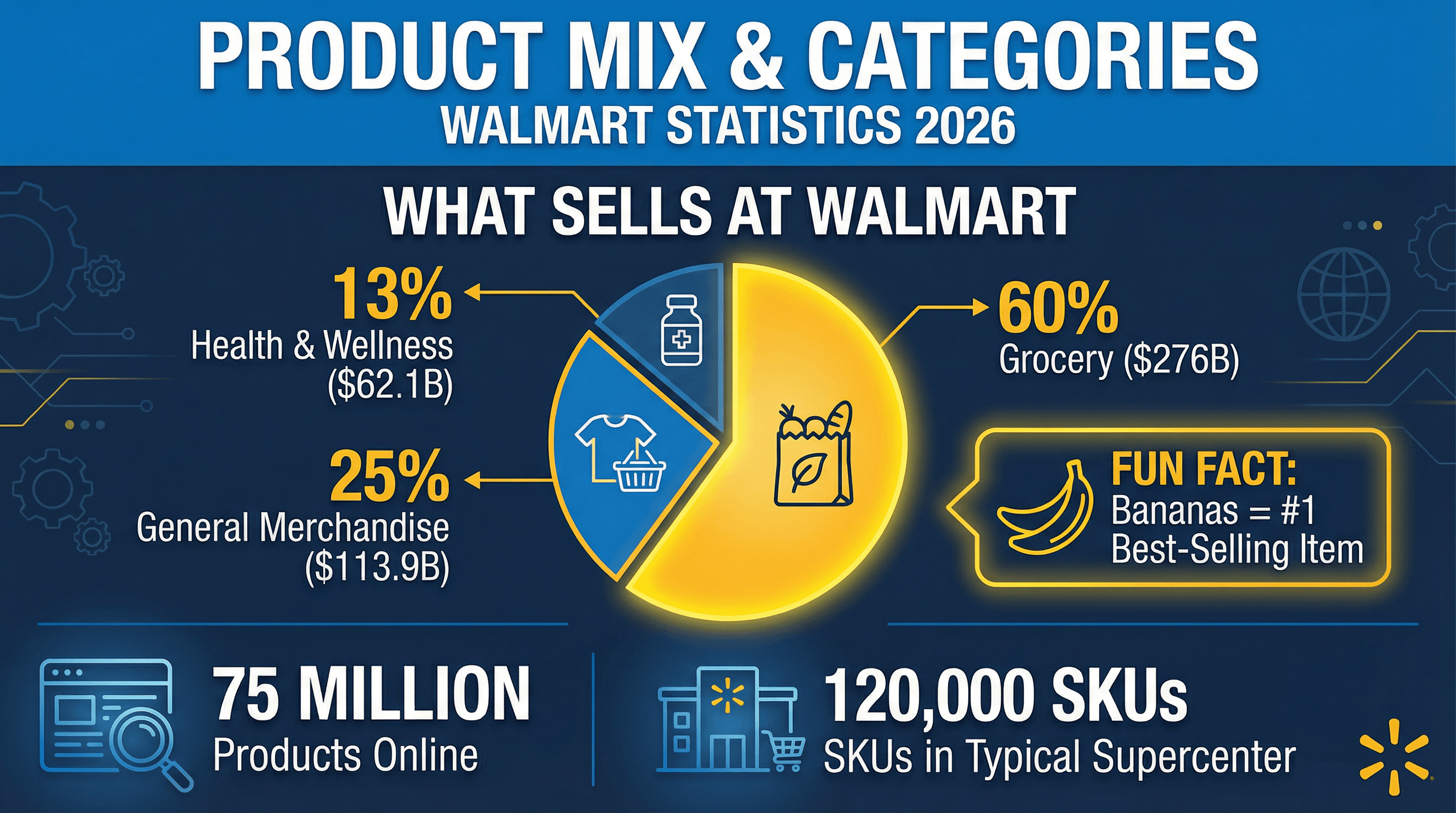 המבחר של Walmart הוא אגדי, אבל מכולת היא המנוע האמיתי:
- מכולת: 60% ממכירות ארה״ב (~276 מיליארד דולר ב‑2025) ()
- מוצרים כלליים: 25% (~113.9 מיליארד דולר)
- בריאות ורווחה: 13% (~62.1 מיליארד דולר)
וכן, הבננה הצנועה היא המוצר הנמכר ביותר ב‑Walmart (). זה הרבה אשלגן.
המרקטפלייס המקוון של Walmart מציע כיום מעל 75 מיליון מוצרים (), לעומת כ‑120,000 מק״טים בסניף Supercenter טיפוסי.
התנהגות צרכנים ב‑Walmart: נאמנות, שביעות רצון ותפיסת מותג
נאמנות הלקוחות של Walmart יוצאת דופן: מעל 95% מהקונים ביצעו מספר ביקורים בשנה האחרונה (). אבל במדדי שביעות רצון, Walmart מפגרת אחרי Target ו‑Costco. ציון ACSI של Walmart היה 73/100 ב‑2024–2025, לעומת 80 ל‑Target (). תלונות נפוצות? מעברים עמוסים, תורים ארוכים ומדי פעם מוצר שחסר במלאי.
ובכל זאת, ההבטחה של Walmart—מחירים נמוכים ונוחות—מחזירה את הלקוחות שוב ושוב. כפי שניסח זאת אנליסט אחד: “Walmart מקבלת ציונים נמוכים מאוד בשביעות רצון, אבל זה לא מנע ממנה להיות הקמעונאית הגדולה ביותר—מחיר ונוחות לרוב מנצחים חוויית פרימיום” ().
Walmart ופשיעה קמעונאית: מניעת אובדן ואבטחה
כשיש קנה מידה כזה, יש גם… “Shrink”. Walmart מפסידה כ‑3 מיליארד דולר בשנה לגניבות (), בערך 1% מהמכירות נטו. באזורים עם פשיעה גבוהה, Walmart אף סגרה חנויות (כמו בפורטלנד, אורגון) בגלל הפסדים שלא ניתן לשאת ().
התגובה של Walmart? שילוב של טכנולוגיה מתקדמת (מצלמות מבוססות AI, תגי RFID), הכשרת עובדים ושיתופי פעולה עם רשויות אכיפה מקומיות. בחלק מהחנויות יש אפילו תחנות משטרה בתוך המתחם. זה איזון עדין: יותר מדי אבטחה פוגעת בחוויית הקנייה, אבל פחות מדי מזמינה עוד הפסדים.
הוצאות פרסום ושיווק של Walmart
Walmart לא מתביישת להשקיע בהפצה. בשנת הכספים 2025, Walmart הוציאה 5.1 מיליארד דולר על פרסום וקידומים (), עלייה של 16% לעומת השנה הקודמת. זה פחות מ‑1% מהמכירות, אבל בסכומים מוחלטים—יותר מתקציב השיווק השנתי של חברות רבות.
Walmart גם מרוויחה מפרסום—פלטפורמת Walmart Connect ייצרה מעל 2.7 מיליארד דולר הכנסות מפרסום בארה״ב ב‑2024 (), ובפועל מממנת חלק מה״מכונה״ השיווקית שלה.
Walmart בהשוואה: מול ענקיות קמעונאות אחרות
איך Walmart נראית מול המתחרות?
- Amazon: ההכנסות של Walmart (681 מיליארד דולר) עדיין גבוהות מה‑514 מיליארד של Amazon (שחלק גדול מהם מגיע מ‑AWS ולא מקמעונאות) ().
- Costco: 242 מיליארד דולר מכירות—בערך שליש מ‑Walmart ().
- Kroger: 150 מיליארד דולר מכירות מכולת—כמחצית מעסקי המכולת של Walmart.
- Target: 109 מיליארד דולר מכירות—בערך שישית מסך Walmart U.S.
הקנה מידה של Walmart כל כך עצום, שהמהלכים שלה הופכים לסטנדרט תעשייתי—במחירים, בשכר ואפילו בתקני שרשרת אספקה.
תובנות מרכזיות מסטטיסטיקות Walmart 2026
- Walmart היא הקמעונאית הגדולה בעולם: 681 מיליארד דולר הכנסות, 270 מיליון לקוחות בשבוע, 10,800+ חנויות ו‑2.1 מיליון עובדים ().
- מכולת היא הליבה: 60% ממכירות ארה״ב, 276 מיליארד דולר בשנה, 21% נתח שוק מכולת בארה״ב ().
- האיקומרס מזנק: 79 מיליארד דולר מכירות דיגיטליות, 6.4% נתח איקומרס בארה״ב, 35%+ נתח מכולת אונליין ().
- בסיס הלקוחות רחב ונאמן: 95% מהאמריקאים קונים ב‑Walmart, והקונה הממוצע מוציא 3,500 דולר בשנה ().
- המהלכים של Walmart מעצבים את הענף: הגודל, היעילות וההתמקדות הבלתי מתפשרת בערך משאירים אותה במרכז החדשנות והתחרות בקמעונאות.
מקורות נתונים לציטוט והמשך מחקר
אם אתם רוצים להעמיק או לצטט את הנתונים במחקר שלכם, הנה כמה מהמקורות הטובים ביותר:
לעוד תכנים על איך נתונים של Walmart יכולים לתרום לעסק או למחקר שלכם, היכנסו ל‑ לצלילות עומק על קמעונאות מבוססת נתונים, אוטומציה באיקומרס והניתוחים העדכניים ביותר של התנהגות צרכנים.
מחשבה לסיום: בין אם אתם משווקים, מתחרים, או פשוט מישהו שקנה פעם בננה ב‑Walmart—הסטטיסטיקות האלה הן לא רק מספרים; הן הצצה להרגלים, לשאיפות ולמרוץ היומיומי של קונים בעידן המודרני. ואם אתם רוצים לנתח או לאוטומט נתוני קמעונאות בקנה מידה גדול—אתם כבר יודעים איפה למצוא אותי (ואת ).