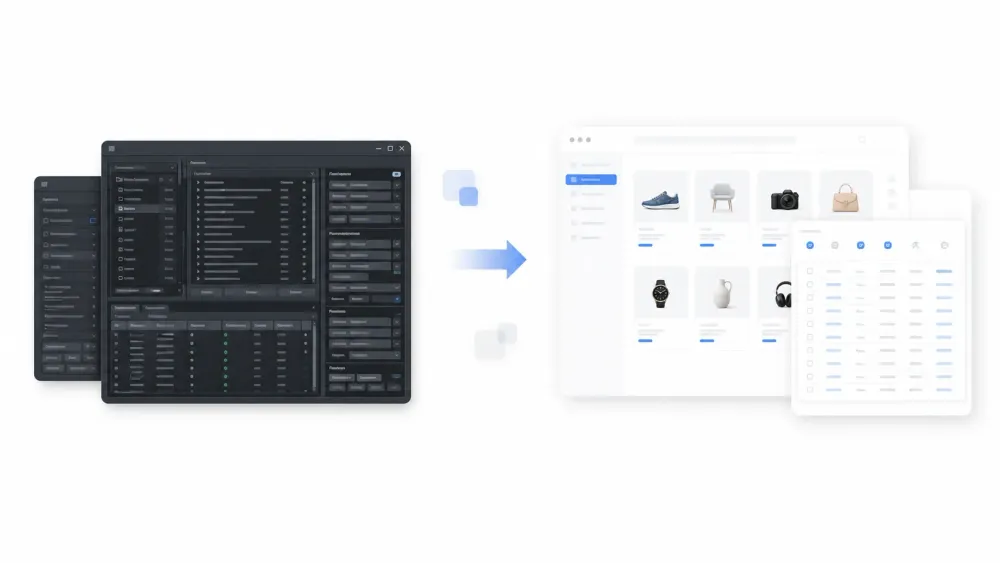
If you have spent any time around SEO forums, digital marketing communities, or scraping-heavy lead-gen workflows, you have probably heard ScrapeBox called the "Swiss Army knife of SEO." That reputation did not come from nowhere. ScrapeBox still bundles URL harvesting, keyword scraping, backlink utilities, proxy workflows, and a long tail of plug-ins into one Windows desktop app.
The harder question in May 2026 is whether that power still translates into the best buying decision for a normal business user. For experienced SEO operators who are comfortable with proxies, footprints, and brittle scraping flows, ScrapeBox still has a place. For everyone else, the tradeoff has become sharper: you save on subscription cost upfront, but you pay in setup friction, older UX, and the extra moving parts needed to get consistent results.
This review is written for buyers deciding between a legacy SEO power tool and a newer no-code scraper. I will break down what ScrapeBox still does well, where it shows its age, and why Thunderbit is the better alternative for non-technical teams that want web data without the maintenance burden.
The Quick Verdict
If you only need the shortlist:
- Choose ScrapeBox if you are an SEO power user who specifically wants a one-time Windows license and you are comfortable managing proxies, add-ons, and search-engine scraping workflows manually.
- Choose Thunderbit if you want the fastest route from webpage to structured data without configuring selectors, proxies, or a desktop automation stack.
- Avoid buying ScrapeBox as your first scraper if your real job to be done is "get data into Sheets quickly" rather than "tinker with a broad SEO utility belt."
What ScrapeBox Is in 2026
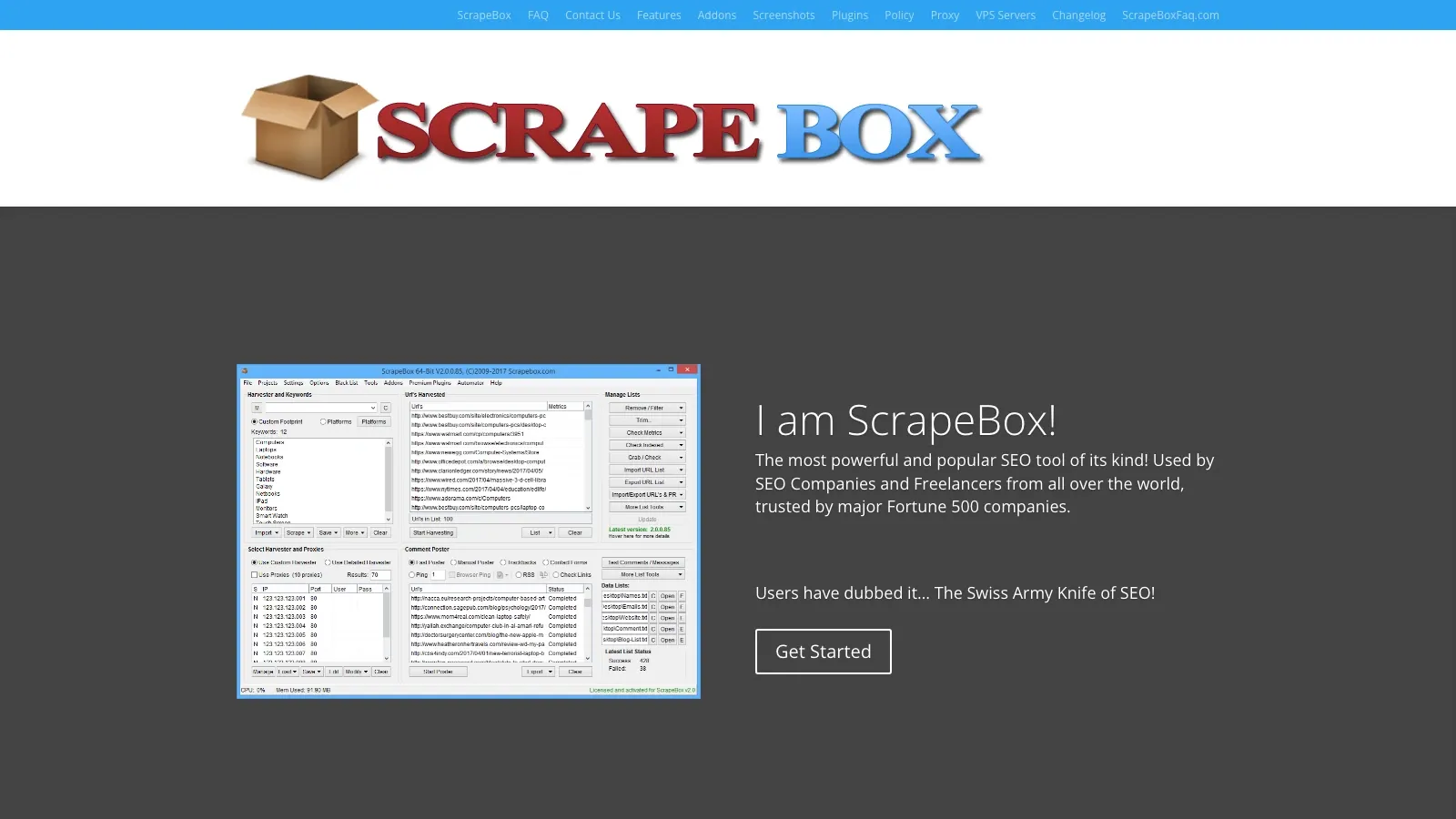
ScrapeBox is still a Windows desktop application built around SEO automation and search-driven scraping tasks. The vendor is now promoting ScrapeBox v2, still sold as a one-time purchase, with ongoing minor updates included for owners. Its core positioning has not changed much: it is a multi-tool for link prospecting, harvesting, indexing checks, keyword collection, and related scraping utilities.
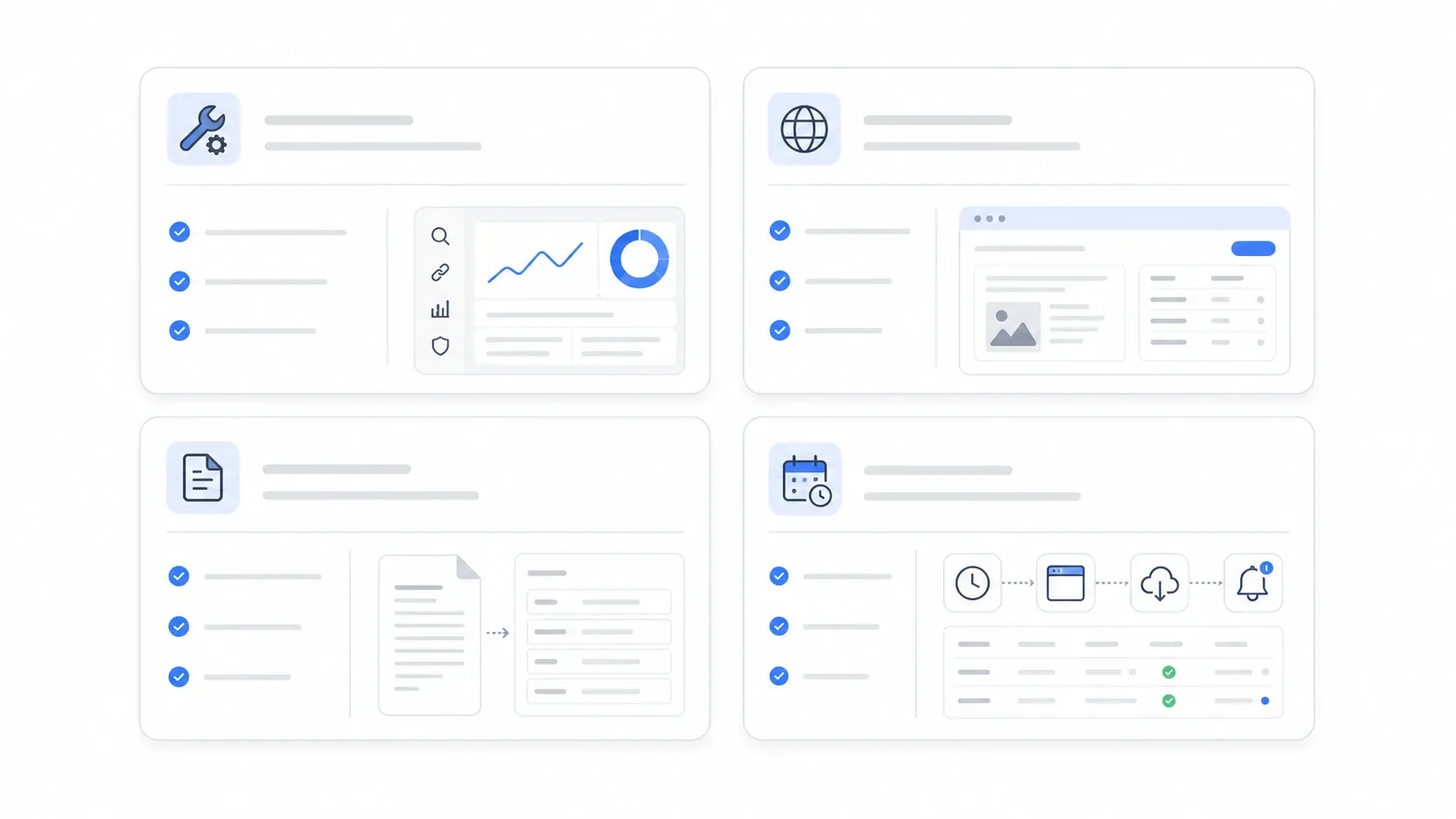
The main capabilities buyers still care about are:
- URL harvesting: Pull large sets of URLs from search engines for prospecting and research.
- Keyword scraping: Generate long-tail keyword ideas from suggest engines and related sources.
- Backlink and index checks: Validate whether links are live and whether pages are indexed.
- Proxy workflows: Route queries through proxy lists to reduce blocking during larger runs.
- Plug-ins and add-ons: Extend the core app with extra utilities for specialized scraping tasks.
What matters most is not whether ScrapeBox can do these jobs in theory. It can. The real question is how much operator effort is required to keep those jobs working in practice.
Check Whether a No-Code Scraper Fits Your Workflow Better
If you want to see what a typical ScrapeBox setup mindset looks like before you buy, this getting-started tutorial is still useful context.
Who ScrapeBox Is Actually For
ScrapeBox still makes the most sense for a fairly narrow buyer profile:
- SEO professionals who already understand proxies, CAPTCHA friction, and search footprints
- Link-building specialists doing prospecting and bulk search tasks
- technical marketers who value tool breadth more than ease of use
- buyers who strongly prefer a one-time license over SaaS pricing
It is a weaker fit for:
- sales teams trying to scrape lead data quickly
- ecommerce operators who want point-and-click price or product extraction
- researchers who do not want to maintain scraping settings
- small business owners who need usable data more than tool depth
The biggest gap is that ScrapeBox was designed for operators who accept setup work as part of the process. Modern no-code scrapers are designed for operators who expect the tool to absorb that complexity for them.
ScrapeBox Pricing in May 2026
ScrapeBox still advertises a one-time license for $97, discounted from a crossed-out $197 price on the official site. The vendor also still states that the purchase is for one PC, includes one free license transfer per month, and includes bug fixes plus minor upgrades.
That sounds simple, and compared with many SaaS tools it is simple. The catch is that the software cost is not the full operating cost. Buyers often still need:
- proxies for larger scraping workloads
- paid or extra plug-ins for specific use cases
- time to configure, test, and maintain workflows
So the financial tradeoff looks like this:
- Low upfront software cost
- Higher operator overhead
- Higher hidden complexity cost
If you are experienced, that can still be acceptable. If you are not, the cheap sticker price can be misleading.
What Current Users Are Saying
The current review picture is still polarized rather than uniformly positive.
- G2 currently shows 3.5/5 from 12 reviews, which is a small but useful sample for recurring themes around usability and setup friction.
- Trustpilot currently shows 3.1/5 from 66 reviews, notably lower than the score older roundup posts often cite.
Across those sources, the same patterns keep surfacing:
- buyers still like the breadth of features and one-time pricing
- experienced users see it as good value if they already know the workflow
- newer users struggle with the interface, activation flow, and the extra setup around proxies and add-ons
That matters because this article is not asking "Is ScrapeBox famous?" It is asking "Is ScrapeBox still the best fit for a new buyer in 2026?" The user feedback still says the answer depends heavily on technical tolerance.
Where ScrapeBox Still Works Well
To be fair, ScrapeBox still has real strengths:
- Breadth: Few legacy tools bundle this many SEO utilities into a single purchase.
- One-time purchase model: For some buyers, avoiding recurring software spend still matters.
- Power-user flexibility: If you already know how to tune the workflow, you can get a lot done.
- Long update history: The vendor still emphasizes ongoing version releases and maintenance.
If you live inside SEO operations and you want a desktop utility belt, ScrapeBox can still be rational.
Where ScrapeBox Shows Its Age
This is the part many older reviews understate. ScrapeBox is not just "a little old-school." The product experience is built around an older assumption: that the user, not the software, should manage most of the complexity.
That shows up in four places:
1. Setup Friction
ScrapeBox may not require coding, but it still requires operator knowledge. You need to understand how proxies fit the workflow, when a plug-in is necessary, and how to avoid low-quality results or blocking.
2. UX Debt
The interface is functional, but dense. It was built for users who tolerate utility-style software. That is very different from modern tools that bias toward fast onboarding and obvious next actions.
3. Hidden Cost Structure
The core software is cheap, but reliable larger-scale usage can pull in extra cost through proxies, extra services, and time spent maintaining the workflow.
4. Weak Fit for Business Users
Most non-technical users do not want a flexible SEO workbench. They want extracted data, exported cleanly, with as little operational overhead as possible.
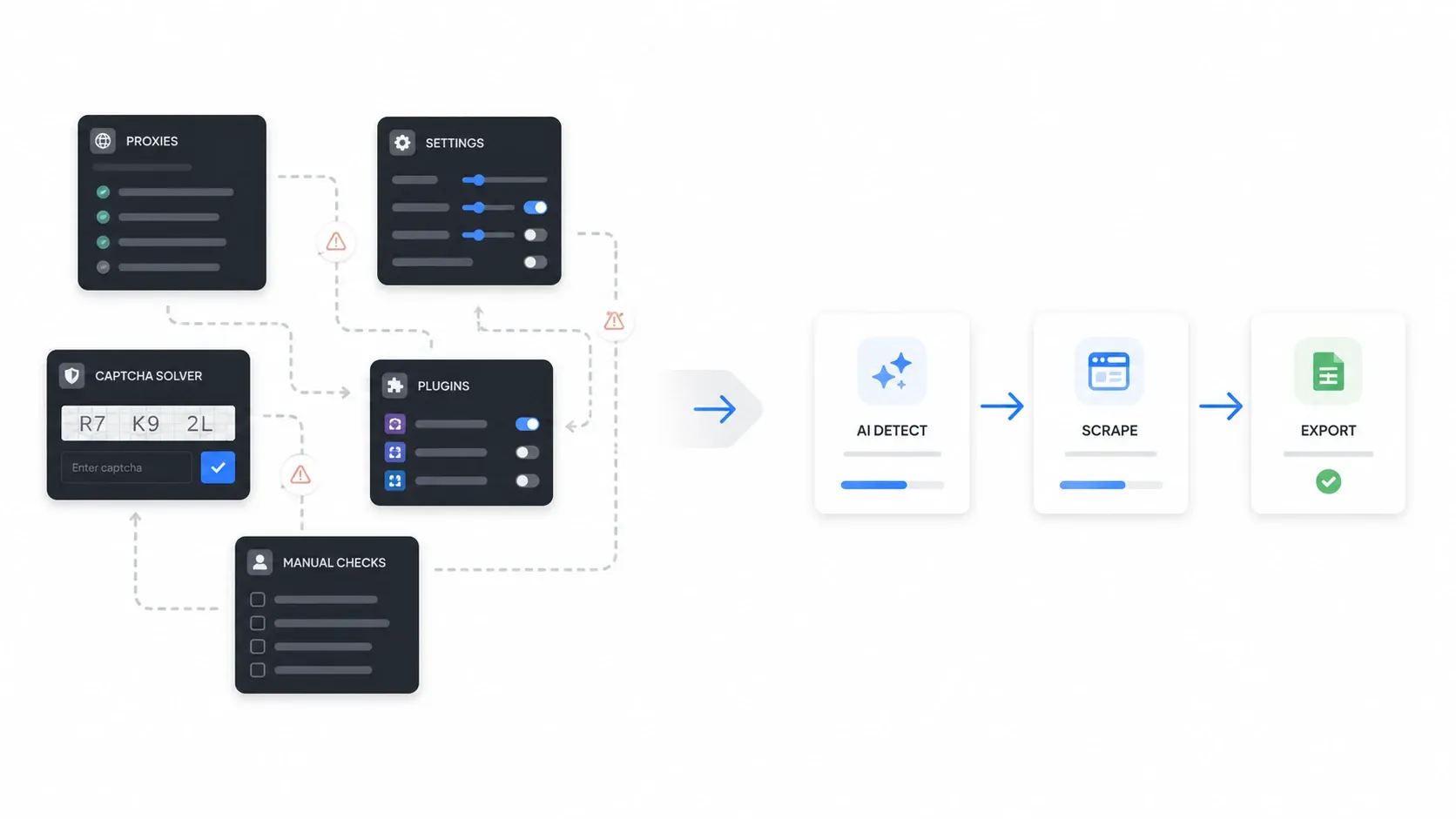
If your real requirement is "pull the data and move on," that complexity is overhead, not an advantage.
Thunderbit: The Best Alternative for Non-Technical Users
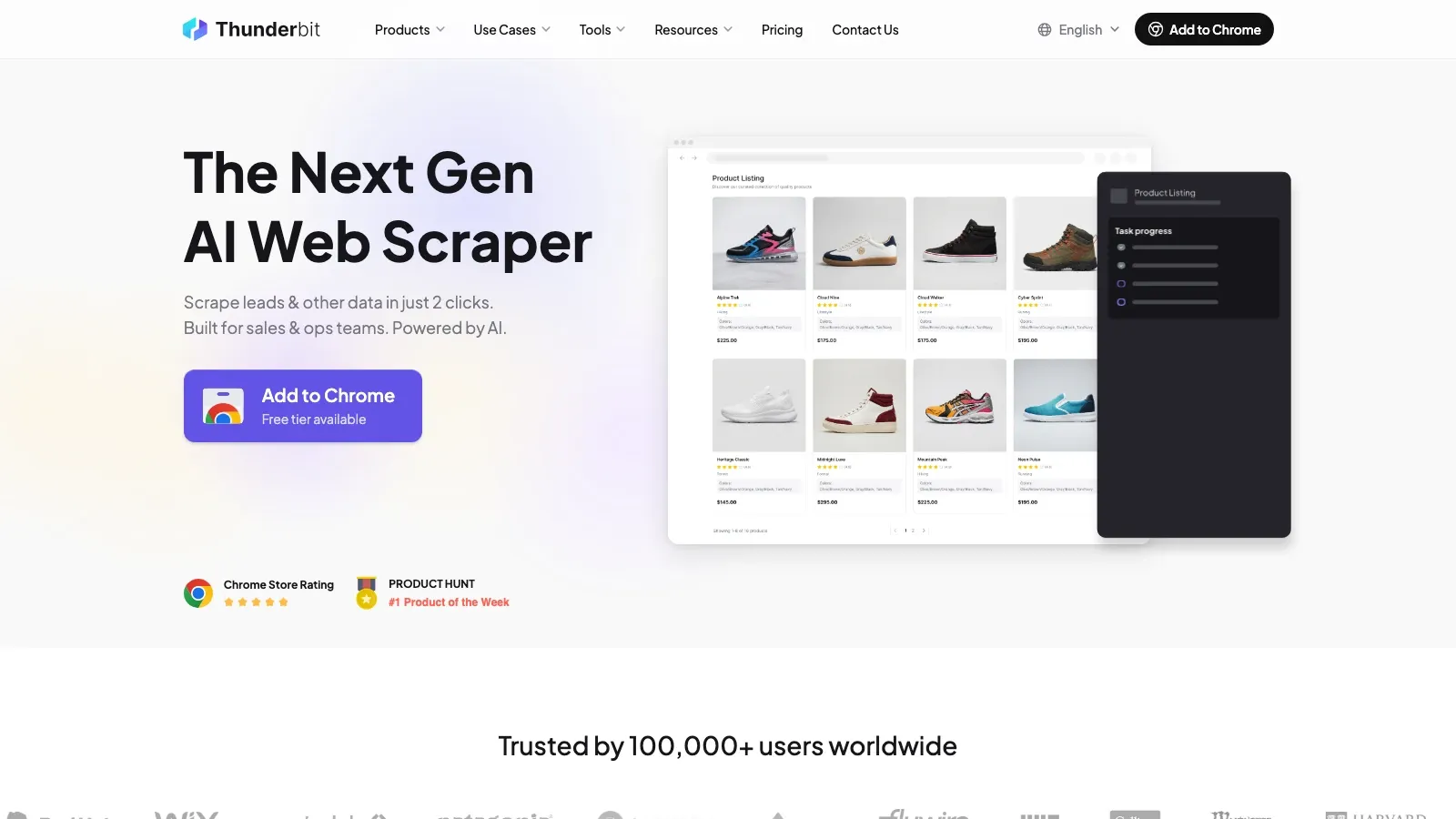
Thunderbit takes the opposite approach. Instead of asking the user to configure the scraping logic piece by piece, it pushes the complexity into the product through AI-assisted extraction.
The workflow is simple:
- open the target website
- click AI Suggest Fields
- review the suggested columns
- click Scrape
- export to your tool of choice
That difference matters more than any feature checklist. Thunderbit is built for business users who care about time-to-data, not time spent tuning a scraper.
Why Thunderbit Is Easier to Adopt
- No-code setup: No selector logic, proxy management, or desktop utility sprawl
- Cross-platform delivery: Runs as a Chrome extension rather than a Windows-only desktop app
- Subpage scraping: Enrich row data by automatically visiting linked detail pages
- Free export: Send data to Excel, Google Sheets, Airtable, or Notion without a separate export penalty
- AI-assisted extraction: The product proposes the fields instead of asking the user to define everything manually
- Broader source coverage: Useful for websites, PDFs, images, and document-style inputs, not only classic search scraping flows
Thunderbit Pricing in May 2026
Thunderbit's current pricing has moved since older 2025 comparison posts. The official pricing page now shows:
| Tier | Monthly Price | Annual Price | Effective Monthly (Annual Billing) | Credits / Limits |
|---|---|---|---|---|
| Free | Free | Free | Free | 6 pages, max 30 credits per page |
| Starter | $15 | $108 | $9 | 500 credits monthly or 5,000 credits yearly |
| Pro Tier 1 | $38 | $288 | $24 | 3,000 credits monthly or 30,000 credits yearly |
| Pro Tier 2 | $75 | $576 | $48 | 6,000 credits monthly or 60,000 credits yearly |
| Pro Tier 3 | $125 | $1,152 | $96 | 10,000 credits monthly or 120,000 credits yearly |
| Pro Tier 4 | $249 | $2,304 | $192 | 20,000 credits monthly or 240,000 credits yearly |
For most readers of this page, the key point is simpler than the whole table: Thunderbit is now priced like a modern usage-based scraper, while ScrapeBox is priced like a legacy utility. Which one feels cheaper depends on whether your bottleneck is software cost or team time.
This Thunderbit walkthrough is the most relevant orientation video if you want to see the current "two-click" model in action.
Thunderbit vs ScrapeBox
| Feature | ScrapeBox | Thunderbit |
|---|---|---|
| Platform | Windows desktop app | Chrome extension, cross-platform |
| Setup model | Manual configuration and SEO utility workflow | Point-and-click AI-assisted workflow |
| Core strength | Search harvesting and SEO utility breadth | Fast no-code extraction and exports |
| Learning curve | Steep for beginners | Low for non-technical users |
| Proxy dependence | Common for larger-scale workflows | Usually not part of the user workflow |
| Data sources | Search engines, websites, plug-in driven sources | Websites, subpages, PDFs, images, documents |
| Export workflow | Basic file export and manual follow-up | Excel, Google Sheets, Airtable, Notion |
| Pricing model | $97 one-time license for one PC | Free tier plus recurring usage tiers |
| Best fit | Experienced SEO operators | Business users and no-code teams |
Which Tool Should You Choose?
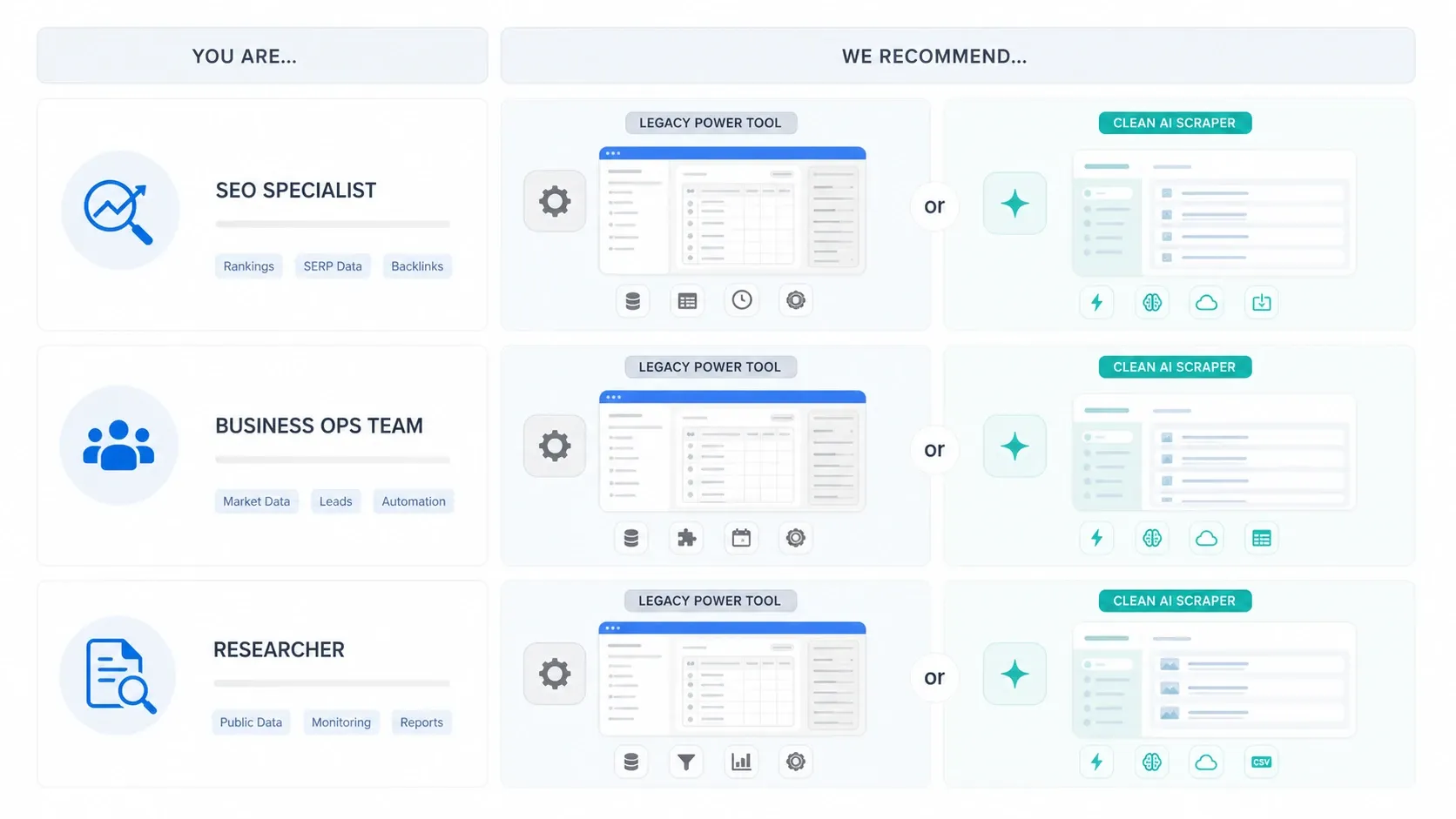
Use this as the practical decision rule:
| If you are... | Choose... | Why |
|---|---|---|
| SEO consultant who already uses proxies and search-footprint workflows | ScrapeBox | You will benefit from the utility-belt depth and one-time license model |
| sales, ecommerce, operations, or research user who wants clean data fast | Thunderbit | The product removes setup overhead and gets you to export faster |
| small team deciding between "cheap software" and "cheap time" | Thunderbit | Team time is usually the more expensive variable |
| advanced operator buying a second specialized tool for SEO harvesting | ScrapeBox | It can still add value as a niche workflow tool |
| non-technical buyer choosing a first scraper | Thunderbit | The onboarding path is far easier and more reliable |
If you want a second product example beyond the generic walkthrough, this short official use-case demo shows the style of live-page extraction that tends to replace manual scraping workflows for non-technical teams.
Final Take
ScrapeBox is still relevant, but it is no longer easy to recommend broadly. In 2026 it reads less like a universal best choice and more like a specialized legacy tool for experienced SEO operators who know exactly what they are buying.
If you fit that profile, the one-time license can still be attractive.
If you do not, the better decision is usually Thunderbit. It is easier to adopt, easier to teach across a team, and much better aligned with the way most business users actually want web scraping to work now.
FAQ
Q1: Is ScrapeBox still worth buying in 2026?
Yes, but only for the right buyer. It still makes sense for experienced SEO users who specifically want a one-time desktop utility with search-harvesting and scraping workflows. It is a poor first choice for most beginners.
Q2: Is ScrapeBox really still $97?
As of May 19, 2026, the official site still advertises ScrapeBox for $97 as a one-time single-PC license, with one free license transfer per month and ongoing minor updates included.
Q3: What changed in Thunderbit pricing since older 2025 comparison posts?
Thunderbit's current pricing page now shows annual totals of $108, $288, $576, $1,152, and $2,304 across Starter through Pro Tier 4, which means some older yearly-equivalent figures circulating in older blog posts are no longer current.
Q4: What is the biggest difference between ScrapeBox and Thunderbit?
ScrapeBox gives you a broad legacy SEO toolkit but expects more operator setup. Thunderbit is designed to reduce setup work and get non-technical users to usable exports faster.
Related Reading
- 12 Best Web Scraping Tools in 2026
- 11 Best Chrome Extension Data Scraper Tools in 2026
- Best Web Scraping Solutions for Easy Data Collection
Start Scraping Without the ScrapeBox Learning Curve Get Started Free