
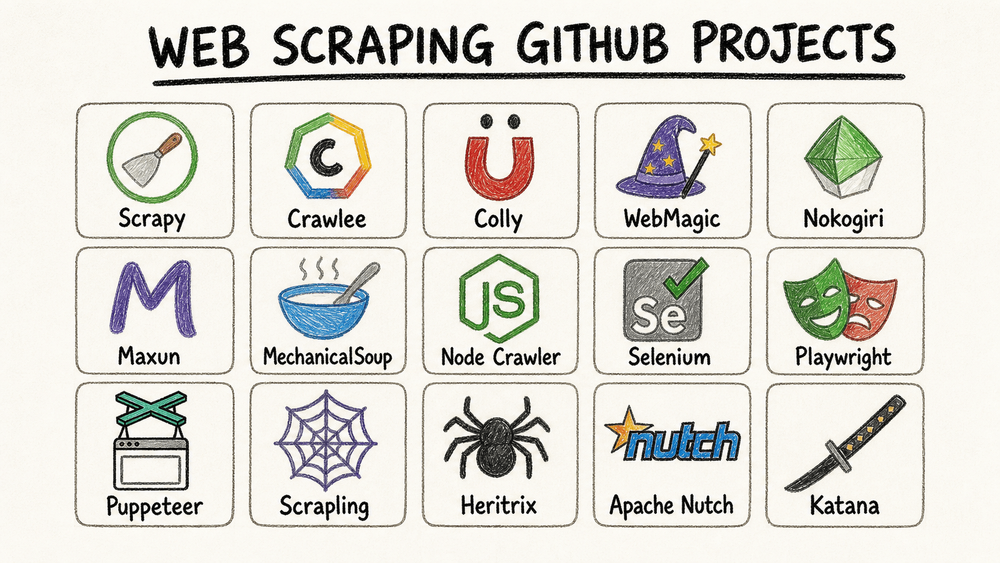
The web is still full of valuable data in 2026, but most teams do not need "a scraper" in the abstract. They need a practical answer to one of three questions: which open-source project is still worth building on, which stack can handle modern JavaScript-heavy sites, and whether a non-developer should skip GitHub entirely and use a no-code workflow instead.
This refresh is built around that decision path. I re-checked public GitHub repo pages, star counts, and commit-feed activity on August 6, 2026, then compared the projects below by setup complexity, JavaScript support, maintenance signal, export ergonomics, and audience fit.
The Quick Answer
- Choose Scrapy if you want the most mature Python crawling framework for structured, large-scale scraping.
- Choose Crawlee if your team works in JavaScript or TypeScript and wants one stack for both HTTP and browser-based scraping.
- Choose Playwright or Puppeteer if the site is JavaScript-heavy and true browser automation is the real requirement.
- Choose Maxun if you want an open-source, visual, self-hostable no-code layer instead of writing scraping code from scratch.
- Choose Heritrix, Apache Nutch, or Katana only if your job is specialized: archival crawling, distributed crawling, or security reconnaissance.
- Choose Thunderbit if you are not trying to build on GitHub at all and just want data in Sheets, Airtable, Notion, CSV, or JSON fast.
Try a No-Code Scraper Before You Commit to a Code Stack
At-a-Glance Comparison
GitHub stars and last-commit signals below were checked against public repo pages and commit feeds on August 6, 2026.
| Project | Language / Model | Setup | JS Support | Best Fit | GitHub Stars | Last Commit Signal |
|---|---|---|---|---|---|---|
| Scrapy | Python framework | Moderate | No native JS | Large-scale spiders, ecommerce, news | 63.7k | August 6, 2026 |
| Crawlee | Node.js / TypeScript framework | Moderate | Yes | Static + dynamic scraping in one stack | 25.2k | August 6, 2026 |
| Maxun | Open-source no-code platform | Moderate deploy, easy for users | Yes | Business users who still want open-source control | 17.1k | August 5, 2026 |
| MechanicalSoup | Python library | Easy | No | Forms, sessions, and simple static sites | 4.9k | August 4, 2026 |
| Node Crawler | Node.js crawler | Moderate | No | Fast static crawling and feed aggregation | 6.8k | June 18, 2026 |
| Heritrix | Java archival crawler | Advanced | No | Web archiving and domain-scale capture | 3.3k | August 5, 2026 |
| Apache Nutch | Java distributed crawler | Advanced | No | Search-style and big-data crawling | 3.3k | August 5, 2026 |
| Selenium | Multi-language browser automation | Moderate | Yes | Interaction-heavy flows and browser fidelity | 34.3k | August 6, 2026 |
| Playwright | Multi-language browser automation | Moderate | Yes | Modern dynamic sites and robust scripting | 94.1k | August 6, 2026 |
| Puppeteer | Node.js browser automation | Moderate | Yes | Chrome-first automation and scraping | 95.4k | August 6, 2026 |
| Scrapling | Python stealth scraping toolkit | Moderate | Yes | Anti-bot-sensitive browser scraping | 72.8k | July 30, 2026 |
| Katana | Go crawler / CLI | Moderate | Optional headless | Security crawling and URL discovery | 17.3k | August 5, 2026 |
| Colly | Go framework | Moderate | No | High-performance static scraping | 25.4k | June 18, 2026 |
| WebMagic | Java framework | Moderate | No native JS | General Java scraping pipelines | 11.7k | December 20, 2025 |
| Nokogiri | Ruby parser | Easy | No | Ruby apps and custom parsing workflows | 6.3k | August 3, 2026 |
| Thunderbit | AI no-code Chrome extension | Plug and play | Yes | Non-technical teams that want usable data fast | N/A | Managed product, continuously updated |
Before You Choose a GitHub Project, Ask Whether You Even Want a Code Workflow
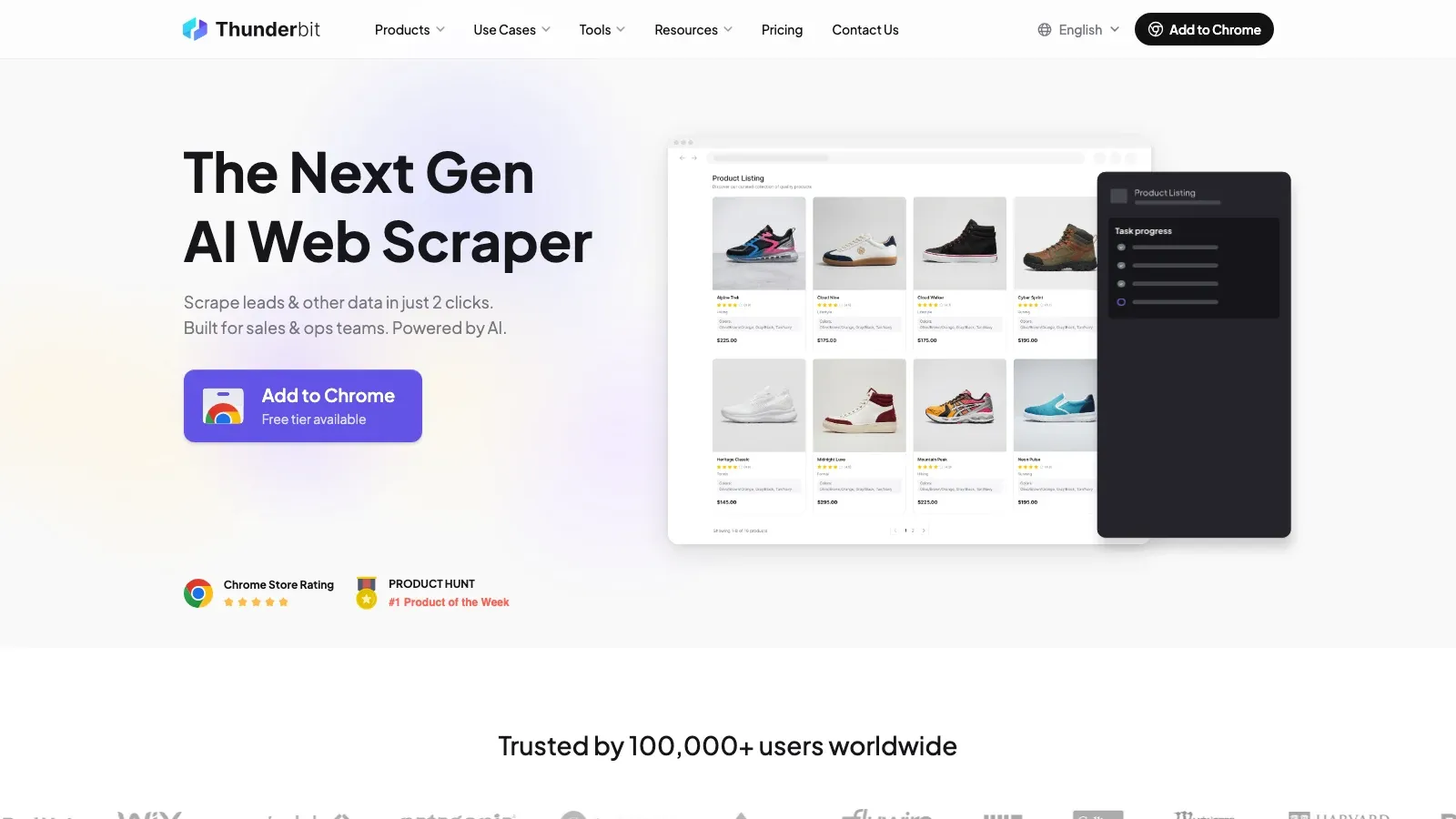
Thunderbit is not a GitHub project, and that is exactly why it belongs in this decision guide. A large share of people searching for "best web scraping GitHub projects" do not actually want to maintain a crawler stack. They want structured data out of a live website today.
Thunderbit is the cleanest exit ramp from code-first scraping research to business-ready execution:
- Best for: sales prospecting, ecommerce monitoring, real estate collection, recruiting research, and browser-first operations work.
- Why it stands out: AI field suggestion, subpage enrichment, dynamic-page handling, and exports to Sheets, Airtable, Notion, CSV, and JSON without writing scraping logic.
- Watchout: if your job is a long-lived internal crawl platform with custom infrastructure, an open-source framework still gives you more control.
If you want to see the no-code path before you decide to live inside GitHub, this current Thunderbit walkthrough is the fastest reality check:
Try Thunderbit AI Web Scraper for Free
How I Evaluated These GitHub Scraping Projects
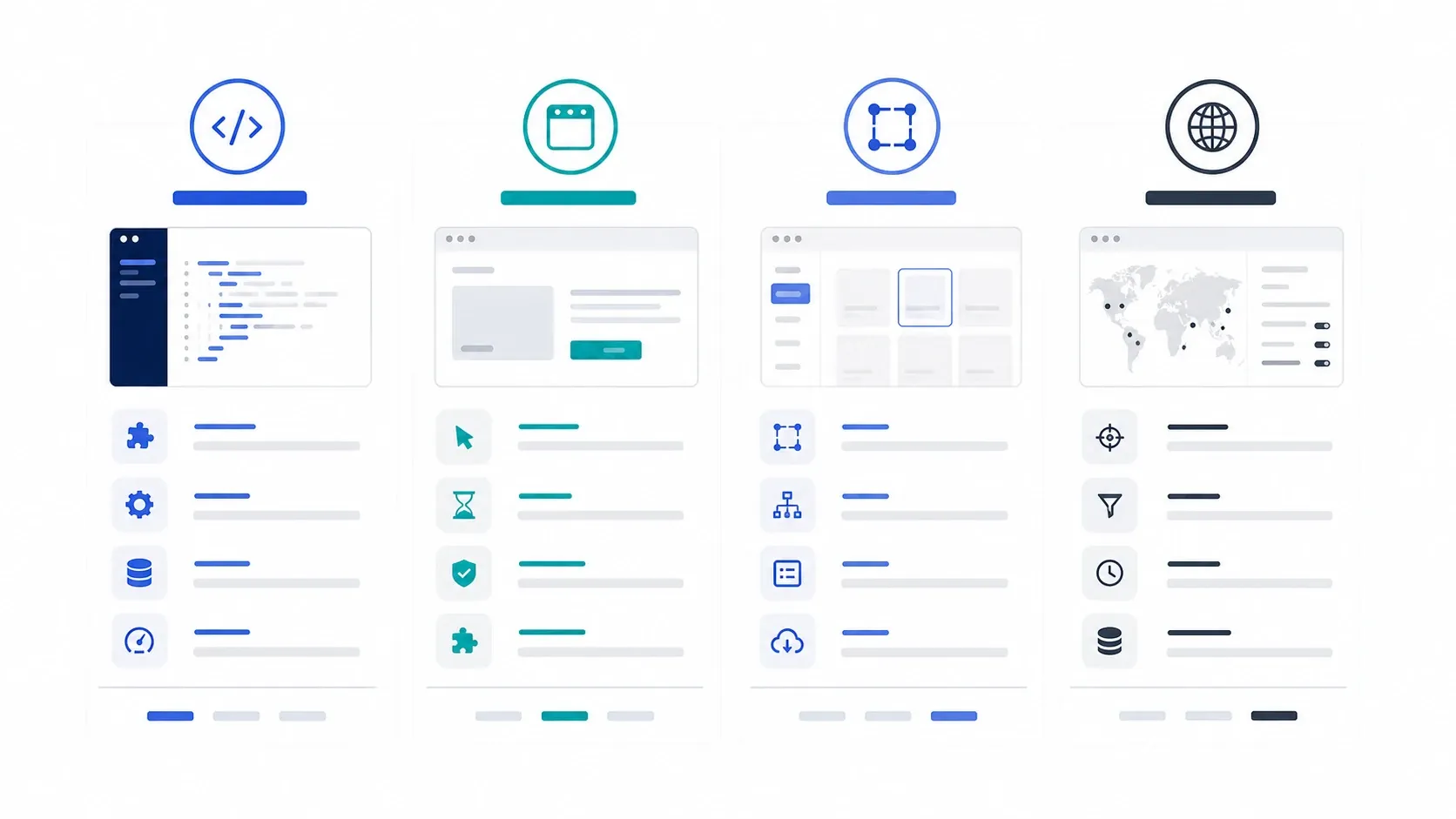
Not all GitHub scraping projects are comparable. Some are full frameworks. Some are browser-automation libraries. Some are parsers. Some are niche crawlers built for archives or security teams.
To keep the list useful, I prioritized projects that still meet four practical filters:
- They still have market reality behind them.
High stars alone are not enough, but low adoption plus stale maintenance is usually a bad sign. - They still have visible project motion.
For this refresh, I re-checked public commit-feed activity on August 6, 2026 instead of trusting old roundup numbers. - They solve a real scraping job.
I excluded neat-but-obscure repos that do not map well to actual business or research workflows. - They are distinct enough to shortlist.
The goal is not to dump 50 repos. It is to help you decide between frameworks, browser stacks, no-code open-source tools, and specialist crawlers.
The comparison dimensions are the same ones that usually decide success or failure in practice:
- Setup complexity: how quickly a new user can get to a working scrape.
- JavaScript support: whether the project can handle modern client-rendered sites.
- Project health: whether the repo still looks alive enough to trust.
- Data handling: whether the project produces structured output or leaves more work to you.
- Audience fit: whether the project is really for beginners, data engineers, security teams, or non-technical operators.
Setup Complexity: How Fast Can You Start?
That setup taxonomy still holds up, but the useful framing in 2026 is simpler:
- Plug and play: Thunderbit for business users; MechanicalSoup or Nokogiri for lightweight code-first scripts.
- Moderate: Scrapy, Crawlee, Maxun, Selenium, Playwright, Puppeteer, Colly, Katana, Scrapling, WebMagic, and Node Crawler all need some coding, CLI, or deployment work.
- Advanced: Heritrix and Apache Nutch make sense only if you actually need Java-based archival or distributed crawling.
Maxun deserves a special mention here because it splits the difference. The platform itself needs deployment, but the end-user workflow is much lighter than working directly with Scrapy or Playwright.
Dynamic Content Support: Which Projects Can Handle the Modern Web?
Modern websites are full of React, Vue, infinite scroll, background API calls, and login-heavy flows. This is the line that divides "I got HTML" from "I got the data I actually needed."
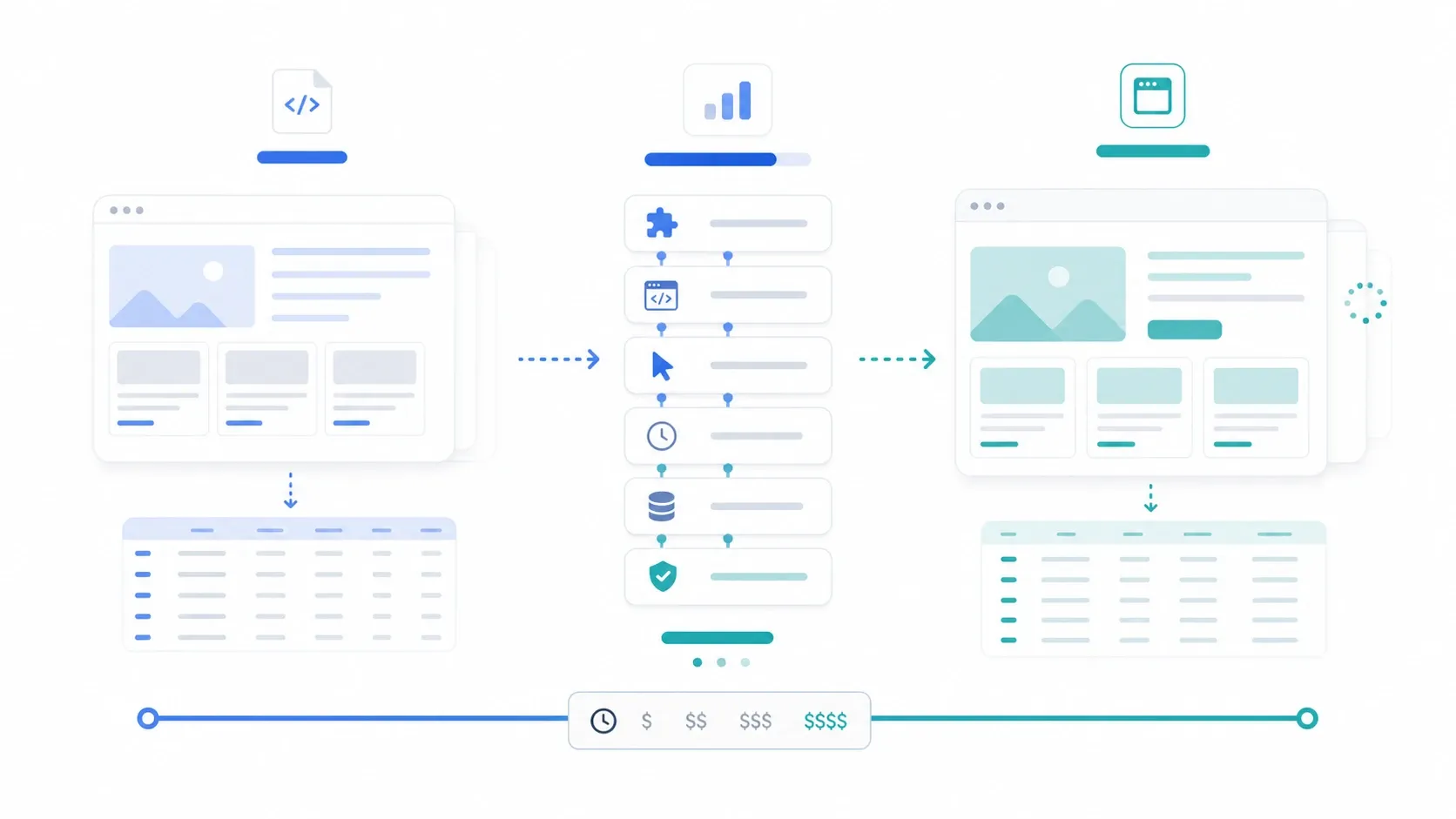
The projects on this list fall into three buckets:
- Full browser automation: Selenium, Playwright, and Puppeteer execute JavaScript fully and are still the most reliable choices for interaction-heavy sites.
- Hybrid or wrapper support: Crawlee can switch between lightweight HTTP crawling and browser-backed scraping. Scrapling adds stealth-oriented tooling around harder targets. Maxun uses a browser-backed approach behind a visual interface.
- Static HTML only by default: Scrapy, MechanicalSoup, Node Crawler, Colly, WebMagic, Nokogiri, Heritrix, and Apache Nutch do not natively solve modern rendering problems on their own.
If your biggest uncertainty is "can this stack handle JavaScript-heavy pages without me hand-rolling every browser step?", this current Playwright scraping tutorial is the best middle-of-the-page reality check:
Project Health: Which Repos Still Look Trustworthy in 2026?
The 2025 version of this article leaned on star counts and a few dated update notes. That is not enough anymore. I checked both current star counts and recent commit signals on August 6, 2026.
The healthy split looks like this:
- Clearly active right now: Scrapy, Crawlee, Maxun, MechanicalSoup, Heritrix, Apache Nutch, Selenium, Playwright, Puppeteer, Scrapling, Katana, and Nokogiri all pushed public commits within the two weeks before this check.
- Alive but slower-moving: Colly and Node Crawler both last pushed on June 18, 2026. They still look usable, but they update in occasional bursts rather than at the weekly pace of Playwright or Crawlee.
- More caution required: WebMagic is the one real gap on this list. The latest public commit signal I checked was December 20, 2025, so I would treat it as stable rather than actively evolving.
That matters because maintenance style should influence your shortlist:
- If you want a safe default for a new engineering build, favor the more visibly active repos.
- If the tool is simple and your use case is narrow, slower-moving is acceptable.
- If the project is specialized, judge it by fit first, not by whether it ships weekly releases.
The 15 Best Web Scraping GitHub Projects in 2026
Frameworks for Large-Scale or General-Purpose Scraping
1. Scrapy
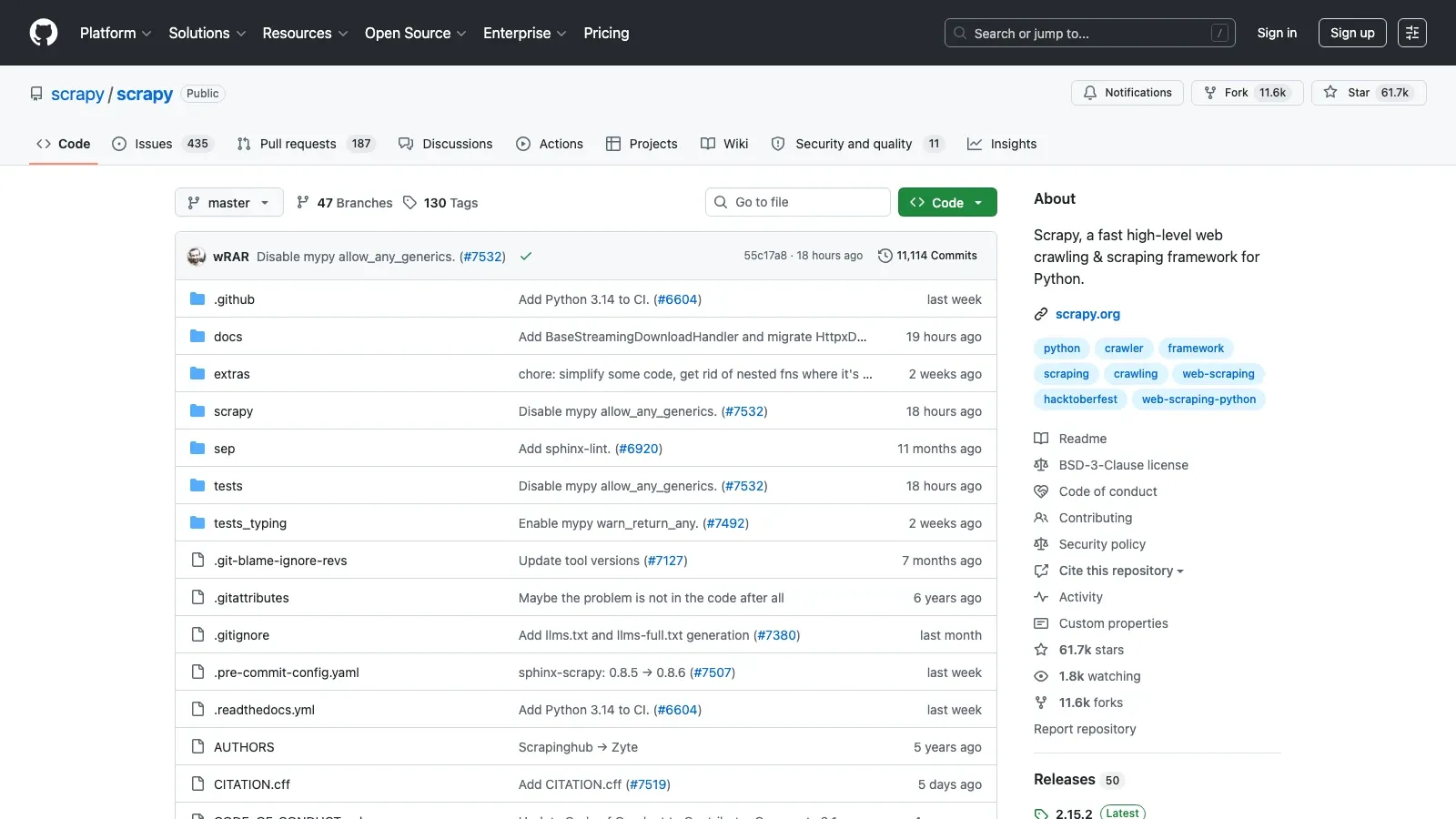
Scrapy is still the default Python answer when the job is bigger than a quick script. If you want spiders, pipelines, middleware, throttling, retries, and a mature ecosystem, it remains the safest open-source framework bet on this list.
- Setup: Moderate
- Best for: ecommerce catalogs, directory scraping, news crawling, and long-lived internal scraping systems
- JS support: No native rendering; pair with Playwright or Selenium when needed
- Why pick it: mature architecture, strong docs, and one of the best power-to-community ratios in open-source scraping
- Watchout: the learning curve is real if you have never worked inside a crawler framework
If you want to judge whether the Scrapy path feels right before committing to it, this current beginner walkthrough is still useful:
2. Crawlee
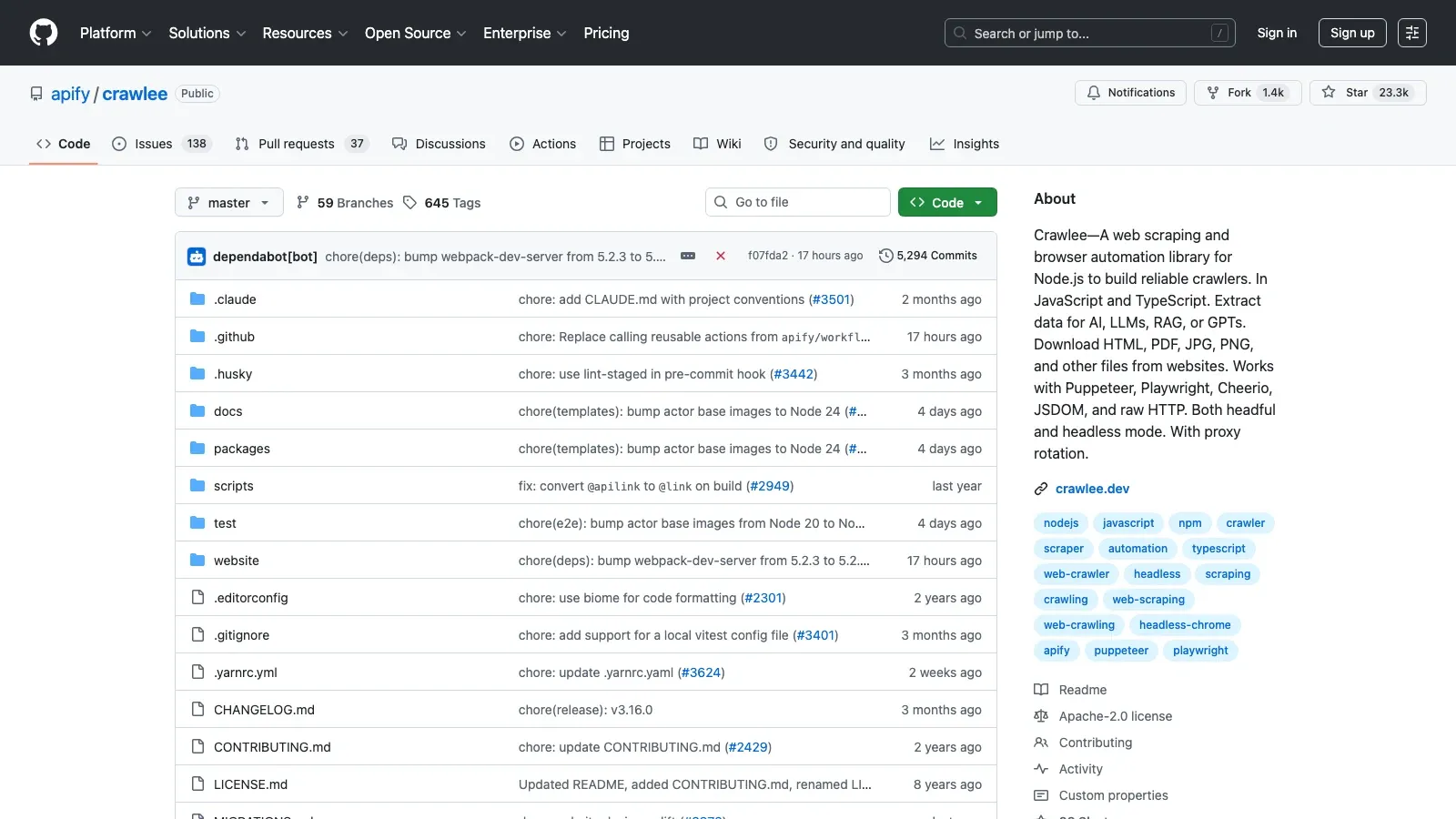
Crawlee has become the most attractive JavaScript or TypeScript framework choice when you want one project that can cover both lightweight crawling and browser-backed scraping. The ability to switch between HTTP-first and Playwright or Puppeteer-driven workflows is the real advantage.
- Setup: Moderate
- Best for: JS and TS teams, hybrid static and dynamic targets, and automation-heavy internal tooling
- JS support: Yes
- Why pick it: flexible runtime model, anti-blocking helpers, and stronger browser-story ergonomics than older crawler-only stacks
- Watchout: it makes the most sense if your team is already comfortable in Node.js
3. Colly
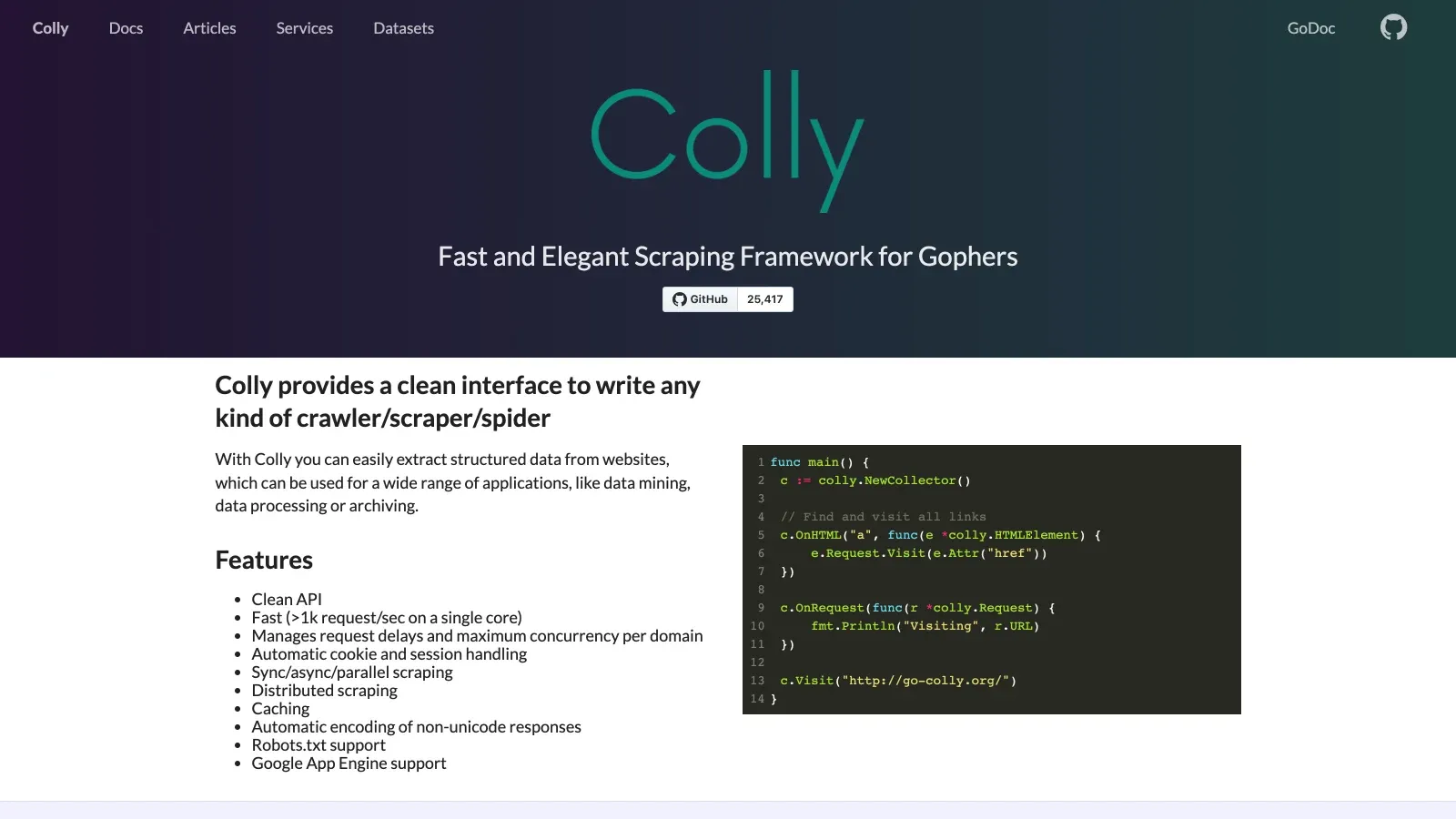
Colly is still one of the cleanest high-performance choices for Go teams that do not need browser rendering by default. It is fast, elegant, and practical when the bottleneck is volume rather than interface complexity.
- Setup: Moderate
- Best for: Go developers building fast static crawlers
- JS support: No native rendering
- Why pick it: concurrency, rate limiting, and a pleasant API for high-throughput jobs
- Watchout: not the right pick when browser automation is the real requirement
4. WebMagic
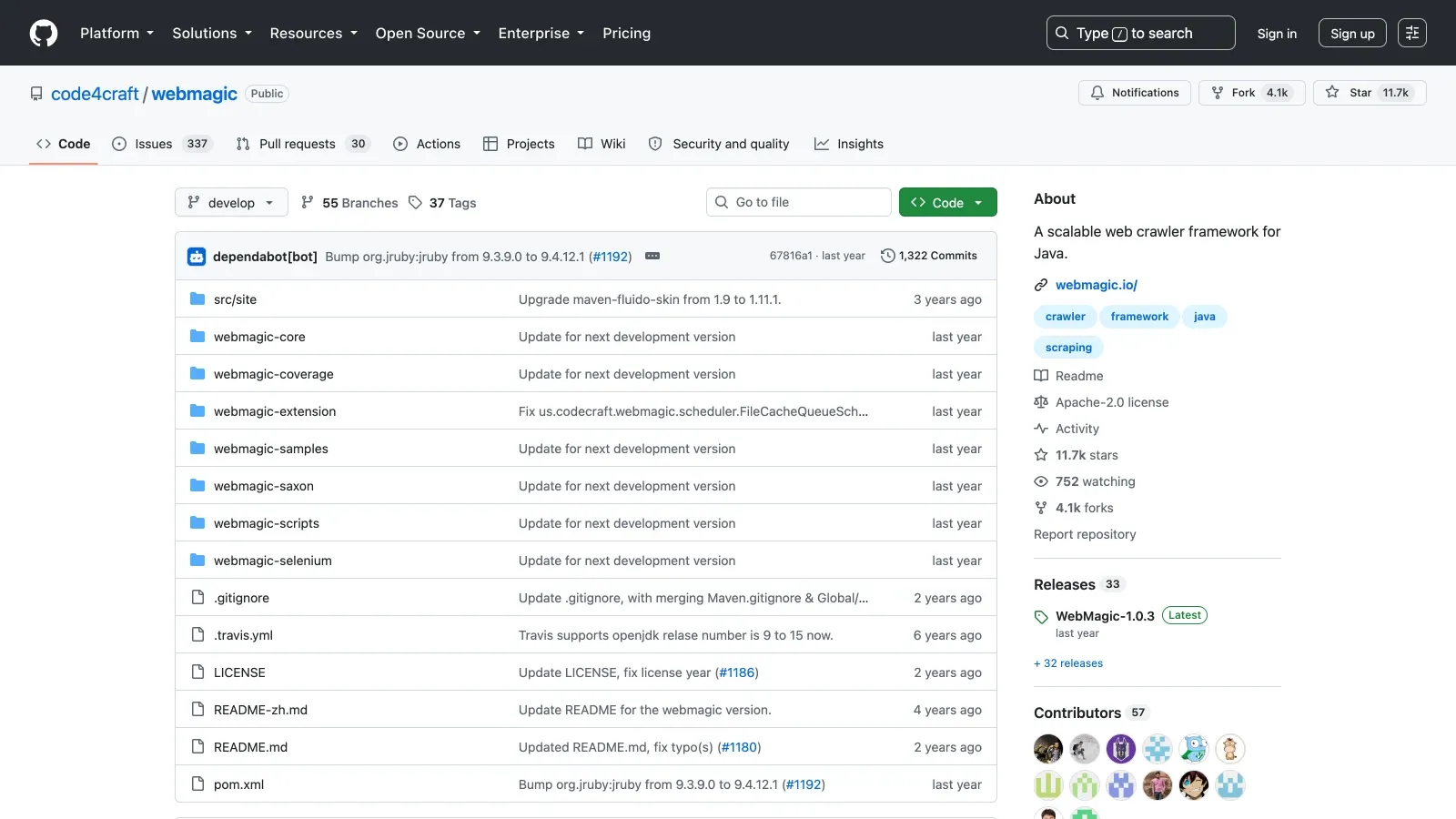
WebMagic remains the Java analogue for teams that like the Scrapy model but want to stay in the JVM ecosystem. It still makes sense for Java shops, even if the surrounding mindshare is smaller than Python or Node-based options.
- Setup: Moderate
- Best for: Java-based scraping pipelines
- JS support: No native rendering
- Why pick it: schedulers, pipelines, and a straightforward framework structure
- Watchout: the ecosystem is quieter than the larger Python and Node options, and the latest public commit signal I found was December 20, 2025, so treat it as stable rather than actively evolving
5. Nokogiri
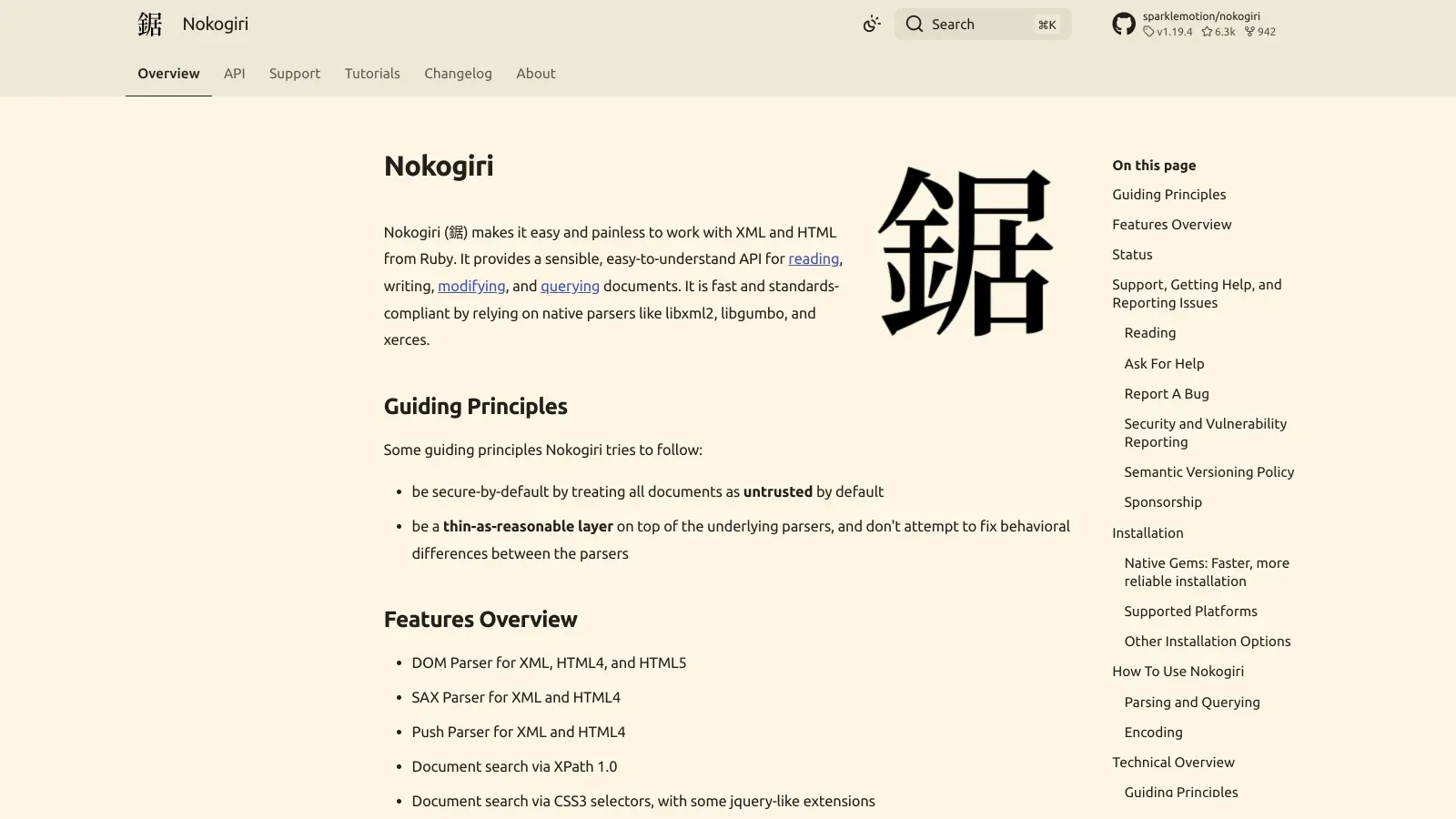
Nokogiri is not a crawler framework. It is the parser Ruby developers still reach for when they want clean HTML or XML handling inside a custom script or application flow.
- Setup: Easy
- Best for: Ruby and Rails apps that need parsing rather than a full crawler framework
- JS support: No
- Why pick it: fast, stable, and secure-by-default parsing
- Watchout: you still need to bring your own HTTP, session, or browser layer
Lightweight Static and Beginner-Friendly Projects
6. Maxun
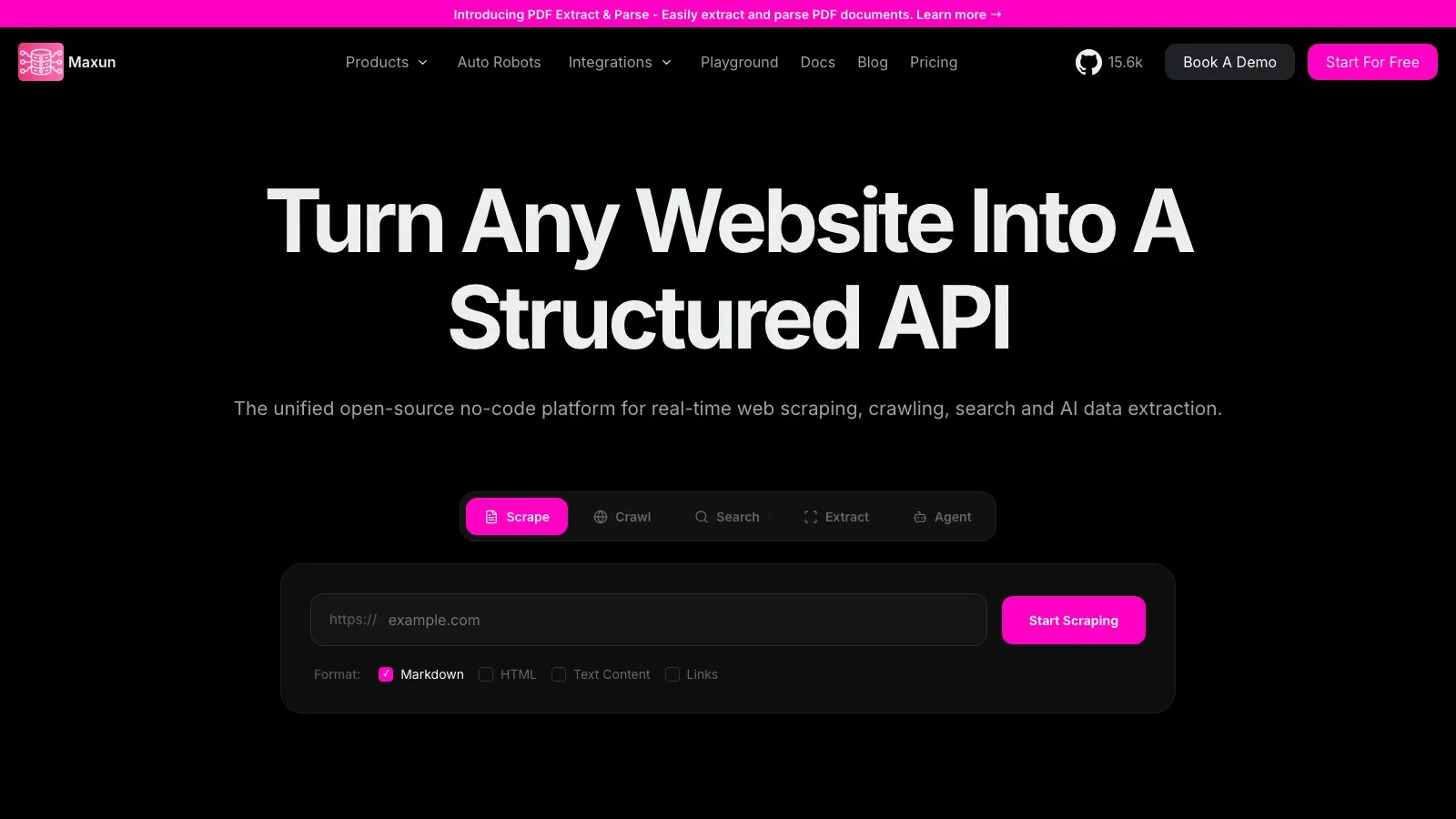
Maxun is the open-source answer for people who like the idea of no-code scraping but still want self-hosting and GitHub-level control. It is much more approachable for non-developers than a pure framework, but it is still an actual open-source project rather than a closed SaaS.
- Setup: Moderate to deploy, easier for end users after setup
- Best for: teams that want a visual UI with open-source control
- JS support: Yes
- Why pick it: point-and-click extraction, multi-step flows, and better accessibility than writing code from scratch
- Watchout: the deployment step is still heavier than a fully managed browser extension
7. MechanicalSoup
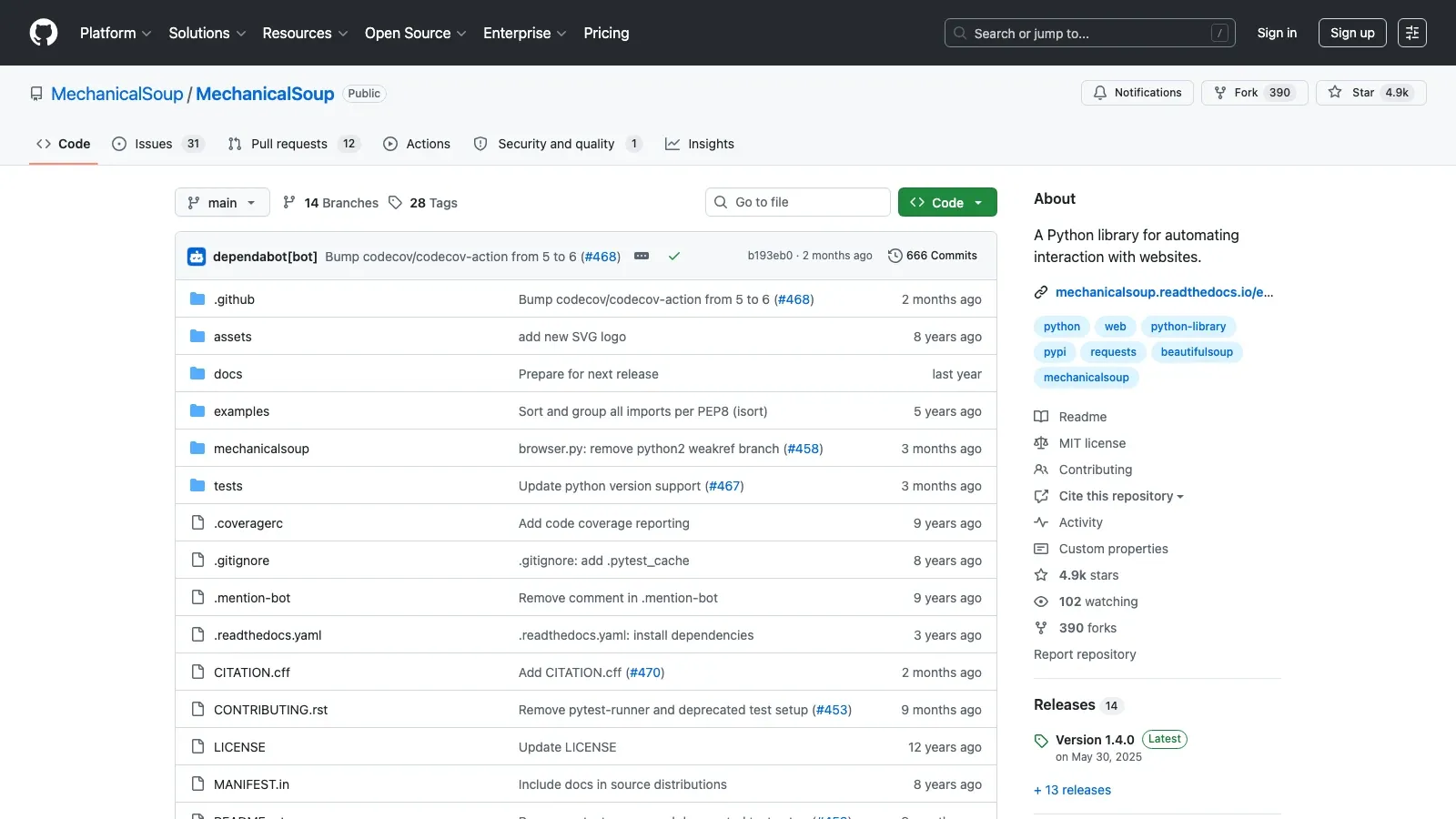
MechanicalSoup still deserves a place because not every scrape needs a headless browser. If the real problem is session handling, form submission, or walking a static flow behind a login, it stays pleasantly small and understandable.
- Setup: Easy
- Best for: simple forms, login-protected static pages, and quick Python automation scripts
- JS support: No
- Why pick it: low friction, readable code, and a gentle on-ramp for Python users
- Watchout: it stops being useful fast on JS-heavy sites
8. Node Crawler
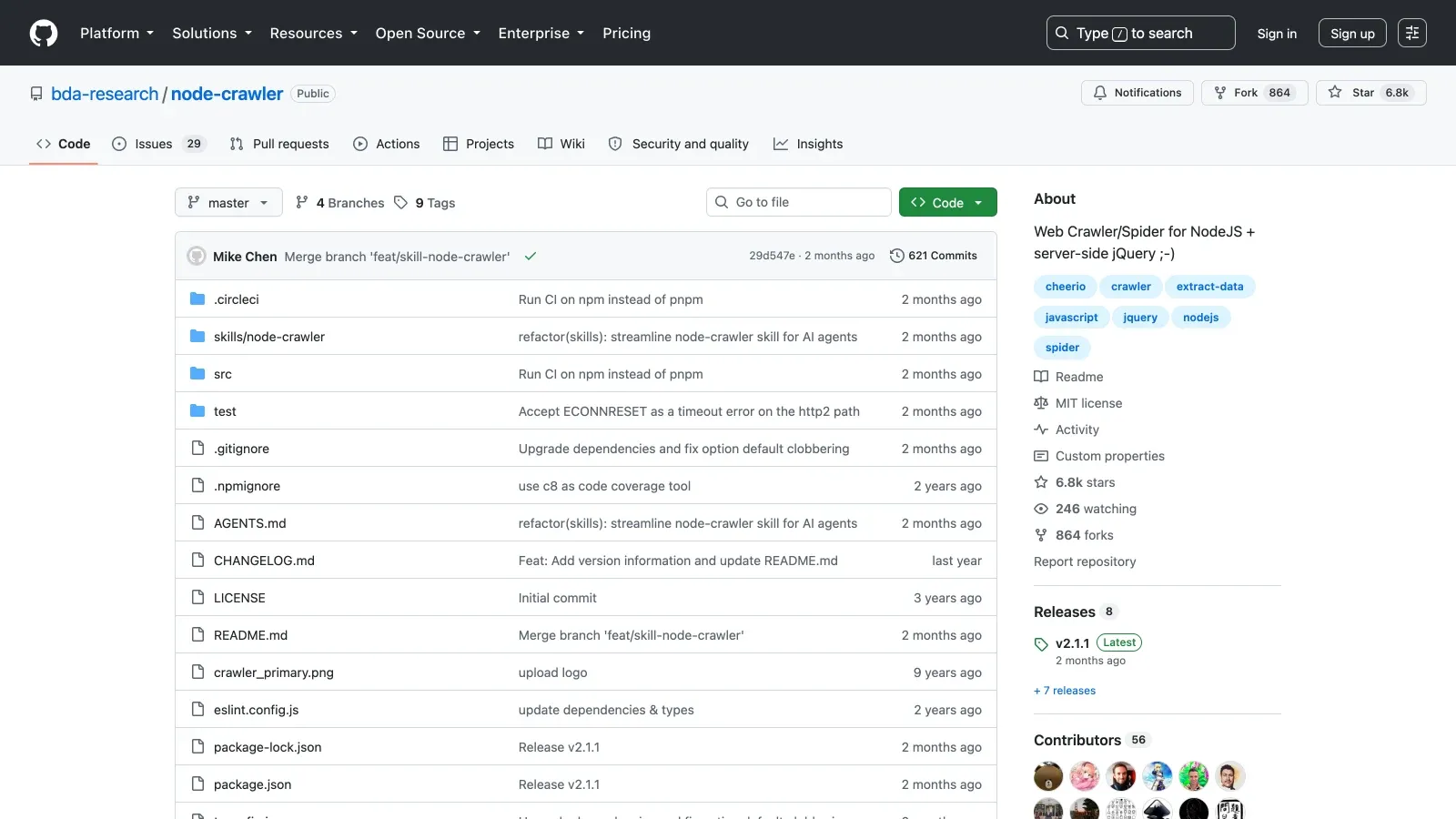
Node Crawler still has a place if your target is static HTML and you mainly care about concurrency, queueing, and Cheerio-style parsing. I would not choose it for a fresh browser-heavy project, but it can still be a fine fit for feed-style and static-site collection.
- Setup: Moderate
- Best for: high-speed static crawling and aggregation
- JS support: No
- Why pick it: concurrency controls and a familiar jQuery-like parsing workflow
- Watchout: the latest public commit signal I found was June 18, 2026, and the gaps between updates are long, so it is not where I would start for a new long-lived dynamic-site stack
Dynamic-Site and Browser-Automation Projects
9. Selenium
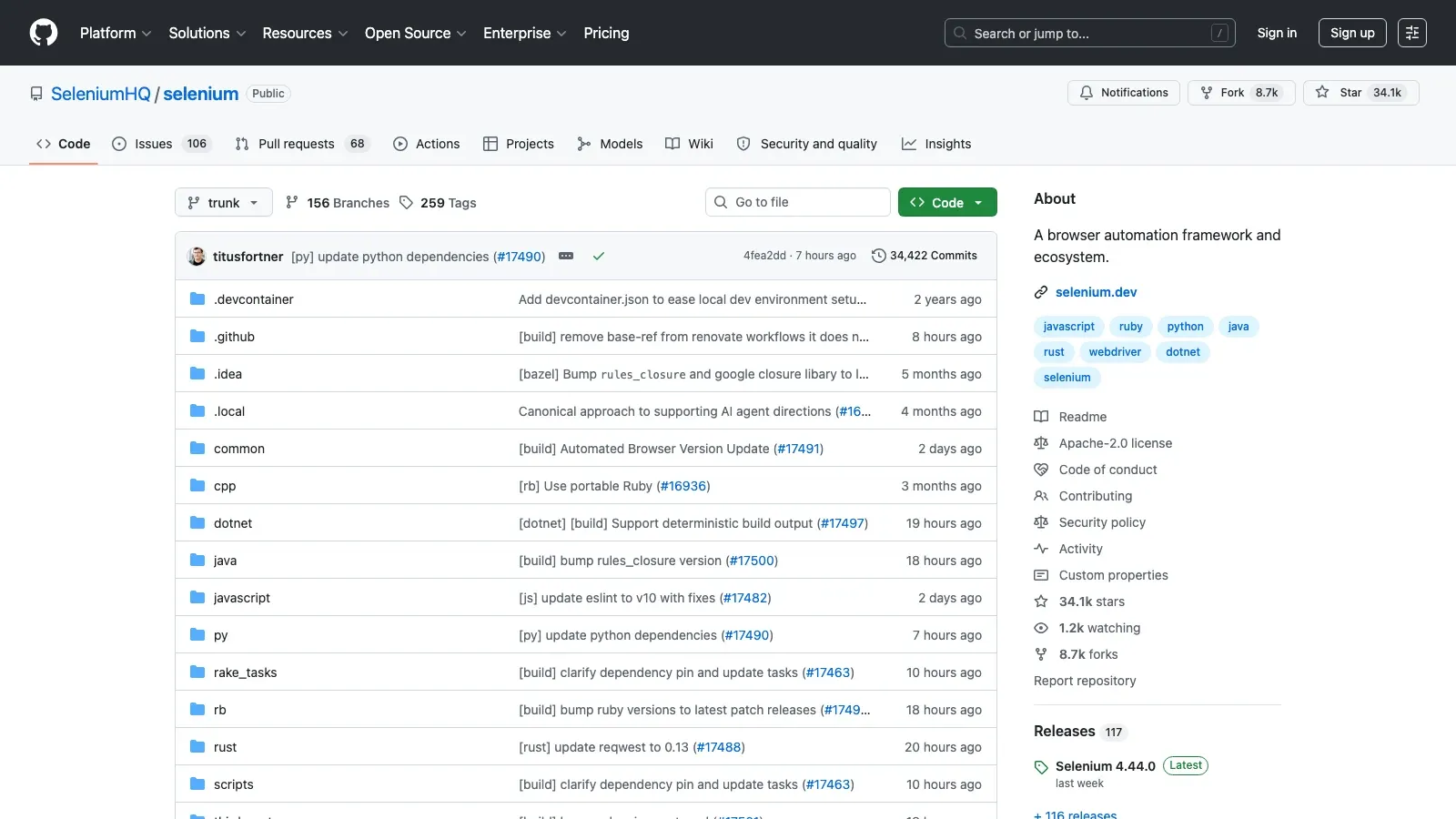
Selenium is older than Playwright, but it still matters when exact browser behavior and interaction fidelity outrank elegance. It remains especially relevant where scraping overlaps with QA, regression automation, or sites that demand very literal browser behavior.
- Setup: Moderate
- Best for: interaction-heavy flows, legacy browser automation, and teams already using Selenium for testing
- JS support: Yes
- Why pick it: broad browser coverage, huge ecosystem, and long-running maturity
- Watchout: newer automation stacks often feel cleaner and faster for greenfield scraping work
10. Playwright
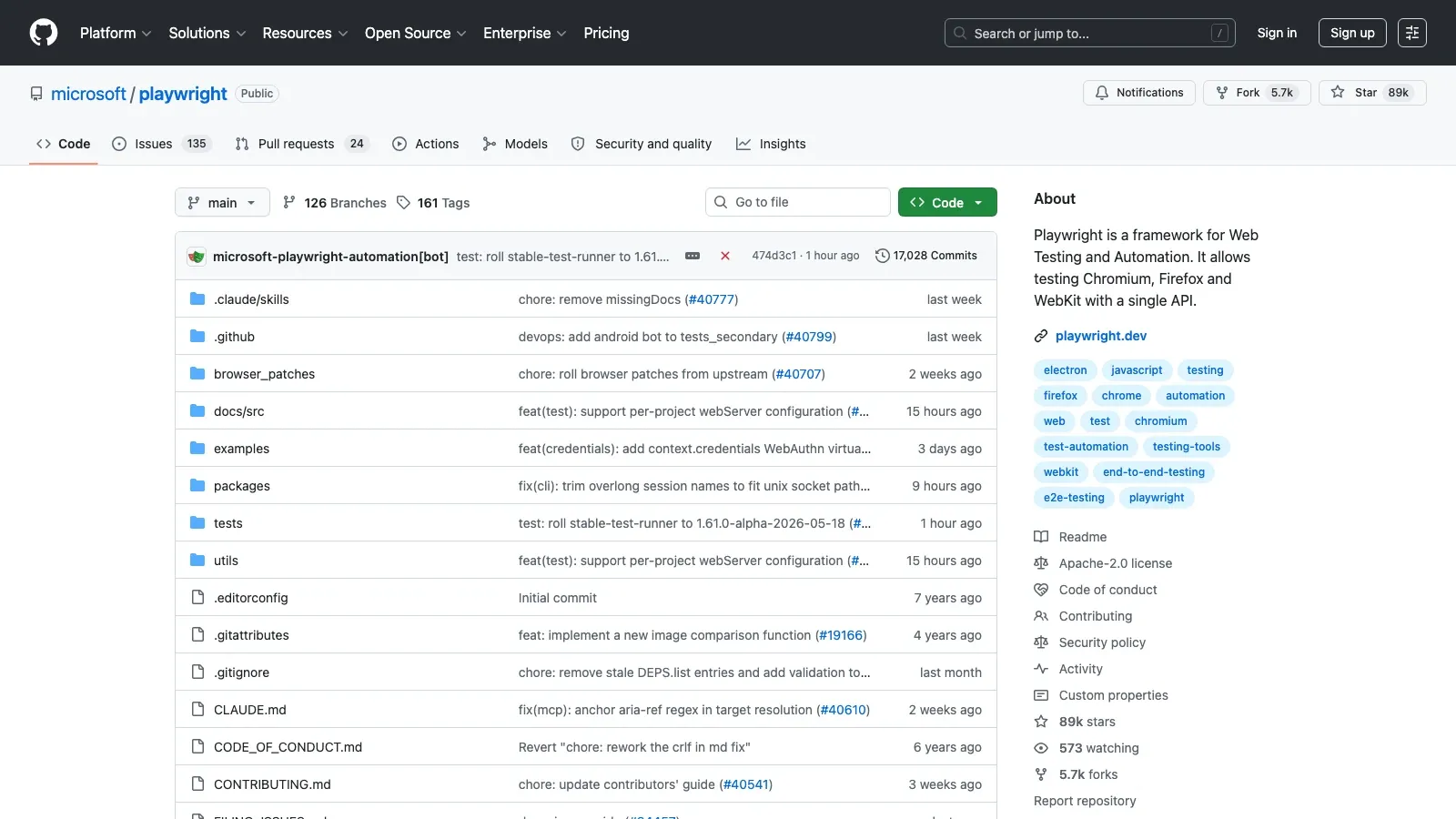
Playwright is my default modern recommendation for developer teams that need dynamic-page scraping. The combination of multi-browser support, strong waiting behavior, and clean APIs makes it the easiest browser-automation project here to recommend broadly.
- Setup: Moderate
- Best for: modern web apps, logged-in flows, and JavaScript-heavy targets
- JS support: Yes
- Why pick it: cross-browser control, robust automation primitives, and active maintenance
- Watchout: you still own selectors, browser infra, retries, and output quality
11. Puppeteer
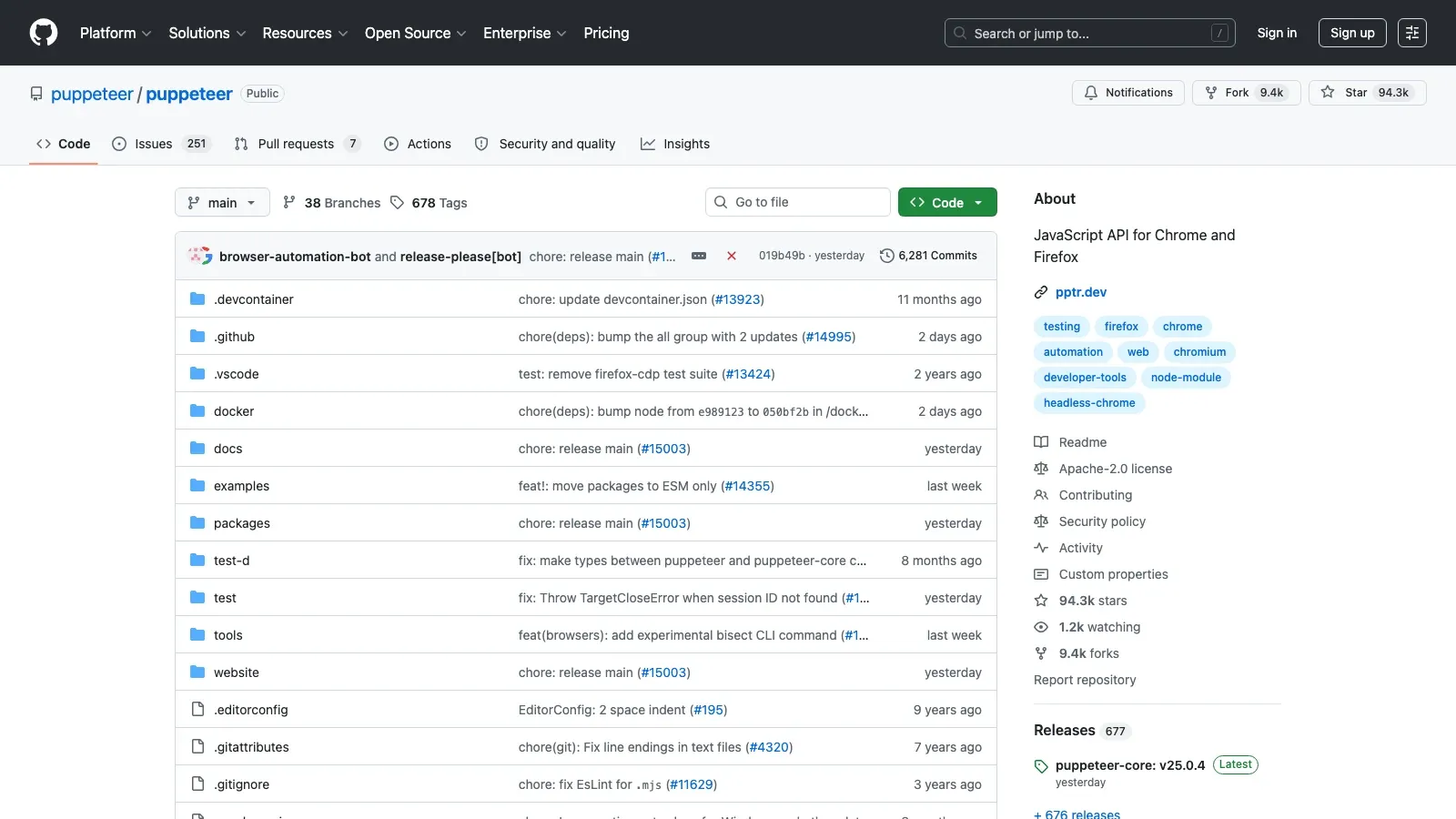
Puppeteer is still the Chrome-first classic. If your team is already in Node.js and mostly targets Chromium-compatible workflows, it remains a practical and well-understood option.
- Setup: Moderate
- Best for: Chrome-oriented automation, screenshots, PDFs, and dynamic content extraction
- JS support: Yes
- Why pick it: rich browser control and a huge amount of community examples
- Watchout: Playwright has become the stronger default if you want broader browser coverage or a more modern cross-browser story
12. Scrapling
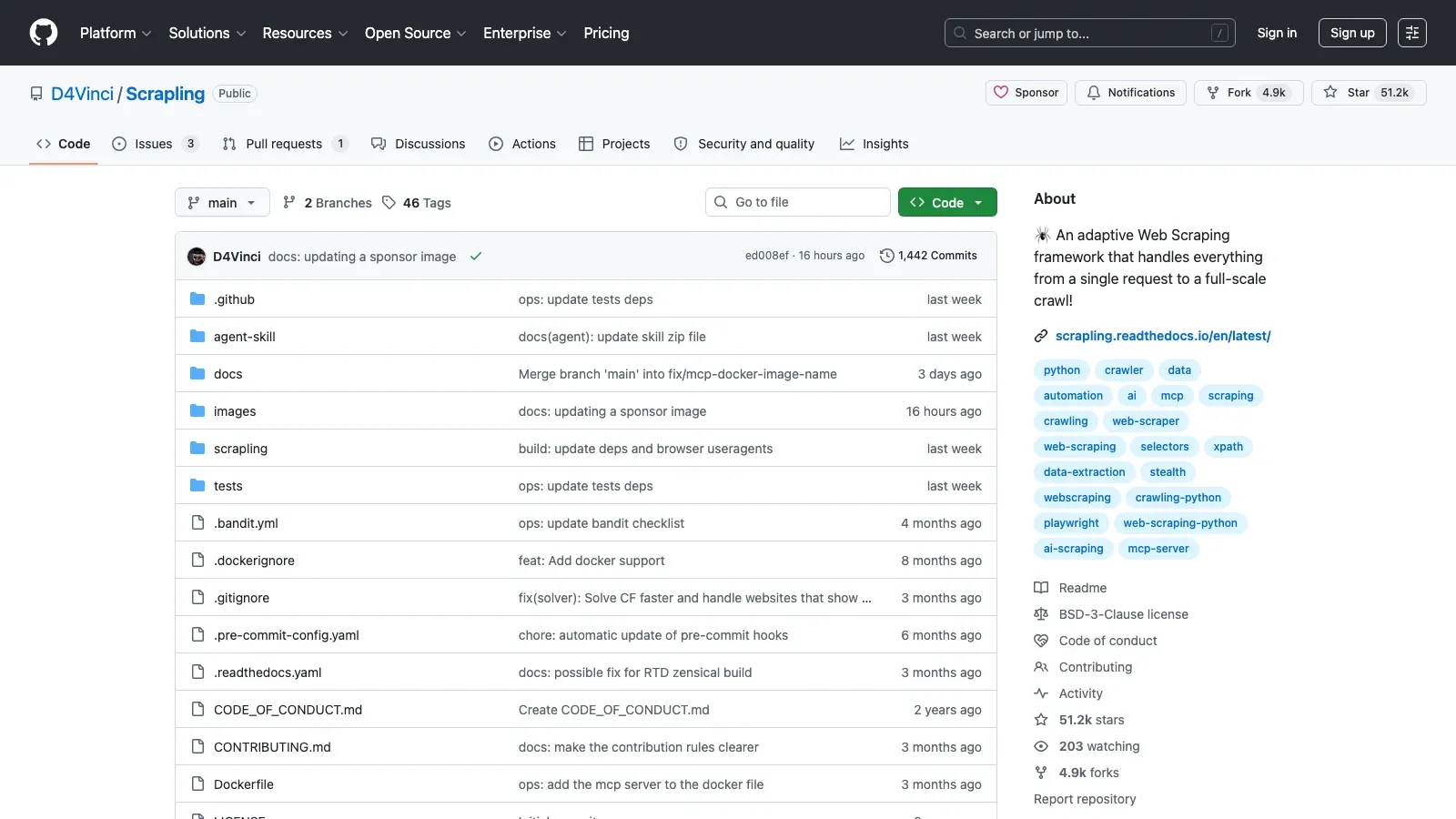
Scrapling is the most specialized modern entrant in this group. It is for people who already know that browser rendering is not the only problem. They also need stealth, proxy awareness, and stronger anti-bot posture.
- Setup: Moderate
- Best for: stealth scraping, anti-bot-sensitive targets, and Python-first dynamic-site work
- JS support: Yes
- Why pick it: active development and a sharper focus on scraping friction that simpler frameworks ignore
- Watchout: overkill for plain static sites and less beginner-friendly than MechanicalSoup or Scrapy
Specialist Crawlers for Research, Security, and Infrastructure Jobs
13. Heritrix
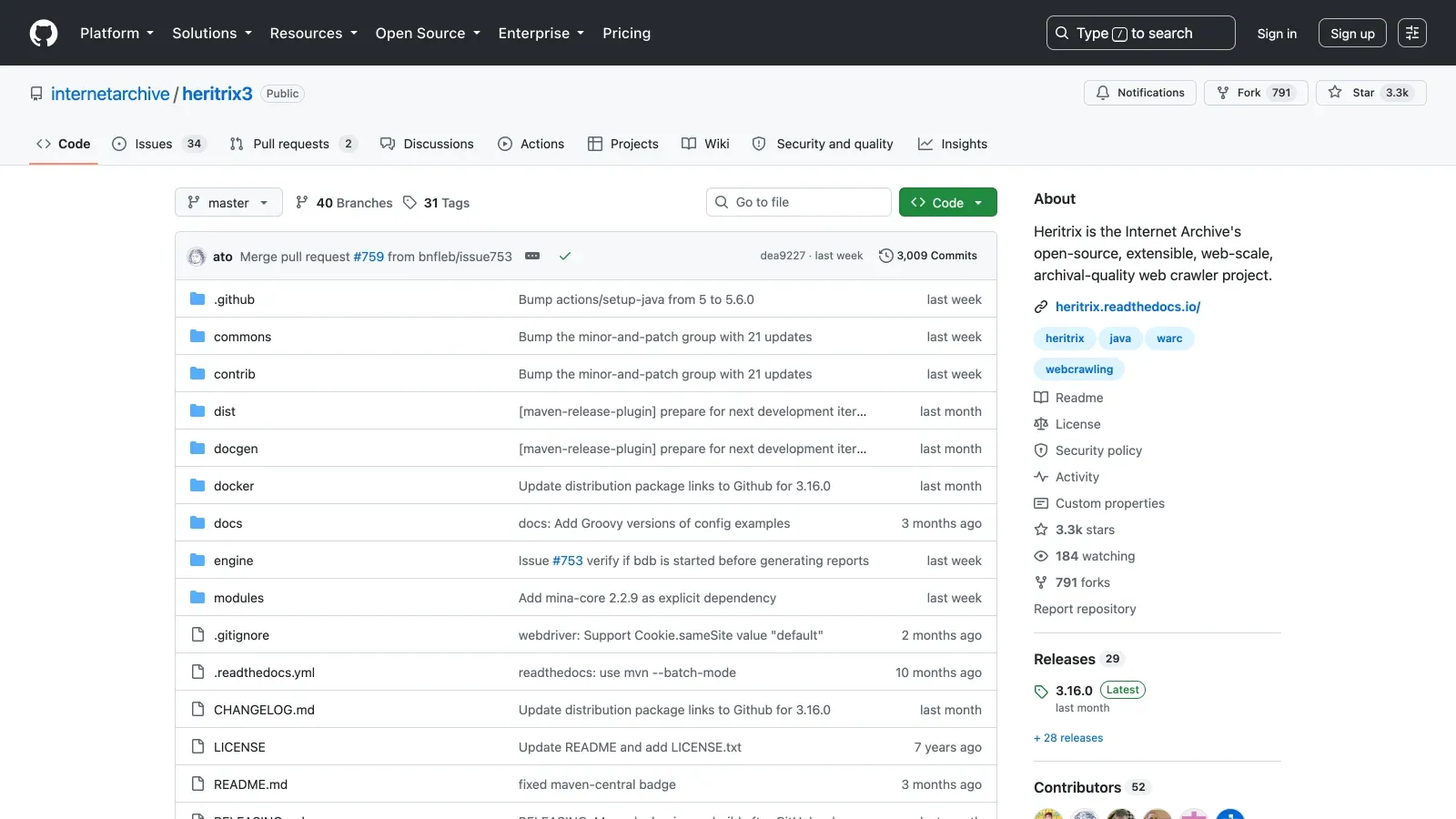
Heritrix is not a product-comparison scraper. It is an archival crawler built for institutions that care about full-site preservation and standards-compliant capture.
- Setup: Advanced
- Best for: archives, libraries, and large-scale preservation workflows
- JS support: No
- Why pick it: Internet Archive pedigree and WARC-oriented archival workflows
- Watchout: wrong tool for targeted list or price scraping
14. Apache Nutch
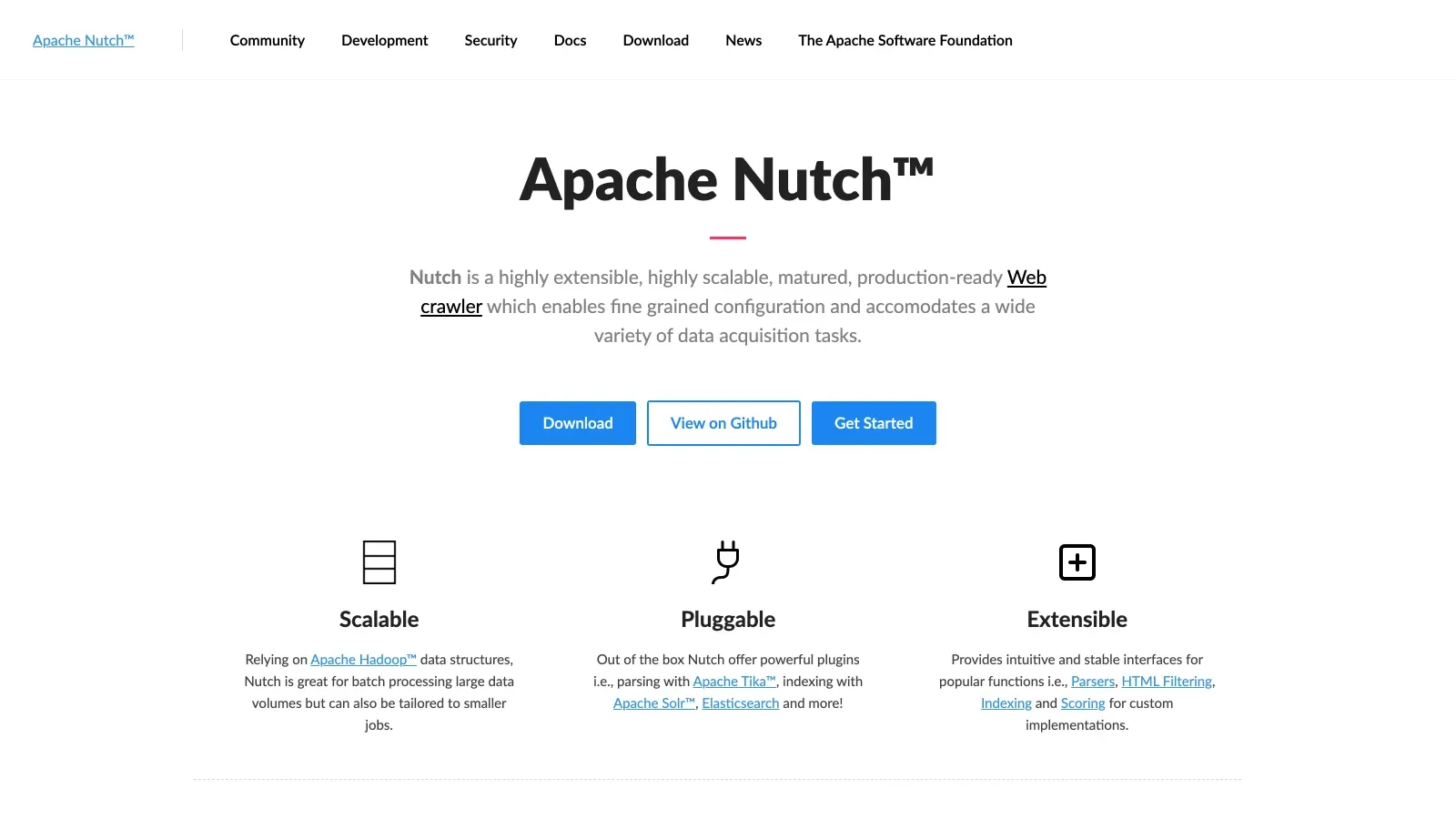
Apache Nutch still makes sense for teams thinking in terms of distributed crawling, indexing, or search-style data collection rather than one-off business scraping.
- Setup: Advanced
- Best for: distributed crawling, research datasets, and search-engine-style collection
- JS support: No
- Why pick it: plugin model and Apache-style enterprise familiarity
- Watchout: far too heavy for most spreadsheet-first or browser-first jobs
15. Katana
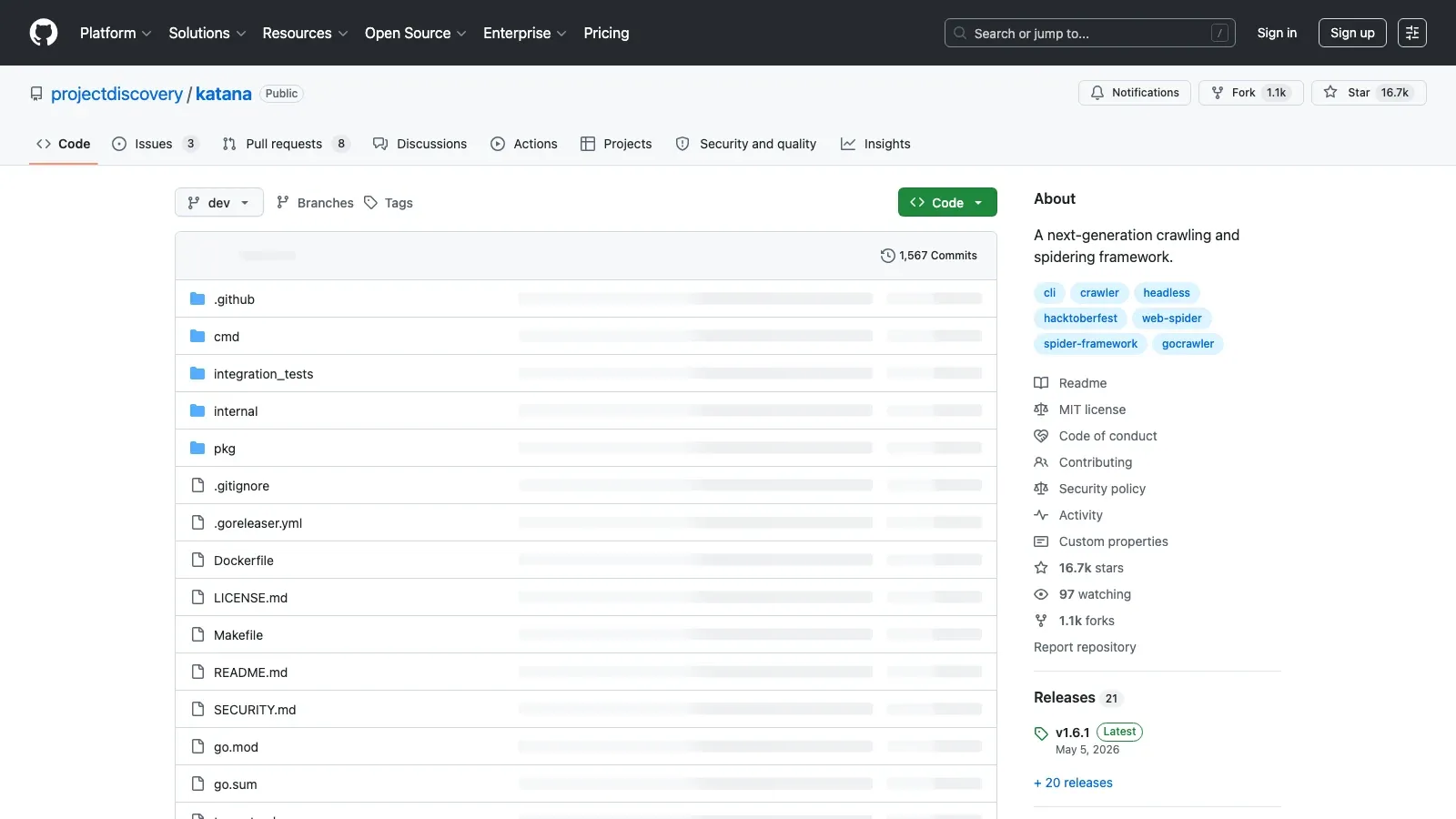
Katana belongs here because security crawling is its own use case. If the job is reconnaissance, endpoint discovery, or surfacing the structure of a target quickly, Katana is a much better fit than a general-purpose scraping framework.
- Setup: Moderate
- Best for: security reconnaissance, link discovery, and URL inventory generation
- JS support: Optional headless mode
- Why pick it: speed, concurrency, and a security-focused crawling model
- Watchout: it is not designed to be a polished business-data extraction stack
My Shortlist by Team Type
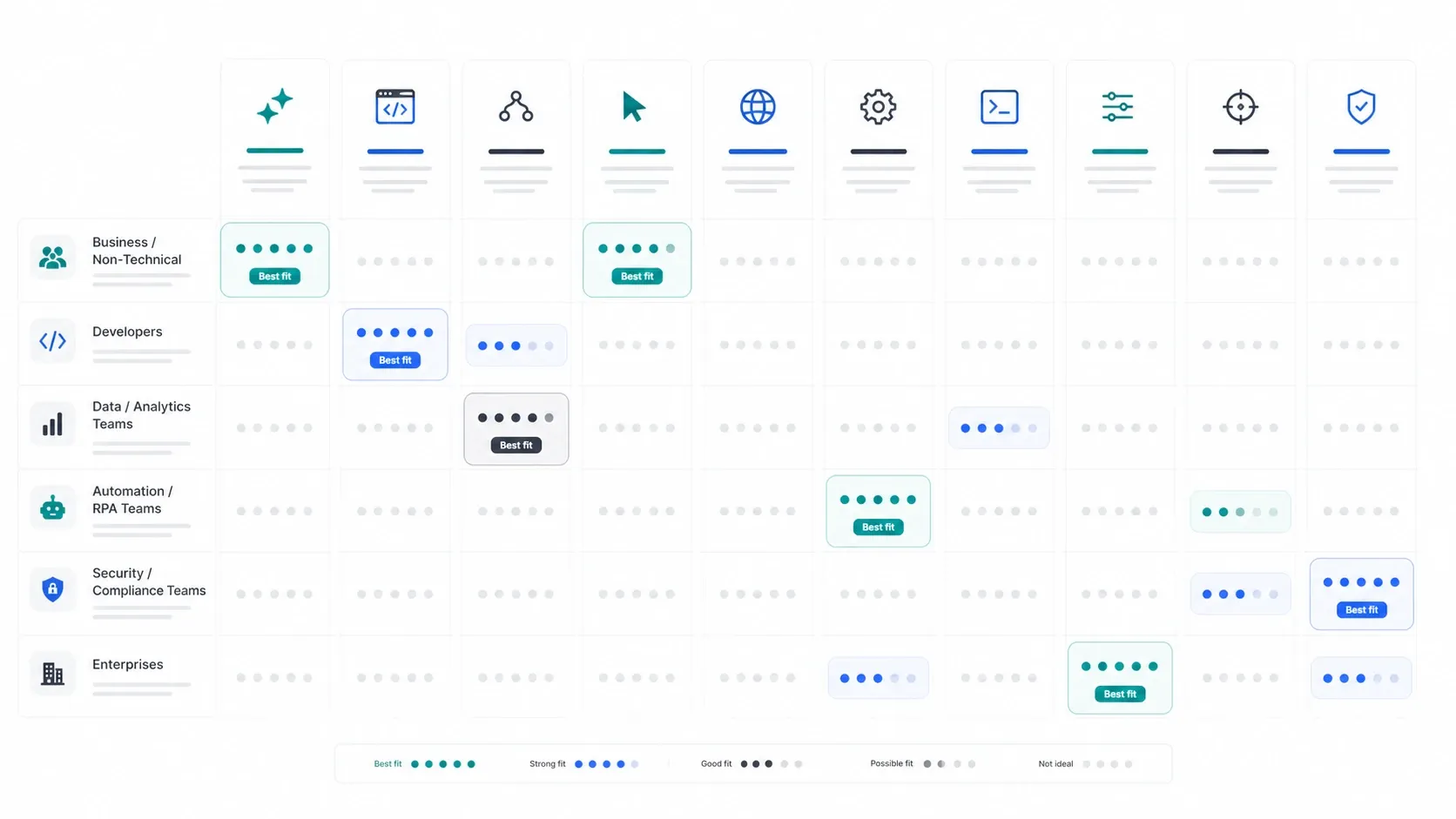
- Python developers: start with Scrapy for frameworks, MechanicalSoup for smaller static flows, and Scrapling if stealth or anti-bot friction is already part of the problem.
- JavaScript or TypeScript teams: start with Crawlee for a framework, Playwright for browser automation, and Puppeteer if Chrome-first workflows are enough.
- Go teams: Colly for scraping, Katana for discovery-heavy security crawling.
- Java teams: WebMagic for general crawling, Heritrix for archival capture, Apache Nutch for distributed search-style crawling.
- Non-technical operators: Maxun if you want open-source self-hosting, or Thunderbit if you want a managed no-code workflow that gets to usable output faster.
Which Project Should Most People Actually Start With?
Here is the pragmatic answer:
- If you want to build and own a scraper, start with Scrapy or Crawlee.
- If you need to control a real browser, start with Playwright.
- If you need a visual open-source layer, start with Maxun.
- If you need specialized archival or security crawling, choose Heritrix, Nutch, or Katana only because your use case clearly demands them.
- If you want to skip code and get the data now, do not force yourself into GitHub first. Use Thunderbit.
Final Take
The best web scraping GitHub project in 2026 depends less on raw stars than on what burden you are willing to own. Scrapy is still the safest Python framework default. Crawlee is the best modern JavaScript framework choice. Playwright is the strongest browser-automation default. Maxun is the most interesting open-source no-code path. Heritrix, Apache Nutch, and Katana are specialist tools that are excellent only when the job is specialized.
The important thing is not to confuse "most powerful" with "best fit." If your team only needs clean data in a spreadsheet, GitHub might not be the right starting point at all.
Skip the Maintenance Overhead and Start Scraping Faster Get Started Free




